2nd Grade Sight Words Scavenger Hunt
Written by Adi Ackerman, Head Teacher
"2nd Grade Sight Words Scavenger Hunt" is written for 2nd Grade (Ages 7-8). Children a grade either side can use it too: younger ones with an adult reading it aloud, older ones as a quick refresher.
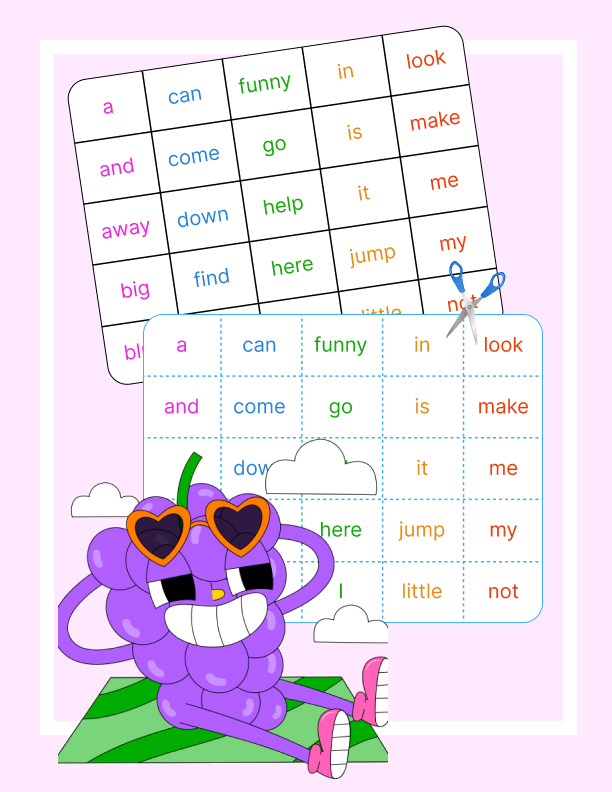
A 2nd grade sight word scavenger hunt: kids search a picture scene for hidden sight words and check them off as they find each one. Part of our sight words collection.
How do I use this resource?
Pick the format that fits the moment: print the checklist and mark off words as your 2nd grade student reads them correctly, cut apart the flashcards for a quick drill or matching game, or hand over the scavenger hunt for an independent seat-work activity. Post the reference poster where kids can glance at it during independent reading or writing. The tracing and sentence pages work well as a short warm-up or homework page. Rotate through a few formats each week so the same words show up in different contexts, which is what actually makes them stick.
What students will practice
- Gives 2nd grade students a hands-on way to build sight word recognition through checklists, flashcards, scavenger hunts, and reference posters.
- Tracks progress word by word so teachers and parents can see exactly which high-frequency words still need practice.
- Turns repeated exposure into a game instead of a drill, through cut-apart cards, picture hunts, and quick tracing pages.



Curriculum Links
Curriculum Standard
Reading: Foundational Skills · 2nd Grade
Standard: Recognize and read grade-appropriate irregularly spelled words.
View all RF.2.3.F worksheets →Find this in the curriculum
Browse the grade, subject, and topic this belongs to.
FAQ
How do I use the 2nd Grade Sight Words Scavenger Hunt?
⌄
Pick the format that fits the moment: print the checklist and mark off words as your 2nd grade student reads them correctly, cut apart the flashcards for a quick drill or matching game, or hand over the scavenger hunt for an independent seat-work activity. Post the reference poster where kids can glance at it during independent reading or writing. The tracing and sentence pages work well as a short warm-up or homework page. Rotate through a few formats each week so the same words show up in different contexts, which is what actually makes them stick.
What is the 2nd Grade Sight Words Scavenger Hunt?
⌄
This sight-words collection gives 2nd grade teachers and parents a mix of formats for building high-frequency word recognition: printable Dolch word checklists organized by grade band, cut-apart flashcards, a picture scavenger hunt where kids spot hidden words in a scene, a reference poster for the wall, and short tracing and sentence-writing pages. Some pages are meant to be checked off word by word as a student masters each one. Others are reusable, like the flashcards and the poster, and stay in rotation all year. Together they cover recognition, recall, and handwriting practice for the words kids see most often in early reading.
Can I use the 2nd Grade Sight Words Scavenger Hunt at home and in the classroom?
⌄
Yes. We made it for 2nd Grade sight words, and it works the same at home or at school. Families print it for one child and keep it where they will use it every day. Teachers print a copy per student or one for the whole room, whichever the day needs.
How does the second grade sight word hunt work?
⌄
Your child searches for the 46 Dolch second grade words in books, around the room, or on the page, marking each one found. Turning recognition into a search means each word gets met many times without a single drill.
Why is hunting better than reciting a list?
⌄
Because the words appear in different fonts, sizes and contexts, which is what real reading demands. A word known only from one flashcard is often not recognized inside a paragraph. A hunt closes that gap by design.
How many words should we hunt at once?
⌄
Five to eight. The full 46 word list at once means a child loses track of what they are looking for. Small batches also let you retire words that are already solid instead of hunting them again.
How many 2nd Grade sight words resources are there?
⌄
2 printable resources, all free to preview. Downloads are included with a ClassWeekly free trial, and every page prints on standard 8.5 x 11 paper.
What age are sight words resources for?
⌄
These are written for 2nd Grade students, roughly ages 7-8. Many teachers also use them a grade up for review or a grade down as an extension, so use the preview to judge the fit for a particular child.
Can I use these sight words resources for homeschool?
⌄
Yes. Nothing here assumes a classroom of 25, so they work the same one-to-one at the kitchen table as they do in a 2nd Grade classroom, a literacy centre, or a tutoring session.
Ratings & Reviews
No reviews yet. Be the first to share what you think.
Reviews are for ClassWeekly members.
Make a Request
Spotted something to fix, or want a resource we don't have yet? Tell us and we'll make it.
Resource Details
| Grade | 2nd Grade |
| Subject | Resources |
| Topic | Sight words |
| Standard | RF.2.3.F |
| Pages | 1 page |
| Difficulty | Medium |
What is ClassWeekly?
ClassWeekly offers free worksheets and printable learning resources for kids in preschool to grade 5. All worksheets are aligned to Common Core, NGSS, and C3 Framework standards and designed by educators. Become a member to access the full library and download unlimited PDFs.