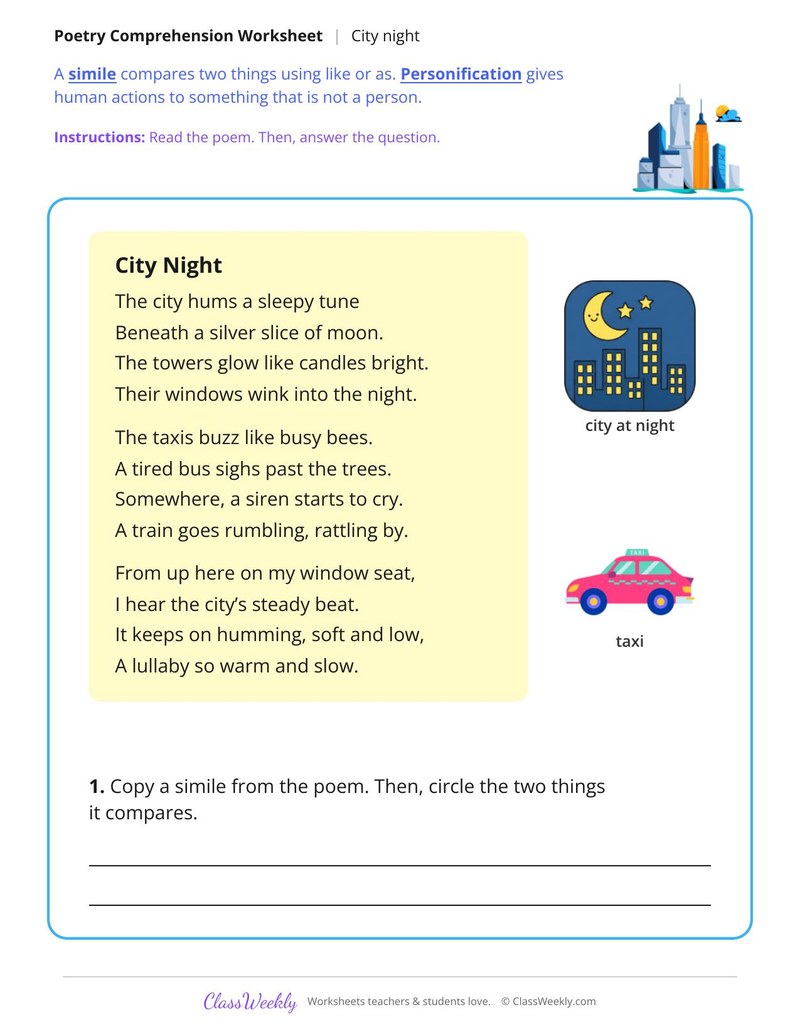
City Night
Written by Adi Ackerman, Head Teacher
"City Night" is written for 4th Grade (Ages 9-10), and it covers Common Core RL.4.5. If your little one is a year younger but already steady on poetry, the page still works. You may just need to read the instructions out loud. And if they are older and poetry comprehension never quite stuck, this is a short review rather than busywork.
3 pages in this set
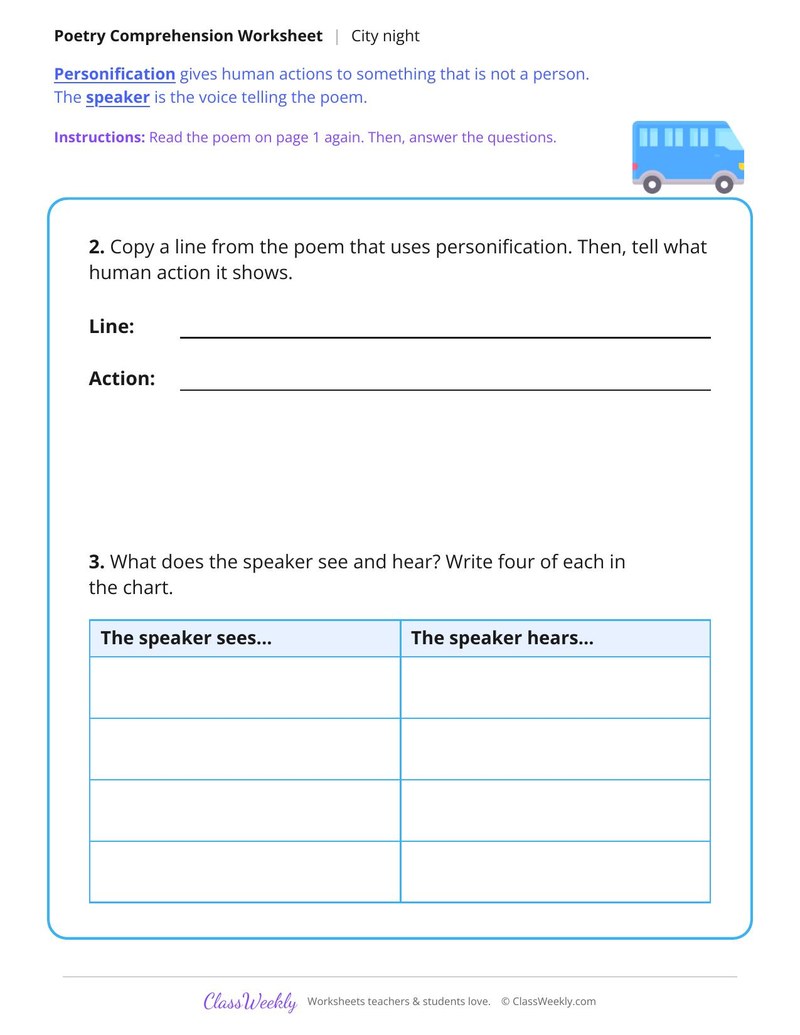
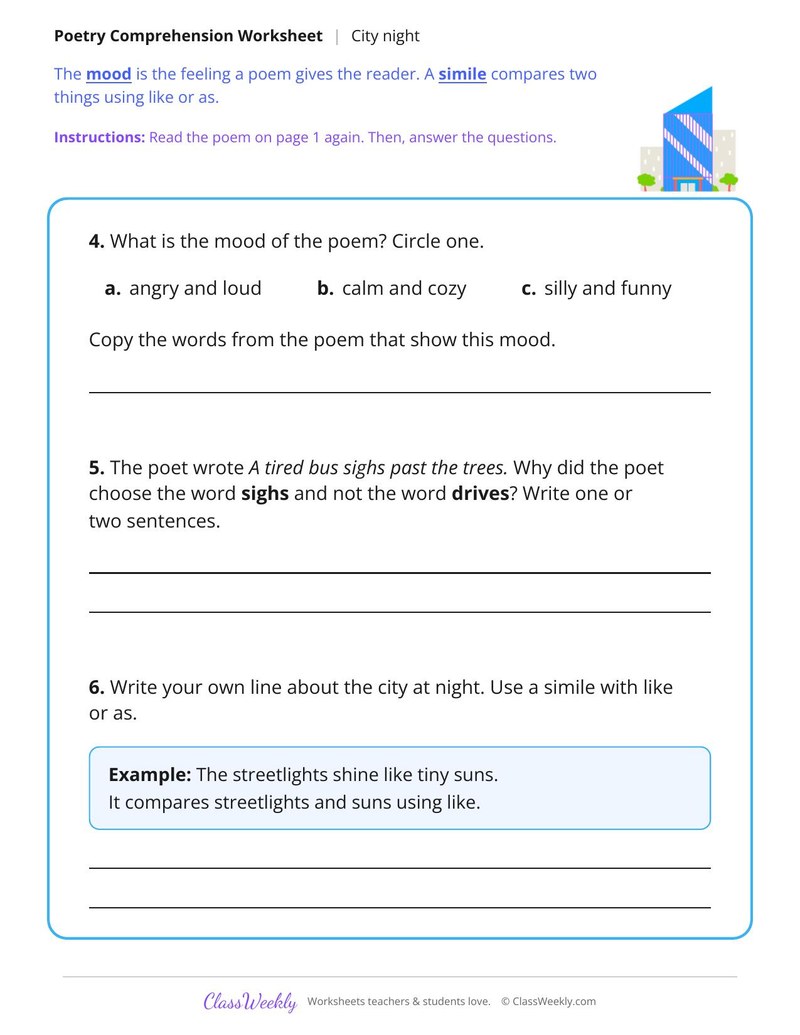
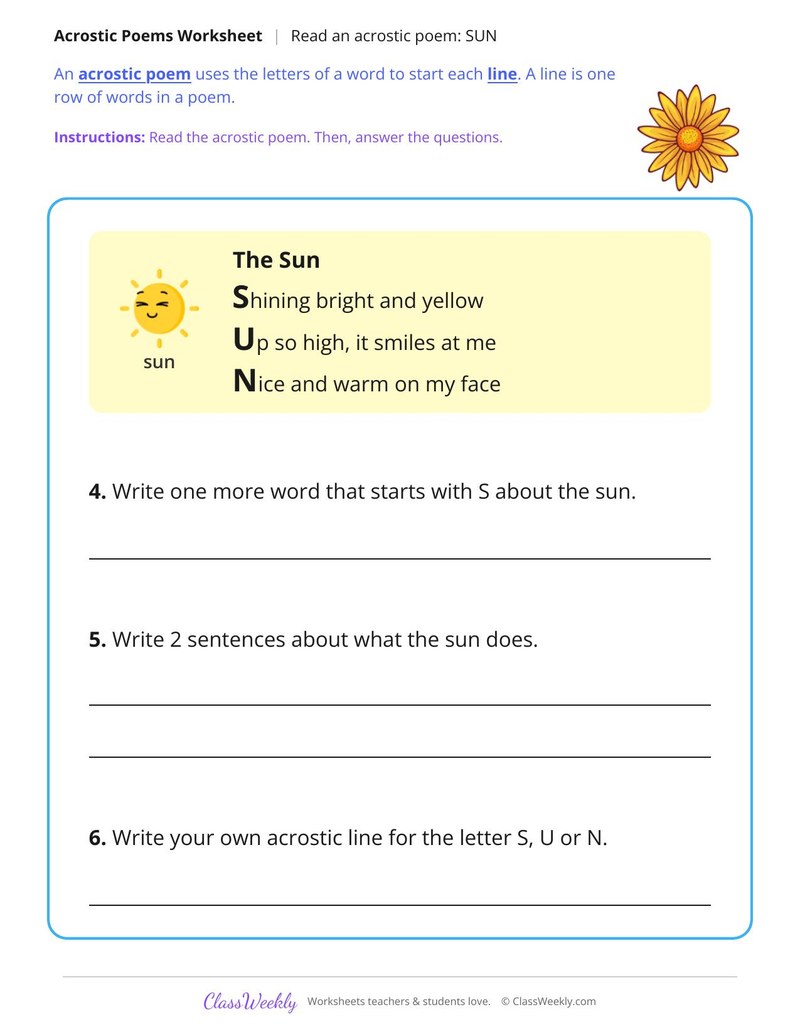
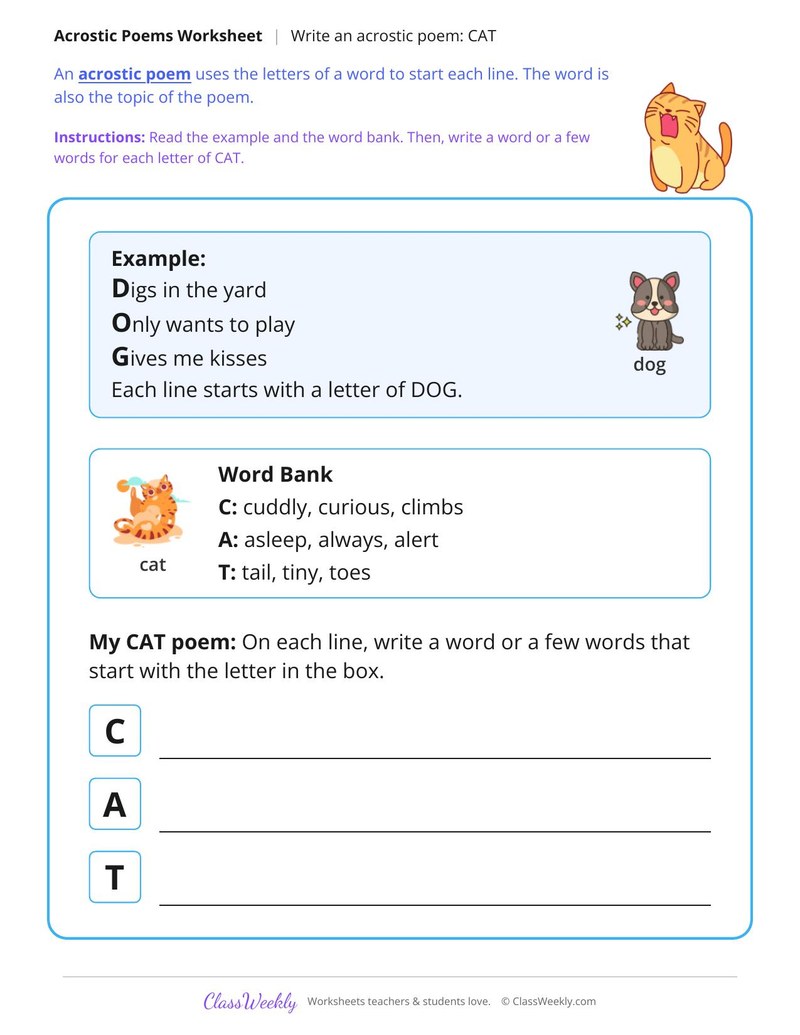
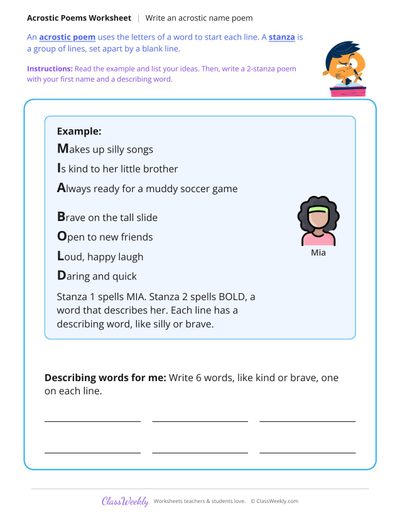
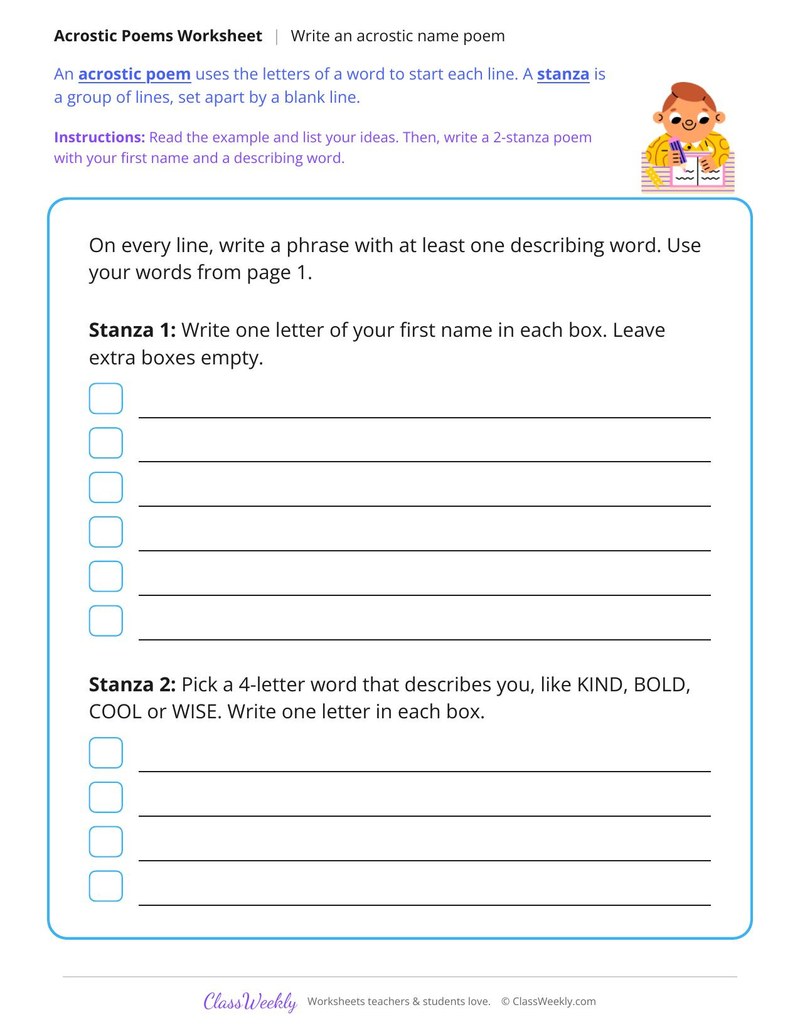
Poetry comprehension for 4th grade. Kids read City Night, then find similes and personification, name the mood and write a line. Answer key included. Part of our poetry comprehension collection. Aligned to Common Core standards.
How do I use this worksheet?
Read the poem aloud once for enjoyment, then have students read it again on their own before the questions. Ask them to underline the line that gives each answer, since many questions ask them to copy a line. The 3rd and 4th grade sheets run three pages, so they can be split over two days. Check answers with the key, then talk about the questions that have more than one good answer.
What students will practice
- Students will read an original poem closely and answer questions about its details, lines and stanzas.
- Students will find rhyming words and rhyme schemes, and compare how a poem and a story tell the same events.
- Older students will identify similes, personification, mood, the speaker and the theme, and support answers with lines from the poem.
Curriculum Links
Common Core State Standards
Reading · 4th Grade
Find this in the curriculum
Browse the grade, subject, and topic this belongs to.
FAQ
How do I use this poetry comprehension worksheet?
⌄
Read the poem aloud once for enjoyment, then have students read it again on their own before the questions. Ask them to underline the line that gives each answer, since many questions ask them to copy a line. The 3rd and 4th grade sheets run three pages, so they can be split over two days. Check answers with the key, then talk about the questions that have more than one good answer.
What does this worksheet teach?
⌄
Six poetry comprehension worksheets from 2nd to 4th grade, each built around an original ClassWeekly poem, and every one has an answer key. In 2nd grade, students read The Puddle and Bedtime Moon and answer questions about rhyme, feelings, describing words and stanzas. In 3rd grade, they read The Old Oak Tree and find its stanzas, a word's meaning and its ABAB rhyme scheme, and compare a poem and a story about the same lost kite. In 4th grade, they read City Night and The Last Day of Summer and work with similes, personification, mood, the speaker and theme.
Can I use this poetry comprehension worksheet for homeschool or classroom?
⌄
Yes, both. We made it for 4th Grade poetry, and the page works the same whether it lands on a kitchen table or a center rotation. At home, most families go through it together and talk the answers out loud, and that talking is where most of the learning happens with poetry comprehension. In class it runs well as independent work while you pull a small group. Print one copy or thirty, whichever the day needs.
What is the speaker of a poem?
⌄
The speaker is the voice telling the poem. It is not always the poet: in The Last Day of Summer, the speaker is a child thinking about going back to school.
How is a poem different from a story?
⌄
A poem is written in lines and stanzas and often rhymes. A story is written in sentences and paragraphs and usually gives more details, such as the character's name. The Lost Kite sheet tells the same event both ways so students can compare them.
What grades are these poetry worksheets for?
⌄
2nd, 3rd and 4th grade, with ten sheets for each grade. Each sheet's description names the grade it was written for, so you can choose a level, or move a child up or down a grade when a sheet feels too easy or too hard.
What kinds of poems do these worksheets cover?
⌄
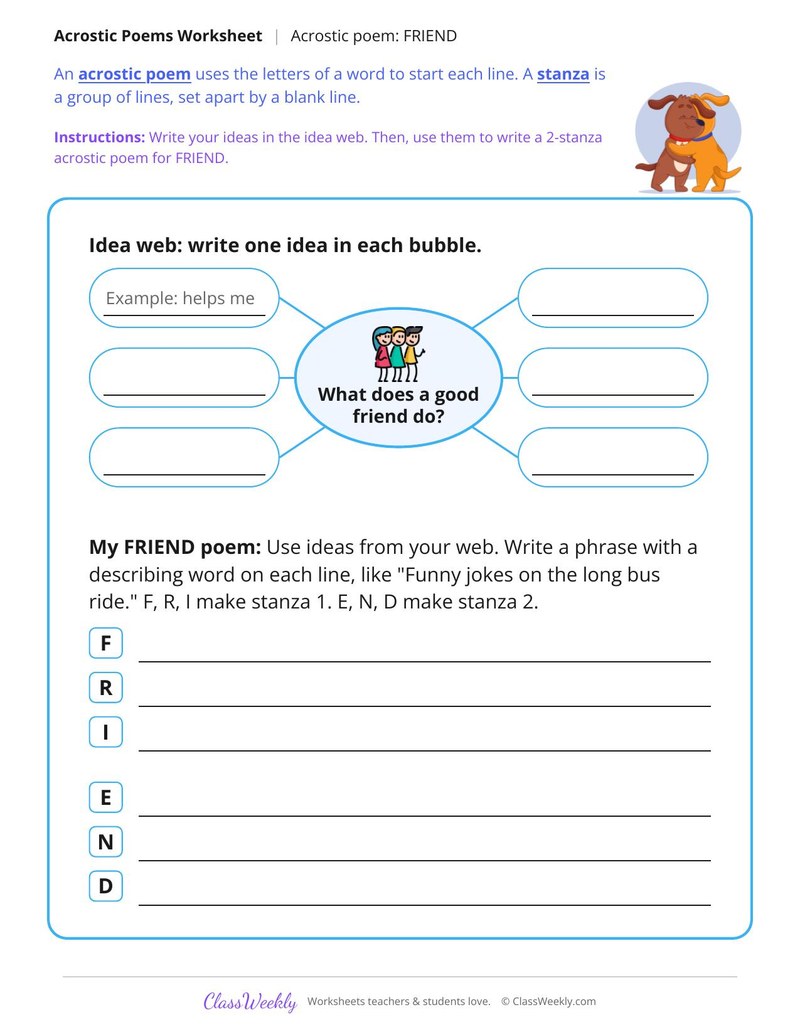
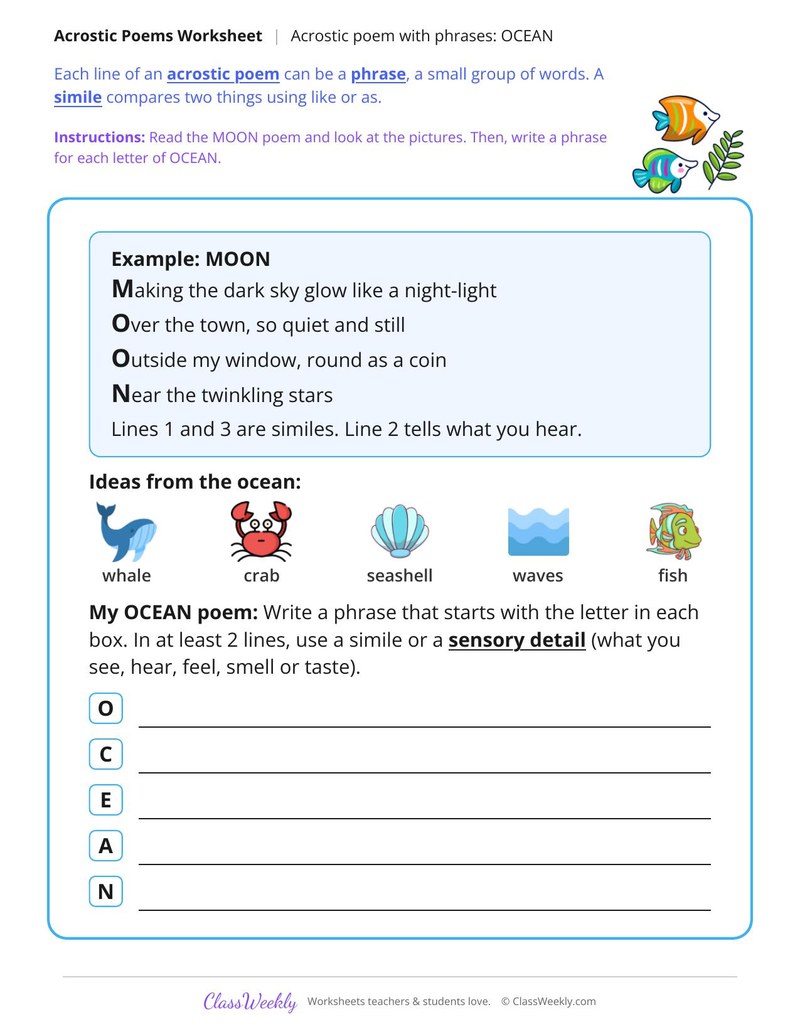
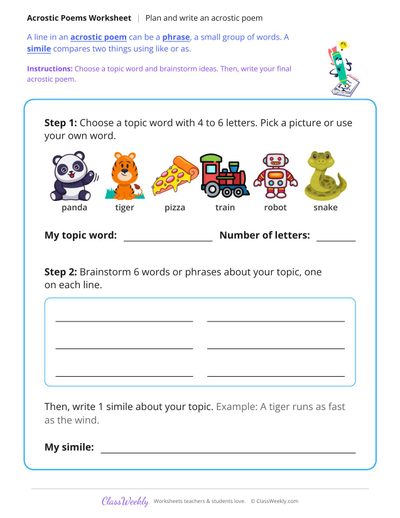
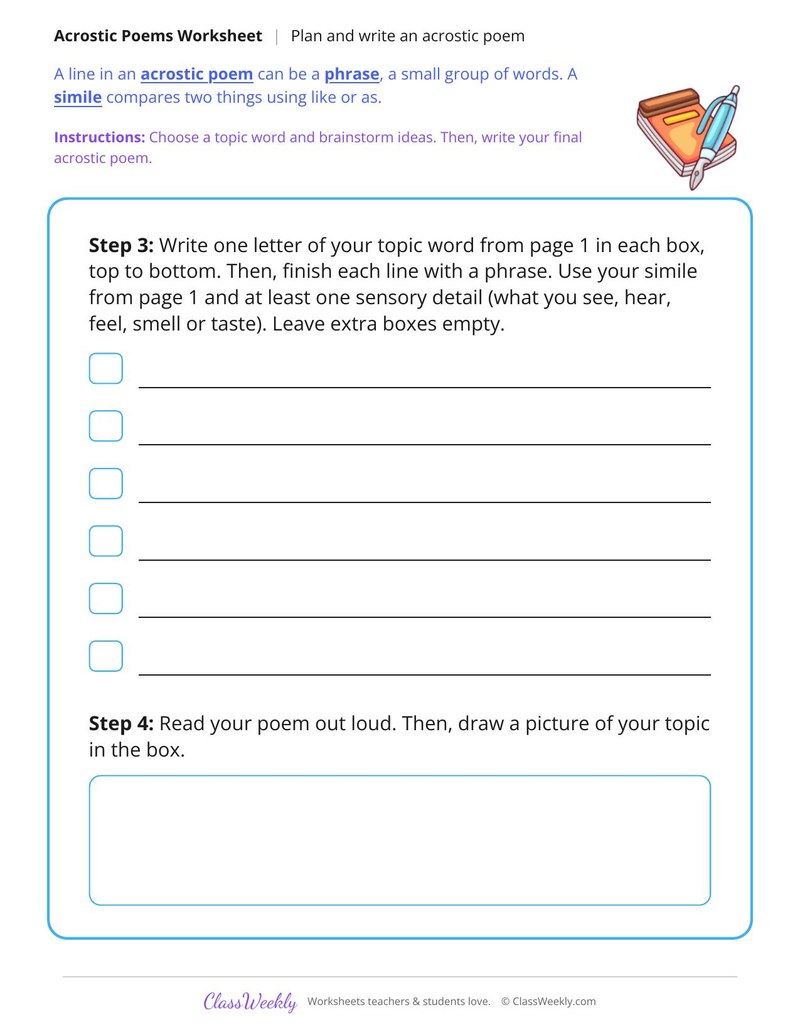
Five: acrostic poems, haiku, rhyming couplets, cinquains and poetry comprehension. Each type has two sheets per grade, usually one to read or practice the form and one to plan and write a poem. The comprehension sheets use original ClassWeekly poems.
What is a cinquain poem?
⌄
A cinquain is a five-line poem. In the word form used in 2nd and 3rd grade, line 1 is a noun, line 2 has two adjectives, line 3 has three -ing verbs, line 4 is a four-word feeling, and line 5 renames line 1. The 4th grade sheets add the syllable form, with 2, 4, 6, 8 and 2 syllables in its lines.
How do you teach kids to count syllables in a haiku?
⌄
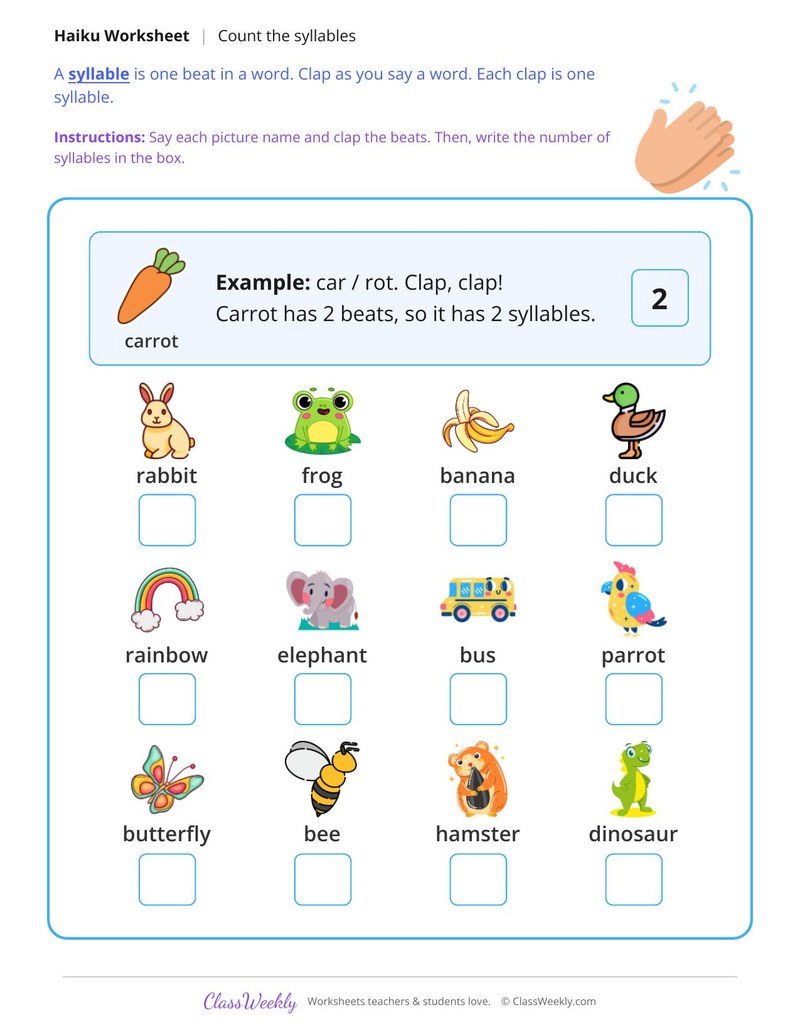
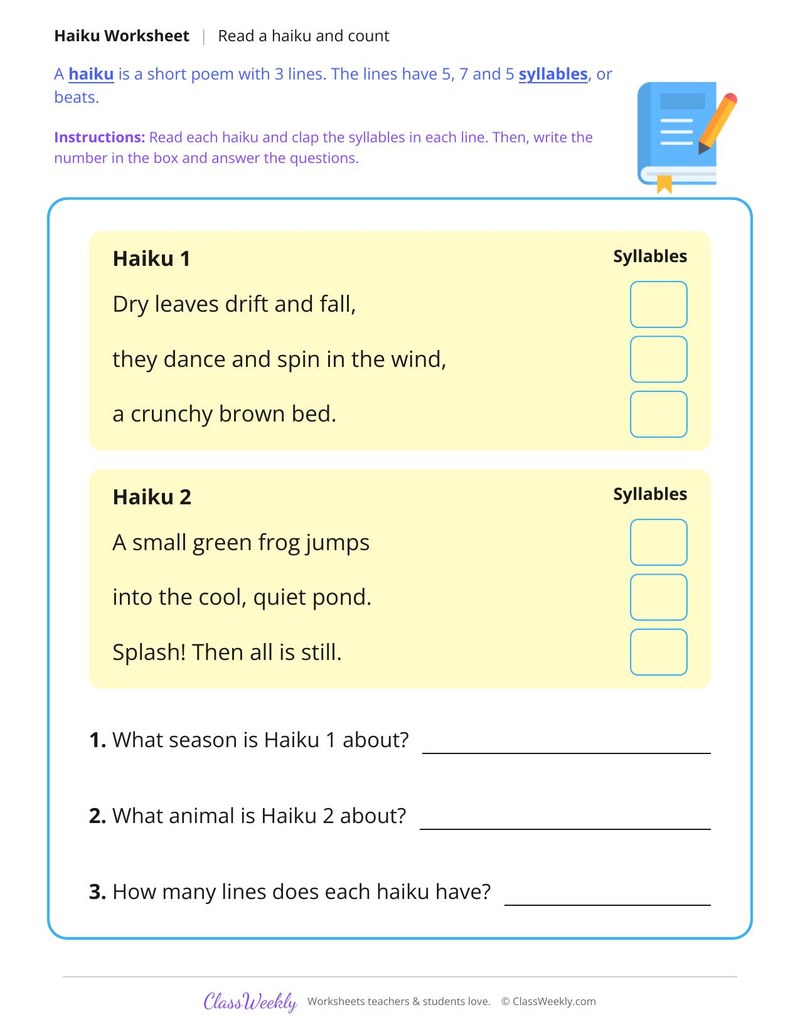
Clap once for each beat as you say a word: car-rot is two claps, so it has two syllables. A haiku has three lines with 5, 7 and 5 syllables. The haiku sheets start with clapping picture words, then counting whole lines, then writing a haiku with one dot for each syllable.
Do the poetry worksheets have answer keys?
⌄
18 of the 30 sheets do: every sheet with a right answer, such as counting syllables, finding rhymes or answering questions about a poem. The poem-writing sheets are open-ended, so there is nothing to mark right or wrong.
Ratings & Reviews
No reviews yet. Be the first to share what you think.
Reviews are for ClassWeekly members.
Make a Request
Spotted something to fix, or want a worksheet we don't have yet? Tell us and we'll make it.
What is ClassWeekly?
ClassWeekly offers free worksheets and printable learning resources for kids in preschool to grade 5. All worksheets are aligned to Common Core, NGSS, and C3 Framework standards and designed by educators. Become a member to access the full library and download unlimited PDFs.