Identify the Variables
Written by Adi Ackerman, Head Teacher
"Identify the Variables" is written for 4th Grade (Ages 9-10). If your little one is a year younger but already steady on scientific method, the page still works. You may just need to read the instructions out loud. And if they are older and scientific method skills never quite stuck, this is a short review rather than busywork.
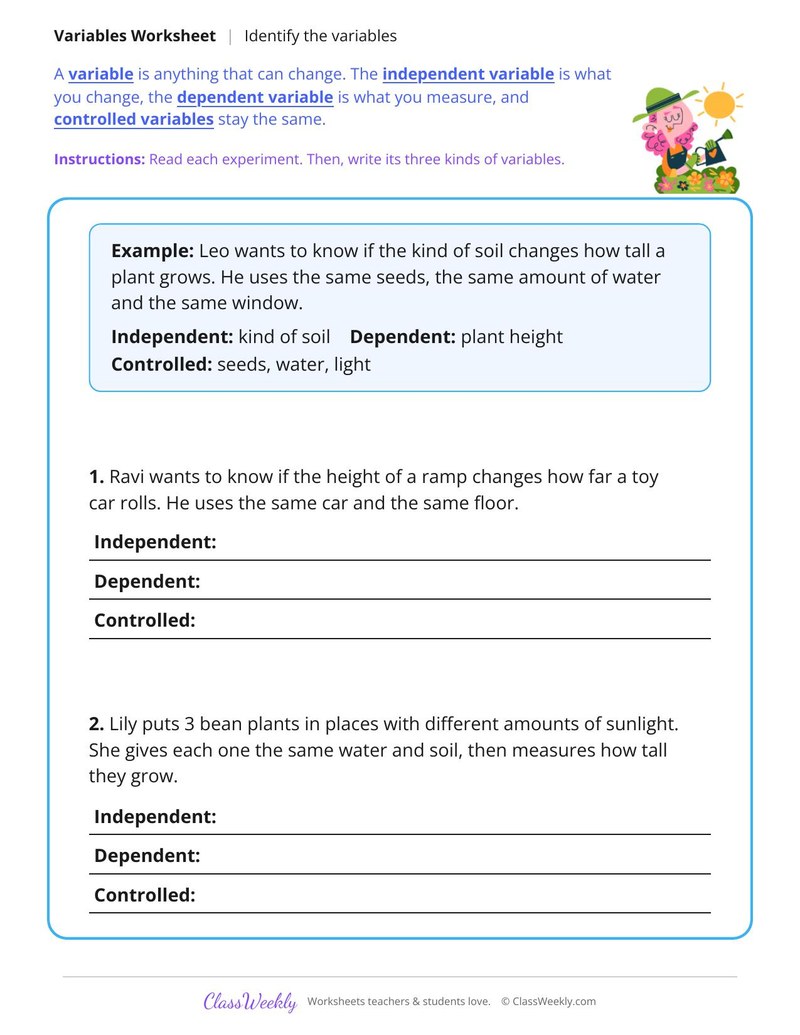
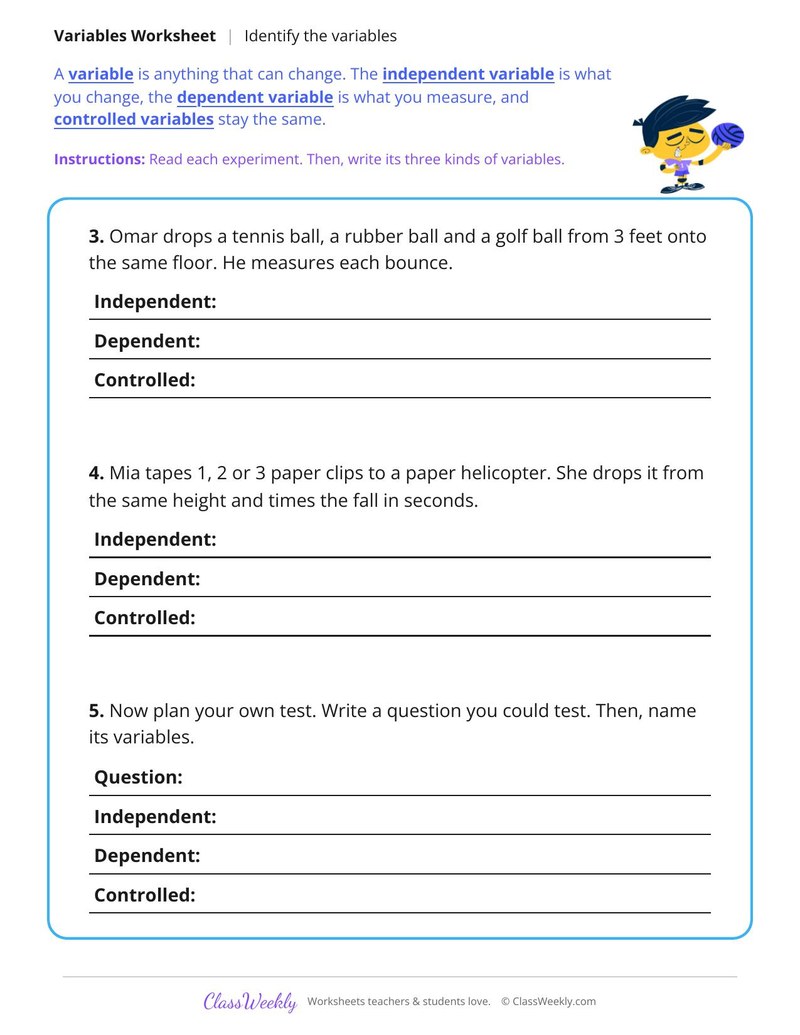
2 pages in this set
Identify the variables, 4th grade science. Kids name the independent, dependent and controlled variables in 4 tests, then plan one. Answer key included. Part of our scientific method skills collection. Aligned to NGSS standards.
How do I use this worksheet?
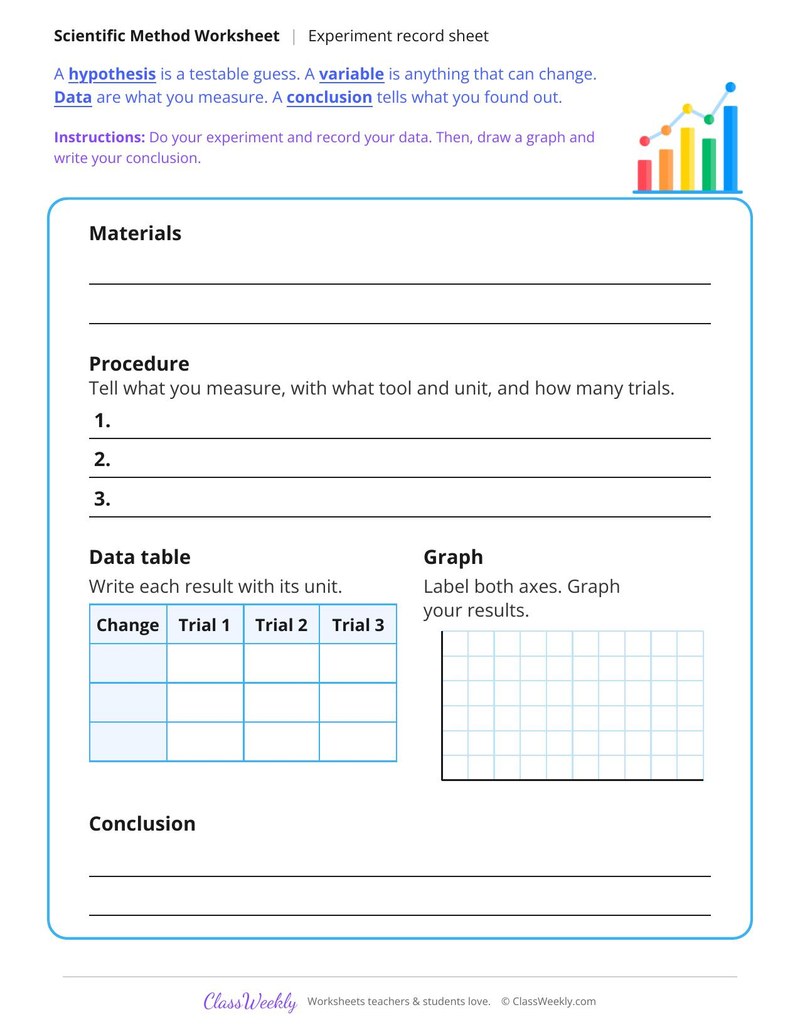
Use the six steps sheet first so the later words have a frame. Start the fair test sheet with a quick unfair race, such as two students starting from different lines. Read the worked example on each page together before students start, and check answers with the key. Keep the vocabulary sheet as a reference during experiments.
What students will practice
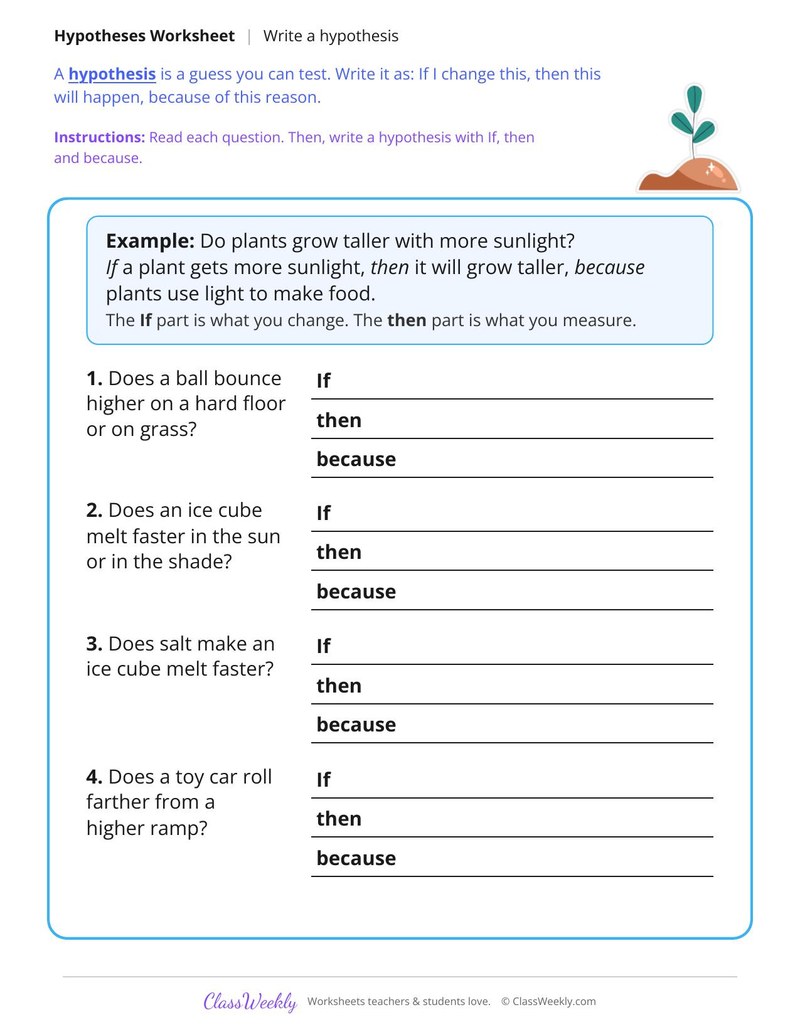
- Students will put the six steps of the scientific method in order and write a testable hypothesis with if, then and because.
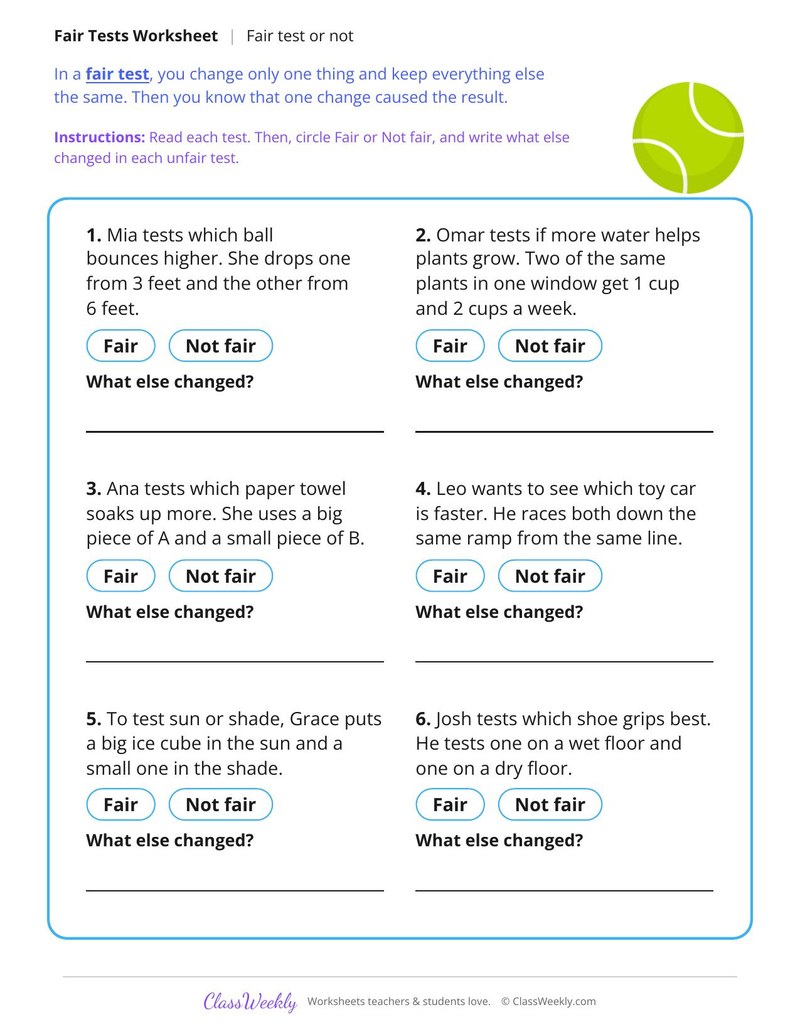
- Students will tell an observation from an inference and decide whether a test is fair by checking that only one thing changes.
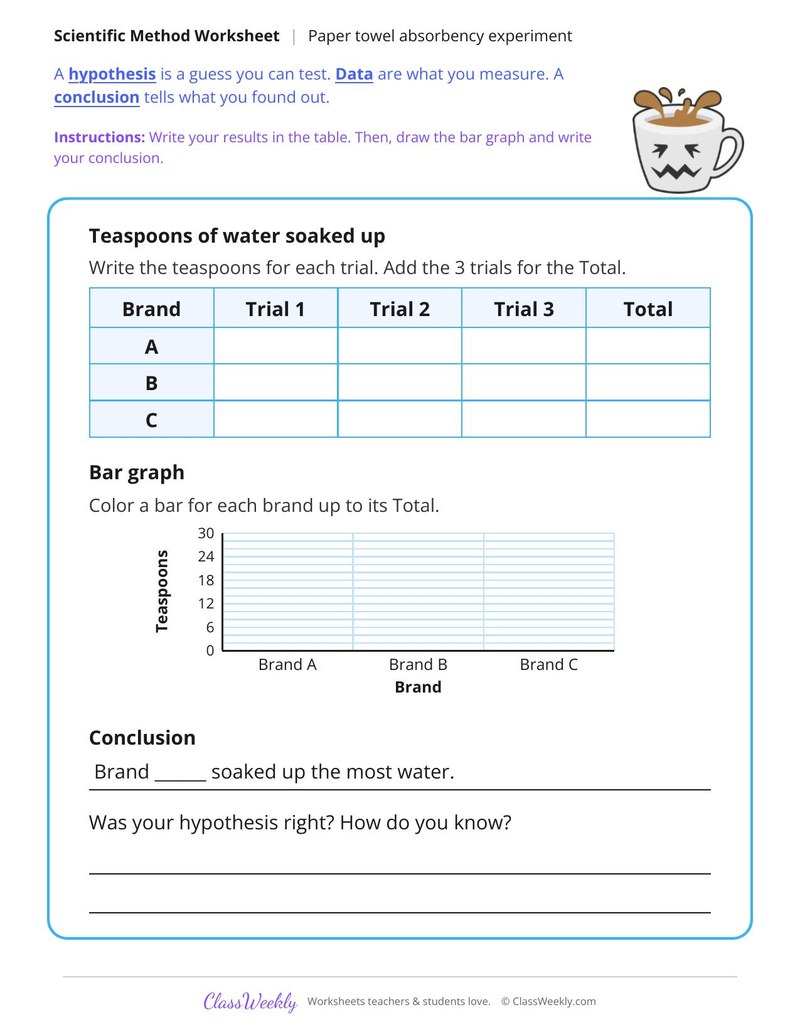
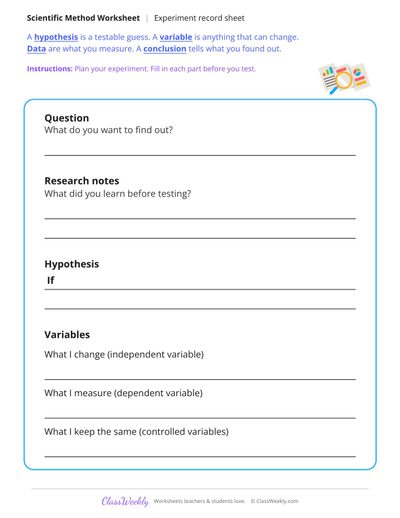
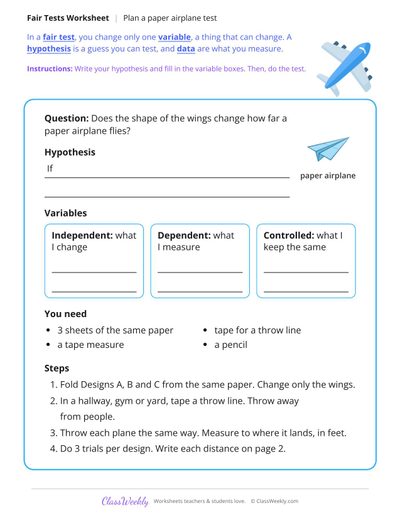
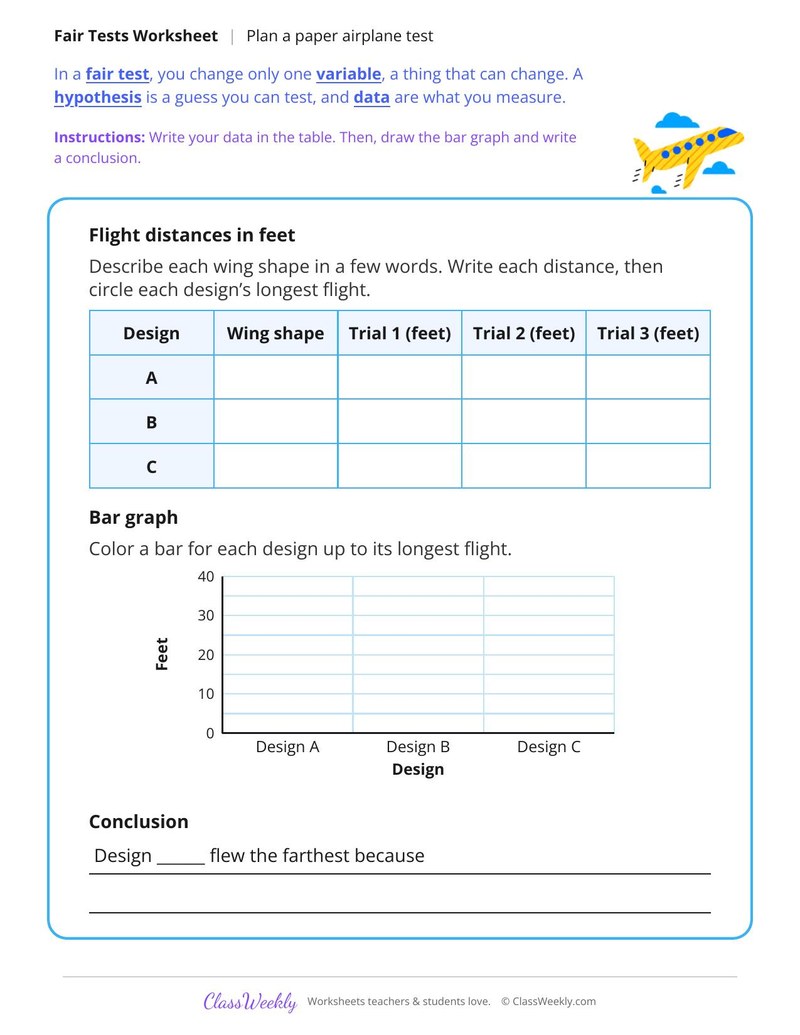
- Students will name independent, dependent and controlled variables and define key words such as hypothesis, data and trial.
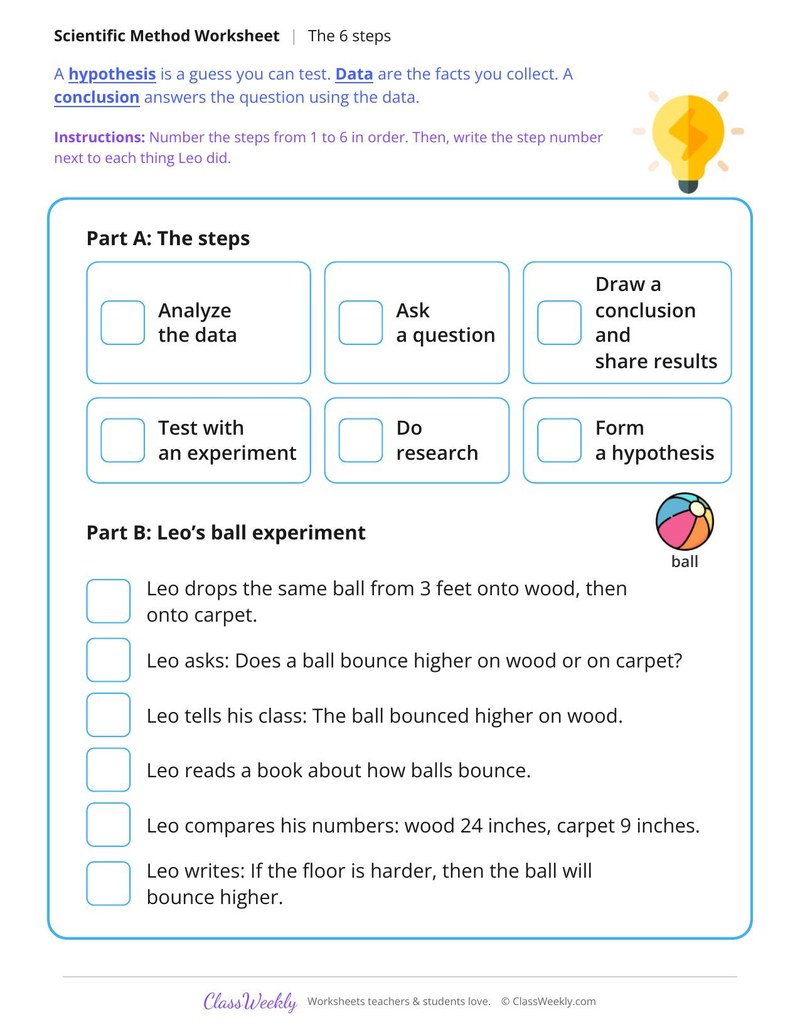
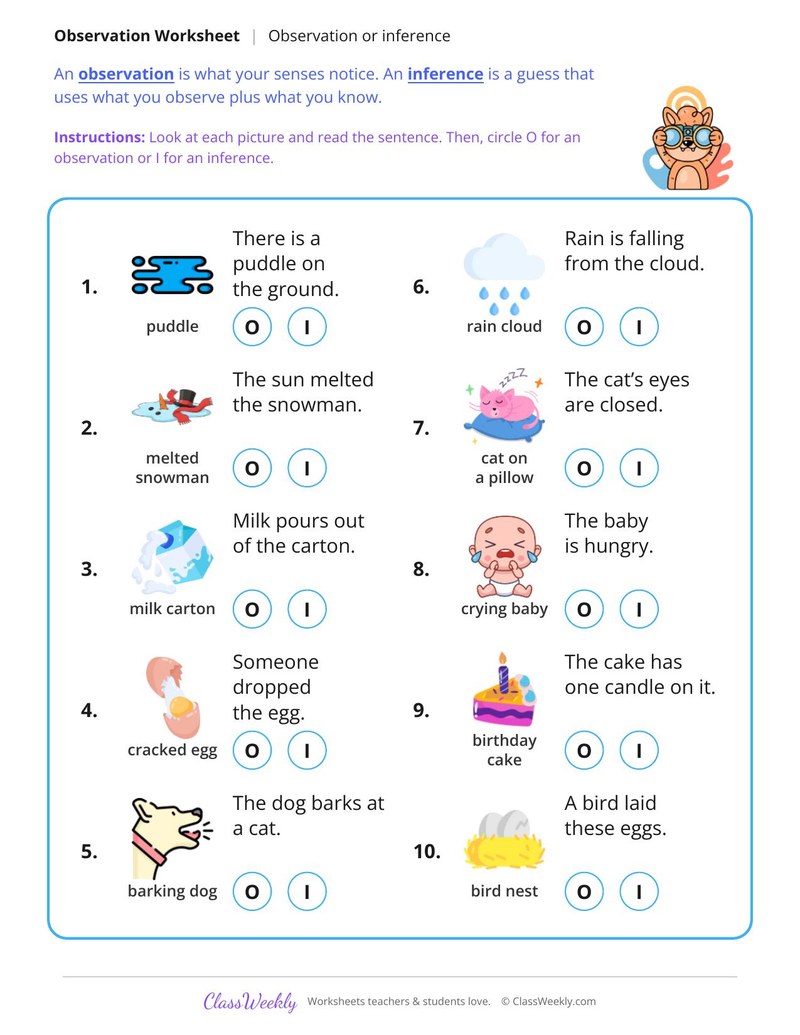
Curriculum Links
Find this in the curriculum
Browse the grade, subject, and topic this belongs to.
FAQ
How do I use this scientific method skills worksheet?
⌄
Use the six steps sheet first so the later words have a frame. Start the fair test sheet with a quick unfair race, such as two students starting from different lines. Read the worked example on each page together before students start, and check answers with the key. Keep the vocabulary sheet as a reference during experiments.
What does this worksheet teach?
⌄
Six scientific method worksheets for 3rd to 5th grade, each with an answer key. 3rd grade students order the six steps and match them to a ball-bounce experiment, sort ten picture sentences as observation or inference, and write if, then, because hypotheses for four testable questions. 4th grade students circle fair or not fair for six short experiments and identify the three kinds of variables in four more. 5th grade students match ten scientific method words to their definitions.
Can I use this scientific method skills worksheet for homeschool or classroom?
⌄
Yes, both. We made it for 4th Grade scientific method, and the page works the same whether it lands on a kitchen table or a center rotation. At home, most families go through it together and talk the answers out loud, and that talking is where most of the learning happens with scientific method skills. In class it runs well as independent work while you pull a small group. Print one copy or thirty, whichever the day needs.
What is the difference between an observation and an inference?
⌄
An observation is what your senses notice, like a puddle on the ground. An inference is a guess that uses what you observe plus what you know, like the sun melting a snowman.
What are independent, dependent and controlled variables?
⌄
The independent variable is what you change, the dependent variable is what you measure, and the controlled variables are what you keep the same. In a ramp test, the ramp height is independent and the distance the car rolls is dependent.
How do you know if a test is fair?
⌄
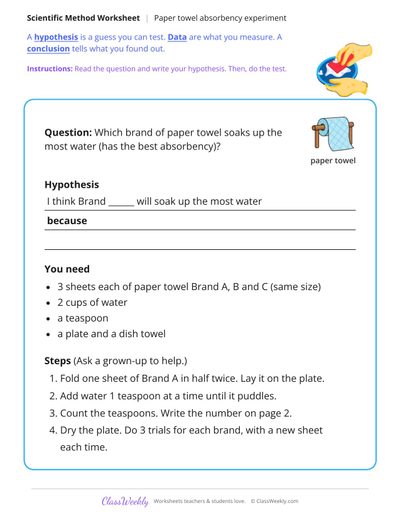
Check that only one thing changes. If a student drops one ball from 3 feet and another from 6 feet, the height changed too, so the test cannot show which ball bounces higher.
What grades are these scientific method worksheets for?
⌄
3rd, 4th and 5th grade: five sheets for 3rd grade, four for 4th grade and four for 5th grade. Sheets for Kindergarten to 2nd grade are on the 1st grade scientific method page.
What are the 6 steps of the scientific method?
⌄
Ask a question, do research, form a hypothesis, test with an experiment, analyze the data, and draw a conclusion and share the results. The 3rd grade steps sheet has students put them in order and match each one to part of a ball-bounce experiment.
How do kids write a hypothesis?
⌄
Use the frame If, then, because: if I change this, then this will happen, because of this reason. The if part is what you change, and the then part is what you measure. The hypothesis sheet walks through one example, then gives four testable questions to try.
What is a fair test?
⌄
A fair test changes only one thing and keeps everything else the same, so you know that one change caused the result. The thing you change is the independent variable, what you measure is the dependent variable, and what you keep the same are the controlled variables.
Do these worksheets have answer keys?
⌄
Eight of the thirteen do, the ones with a right answer, such as ordering the steps, observation or inference, and identifying variables. The experiment sheets and the science fair planner use each student's own data, so they have no key.
Ratings & Reviews
No reviews yet. Be the first to share what you think.
Reviews are for ClassWeekly members.
Make a Request
Spotted something to fix, or want a worksheet we don't have yet? Tell us and we'll make it.
Worksheet Details
| Grade | 4th Grade |
| Subject | Science |
| Topic | Scientific Method |
| Pages | 2 pages |
| Difficulty | Medium |
What is ClassWeekly?
ClassWeekly offers free worksheets and printable learning resources for kids in preschool to grade 5. All worksheets are aligned to Common Core, NGSS, and C3 Framework standards and designed by educators. Become a member to access the full library and download unlimited PDFs.