World Bee Day 2027
Taught in US schools
Key Takeaways
- World Bee Day sparks curiosity and reinforces STEM habits of mind, questioning, observing, and discovering
- Students in Kindergarten–Grade 5 develop scientific thinking through hands-on exploration tied to this event
- From experiments to nature walks to STEM challenges, this event is a launchpad for deep inquiry
World Bee Day Lesson Plan
A ready-to-teach 45-minute lesson built around World Bee Day, for Kindergarten, 1st Grade, 2nd Grade, 3rd Grade, 4th Grade, 5th Grade.
1. Open with what they already know (5 min)
Ask what students already associate with World Bee Day. Take everything offered without correcting. You are finding out what is already in the room before you add to it.
2. Teach the skill, not the theme (10 min)
World Bee Day is the hook; the skill is the lesson. Name what students are practising today and model one example, thinking out loud so they hear the reasoning rather than just the answer.
3. Work through it together (10 min)
Do two or three together with students supplying each step. If they stall, drop back to something concrete before pressing on.
4. Independent practice (15 min)
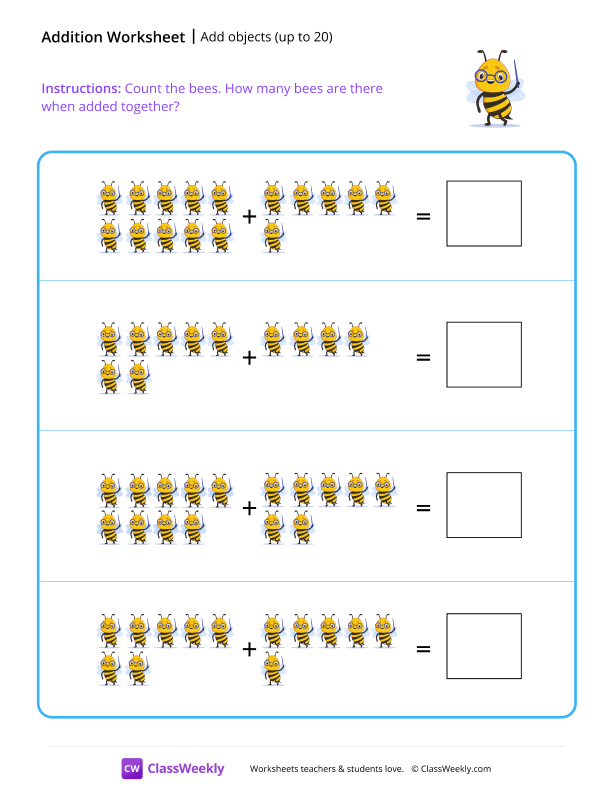
Hand out the pages below for your grade. Circulate while students work and note who is fluent and who needs another pass tomorrow.
5. Close on the connection (5 min)
Two or three students share. Tie the work back to World Bee Day in one sentence so the theme reads as purposeful rather than decoration.
Check for understanding
Collect the practice pages and sort them into three piles: got it, getting there, and not yet. The third pile is tomorrow’s small group.
Differentiation
Support. Pair students who stall with a partner and rebuild the skill concretely before asking for written work.
Extension. Students who finish early write their own world bee day question for a partner to answer.
The Science Behind World Bee Day
World Bee Day has deep scientific roots. World Bee Day (May 20) celebrates the vital role of bees in our ecosystem. Explore pollination, bee life cycles, honey production, and why bees matter. The discovery and understanding underlying this event represents some of the most important intellectual advances in human history.
Scientists, mathematicians, naturalists, and explorers contributed to what we now celebrate on this day. Their curiosity, and their willingness to question accepted wisdom, changed how we see the world.
Teaching the history of this scientific concept helps students understand that science isn't a fixed body of facts. It's a living conversation across generations, one that students can join right now.
Why World Bee Day Belongs in Every Classroom
Science literacy is one of the most critical skills students in Kindergarten–Grade 5 can develop. Observing, questioning, experimenting, and explaining, these habits of mind apply far beyond the science classroom.
World Bee Day provides a compelling hook for inquiry. Whether your classroom has a full lab setup or a single windowsill, this event invites students to engage with the natural and designed world with genuine curiosity.
Teaching science is also teaching humility, the understanding that we don't know everything, that questions matter as much as answers, and that being wrong is part of the process. These are lessons that last a lifetime.
How to Teach World Bee Day by Grade Level
Kindergarten
For kindergarteners, make World Bee Day concrete and sensory. Use picture books, puppets, songs, and simple art activities to introduce the key concept. Focus on one big idea, "we are all connected" or "the world is changing", and return to it throughout the day through different experiences.
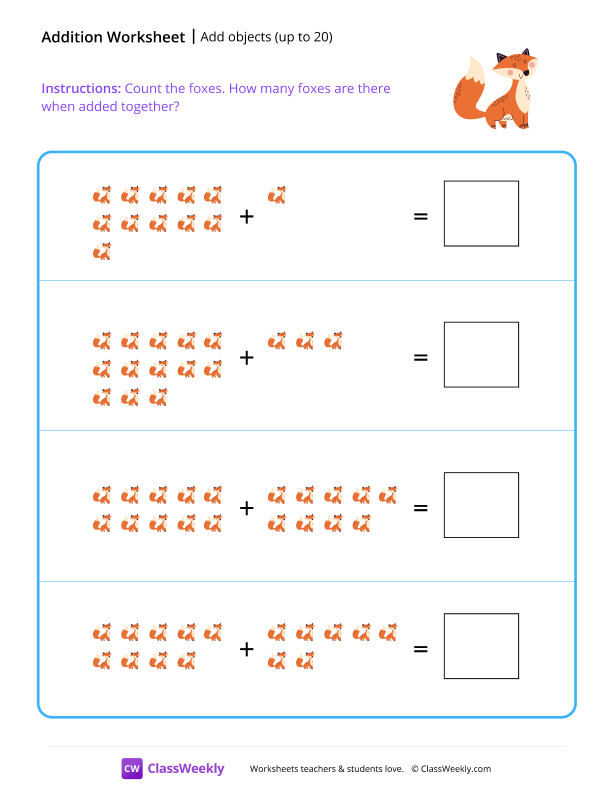
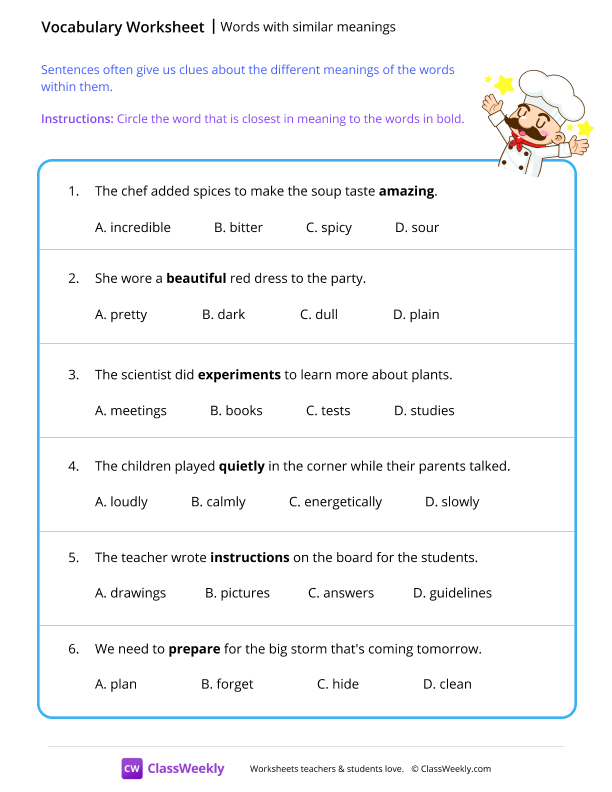
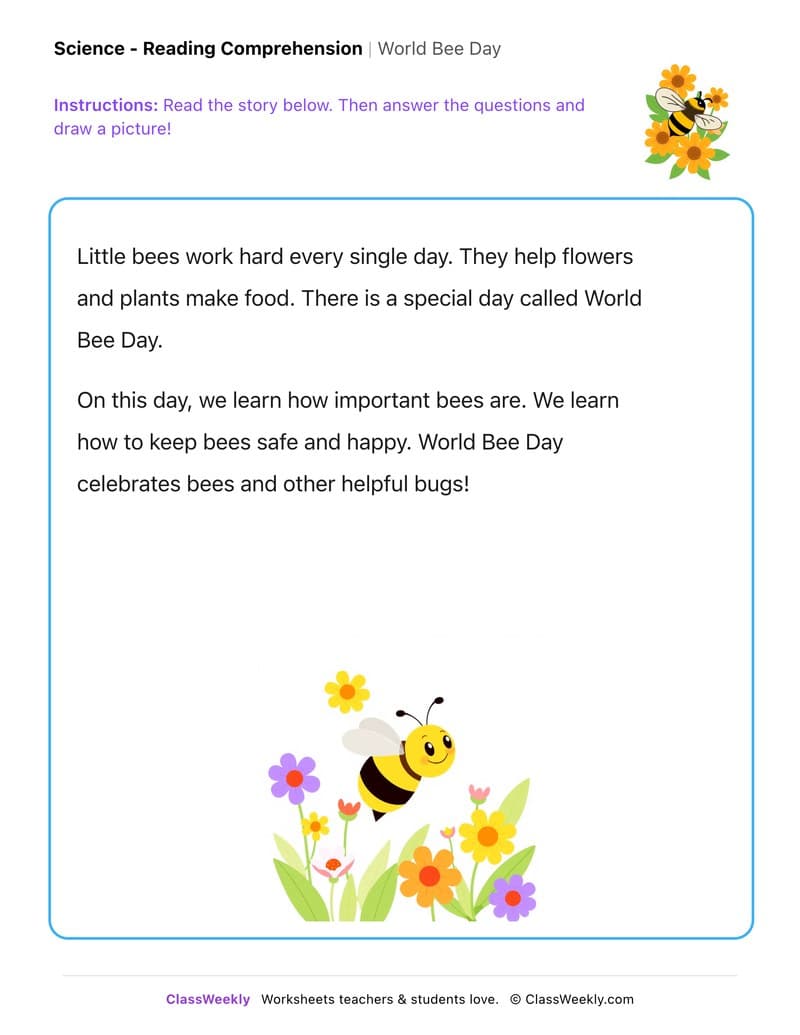
World Bee Day Worksheets for Kindergarten
1st Grade
First graders are ready for simple explanations and structured discussion. Anchor World Bee Day with a shared read-aloud, then use sentence frames ("I notice… I wonder… This makes me think…") to guide responses. Drawing and labeling lets emergent writers participate fully.
2nd Grade
Second graders thrive with short informational texts paired with graphic organizers. For World Bee Day, have students identify the main idea and two supporting details, then share with a partner. A class anchor chart captures key vocabulary and builds shared knowledge.
3rd Grade
Third graders can tackle research tasks connected to World Bee Day. Set up a "learning station" with two or three curated sources. Students take notes, discuss findings in small groups, and synthesize information into a paragraph or poster. Introduce multiple perspectives where relevant.
4th Grade
Fourth graders are ready to explore complexity. For World Bee Day, use a structured discussion protocol, Socratic seminar, four corners, or philosophical chairs, to examine different viewpoints. Assign a short written reflection that asks students to take and defend a position.
5th Grade
Fifth graders can engage with primary sources, data, and big-picture thinking around World Bee Day. Assign an essay, multimedia presentation, or debate that asks: why does this matter? What are the different perspectives? What would you do? These questions build the critical thinking that defines college and career readiness.
World Bee Day Classroom Activities
Guided Inquiry Investigation
Students follow the scientific method to investigate a question connected to World Bee Day: ask a question, make a prediction, design a test, collect data, and draw conclusions. Even simple investigations build powerful scientific thinking.
Kindergarten–Grade 5STEM Design Challenge
Present a real-world problem related to World Bee Day. Students work in teams to design, build, test, and improve a solution using provided materials. Debrief focuses on the engineering design process, not just the outcome.
Grades 2–5Scientist Biography Study
Students research a scientist connected to the theme of World Bee Day. They create a biography poster or "scientist trading card" and present it to the class. Discuss: what questions drove this scientist? What obstacles did they face?
Grades 2–5Nature Sketchbook
Students make detailed observational drawings of natural objects connected to World Bee Day's theme, plants, weather patterns, insects, rocks. They label parts and add one question per drawing. Builds observation skills and scientific vocabulary.
Kindergarten–Grade 5Concept Mapping
Students create a concept map showing how key science ideas from World Bee Day connect to each other and to things they already know. This metacognitive tool shows students their own growing understanding.
Grades 2–5
World Bee Day Games & Interactive Ideas
Science 20 Questions
One student thinks of a science concept, object, or organism connected to World Bee Day's theme. Classmates ask yes/no questions to identify it in 20 questions or fewer. Builds scientific vocabulary and deductive reasoning.
Kindergarten–Grade 5Lab Prediction Challenge
Before a demonstration or experiment, all students record their predictions. Reveal results and count how many students predicted correctly. Discuss: what prior knowledge helped? What surprised you? Builds scientific reasoning.
Kindergarten–Grade 5Science Pictionary
Teams draw and guess science vocabulary, diagrams, or concepts related to World Bee Day. Students must illustrate abstract concepts, which reveals and deepens understanding in ways that writing alone cannot.
Kindergarten–Grade 5STEM Feud
Modeled after Family Feud, ask questions where teams guess the most common answers about science topics related to World Bee Day. "Name a thing that needs sunlight to survive." Great for activating prior knowledge and misconceptions.
Grades 2–5Frequently Asked Questions
When is World Bee Day in 2027?
World Bee Day falls on May 20, 2027.
How do I teach World Bee Day to elementary students?
For kindergarteners, make World Bee Day concrete and sensory. Use picture books, puppets, songs, and simple art activities to introduce the key concept. Focus on one big idea, "we are all connected" or "the world is changing", and return to it throughout the day through different experiences. A good starting activity: guided inquiry investigation, where students follow the scientific method to investigate a question connected to World Bee Day: ask a question, make a prediction, design a test, collect data, and draw conclusions. Even simple investigations build powerful scientific thinking.
What are the best World Bee Day activities for kids?
Guided Inquiry Investigation (Kindergarten–Grade 5): Students follow the scientific method to investigate a question connected to World Bee Day: ask a question, make a prediction, design a test, collect data, and draw conclusions. Even simple investigations build powerful scientific thinking. Another option, STEM Design Challenge (Grades 2–5): present a real-world problem related to World Bee Day. Students work in teams to design, build, test, and improve a solution using provided materials. Debrief focuses on the engineering design process, not just the outcome.
Why is World Bee Day important for students to learn about?
World Bee Day (May 20) celebrates the vital role of bees in our ecosystem. Explore pollination, bee life cycles, honey production, and why bees matter. Teaching students about World Bee Day builds cultural literacy, historical thinking, and empathy, skills that support learning across every subject and prepare students to be thoughtful, informed community members.
What grade levels is World Bee Day appropriate for?
With the right scaffolding, World Bee Day can be explored at every grade level from PreK through Grade 5. The content is the same; the depth, text complexity, and task demand shift by grade. ClassWeekly offers differentiated resources for Kindergarten–Grade 5.
Free Teaching Resources for Every Occasion
#1 Curriculum aligned resource library (K‑5) with teacher-made materials.