Plan Your Writing with a Web
Written by Adi Ackerman, Head Teacher
"Plan Your Writing with a Web" is written for 1st Grade (Ages 6-7), and it covers Common Core W.1.5. If your little one is a year younger but already steady on writing, the page still works. You may just need to read the instructions out loud. And if they are older and writing process never quite stuck, this is a short review rather than busywork.
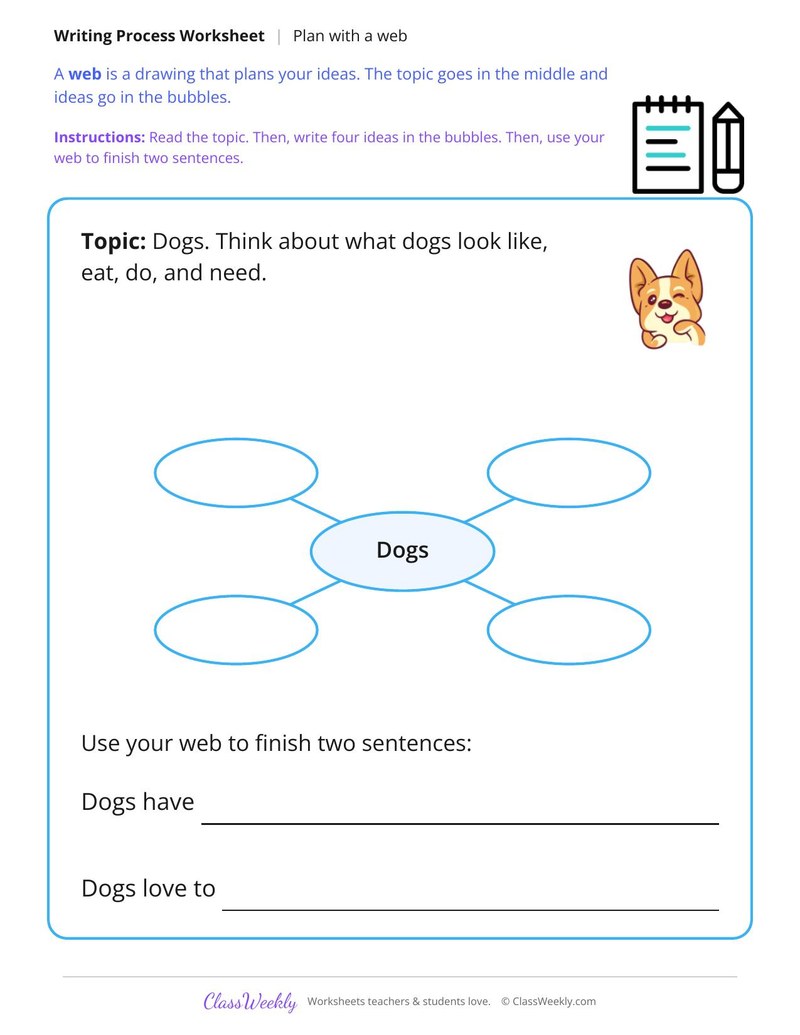
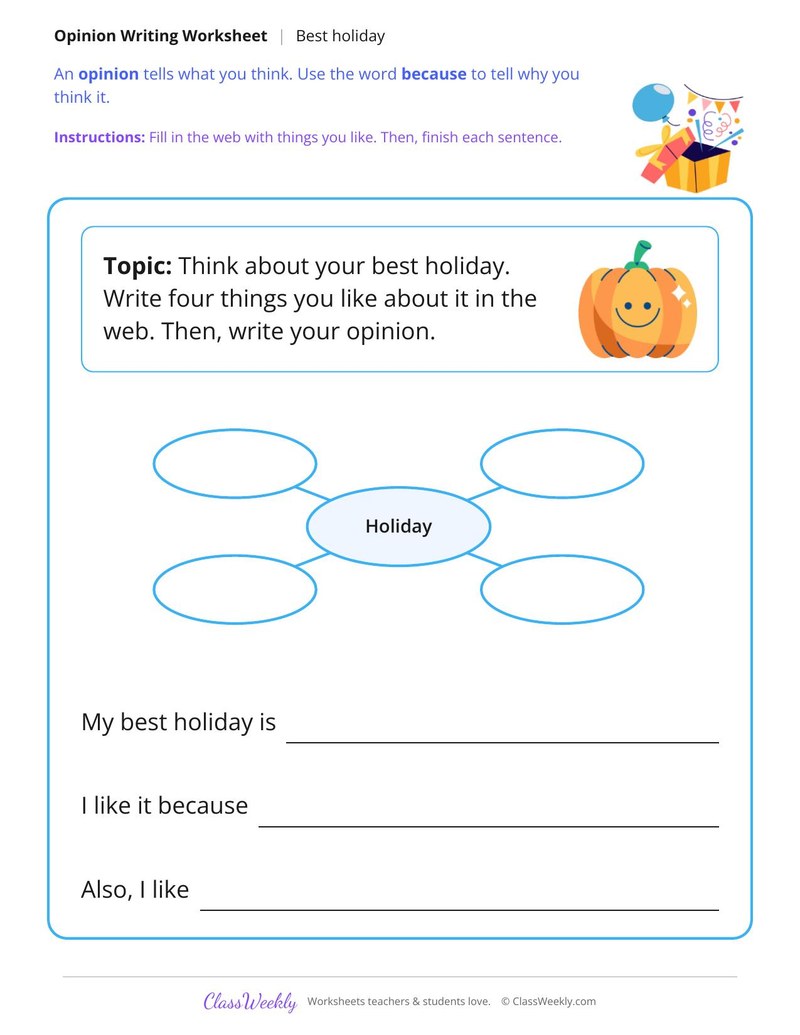
1st grade writing worksheet: read the topic, write four ideas in the bubbles and use your web to finish two sentences. Answer key included. Part of our writing process collection. Aligned to Common Core standards.
How do I use this worksheet?
Work through the pages in the order a writer would: plan, write, revise, edit. Read each example with your child before the practice. Ask your child which change made the sentence better.
What students will practice
- Students will plan ideas with a web before writing.
- Students will write a beginning, a middle and an end.
- Students will revise with a detail and edit for capitals and periods.
Curriculum Links
Common Core State Standards
Grammar & Writing · 1st Grade
Find this in the curriculum
Browse the grade, subject, and topic this belongs to.
FAQ
How do I use this writing process worksheet?
⌄
Work through the pages in the order a writer would: plan, write, revise, edit. Read each example with your child before the practice. Ask your child which change made the sentence better.
What does this worksheet teach?
⌄
1st grade writing page: plan your writing with a web. A web is a drawing that plans your ideas. The topic goes in the middle and ideas go in the bubbles. The directions on the page read: Read the topic. Then, write four ideas in the bubbles. Then, use your web to finish two sentences. The answer key gives a marking guide and a model answer, since answers will vary.
Can I use this writing process worksheet for homeschool or classroom?
⌄
Yes, both. We made it for 1st Grade writing, and the page works the same whether it lands on a kitchen table or a center rotation. At home, most families go through it together and talk the answers out loud, and that talking is where most of the learning happens with writing process. In class it runs well as independent work while you pull a small group. Print one copy or thirty, whichever the day needs.
What is the writing process in 1st grade?
⌄
First graders plan, write, add details and check their work, with guidance (CCSS W.1.5). These six sheets teach each step on its own: planning with a web, drafting with starters, revising with a detail and editing with capitals and periods.
What does revising mean for a 1st grader?
⌄
Revising means making a draft better, usually by adding a detail that tells more. A first grader might change "I saw a dog" to "I saw a big brown dog." The revising sheet shows a draft and asks for a detail in each sentence.
How is editing different from revising?
⌄
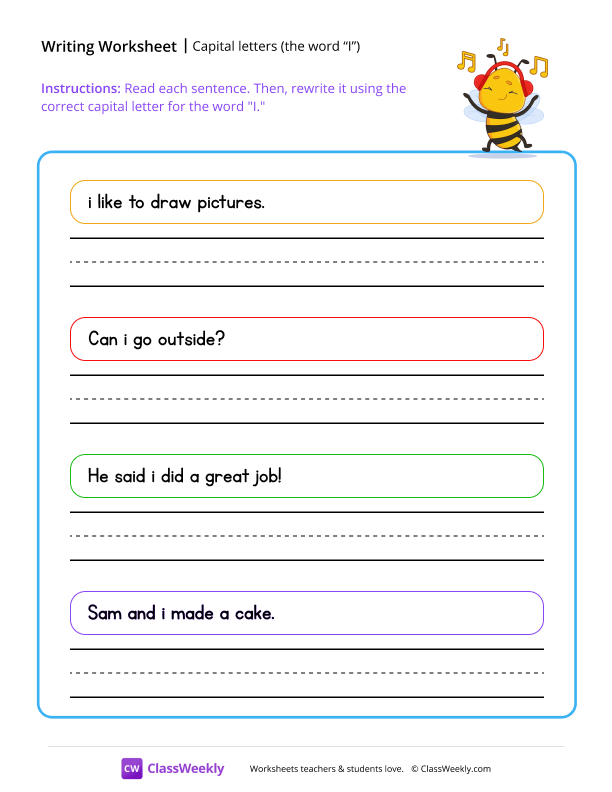
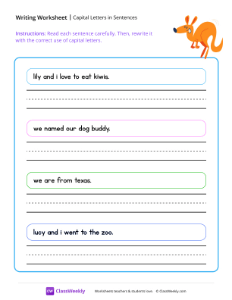
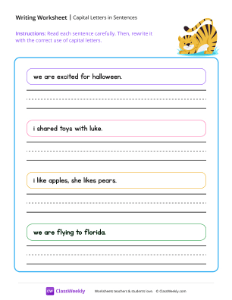
Revising changes ideas and words. Editing fixes mistakes in capital letters, periods and spelling. The editing sheet gives sentences to rewrite with a capital letter at the start and a period at the end (L.1.2).
Do these writing process worksheets have answer keys?
⌄
Yes. All six sheets have a key with a marking guide and a model answer.
What writing skills should first graders develop?
⌄
First graders should write opinion pieces with a topic sentence and a reason (CCSS W.1.1), informative texts with a topic and facts (W.1.2), and narrative pieces with a beginning, middle, and end (W.1.3). They should also use capitalization, spacing, and basic punctuation in their writing (L.1.2).
How much writing should a first grader produce?
⌄
By the end of first grade, most students can write several connected sentences (3-5) on a topic with appropriate spacing, capitalization, and ending punctuation. The focus at this level is on communicating ideas rather than length. Daily writing practice - even short journal entries - builds fluency faster than occasional longer assignments.
How do you help a first grader who struggles to write sentences?
⌄
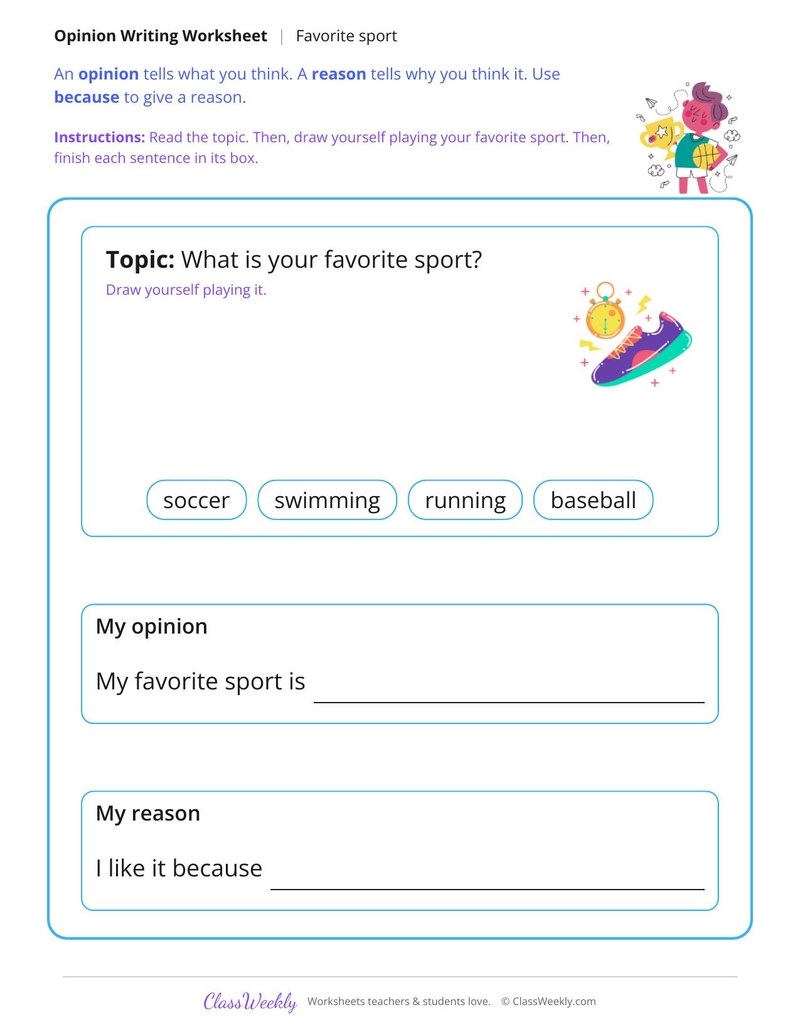
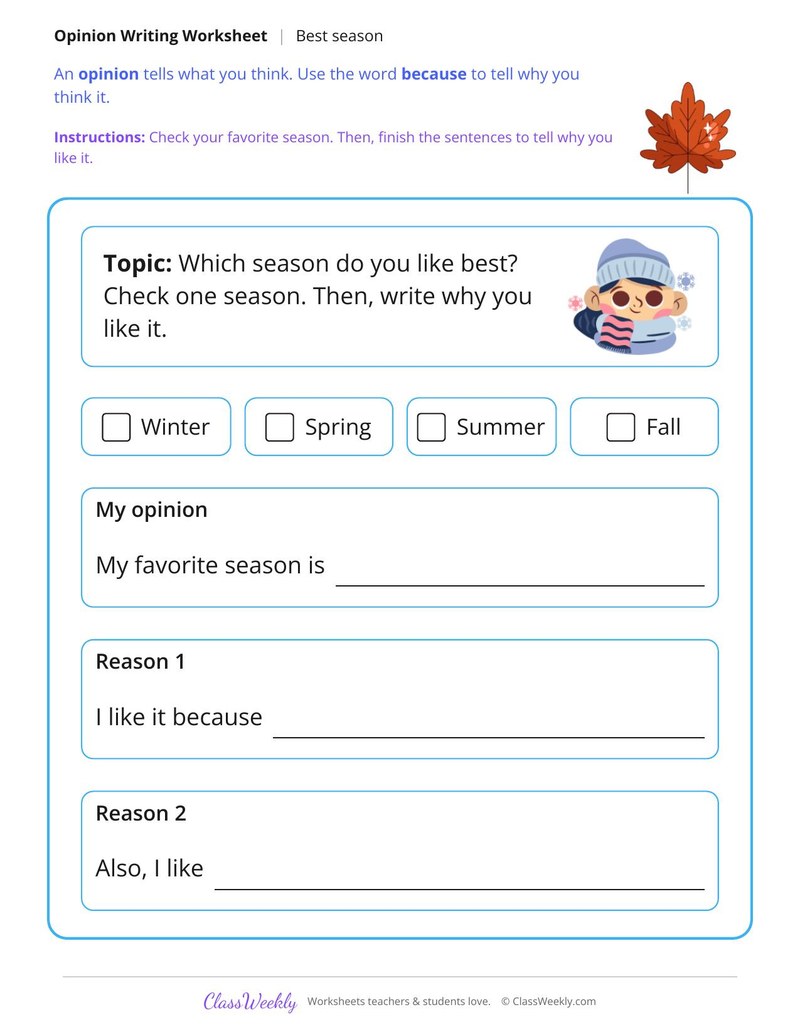
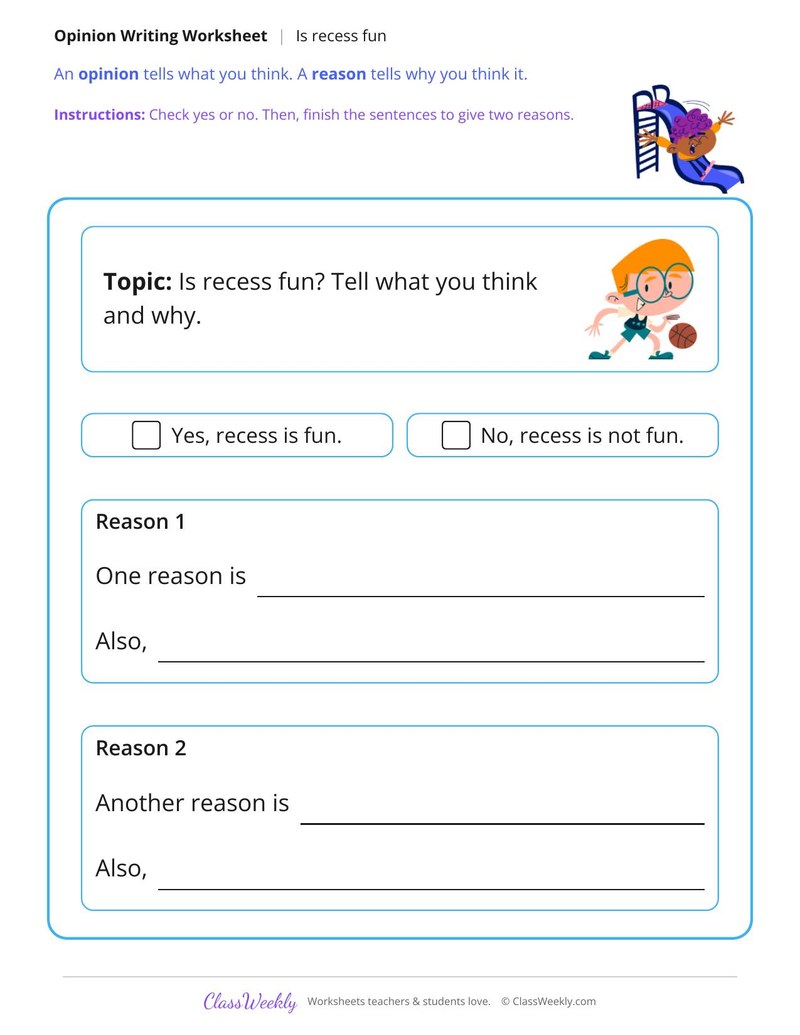
Start with sentence frames (I like ___ because ___) that scaffold the writing structure. Use pictures as prompts to give the child something concrete to write about. Practice oral storytelling before writing, since children often have more to say than they can write. Worksheets with a picture and a few sentence starter lines are excellent scaffolds for reluctant writers.
Do the 1st grade writing worksheets have answer keys?
⌄
Yes. All 36 new opinion, narrative, informative and writing process sheets have an answer key with a marking guide and a model answer. Since writing varies, the key shows what a complete piece includes.
How should I use the three kinds of writing in 1st grade?
⌄
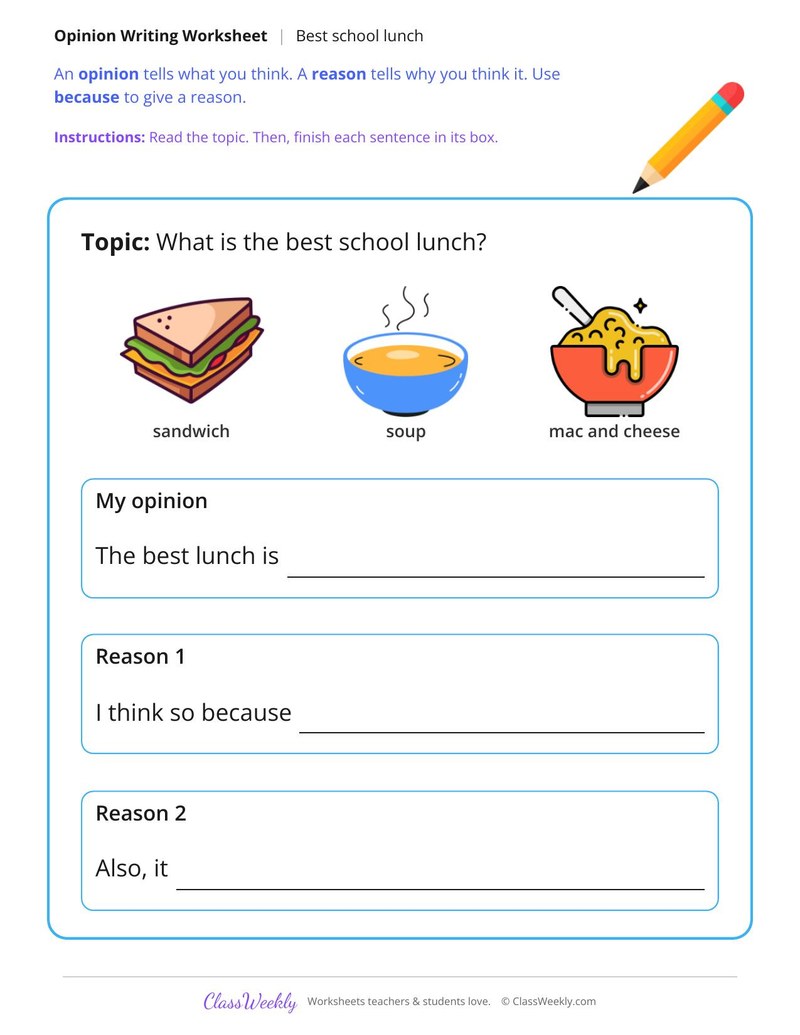
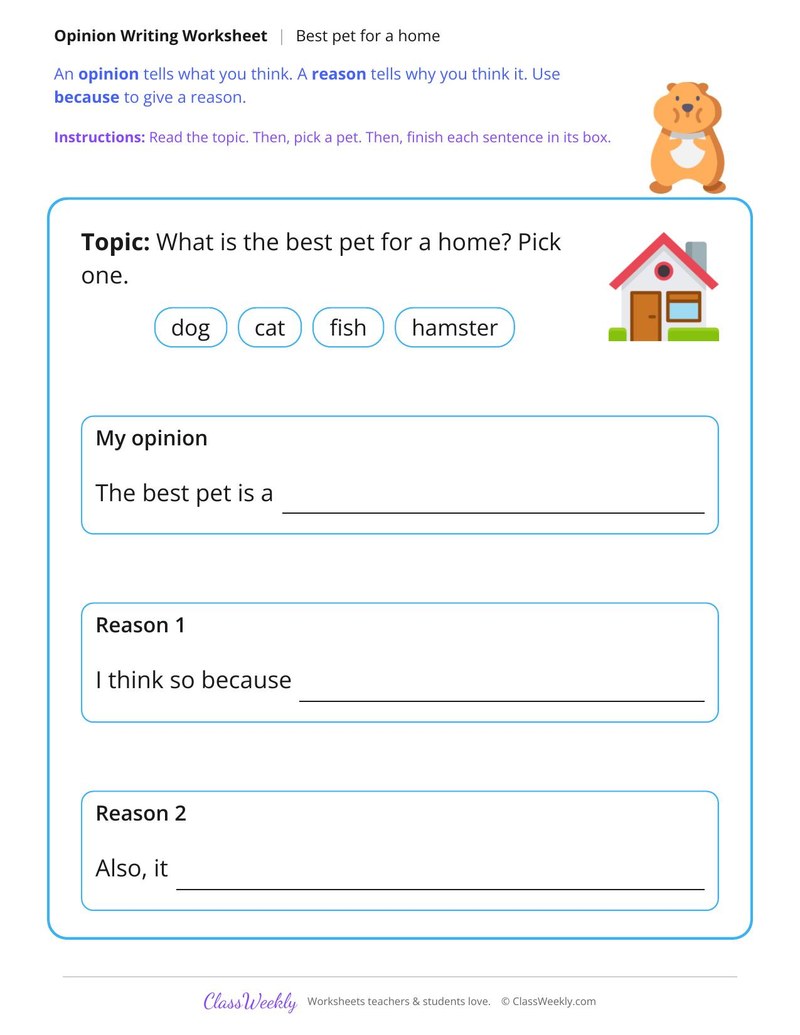
Rotate them. An opinion page asks what a child thinks and why, a narrative page asks what happened first, next and last, and an informative page asks for true facts about a topic. Mixing them keeps writing varied while building the structures in W.1.1 to W.1.3.
Ratings & Reviews
No reviews yet. Be the first to share what you think.
Reviews are for ClassWeekly members.
Make a Request
Spotted something to fix, or want a worksheet we don't have yet? Tell us and we'll make it.
Worksheet Details
| Grade | 1st Grade |
| Subject | Grammar & Writing |
| Topic | Writing |
| Standard | W.1.5 |
| Pages | 1 page |
| Difficulty | Medium |
Learn More
What is ClassWeekly?
ClassWeekly offers free worksheets and printable learning resources for kids in preschool to grade 5. All worksheets are aligned to Common Core, NGSS, and C3 Framework standards and designed by educators. Become a member to access the full library and download unlimited PDFs.