Octopus Facts (Nonfiction Passage)
Written by Adi Ackerman, Head Teacher
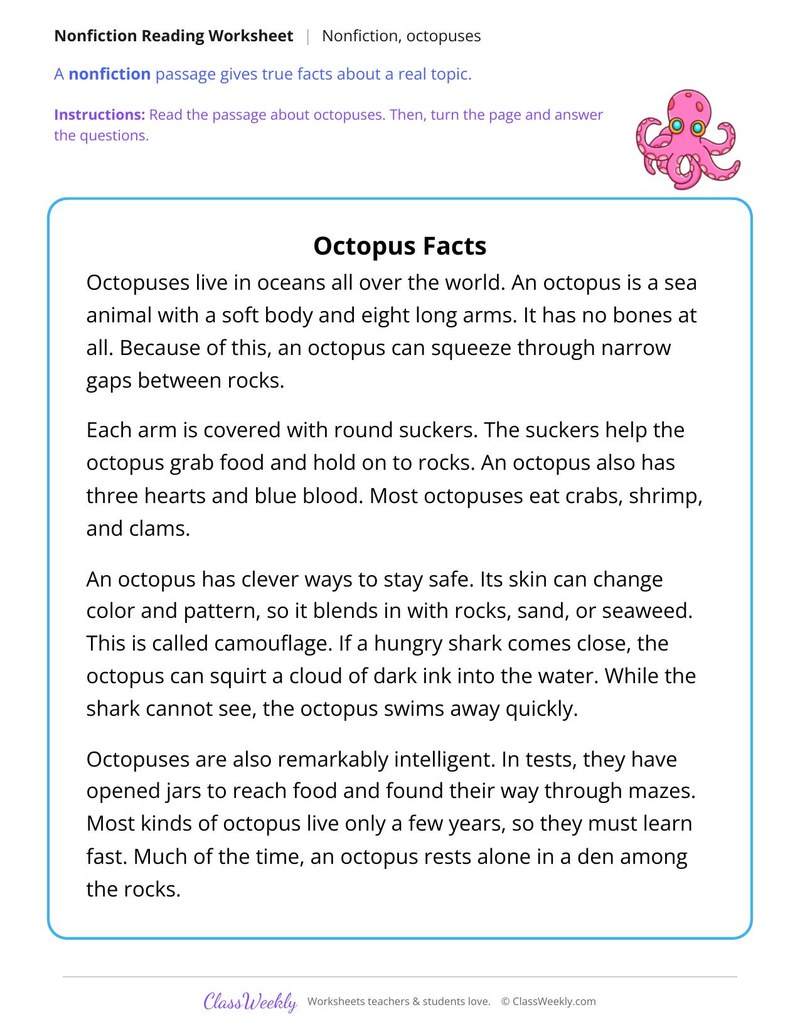
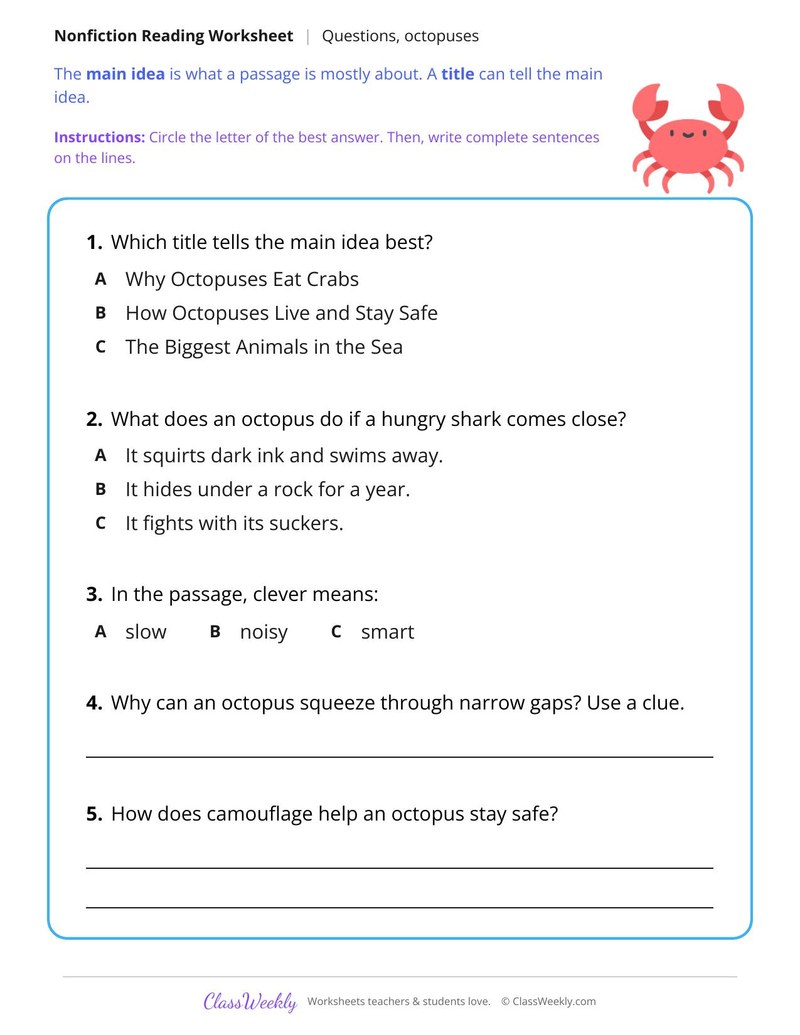
"Octopus Facts" is a 3rd Grade nonfiction reading passage worksheet for ages 8-9: an article of about 180 words about the clever body tricks that keep an octopus safe and let it move through tight spaces, plus a page of five questions on the main idea, vocabulary in context and cause and effect. It covers Common Core RI.3.2 and includes an answer key.
2 pages in this set
Read nonfiction facts about octopuses, then pick the best title for the main idea and explain how camouflage keeps an octopus safe. Part of our nonfiction passages collection. Aligned to Common Core standards.
How to use “Octopus Facts” with 3rd graders
Start with a minute of talk: How can a soft animal with no shell stay safe? Then have students read the passage on page 1, about 180 words in 4 short paragraphs, pencil in hand. They can underline facts as they go. Page 2 has five questions, three multiple choice and two written. Remind students to answer in complete sentences and to point to the part of the text that proves their answer. Check the work with the answer key.
Skills students practice in this 3rd grade nonfiction passage
- Choose the main idea of the passage on "Octopus Facts" and tell it apart from a supporting detail
- Work out what "clever" means from the words around it
- Write complete sentences to answer prompts such as "Why can an octopus squeeze through narrow gaps?"
Penguins of Antarctica (Nonfiction Passage)
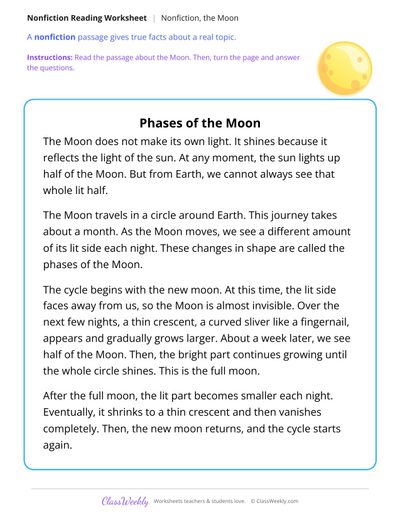
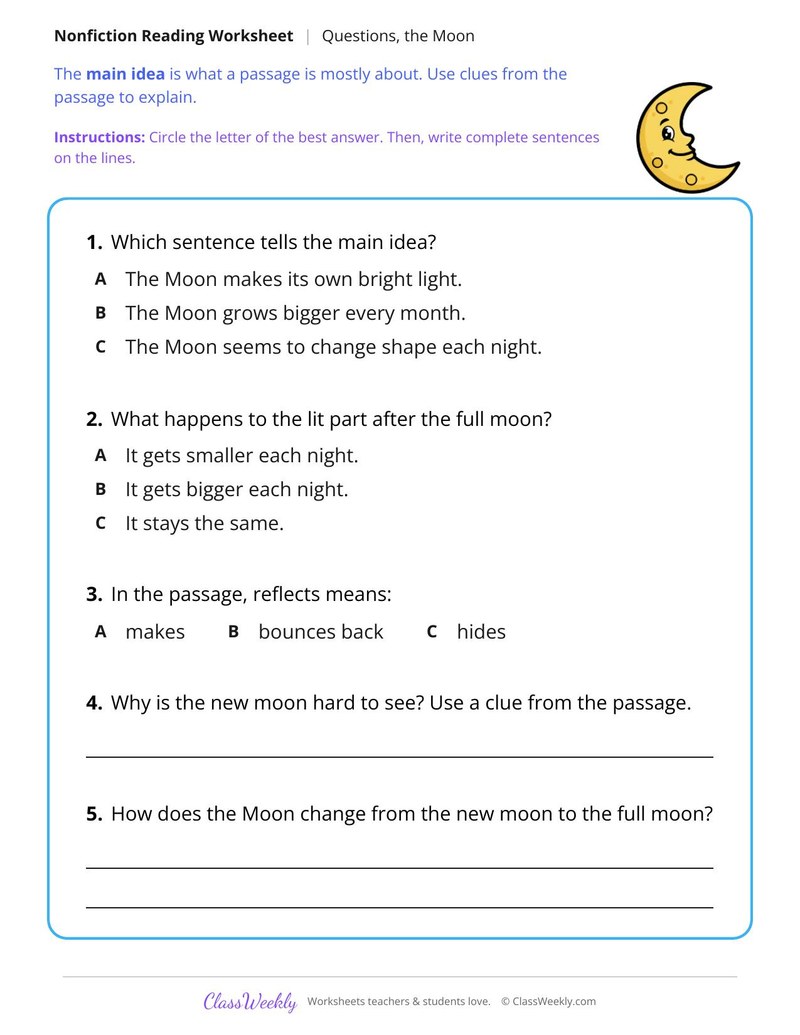
Phases of the Moon (Nonfiction Passage)
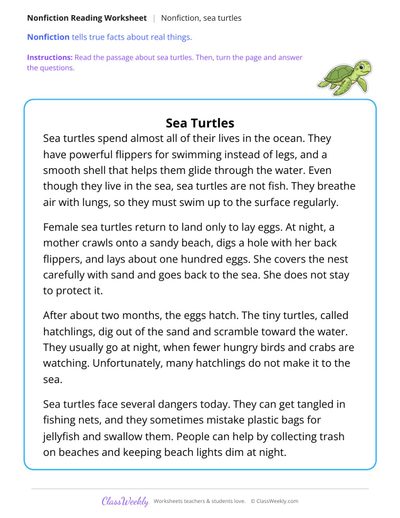
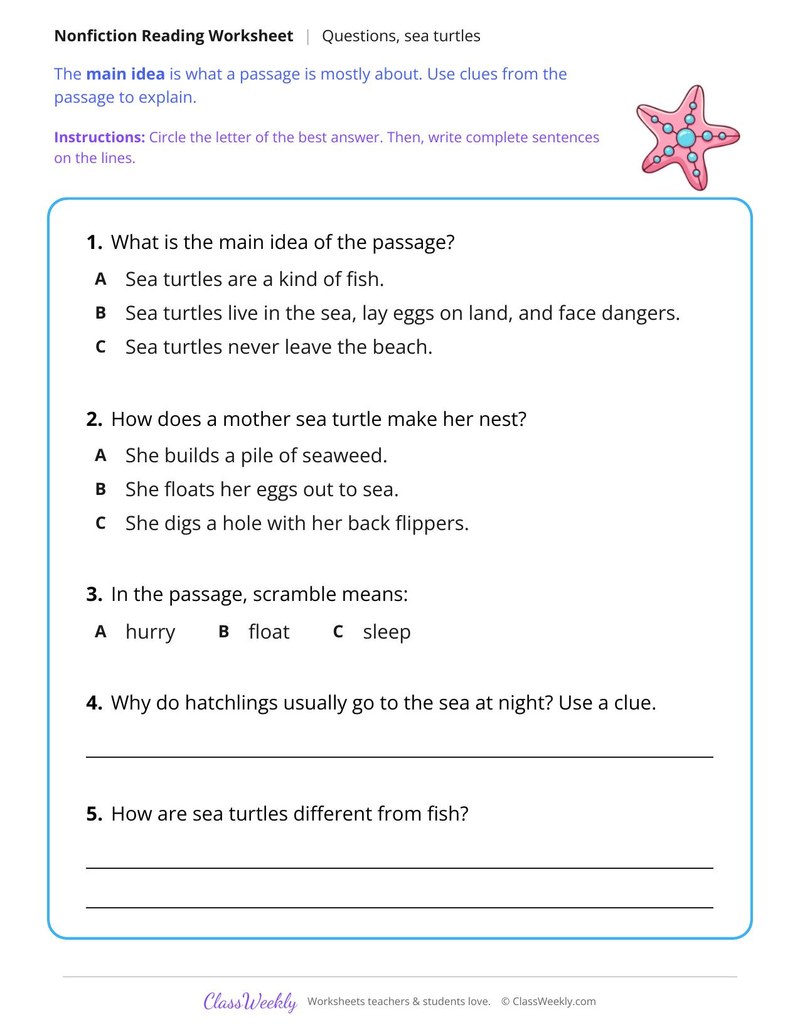
Sea Turtles (Nonfiction Passage)
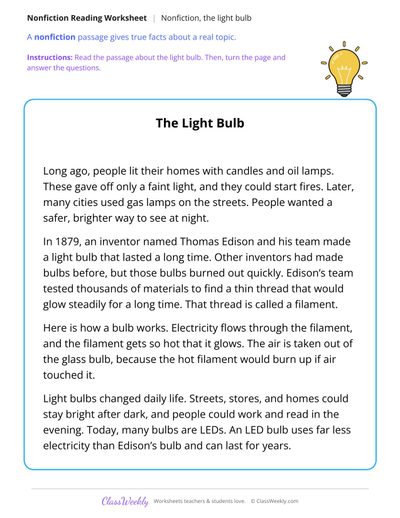
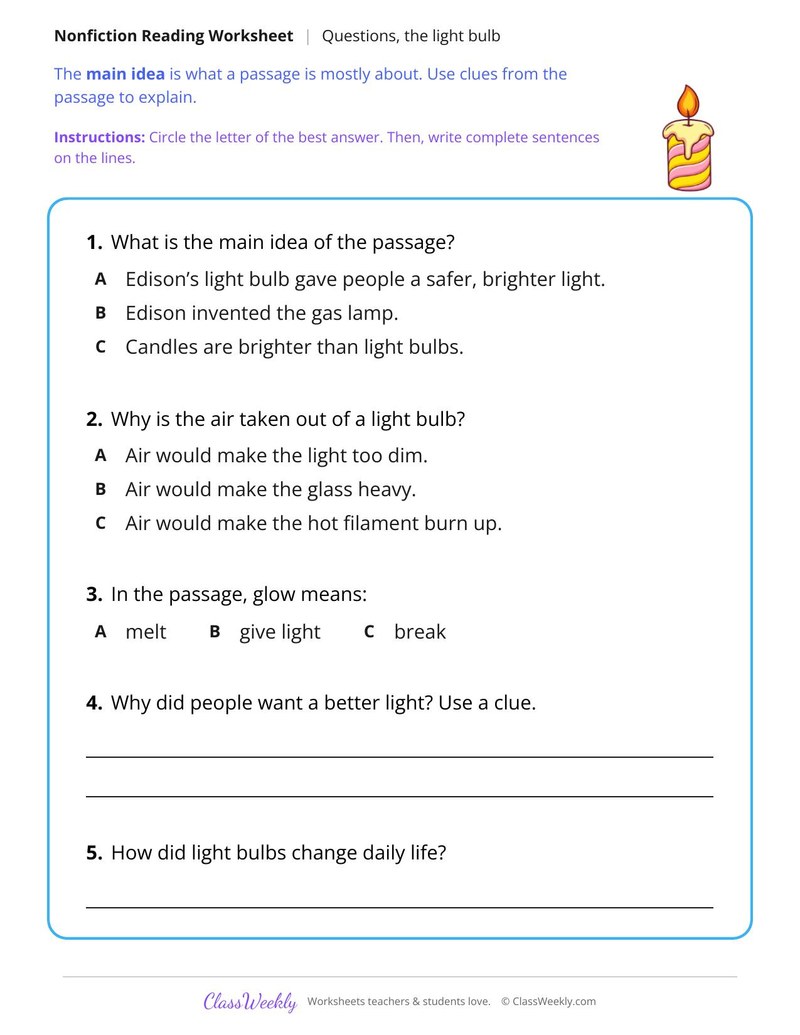
The Light Bulb (Nonfiction Passage)
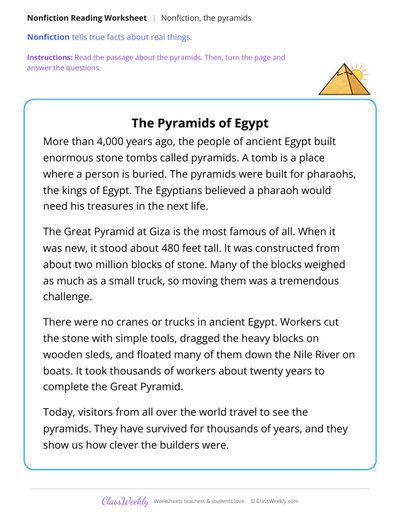
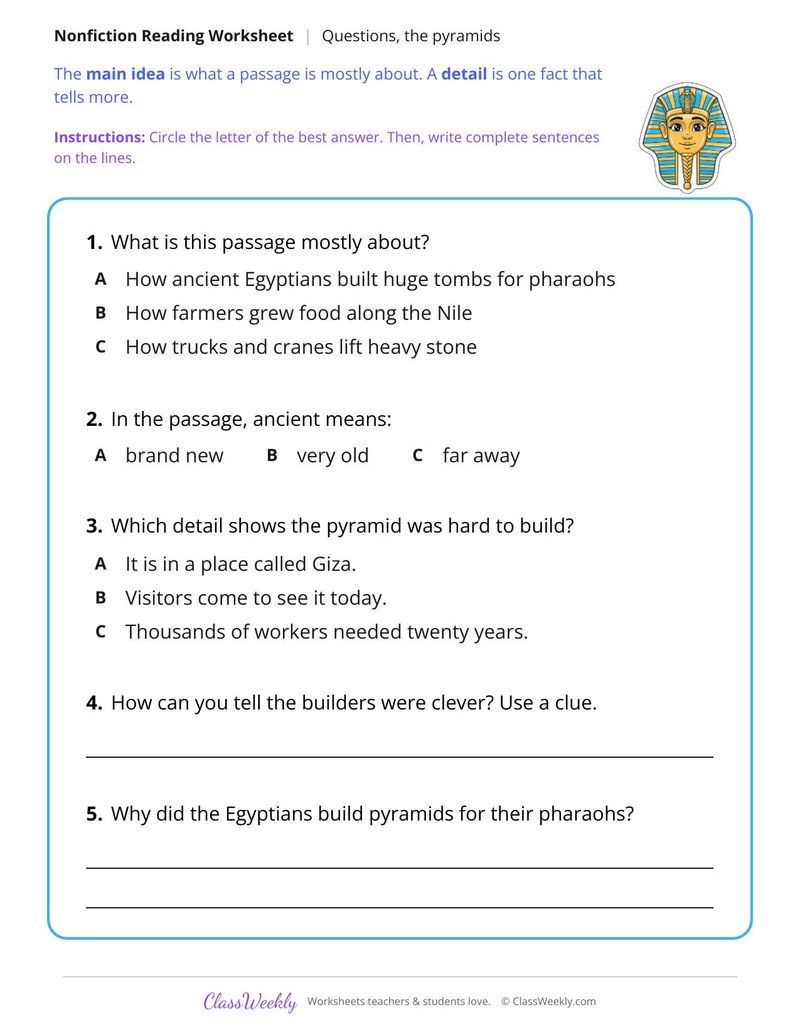
The Pyramids of Egypt (Nonfiction Passage)
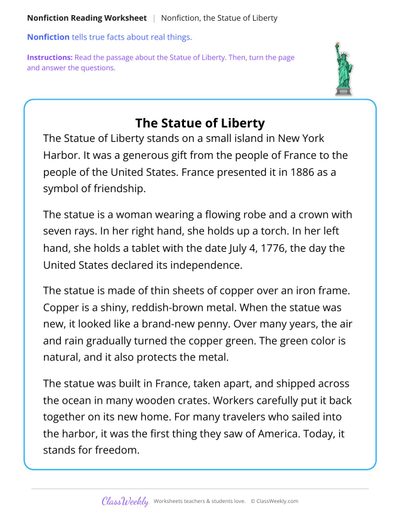
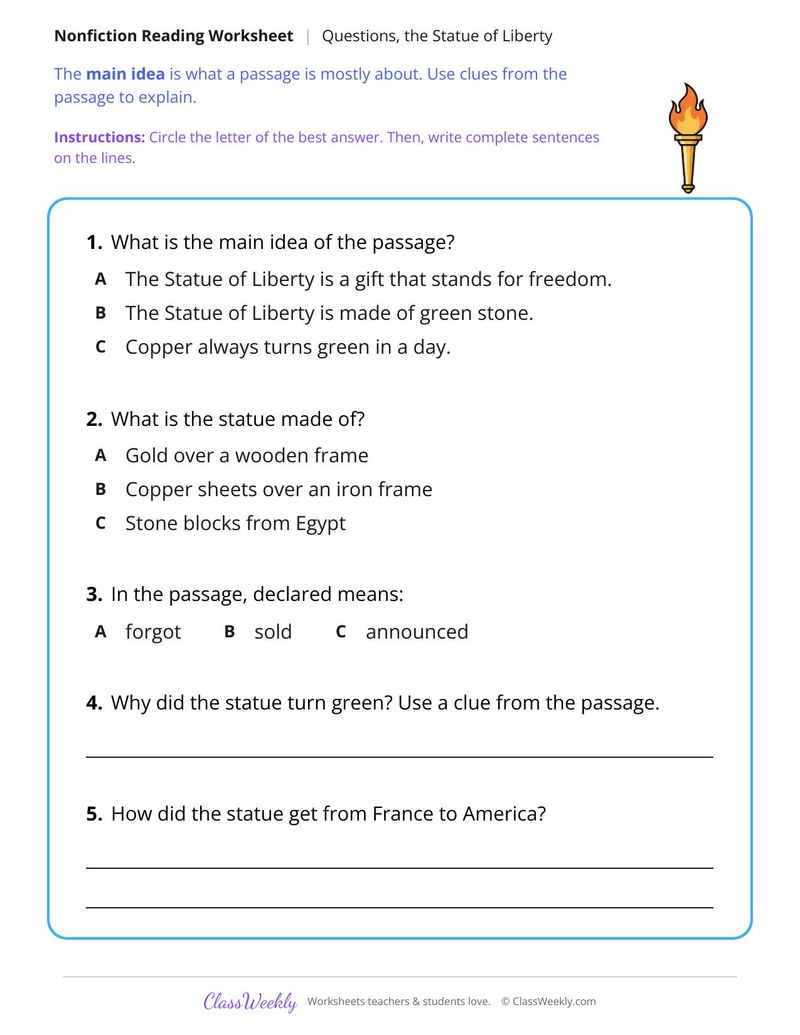
The Statue of Liberty (Nonfiction Passage)
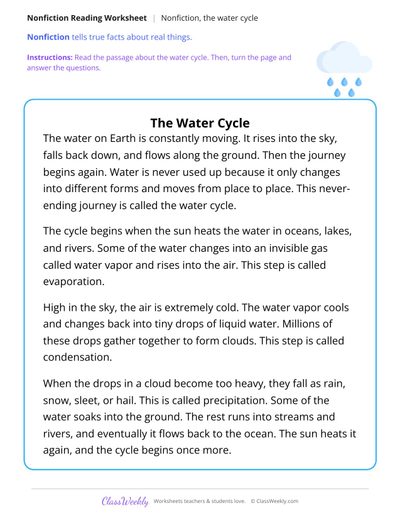
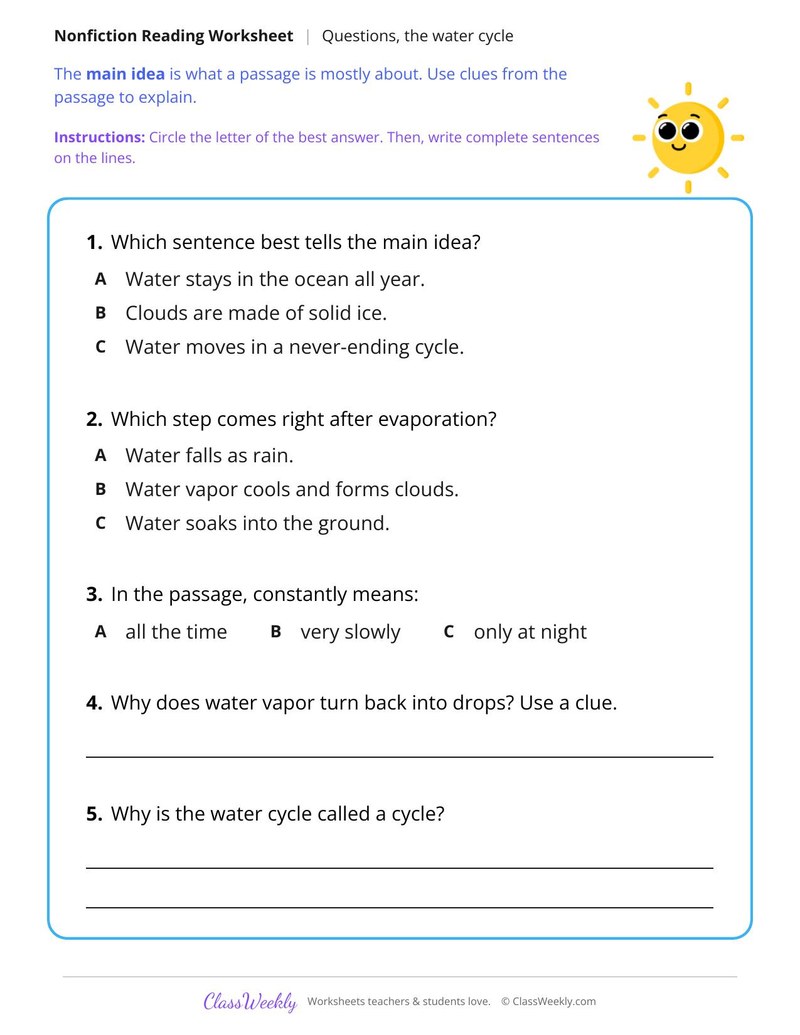
The Water Cycle (Nonfiction Passage)
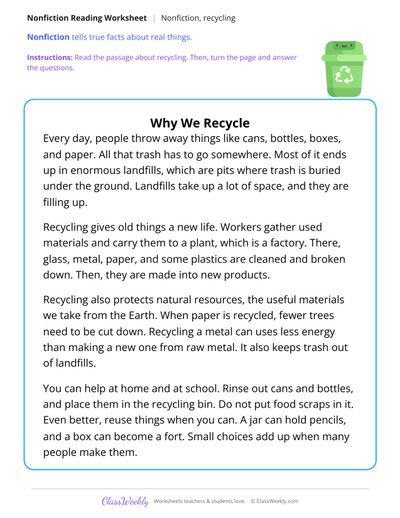
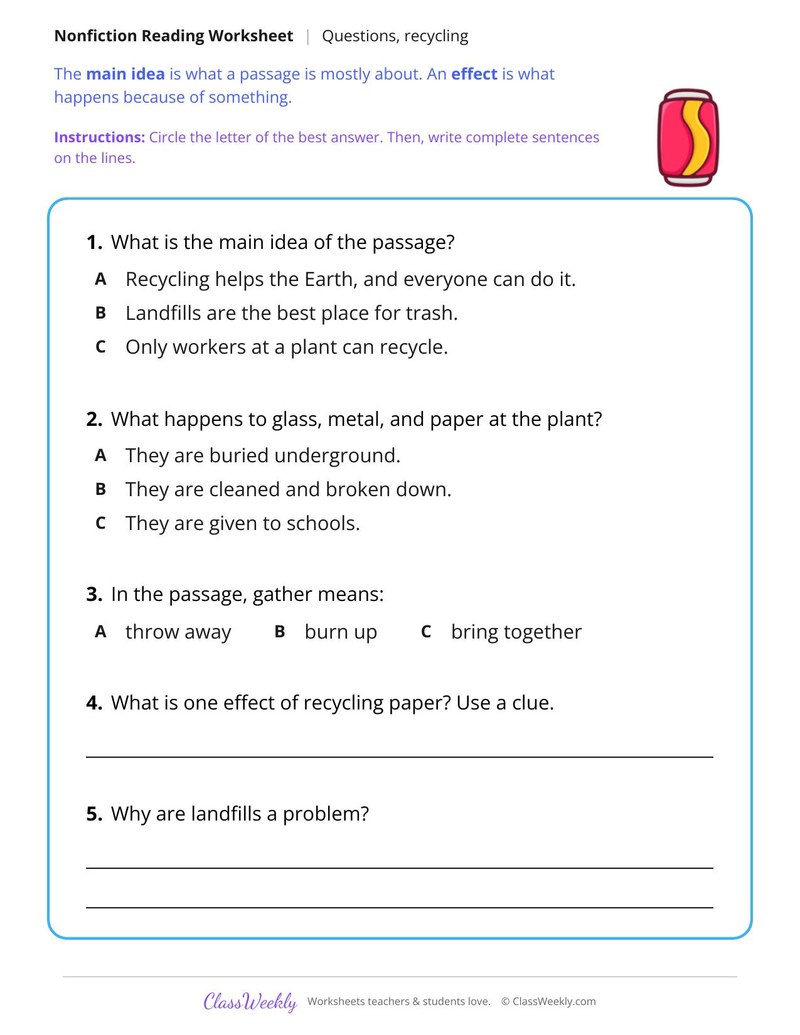
Why We Recycle (Nonfiction Passage)
Curriculum Links
Common Core State Standards
Reading · 3rd Grade
Find this in the curriculum
Browse the grade, subject, and topic this belongs to.
FAQ
How to use “Octopus Facts” with 3rd graders
⌄
Start with a minute of talk: How can a soft animal with no shell stay safe? Then have students read the passage on page 1, about 180 words in 4 short paragraphs, pencil in hand. They can underline facts as they go. Page 2 has five questions, three multiple choice and two written. Remind students to answer in complete sentences and to point to the part of the text that proves their answer. Check the work with the answer key.
What does this worksheet teach?
⌄
Octopus Facts gives 3rd grade students a nonfiction passage of about 180 words about the clever body tricks that keep an octopus safe and let it move through tight spaces, followed by five questions. The questions practice the main idea, vocabulary in context and cause and effect, and the sheet is aligned to Common Core RI.3.2. An answer key is included.
What is "Octopus Facts" about?
⌄
Octopus Facts is a nonfiction passage of about 180 words about the clever body tricks that keep an octopus safe and let it move through tight spaces. It is written for 3rd grade readers (ages 8-9) and has 4 short paragraphs, so students can read it in one sitting.
Which reading skills does the Octopus Facts worksheet practice?
⌄
Its five questions, three multiple choice and two written, practice the main idea, vocabulary in context and cause and effect. Questions include "Which title tells the main idea best" and "How does camouflage help an octopus stay safe". The sheet is aligned to Common Core RI.3.2, and the answer key is included so you can check responses quickly.
How can I introduce "Octopus Facts" before students read?
⌄
Try this conversation starter: How can a soft animal with no shell stay safe? Ask students to name one thing they wonder about the topic, then read to find out. Come back to the question after the last paragraph.
How long does the Octopus Facts worksheet take, and can I use it at home or in class?
⌄
Most students need about 15 to 20 minutes for the passage and the questions together. The sheet works at a kitchen table with a parent talking through the written answers, or at a reading center as independent work on the main idea and vocabulary in context.
Ratings & Reviews
No reviews yet. Be the first to share what you think.
Reviews are for ClassWeekly members.
Make a Request
Spotted something to fix, or want a worksheet we don't have yet? Tell us and we'll make it.
Worksheet Details
| Grade | 3rd Grade |
| Subject | Reading |
| Topic | Paragraphs & Passages |
| Standard | RI.3.2 |
| Pages | 2 pages |
| Difficulty | Medium |
Learn More
What is ClassWeekly?
ClassWeekly offers free worksheets and printable learning resources for kids in preschool to grade 5. All worksheets are aligned to Common Core, NGSS, and C3 Framework standards and designed by educators. Become a member to access the full library and download unlimited PDFs.
Penguins of Antarctica (Nonfiction Passage)
Phases of the Moon (Nonfiction Passage)
Sea Turtles (Nonfiction Passage)
The Light Bulb (Nonfiction Passage)
The Pyramids of Egypt (Nonfiction Passage)
The Statue of Liberty (Nonfiction Passage)
The Water Cycle (Nonfiction Passage)
Why We Recycle (Nonfiction Passage)