Endings Able and Ible
Written by Adi Ackerman, Head Teacher
"Endings Able and Ible" is written for 5th Grade (Ages 10-11), and it covers Common Core L.5.2.E. If your little one is a year younger but already steady on spelling, the page still works. You may just need to read the instructions out loud. And if they are older and word endings never quite stuck, this is a short review rather than busywork.
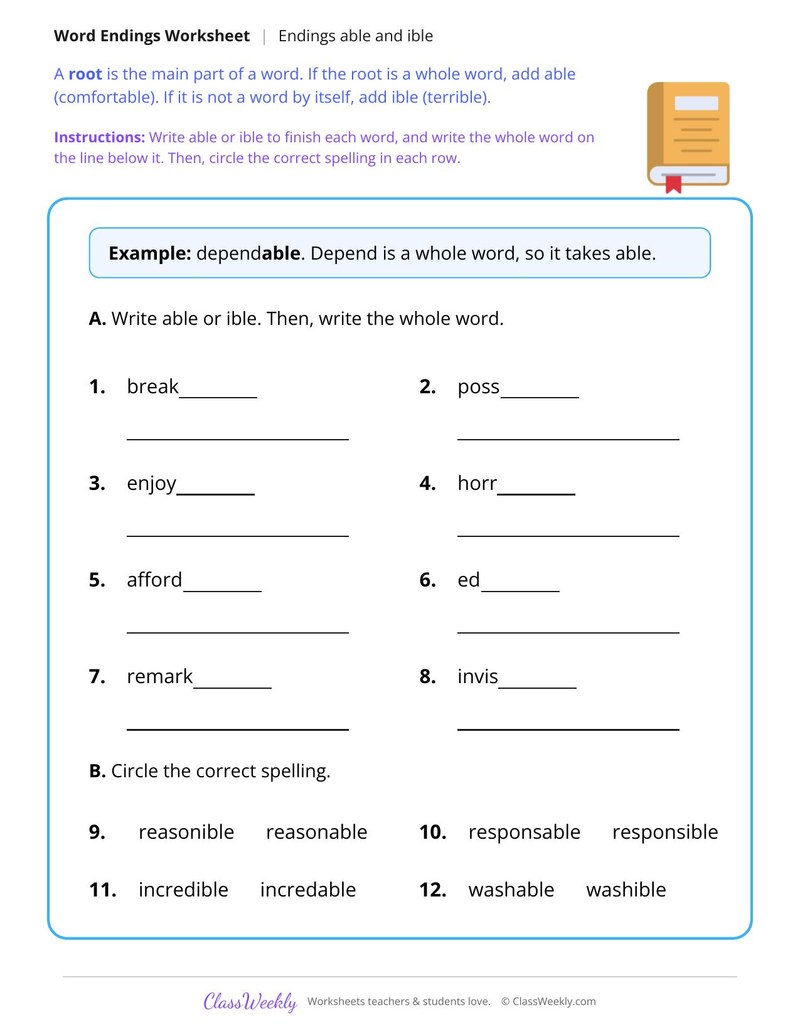
5th grade spelling worksheet: choose able or ible by checking whether the root is a whole word. Answer key included. Part of our word endings spelling collection. Aligned to Common Core standards.
How do I use this worksheet?
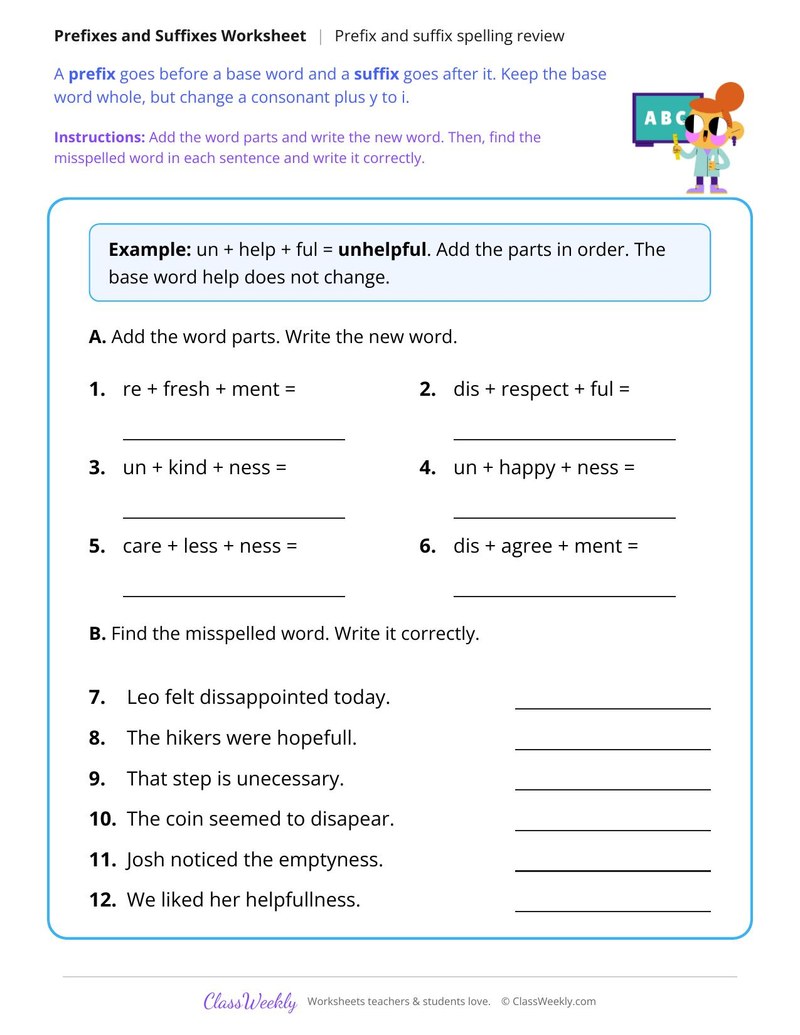
Have your child say the rule out loud before choosing each ending. For ant and ent, write the related word next to the answer. Check with the answer key and note which endings still need practice.
What students will practice
- Students will choose able or ible by checking whether the root is a whole word.
- Students will use related words to choose ant, ent, ance or ence.
- Students will choose le, el or al endings.
Curriculum Links
Common Core State Standards
Reading · 5th Grade
Find this in the curriculum
Browse the grade, subject, and topic this belongs to.
FAQ
How do I use this word endings worksheet?
⌄
Have your child say the rule out loud before choosing each ending. For ant and ent, write the related word next to the answer. Check with the answer key and note which endings still need practice.
What does this worksheet teach?
⌄
Choose able or ible by checking whether the root is a whole word. A root is the main part of a word. If the root is a whole word, add able (comfortable). If it is not a word by itself, add ible (terrible). The directions on the page read: Write able or ible to finish each word, and write the whole word on the line below it. Then, circle the correct spelling in each row. The page opens with a worked example, and the answer key shows every answer.
Can I use this word endings worksheet for homeschool or classroom?
⌄
Yes, both. We made it for 5th Grade spelling, and the page works the same whether it lands on a kitchen table or a center rotation. At home, most families go through it together and talk the answers out loud, and that talking is where most of the learning happens with word endings. In class it runs well as independent work while you pull a small group. Print one copy or thirty, whichever the day needs.
How do you know whether to use able or ible?
⌄
If the root is a whole word, add able (dependable, comfortable). If it is not a word on its own, add ible (possible, terrible). There are exceptions, but the rule works for most words.
How do you choose ant or ent?
⌄
Think of a related word. If it has ance, ancy or ation (tolerance, hesitation), use ant. If it ends in ence (confidence), use ent. The same link works for ance and ence.
When is the ending le, el or al?
⌄
Le is the most common (table, bubble). El often comes after m, n, r, v or w (camel, tunnel, travel). Al usually ends describing words (magical, tropical).
Is there an answer key for each worksheet?
⌄
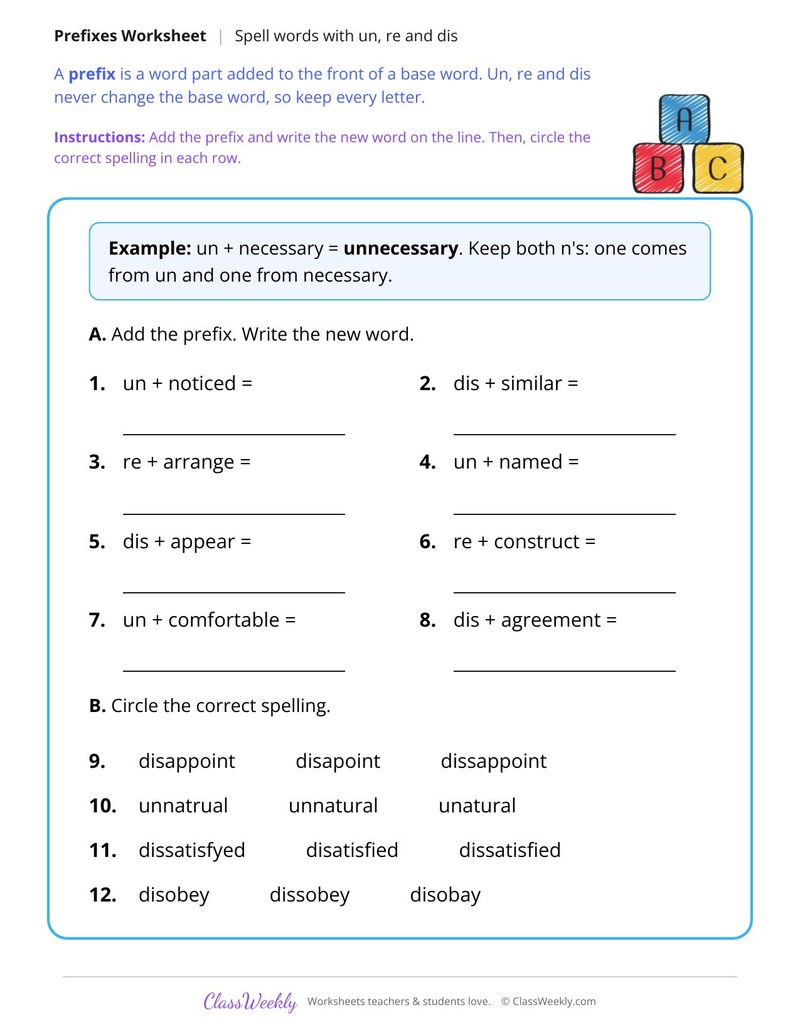
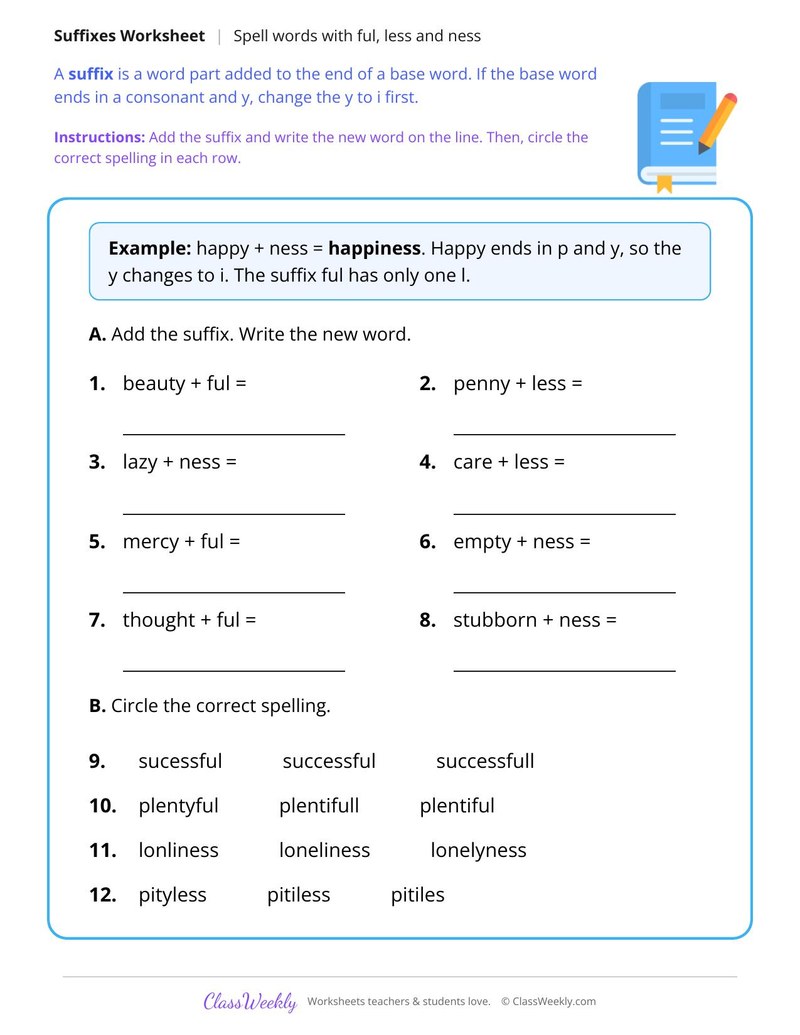
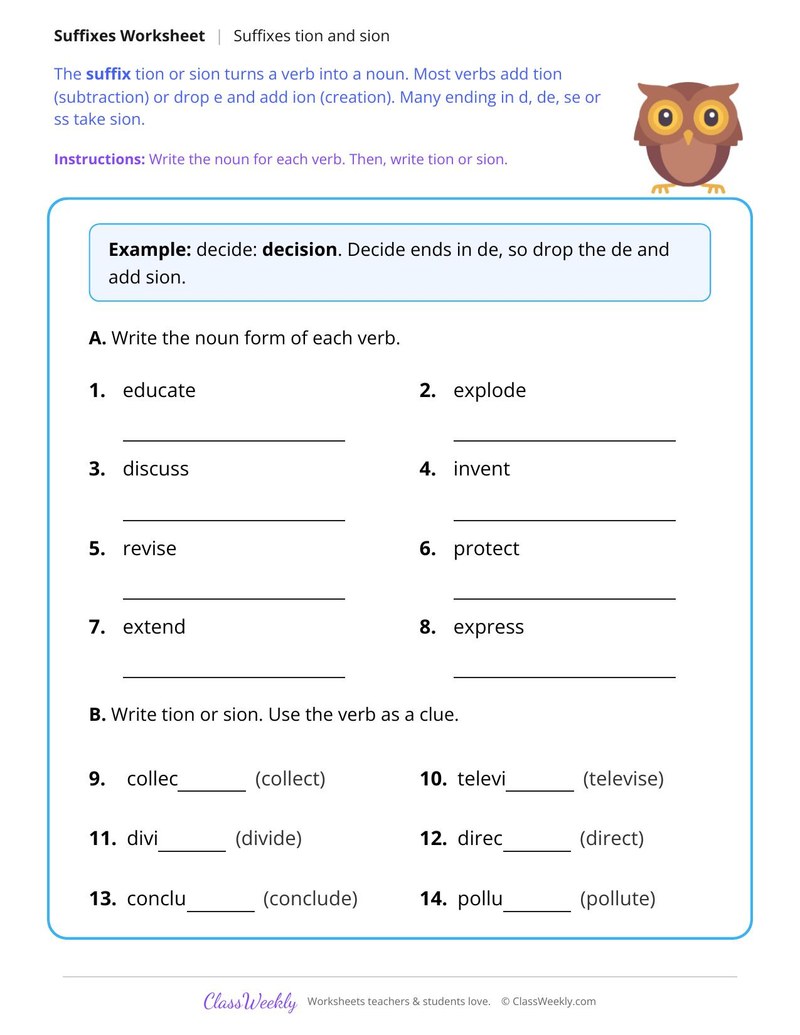
Yes. All four sheets have an answer key that shows every spelling, so a parent or teacher can check the work in a minute.
What spelling skills should a 5th grader have?
⌄
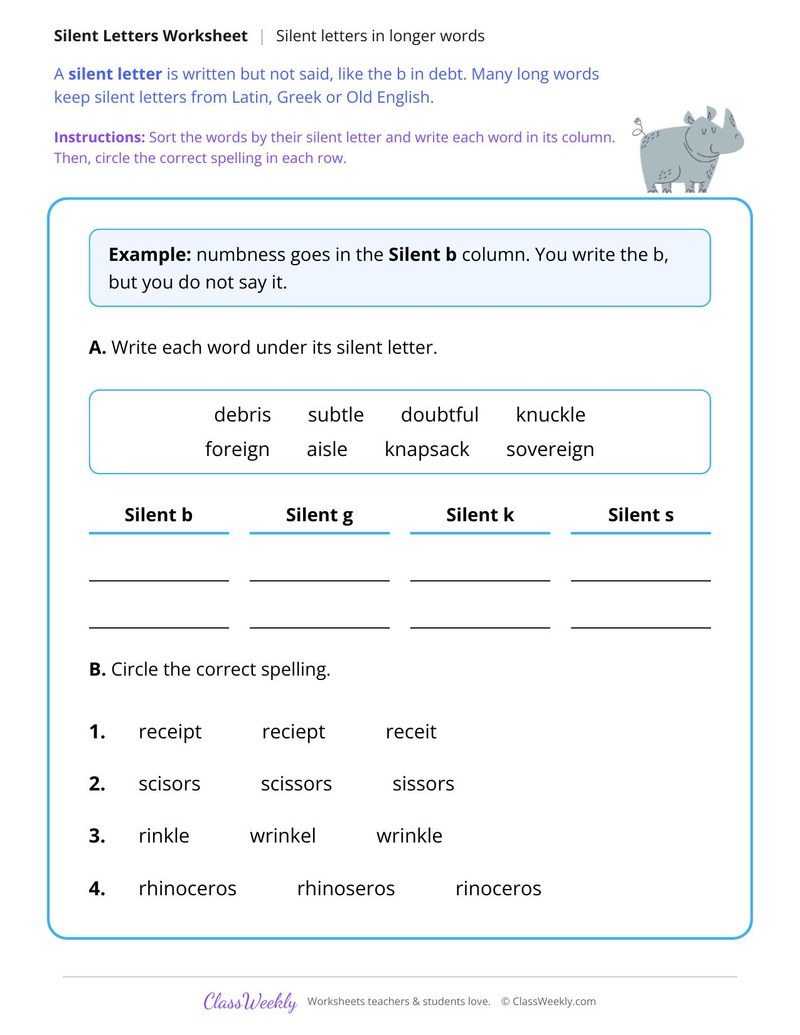
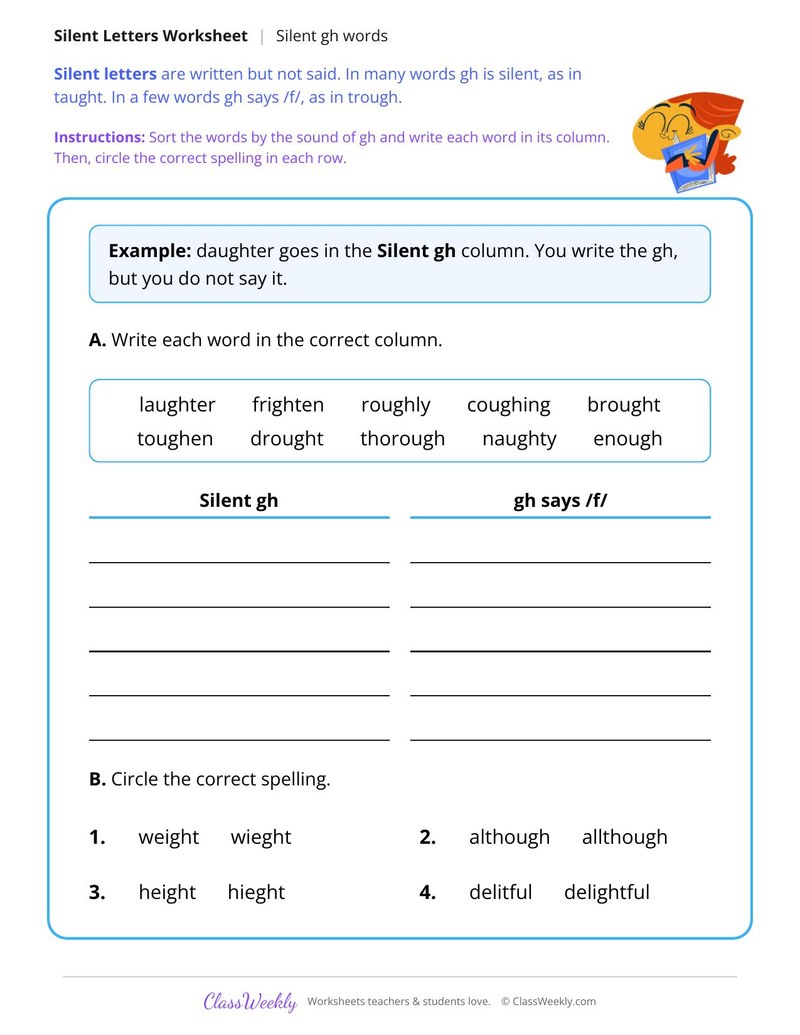
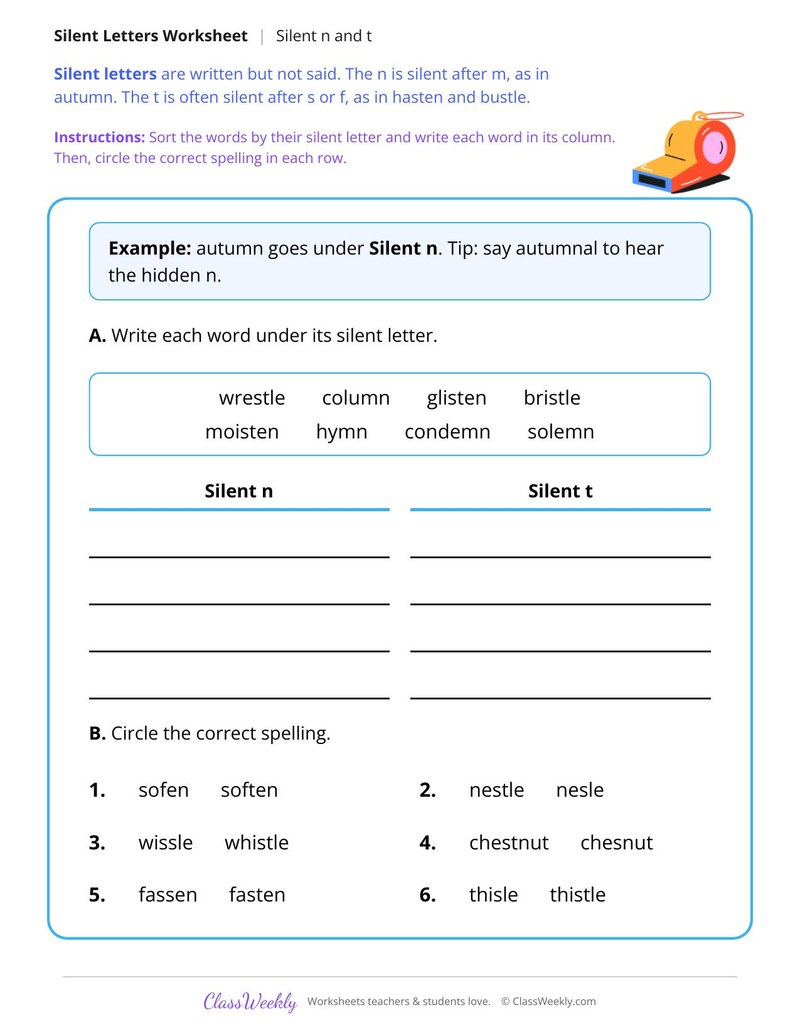
5th graders are expected to spell grade-level words correctly and consult references when needed (CCSS L.5.2.E). In practice that means spelling words with prefixes and suffixes, choosing tricky endings like able or ible, handling double consonants and silent letters, and breaking long words into syllables.
How do you know whether a word ends in able or ible?
⌄
A useful rule of thumb: if the root is a complete word, the ending is usually able (comfortable, readable). If the root is not a word on its own, it is usually ible (visible, possible). The word endings pages practice this and the ant and ent, ance and ence pairs.
How can my child spell long words correctly?
⌄
Say the word slowly and split it into syllables, then spell one syllable at a time. Pay extra attention to the unstressed syllable, where vowels often sound like uh (the schwa sound), as in the a of about. The multisyllabic words pages walk through this step by step.
Ratings & Reviews
No reviews yet. Be the first to share what you think.
Reviews are for ClassWeekly members.
Make a Request
Spotted something to fix, or want a worksheet we don't have yet? Tell us and we'll make it.
Learn More
What is ClassWeekly?
ClassWeekly offers free worksheets and printable learning resources for kids in preschool to grade 5. All worksheets are aligned to Common Core, NGSS, and C3 Framework standards and designed by educators. Become a member to access the full library and download unlimited PDFs.