Skip Counting by 10s Hundreds Chart
Written by Adi Ackerman, Head Teacher
"Skip Counting by 10s Hundreds Chart" is written for 1st Grade (Ages 6-7). Children a grade either side can use it too: younger ones with an adult reading it aloud, older ones as a quick refresher.
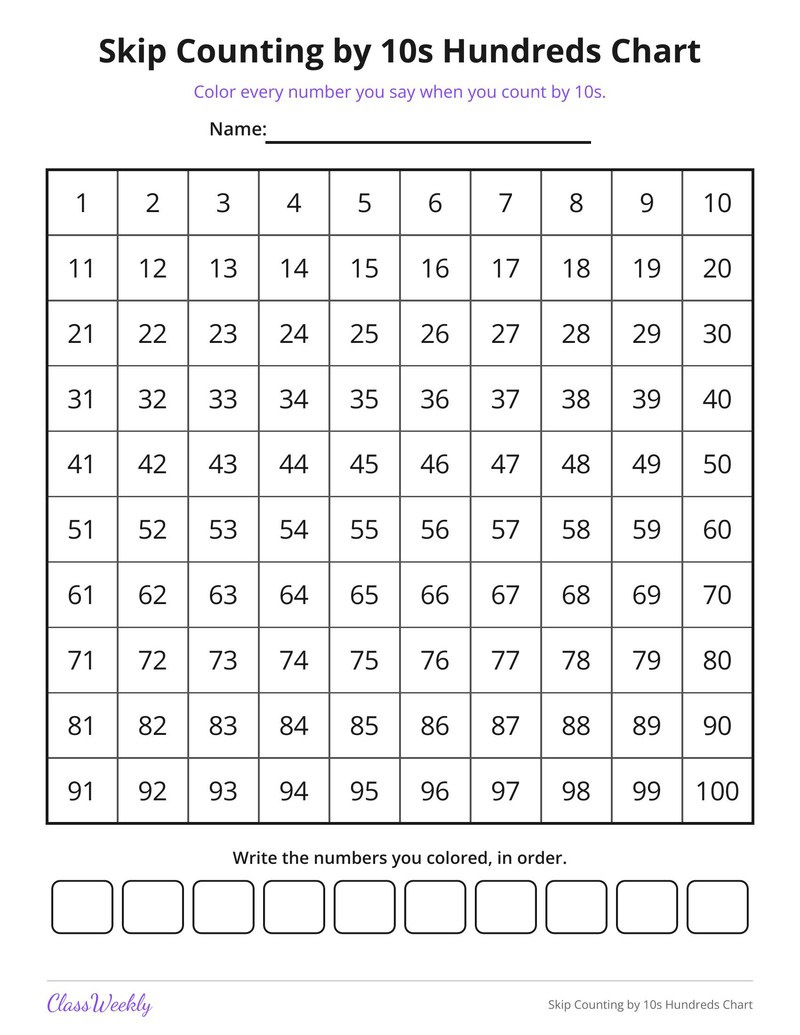
Skip counting by 10s hundreds chart: color 10, 20, 30 and on to 100 on a filled chart and see the tens line up. Answer key included. Part of our skip counting hundreds charts numbers collection.
How do I use this resource?
Count by 10s together, then have students color as they count. Use the finished chart to talk about tens and how every number in that column ends in 0.
What students will practice
- Gives 1st grade students visual references and hands-on tools for counting, number recognition, and number patterns.
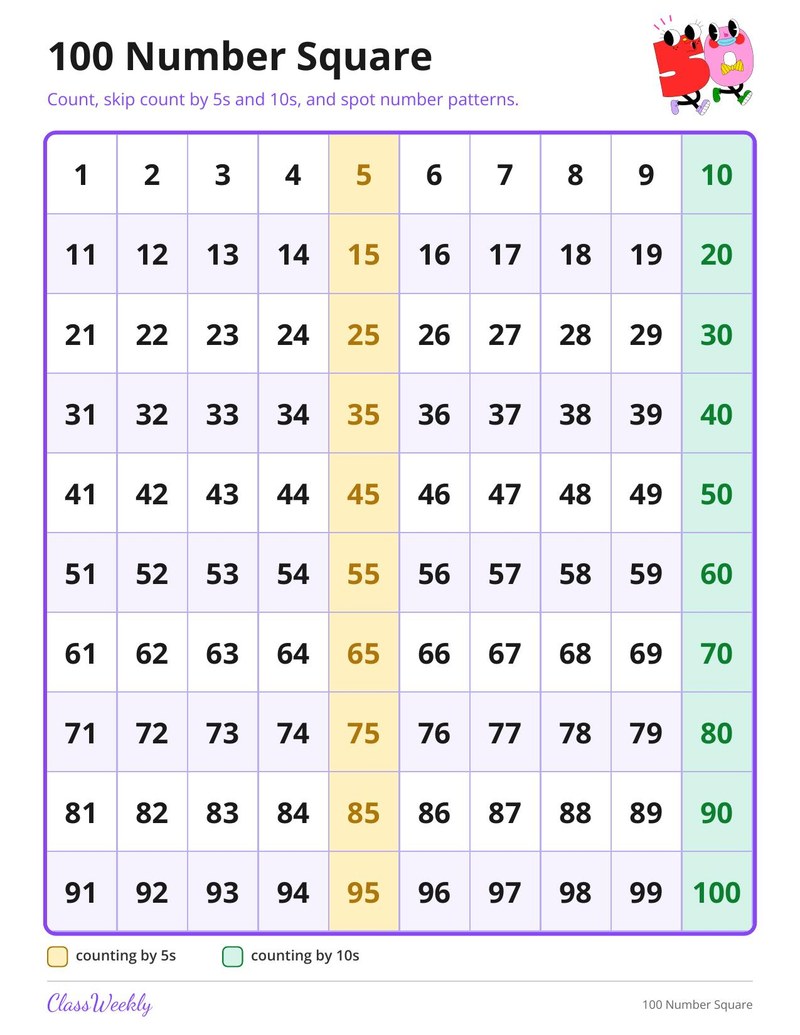
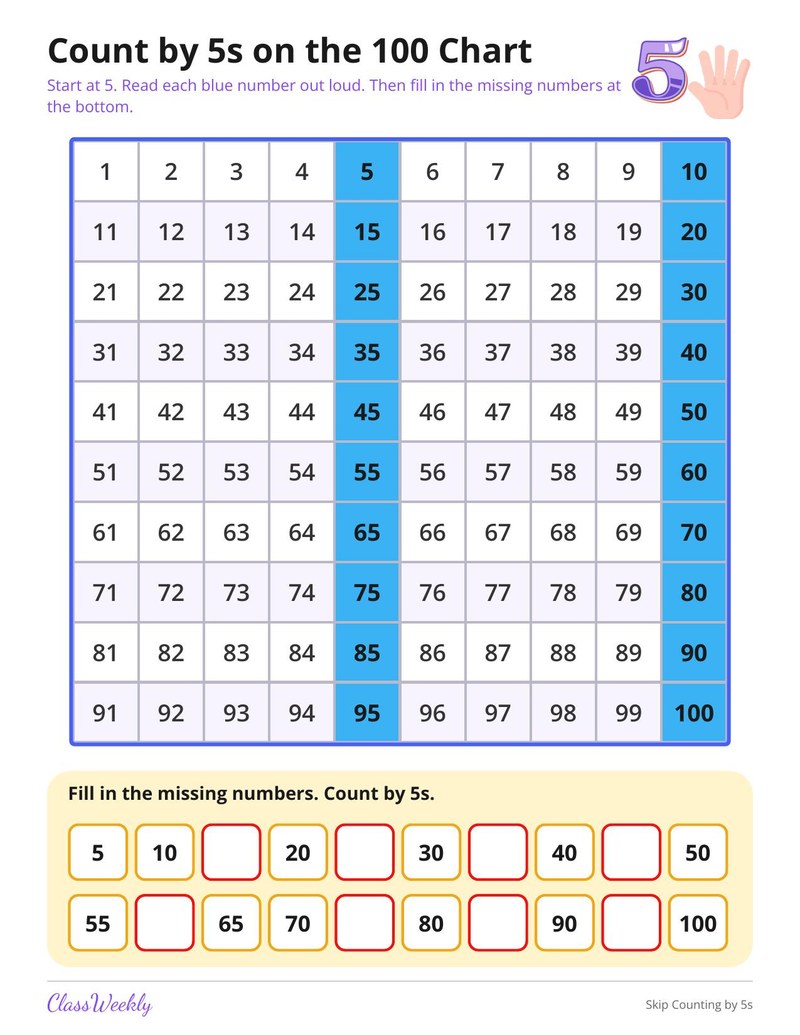
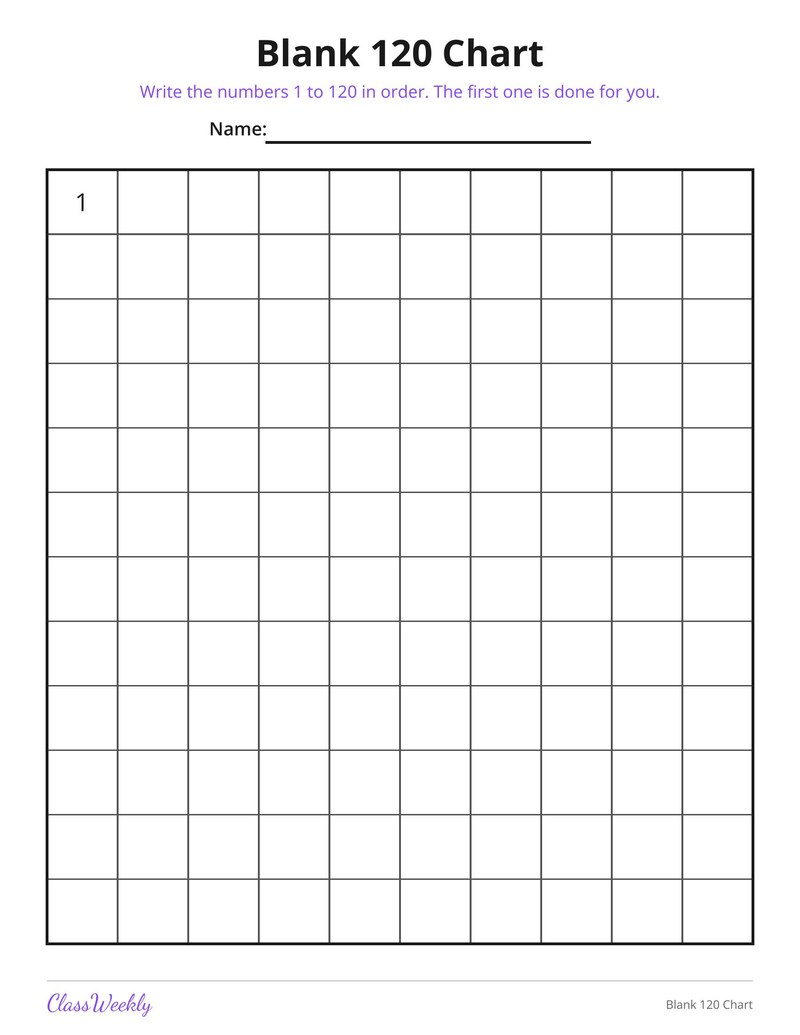
- Builds number sense through wall charts, a fillable grid, skip-counting practice, and matching cards.
- Supports a math wall display, small-group centers, and quick counting games at home.
Curriculum Links
FAQ
How do I use the Skip Counting by 10s Hundreds Chart?
⌄
Count by 10s together, then have students color as they count. Use the finished chart to talk about tens and how every number in that column ends in 0.
What is the Skip Counting by 10s Hundreds Chart?
⌄
A filled 1-100 hundreds chart for counting by 10s. Students color each number they say, and the colored boxes line up in the last column. An answer key is included.
Can I use the Skip Counting by 10s Hundreds Chart at home and in the classroom?
⌄
Yes. We made it for 1st Grade numbers, and it works the same at home or at school. Families print it for one child and keep it where they will use it every day. Teachers print a copy per student or one for the whole room, whichever the day needs.
What does skip counting by 10s mean?
⌄
Counting 10, 20, 30 and so on, jumping a whole ten each time instead of one. Counting by tens is usually the first skip count children learn, because the pattern is visible in the numerals themselves.
Why does skip counting matter?
⌄
Skip counting by 10s is the groundwork for multiplication. Counting by 10s is the 10 times table before it has that name. It also builds the habit of counting in groups instead of one at a time, which is what makes larger numbers manageable.
My child can chant the numbers but cannot start from the middle. Is that normal?
⌄
Very normal, and it is the useful thing to work on next. Chanting is memorized sound. Understanding shows up when you start them at, say, 40 and ask what comes next. Practice starting from different points and the chant turns into real counting.
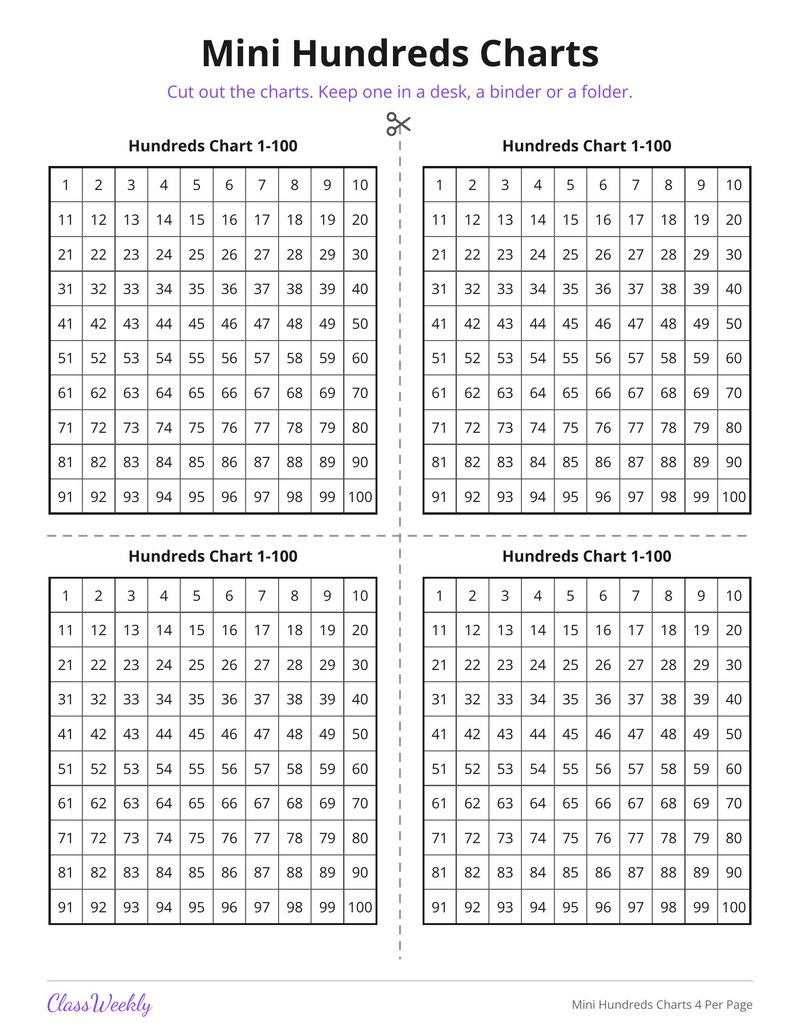
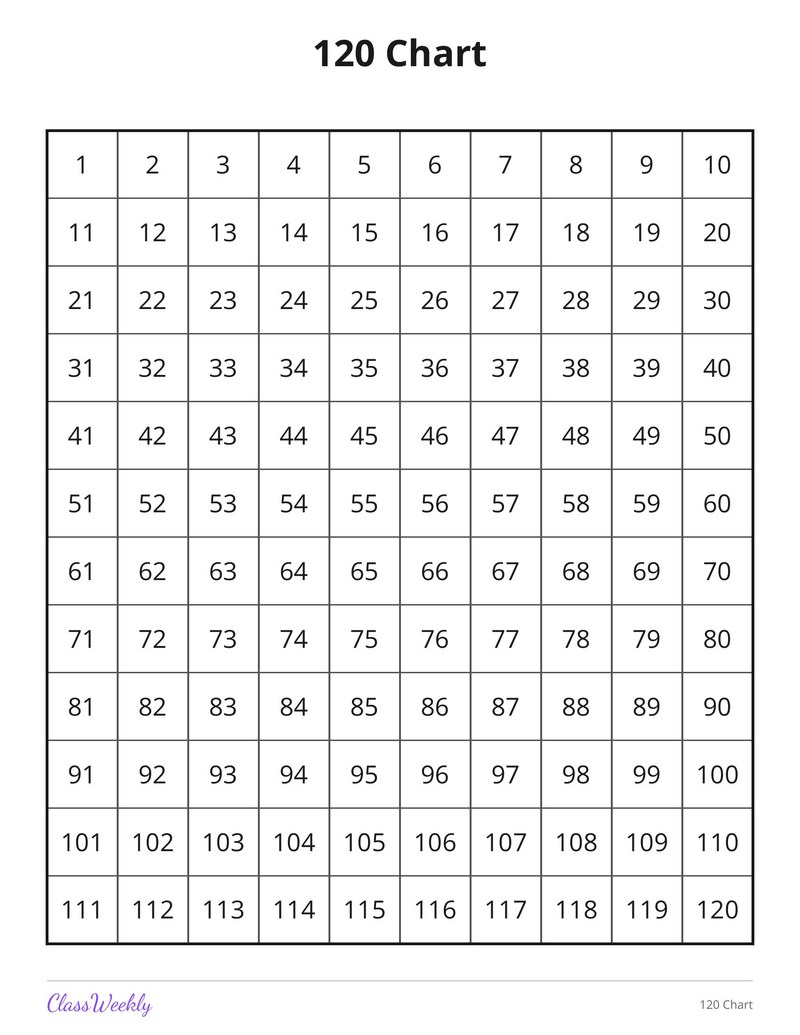
What is the difference between a hundreds chart and a 120 chart?
⌄
A hundreds chart shows 1 to 100 in ten rows of ten. A 120 chart adds two more rows, to 120, which matches the counting goal for 1st grade.
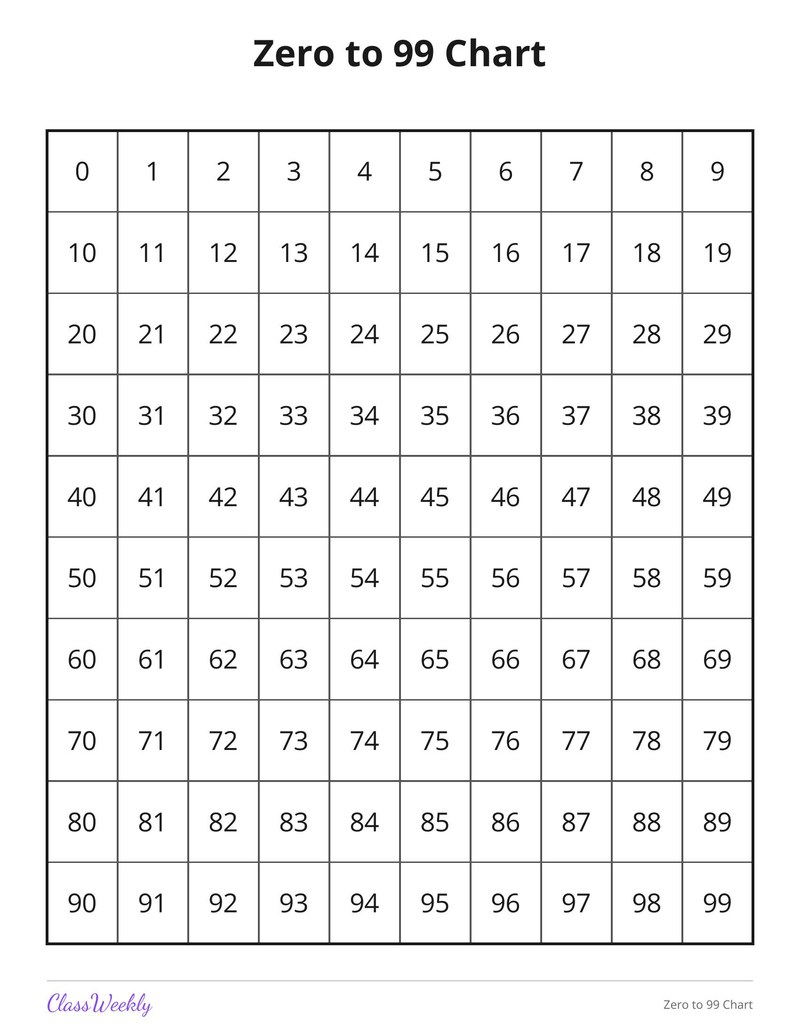
Why use a 0 to 99 chart?
⌄
On a 0-99 chart every number in a row has the same tens digit and every number in a column has the same ones digit, which makes tens and ones easy to see.
How do missing number charts help?
⌄
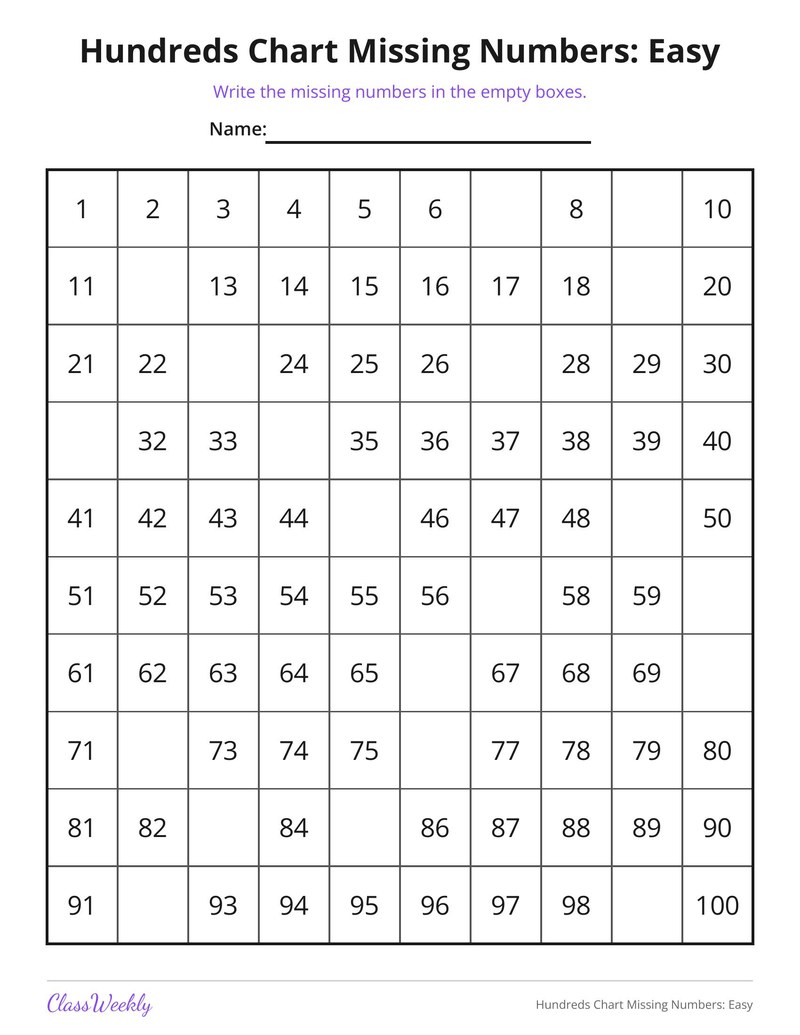
Children use the numbers around a gap to work out what is missing: one more to the right, one less to the left, ten more below and ten less above. The three levels go from about 20 missing numbers to about 60.
Do the hundreds charts have answer keys?
⌄
Yes. The blank charts, missing number charts, skip counting charts and mystery pictures each have an answer key.
Ratings & Reviews
No reviews yet. Be the first to share what you think.
Reviews are for ClassWeekly members.
Make a Request
Spotted something to fix, or want a resource we don't have yet? Tell us and we'll make it.
What is ClassWeekly?
ClassWeekly offers free worksheets and printable learning resources for kids in preschool to grade 5. All worksheets are aligned to Common Core, NGSS, and C3 Framework standards and designed by educators. Become a member to access the full library and download unlimited PDFs.