Circle the Helper
Written by Adi Ackerman, Head Teacher
"Circle the Helper - Patriot Day" is written for Kindergarten (Ages 3-6), and it covers C3 Framework D2.Civ.2.K-2. If your little one is a year younger but already steady on community helpers, the page still works. You may just need to read the instructions out loud. And if they are older and find the helpers never quite stuck, this is a short review rather than busywork.
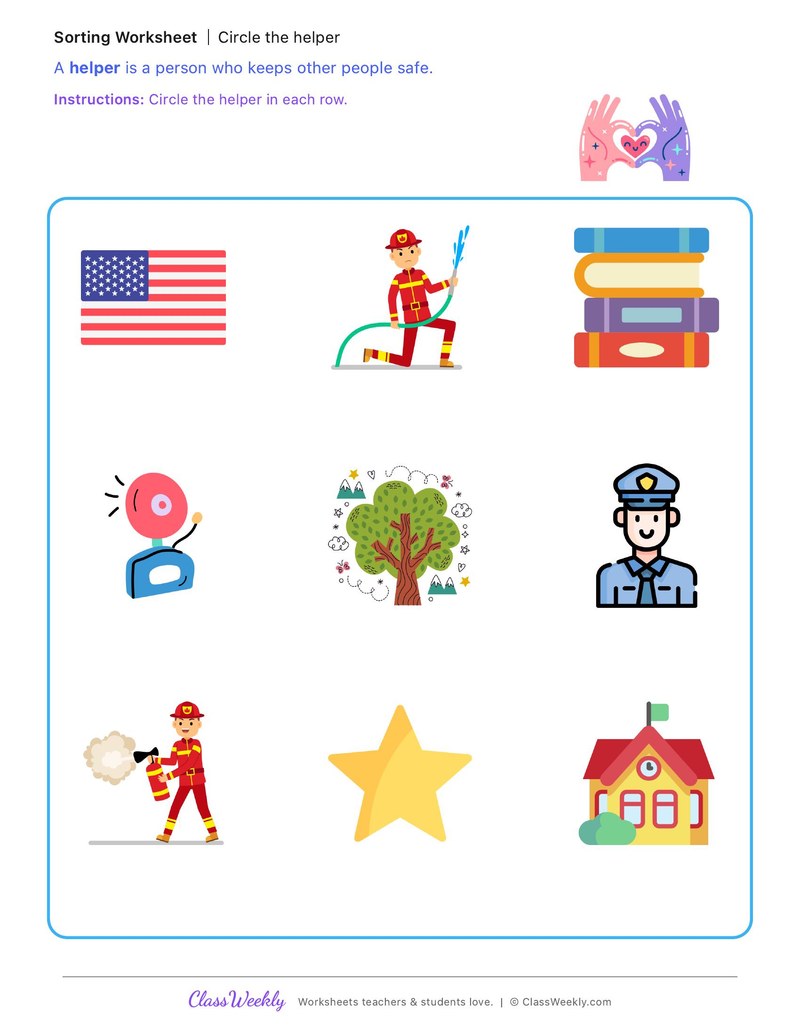
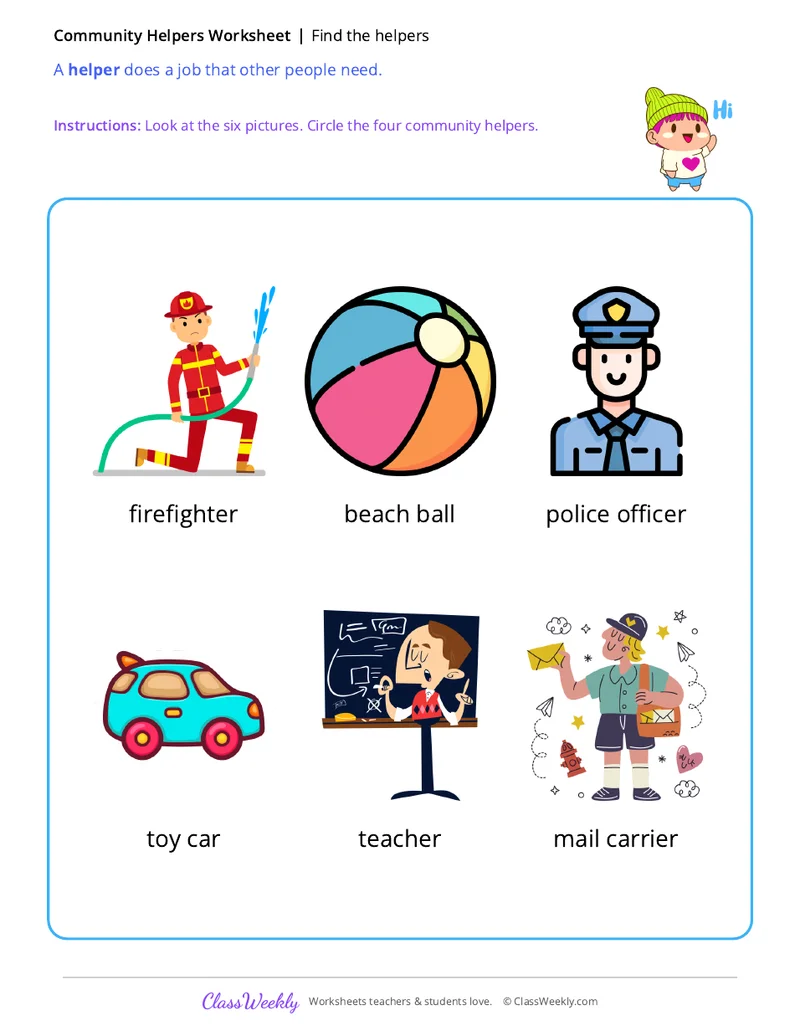
Circle the community helper (firefighter or police officer) in each row of three pictures. Free printable kindergarten social studies worksheet with answer key. Part of our find the helpers community helpers collection. Aligned to C3 Framework standards.
How do I use this worksheet?
Start with a question students can talk about right away: "What do you already know about find the helpers?" or a picture on the board to look at together. Then let students work through it with your modeling first (do the first item together on the board), then try the rest with a partner, keeping a map, calendar, or word bank in view if the activity uses one. When you review, ask students what surprised them or what they'd like to find out next. These find the helpers worksheets work well as a class discussion starter, an independent center activity, or a take-home page to talk about with family.
What students will practice
- Students will describe find the helpers using vocabulary and examples appropriate for their grade level.
- Students will connect what they observe or a picture read aloud with them about find the helpers to what they already know.
- Students will use what they learn about find the helpers to answer questions and explain their thinking.
Curriculum Links
C3 Framework for Social Studies State Standards
Social Studies · Kindergarten
Find this in the curriculum
Browse the grade, subject, and topic this belongs to.
FAQ
How do I use this find the helpers worksheet?
⌄
Start with a question students can talk about right away: "What do you already know about find the helpers?" or a picture on the board to look at together. Then let students work through it with your modeling first (do the first item together on the board), then try the rest with a partner, keeping a map, calendar, or word bank in view if the activity uses one. When you review, ask students what surprised them or what they'd like to find out next. These find the helpers worksheets work well as a class discussion starter, an independent center activity, or a take-home page to talk about with family.
What does this worksheet teach?
⌄
These find the helpers worksheets for Kindergarten give students a first hands-on look at one of the big ideas in community helpers. Students label, sort, match, and answer questions that connect find the helpers to the wider world beyond their own classroom. Each page keeps the vocabulary concrete and the reading light, so the social studies content stays the focus rather than the reading level. Working through find the helpers on paper gives Kindergarten students a shared reference point for class discussion and a keepsake for what they noticed.
Can I use this find the helpers worksheet for homeschool or classroom?
⌄
Yes, both. We made it for Kindergarten community helpers, and the page works the same whether it lands on a kitchen table or a center rotation. At home, most families go through it together and talk the answers out loud, and that talking is where most of the learning happens with find the helpers. In class it runs well as independent work while you pull a small group. Print one copy or thirty, whichever the day needs.
What are community helpers and why do kindergartners learn about them?
⌄
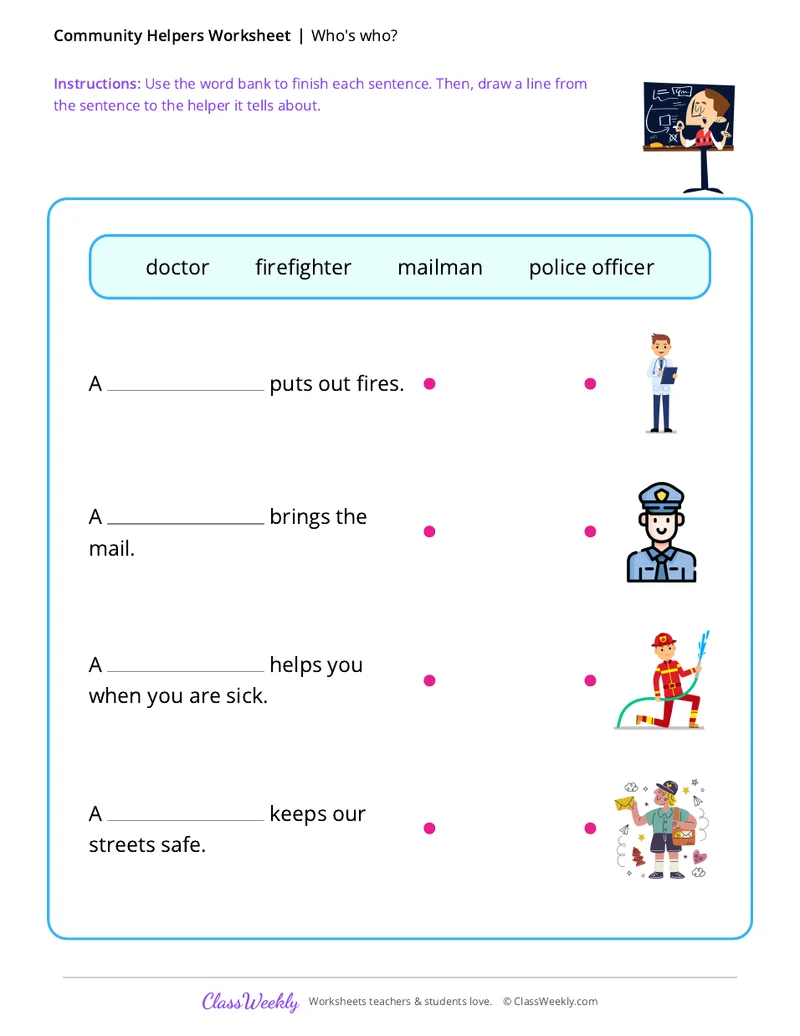
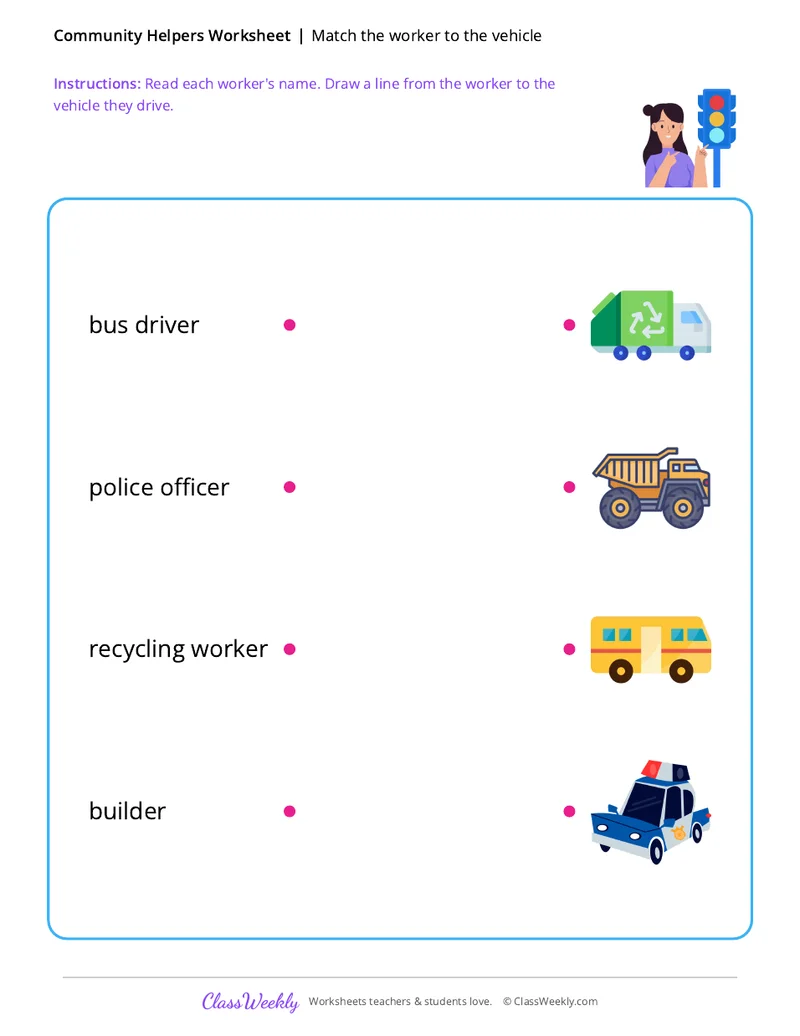
Community helpers are the people whose jobs keep a neighborhood running and safe, firefighters, doctors, mail carriers, police officers, and teachers among them. Kindergartners learn about community helpers because it is their first real introduction to how a community works together, each person doing a job that others depend on. The C3 Framework's civics dimension (D2.Civ.2.K-2) asks students to explain how all people, not just official leaders, play an important role in a community, and community helper units are the most concrete way to teach that idea to five and six year olds. Children this age recognize helpers by uniform, vehicle, and workplace long before they can name a job title from a written description, so worksheets that match a helper to their tool, vehicle, or workplace build the connection between what a helper looks like and what they do. This groundwork also supports later social studies units on government and civic participation, where students learn that many kinds of jobs, not just elected ones, serve the public good.
How do worksheets help kindergartners learn about community helpers?
⌄
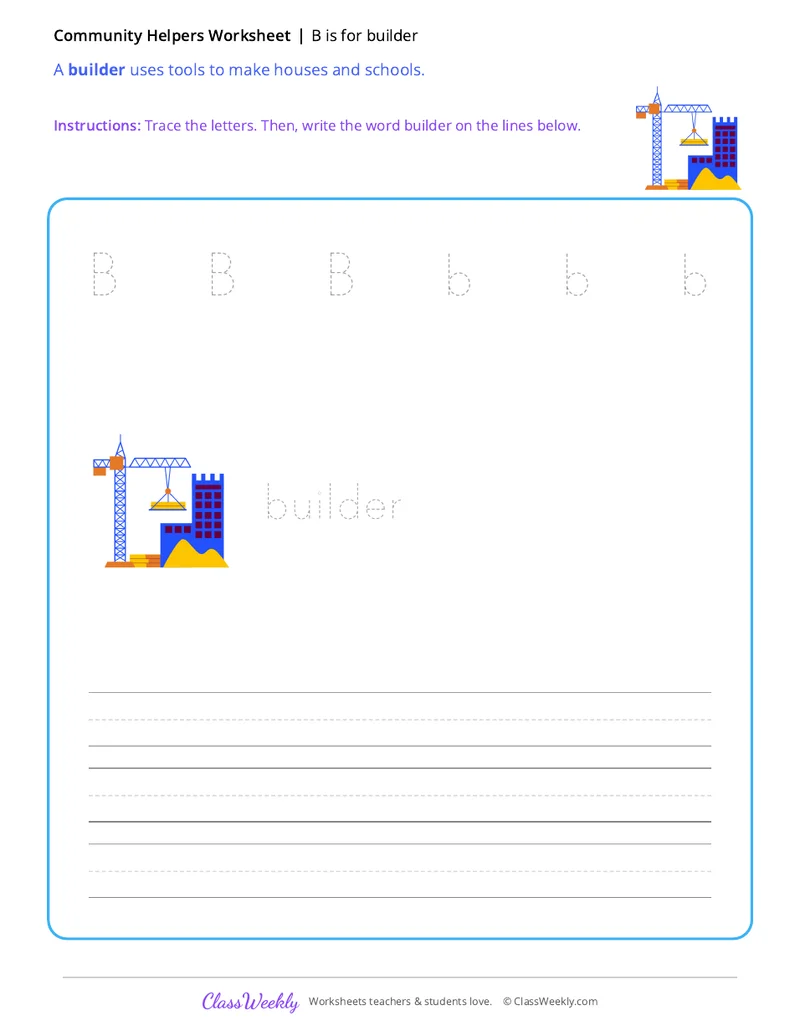
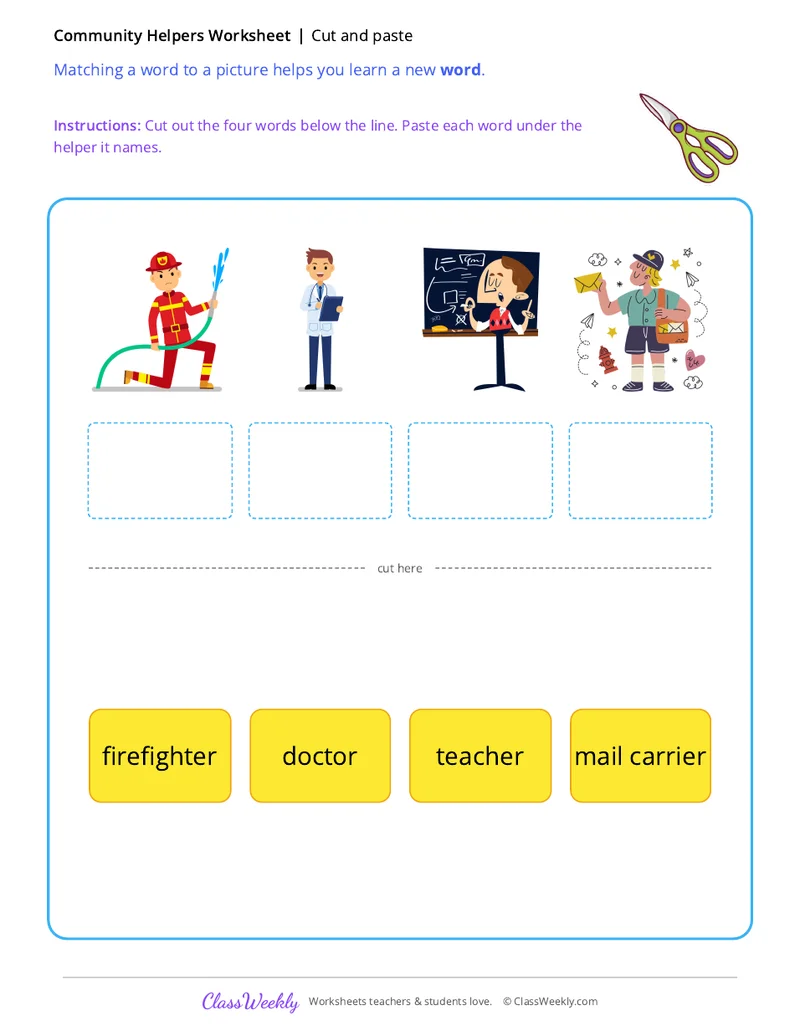
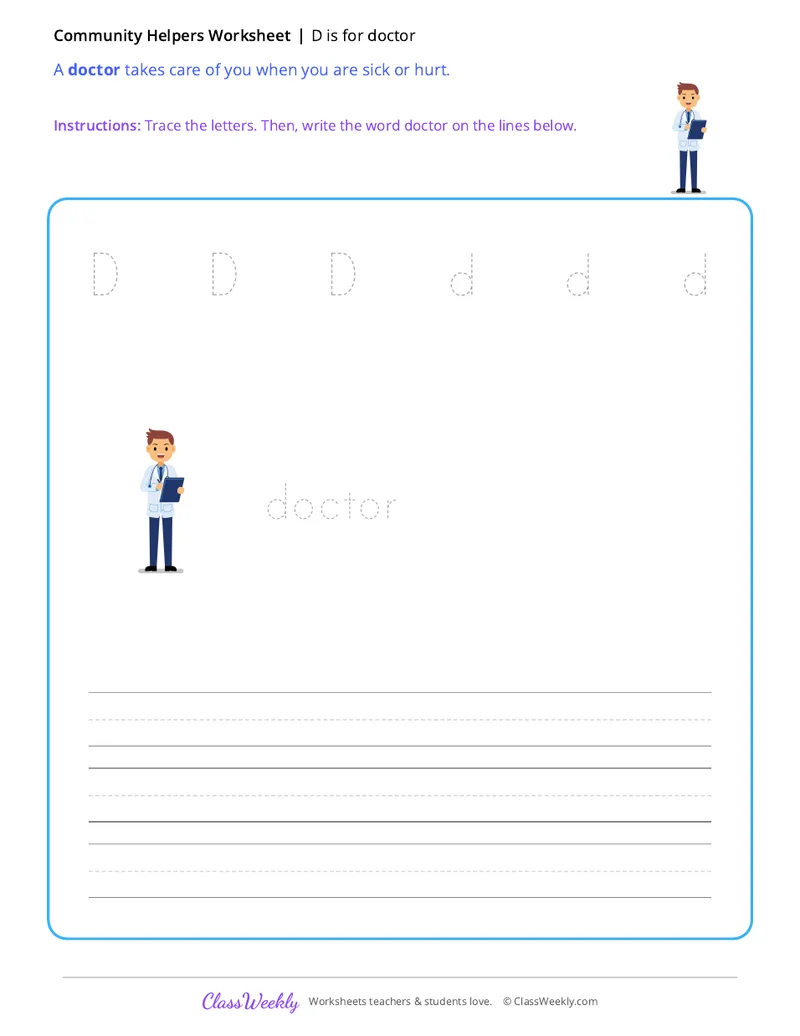
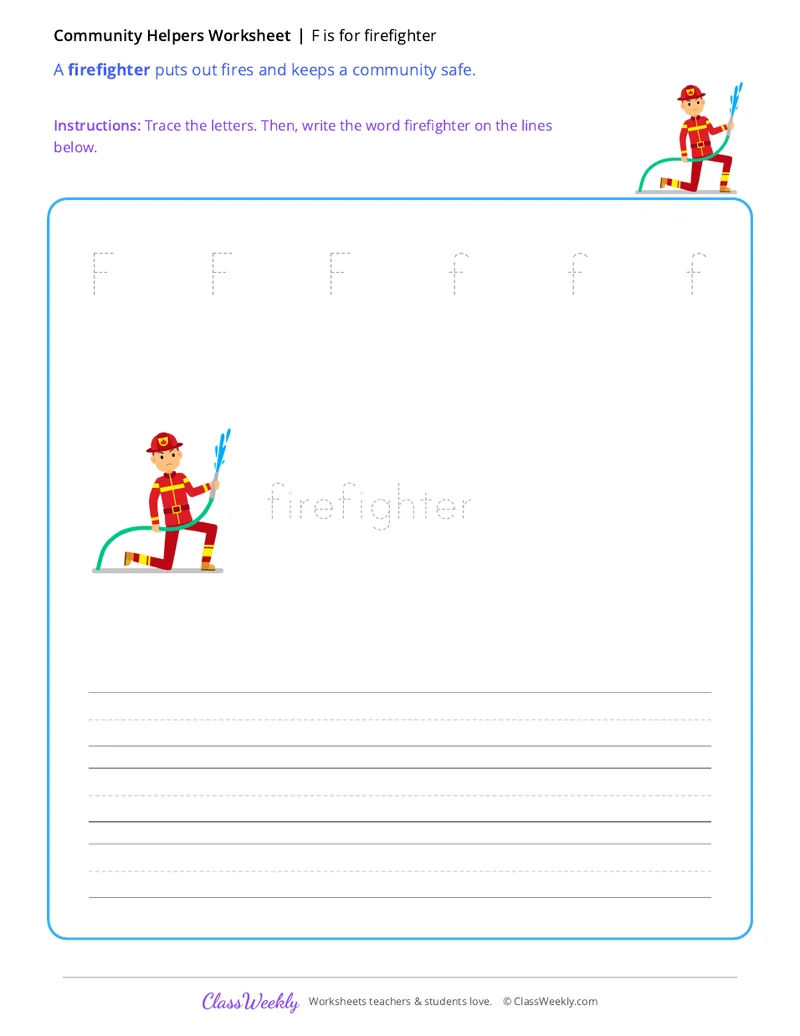
Worksheets give kindergartners repeated, low-pressure practice connecting a helper to their role, using formats matched to how five and six year olds actually think: matching a worker to their vehicle, sorting tools by job, or tracing and writing a helper's name alongside a picture. Because kindergartners are still building reading stamina, the strongest community helper worksheets lean on pictures and short labels rather than paragraphs, letting a child demonstrate understanding by drawing a line or circling an answer instead of writing a sentence. Worksheets that ask 'who can help?' for a specific problem (a fire, a toothache, a lost book) push students past simple recognition into applying what they know, which is the C3 Framework's actual goal for this age band. Rotating through several community helper worksheets over a week, each with a different format, keeps the content fresh while reinforcing the same core idea: every helper's job matters.
Which community helpers should a kindergartner be able to name?
⌄
By the end of kindergarten, most children can name and describe the role of firefighters, police officers, doctors, nurses, teachers, mail carriers, librarians, bus drivers, and park rangers, the helpers most visible in a typical child's daily life. Programs often add a few less obvious roles, dentists, veterinarians, and construction workers among them, once the core group is solid. The goal at this stage is not memorizing a long list but understanding the pattern: every helper has a job, tools that go with that job, and a way they help other people. Worksheets built around a small, familiar set of helpers, repeated across several activity types, teach that pattern more effectively than trying to cover every possible community job in a single unit.
Ratings & Reviews
No reviews yet. Be the first to share what you think.
Reviews are for ClassWeekly members.
Make a Request
Spotted something to fix, or want a worksheet we don't have yet? Tell us and we'll make it.
Worksheet Details
| Grade | Kindergarten |
| Subject | Social Studies |
| Topic | Community Helpers |
| Standard | D2.Civ.2.K-2 |
| Pages | 1 page |
| Difficulty | Medium |
What is ClassWeekly?
ClassWeekly offers free worksheets and printable learning resources for kids in preschool to grade 5. All worksheets are aligned to Common Core, NGSS, and C3 Framework standards and designed by educators. Become a member to access the full library and download unlimited PDFs.