The Long Way Home
Written by Adi Ackerman, Head Teacher
"The Long Way Home" is written for 4th Grade (Ages 9-10), and it covers Common Core RL.4.2. If your little one is a year younger but already steady on fables, the page still works. You may just need to read the instructions out loud. And if they are older and the long way home never quite stuck, this is a short review rather than busywork.

2 pages in this set
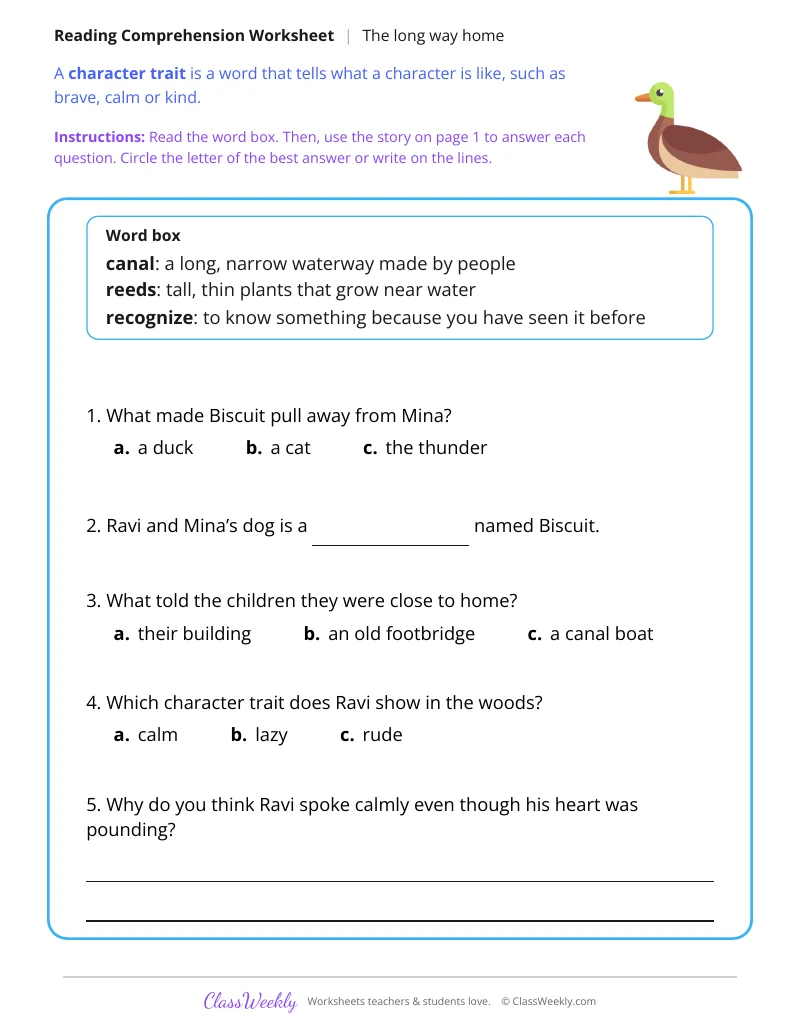
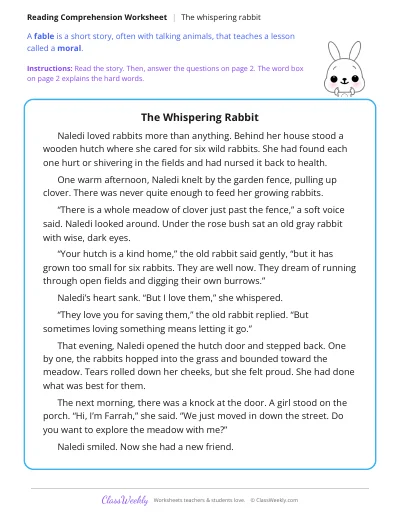
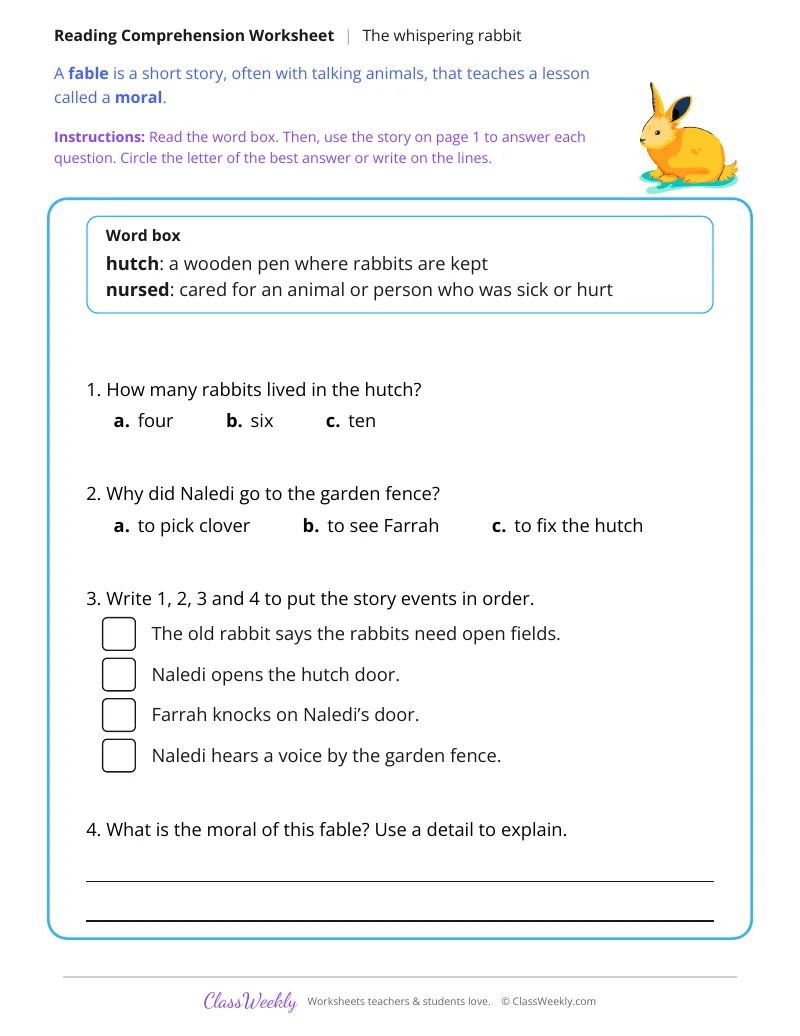
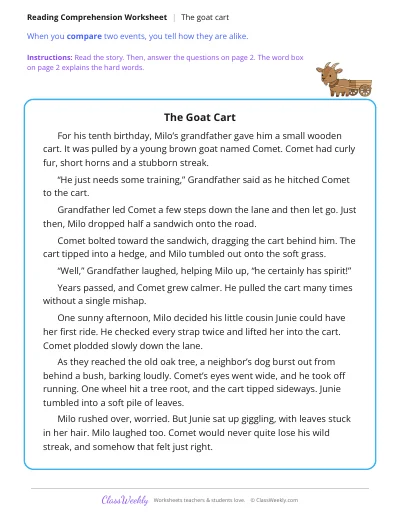
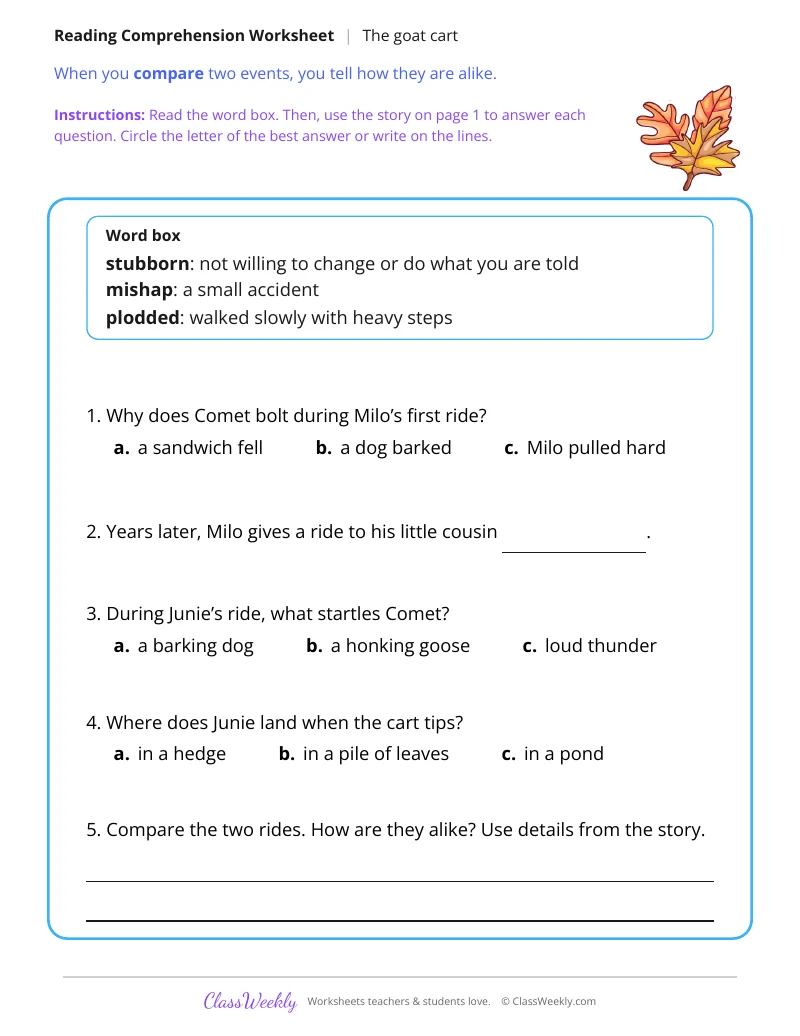
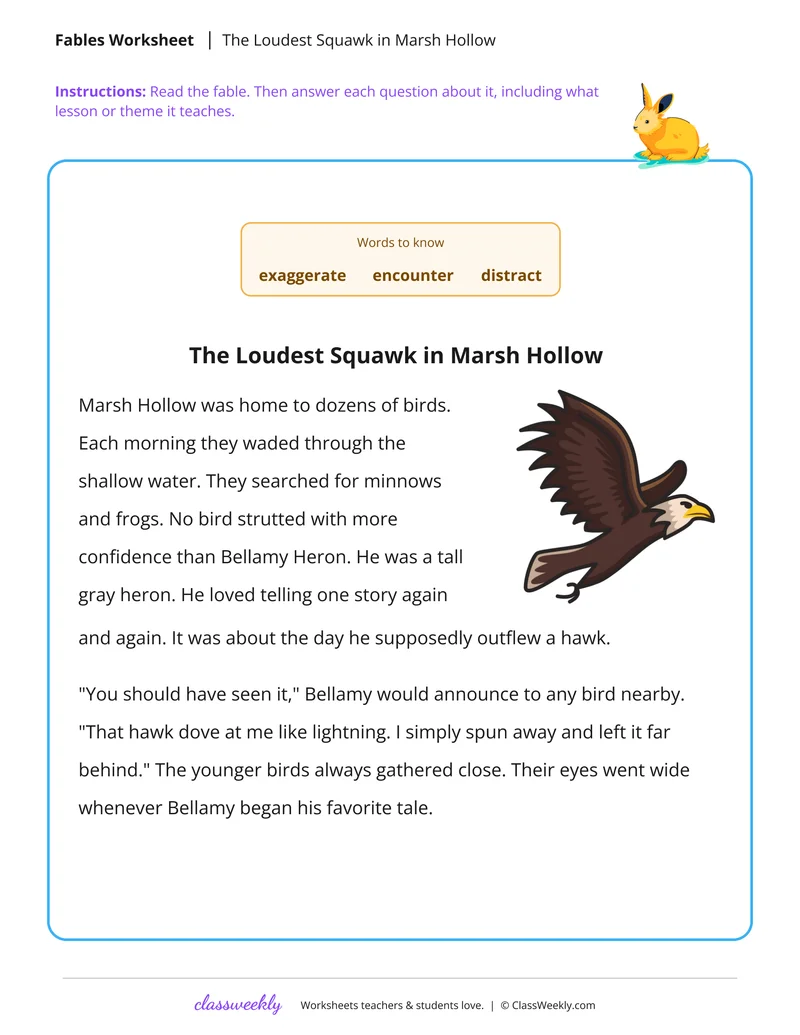
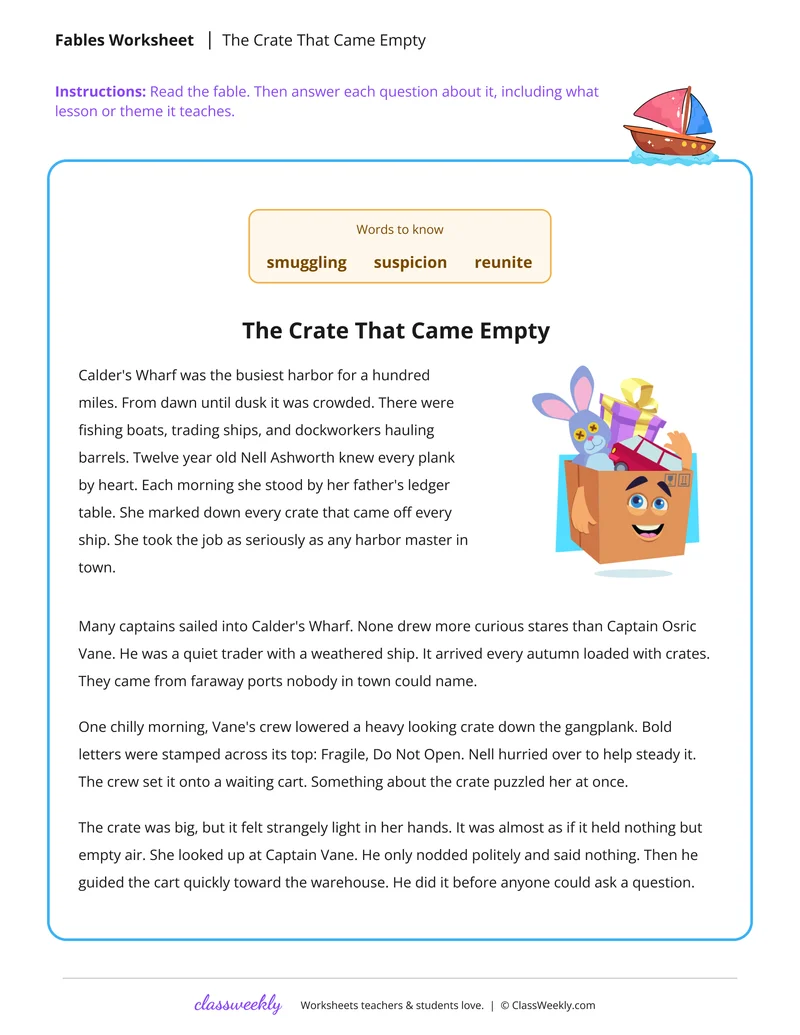
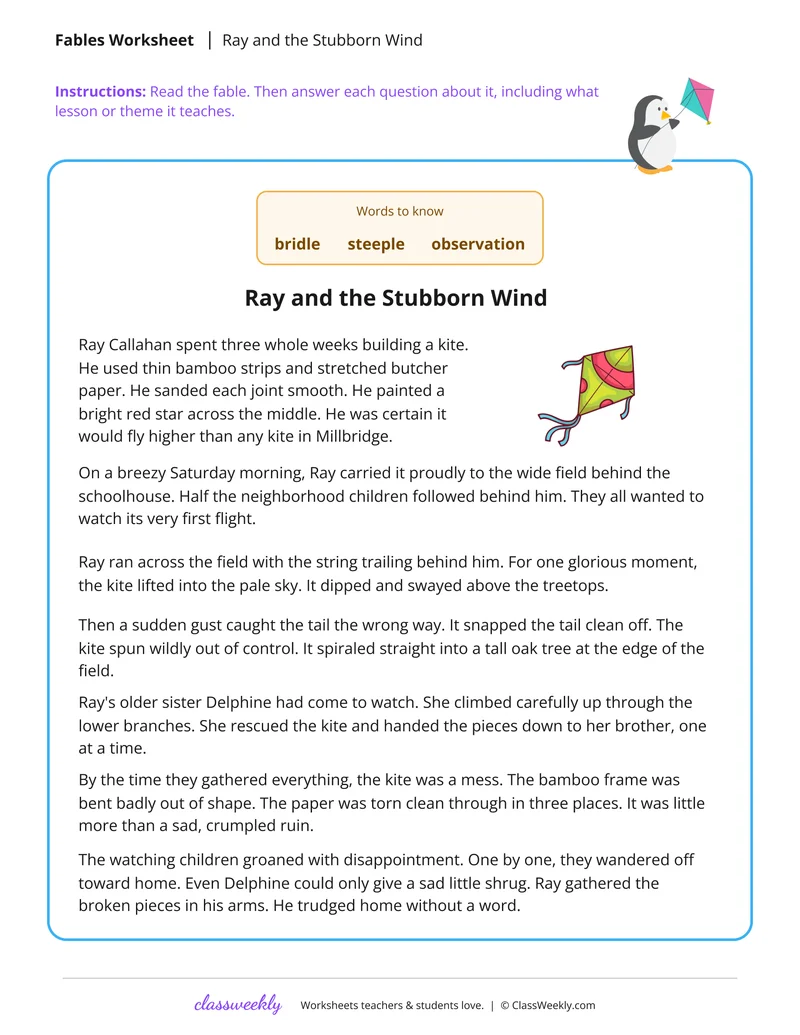
The Long Way Home - original 3rd grade reading comprehension worksheet: students read the story and answer questions about it. Part of our long way home fables collection. Aligned to Common Core standards.
How do I use this worksheet?
Begin with a shared reading or oral warm-up that highlights the long way home so students hear and see the skill in context before practicing it independently. Have students work through it independently, since students at this age benefit more from productive struggle than from being walked through each step, especially for phonics-based tasks where saying an answer aloud first helps. After completing the worksheet, use one or two examples from the page to start a discussion: "Where else have you seen this in your reading?" These the long way home worksheets are ideal for use during small group reading time, as independent center work, or as a homework activity.
What students will practice
- Students will identify and apply the long way home knowledge to decode and comprehend grade-level text.
- Students will recognize patterns and rules related to the long way home in spoken and written language.
- Students will build fluency and confidence with the long way home through independent reading and discussion.
Curriculum Links
Common Core State Standards
Reading · 4th Grade
Find this in the curriculum
Browse the grade, subject, and topic this belongs to.
FAQ
How do I use this long way home worksheet?
⌄
Begin with a shared reading or oral warm-up that highlights the long way home so students hear and see the skill in context before practicing it independently. Have students work through it independently, since students at this age benefit more from productive struggle than from being walked through each step, especially for phonics-based tasks where saying an answer aloud first helps. After completing the worksheet, use one or two examples from the page to start a discussion: "Where else have you seen this in your reading?" These the long way home worksheets are ideal for use during small group reading time, as independent center work, or as a homework activity.
What does this worksheet teach?
⌄
These the long way home worksheets for 4th grade give students focused practice with one of the key skills in early literacy. Students read, identify, and respond to the long way home through a variety of activities designed for their grade level. Our stories kids fables worksheets build both decoding skills and reading comprehension, helping students connect what they practice on paper to the books they read every day. Regular practice with the long way home strengthens the reading skills that 4th grade students need to become confident, independent readers.
Can I use this long way home worksheet for homeschool or classroom?
⌄
Yes, both. We made it for 4th Grade fables, and the page works the same whether it lands on a kitchen table or a center rotation. At home, most families go through it together and talk the answers out loud, and that talking is where most of the learning happens with the long way home. In class it runs well as independent work while you pull a small group. Print one copy or thirty, whichever the day needs.
What is a fable and how is it different from a fairy tale or a regular story?
⌄
A fable is a short story, usually with animal or ordinary characters, written specifically to teach a lesson or moral. Unlike a fairy tale, a fable rarely includes magic for its own sake and almost always ends with a clear takeaway about how to behave. Unlike a general children's story, where the theme can be subtle or open to interpretation, a fable's moral is meant to be identifiable by the end, which makes fables a good entry point for teaching theme (CCSS RL.4.2).
Why do fourth graders study fables specifically?
⌄
Fables give students low-stakes practice at a high-value skill: identifying theme from character actions and consequences, rather than from an explicit statement in the text. Because the moral is usually inferable but not always spelled out, fables train the same inference muscle (RL.4.1) that harder literary texts require later, without the added difficulty of complex plot or vocabulary getting in the way.
How do I help my child find the moral or lesson in a fable?
⌄
Ask three questions in order: What did the character want? What did they do to get it? What happened as a result? The moral almost always lives in the gap between what the character wanted and what they got. Avoid asking "what's the moral" as the very first question, since it invites guessing. Working backward from the character's choice and its consequence gets a more reliable, text-supported answer.
Ratings & Reviews
No reviews yet. Be the first to share what you think.
Reviews are for ClassWeekly members.
Make a Request
Spotted something to fix, or want a worksheet we don't have yet? Tell us and we'll make it.
What is ClassWeekly?
ClassWeekly offers free worksheets and printable learning resources for kids in preschool to grade 5. All worksheets are aligned to Common Core, NGSS, and C3 Framework standards and designed by educators. Become a member to access the full library and download unlimited PDFs.