Inventor Names and Places
Written by Adi Ackerman, Head Teacher
"Inventor Names and Places - Inventions" is written for 2nd Grade (Ages 7-8), and it covers Common Core L.2.2.A. If your little one is a year younger but already steady on nouns, the page still works. You may just need to read the instructions out loud. And if they are older and common vs proper nouns never quite stuck, this is a short review rather than busywork.

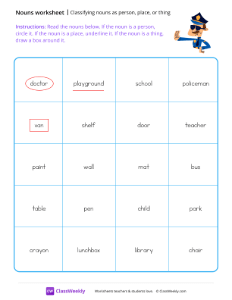
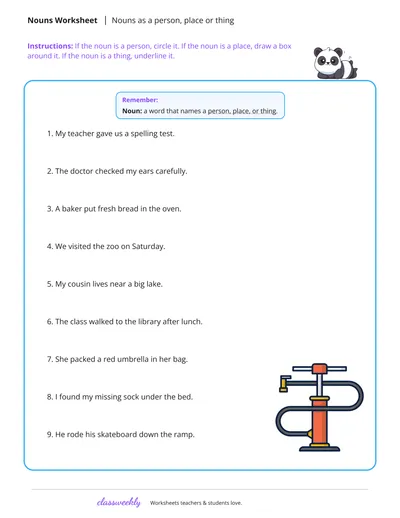
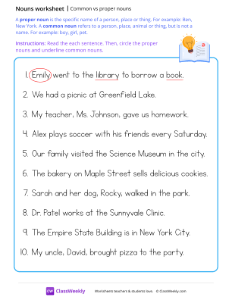
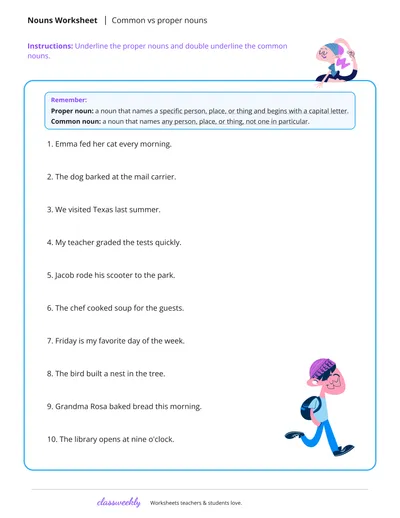
A proper noun names one particular person, place or thing, and starts with a capital. Write each word from the word bank in the right column. Free printable second grade grammar worksheet from our Inventions pack. Part of our common vs proper nouns collection. Aligned to Common Core standards.
How do I use this worksheet?
Introduce the skill with a brief whole-class activity, such as calling out examples and asking students to give a thumbs up when they hear common vs proper nouns in a sentence. Then let students work through it independently after a quick group example, checking in with a partner if they get stuck, referring to a class anchor chart if one is available. When reviewing answers, ask students to explain why an answer is correct rather than just confirming it. These common vs proper nouns worksheets work well as a focused practice activity, a homework assignment, or a warm-up at the start of a language arts lesson.
What students will practice
- Students will identify and correctly use common vs proper nouns in sentences and short passages.
- Students will distinguish common vs proper nouns from related language concepts and apply rules consistently.
- Students will demonstrate understanding of common vs proper nouns through guided and independent decoding, in both reading and their own writing.
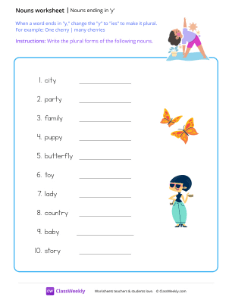
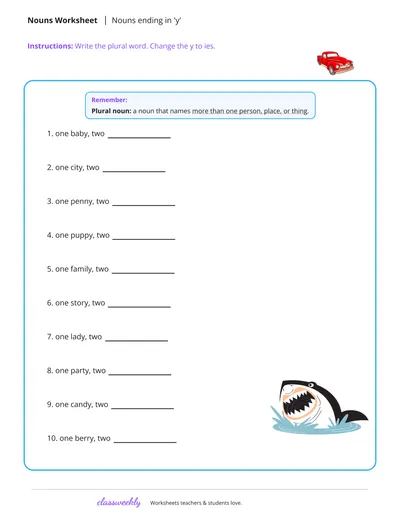
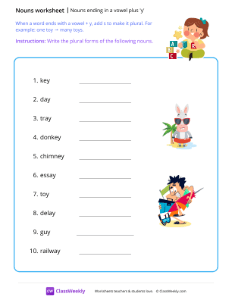
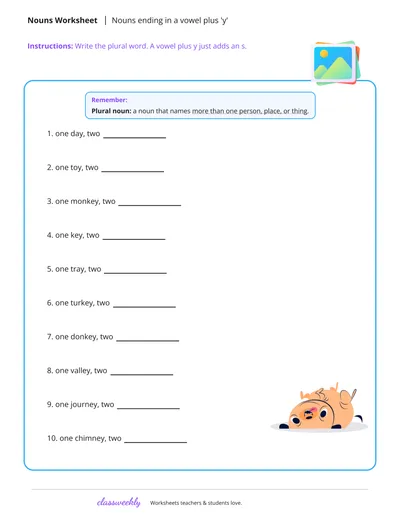
Curriculum Links
Common Core State Standards
Language · 2nd Grade
Standard: Capitalize holidays, product names, and geographic names.
View all L.2.2.A worksheets →Find this in the curriculum
Browse the grade, subject, and topic this belongs to.
FAQ
How do I use this common vs proper nouns worksheet?
⌄
Introduce the skill with a brief whole-class activity, such as calling out examples and asking students to give a thumbs up when they hear common vs proper nouns in a sentence. Then let students work through it independently after a quick group example, checking in with a partner if they get stuck, referring to a class anchor chart if one is available. When reviewing answers, ask students to explain why an answer is correct rather than just confirming it. These common vs proper nouns worksheets work well as a focused practice activity, a homework assignment, or a warm-up at the start of a language arts lesson.
What does this worksheet teach?
⌄
These common vs proper nouns worksheets for 2nd grade give students the targeted language arts practice they need to master this important grammar skill. Students identify, sort, complete, and write using common vs proper nouns through a variety of exercises designed to reinforce both recognition and application. Our nouns worksheets connect grammar practice to reading and writing so students see how common vs proper nouns works in real language. Building a solid understanding of common vs proper nouns in 2nd grade sets students up for stronger writing and clearer communication in every subject.
Can I use this common vs proper nouns worksheet for homeschool or classroom?
⌄
Yes, both. We made it for 2nd Grade nouns, and the page works the same whether it lands on a kitchen table or a center rotation. At home, most families go through it together and talk the answers out loud, and that talking is where most of the learning happens with common vs proper nouns. In class it runs well as independent work while you pull a small group. Print one copy or thirty, whichever the day needs.
How do students decide whether a noun is common or proper?
⌄
If the noun names a specific, one-of-a-kind person, place, or thing and requires a capital letter, it is proper; if it names a general category, it is common.
What are common examples of common vs. proper noun pairs for 2nd graders?
⌄
Examples include: city/Chicago, teacher/Mrs. Smith, month/October, dog/Fido - sorting pairs like these makes the distinction concrete and memorable.
How does distinguishing common from proper nouns support writing mechanics?
⌄
Students who understand this distinction apply capitalization rules correctly in their own writing, reducing one of the most common mechanical errors in early writing.
What noun concepts should second graders learn?
⌄
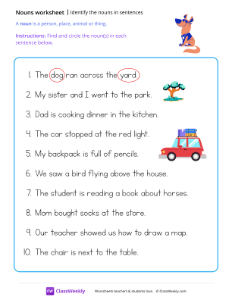
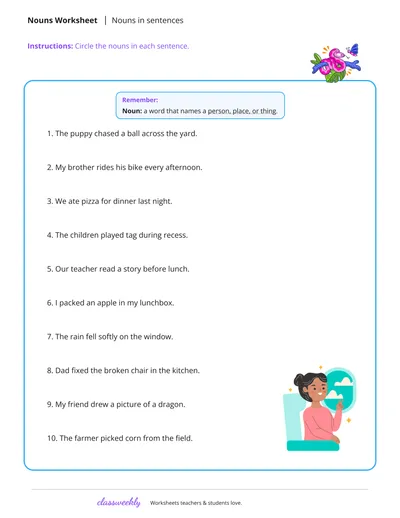
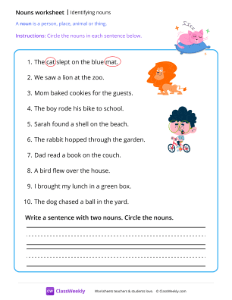
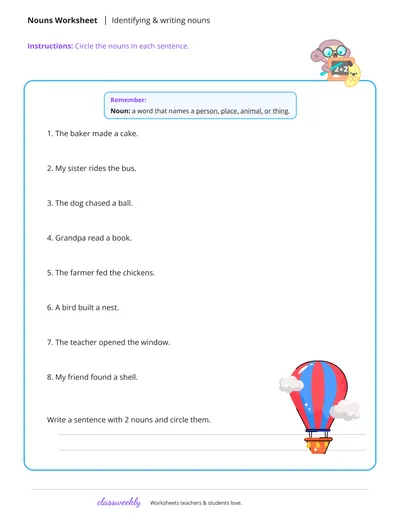
Second graders should identify and use common nouns, proper nouns, collective nouns, and irregular plural nouns. CCSS L.2.1a specifies that students use collective nouns (group, herd, flock) and CCSS L.2.1b requires them to form and use frequently occurring irregular plural nouns (children, feet, mice, teeth). Students at this level deepen their understanding beyond simply identifying nouns to categorizing them: common versus proper, singular versus plural, regular versus irregular. They should understand that a noun names a person, place, thing, or idea, and that proper nouns require capitalization. Worksheets that include noun sorting activities, sentence completion with the correct noun form, and matching singular nouns to their irregular plurals build comprehensive noun knowledge. This grade level also introduces possessive nouns with apostrophes, connecting noun work to punctuation skills in an integrated way.
How do I teach collective nouns to a second grader?
⌄
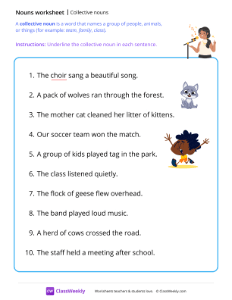
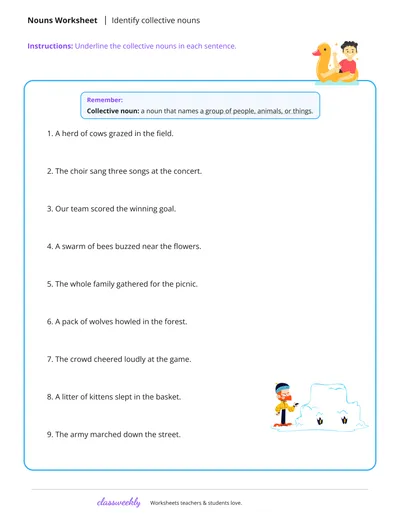
Collective nouns are fun to teach because they describe groups in interesting ways. Start with familiar examples: a team of players, a class of students, a family of bears. Then introduce more unusual ones: a flock of birds, a pack of wolves, a bouquet of flowers. Use pictures or drawings to show that one word can describe many things grouped together. Worksheets that match collective nouns to pictures of groups, or that ask students to fill in the correct collective noun in a sentence, provide structured practice. You can also create a classroom or home "collection wall" where you add new collective nouns as you encounter them in reading. Games like "What is a group of ___ called?" build vocabulary in an engaging way. CCSS L.2.1a specifically lists collective nouns as a second grade skill because understanding them helps students write more precisely and read more fluently.
What irregular plural nouns should second graders know?
⌄
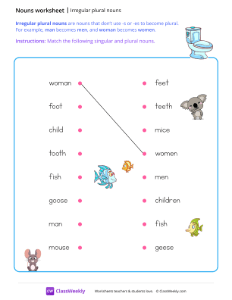
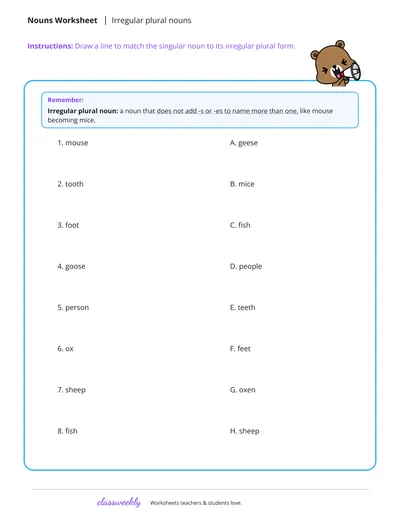
The most important irregular plural nouns for second graders include: child to children, foot to feet, tooth to teeth, man to men, woman to women, mouse to mice, goose to geese, person to people, life to lives, and leaf to leaves. CCSS L.2.1b focuses on frequently occurring irregular plurals, meaning the ones children encounter most often in reading and need in their own writing. Unlike regular plurals that simply add s or es, irregular plurals follow different patterns: vowel changes (foot to feet), word changes (child to children), or the same form for singular and plural (sheep, fish, deer). Worksheets that sort nouns into "add s" and "changes" categories help children recognize that not all plurals follow the same rule. Matching games that pair singular and plural forms build memorization. Frequent reading exposure is the best long-term strategy because children internalize correct forms from repeated encounters.
Ratings & Reviews
No reviews yet. Be the first to share what you think.
Reviews are for ClassWeekly members.
Make a Request
Spotted something to fix, or want a worksheet we don't have yet? Tell us and we'll make it.
Worksheet Details
| Grade | 2nd Grade |
| Subject | Grammar & Writing |
| Topic | Nouns |
| Standard | L.2.2.A |
| Pages | 1 page |
| Difficulty | Medium |
Learn More
What is ClassWeekly?
ClassWeekly offers free worksheets and printable learning resources for kids in preschool to grade 5. All worksheets are aligned to Common Core, NGSS, and C3 Framework standards and designed by educators. Become a member to access the full library and download unlimited PDFs.