Multiply 2 digits by 3
Written by Adi Ackerman, Head Teacher
"Multiply 2 digits by 3 - Snowflake" is written for 4th Grade (Ages 9-10), and it covers Common Core 4.NBT.B.5. If your little one is a year younger but already steady on multiplication, the page still works. You may just need to read the instructions out loud. And if they are older and multi-digit multiplication never quite stuck, this is a short review rather than busywork.
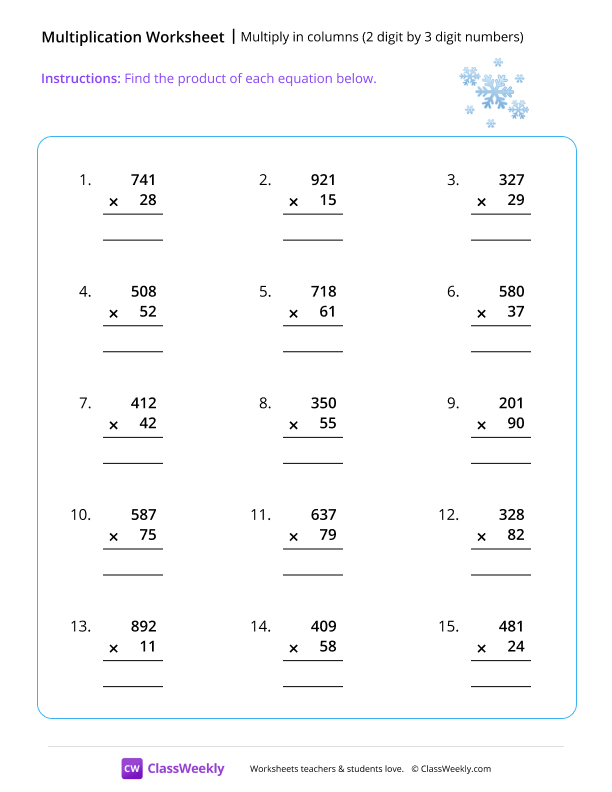
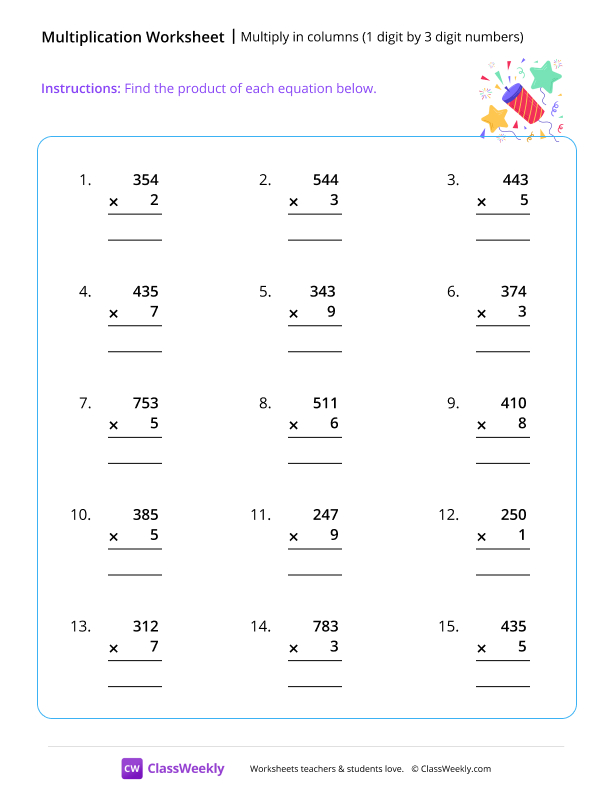
Free printable multiply 2 digits by 3 (snowflake) worksheet for 4th grade students. Part of our multi-digit multiplication collection. Aligned to Common Core standards.
How do I use this worksheet?
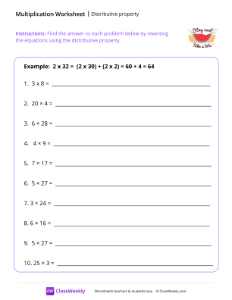
Begin by reviewing the partial products strategy with a two-digit by two-digit example before moving to the standard algorithm, since partial products make the place value reasoning visible. Encourage your child to estimate the product first (rounding to the nearest ten or hundred) so they can catch errors in their final answer. For word problems, have them underline the key numbers and circle what the question is asking before writing any equations.
What students will practice
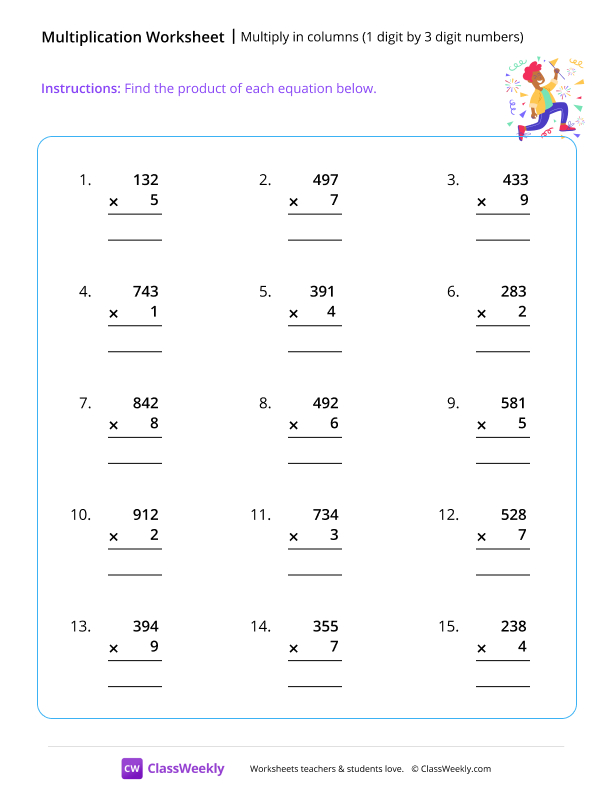
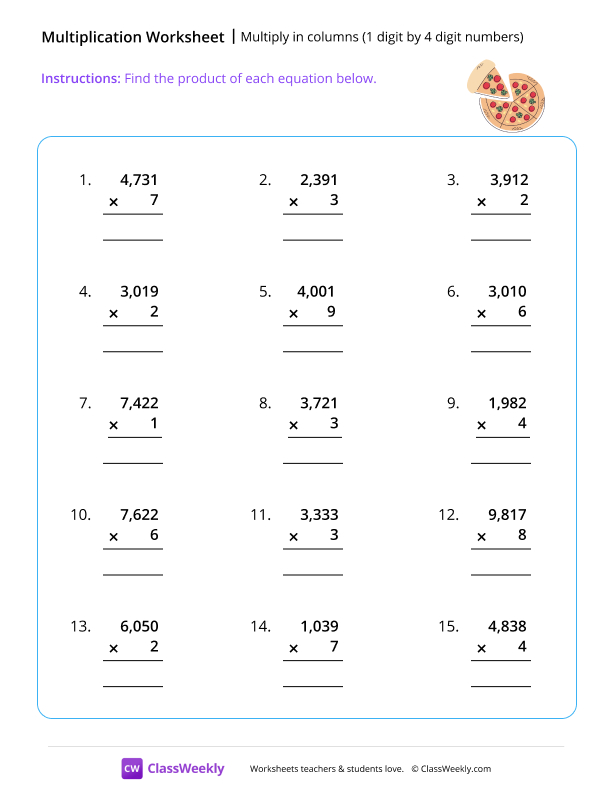
- Students will multiply up to four-digit numbers by one-digit numbers using the standard algorithm.
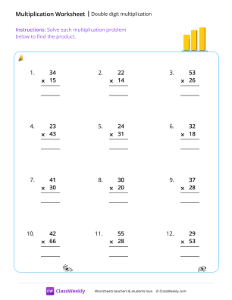
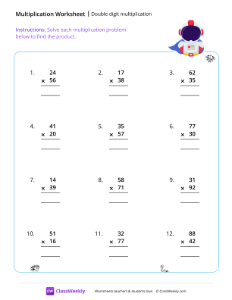
- Students will multiply two two-digit numbers using area models, partial products, and the standard algorithm.
- Students will apply multi-digit multiplication to solve real-world word problems.
Curriculum Links
Common Core State Standards
Number and Operations in Base Ten · 4th Grade
Standard: Multiply a whole number of up to four digits by a one-digit whole number, and multiply two two-digit numbers, using strategies based on place value and the properties of operations. Illustrate and explain the calculation by using equations, rectangular arrays, and/or area models.
View all 4.NBT.B.5 worksheets →Find this in the curriculum
Browse the grade, subject, and topic this belongs to.
FAQ
How do I use this multi-digit multiplication worksheet?
⌄
Begin by reviewing the partial products strategy with a two-digit by two-digit example before moving to the standard algorithm, since partial products make the place value reasoning visible. Encourage your child to estimate the product first (rounding to the nearest ten or hundred) so they can catch errors in their final answer. For word problems, have them underline the key numbers and circle what the question is asking before writing any equations.
What does this worksheet teach?
⌄
These multi-digit multiplication worksheets for 4th grade challenge students to extend the multiplication facts they know into larger, more complex computations. Students practice multiplying two-, three-, and four-digit numbers using strategies including area models, partial products, and the standard algorithm. Our 4th grade multiplication worksheets include both straight computation problems and word problems so students build procedural fluency alongside problem-solving skills. Multi-digit multiplication is one of the most important skills in 4th grade math and the foundation for long division and fraction work ahead.
Can I use this multi-digit multiplication worksheet for homeschool or classroom?
⌄
Yes, both. We made it for 4th Grade multiplication, and the page works the same whether it lands on a kitchen table or a center rotation. At home, most families go through it together and talk the answers out loud, and that talking is where most of the learning happens with multi-digit multiplication. In class it runs well as independent work while you pull a small group. Print one copy or thirty, whichever the day needs.
What multiplication combinations are considered multi-digit at the 4th grade level?
⌄
Multi-digit problems at 4th grade include 3-digit × 1-digit, 4-digit × 1-digit, and 2-digit × 2-digit multiplications as specified by CCSS 4.NBT.B.5.
How do estimation strategies support multi-digit multiplication on these worksheets?
⌄
Rounding each factor to its leading digit before computing gives students a quick estimate to check their exact answer's reasonableness, catching major errors before they go unnoticed.
How do these multi-digit multiplication sheets bridge to 5th grade computation standards?
⌄
Mastering multiplication with factors up to 4 digits sets the stage for 5th grade multi-digit division and decimal multiplication, which build directly on these skills.
What multiplication skills should fourth graders have?
⌄
Fourth graders should multiply a whole number of up to four digits by a one-digit whole number and multiply two two-digit numbers using strategies based on place value and the properties of operations (CCSS 4.NBT.B.5). They should understand multiplication as an area model and connect partial products to the standard algorithm. Students should also multiply fractions by whole numbers and apply multiplication to solve multi-step word problems. Worksheets that progress from one-digit-by-multi-digit problems to two-digit-by-two-digit problems, using both the area model and the standard algorithm, help students build understanding alongside procedural fluency. Estimation of products using rounding should accompany exact computation to develop the habit of checking reasonableness.
How do you teach two-digit by two-digit multiplication?
⌄
Start with the area model: draw a rectangle divided into four sections representing the tens and ones of each factor. For 23 times 15, the sections show 20 times 10, 20 times 5, 3 times 10, and 3 times 5. Add the four partial products (200 plus 100 plus 30 plus 15 equals 345). Then show how the standard algorithm performs the same calculation in a more compact format. Worksheets that display the area model next to the standard algorithm for the same problem help children see that each step in the algorithm corresponds to a section of the rectangle. This connection between the visual model and the procedure builds understanding that lasts, rather than rote memorization of steps that are easily forgotten.
Why is the area model important for learning multiplication?
⌄
The area model represents multiplication as the area of a rectangle, making the distributive property visible. It shows exactly what each partial product represents and why you cannot simply multiply the ones digits and tens digits separately. This visual representation prevents the common error of multiplying 23 times 15 as 2 times 1 followed by 3 times 5. The area model also connects to real-world applications (finding the area of a room) and previews algebra (multiplying binomials). Worksheets that guide students through the area model with grid-based drawings, then transition to the open area model without grid lines, then to the standard algorithm, create a progression from visual understanding to efficient computation that many math programs now recommend.
Ratings & Reviews
No reviews yet. Be the first to share what you think.
Reviews are for ClassWeekly members.
Make a Request
Spotted something to fix, or want a worksheet we don't have yet? Tell us and we'll make it.
Worksheet Details
| Grade | 4th Grade |
| Subject | Math |
| Topic | Multiplication |
| Standard | 4.NBT.B.5 |
| Pages | 1 page |
| Difficulty | Medium |
Learn More
What is ClassWeekly?
ClassWeekly offers free worksheets and printable learning resources for kids in preschool to grade 5. All worksheets are aligned to Common Core, NGSS, and C3 Framework standards and designed by educators. Become a member to access the full library and download unlimited PDFs.