Sound Devices in a Poem
Written by Adi Ackerman, Head Teacher
"Sound Devices in a Poem" is written for 5th Grade (Ages 10-11), and it covers Common Core RL.5.4. If your little one is a year younger but already steady here, the page still works. You may just need to read the instructions out loud. And if they are older and figurative language never quite stuck, this is a short review rather than busywork.
2 pages in this set
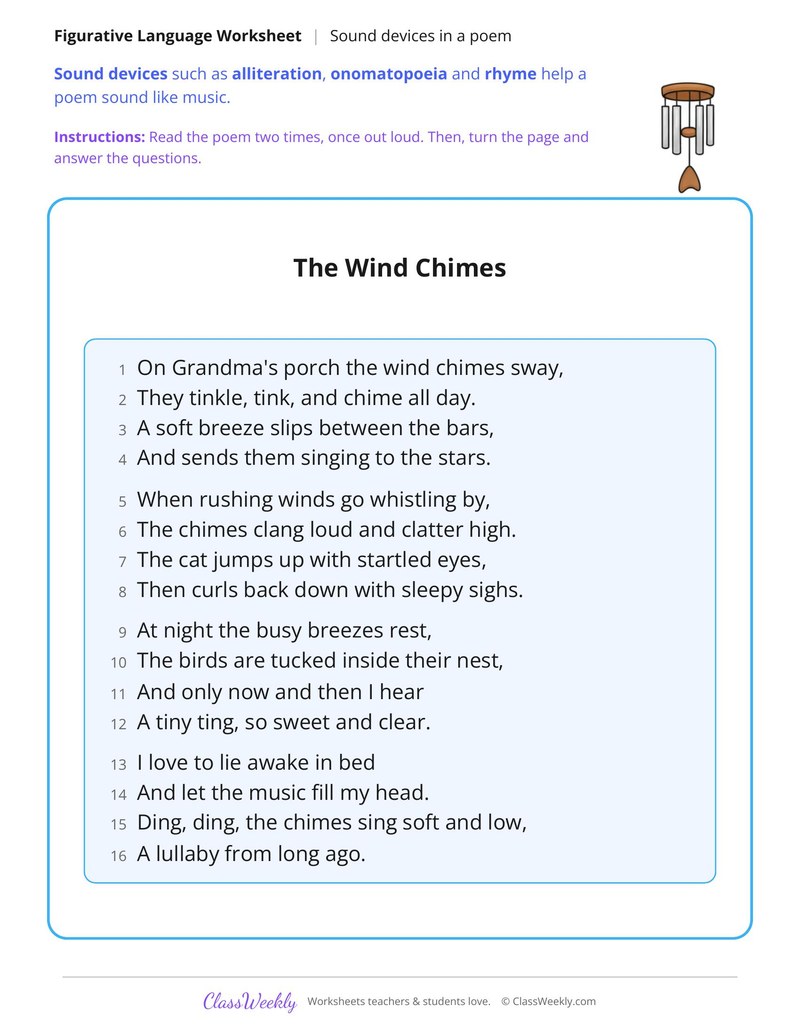
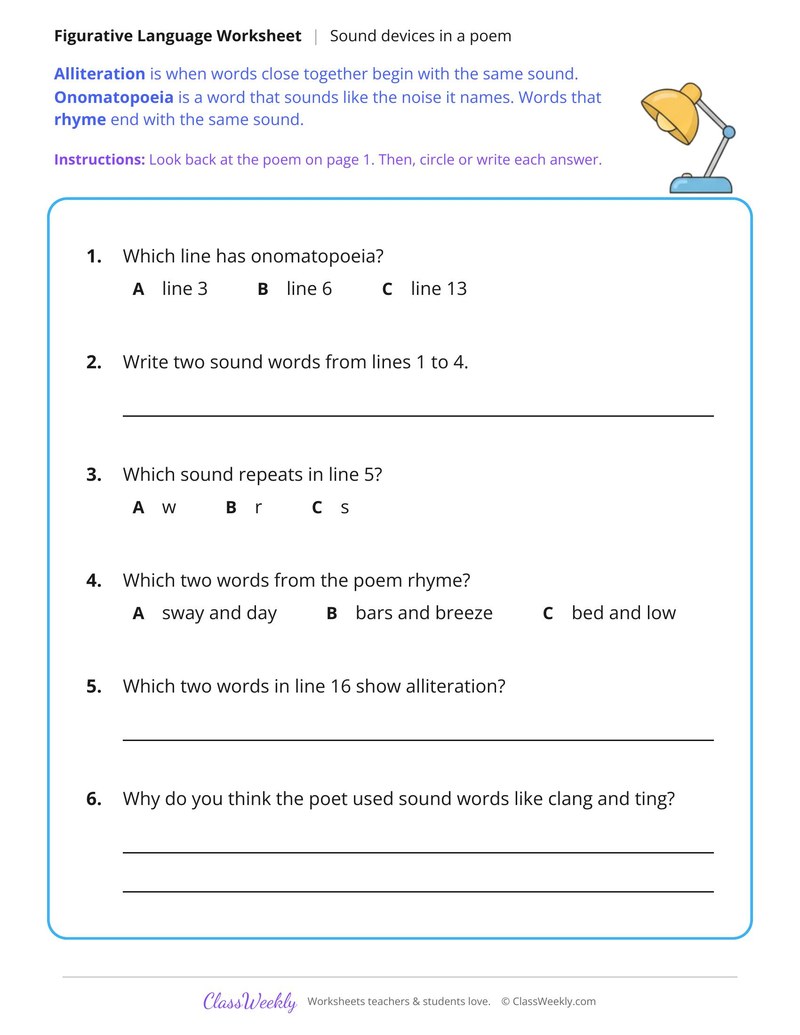
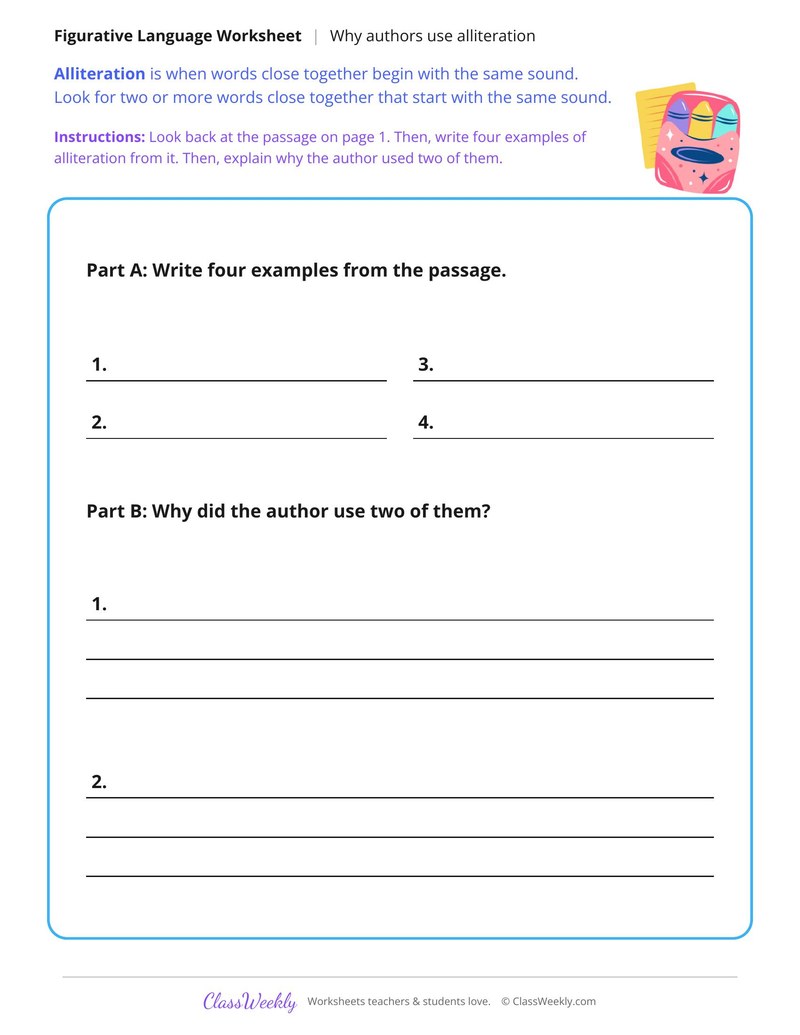
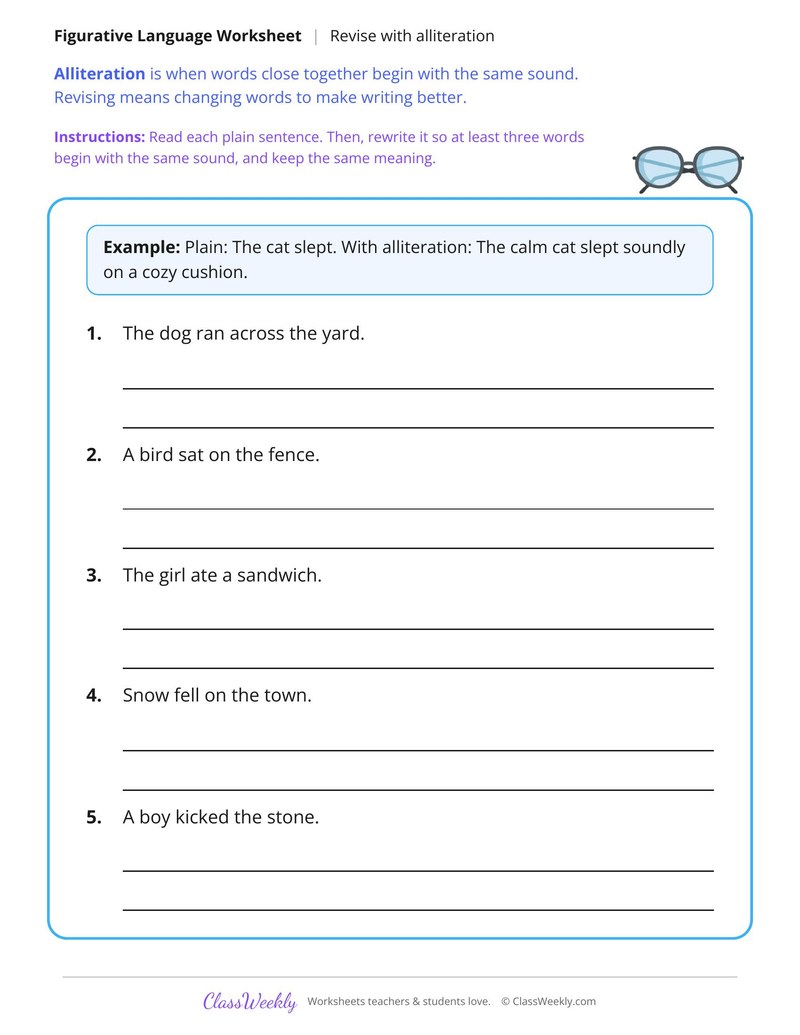
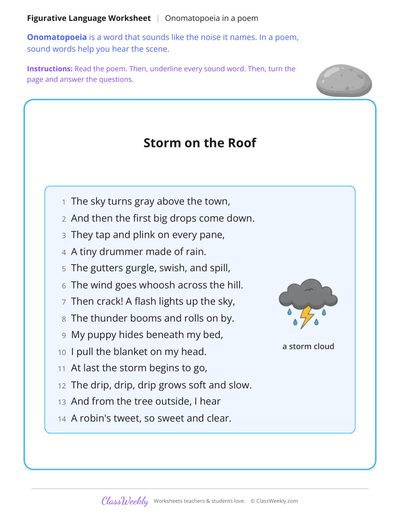
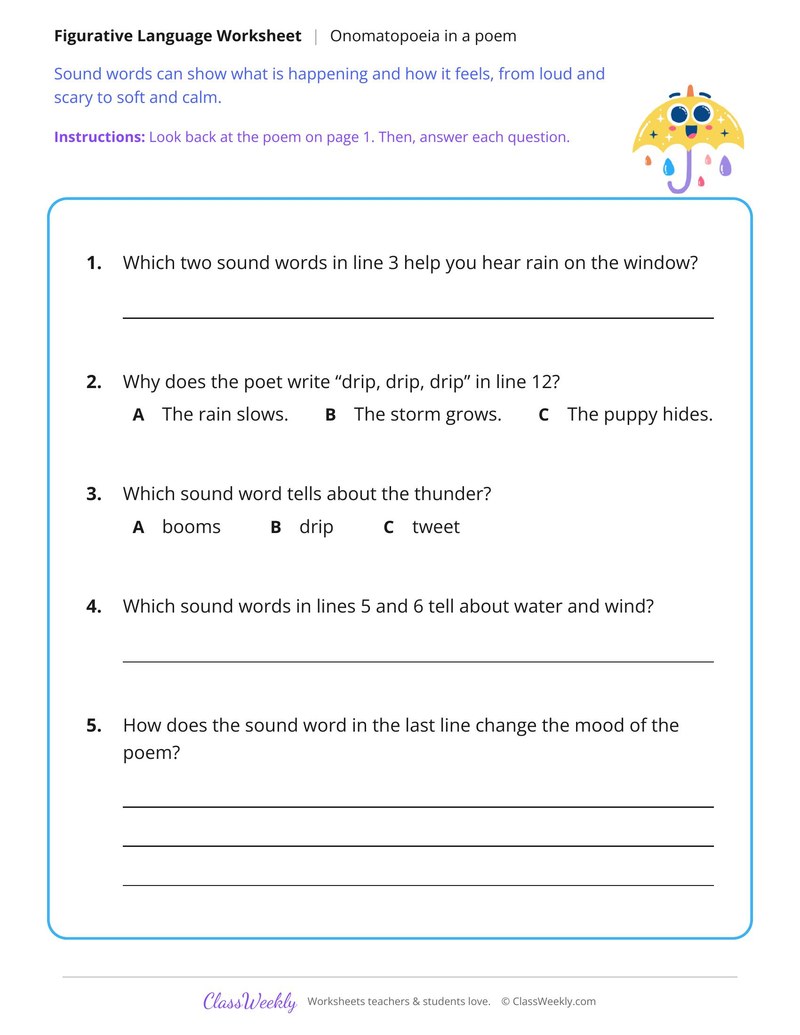
5th grade vocabulary worksheet: read an original poem about wind chimes, then find its alliteration, sound words and rhymes. Answer key included. Part of our figurative language collection. Aligned to Common Core standards.
How do I use this worksheet?
Read the poem aloud together before your child answers. For each saying, ask when someone might say it in real life. Check with the answer key and compare your child's explanations with the samples.
What students will practice
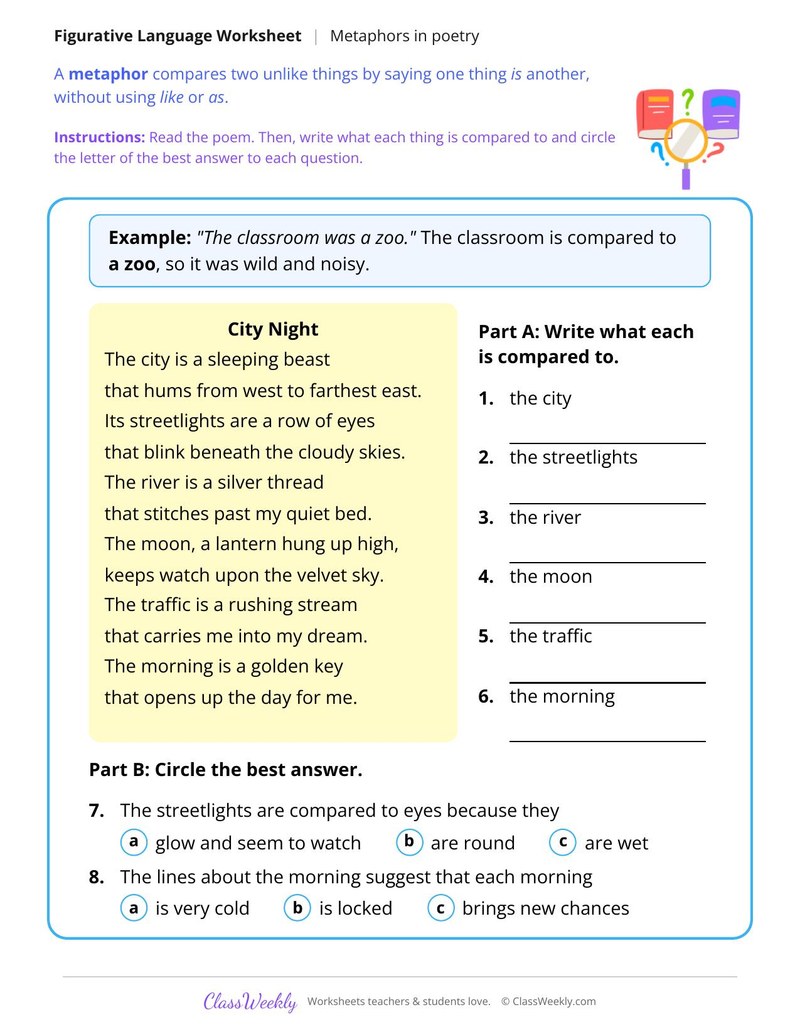
- Students will explain what the metaphors in a poem compare.
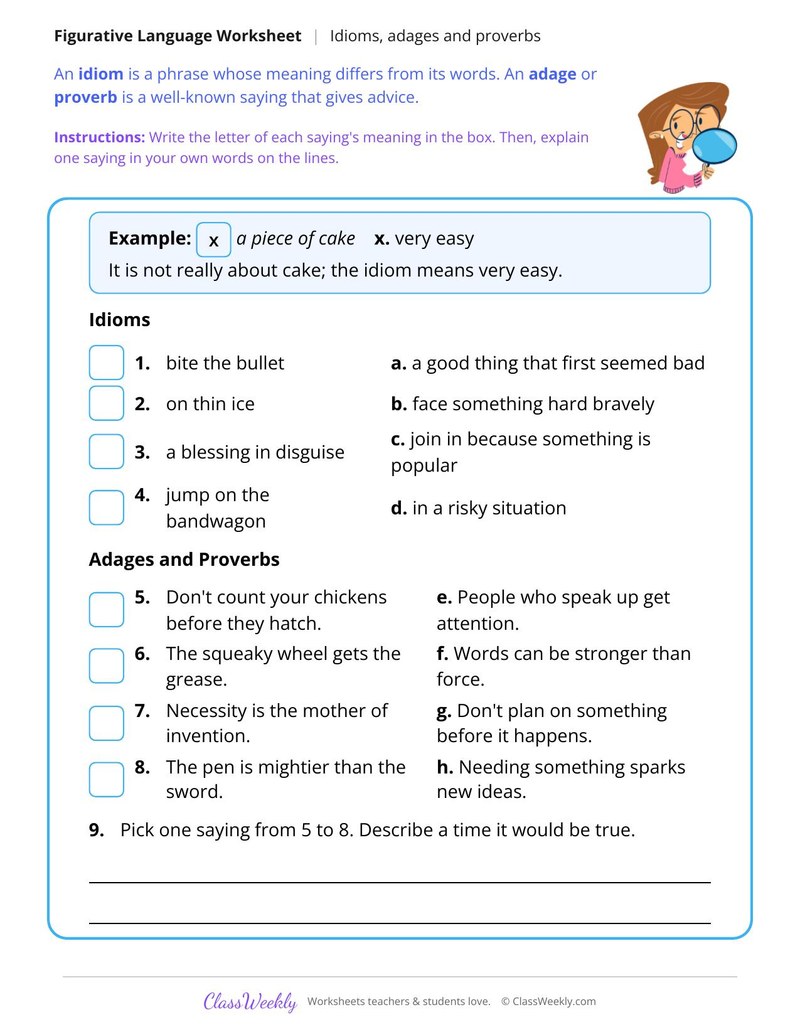
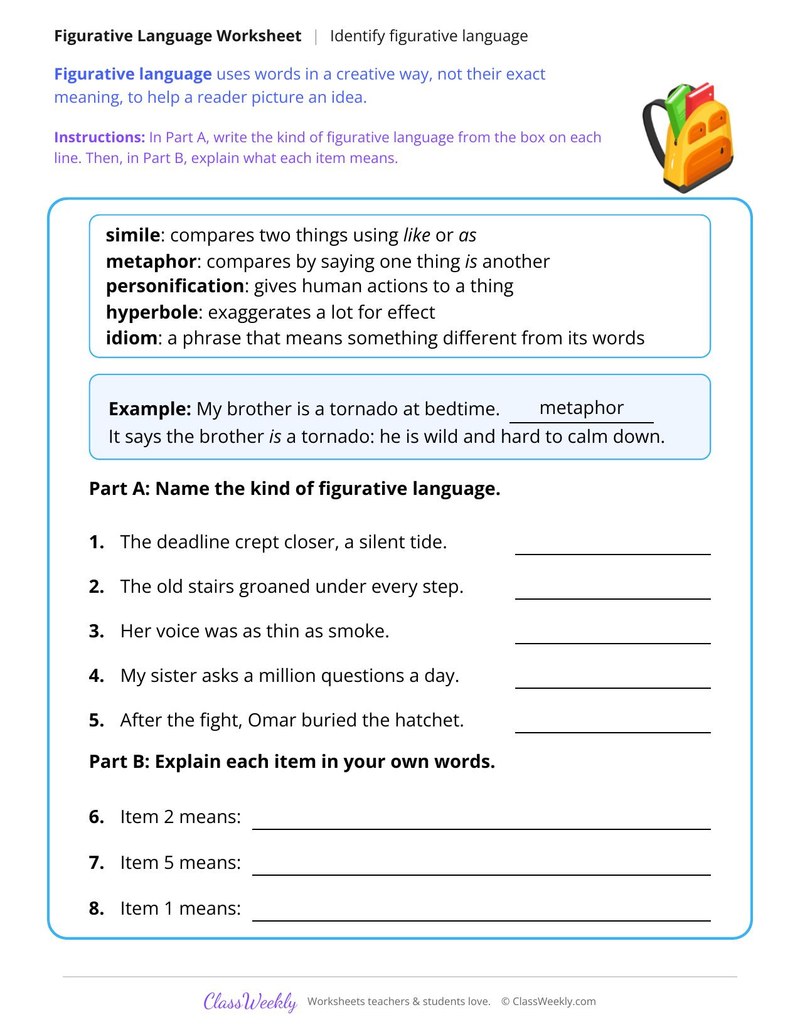
- Students will explain the meaning of idioms, adages and proverbs.
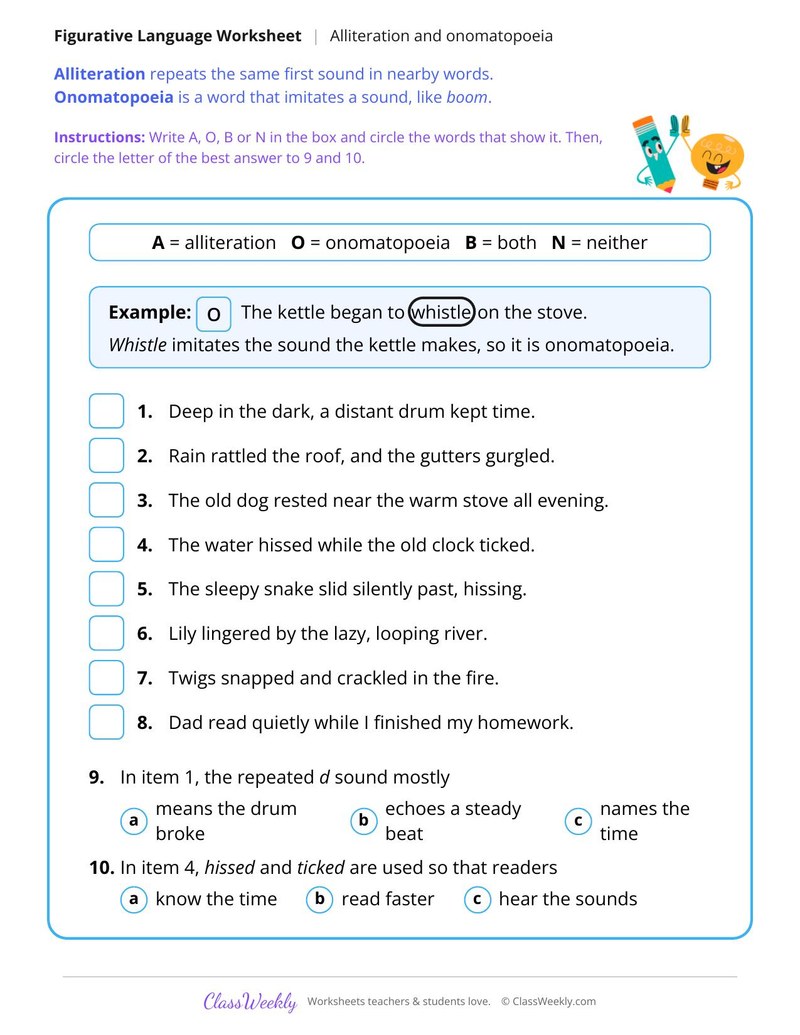
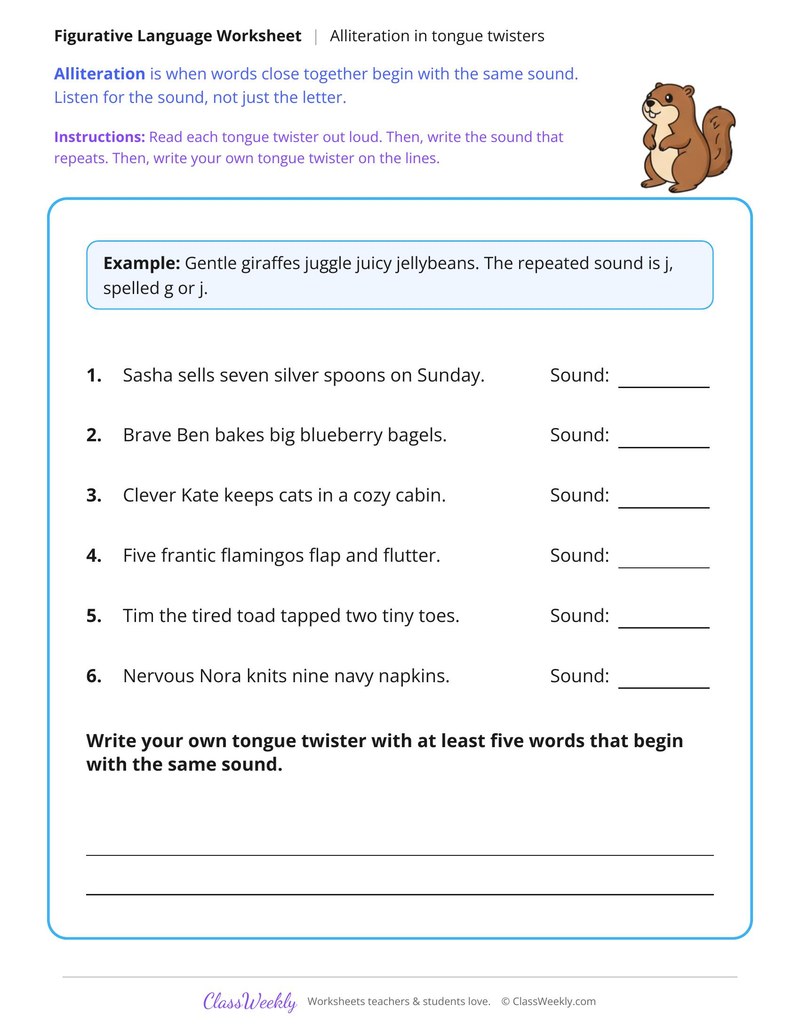
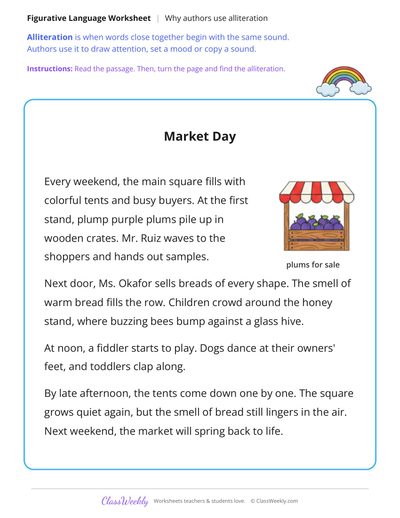
- Students will identify, explain and write alliteration, onomatopoeia, puns and oxymorons.
Curriculum Links
Common Core State Standards
Vocabulary · 5th Grade
Find this in the curriculum
Browse the grade, subject, and topic this belongs to.
FAQ
How do I use this figurative language worksheet?
⌄
Read the poem aloud together before your child answers. For each saying, ask when someone might say it in real life. Check with the answer key and compare your child's explanations with the samples.
What does this worksheet teach?
⌄
Read an original poem about wind chimes, then find its alliteration, sound words and rhymes. Sound devices such as alliteration, onomatopoeia and rhyme help a poem sound like music. The directions on the page read: Read the poem two times, once out loud. Then, turn the page and answer the questions. On page 2: Look back at the poem on page 1. Then, circle or write each answer. The answer key covers the questions on page 2.
Can I use this figurative language worksheet for homeschool or classroom?
⌄
Yes, both. We made it for 5th Grade figurative language, and the page works the same whether it lands on a kitchen table or a center rotation. At home, most families go through it together and talk the answers out loud, and that talking is where most of the learning happens. In class it runs well as independent work while you pull a small group. Print one copy or thirty, whichever the day needs.
What figurative language do 5th graders learn?
⌄
CCSS L.5.5.A asks 5th graders to interpret similes and metaphors in context, and L.5.5.B covers idioms, adages and proverbs. Sound devices like alliteration and onomatopoeia often come up in the poetry unit, and puns and oxymorons show how writers play with meaning.
What is the difference between an idiom and a proverb?
⌄
An idiom is a phrase whose meaning differs from its words, like on thin ice. An adage or proverb is a well-known saying that gives advice, like don't count your chickens before they hatch.
How do I help my child explain a metaphor?
⌄
Ask two questions: what two things are compared, and what do they have in common? In the river is a silver thread, both are long, thin and shiny. That answer is the meaning.
Is there an answer key for each worksheet?
⌄
Sixteen of the twenty sheets have an answer key, with sample answers for the written explanations. Revise With Alliteration, Write Your Own Puns, Write Sentences With Oxymorons and Figurative Language Revision have no key, since every child's writing is different.
Ratings & Reviews
No reviews yet. Be the first to share what you think.
Reviews are for ClassWeekly members.
Make a Request
Spotted something to fix, or want a worksheet we don't have yet? Tell us and we'll make it.
Worksheet Details
| Grade | 5th Grade |
| Subject | Vocabulary |
| Topic | Figurative Language |
| Standard | RL.5.4 |
| Pages | 2 pages |
| Difficulty | Medium |
What is ClassWeekly?
ClassWeekly offers free worksheets and printable learning resources for kids in preschool to grade 5. All worksheets are aligned to Common Core, NGSS, and C3 Framework standards and designed by educators. Become a member to access the full library and download unlimited PDFs.