Name the Sense Behind Each Detail at a County Fair
Written by Adi Ackerman, Head Teacher
"Name the Sense Behind Each Detail at a County Fair" is written for 4th Grade (Ages 9-10), and it covers Common Core W.4.3.D. If your little one is a year younger but already steady on writing process, the page still works. You may just need to read the instructions out loud. And if they are older and descriptive language never quite stuck, this is a short review rather than busywork.
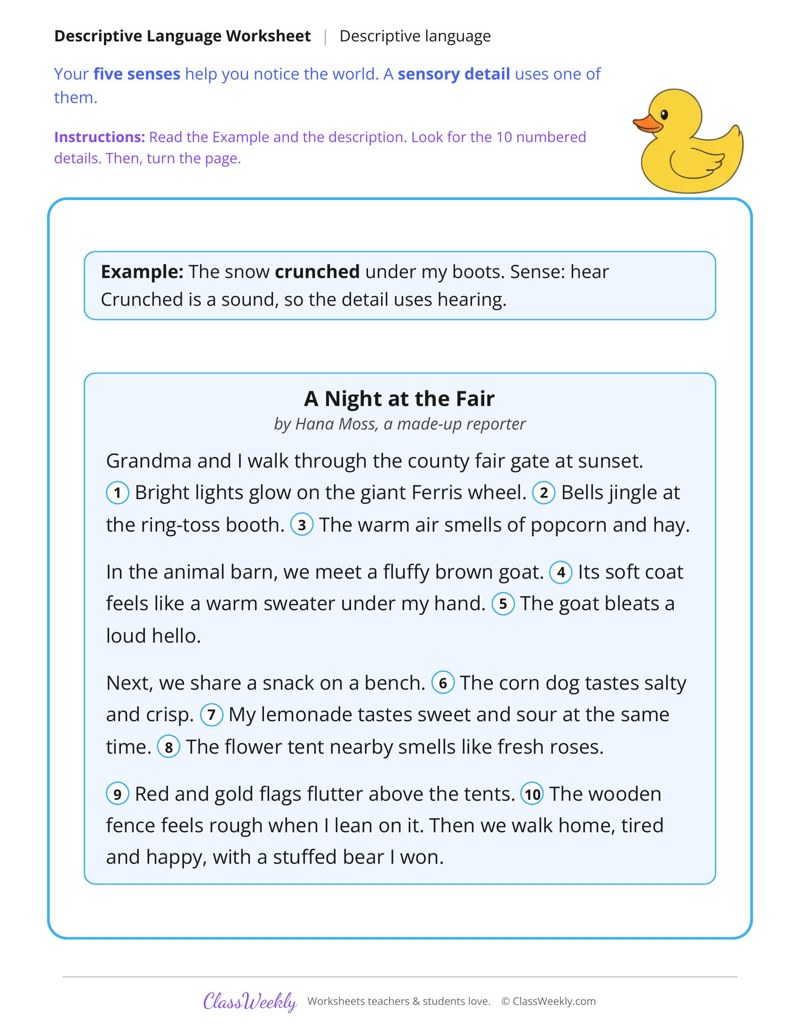
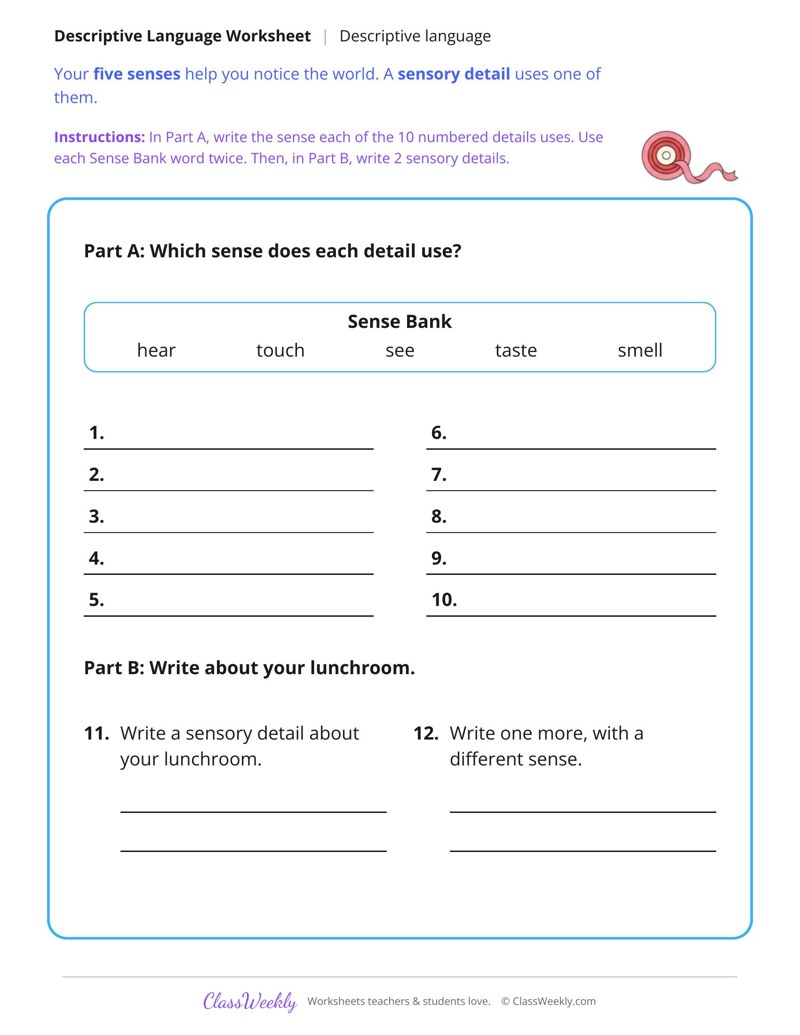
2 pages in this set
4th grade writing worksheet: name the sense behind 10 details in a made-up county fair report, then describe your lunchroom. Answer key included. Part of our descriptive language writing process collection. Aligned to Common Core standards.
How do I use this worksheet?
Pick one tool a week and look for it together in a book your child is reading. Then have your child use it in a planner and write a short paragraph from the plan. Read the paragraph aloud and point out the strongest word.
What students will practice
- Students will replace vague words with vivid verbs, precise nouns and sensory details.
- Students will find and write similes, metaphors, personification, hyperbole and sound words.
- Students will show a character's feelings through actions and plan a description before drafting.
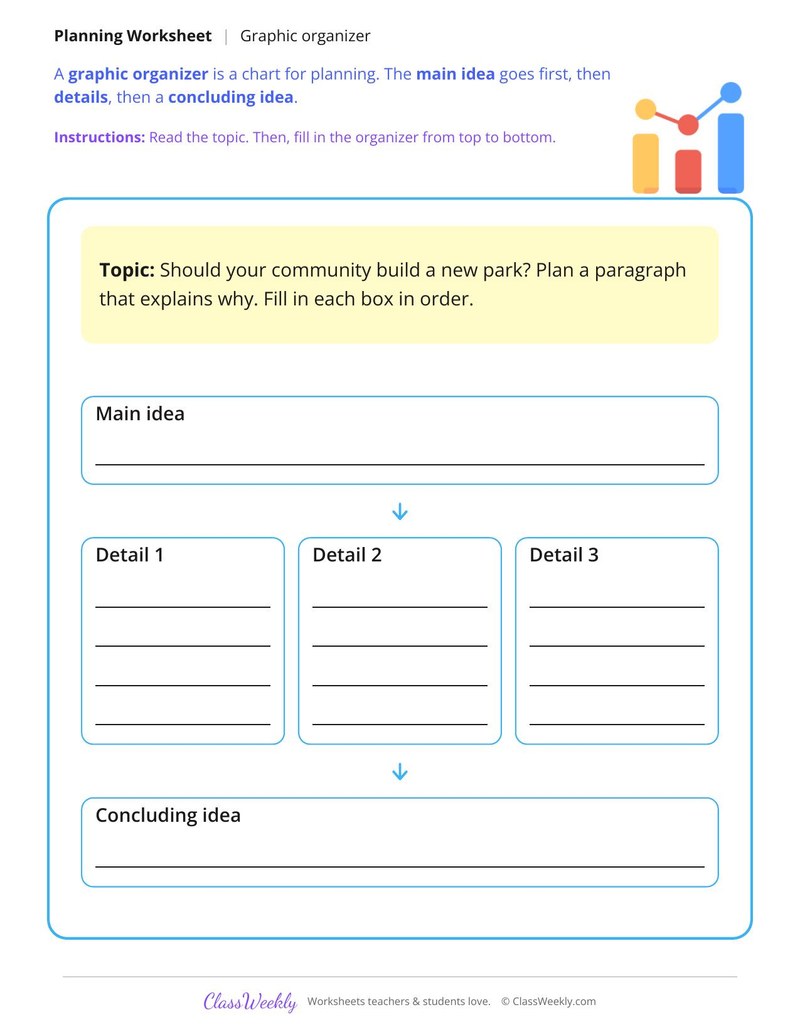
Plan an Essay with a Graphic Organizer
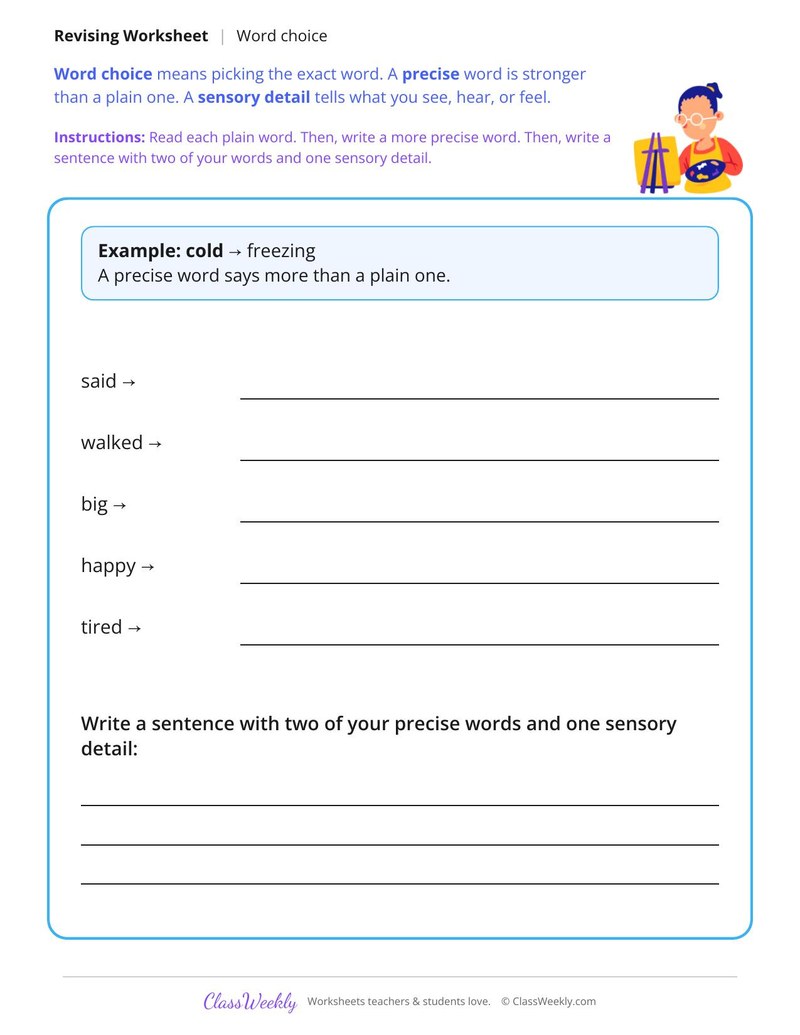
Revise Writing for Word Choice
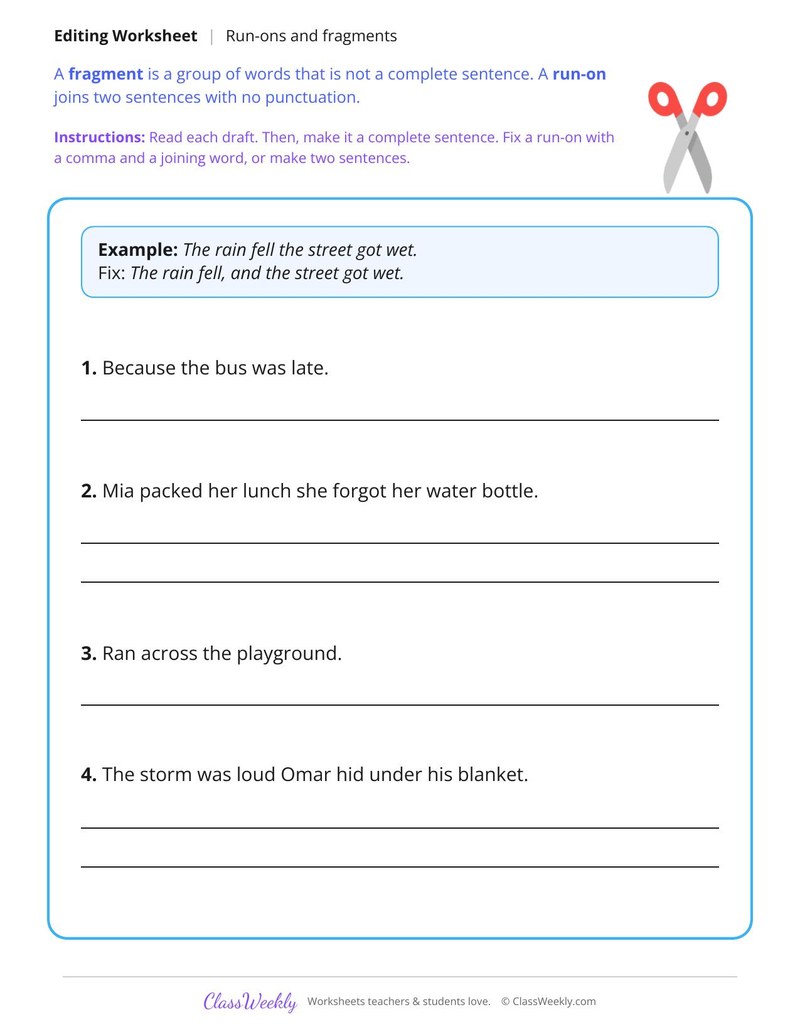
Edit Writing for Run-ons and Fragments
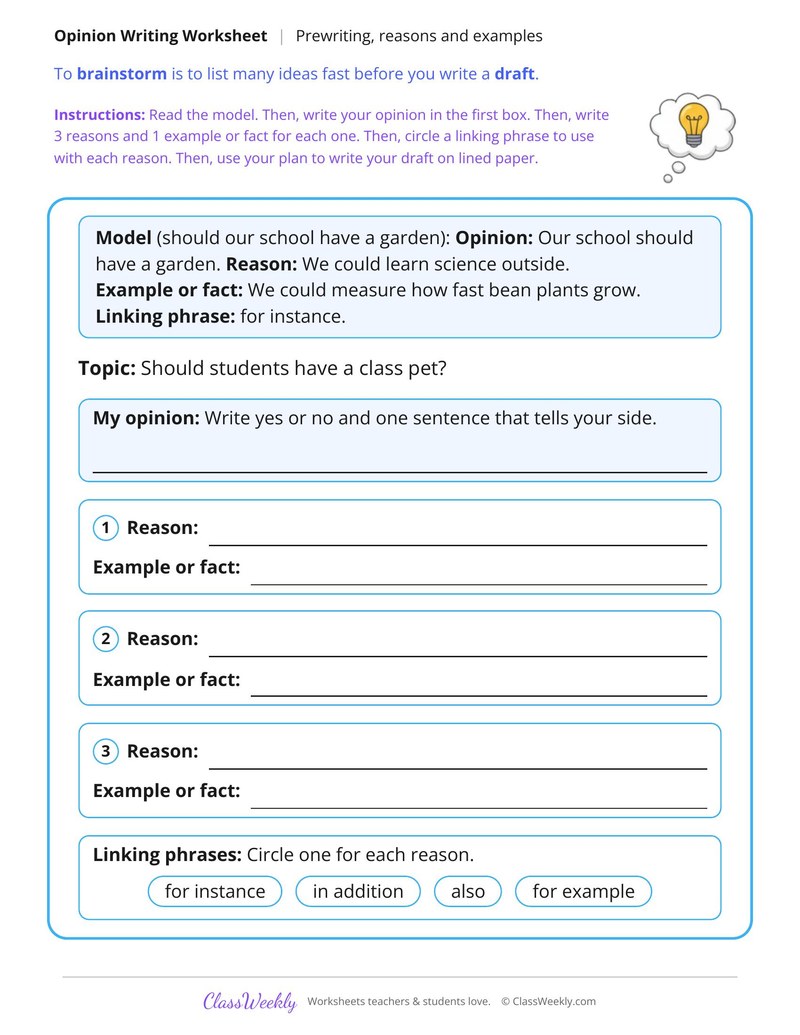
Brainstorm Reasons and Examples for an Opinion Essay
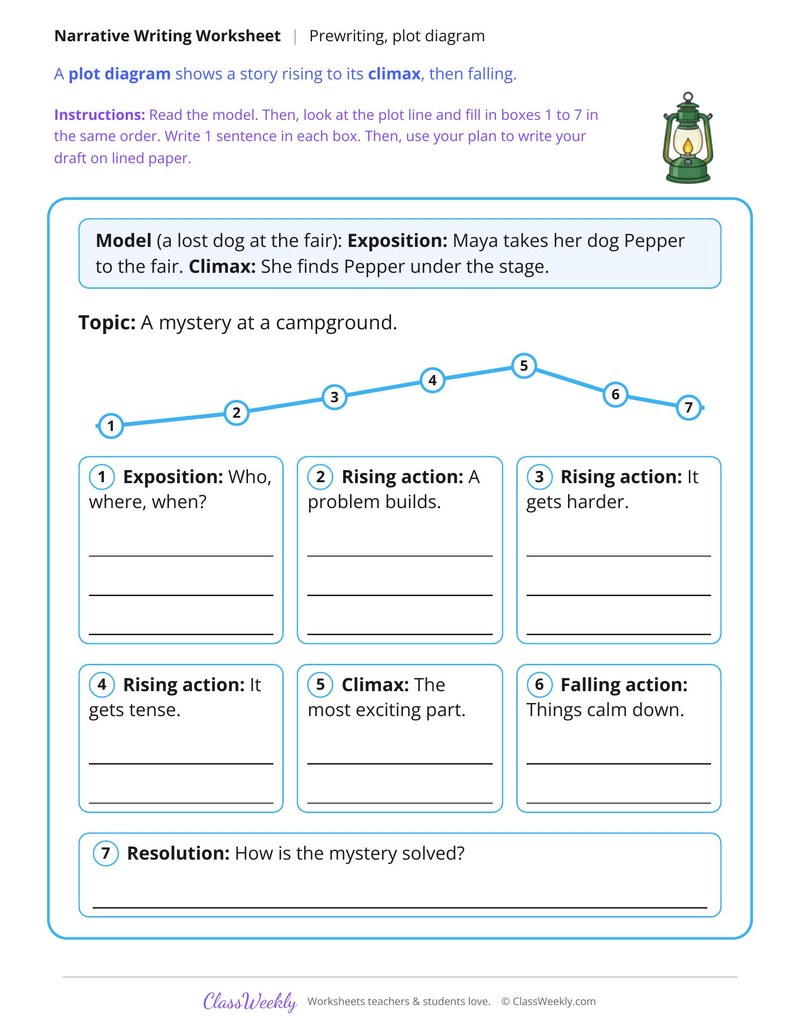
Plan a Narrative With a Plot Diagram
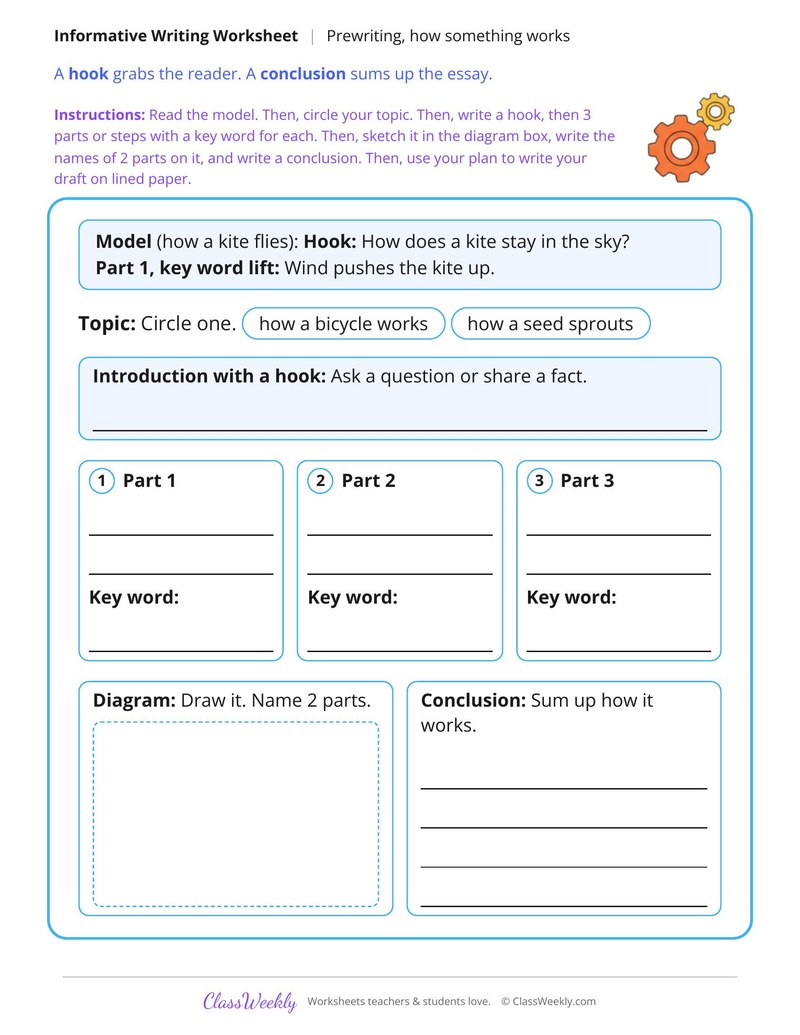
Plan an Explanatory Essay About How Something Works
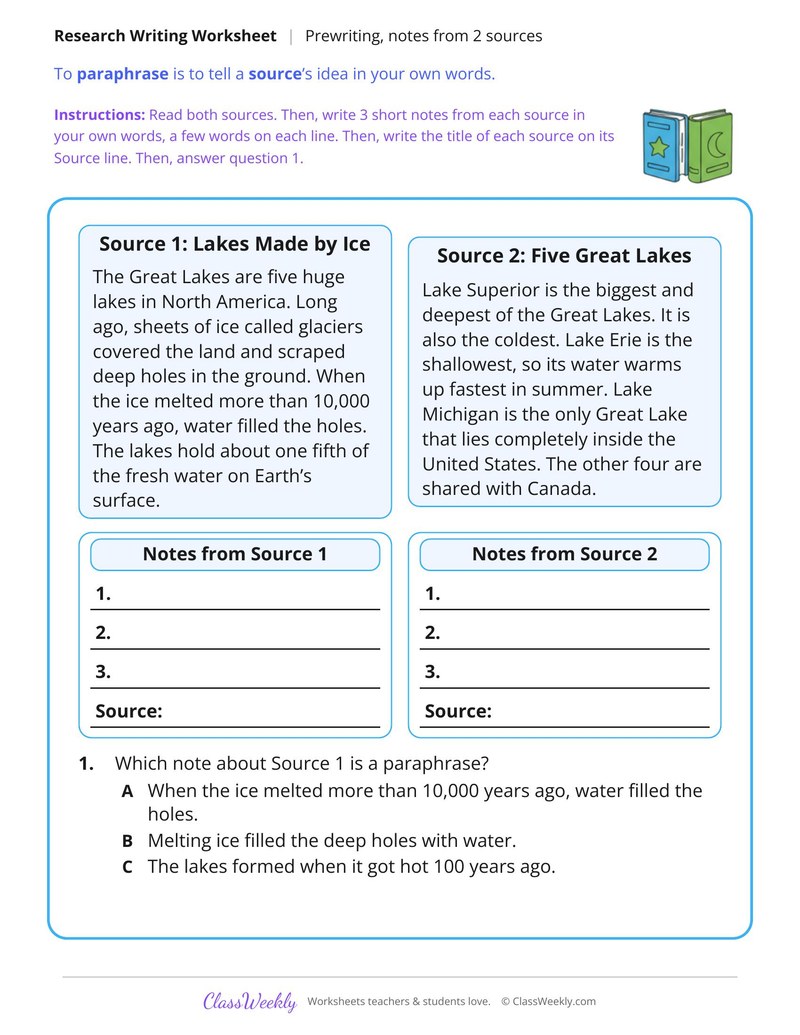
Take Notes in Your Own Words From Two Sources
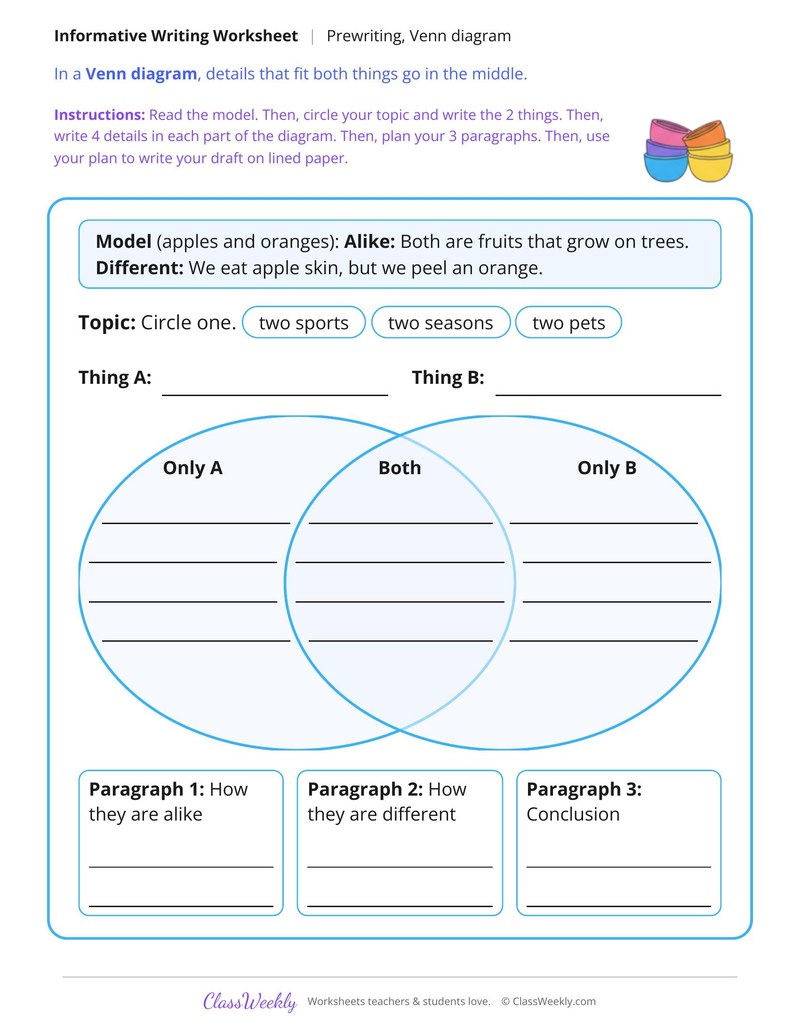
Plan a Compare and Contrast Essay With a Venn Diagram
Curriculum Links
Common Core State Standards
Writing · 4th Grade
Standard: Use concrete words and phrases and sensory details to convey experiences and events precisely.
View all W.4.3.D worksheets →Find this in the curriculum
Browse the grade, subject, and topic this belongs to.
FAQ
How do I use this descriptive language worksheet?
⌄
Pick one tool a week and look for it together in a book your child is reading. Then have your child use it in a planner and write a short paragraph from the plan. Read the paragraph aloud and point out the strongest word.
What does this worksheet teach?
⌄
Name the sense behind 10 details in a made-up county fair report, then describe your lunchroom. Your five senses help you notice the world. A sensory detail uses one of them. The directions on the page read: Read the Example and the description. Look for the 10 numbered details. Then, turn the page. On page 2: In Part A, write the sense each of the 10 numbered details uses. Use each Sense Bank word twice. Then, in Part B, write 2 sensory details. The answer key covers the questions on page 2.
Can I use this descriptive language worksheet for homeschool or classroom?
⌄
Yes, both. We made it for 4th Grade writing process, and the page works the same whether it lands on a kitchen table or a center rotation. At home, most families go through it together and talk the answers out loud, and that talking is where most of the learning happens with descriptive language. In class it runs well as independent work while you pull a small group. Print one copy or thirty, whichever the day needs.
What is descriptive language?
⌄
Descriptive language is word choice that lets a reader picture what is happening: exact nouns, vivid verbs, sensory details, figurative language and words that show feelings. CCSS W.4.3.D asks 4th graders to use concrete words and sensory details in their stories.
What is the difference between a simile, a metaphor and personification?
⌄
A simile compares two things with like or as, as in the mist was as soft as a blanket. A metaphor says one thing is another, as in our classroom was a zoo. Personification gives a thing a human action, as in the old maple tree waves its long arms. The sheets have children find each one in a short description and then write their own (L.4.5).
What does show, don't tell mean?
⌄
Telling names a feeling, as in Ava was tired. Showing lets the reader see it through actions, as in she yawned and rubbed her eyes. One page matches 6 telling sentences to their showing sentences, and a planner has children build a scene about feeling jealous or proud from body clues and actions.
Is there an answer key for each worksheet?
⌄
18 of the 26 sheets have an answer key, with a sample answer for the sentences children write. The 8 planners, such as the character sketch, the animal in motion and the slow motion moment, have no key, since each child describes their own.
Ratings & Reviews
No reviews yet. Be the first to share what you think.
Reviews are for ClassWeekly members.
Make a Request
Spotted something to fix, or want a worksheet we don't have yet? Tell us and we'll make it.
Worksheet Details
| Grade | 4th Grade |
| Subject | Grammar & Writing |
| Topic | Writing Process |
| Standard | W.4.3.D |
| Pages | 2 pages |
| Difficulty | Medium |
What is ClassWeekly?
ClassWeekly offers free worksheets and printable learning resources for kids in preschool to grade 5. All worksheets are aligned to Common Core, NGSS, and C3 Framework standards and designed by educators. Become a member to access the full library and download unlimited PDFs.
Plan an Essay with a Graphic Organizer
Revise Writing for Word Choice
Edit Writing for Run-ons and Fragments
Brainstorm Reasons and Examples for an Opinion Essay
Plan a Narrative With a Plot Diagram
Plan an Explanatory Essay About How Something Works
Take Notes in Your Own Words From Two Sources
Plan a Compare and Contrast Essay With a Venn Diagram