Use the Five Senses to Describe a Picnic
Written by Adi Ackerman, Head Teacher
"Use the Five Senses to Describe a Picnic" is written for 3rd Grade (Ages 8-9), and it covers Common Core W.3.5. If your little one is a year younger but already steady on writing process, the page still works. You may just need to read the instructions out loud. And if they are older and descriptive language never quite stuck, this is a short review rather than busywork.
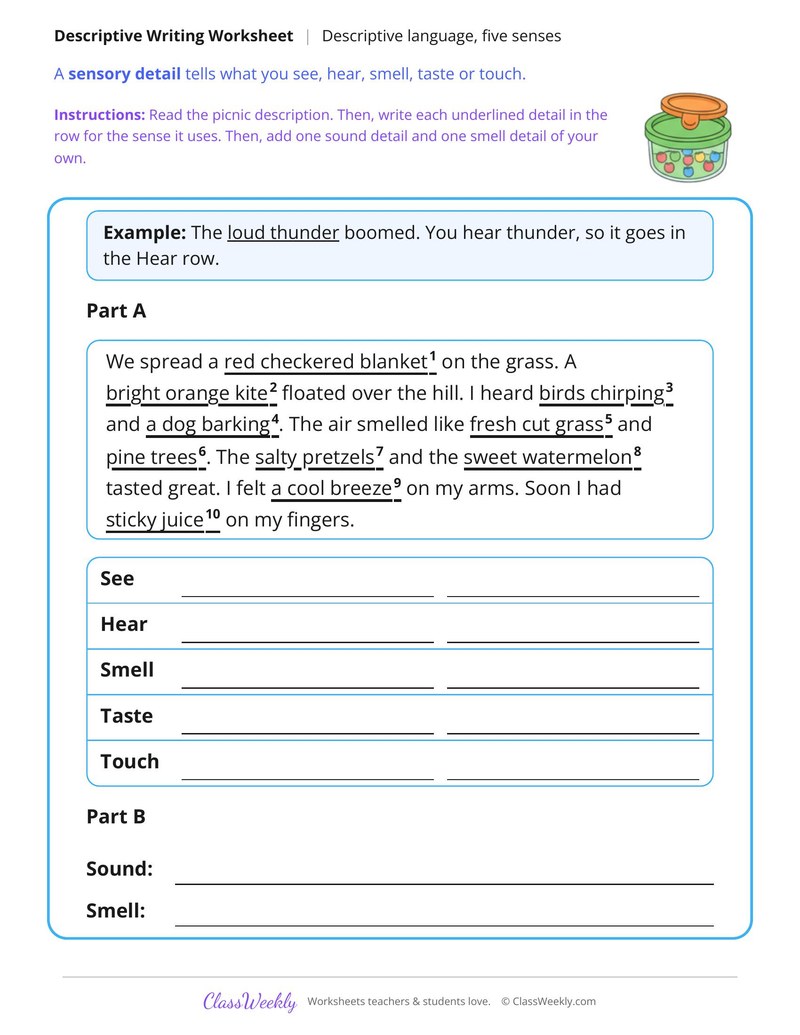
3rd grade writing worksheet: sort the sense details of a picnic description by sense, then add a sound and a smell detail. Answer key included. Part of our descriptive language writing process collection. Aligned to Common Core standards.
How do I use this worksheet?
Before the senses page, go outside or into the kitchen and name one thing for each sense together. Read the verb choices aloud in the sentence to hear which fits. Use the planner to write a short paragraph afterward.
What students will practice
- Students will show a feeling through actions and details instead of naming it.
- Students will sort sense details and add their own sound and smell details.
- Students will choose strong verbs and plan a description of a familiar place.
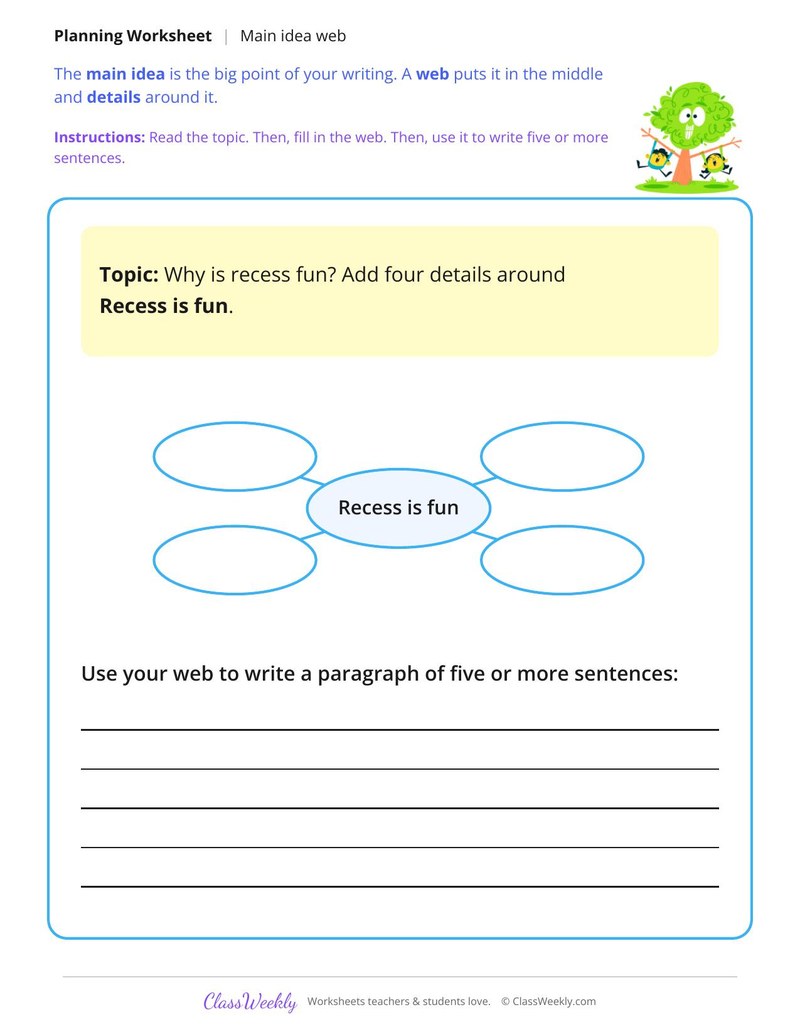
Plan Writing with a Main Idea Web
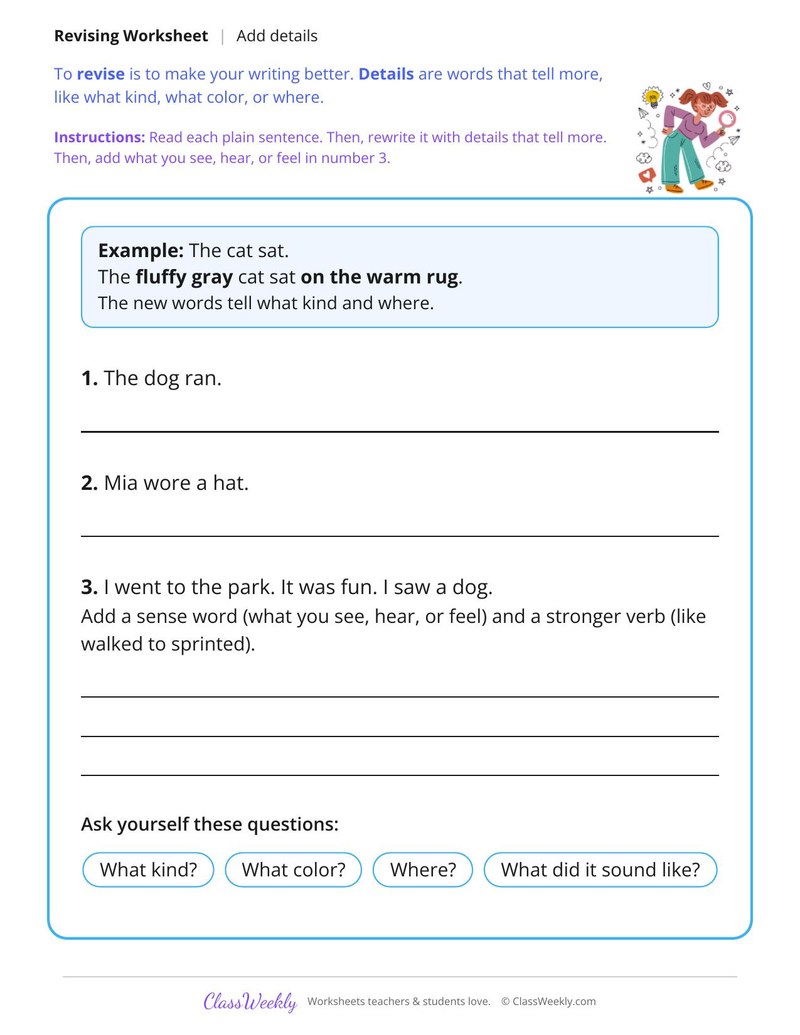
Revise Writing for Details
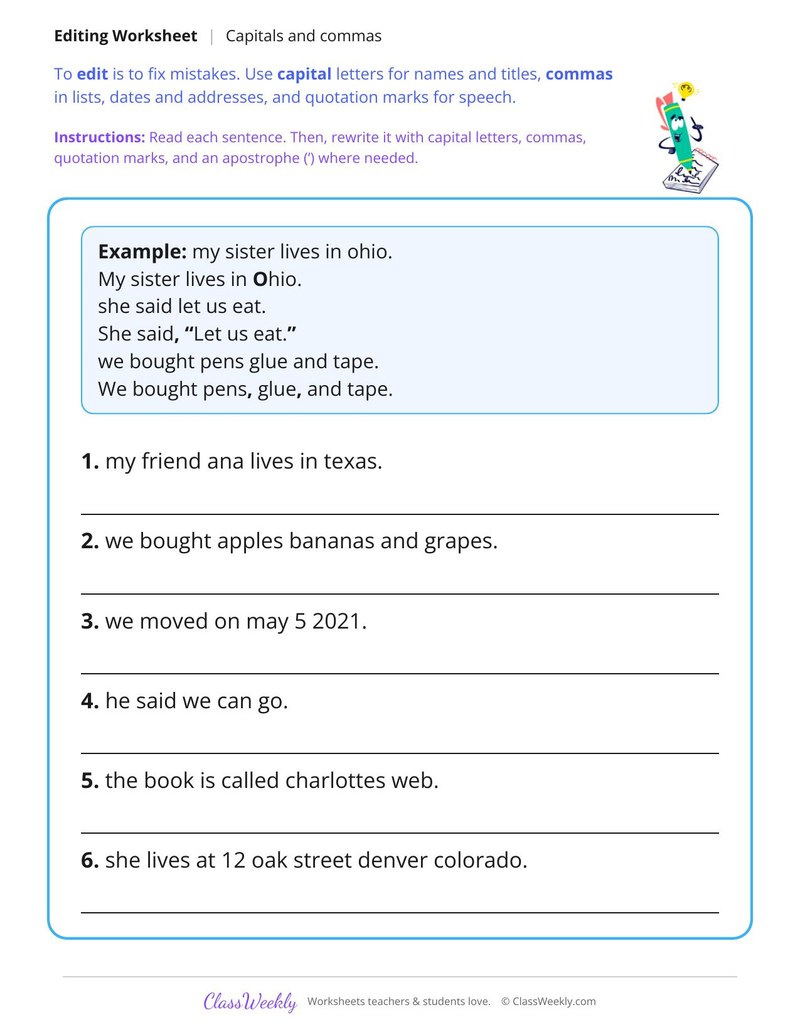
Edit Writing for Capitals and Commas
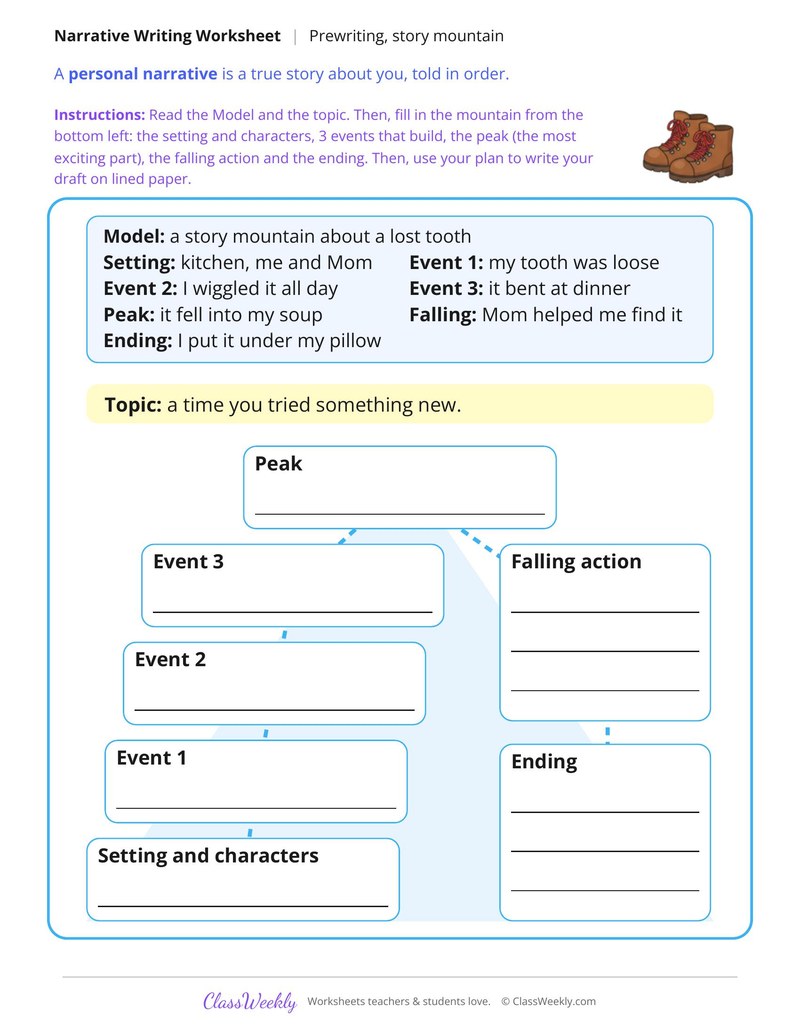
Plan a Personal Narrative on a Story Mountain
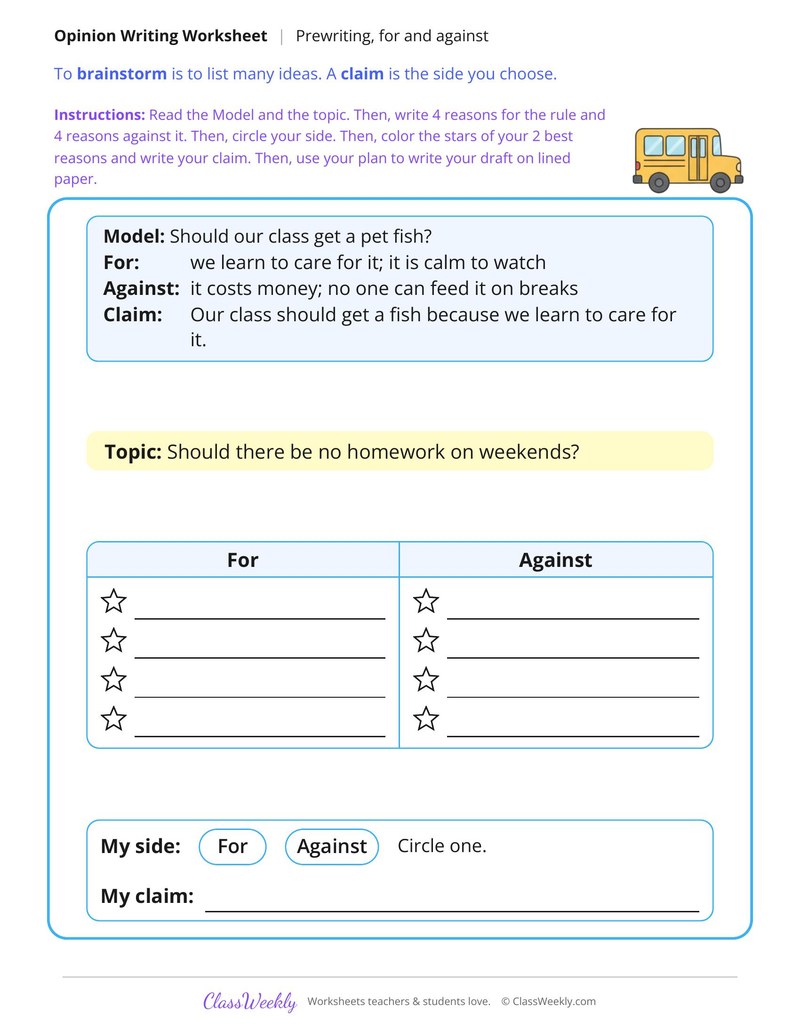
Brainstorm Reasons For and Against a School Rule
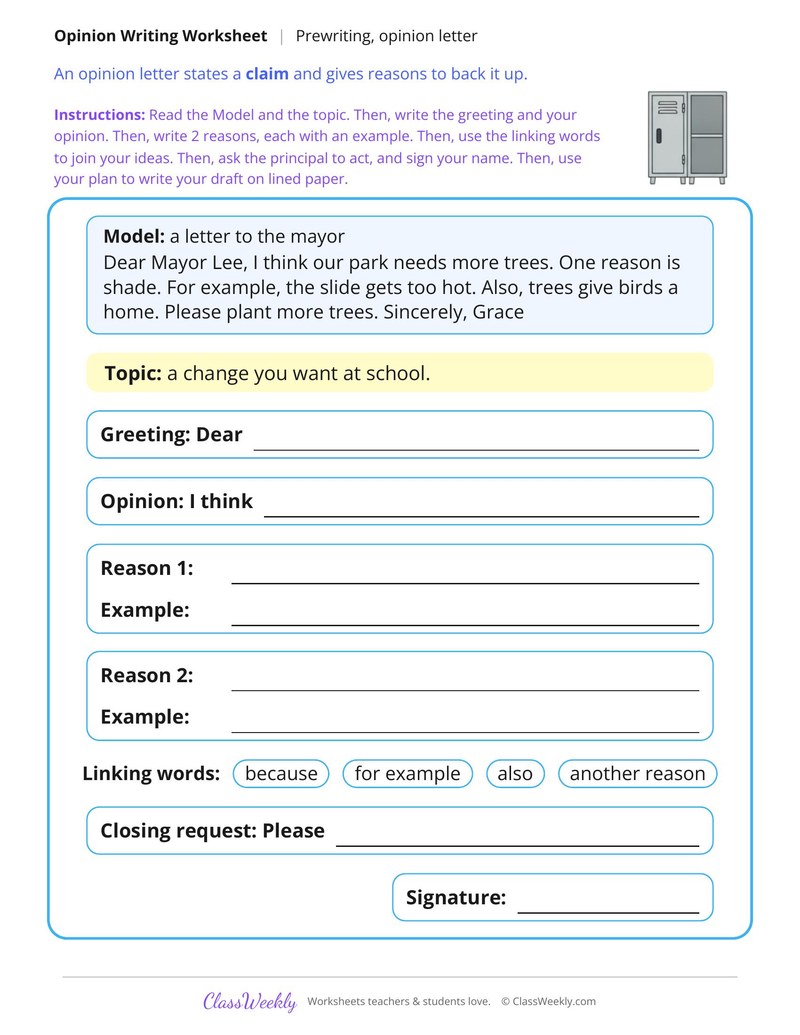
Plan an Opinion Letter to the Principal
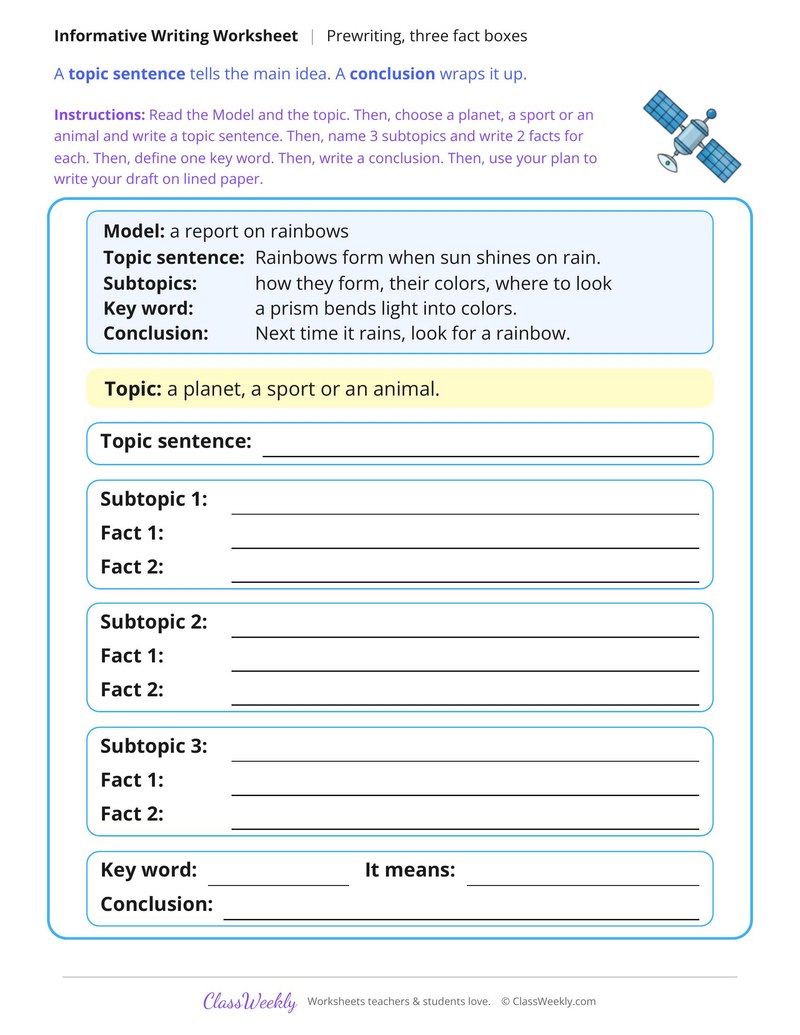
Plan an Informative Report With Three Fact Boxes
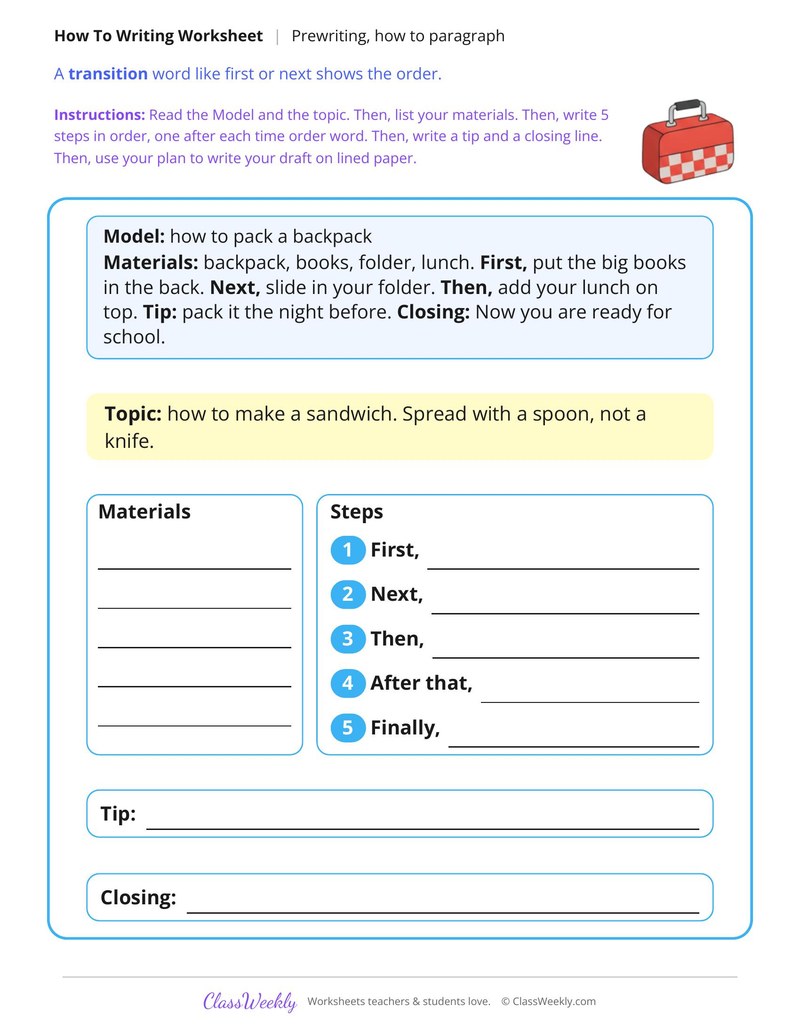
Plan a How To Paragraph About Making a Sandwich
Curriculum Links
Common Core State Standards
Writing · 3rd Grade
Standard: With guidance and support from peers and adults, develop and strengthen writing as needed by planning, revising, and editing.
View all W.3.5 worksheets →Find this in the curriculum
Browse the grade, subject, and topic this belongs to.
FAQ
How do I use this descriptive language worksheet?
⌄
Before the senses page, go outside or into the kitchen and name one thing for each sense together. Read the verb choices aloud in the sentence to hear which fits. Use the planner to write a short paragraph afterward.
What does this worksheet teach?
⌄
Sort the sense details of a picnic description by sense, then add a sound and a smell detail. A sensory detail tells what you see, hear, smell, taste or touch. The directions on the page read: Read the picnic description. Then, write each underlined detail in the row for the sense it uses. Then, add one sound detail and one smell detail of your own. An answer key is included.
Can I use this descriptive language worksheet for homeschool or classroom?
⌄
Yes, both. We made it for 3rd Grade writing process, and the page works the same whether it lands on a kitchen table or a center rotation. At home, most families go through it together and talk the answers out loud, and that talking is where most of the learning happens with descriptive language. In class it runs well as independent work while you pull a small group. Print one copy or thirty, whichever the day needs.
What does show, not tell mean?
⌄
Telling names a feeling, like Mia was scared. Showing gives clues so the reader figures it out, like Mia's hands shook as she held the rail. The show, not tell page pairs telling and showing sentences so children see the difference.
Why use the five senses in writing?
⌄
Sense details let a reader see, hear, smell, taste and feel a place. Most children only write what they see, so the picnic page asks them to sort details by sense and then add a sound and a smell of their own.
What makes a verb strong?
⌄
A strong verb shows exactly how something happens. Kicked, raced or dove tells more than went or got (L.3.3.A). The soccer page has children pick the stronger verb, then use strong verbs in two sentences about another sport.
Is there an answer key for each worksheet?
⌄
Three of the four sheets have an answer key. The place description planner has no key, since each child describes their own kitchen or park.
What is the writing process in 3rd grade?
⌄
It is the set of steps writers use: plan, draft, revise, edit and share. CCSS W.3.5 asks 3rd graders to strengthen their writing with guidance from adults and peers by planning, revising and editing. These sheets give each step its own page, so a child can practice one step at a time.
What is the difference between revising and editing?
⌄
Revising changes what the writing says: adding details, putting events in order or cutting a sentence that does not belong. Editing fixes the rules: capital letters, commas, end marks and spelling. Revise first, since there is no point fixing commas in a sentence that may be cut.
How do I use the planning sheets with my child?
⌄
Talk the topic through first, then have your child fill the organizer with words and short phrases, not full sentences. The plan becomes the draft on lined paper. Keep the planner beside the draft so your child can check that every part made it in.
Do the 3rd grade writing process worksheets have answer keys?
⌄
18 of the 28 sheets have an answer key, including every revising and editing page. The 10 planners and open writing pages have no key, since each child writes about their own ideas. For those, check that every box is filled and the plan fits the topic.
Ratings & Reviews
No reviews yet. Be the first to share what you think.
Reviews are for ClassWeekly members.
Make a Request
Spotted something to fix, or want a worksheet we don't have yet? Tell us and we'll make it.
Worksheet Details
| Grade | 3rd Grade |
| Subject | Grammar & Writing |
| Topic | Writing Process |
| Standard | W.3.5 |
| Pages | 1 page |
| Difficulty | Medium |
What is ClassWeekly?
ClassWeekly offers free worksheets and printable learning resources for kids in preschool to grade 5. All worksheets are aligned to Common Core, NGSS, and C3 Framework standards and designed by educators. Become a member to access the full library and download unlimited PDFs.
Plan Writing with a Main Idea Web
Revise Writing for Details
Edit Writing for Capitals and Commas
Plan a Personal Narrative on a Story Mountain
Brainstorm Reasons For and Against a School Rule
Plan an Opinion Letter to the Principal
Plan an Informative Report With Three Fact Boxes
Plan a How To Paragraph About Making a Sandwich