Antonyms
Written by Adi Ackerman, Head Teacher
"Antonyms" is written for 1st Grade (Ages 6-7), and it covers Common Core L.1.5. If your little one is a year younger but already steady on synonyms and antonyms, the page still works. You may just need to read the instructions out loud. And if they are older and antonyms never quite stuck, this is a short review rather than busywork.

Free printable antonyms worksheet for 1st grade students. Part of our antonyms synonyms and antonyms collection. Aligned to Common Core standards.
How do I use this worksheet?
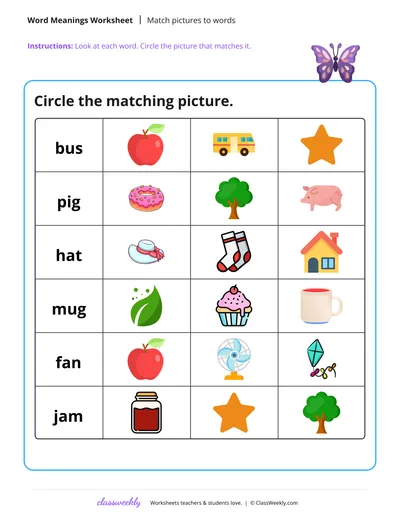
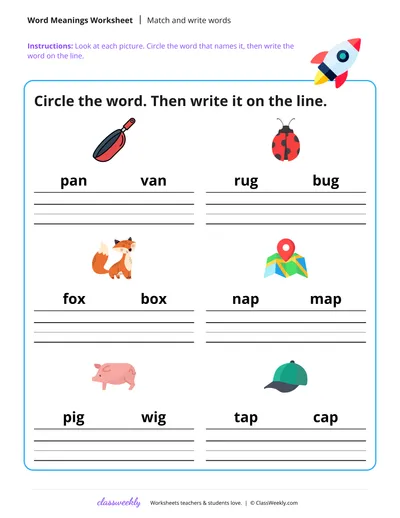
Introduce antonyms with a quick real-world example, then let students work through the first item together as a class, then finish the rest independently or with a partner, talking through their thinking as they go rather than working silently. When reviewing answers, ask students to use the word in their own sentence, not just confirm the answer, so the word sticks beyond the page. These antonyms worksheets work well as a warm-up before reading time, an independent center activity, or a quick homework assignment.
What students will practice
- Students will identify and correctly use antonyms in sentences and short passages.
- Students will distinguish antonyms from related language concepts and apply rules consistently.
- Students will demonstrate understanding of antonyms through guided and independent decoding, in both reading and their own writing.




Curriculum Links
Common Core State Standards
Language · 1st Grade
Standard: With guidance and support from adults, demonstrate understanding of word relationships and nuances in word meanings.
View all L.1.5 worksheets →Find this in the curriculum
Browse the grade, subject, and topic this belongs to.
FAQ
How do I use this antonyms worksheet?
⌄
Introduce antonyms with a quick real-world example, then let students work through the first item together as a class, then finish the rest independently or with a partner, talking through their thinking as they go rather than working silently. When reviewing answers, ask students to use the word in their own sentence, not just confirm the answer, so the word sticks beyond the page. These antonyms worksheets work well as a warm-up before reading time, an independent center activity, or a quick homework assignment.
What does this worksheet teach?
⌄
These antonyms worksheets for 1st grade give students focused practice building word knowledge, one of the biggest levers for reading comprehension at this age. Students match, sort, define, and use antonyms through a variety of activities designed for their grade level. Our synonyms antonyms worksheets connect vocabulary practice to real reading and writing, so students see how antonyms shows up in the sentences and stories they encounter every day. A strong vocabulary at this stage is one of the clearest predictors of later reading success, and regular practice with antonyms builds it word by word.
Can I use this antonyms worksheet for homeschool or classroom?
⌄
Yes, both. We made it for 1st Grade synonyms and antonyms, and the page works the same whether it lands on a kitchen table or a center rotation. At home, most families go through it together and talk the answers out loud, and that talking is where most of the learning happens with antonyms. In class it runs well as independent work while you pull a small group. Print one copy or thirty, whichever the day needs.
What is an antonym?
⌄
A word that means the opposite of another, like hot and cold or up and down. Opposites are the easier of the two ideas for young children, because the contrast is sharp and they already use these pairs in everyday talk.
What does this worksheet ask my child to do?
⌄
Antonyms. Writing the answer is the hardest version, because nothing is provided to choose from. Your child has to retrieve the word from memory and spell it, so expect this one to take longer.
How do I build this vocabulary away from the page?
⌄
Bring it into everyday talk. At dinner or in the car, say a word and ask for a synonym or an antonym on the spot. Vocabulary sticks best when it's tied to a real moment, not just a worksheet.
Why are synonyms and antonyms important for first grade vocabulary?
⌄
Matching a word to a synonym or antonym is one of the clearest ways a young student can demonstrate they actually understand what a word means, rather than just recognizing it (CCSS L.1.5). A student who can pick happy as a synonym for glad, or cold as an antonym for hot, is showing real comprehension of both words. This kind of word-relationship thinking also builds the foundation for using more precise, varied vocabulary in their own writing later on.
What makes the synonym crossword format different from a matching worksheet?
⌄
A matching worksheet lets students compare two words side by side, which is a recognition task. A crossword requires a student to recall a synonym from a clue with no word bank in front of them and then spell it correctly to fit the grid, which is a harder, more active form of the same skill. It works well as a next step once a student is comfortable with basic synonym matching.
How can parents reinforce synonyms and antonyms at home without a worksheet?
⌄
A quick game works well: say a word out loud during everyday conversation and ask for a word that means the same thing, or the opposite. Books are also a natural source, since noticing when an author uses a more interesting word than the everyday one (huge instead of big) is an easy way to build synonym awareness during regular reading time.
Ratings & Reviews
No reviews yet. Be the first to share what you think.
Reviews are for ClassWeekly members.
Make a Request
Spotted something to fix, or want a worksheet we don't have yet? Tell us and we'll make it.
Worksheet Details
| Grade | 1st Grade |
| Subject | Vocabulary |
| Topic | Synonyms and Antonyms |
| Standard | L.1.5 |
| Pages | 1 page |
| Difficulty | Medium |
What is ClassWeekly?
ClassWeekly offers free worksheets and printable learning resources for kids in preschool to grade 5. All worksheets are aligned to Common Core, NGSS, and C3 Framework standards and designed by educators. Become a member to access the full library and download unlimited PDFs.