Meaningful sentences
Written by Adi Ackerman, Head Teacher
"Meaningful sentences" is written for 2nd Grade (Ages 7-8), and it covers Common Core L.2.5.A. If your little one is a year younger but already steady on the meanings of words, the page still works. You may just need to read the instructions out loud. And if they are older and meaningful sentences never quite stuck, this is a short review rather than busywork.

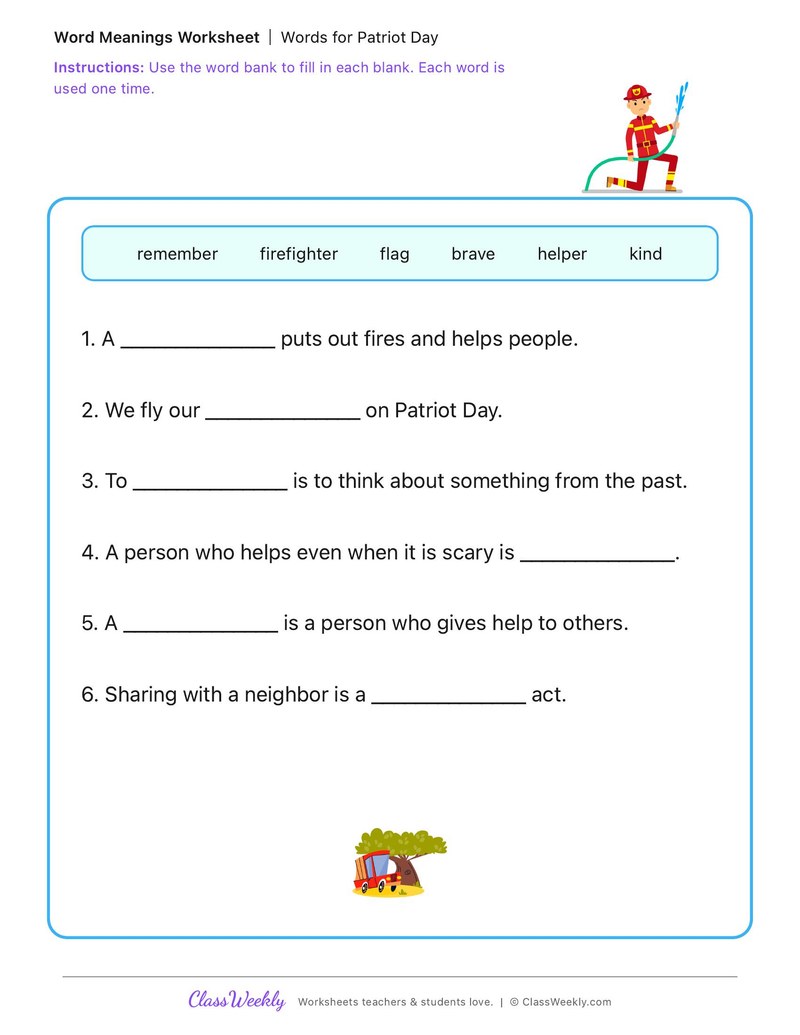
Draw a line to join each sentence starter to the ending that actually makes sense. Free printable 2nd grade vocabulary worksheet with answer key. Part of our meaningful sentences meanings of words collection. Aligned to Common Core standards.
How do I use this worksheet?
Introduce meaningful sentences with a quick real-world example, then let students work through it independently after a quick group example, checking in with a partner if they get stuck, talking through their thinking as they go rather than working silently. When reviewing answers, ask students to use the word in their own sentence, not just confirm the answer, so the word sticks beyond the page. These meaningful sentences worksheets work well as a warm-up before reading time, an independent center activity, or a quick homework assignment.
What students will practice
- Students will identify and correctly use meaningful sentences in sentences and short passages.
- Students will distinguish meaningful sentences from related language concepts and apply rules consistently.
- Students will demonstrate understanding of meaningful sentences through guided and independent decoding, in both reading and their own writing.


Curriculum Links
Common Core State Standards
Language · 2nd Grade
Standard: Identify real-life connections between words and their use (e.g., describe foods that are spicy or juicy).
View all L.2.5.A worksheets →Find this in the curriculum
Browse the grade, subject, and topic this belongs to.
FAQ
How do I use this meaningful sentences worksheet?
⌄
Introduce meaningful sentences with a quick real-world example, then let students work through it independently after a quick group example, checking in with a partner if they get stuck, talking through their thinking as they go rather than working silently. When reviewing answers, ask students to use the word in their own sentence, not just confirm the answer, so the word sticks beyond the page. These meaningful sentences worksheets work well as a warm-up before reading time, an independent center activity, or a quick homework assignment.
What does this worksheet teach?
⌄
These meaningful sentences worksheets for 2nd grade give students focused practice building word knowledge, one of the biggest levers for reading comprehension at this age. Students match, sort, define, and use meaningful sentences through a variety of activities designed for their grade level. Our word meanings worksheets connect vocabulary practice to real reading and writing, so students see how meaningful sentences shows up in the sentences and stories they encounter every day. A strong vocabulary at this stage is one of the clearest predictors of later reading success, and regular practice with meaningful sentences builds it word by word.
Can I use this meaningful sentences worksheet for homeschool or classroom?
⌄
Yes, both. We made it for 2nd Grade the meanings of words, and the page works the same whether it lands on a kitchen table or a center rotation. At home, most families go through it together and talk the answers out loud, and that talking is where most of the learning happens with meaningful sentences. In class it runs well as independent work while you pull a small group. Print one copy or thirty, whichever the day needs.
How is second grade word-meanings work different from first grade?
⌄
First grade sticks to picture-supported matching and simple context. Second grade adds shades of meaning (CCSS L.2.5b) and sentence-completion tasks like Meaningful Sentences, where a child has to join a sentence starter to the ending that actually makes sense rather than just picking a definition from a list. The jump is from recognizing a word to reasoning about how it fits.
My child can define a word out loud but still picks the wrong one on the worksheet. What's going on?
⌄
That's usually a sentence-reading problem, not a vocabulary problem. Several of these worksheets, like Context Clues and Word Definitions, only work if the child reads the whole sentence or both candidate definitions carefully before choosing. A child who's used to skimming will grab the first familiar-looking word instead of comparing options. Slow the reading down before touching the pencil.
Why does Shades of Meaning matter if my child already knows plenty of synonyms?
⌄
Knowing that quiet and silent are related isn't the same as knowing which one fits a library versus an empty street at midnight. Shades of meaning teaches precision: words with similar meanings still carry different weight, and picking the right one is what separates flat writing from vivid writing. It's a small skill that pays off every time your child writes a story.
Ratings & Reviews
No reviews yet. Be the first to share what you think.
Reviews are for ClassWeekly members.
Make a Request
Spotted something to fix, or want a worksheet we don't have yet? Tell us and we'll make it.
Worksheet Details
| Grade | 2nd Grade |
| Subject | Vocabulary |
| Topic | The Meanings of Words |
| Standard | L.2.5.A |
| Pages | 1 page |
| Difficulty | Medium |
What is ClassWeekly?
ClassWeekly offers free worksheets and printable learning resources for kids in preschool to grade 5. All worksheets are aligned to Common Core, NGSS, and C3 Framework standards and designed by educators. Become a member to access the full library and download unlimited PDFs.