How Avalanche Fences Hold Snow in Place, Read and Answer
Written by Adi Ackerman, Head Teacher
"How Avalanche Fences Hold Snow in Place, Read and Answer" is written for 4th Grade (Ages 9-10), and it covers NGSS 4-ESS3-2. If your little one is a year younger but already steady on Earth's surface, the page still works. You may just need to read the instructions out loud. And if they are older and natural hazards never quite stuck, this is a short review rather than busywork.
2 pages in this set
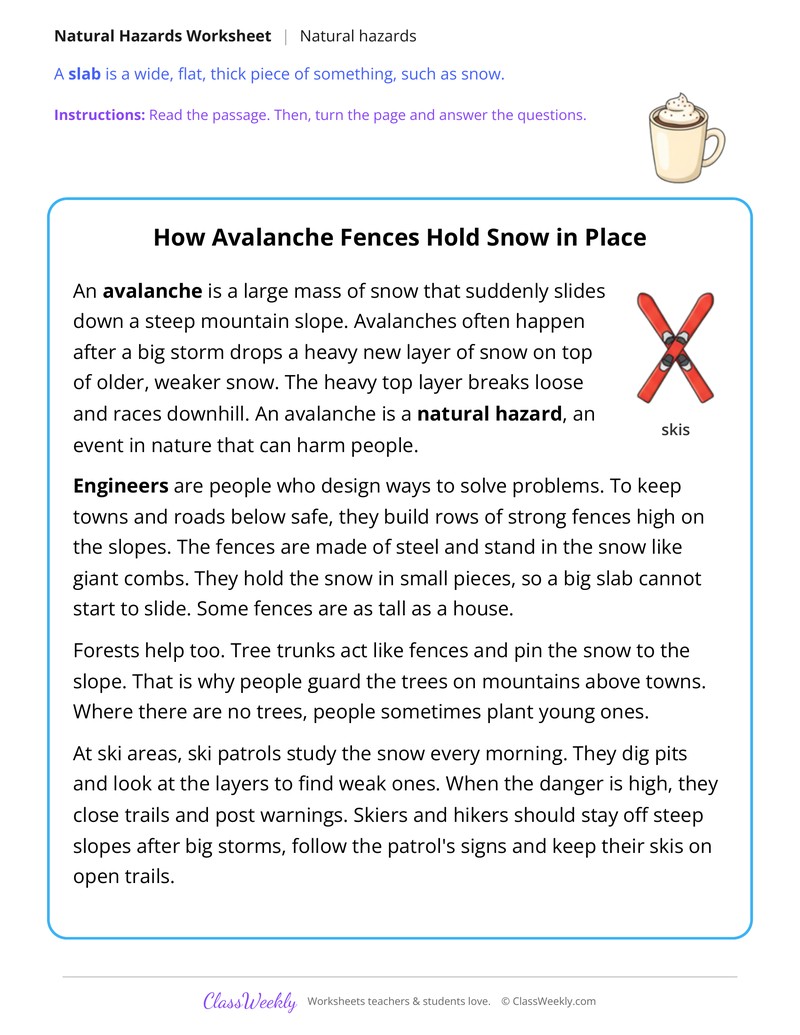
4th grade science worksheet: read how steel avalanche fences and tree trunks pin snow to a slope and why ski patrols dig snow pits. Answer key included. Part of our natural hazards earth's surface collection. Aligned to NGSS standards.
How do I use this worksheet?
Ask your child which hazards can happen where you live before you start. After each passage, talk about what the solution protects and when it might fail, as the levee and stilt house page does. Check each page with the answer key.
What students will practice
- Students will explain how a design such as a levee, a sea wall or a braced building reduces harm from a natural hazard.
- Students will compare two solutions to the same hazard and tell when each one can fail.
- Students will order the steps of a warning system, from sensors to people moving to safety.
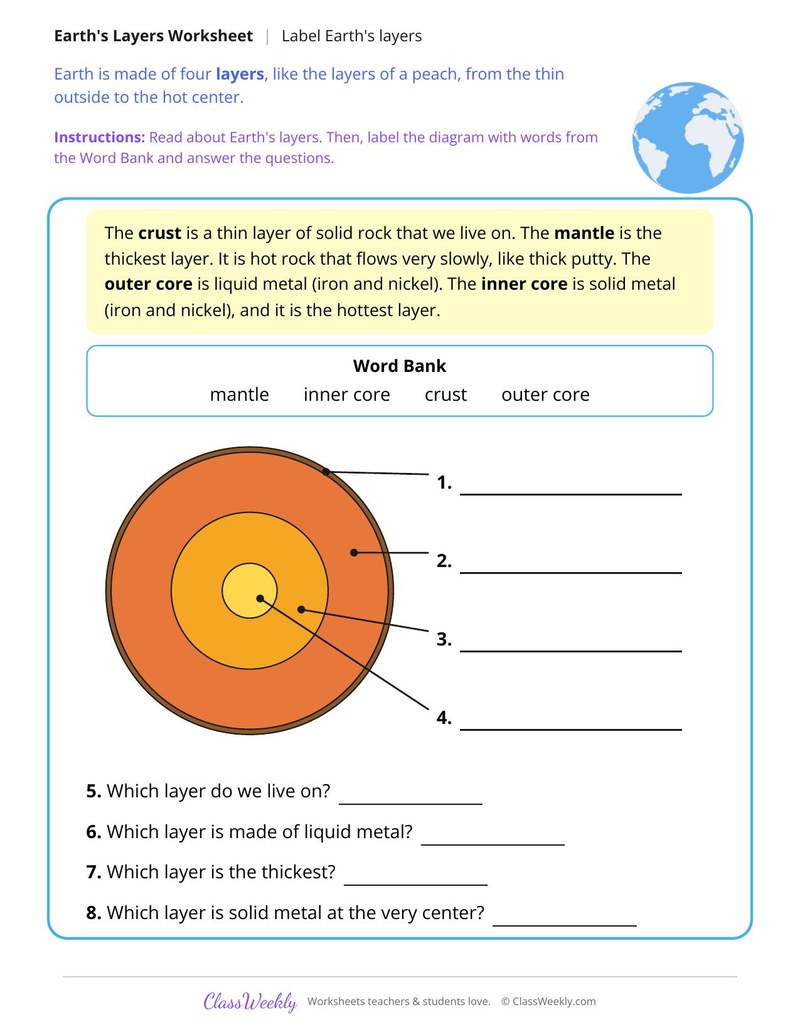
Earth's Layers
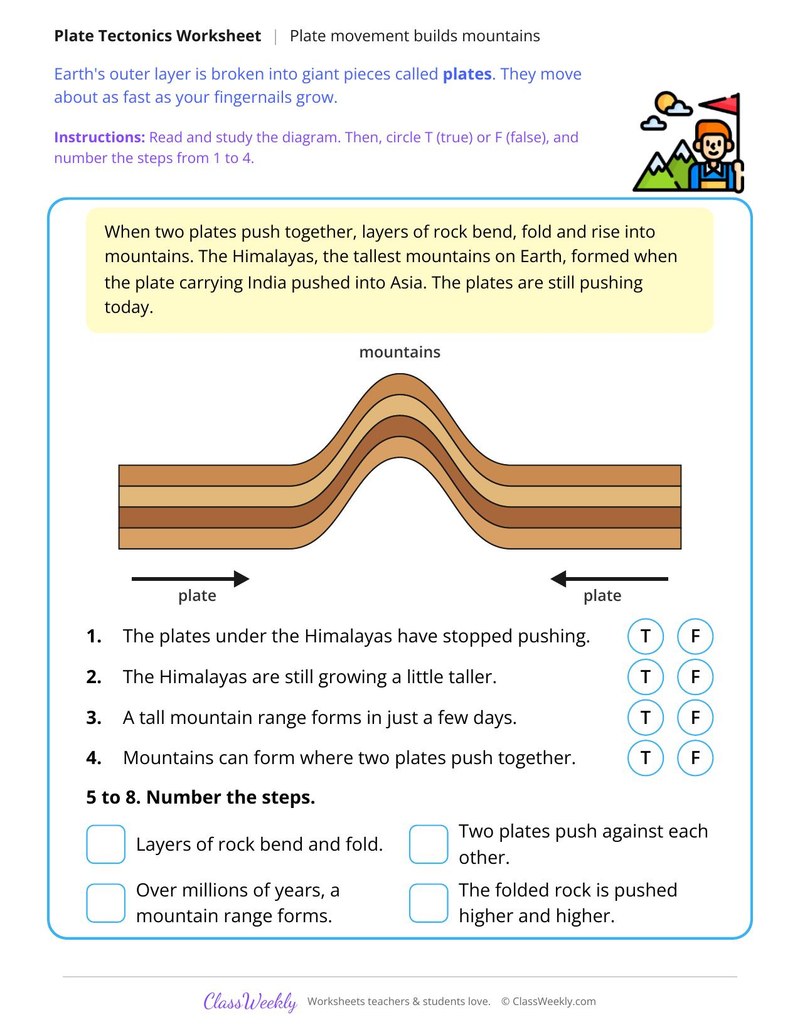
Plate Movement Builds Mountains
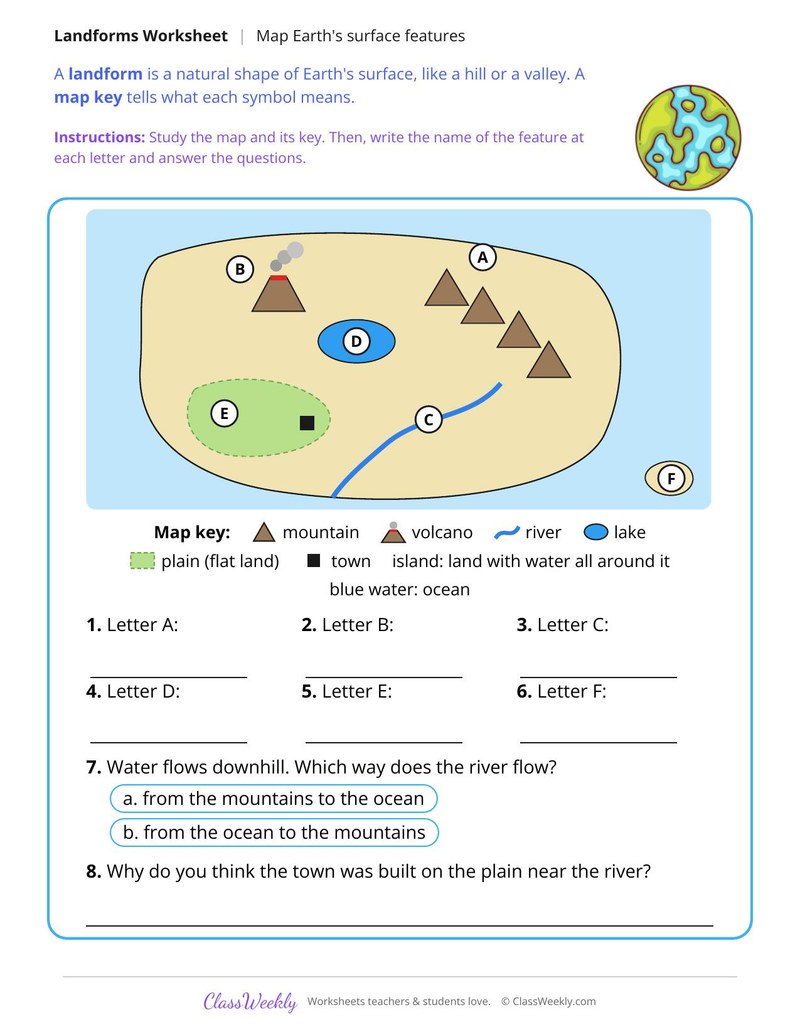
Map Earth's Surface Features
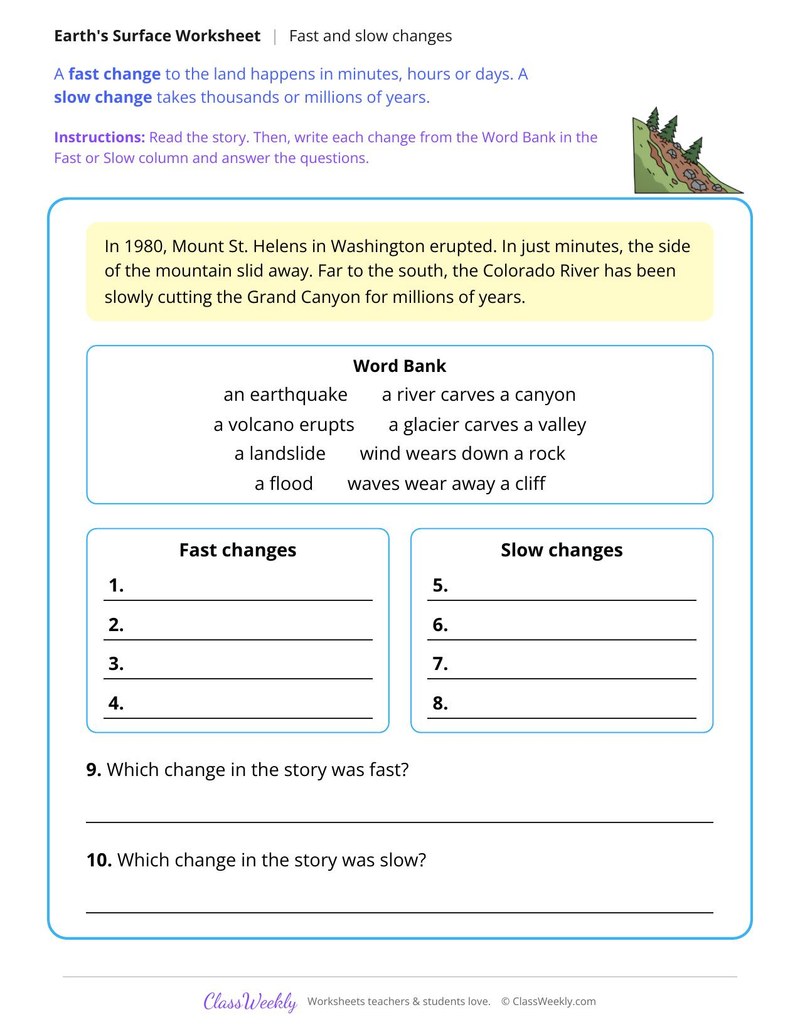
Fast and Slow Changes to the Land
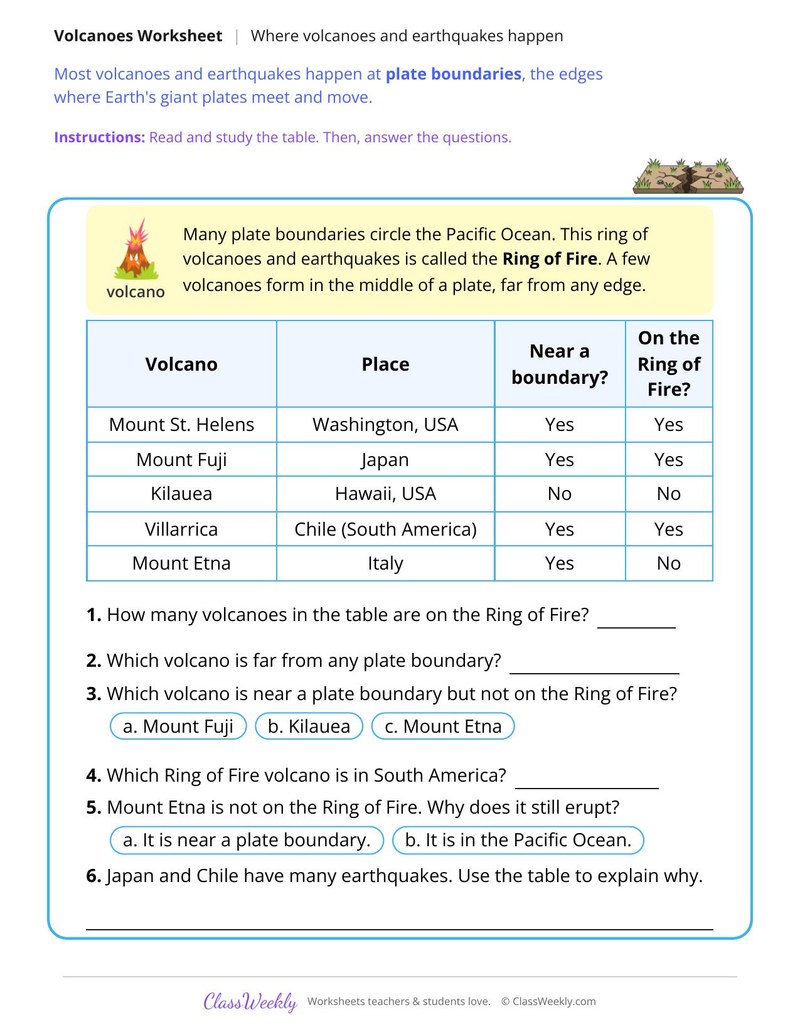
Where Volcanoes and Earthquakes Happen
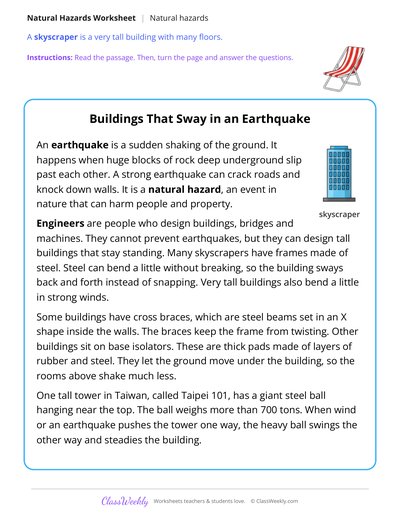
Buildings That Sway in an Earthquake, Read and Answer
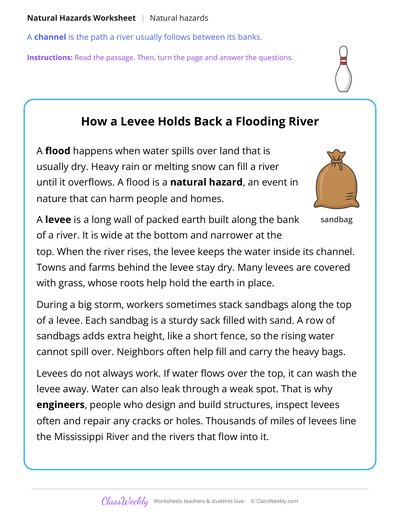
How a Levee Holds Back a Flooding River, Read and Answer
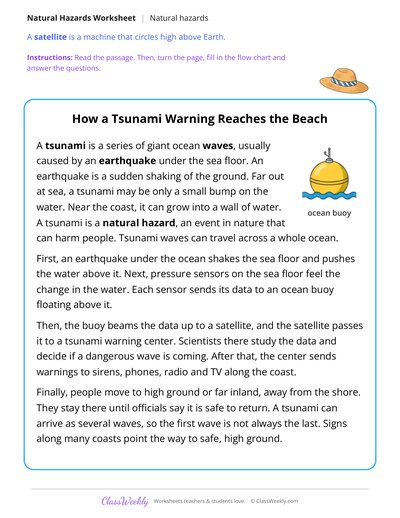
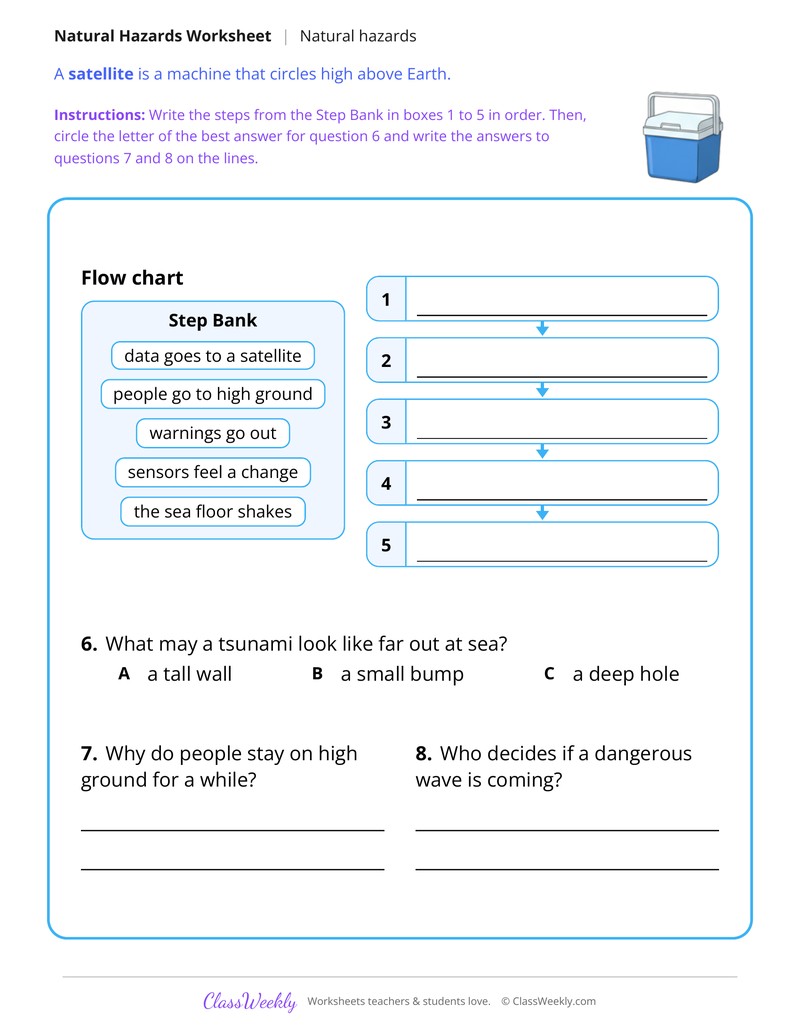
How a Tsunami Warning Reaches the Beach, Order the Steps
Curriculum Links
Next Generation Science Standards
Science · 4th Grade
Find this in the curriculum
Browse the grade, subject, and topic this belongs to.
FAQ
How do I use this natural hazards worksheet?
⌄
Ask your child which hazards can happen where you live before you start. After each passage, talk about what the solution protects and when it might fail, as the levee and stilt house page does. Check each page with the answer key.
What does this worksheet teach?
⌄
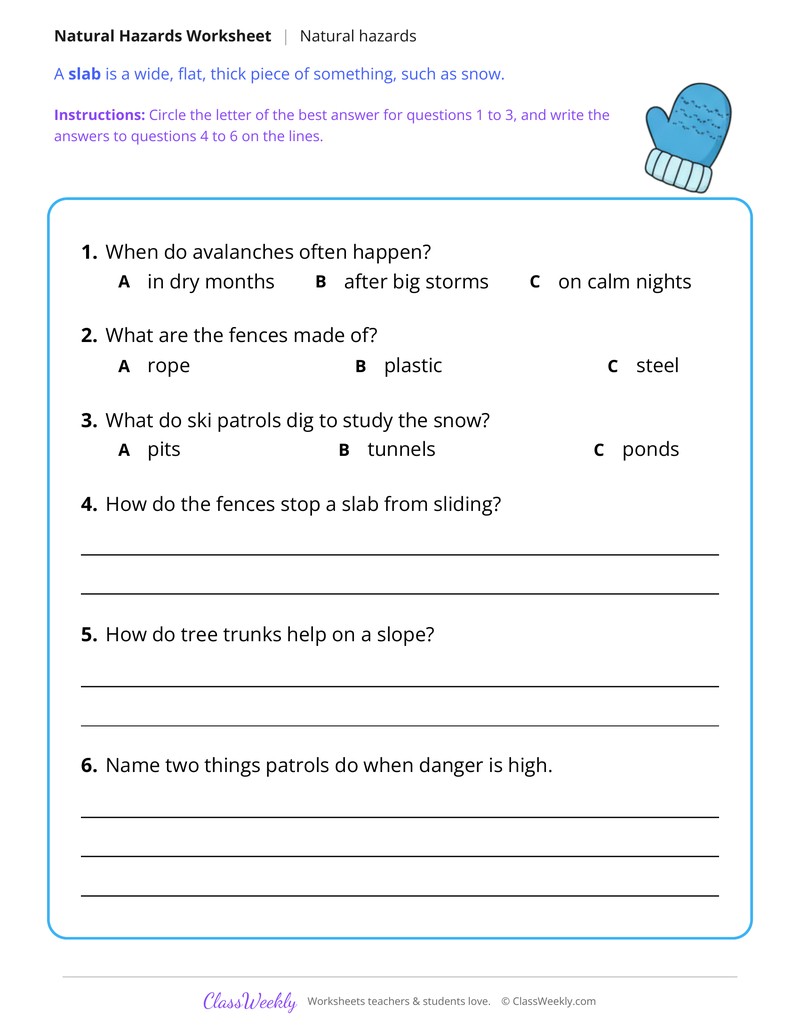
Read how steel avalanche fences and tree trunks pin snow to a slope and why ski patrols dig snow pits. A slab is a wide, flat, thick piece of something, such as snow. The directions on the page read: Read the passage. Then, turn the page and answer the questions. On page 2: Circle the letter of the best answer for questions 1 to 3, and write the answers to questions 4 to 6 on the lines. The answer key covers the questions on page 2.
Can I use this natural hazards worksheet for homeschool or classroom?
⌄
Yes, both. We made it for 4th Grade Earth's surface, and the page works the same whether it lands on a kitchen table or a center rotation. At home, most families go through it together and talk the answers out loud, and that talking is where most of the learning happens with natural hazards. In class it runs well as independent work while you pull a small group. Print one copy or thirty, whichever the day needs.
What is a natural hazard?
⌄
A natural hazard is a natural event like an earthquake, flood, landslide, tsunami, avalanche or volcanic eruption that can harm people and property. People cannot stop these events, but engineers design ways to reduce the harm (4-ESS3-2).
How do engineers protect people from earthquakes and floods?
⌄
For earthquakes, they use steel frames that bend, cross braces and rubber base isolators, so buildings sway instead of falling. For floods, they build levees of packed earth, stack sandbags and raise houses on stilts. One sheet has children sort these fixes by hazard.
How do warnings keep people safe?
⌄
Sea floor sensors and buoys send data by satellite to a tsunami warning center, which sends alerts to sirens and phones along the coast. At volcanoes, scientists watch for tiny earthquakes, a swelling bulge and more gas. In 1980 these signs at Mount St. Helens let officials close the area before it erupted.
Is there an answer key for each worksheet?
⌄
Yes. All 10 natural hazards sheets have an answer key, with sample answers for the questions children answer in their own words and the other answers to accept.
Ratings & Reviews
No reviews yet. Be the first to share what you think.
Reviews are for ClassWeekly members.
Make a Request
Spotted something to fix, or want a worksheet we don't have yet? Tell us and we'll make it.
Worksheet Details
| Grade | 4th Grade |
| Subject | Science |
| Topic | Earth's Surface |
| Standard | 4-ESS3-2 |
| Pages | 2 pages |
| Difficulty | Medium |
What is ClassWeekly?
ClassWeekly offers free worksheets and printable learning resources for kids in preschool to grade 5. All worksheets are aligned to Common Core, NGSS, and C3 Framework standards and designed by educators. Become a member to access the full library and download unlimited PDFs.
Earth's Layers
Plate Movement Builds Mountains
Map Earth's Surface Features
Fast and Slow Changes to the Land
Where Volcanoes and Earthquakes Happen
Buildings That Sway in an Earthquake, Read and Answer
How a Levee Holds Back a Flooding River, Read and Answer
How a Tsunami Warning Reaches the Beach, Order the Steps