Why a Floating Ball Bobs Up and Down, Read and Answer
Written by Adi Ackerman, Head Teacher
"Why a Floating Ball Bobs Up and Down, Read and Answer" is written for 4th Grade (Ages 9-10), and it covers NGSS 4-PS4-1. If your little one is a year younger but already steady here, the page still works. You may just need to read the instructions out loud. And if they are older and waves and light never quite stuck, this is a short review rather than busywork.
2 pages in this set
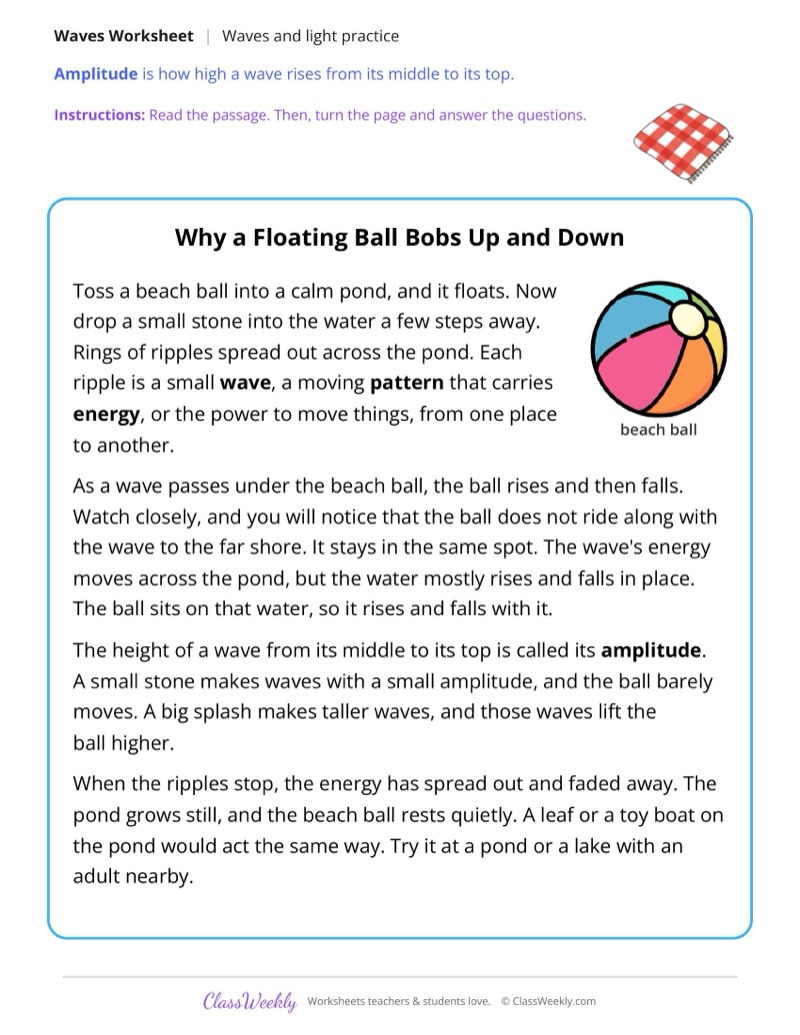
4th grade science worksheet: read why a beach ball on a pond rises and falls in one spot while the ripples carry energy past it. Answer key included. Part of our waves and light collection. Aligned to NGSS standards.
How do I use this worksheet?
Make waves in a tub or shake a jump rope so your child can see crests and troughs before the wave pages. Shine a flashlight at a mirror in a dim room for the light pages, and tap out SOS together for the code pages. Check each page with the answer key.
What students will practice
- Students will describe a wave's amplitude and wavelength and the energy it carries.
- Students will explain that we see an object when light reflects off it into our eyes.
- Students will use patterns of signals, such as Morse code and light flashes, to send a message.
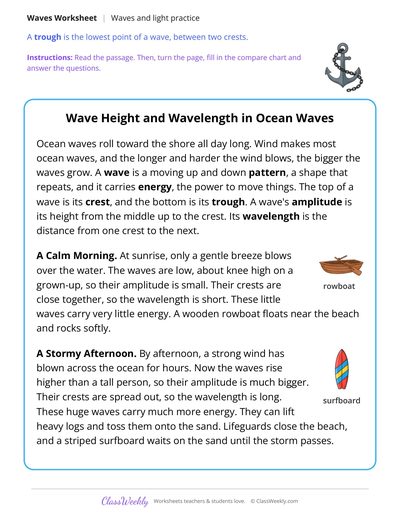
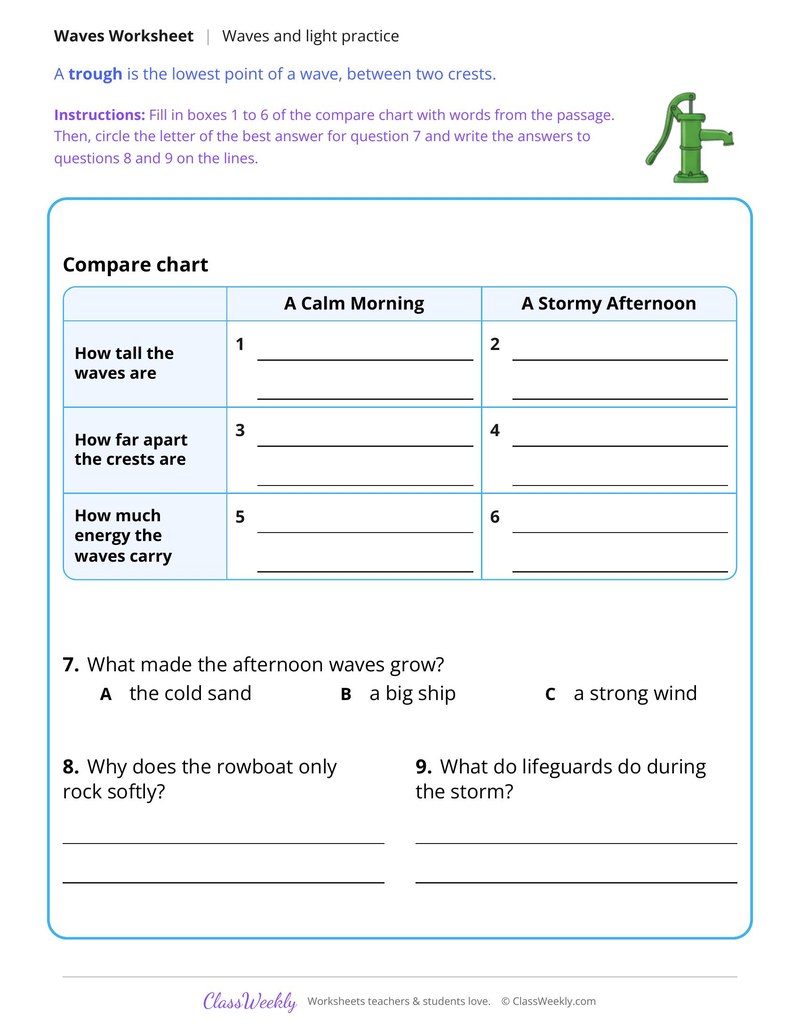
Wave Height and Wavelength in Ocean Waves, Read and Compare
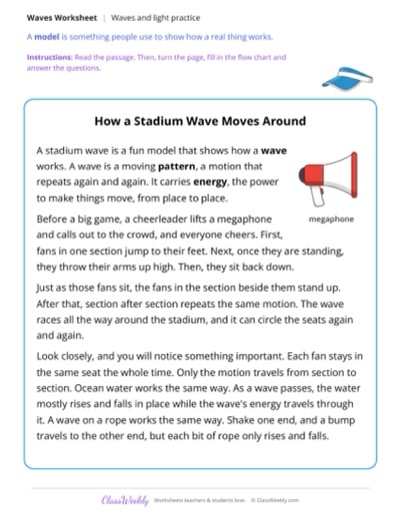
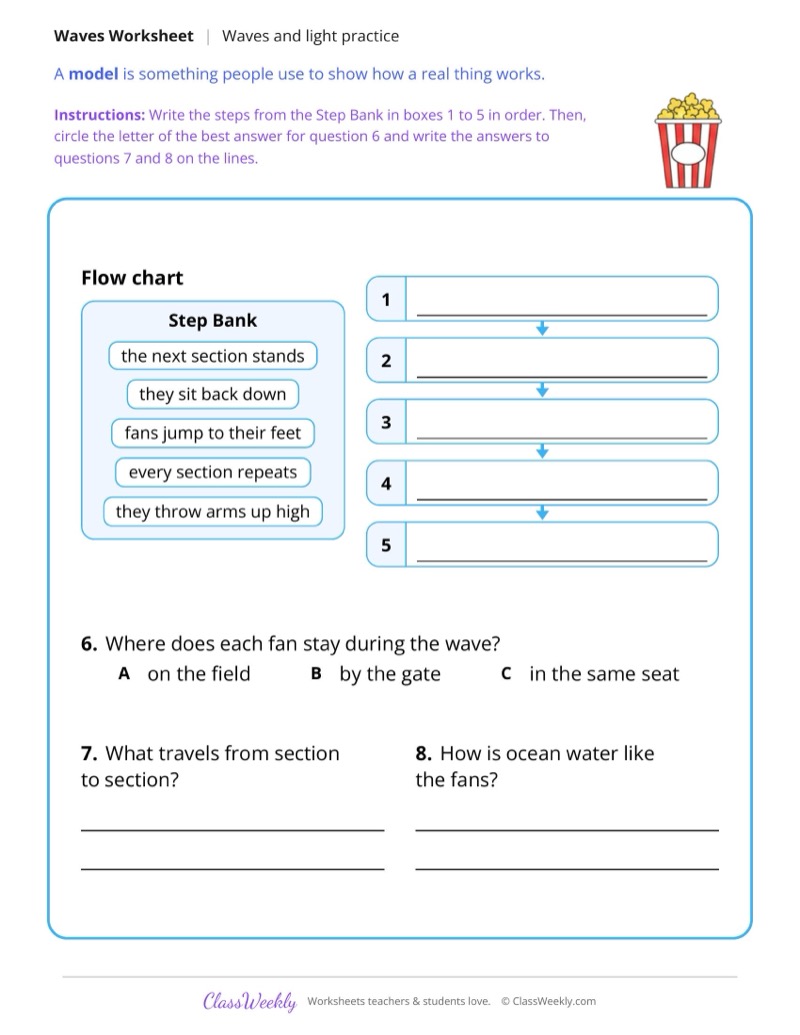
How a Stadium Wave Moves Around, Order the Steps
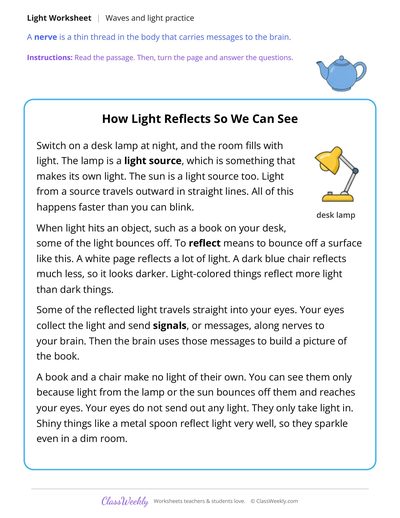
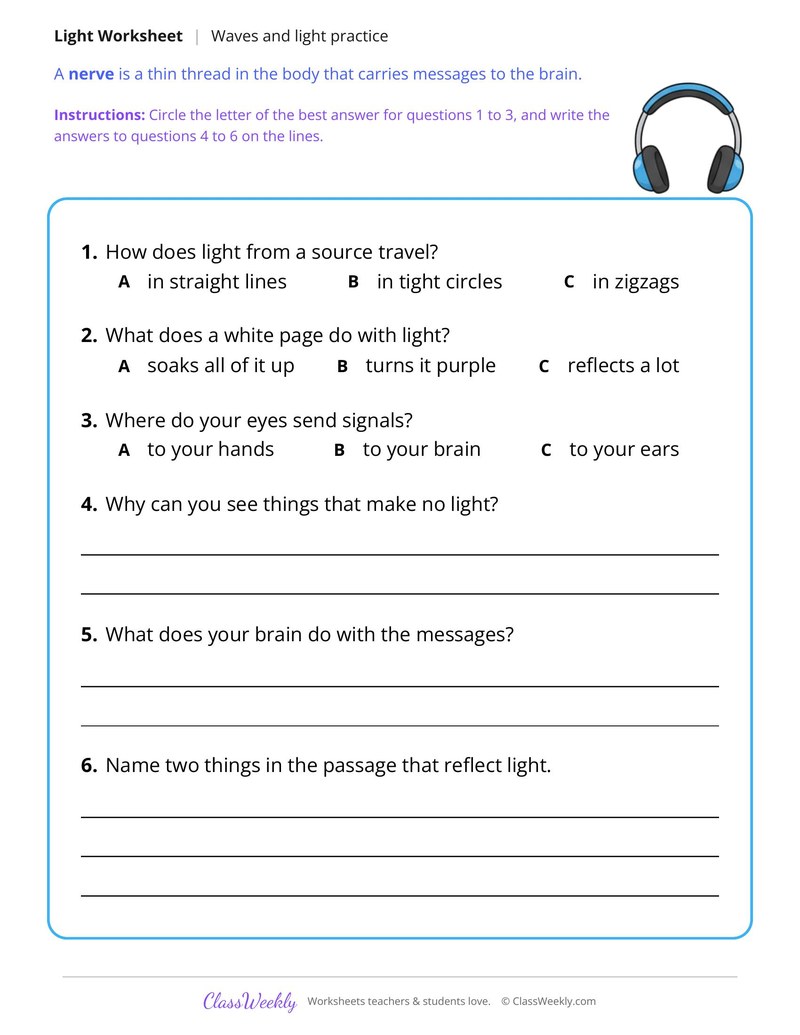
How Light Reflects So We Can See, Read and Answer
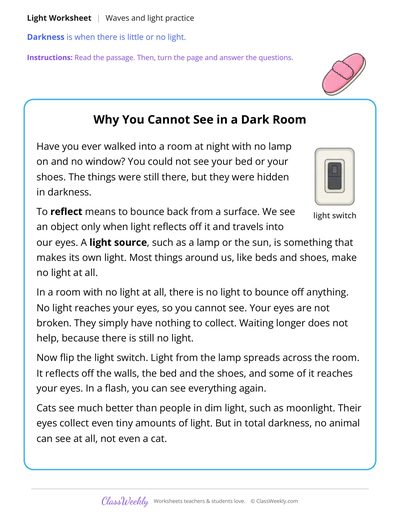
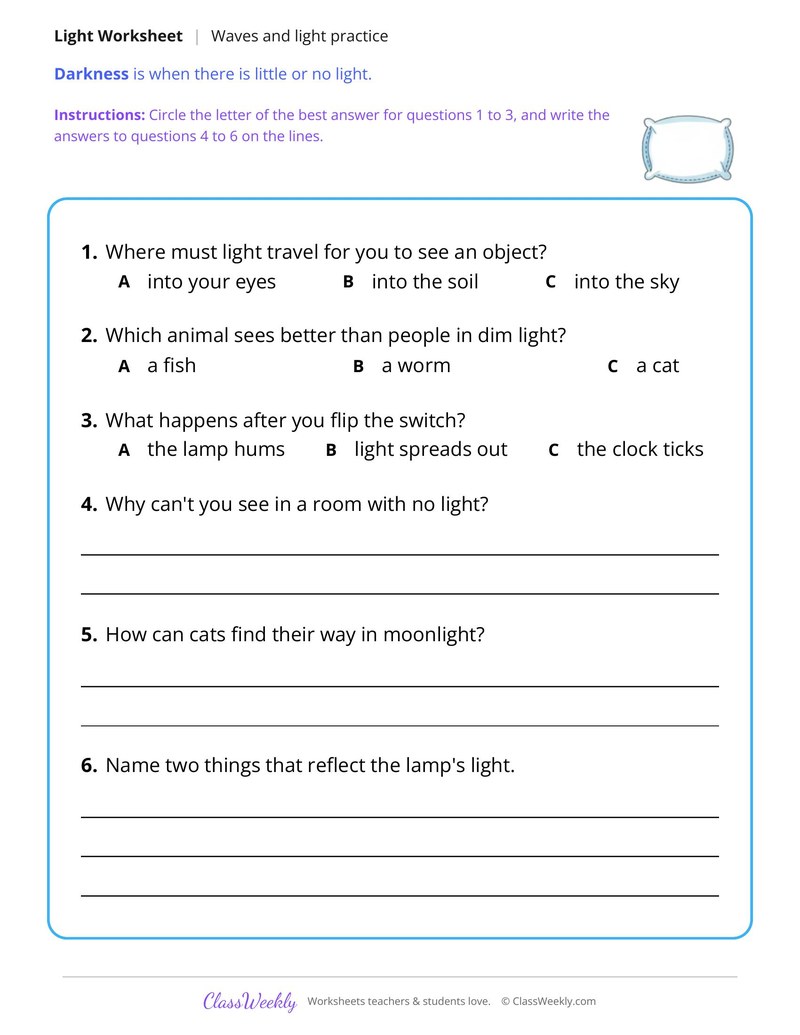
Why You Cannot See in a Dark Room, Read and Answer
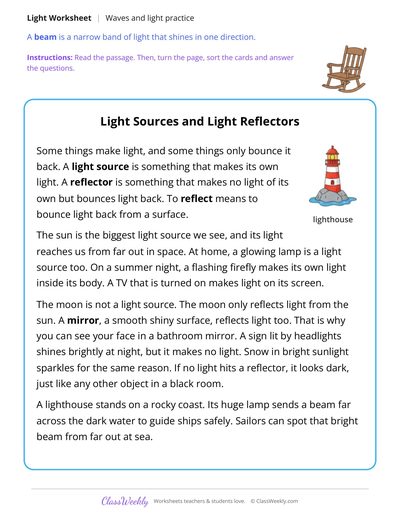
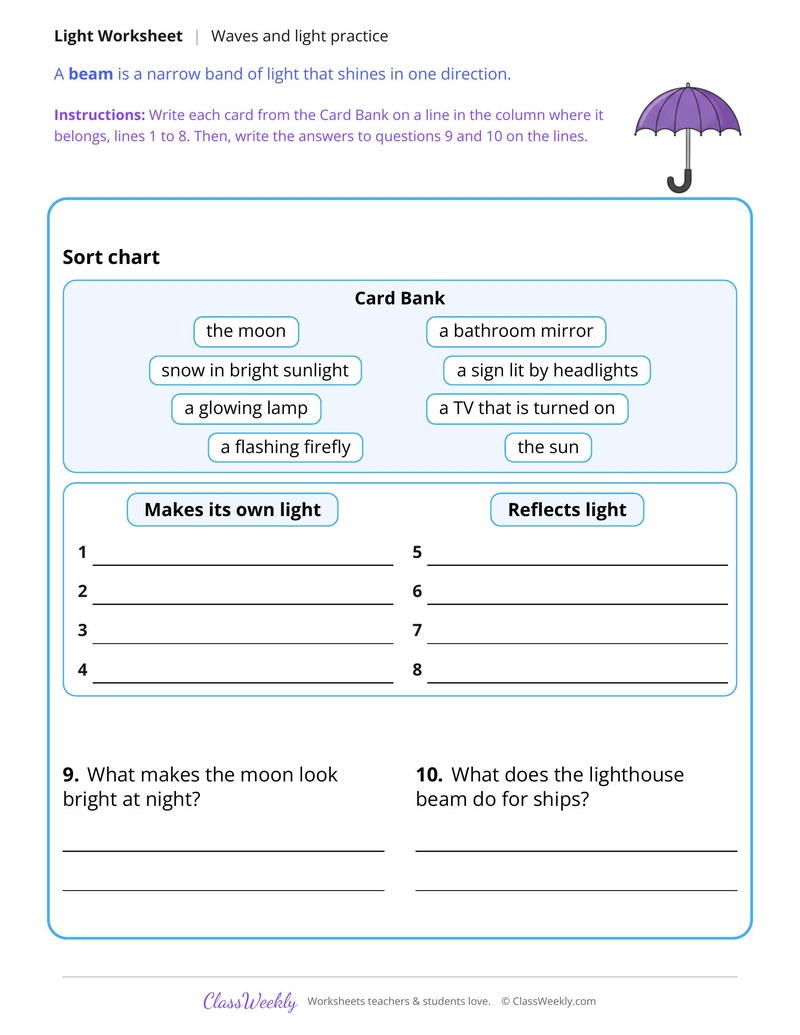
Light Sources and Light Reflectors, Read and Sort
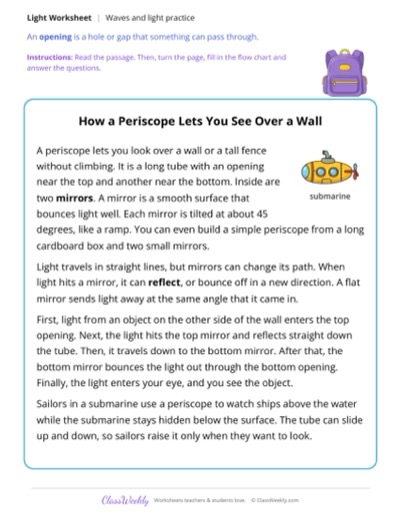
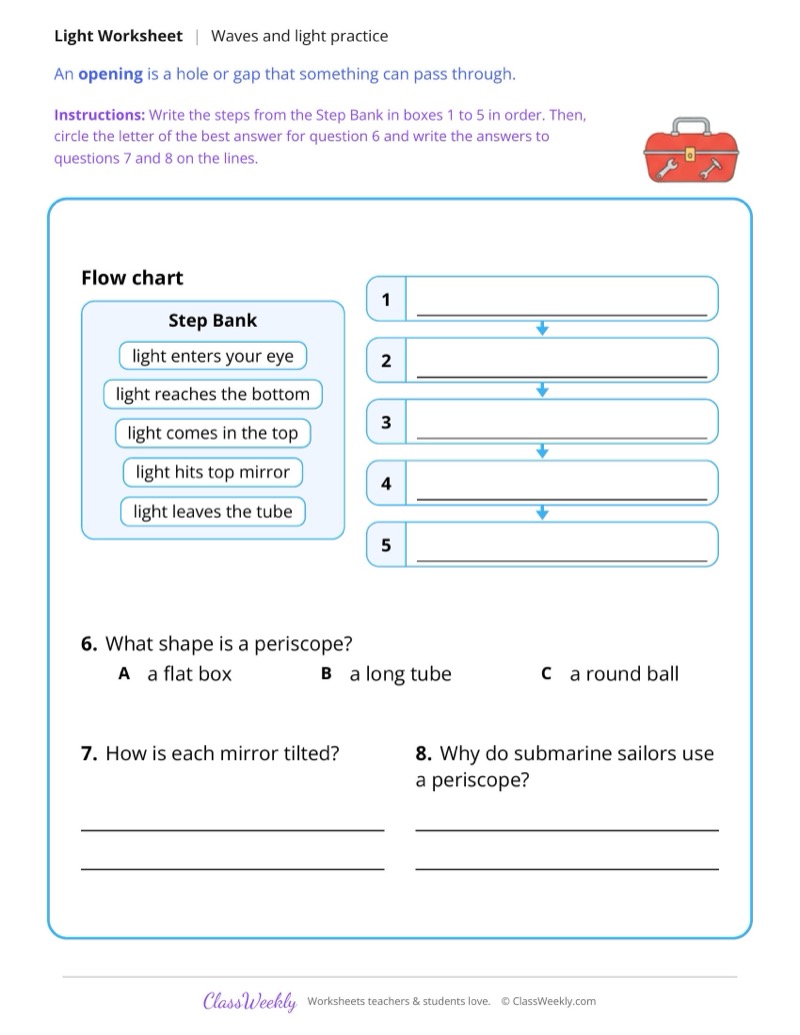
How a Periscope Lets You See Over a Wall, Order the Steps
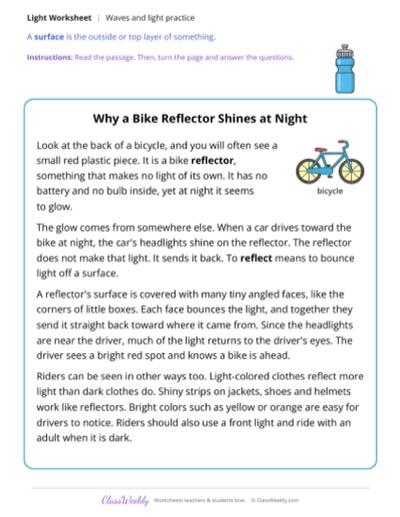
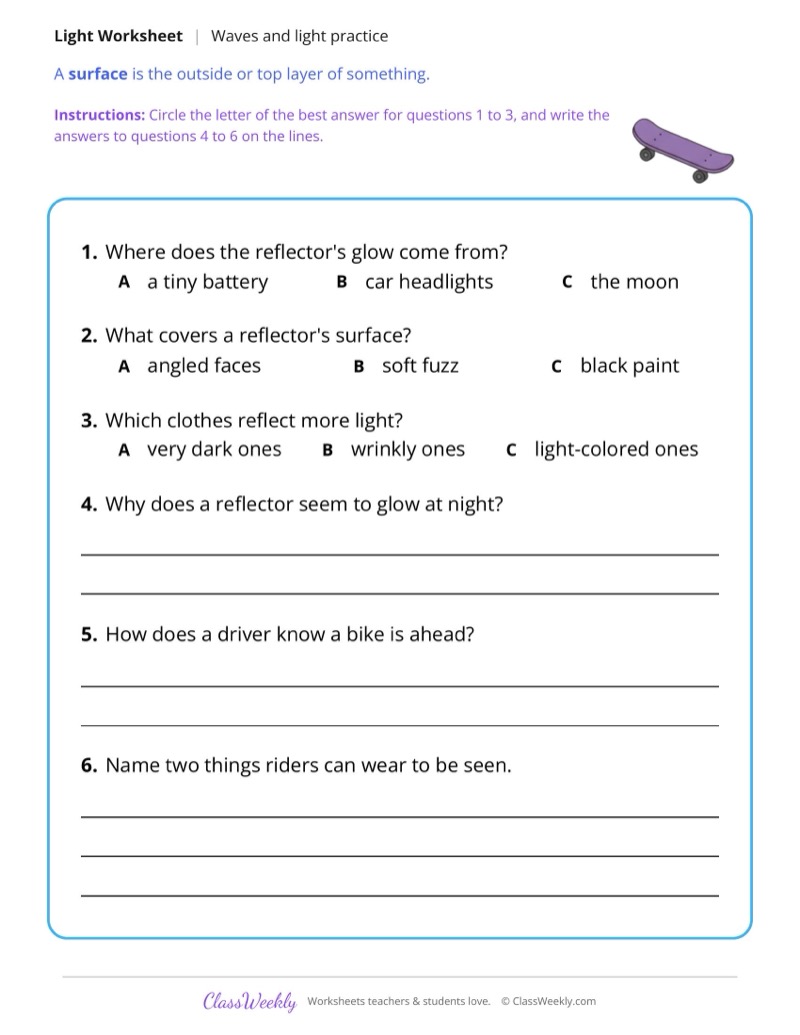
Why a Bike Reflector Shines at Night, Read and Answer
How Morse Code Sends a Message, Read and Answer
Curriculum Links
Next Generation Science Standards
Science · 4th Grade
Find this in the curriculum
Browse the grade, subject, and topic this belongs to.
FAQ
How do I use this waves and light worksheet?
⌄
Make waves in a tub or shake a jump rope so your child can see crests and troughs before the wave pages. Shine a flashlight at a mirror in a dim room for the light pages, and tap out SOS together for the code pages. Check each page with the answer key.
What does this worksheet teach?
⌄
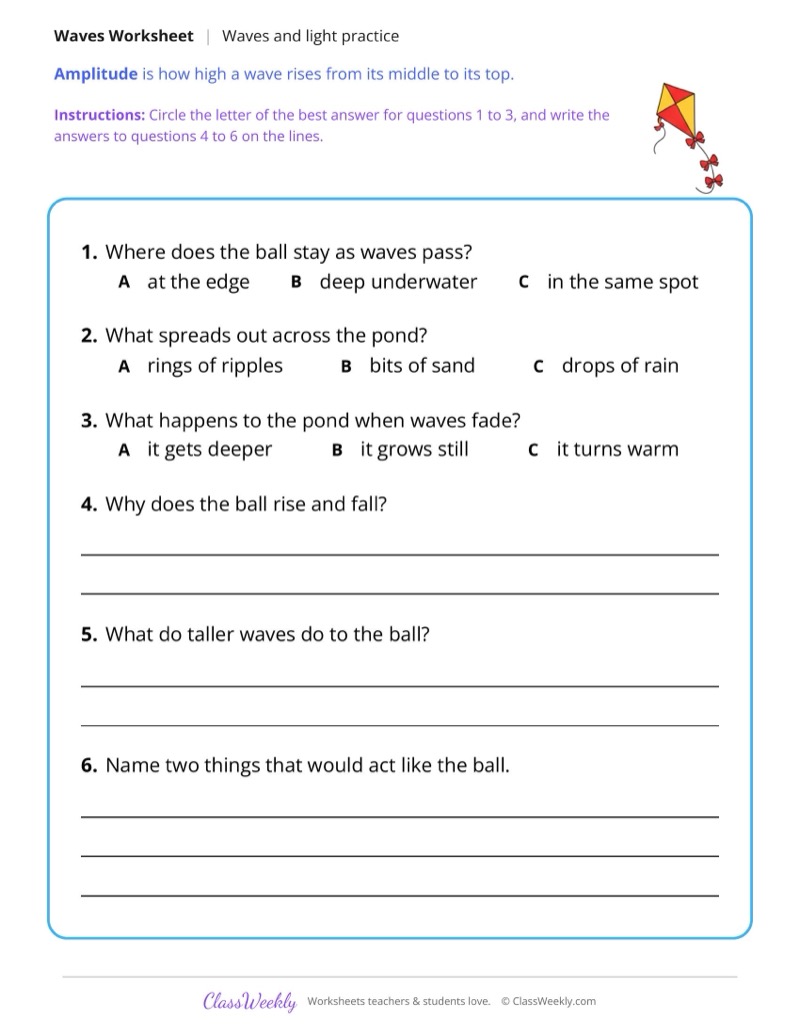
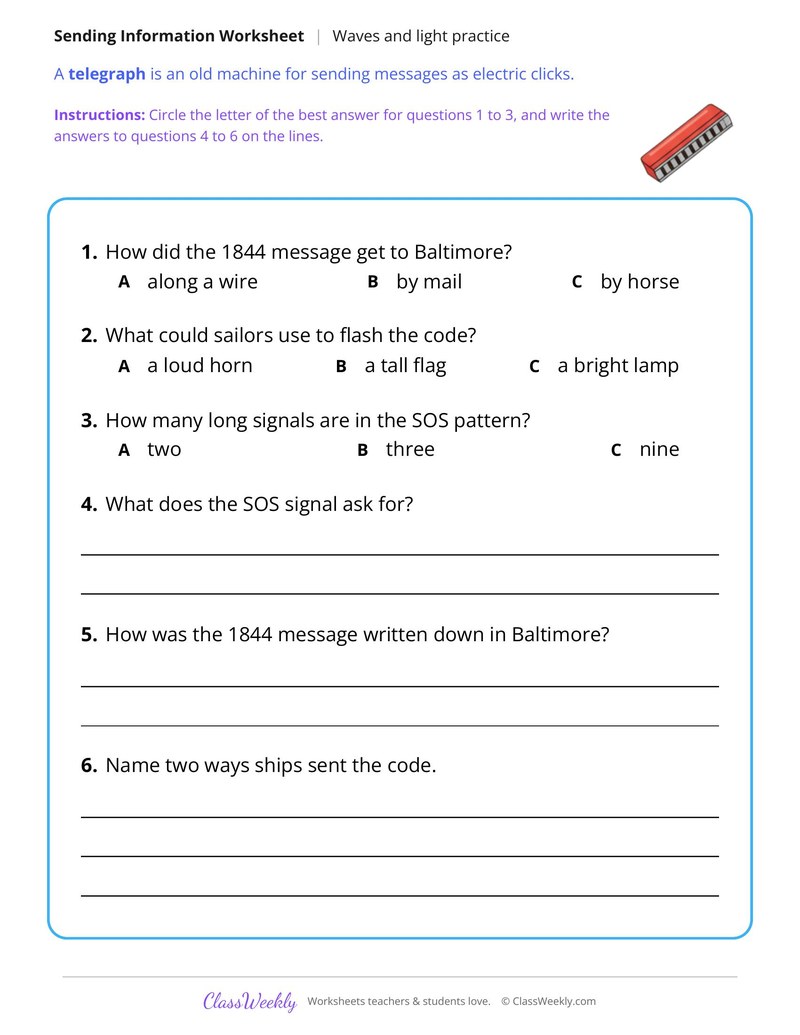
Read why a beach ball on a pond rises and falls in one spot while the ripples carry energy past it. Amplitude is how high a wave rises from its middle to its top. The directions on the page read: Read the passage. Then, turn the page and answer the questions. On page 2: Circle the letter of the best answer for questions 1 to 3, and write the answers to questions 4 to 6 on the lines. The answer key covers the questions on page 2.
Can I use this waves and light worksheet for homeschool or classroom?
⌄
Yes, both. We made it for 4th Grade waves and light, and the page works the same whether it lands on a kitchen table or a center rotation. At home, most families go through it together and talk the answers out loud, and that talking is where most of the learning happens. In class it runs well as independent work while you pull a small group. Print one copy or thirty, whichever the day needs.
What is a wave?
⌄
A wave is a repeating pattern of motion that carries energy, not matter, from place to place. A wave's amplitude is its height from the middle up to the crest, and its wavelength is the distance from one crest to the next. Stormy ocean waves have a bigger amplitude and carry more energy than calm ones (4-PS4-1).
How do we see things?
⌄
We see an object when light bounces off it into our eyes. A lamp or the sun is a light source that makes its own light, while a book, a chair or the moon only reflects light. In a room with no light at all, nothing reflects into your eyes, so you cannot see (4-PS4-2).
Is sound a wave?
⌄
Yes. Sound is a wave that travels through the air when something vibrates. Like a water wave, it carries energy to your ears while the air itself mostly stays in place. The 4th grade Sound waves sheet and the Light sheet from the Energy topic also appear on this page, next to the 12 waves and light sheets.
How can a pattern carry a message?
⌄
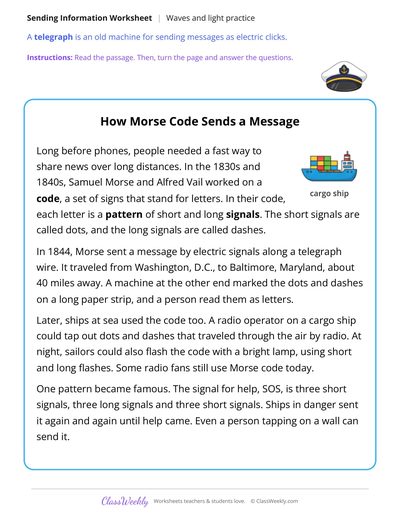
A code is a pattern that carries a message, as long as the sender and the reader both know what each signal means. Morse code turns letters into short and long signals, and SOS is three short, three long and three short. A phone turns each letter into a code of 1s and 0s (4-PS4-3). Every sheet has an answer key.
Ratings & Reviews
No reviews yet. Be the first to share what you think.
Reviews are for ClassWeekly members.
Make a Request
Spotted something to fix, or want a worksheet we don't have yet? Tell us and we'll make it.
Worksheet Details
| Grade | 4th Grade |
| Subject | Science |
| Topic | Waves and Light |
| Standard | 4-PS4-1 |
| Pages | 2 pages |
| Difficulty | Medium |
What is ClassWeekly?
ClassWeekly offers free worksheets and printable learning resources for kids in preschool to grade 5. All worksheets are aligned to Common Core, NGSS, and C3 Framework standards and designed by educators. Become a member to access the full library and download unlimited PDFs.
Wave Height and Wavelength in Ocean Waves, Read and Compare
How a Stadium Wave Moves Around, Order the Steps
How Light Reflects So We Can See, Read and Answer
Why You Cannot See in a Dark Room, Read and Answer
Light Sources and Light Reflectors, Read and Sort
How a Periscope Lets You See Over a Wall, Order the Steps
Why a Bike Reflector Shines at Night, Read and Answer
How Morse Code Sends a Message, Read and Answer