Static Electricity From a Balloon, Read and Answer
Written by Adi Ackerman, Head Teacher
"Static Electricity From a Balloon, Read and Answer" is written for 3rd Grade (Ages 8-9), and it covers NGSS 3-PS2-3. If your little one is a year younger but already steady on electricity and magnetism, the page still works. You may just need to read the instructions out loud. And if they are older and static electricity never quite stuck, this is a short review rather than busywork.
2 pages in this set
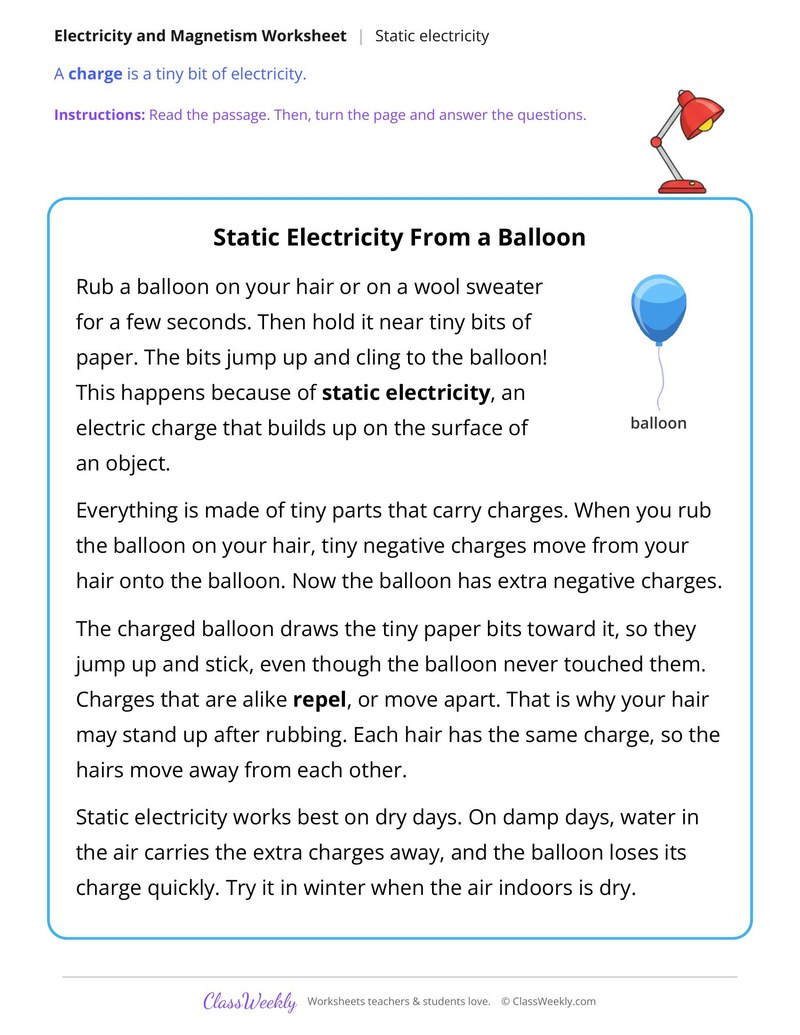
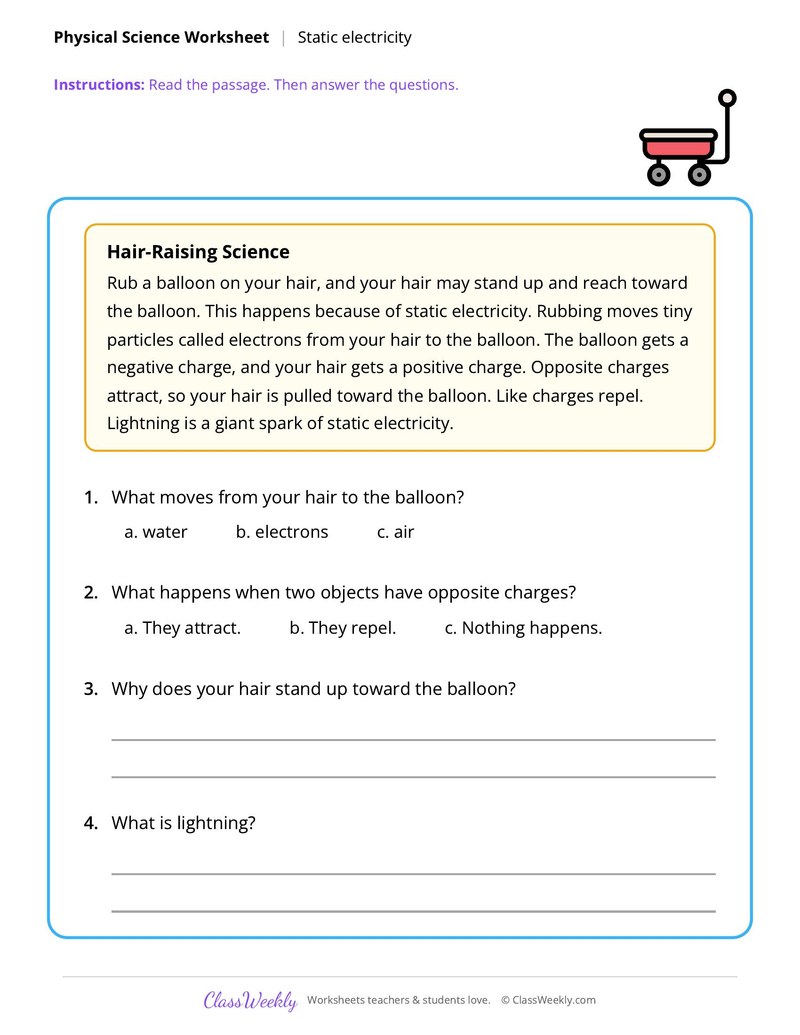
3rd grade science worksheet: read how rubbing a balloon on hair moves charges so it pulls up bits of paper and answer 6 questions. Answer key included. Part of our static electricity collection. Aligned to NGSS standards.
How do I use this worksheet?
Rub a balloon on a sweater and hold it over torn tissue paper while your child watches. Try again on a humid day and compare the results.
What students will practice
- Students will explain how rubbing builds up a static charge.
- Students will describe how a charged balloon pulls paper without touching it.
- Students will explain why static electricity works best on dry days.


Curriculum Links
Next Generation Science Standards
Science · 3rd Grade
Find this in the curriculum
Browse the grade, subject, and topic this belongs to.
FAQ
How do I use this static electricity worksheet?
⌄
Rub a balloon on a sweater and hold it over torn tissue paper while your child watches. Try again on a humid day and compare the results.
What does this worksheet teach?
⌄
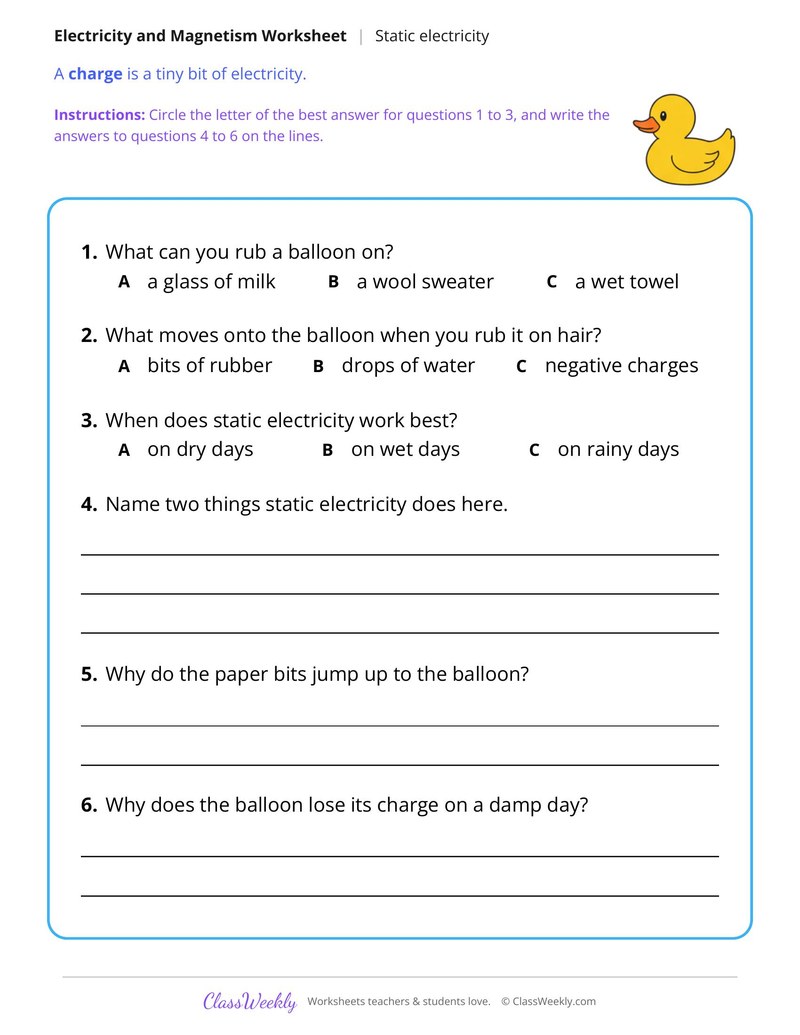
Read how rubbing a balloon on hair moves charges so it pulls up bits of paper and answer 6 questions. A charge is a tiny bit of electricity. The directions on the page read: Read the passage. Then, turn the page and answer the questions. On page 2: Circle the letter of the best answer for questions 1 to 3, and write the answers to questions 4 to 6 on the lines. The answer key covers the questions on page 2.
Can I use this static electricity worksheet for homeschool or classroom?
⌄
Yes, both. We made it for 3rd Grade electricity and magnetism, and the page works the same whether it lands on a kitchen table or a center rotation. At home, most families go through it together and talk the answers out loud, and that talking is where most of the learning happens with static electricity. In class it runs well as independent work while you pull a small group. Print one copy or thirty, whichever the day needs.
What does static electricity teach third graders?
⌄
Static electricity teaches students that all objects are made of tiny charged particles, and that when charges build up on a surface, they can attract or repel other objects and eventually discharge as a spark. Third graders explore familiar examples like hair standing up after a balloon rub, clingy laundry, and doorknob shocks, and connect those experiences to the underlying concept of charge transfer. It builds early atomic thinking in an age-appropriate, observable way.
When do third graders learn about static electricity?
⌄
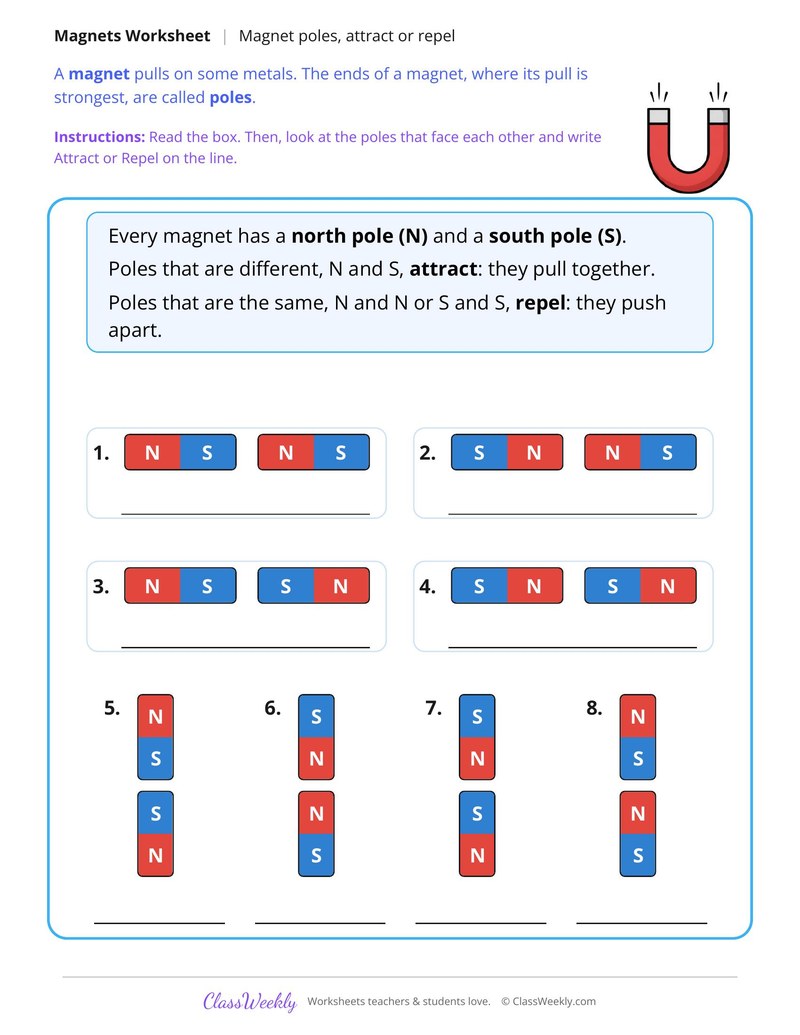
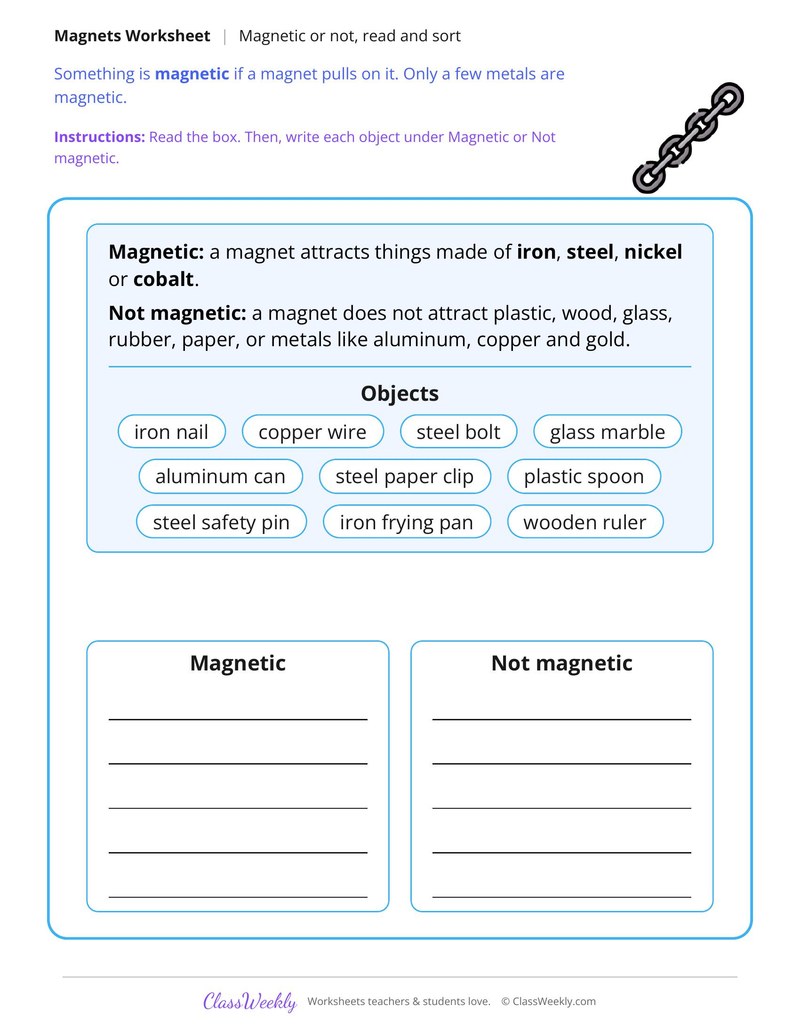
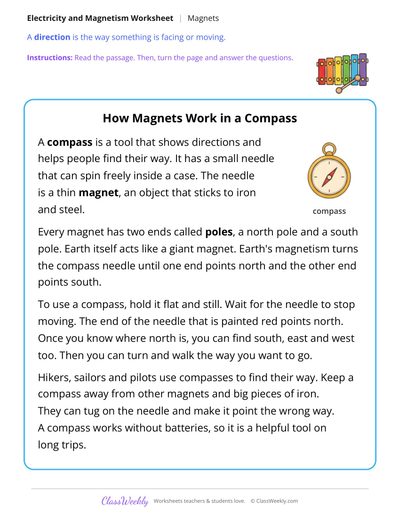
Static electricity is typically introduced in Grade 3 as part of the electricity and magnetism unit, often alongside magnets and contact vs. non-contact forces. At ages 8-9, students find static electricity fascinating because the effects are so visible and surprising, hair floating, paper scraps jumping, making it one of the most memorable units of the year. Simple demonstrations with balloons and tissue paper are standard accompaniments.
How can I use these worksheets at home?
⌄
Rub a balloon on your child's hair, let them observe the effects, and then use the worksheet to explain what's happening in terms of positive and negative charges. The observation and explanation activities in the worksheets are easy to do independently once your child has had a hands-on experience to anchor the concepts. This is a topic where a two-minute kitchen experiment can make an entire worksheet feel easy and satisfying to complete.
How many 3rd Grade static electricity worksheets are there?
⌄
2 printable worksheets, all free to preview. Downloads are included with a ClassWeekly free trial, and every page prints on standard 8.5 x 11 paper.
What age are static electricity worksheets for?
⌄
These are written for 3rd Grade students, roughly ages 8-9. Many teachers also use them a grade up for review or a grade down as an extension, so use the preview to judge the fit for a particular child.
Are these static electricity worksheets aligned to NGSS?
⌄
Yes. Each one shows the NGSS code it covers on its own page, so you can check the alignment yourself rather than taking our word for it.
Ratings & Reviews
No reviews yet. Be the first to share what you think.
Reviews are for ClassWeekly members.
Make a Request
Spotted something to fix, or want a worksheet we don't have yet? Tell us and we'll make it.
Worksheet Details
| Grade | 3rd Grade |
| Subject | Science |
| Topic | Electricity and Magnetism |
| Standard | 3-PS2-3 |
| Pages | 2 pages |
| Difficulty | Medium |
Learn More
What is ClassWeekly?
ClassWeekly offers free worksheets and printable learning resources for kids in preschool to grade 5. All worksheets are aligned to Common Core, NGSS, and C3 Framework standards and designed by educators. Become a member to access the full library and download unlimited PDFs.