Quotation Marks Around Titles of Songs and Poems
Written by Adi Ackerman, Head Teacher
"Quotation Marks Around Titles of Songs and Poems" is written for 4th Grade (Ages 9-10), and it covers Common Core L.4.2. If your little one is a year younger but already steady on punctuation, the page still works. You may just need to read the instructions out loud. And if they are older and quotation marks never quite stuck, this is a short review rather than busywork.
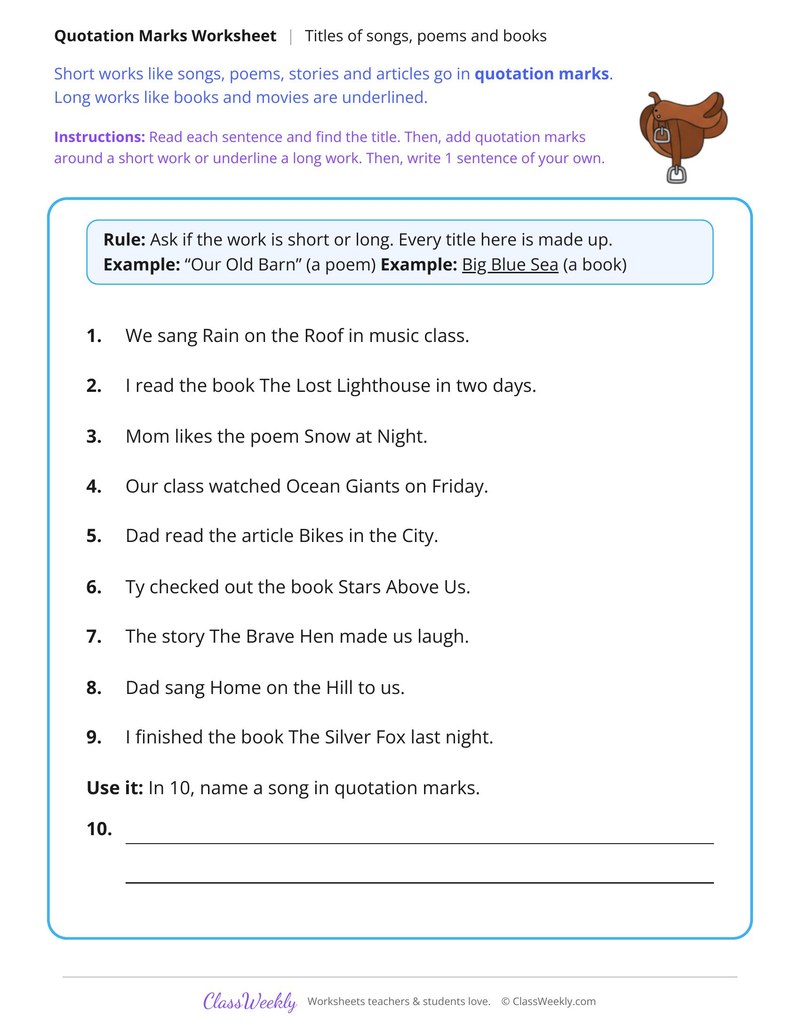
4th grade grammar worksheet: put quotation marks around made up song, poem and story titles and underline book and movie titles. Answer key included. Part of our quotation marks punctuation collection. Aligned to Common Core standards.
How do I use this worksheet?
Have your child point to the exact words the person said before adding marks. For titles, ask if the work is short, like a song, or long, like a book. Check the keyed pages with the answer key.
What students will practice
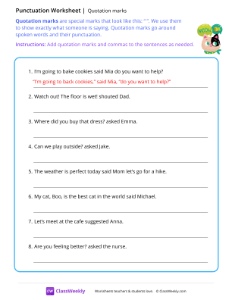
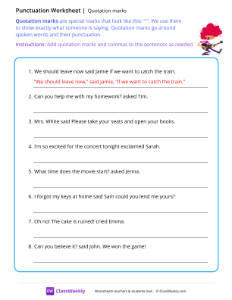
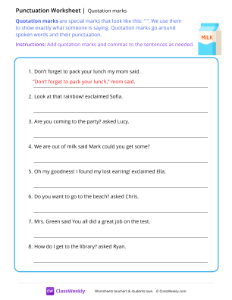
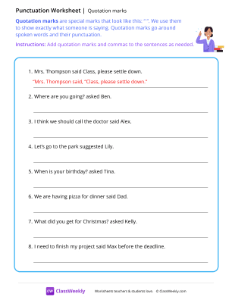
- Students will put quotation marks around a speaker's exact words.
- Students will use commas with quotation marks.
- Students will put quotation marks around short titles and underline long ones.
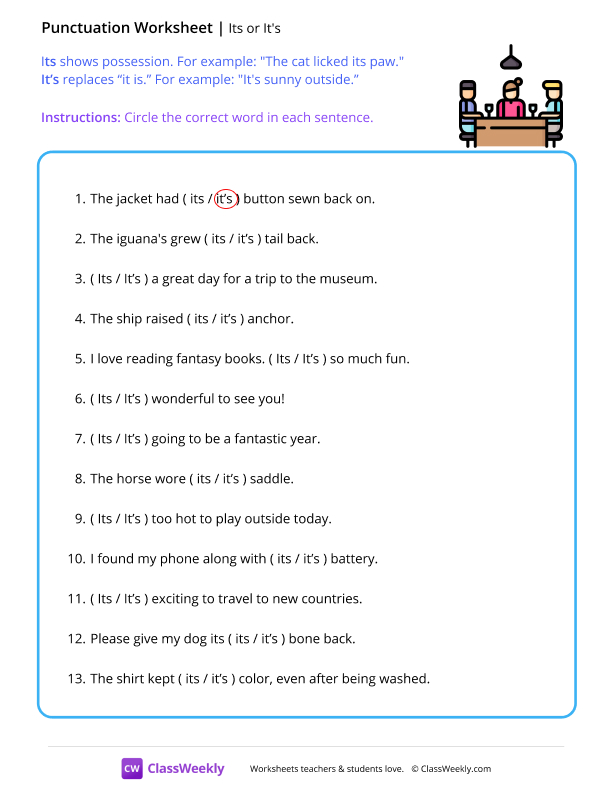
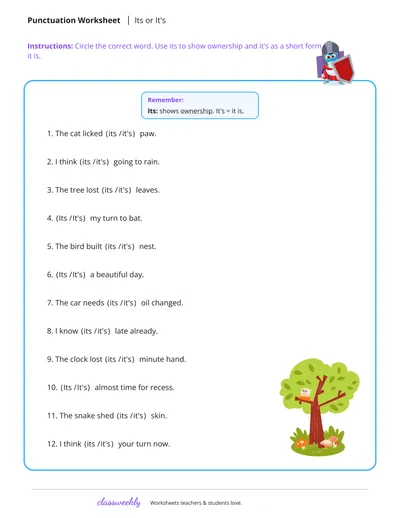


Curriculum Links
Common Core State Standards
Language · 4th Grade
Standard: Demonstrate command of the conventions of standard English capitalization, punctuation, and spelling when writing.
View all L.4.2 worksheets →Find this in the curriculum
Browse the grade, subject, and topic this belongs to.
FAQ
How do I use this quotation marks worksheet?
⌄
Have your child point to the exact words the person said before adding marks. For titles, ask if the work is short, like a song, or long, like a book. Check the keyed pages with the answer key.
What does this worksheet teach?
⌄
Put quotation marks around made up song, poem and story titles and underline book and movie titles. Short works like songs, poems, stories and articles go in quotation marks. Long works like books and movies are underlined. The directions on the page read: Read each sentence and find the title. Then, add quotation marks around a short work or underline a long work. Then, write 1 sentence of your own. An answer key is included.
Can I use this quotation marks worksheet for homeschool or classroom?
⌄
Yes, both. We made it for 4th Grade punctuation, and the page works the same whether it lands on a kitchen table or a center rotation. At home, most families go through it together and talk the answers out loud, and that talking is where most of the learning happens with quotation marks. In class it runs well as independent work while you pull a small group. Print one copy or thirty, whichever the day needs.
What are the two main uses of quotation marks that 4th graders learn?
⌄
Students learn to use quotation marks for (1) dialogue and direct quotations - the exact words someone said - and (2) titles of short works like poems, stories, songs, and articles.
How do students punctuate a direct quotation from a text in a written report?
⌄
Students place the speaker's or author's exact words inside quotation marks, introduce the quote with a comma or colon, and use the correct end punctuation inside the closing quotation mark.
What is the difference between quoting dialogue and quoting from a text in 4th grade writing?
⌄
Dialogue quotes capture what a character or person says in a story or conversation, while textual quotes support a claim in informational writing with evidence from a source - both use quotation marks but serve different writing purposes.
What punctuation skills should fourth graders master?
⌄
Fourth graders should use commas and quotation marks to mark direct speech and quotations from a text, use a comma before a coordinating conjunction in a compound sentence, and correctly punctuate titles. CCSS L.4.2b covers commas and quotation marks in dialogue and direct quotation, while CCSS L.4.2c covers the comma before a coordinating conjunction. Students also refine their use of apostrophes in possessives and continue mastering comma usage in addresses, dates, and series. A key fourth grade advancement is punctuating quotations from source material, not just dialogue, which connects grammar to research writing. Students learn that quoting from a book requires the same punctuation rules as character dialogue. Worksheets that include both dialogue and text quotation exercises build this transfer. Activities that present compound sentences and ask students to place the comma correctly before the conjunction address a common weak spot. Integrated punctuation editing passages that combine all fourth grade rules provide the most realistic and effective practice.
How do I help my fourth grader punctuate compound sentences correctly?
⌄
The rule is straightforward: when two independent clauses are joined by a coordinating conjunction (and, but, or, nor, for, so, yet), place a comma before the conjunction. "I enjoy reading, and my brother prefers soccer." The challenge is distinguishing compound sentences from simple sentences with compound predicates. "I enjoy reading and writing" has no comma because it is one subject with two verbs, not two separate clauses. Teach your child this test: cover everything after the conjunction. If what remains on each side could be a complete sentence on its own, add a comma. If one side cannot stand alone, no comma is needed. Worksheets that present mixed examples and ask students to decide whether a comma is needed are highly effective. Start with clear examples where both clauses have different subjects, then progress to trickier cases. Having students write their own compound sentences and check them with the "cover test" builds the skill for independent use. CCSS L.4.2c specifically identifies this comma rule as a fourth grade focus.
What are the most common punctuation errors fourth graders make?
⌄
Fourth graders commonly struggle with four punctuation areas. First, comma splices: joining two independent clauses with just a comma and no conjunction ("I like pizza, she likes tacos" instead of "I like pizza, and she likes tacos"). Second, missing commas before conjunctions in compound sentences, which is the reverse problem. Third, punctuating quotations from texts incorrectly when incorporating them into research reports and book responses. Fourth, inconsistent or incorrect use of possessive apostrophes, especially with plural possessives and proper nouns ending in s. Some students also over-use exclamation points or place commas based on speech pauses rather than grammar rules. Worksheets that present passages with these specific errors and ask students to identify and correct them build proofreading skills. The most effective approach is focusing on one error type per week until students can spot it automatically, then combining them in integrated editing exercises. CCSS L.4.2 requires students to demonstrate command of capitalization, punctuation, and spelling conventions appropriate to their grade level.
Ratings & Reviews
No reviews yet. Be the first to share what you think.
Reviews are for ClassWeekly members.
Make a Request
Spotted something to fix, or want a worksheet we don't have yet? Tell us and we'll make it.
Worksheet Details
| Grade | 4th Grade |
| Subject | Grammar & Writing |
| Topic | Punctuation |
| Standard | L.4.2 |
| Pages | 1 page |
| Difficulty | Medium |
Learn More
What is ClassWeekly?
ClassWeekly offers free worksheets and printable learning resources for kids in preschool to grade 5. All worksheets are aligned to Common Core, NGSS, and C3 Framework standards and designed by educators. Become a member to access the full library and download unlimited PDFs.