Does or Do? Make the Verb Agree
Written by Adi Ackerman, Head Teacher
"Does or Do? Make the Verb Agree" is written for 2nd Grade (Ages 7-8), and it covers Common Core L.2.1. If your little one is a year younger but already steady on verbs, the page still works. You may just need to read the instructions out loud. And if they are older and subject verb agreement never quite stuck, this is a short review rather than busywork.
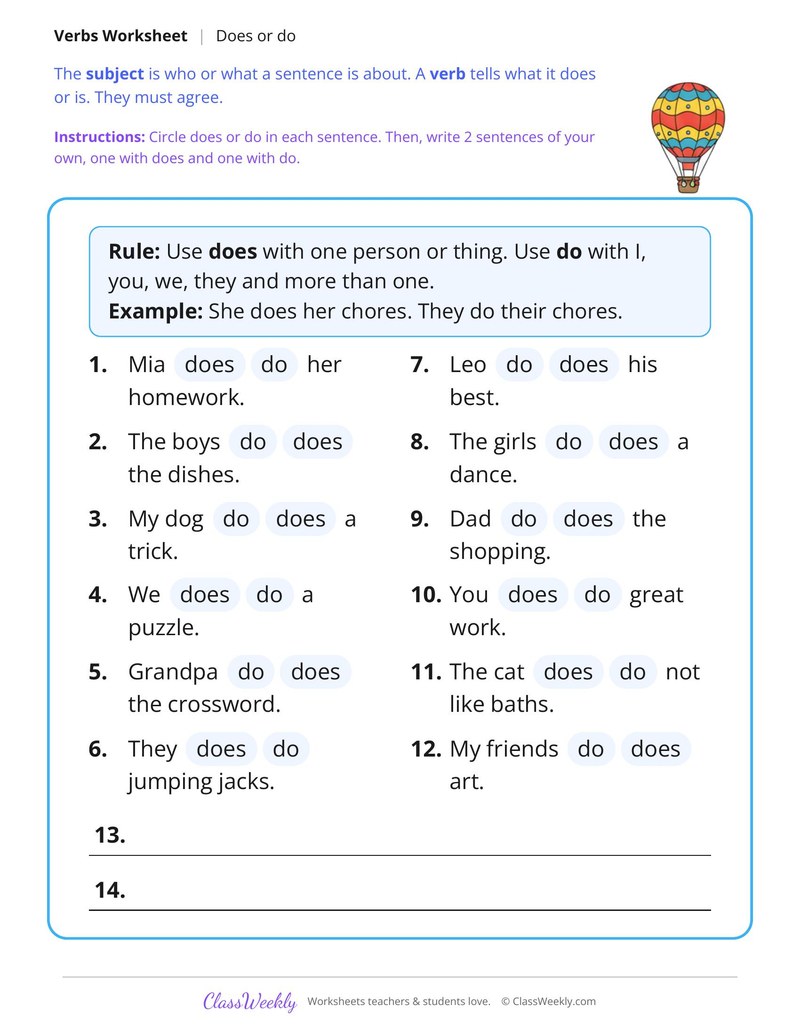
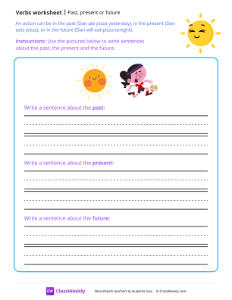
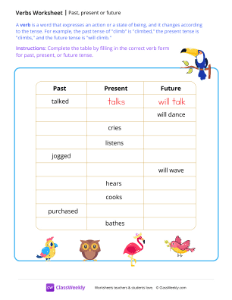
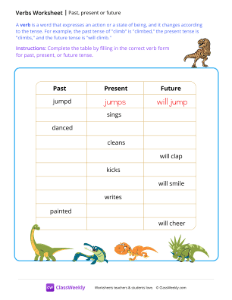
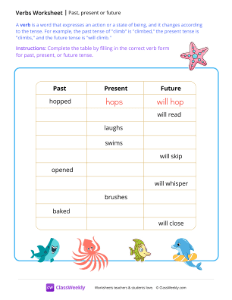
2nd grade grammar worksheet: circle does or do to match the subject, then write one sentence with does and one with do. Answer key included. Part of our subject verb agreement verbs collection. Aligned to Common Core standards.
How do I use this worksheet?
Have your child find the subject first and ask, is it one or more than one? Then read the sentence aloud with each verb choice. Check with the answer key and reread any missed sentence aloud.
What students will practice
- Students will match a verb to a singular or plural subject.
- Students will use the plural verb with two subjects joined by and.
- Students will find and fix verbs that do not agree in a story or a letter.
Curriculum Links
Common Core State Standards
Language · 2nd Grade
Standard: Demonstrate command of the conventions of standard English grammar and usage when writing or speaking.
View all L.2.1 worksheets →Find this in the curriculum
Browse the grade, subject, and topic this belongs to.
FAQ
How do I use this subject verb agreement worksheet?
⌄
Have your child find the subject first and ask, is it one or more than one? Then read the sentence aloud with each verb choice. Check with the answer key and reread any missed sentence aloud.
What does this worksheet teach?
⌄
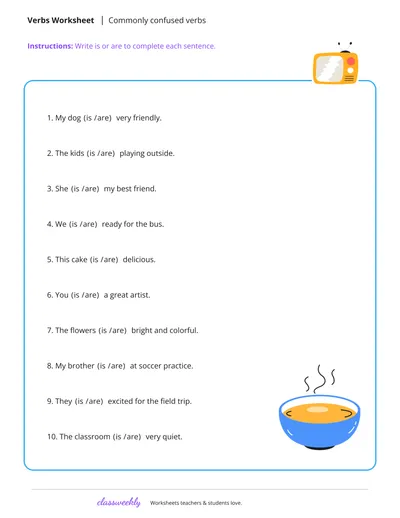
Circle does or do to match the subject, then write one sentence with does and one with do. The subject is who or what a sentence is about. A verb tells what it does or is. They must agree. The directions on the page read: Circle does or do in each sentence. Then, write 2 sentences of your own, one with does and one with do. An answer key is included.
Can I use this subject verb agreement worksheet for homeschool or classroom?
⌄
Yes, both. We made it for 2nd Grade verbs, and the page works the same whether it lands on a kitchen table or a center rotation. At home, most families go through it together and talk the answers out loud, and that talking is where most of the learning happens with subject verb agreement. In class it runs well as independent work while you pull a small group. Print one copy or thirty, whichever the day needs.
What is subject verb agreement?
⌄
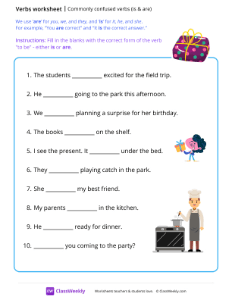
The verb has to match the subject. One subject usually takes a verb with s, as in The dog runs, and more than one takes the verb without it, as in The dogs run. Children use this in every sentence they write (L.2.1).
Why does Mia and Leo take a verb without s?
⌄
Two subjects joined by and make a group of more than one, so they take the plural verb: Mia and Leo run, not runs. One page practices only this pattern.
When does a verb add es instead of s?
⌄
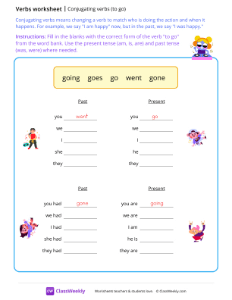
Verbs that end in s, sh, ch, x or o usually add es for one subject, like goes, washes and fixes. The goes or go page practices these verbs, then has children write two sentences.
Is there an answer key for each worksheet?
⌄
Yes. All six subject verb agreement sheets have an answer key.
What verb skills should second graders learn?
⌄
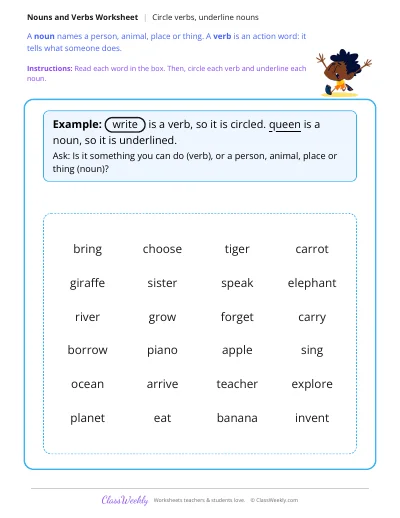
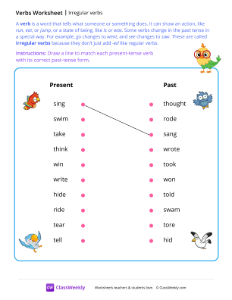
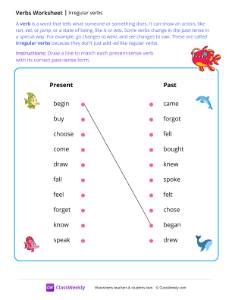
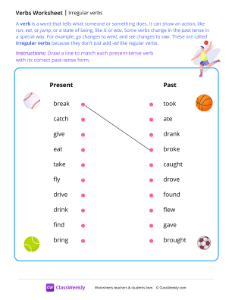
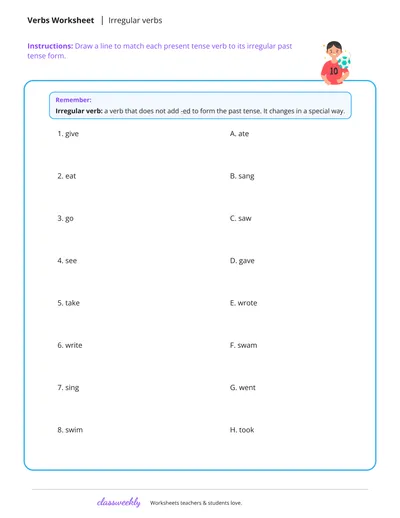
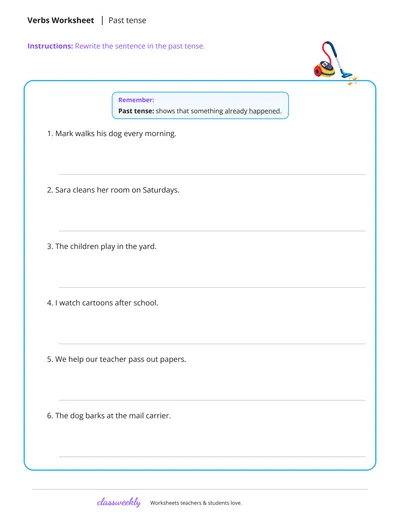
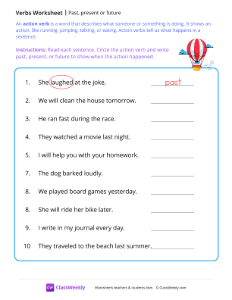
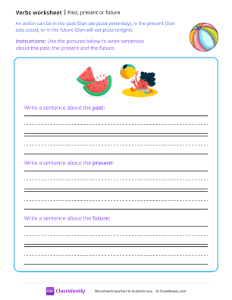
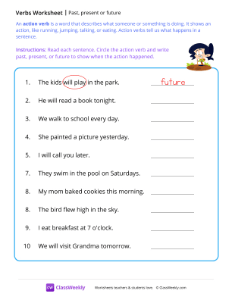
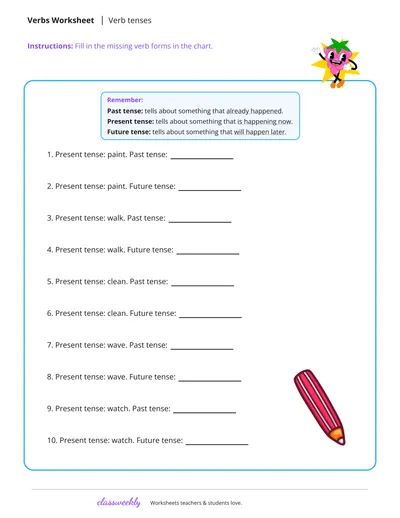
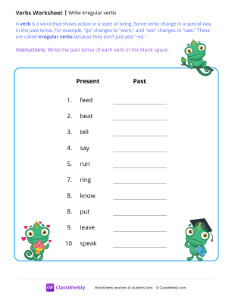
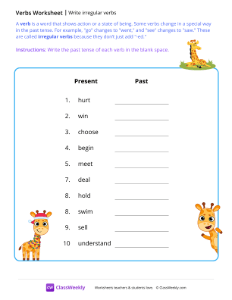
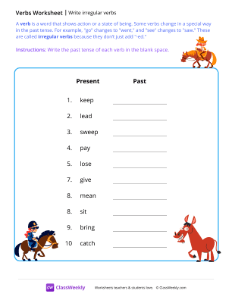
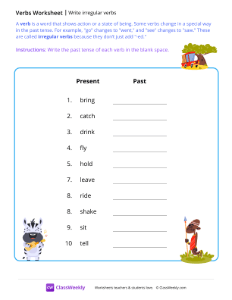
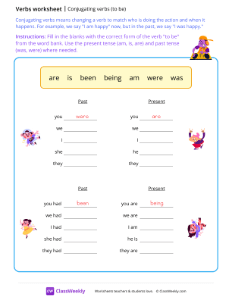
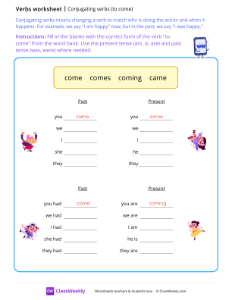
Second graders should form and use the past tense of frequently occurring irregular verbs, as specified in CCSS L.2.1d. This includes verbs like: go/went, come/came, run/ran, see/saw, give/gave, sit/sat, tell/told, think/thought, take/took, and write/wrote. Students also continue practicing regular past tense (adding ed) and learn to identify verbs as action words in sentences. At this level, children begin to understand that verbs change form depending on when the action happened. They should distinguish between present tense (I run), past tense (I ran), and future tense using "will" (I will run). Worksheets that ask students to rewrite sentences changing the verb tense, or to choose the correct past tense form from two options, provide targeted practice. Verb knowledge is fundamental to sentence construction, so mastery at this level supports all future grammar and writing development.
How do I teach irregular past tense verbs to my second grader?
⌄
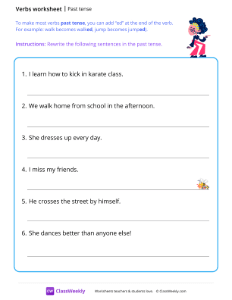
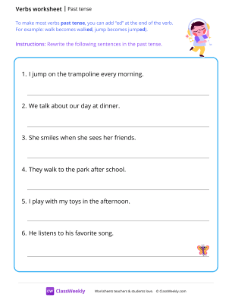
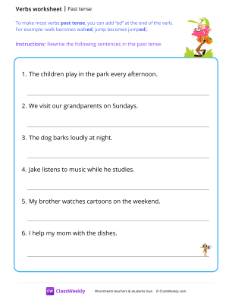
Irregular past tense verbs must be memorized because they do not follow the regular "add ed" pattern. The most effective approach combines direct instruction, repeated exposure through reading, and structured practice. Start with a small group of five to eight high-frequency irregular verbs. Create flashcards with the present tense on one side and past tense on the other. Practice daily until those are automatic, then add more. Worksheets that present a sentence in present tense and ask students to rewrite it in past tense are highly effective. Sorting activities where children group verbs into "add ed" (regular) and "changes" (irregular) categories build awareness of the two patterns. Oral practice is also valuable. Tell a story in present tense and have your child retell it in past tense. The key is frequent, spaced repetition rather than one intensive lesson. CCSS L.2.1d lists irregular verbs as a primary second grade grammar focus.
What are the most common verb mistakes second graders make?
⌄
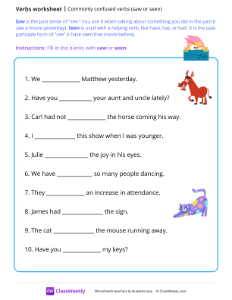
The most common verb error in second grade is over-regularization, applying the "add ed" rule to irregular verbs. Children write "goed" instead of "went," "runned" instead of "ran," and "thinked" instead of "thought." This is actually a positive developmental sign because it means the child has learned the regular past tense rule and is applying it broadly. Other common errors include confusing "was" and "were" ("We was playing"), using "seen" without a helping verb ("I seen it" instead of "I saw it" or "I have seen it"), and inconsistent tense within a piece of writing (switching between past and present). Worksheets that ask students to proofread sentences and fix verb errors develop the editing skill needed to catch these mistakes. Oral correction during conversation also helps. When your child says "I goed," gently restate: "Oh, you went? Tell me more." This models the correct form without interrupting communication, supporting CCSS L.2.1d development.
Ratings & Reviews
No reviews yet. Be the first to share what you think.
Reviews are for ClassWeekly members.
Make a Request
Spotted something to fix, or want a worksheet we don't have yet? Tell us and we'll make it.
Worksheet Details
| Grade | 2nd Grade |
| Subject | Grammar & Writing |
| Topic | Verbs |
| Standard | L.2.1 |
| Pages | 1 page |
| Difficulty | Medium |
Learn More
What is ClassWeekly?
ClassWeekly offers free worksheets and printable learning resources for kids in preschool to grade 5. All worksheets are aligned to Common Core, NGSS, and C3 Framework standards and designed by educators. Become a member to access the full library and download unlimited PDFs.