How Characters Respond to Pressure at a Science Olympiad
Written by Adi Ackerman, Head Teacher
"How Characters Respond to Pressure at a Science Olympiad" is written for 5th Grade (Ages 10-11), and it covers Common Core RL.5.3. If your little one is a year younger but already steady on story elements, the page still works. You may just need to read the instructions out loud. And if they are older and character analysis never quite stuck, this is a short review rather than busywork.
2 pages in this set
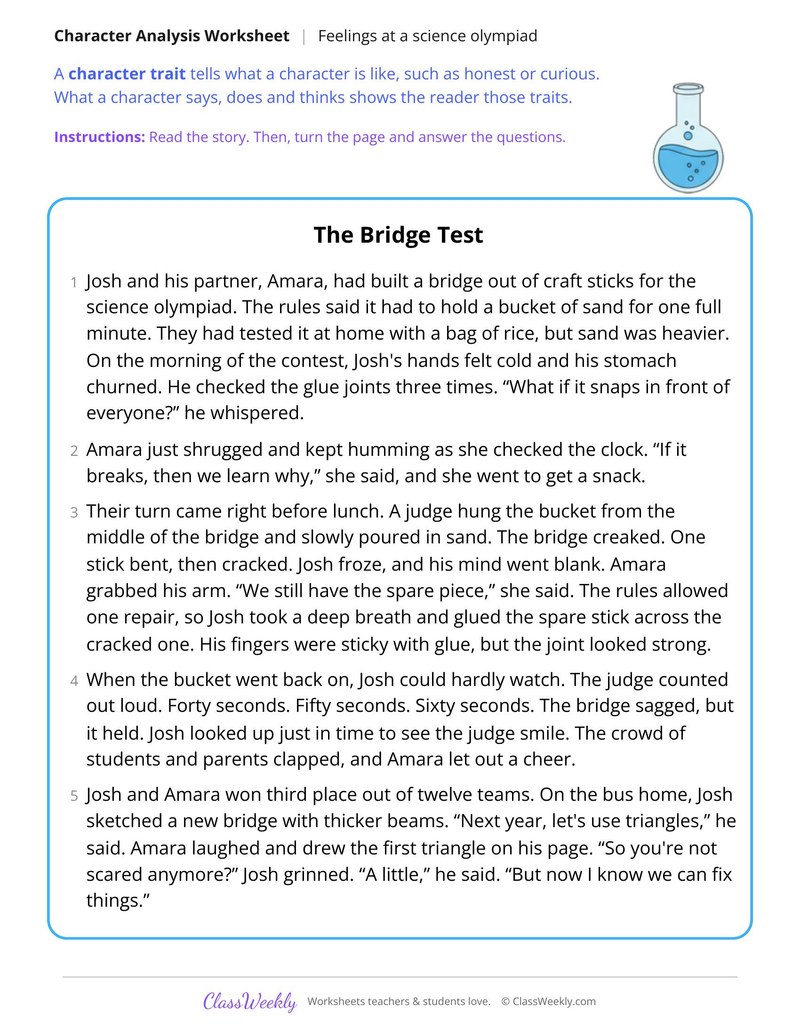
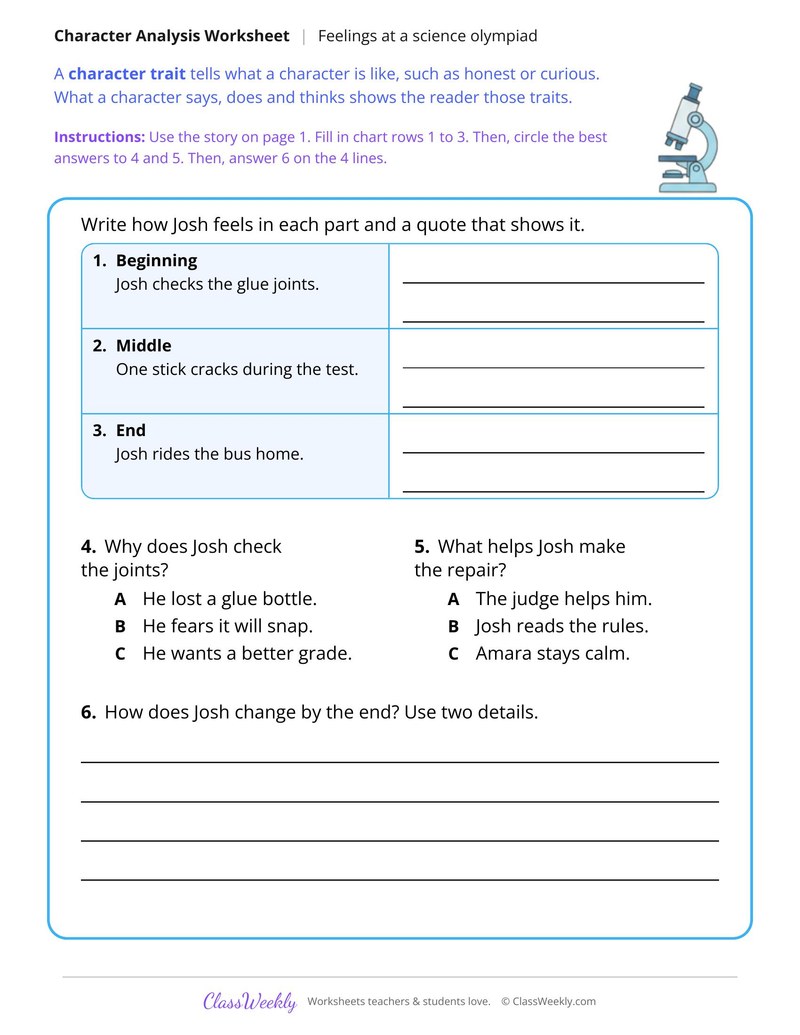
5th grade reading worksheet: track Josh's feelings when a stick in his bridge cracks at a science olympiad and tell how he changes. Answer key included. Part of our character analysis story elements collection. Aligned to Common Core standards.
How do I use this worksheet?
Have your child read the story once for fun and a second time with a pencil, marking words that show how the character feels. On the chart, ask for the exact quote, not a retelling. For the last question, check that the answer names two details from different parts of the story.
What students will practice
- Students will describe a character's traits using quotes from the story.
- Students will explain a character's motives, feelings and conflicts.
- Students will explain how a character changes and what they learn, using two details.
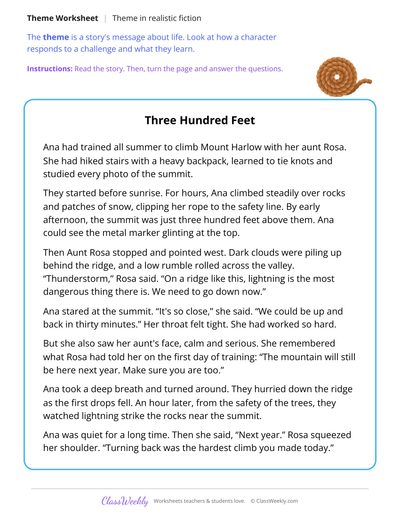
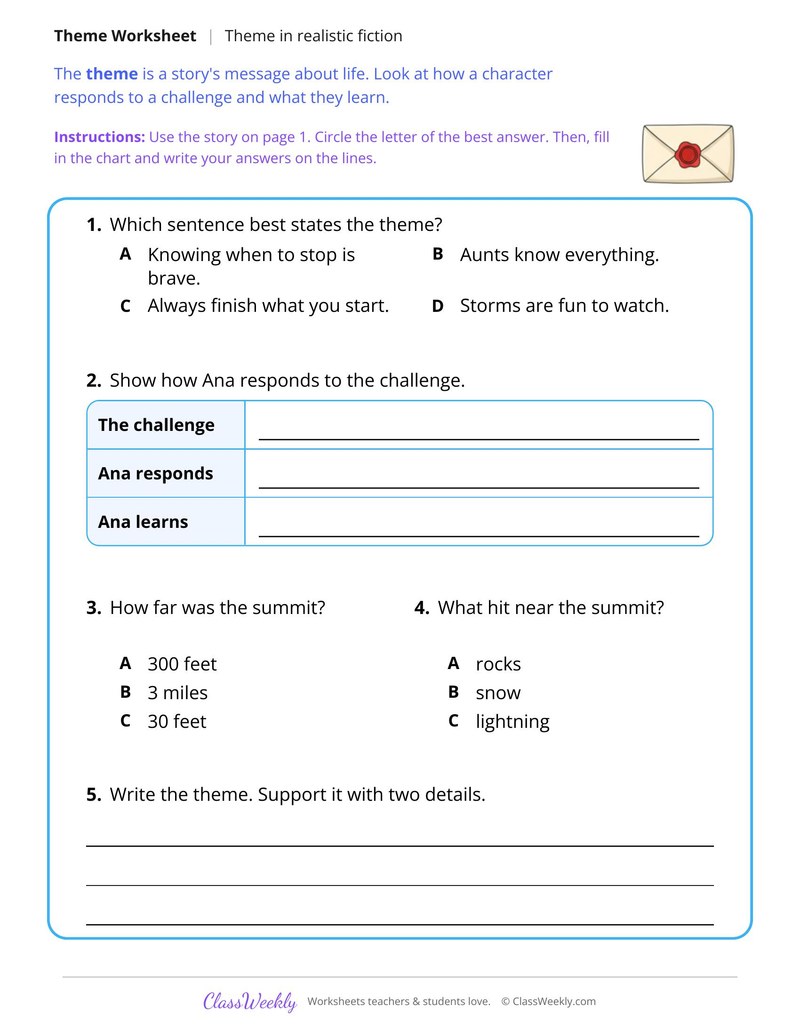
Theme of a Story About a Climber Who Turns Back
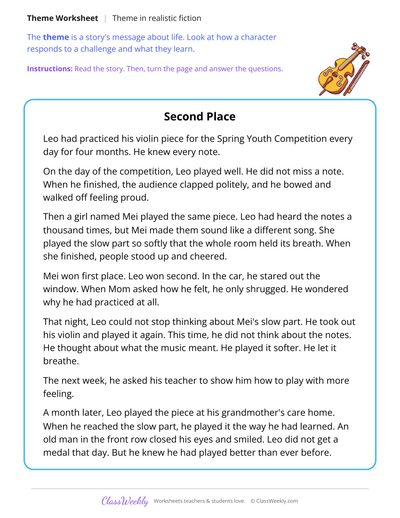
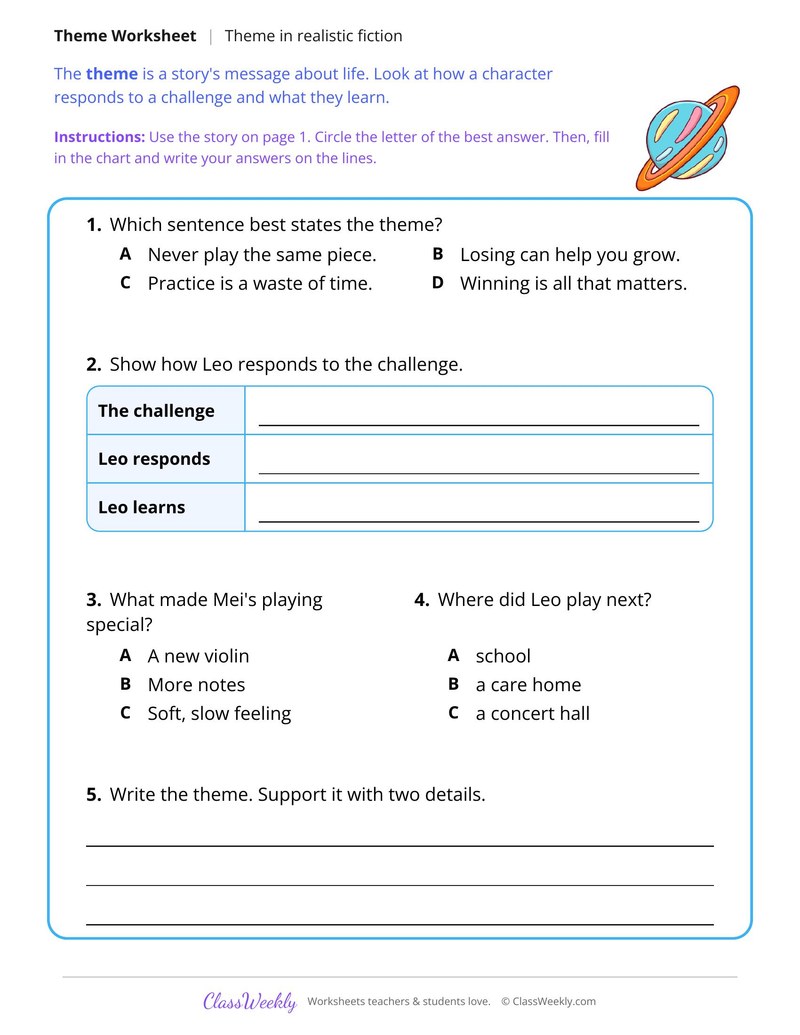
Theme of a Story About a Violinist Who Loses a Competition
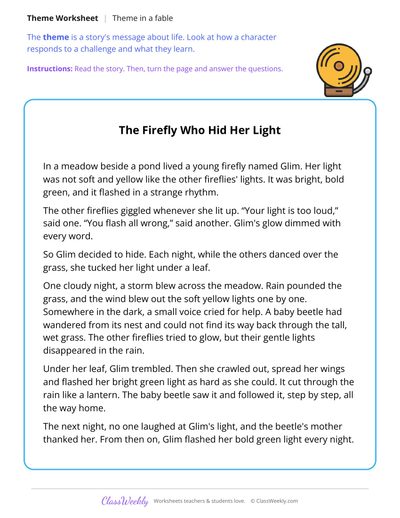
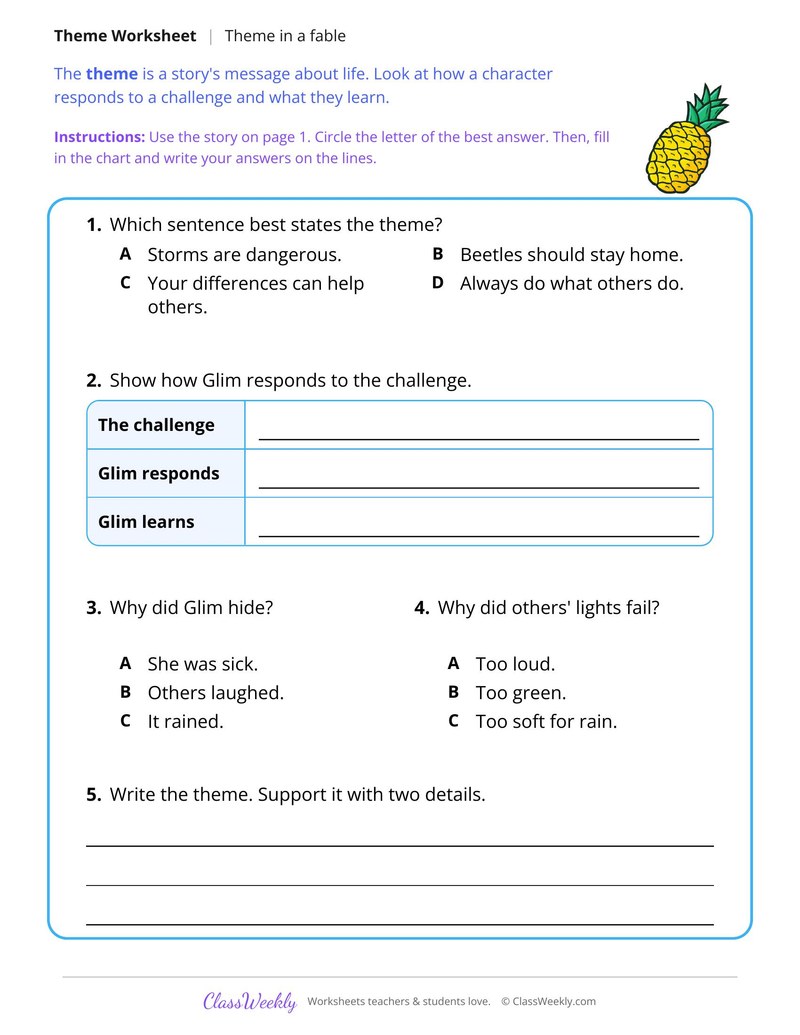
Theme of a Fable About a Firefly Who Hid Its Light
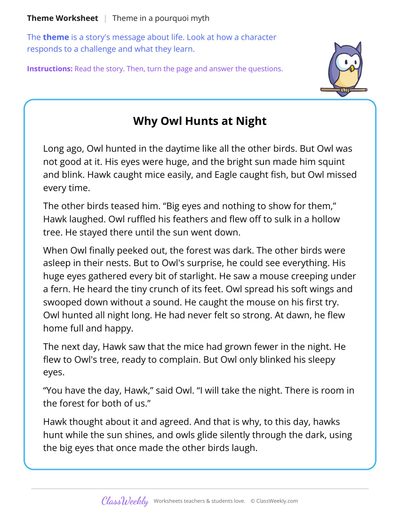
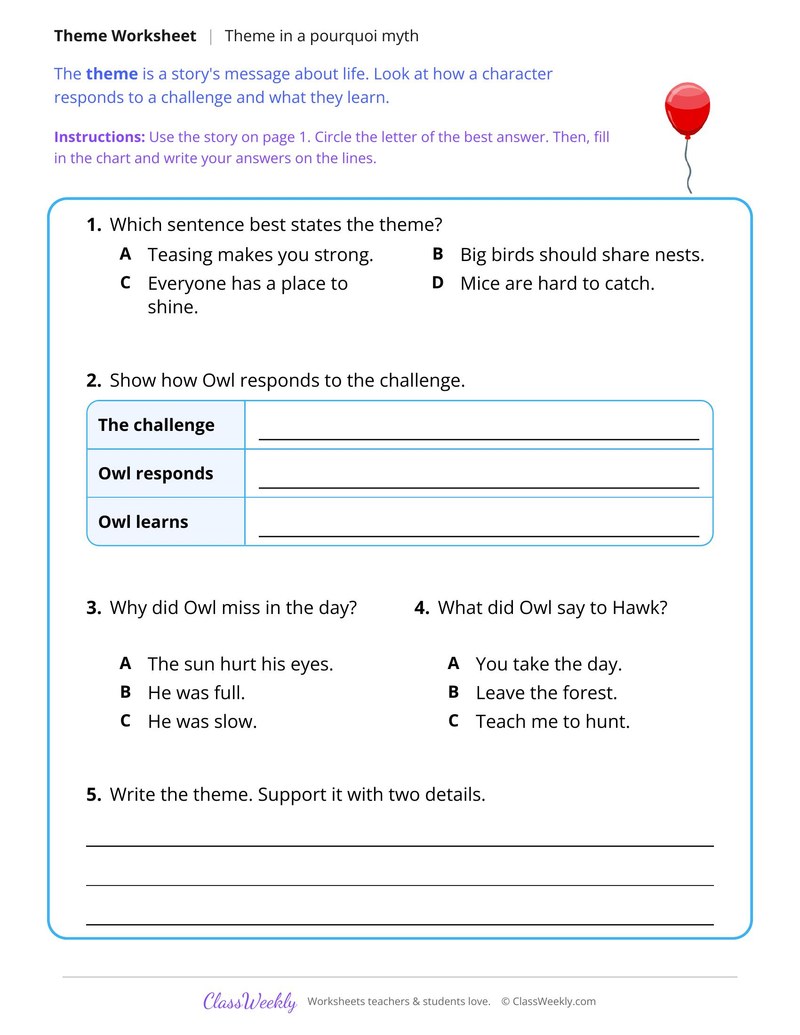
Theme of a Myth About Why Owls Hunt at Night
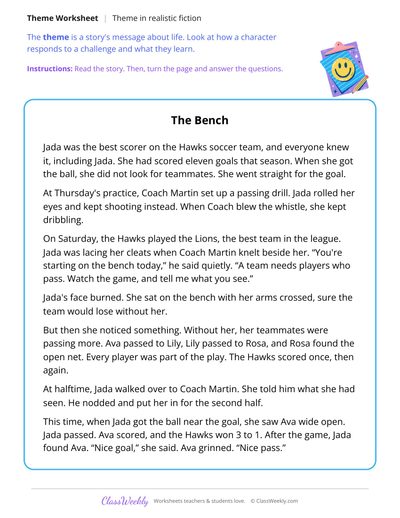
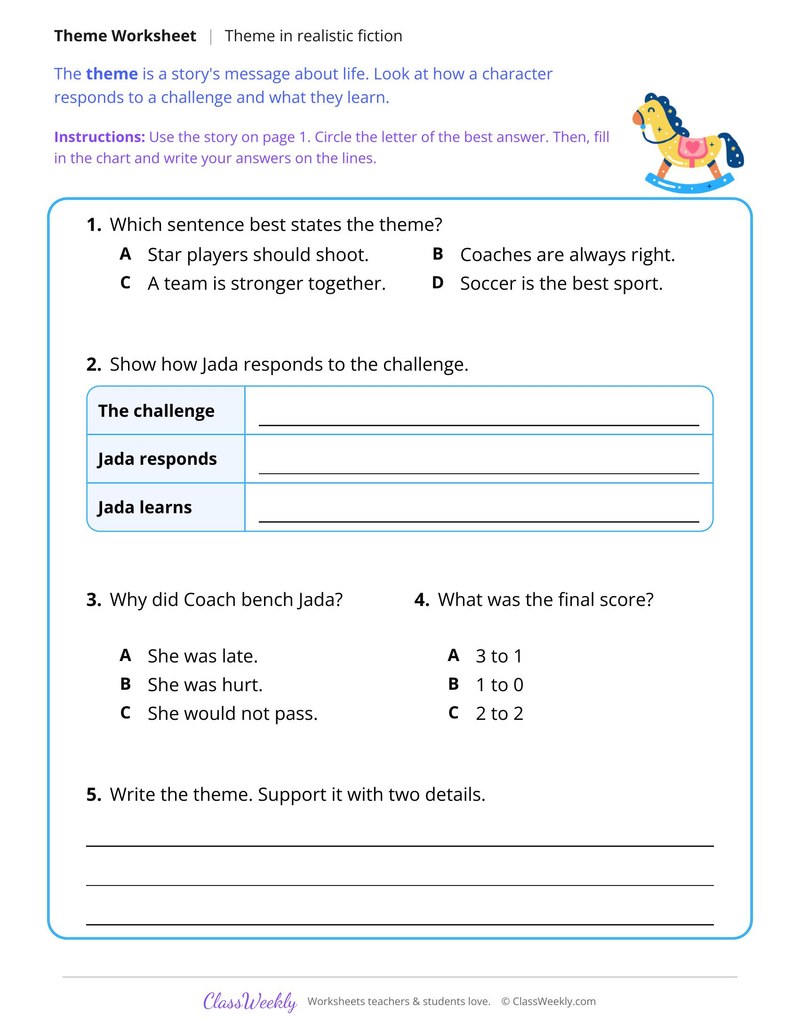
Theme of a Story About a Coach Who Benches the Star Player
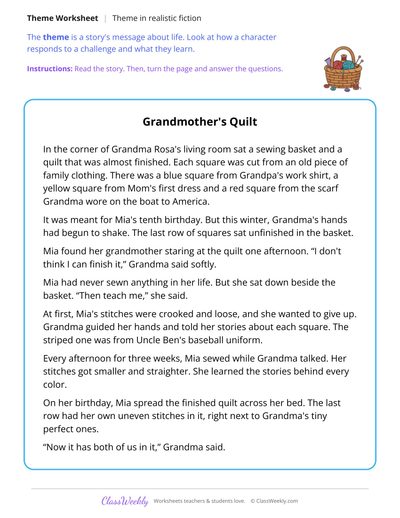
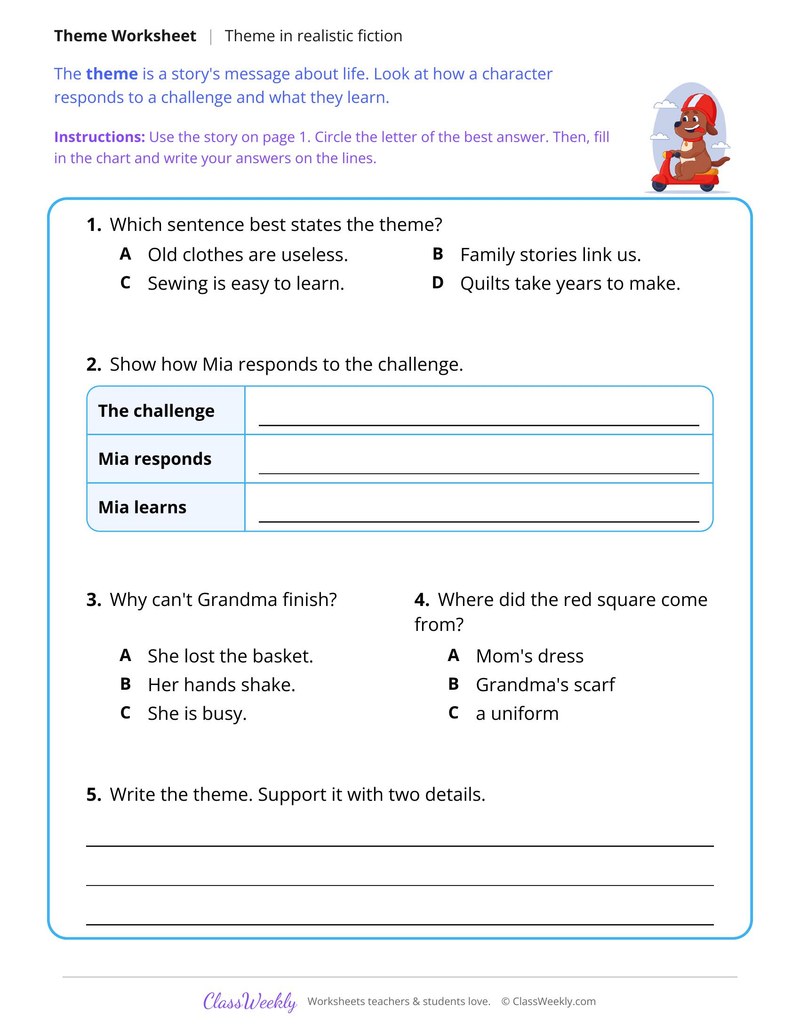
Theme of a Story About Grandmother's Quilt
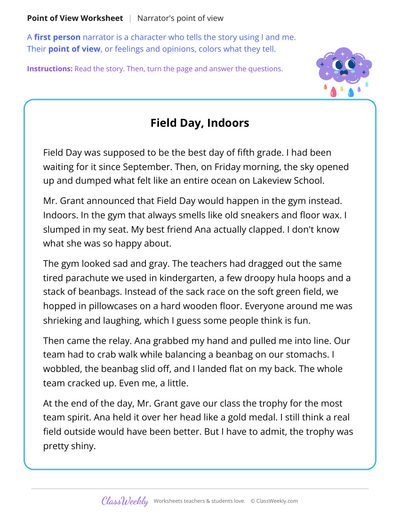
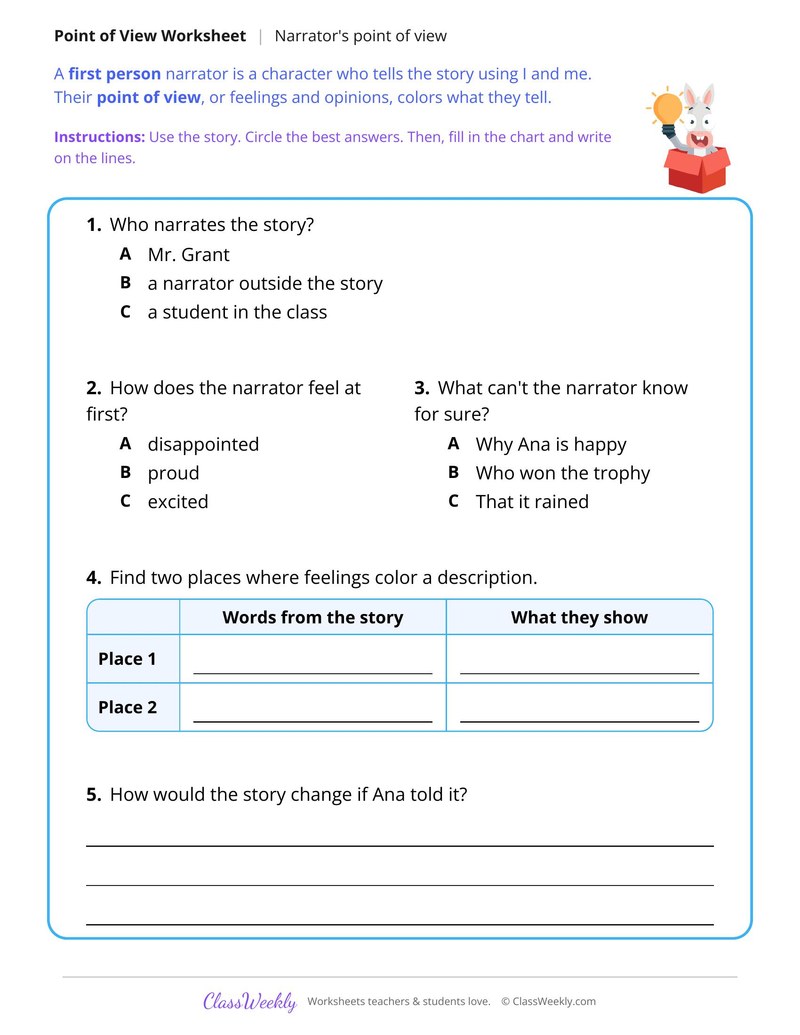
Narrator's Point of View in a Story About a Rainy Field Day
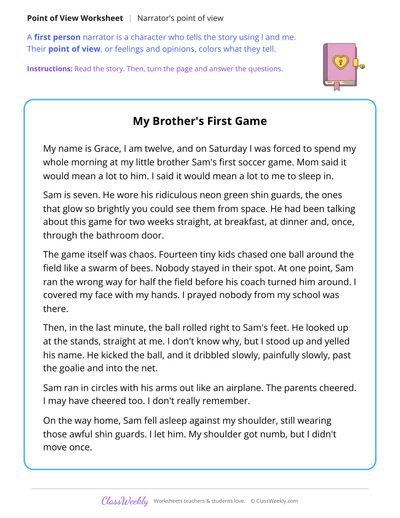
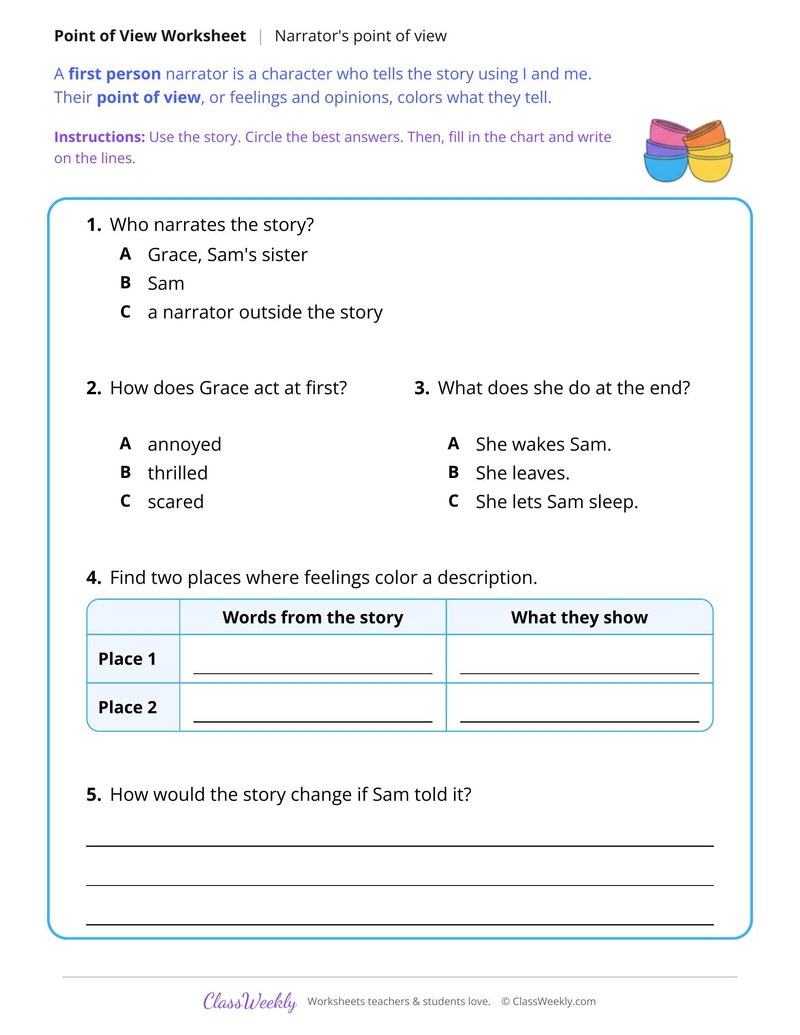
Narrator's Point of View in a Story Told by an Older Sister
Curriculum Links
Common Core State Standards
Reading: Literature · 5th Grade
Standard: Compare and contrast two or more characters, settings, or events in a story or drama, drawing on specific details in the text (e.g., how characters interact).
View all RL.5.3 worksheets →Find this in the curriculum
Browse the grade, subject, and topic this belongs to.
FAQ
How do I use this character analysis worksheet?
⌄
Have your child read the story once for fun and a second time with a pencil, marking words that show how the character feels. On the chart, ask for the exact quote, not a retelling. For the last question, check that the answer names two details from different parts of the story.
What does this worksheet teach?
⌄
Track Josh's feelings when a stick in his bridge cracks at a science olympiad and tell how he changes. A character trait tells what a character is like, such as honest or curious. What a character says, does and thinks shows the reader those traits. The directions on the page read: Read the story. Then, turn the page and answer the questions. On page 2: Use the story on page 1. Fill in chart rows 1 to 3. Then, circle the best answers to 4 and 5. Then, answer 6 on the 4 lines. The answer key covers the questions on page 2.
Can I use this character analysis worksheet for homeschool or classroom?
⌄
Yes, both. We made it for 5th Grade story elements, and the page works the same whether it lands on a kitchen table or a center rotation. At home, most families go through it together and talk the answers out loud, and that talking is where most of the learning happens with character analysis. In class it runs well as independent work while you pull a small group. Print one copy or thirty, whichever the day needs.
How do 5th graders analyze a character?
⌄
They look at what the character says, does and thinks, and how others react, then name a trait and back it up with a quote. RL.5.3 asks 5th graders to compare characters and tell how they respond and interact, using specific details from the story.
What is the difference between a feeling and a trait?
⌄
A feeling changes with events, like Ruby's nerves when she walks into the chess tournament. A trait is what a character is like most of the time, like determined or honest. Several sheets ask for both, so children see how feelings in one scene point to a lasting trait.
Why does one sheet focus on a minor character?
⌄
Minor characters often push the main character to change. In one story, Grace is unhappy on the stage crew until a quiet boy named Theo, who runs the lights, changes how she sees the job. Children chart what Theo does, how it changes Grace and a quote that shows it.
Is there an answer key for each worksheet?
⌄
Yes. All 16 character analysis sheets have an answer key. On the 12 newest sheets, the key gives a model for each chart cell and written answer and lists other answers the story supports.
How many 5th Grade character analysis worksheets are there?
⌄
16 printable worksheets, all free to preview. Downloads are included with a ClassWeekly free trial, and every page prints on standard 8.5 x 11 paper.
What age are character analysis worksheets for?
⌄
These are written for 5th Grade students, roughly ages 10-11. Many teachers also use them a grade up for review or a grade down as an extension, so use the preview to judge the fit for a particular child.
Are these character analysis worksheets aligned to Common Core?
⌄
Yes. Each one shows the Common Core code it covers on its own page, so you can check the alignment yourself rather than taking our word for it.
Ratings & Reviews
No reviews yet. Be the first to share what you think.
Reviews are for ClassWeekly members.
Make a Request
Spotted something to fix, or want a worksheet we don't have yet? Tell us and we'll make it.
Worksheet Details
| Grade | 5th Grade |
| Subject | Reading |
| Topic | Story Elements |
| Standard | RL.5.3 |
| Pages | 2 pages |
| Difficulty | Medium |
What is ClassWeekly?
ClassWeekly offers free worksheets and printable learning resources for kids in preschool to grade 5. All worksheets are aligned to Common Core, NGSS, and C3 Framework standards and designed by educators. Become a member to access the full library and download unlimited PDFs.
Theme of a Story About a Climber Who Turns Back
Theme of a Story About a Violinist Who Loses a Competition
Theme of a Fable About a Firefly Who Hid Its Light
Theme of a Myth About Why Owls Hunt at Night
Theme of a Story About a Coach Who Benches the Star Player
Theme of a Story About Grandmother's Quilt
Narrator's Point of View in a Story About a Rainy Field Day
Narrator's Point of View in a Story Told by an Older Sister