How Two Friends Solve a Fight in a Tree House Story
Written by Adi Ackerman, Head Teacher
"How Two Friends Solve a Fight in a Tree House Story" is written for 4th Grade (Ages 9-10), and it covers Common Core RL.4.3. If your little one is a year younger but already steady on story elements, the page still works. You may just need to read the instructions out loud. And if they are older and character analysis never quite stuck, this is a short review rather than busywork.
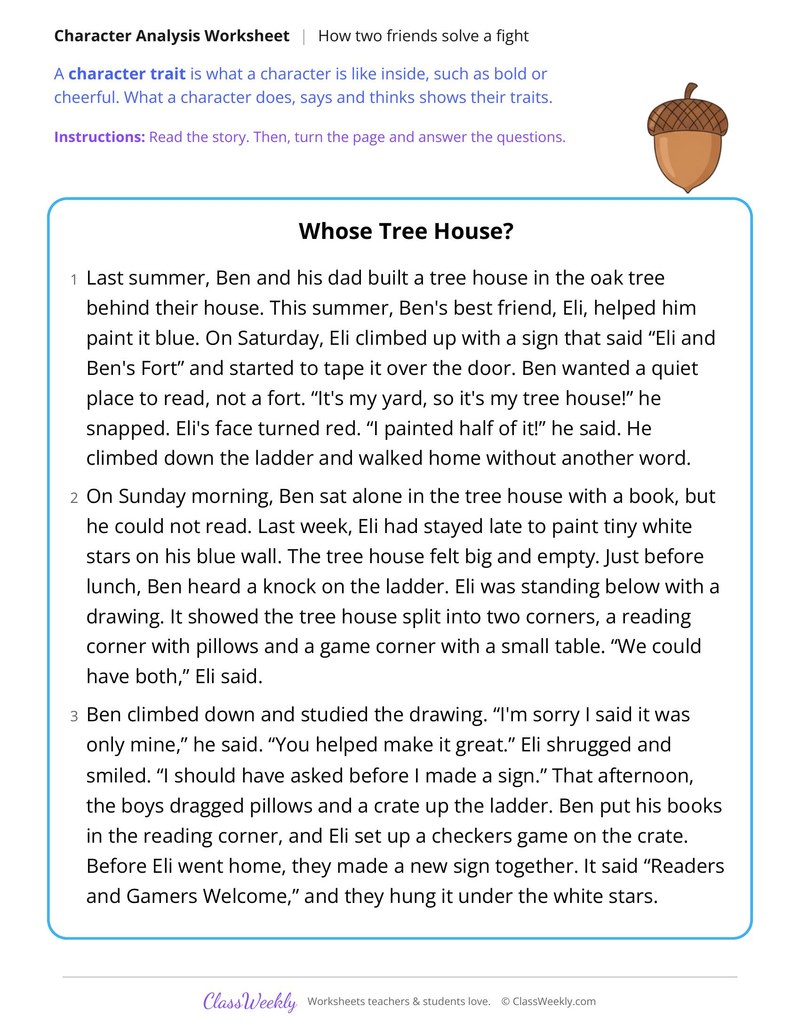
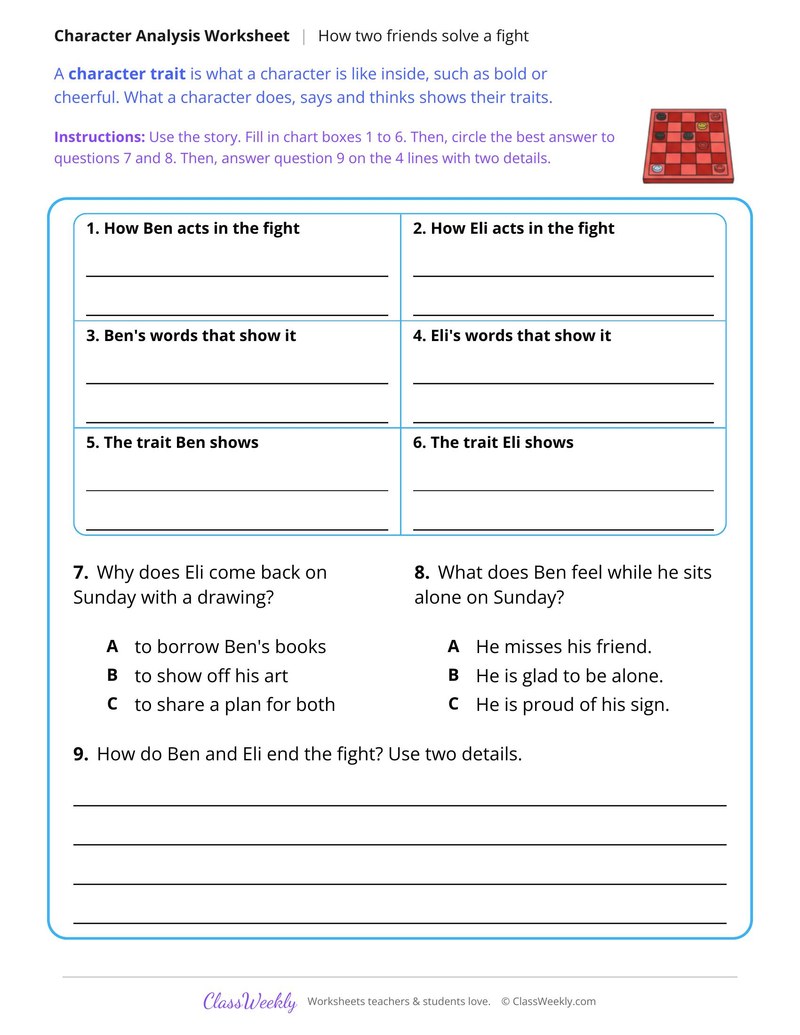
2 pages in this set
4th grade reading worksheet: read a tree house story, tell how Ben and Eli feel during a fight and explain how they make up. Answer key included. Part of our character analysis story elements collection. Aligned to Common Core standards.
How do I use this worksheet?
Read the story together, then ask your child what kind of person the main character is before starting the chart. For each quote, ask what kind of person would do or say that. Use the other accepted answers in the key, since more than one trait word can be right.
What students will practice
- Students will name a character's trait and the action, words or thought that shows it.
- Students will explain why a character acts a certain way and how the character changes.
- Students will compare how two characters react to the same problem.
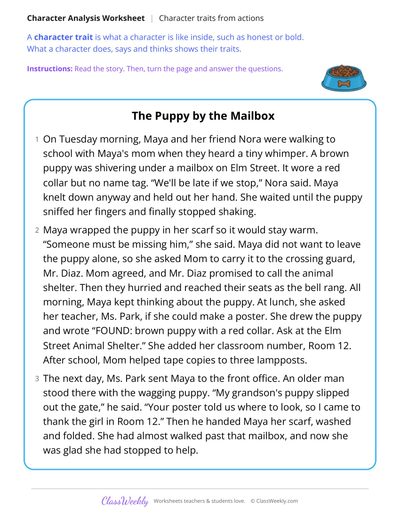
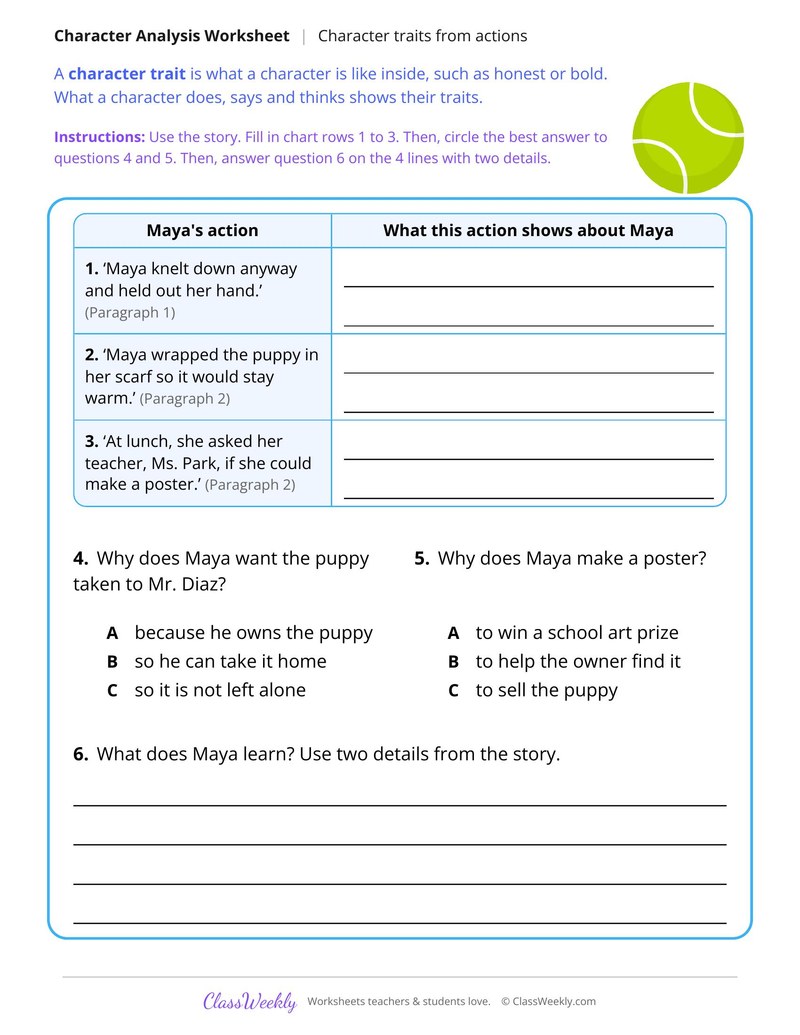
Character Traits From Actions in a Story About a Lost Puppy
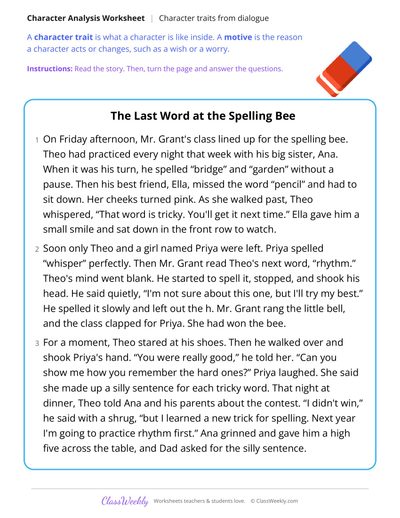
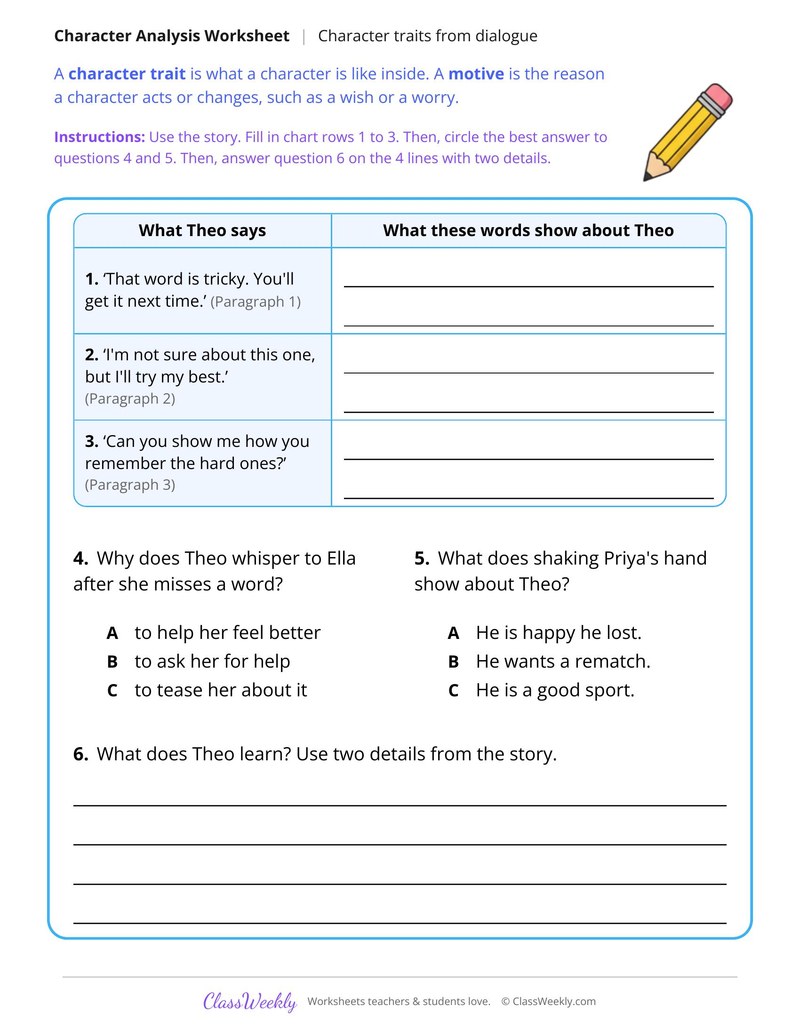
Character Traits From Dialogue in a Spelling Bee Story
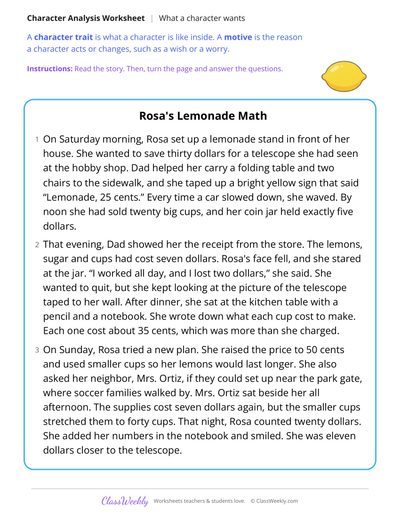
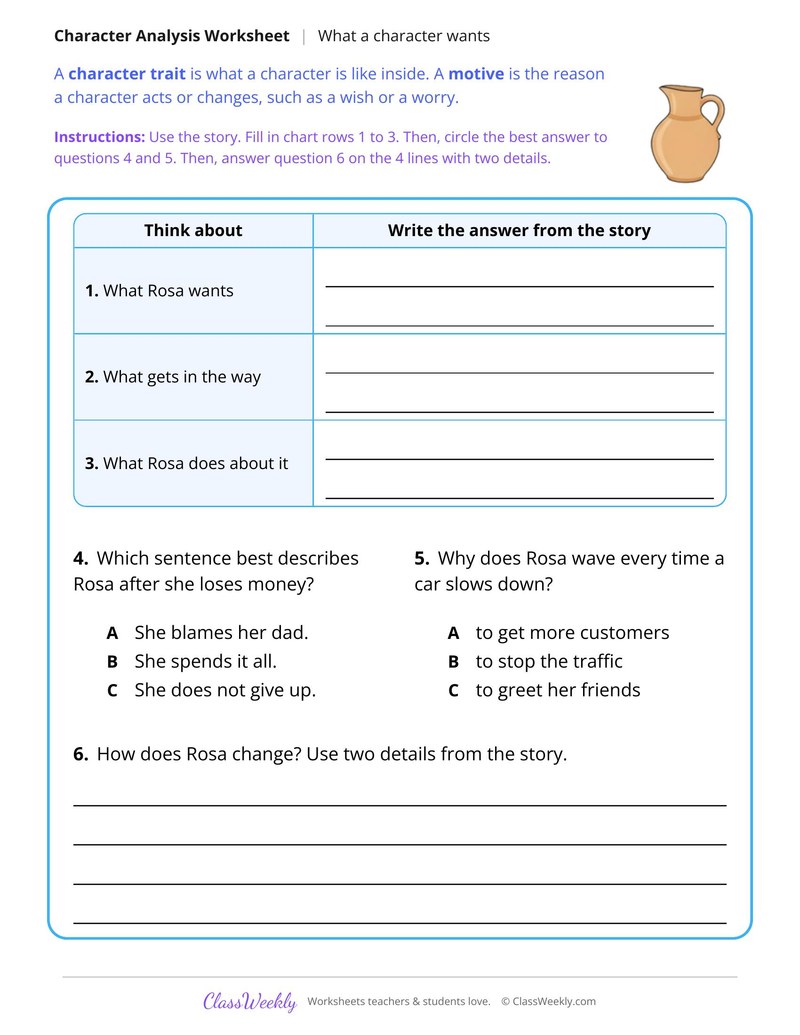
What a Character Wants in a Story About a Lemonade Stand
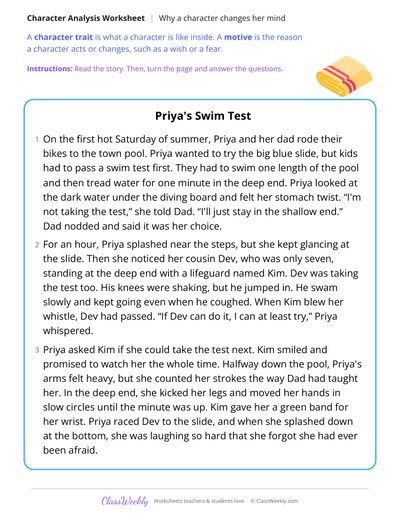
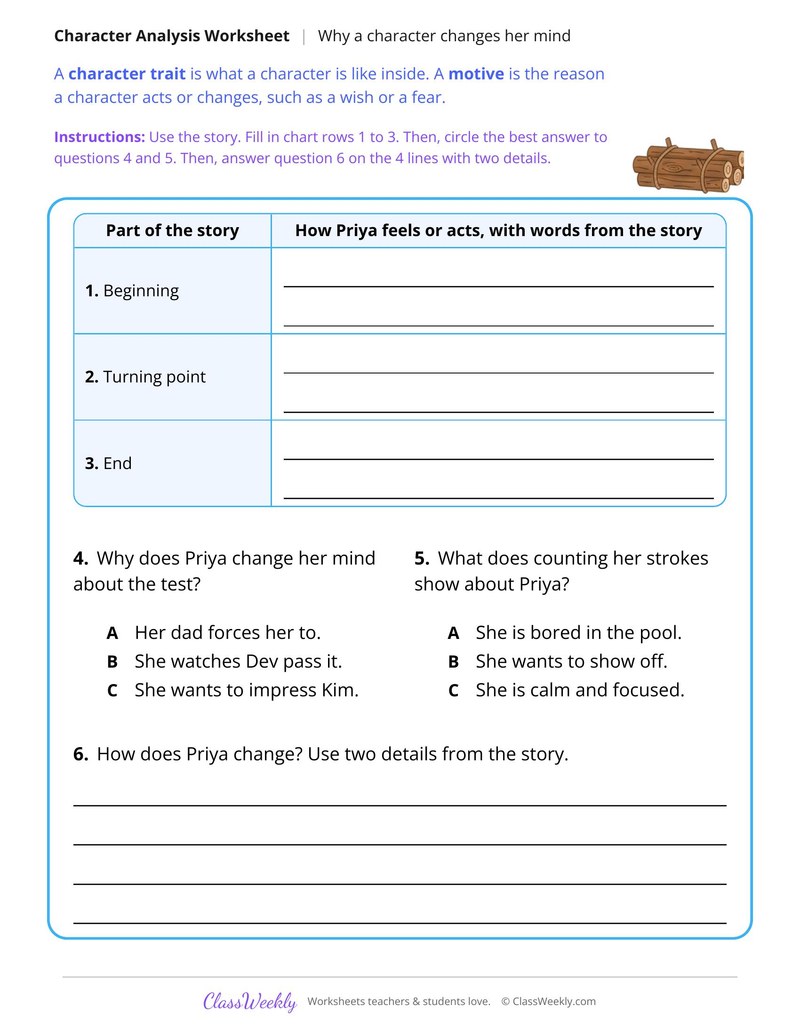
Why a Character Changes Her Mind in a Swim Test Story
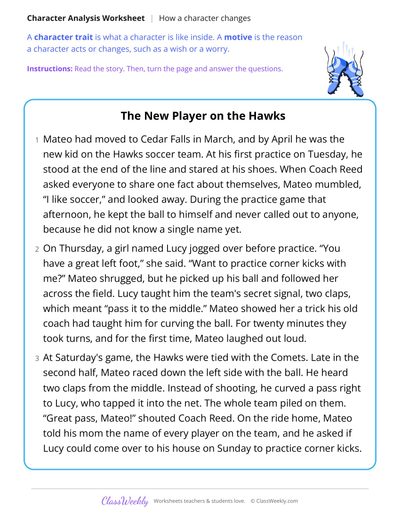
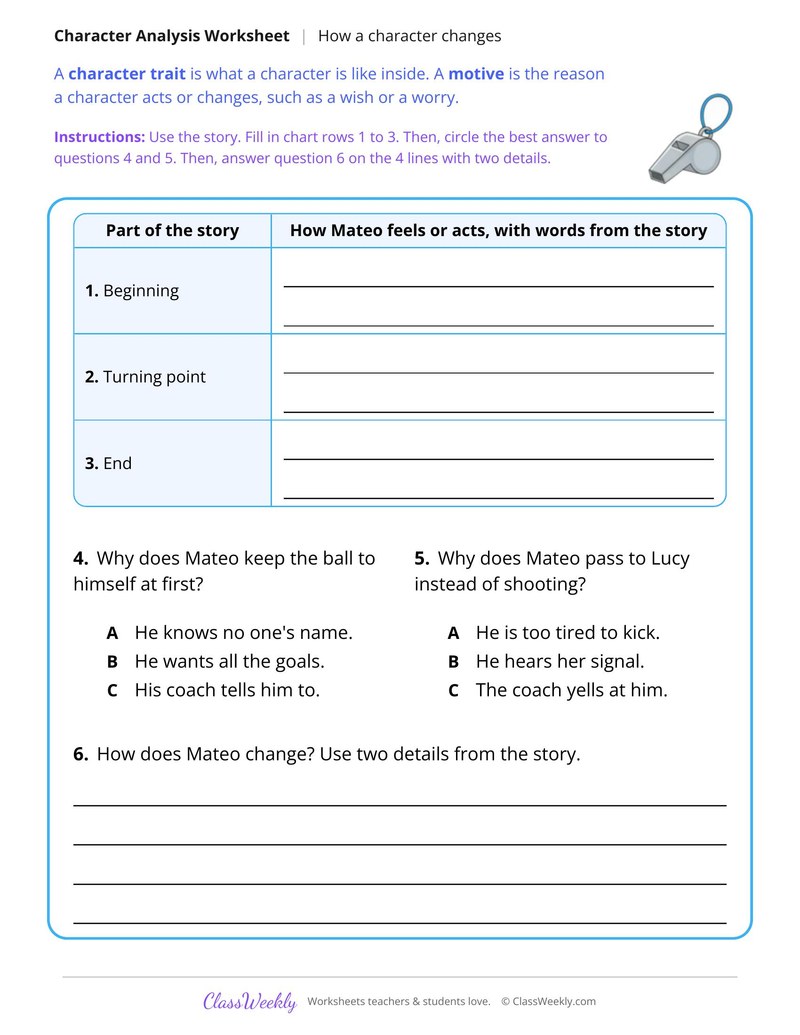
How a Character Changes as the New Kid on the Team
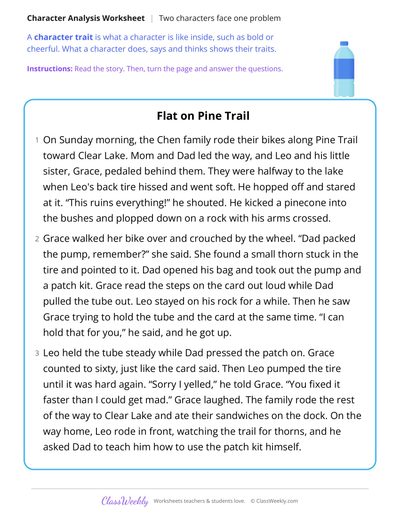
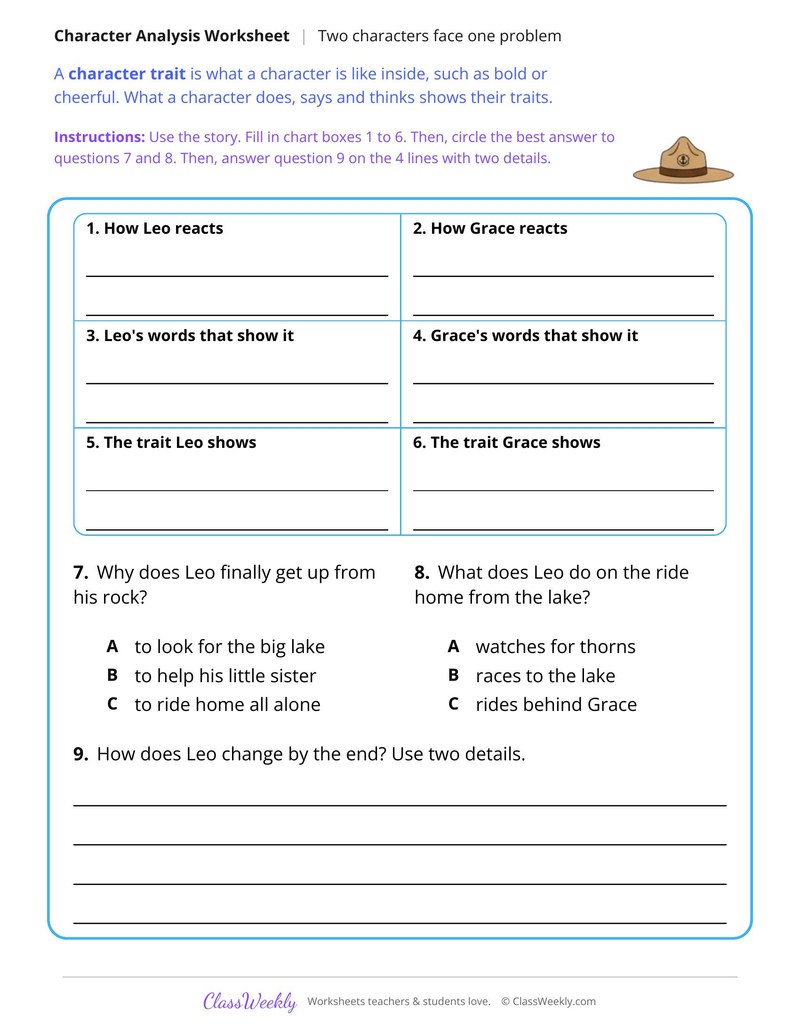
Two Characters Face a Flat Tire on a Family Bike Ride
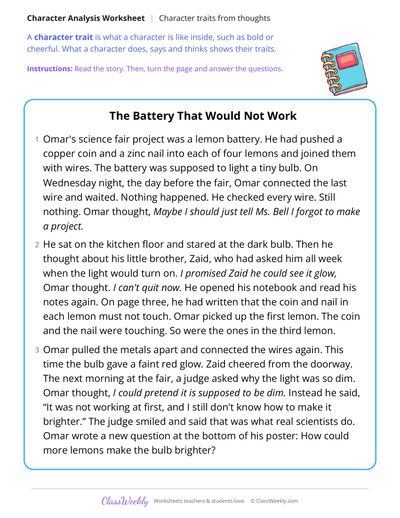
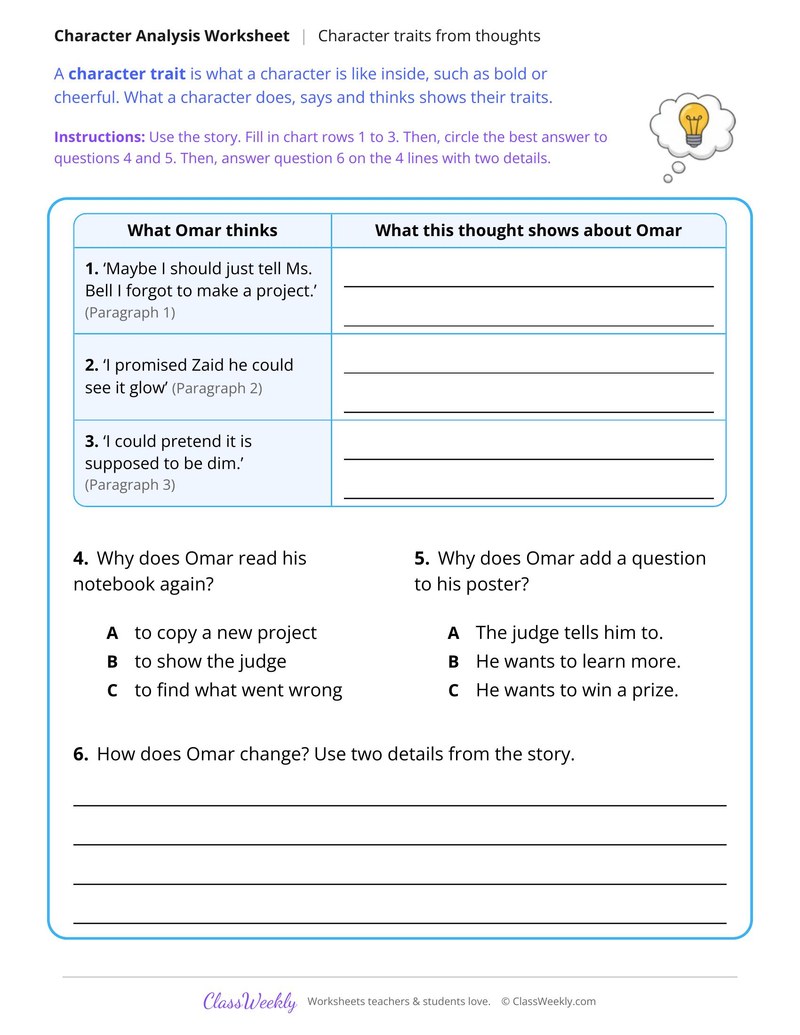
Character Traits From Thoughts in a Science Fair Story
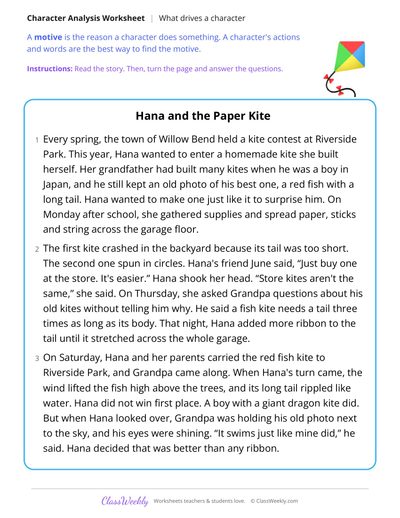
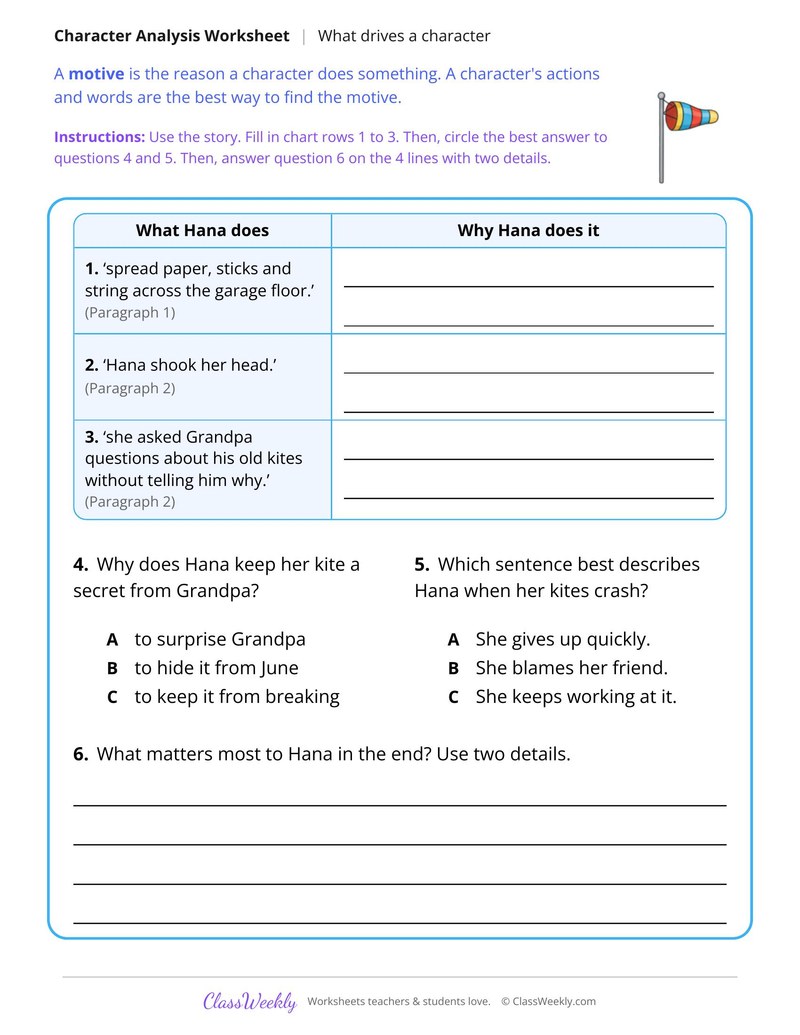
What Drives a Character in a Story About a Kite Contest
Curriculum Links
Common Core State Standards
Reading: Literature · 4th Grade
Standard: Describe in depth a character, setting, or event in a story or drama, drawing on specific details in the text (e.g., a character's thoughts, words, or actions).
View all RL.4.3 worksheets →Find this in the curriculum
Browse the grade, subject, and topic this belongs to.
FAQ
How do I use this character analysis worksheet?
⌄
Read the story together, then ask your child what kind of person the main character is before starting the chart. For each quote, ask what kind of person would do or say that. Use the other accepted answers in the key, since more than one trait word can be right.
What does this worksheet teach?
⌄
Read a tree house story, tell how Ben and Eli feel during a fight and explain how they make up. A character trait is what a character is like inside, such as bold or cheerful. What a character does, says and thinks shows their traits. The directions on the page read: Read the story. Then, turn the page and answer the questions. On page 2: Use the story. Fill in chart boxes 1 to 6. Then, circle the best answer to questions 7 and 8. Then, answer question 9 on the 4 lines with two details. The answer key covers the questions on page 2.
Can I use this character analysis worksheet for homeschool or classroom?
⌄
Yes, both. We made it for 4th Grade story elements, and the page works the same whether it lands on a kitchen table or a center rotation. At home, most families go through it together and talk the answers out loud, and that talking is where most of the learning happens with character analysis. In class it runs well as independent work while you pull a small group. Print one copy or thirty, whichever the day needs.
What does character analysis mean in 4th grade?
⌄
It means describing a character in depth with details from the text: what the character does, says and thinks (CCSS RL.4.3). A child should be able to name a trait, like patient or determined, and point to the sentence that shows it. Every sheet in this topic asks for exactly that.
What is the difference between a character's feelings and traits?
⌄
A feeling changes from moment to moment, like nervous before a swim test or proud after it. A trait is what the character is like inside most of the time, like brave or honest. Several sheets chart how a character feels at each point in the story, then ask how the character changes by the end.
How can I help my child find evidence for a character trait?
⌄
Ask what the character did, then ask what kind of person would do that. The chart on each sheet gives the quote and its paragraph number, so your child can focus on naming the trait. For the last question, have your child point to two sentences in the story before writing.
Do the 4th grade story elements worksheets have answer keys?
⌄
Yes. All 16 sheets have an answer key, with a sample answer for each chart row and the written question. The key also lists other answers to accept, since more than one trait word can fit.
Ratings & Reviews
No reviews yet. Be the first to share what you think.
Reviews are for ClassWeekly members.
Make a Request
Spotted something to fix, or want a worksheet we don't have yet? Tell us and we'll make it.
Worksheet Details
| Grade | 4th Grade |
| Subject | Reading |
| Topic | Story Elements |
| Standard | RL.4.3 |
| Pages | 2 pages |
| Difficulty | Medium |
What is ClassWeekly?
ClassWeekly offers free worksheets and printable learning resources for kids in preschool to grade 5. All worksheets are aligned to Common Core, NGSS, and C3 Framework standards and designed by educators. Become a member to access the full library and download unlimited PDFs.
Character Traits From Actions in a Story About a Lost Puppy
Character Traits From Dialogue in a Spelling Bee Story
What a Character Wants in a Story About a Lemonade Stand
Why a Character Changes Her Mind in a Swim Test Story
How a Character Changes as the New Kid on the Team
Two Characters Face a Flat Tire on a Family Bike Ride
Character Traits From Thoughts in a Science Fair Story
What Drives a Character in a Story About a Kite Contest