Sequence of Events in a Story About Building a Birdhouse
Written by Adi Ackerman, Head Teacher
"Sequence of Events in a Story About Building a Birdhouse" is written for 3rd Grade (Ages 8-9), and it covers Common Core RL.3.3. If your little one is a year younger but already steady on story elements, the page still works. You may just need to read the instructions out loud. And if they are older and story maps never quite stuck, this is a short review rather than busywork.
2 pages in this set
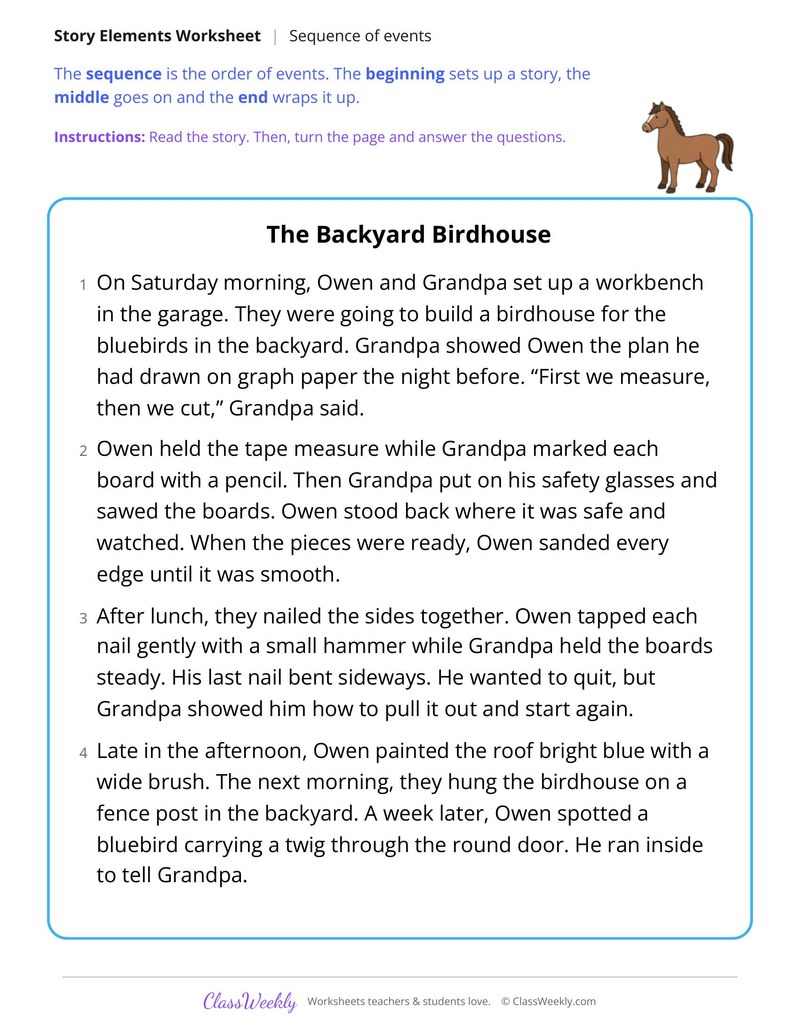
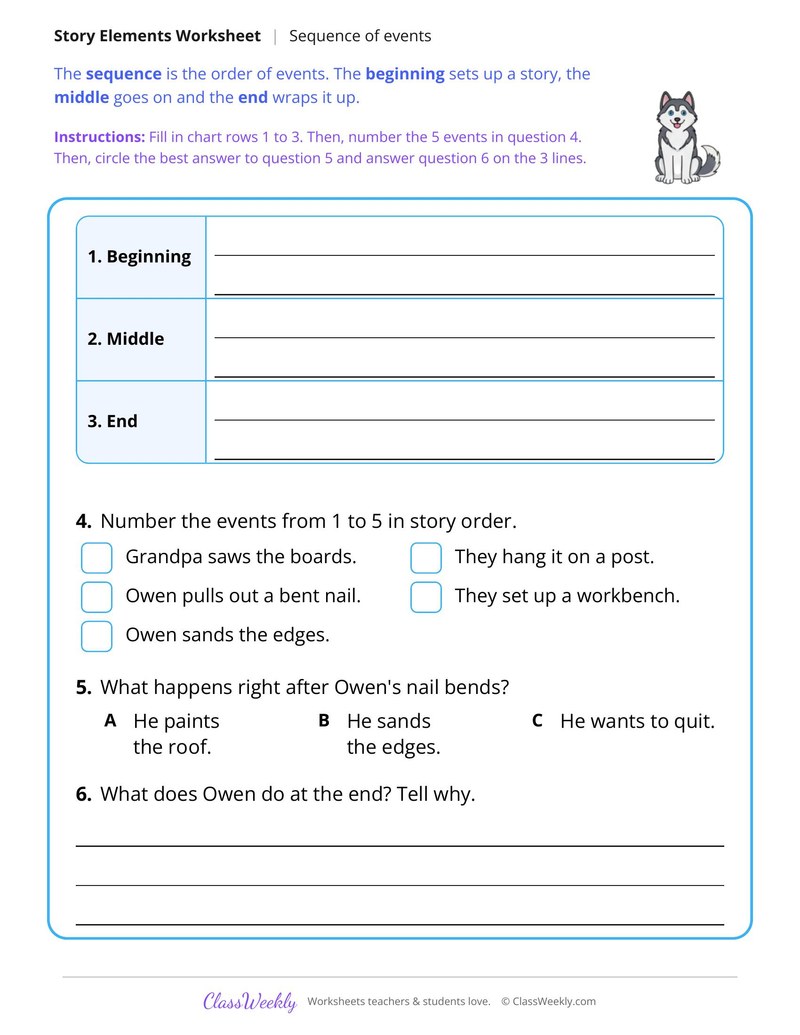
3rd grade reading worksheet: read about Owen and Grandpa building a birdhouse, chart the beginning, middle and end and number events. Answer key included. Part of our story maps collection. Aligned to Common Core standards.
How do I use this worksheet?
After reading, ask your child to retell the story in their own words before filling in the boxes. If the events are hard to order, have your child find each one in the story and write its paragraph number next to it first.
What students will practice
- Students will name the characters, setting, problem and solution of a story.
- Students will tell what happens in the beginning, middle and end of a story.
- Students will number story events in order and explain how the story ends.
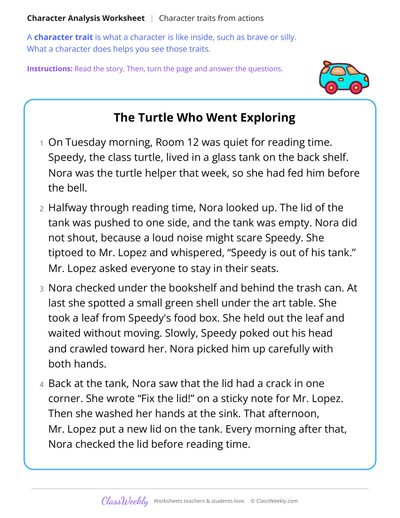
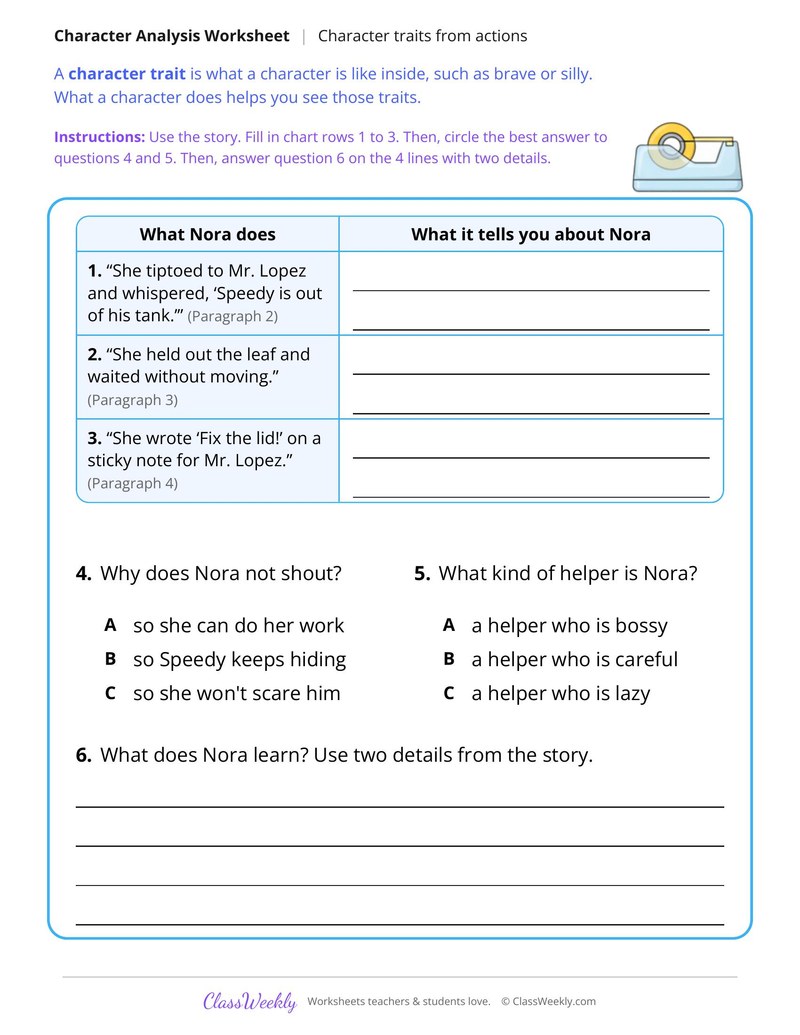
Character Traits From Actions in a Class Turtle Story
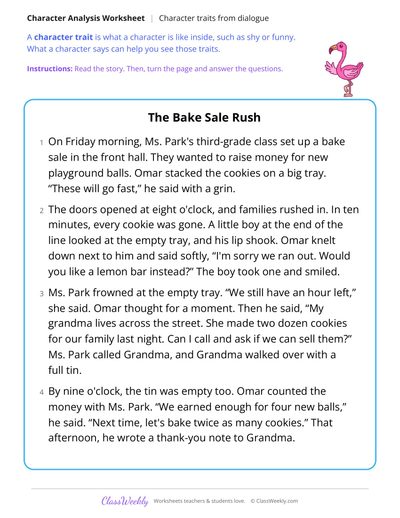
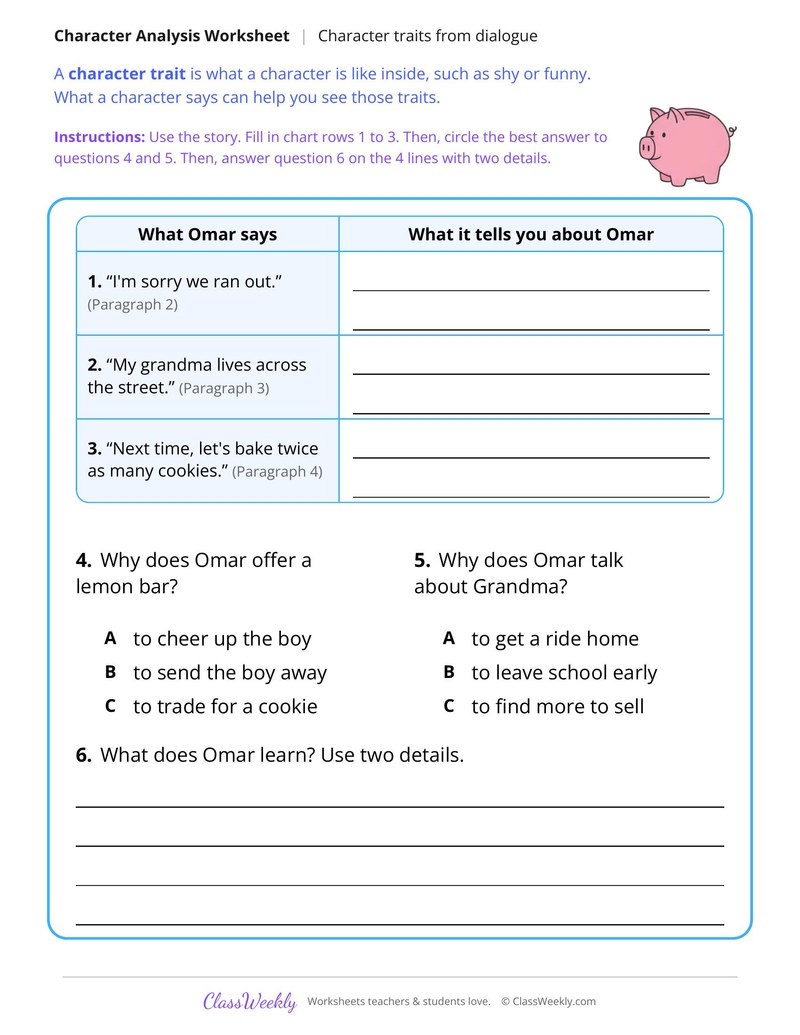
Character Traits From Dialogue in a Story About a Bake Sale
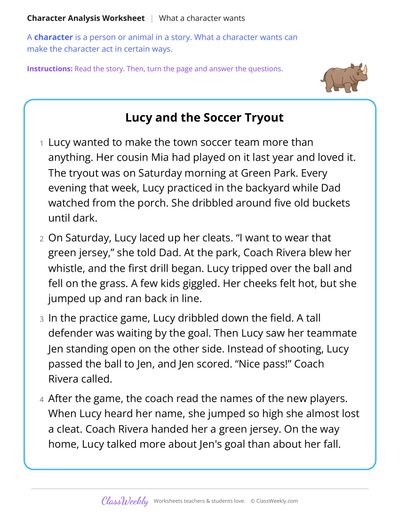
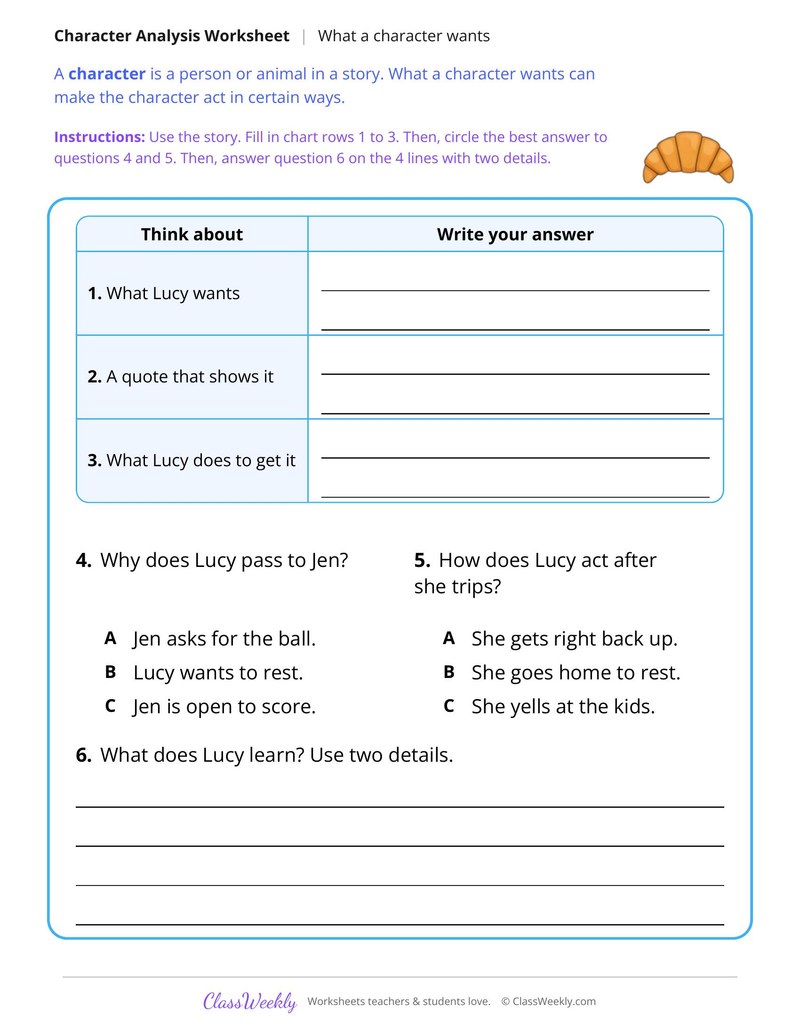
What a Character Wants in a Story About a Soccer Tryout
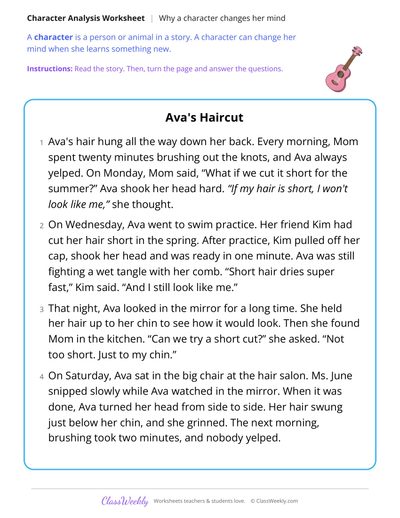
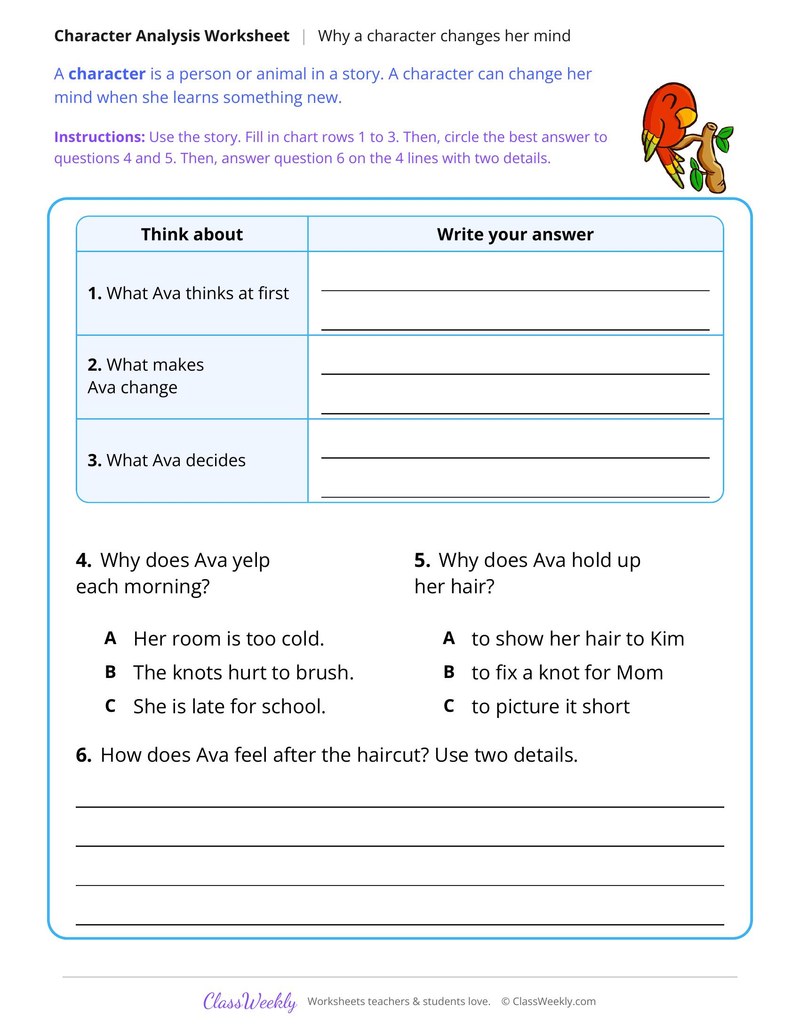
Why a Character Changes Her Mind in a Story About a Haircut
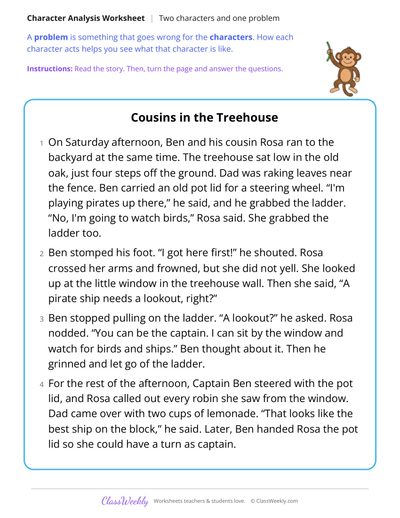
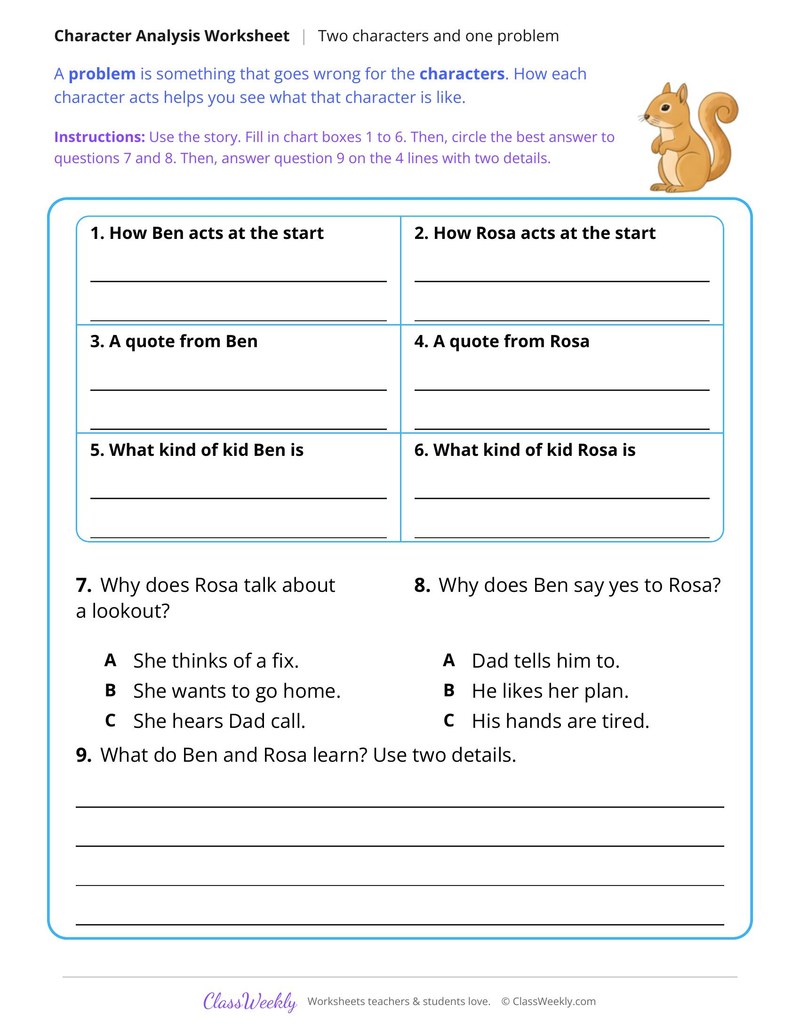
How Two Characters Solve a Problem in a Treehouse Story
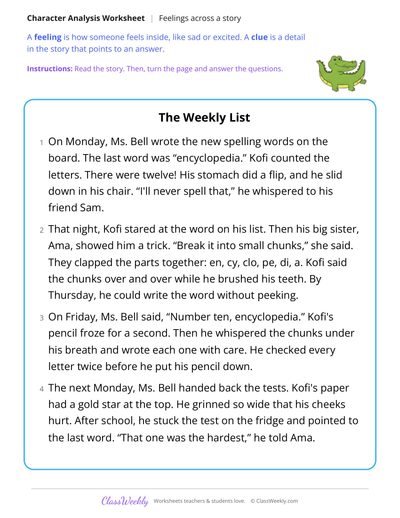
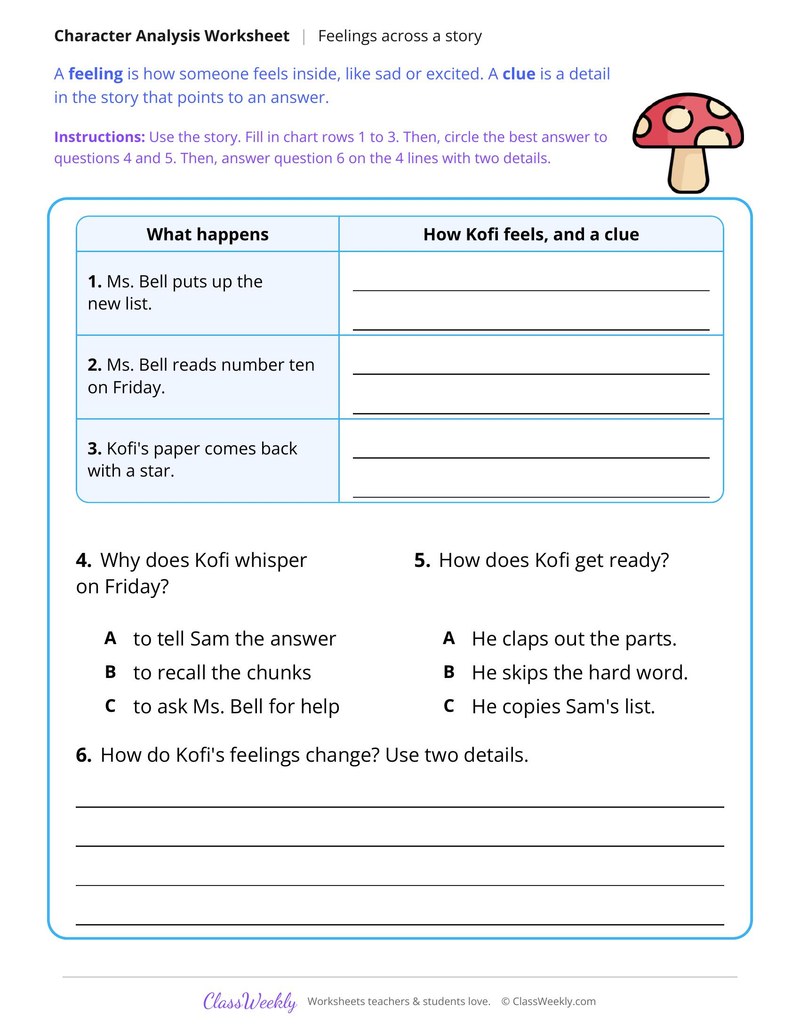
Track a Character's Feelings in a Spelling Test Story
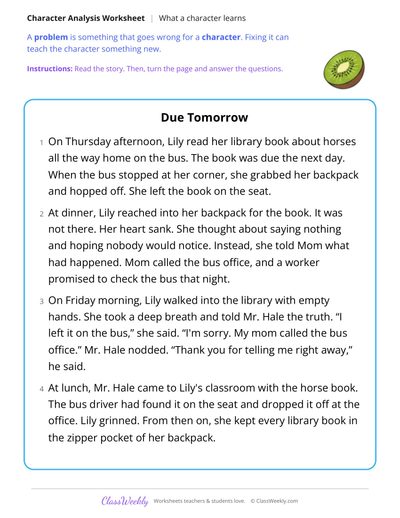
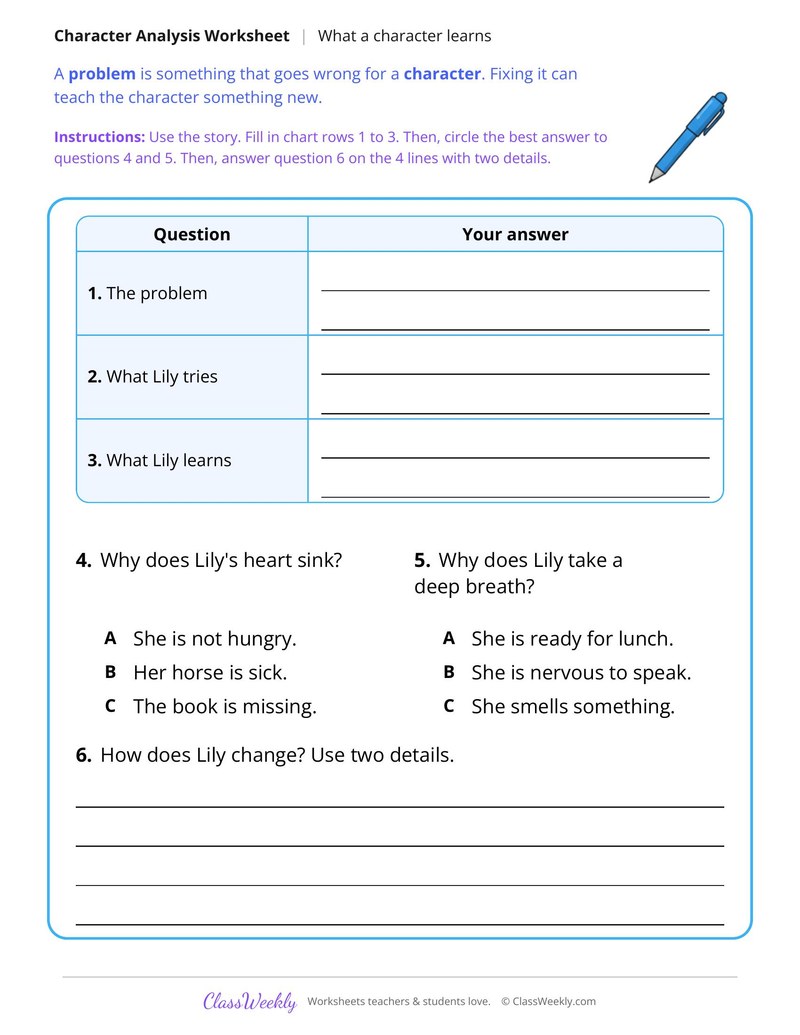
What a Character Learns in a Story About a Lost Library Book
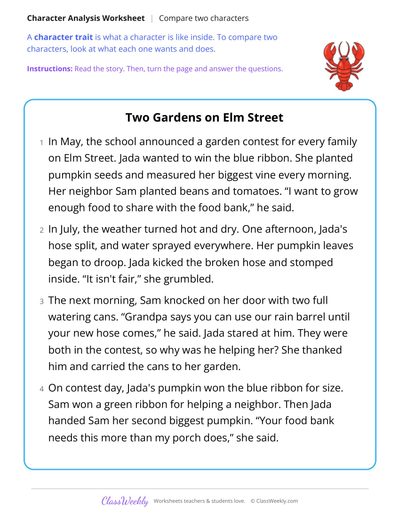
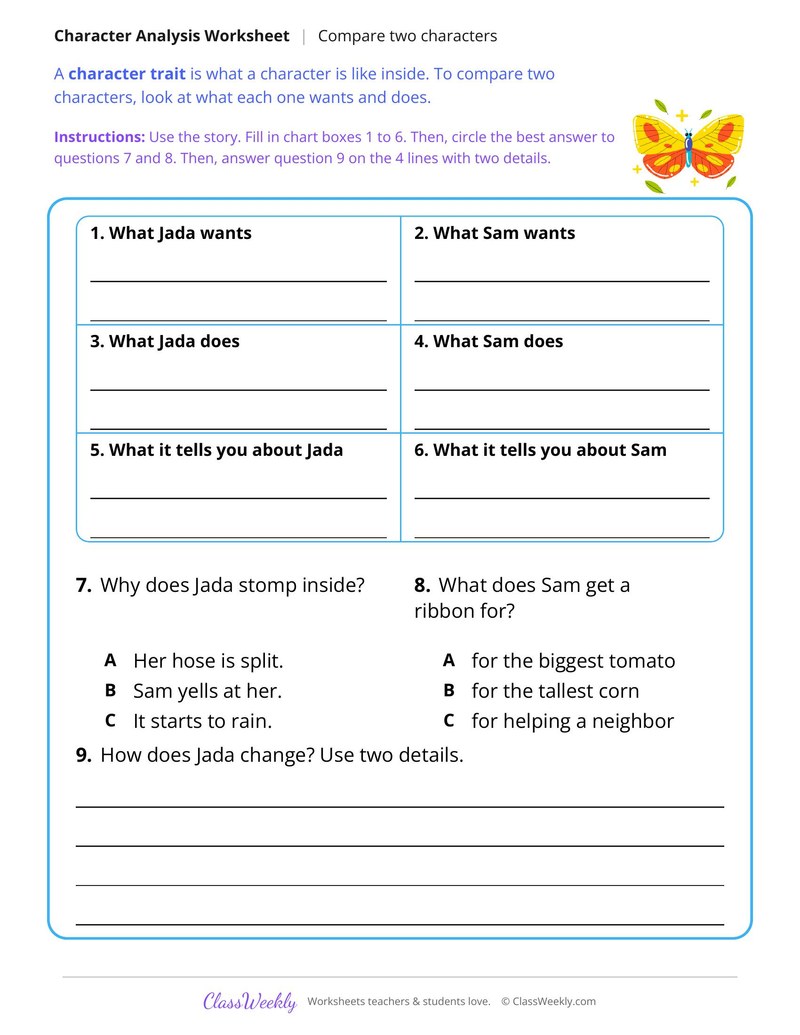
Compare Two Characters in a Story About a Garden Contest
Curriculum Links
Common Core State Standards
Reading: Literature · 3rd Grade
Standard: Describe characters in a story (e.g., their traits, motivations, or feelings) and explain how their actions contribute to the sequence of events.
View all RL.3.3 worksheets →Find this in the curriculum
Browse the grade, subject, and topic this belongs to.
FAQ
How do I use this story maps worksheet?
⌄
After reading, ask your child to retell the story in their own words before filling in the boxes. If the events are hard to order, have your child find each one in the story and write its paragraph number next to it first.
What does this worksheet teach?
⌄
Read about Owen and Grandpa building a birdhouse, chart the beginning, middle and end and number events. The sequence is the order of events. The beginning sets up a story, the middle goes on and the end wraps it up. The directions on the page read: Read the story. Then, turn the page and answer the questions. On page 2: Fill in chart rows 1 to 3. Then, number the 5 events in question 4. Then, circle the best answer to question 5 and answer question 6 on the 3 lines. The answer key covers the questions on page 2.
Can I use this story maps worksheet for homeschool or classroom?
⌄
Yes, both. We made it for 3rd Grade story elements, and the page works the same whether it lands on a kitchen table or a center rotation. At home, most families go through it together and talk the answers out loud, and that talking is where most of the learning happens with story maps. In class it runs well as independent work while you pull a small group. Print one copy or thirty, whichever the day needs.
What is a story map?
⌄
A story map lays out the main parts of a story: the characters, the setting, the problem and the solution. Filling one in shows how the solution fixes what went wrong.
Why number the events in order?
⌄
Putting four or five events in order shows how each part of the story leads to the next (RL.3.5). The events on each sheet are mixed up, so your child has to find each one in the story first.
What are the stories about?
⌄
Each sheet has a one page original story of about 200 words about an everyday problem: a lost tooth thrown away at lunch, a snowman knocked over by the wind, a birdhouse built with Grandpa and a yard sale for an animal shelter.
Is there an answer key for each worksheet?
⌄
Yes. All eight story map sheets have an answer key, with the event numbers, the multiple choice answer and sample answers for each box and the written question.
What story elements do 3rd graders work on?
⌄
Third graders describe characters, including their traits, wants and feelings, and explain how their actions move the story along (CCSS RL.3.3). They also name the characters, setting, problem and solution and put the main events in order. This topic has character analysis sheets for the first part and story map sheets for the second.
How can I help my child describe a character?
⌄
Ask what the character did or said, then ask what kind of person would do that. Many charts give the quote and its paragraph number, so your child can focus on choosing a trait word like careful, patient or kind. For the last question, have your child point to two sentences in the story before writing.
What is the difference between a story map and a beginning, middle and end chart?
⌄
A story map has four boxes for the characters, setting, problem and solution. A beginning, middle and end chart asks what happens in each part of the story. Both kinds of sheets then have children number four or five events in story order.
Do the 3rd grade story elements worksheets have answer keys?
⌄
Yes. All 24 sheets have an answer key, with a sample answer for each box and for the written question. The key also lists other answers to accept, since more than one trait word or detail can fit.
Ratings & Reviews
No reviews yet. Be the first to share what you think.
Reviews are for ClassWeekly members.
Make a Request
Spotted something to fix, or want a worksheet we don't have yet? Tell us and we'll make it.
Worksheet Details
| Grade | 3rd Grade |
| Subject | Reading |
| Topic | Story Elements |
| Standard | RL.3.3 |
| Pages | 2 pages |
| Difficulty | Medium |
What is ClassWeekly?
ClassWeekly offers free worksheets and printable learning resources for kids in preschool to grade 5. All worksheets are aligned to Common Core, NGSS, and C3 Framework standards and designed by educators. Become a member to access the full library and download unlimited PDFs.
Character Traits From Actions in a Class Turtle Story
Character Traits From Dialogue in a Story About a Bake Sale
What a Character Wants in a Story About a Soccer Tryout
Why a Character Changes Her Mind in a Story About a Haircut
How Two Characters Solve a Problem in a Treehouse Story
Track a Character's Feelings in a Spelling Test Story
What a Character Learns in a Story About a Lost Library Book
Compare Two Characters in a Story About a Garden Contest