Name the Device in Figurative Language
Written by Adi Ackerman, Head Teacher
"Name the Device in Figurative Language" is written for 6th Grade (Ages 11-12), and it covers Common Core L.6.5.A. If your student is a year younger but already steady on figurative language, the page still works. You may just need to read the instructions out loud. And if they are older and figurative language practice never quite stuck, this is a short review rather than busywork.
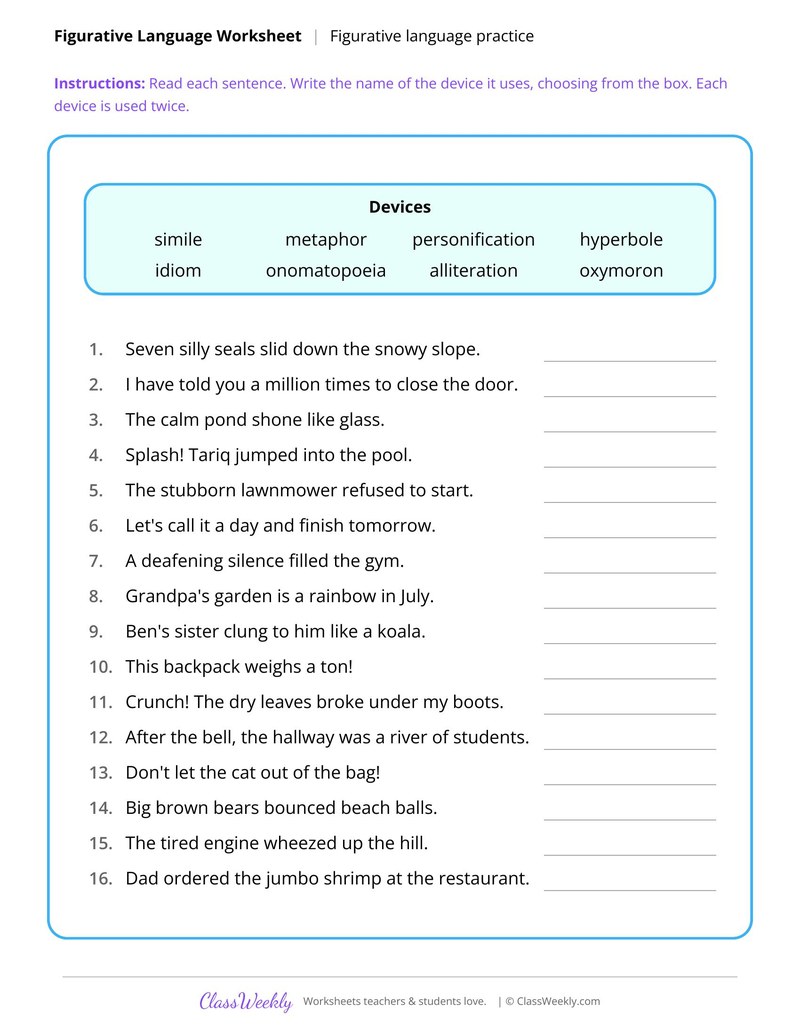
6th grade vocabulary worksheet: name the device in 16 sentences, from Seven silly seals to jumbo shrimp, with 8 devices used twice. Answer key included. Part of our figurative language practice collection. Aligned to Common Core standards.
How do I use this worksheet?
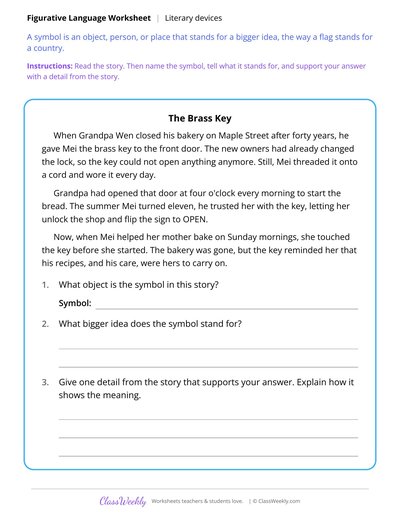
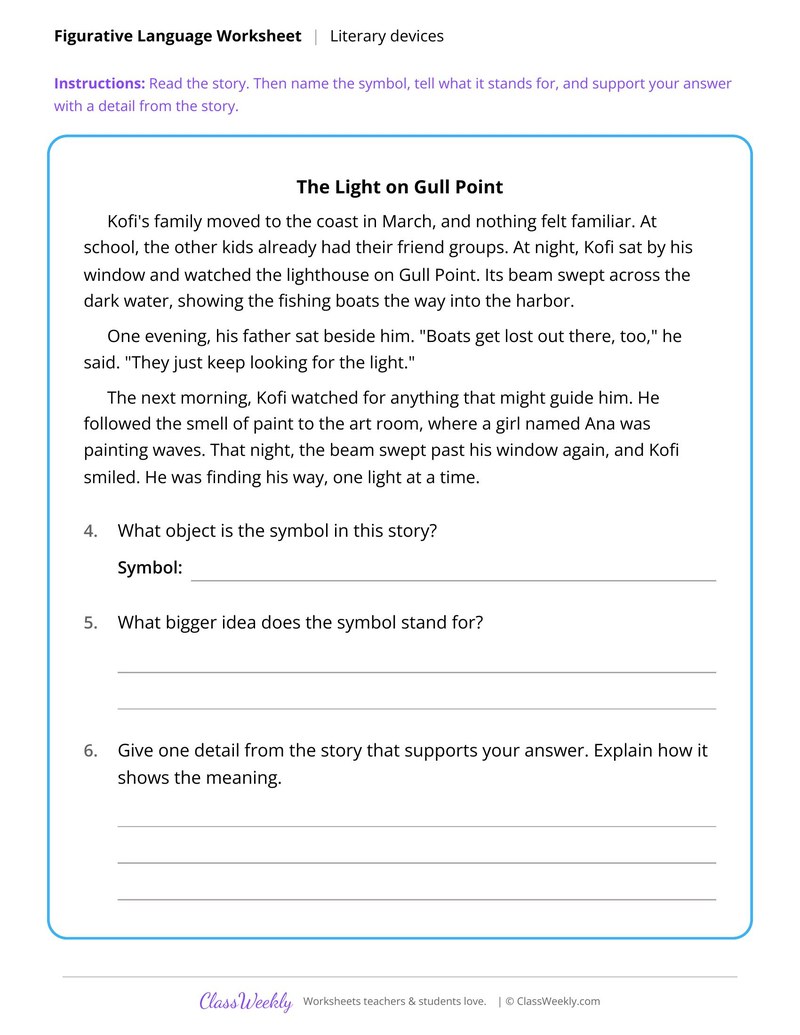
Teach one device per sheet, then use Name the Device in Figurative Language as a mixed review. Finish with the story sheet, where students explain the effect of each device.
What students will practice
- Students will name the device in 16 sentences from a box of 8.
- Students will tell simile from metaphor and idiom from hyperbole.
- Students will find each device twice, such as onomatopoeia in Splash and Crunch.
Curriculum Links
Common Core State Standards
Language · 6th Grade
Standard: Interpret figures of speech (e.g., personification) in context.
View all L.6.5.A worksheets →Find this in the curriculum
Browse the grade, subject, and topic this belongs to.
FAQ
How do I use this figurative language practice worksheet?
⌄
Teach one device per sheet, then use Name the Device in Figurative Language as a mixed review. Finish with the story sheet, where students explain the effect of each device.
What does this worksheet teach?
⌄
Name the device in 16 sentences, from Seven silly seals to jumbo shrimp, with 8 devices used twice. The directions on the page read: Read each sentence. Write the name of the device it uses, choosing from the box. Each device is used twice. An answer key is included.
Can I use this figurative language practice worksheet for homeschool or classroom?
⌄
Yes, both. We made it for 6th Grade figurative language, and the page works the same whether it lands on a kitchen table or a center rotation. At home, most families go through it together and talk the answers out loud, and that talking is where most of the learning happens with figurative language practice. In class it runs well as independent work while you pull a small group. Print one copy or thirty, whichever the day needs.
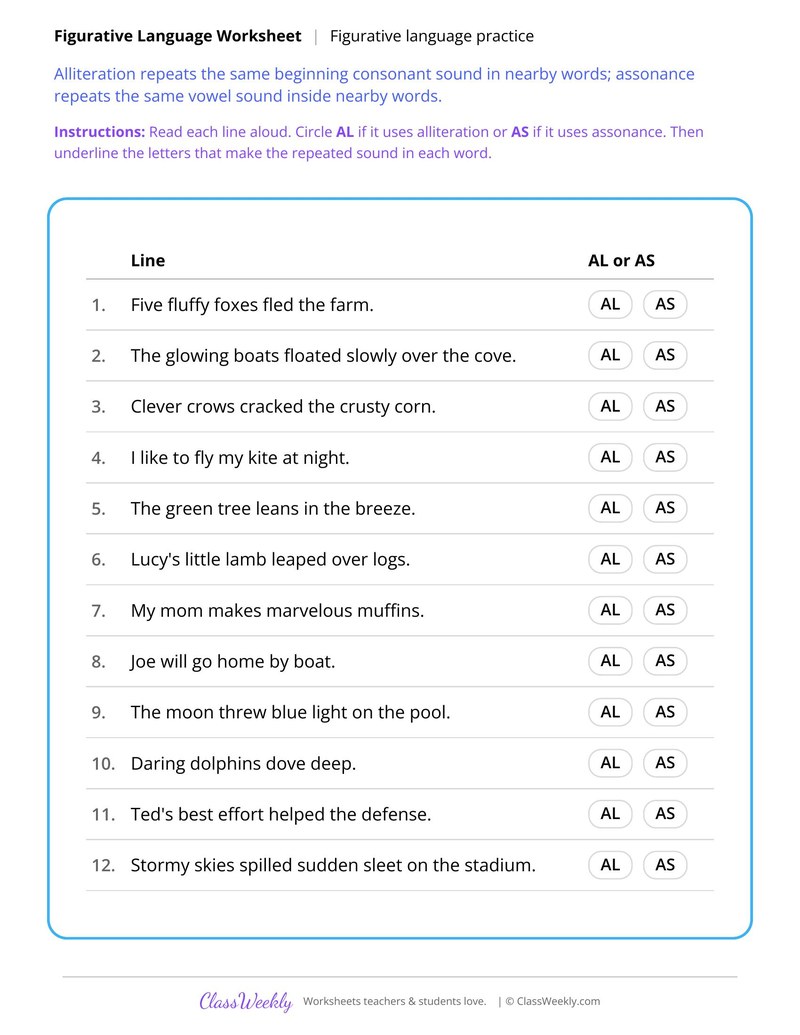
What is the difference between alliteration and assonance?
⌄
Alliteration repeats the same beginning consonant sound, as in Daring dolphins dove deep. Assonance repeats a vowel sound inside words, as in The green tree leans in the breeze.
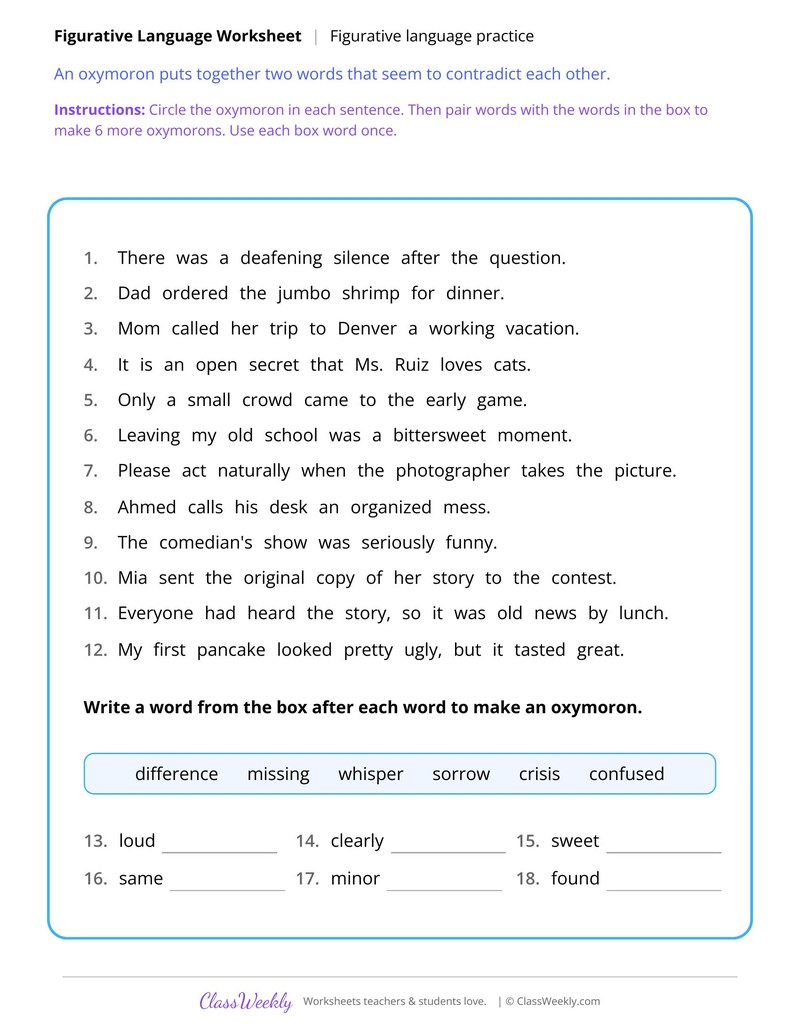
What is an oxymoron?
⌄
An oxymoron puts together two words that seem to contradict each other, like deafening silence or jumbo shrimp. Oxymorons in Sentences also has students build 6, such as loud whisper.
How do you tell literal from figurative language?
⌄
Literal language means exactly what the words say, and figurative language uses words in an unusual way to paint a picture. Literal or Figurative Meaning has students rewrite lines like a walking dictionary in plain words.
Ratings & Reviews
No reviews yet. Be the first to share what you think.
Reviews are for ClassWeekly members.
Make a Request
Spotted something to fix, or want a worksheet we don't have yet? Tell us and we'll make it.
Worksheet Details
| Grade | 6th Grade |
| Subject | Vocabulary |
| Topic | Figurative Language |
| Standard | L.6.5.A |
| Pages | 1 page |
| Difficulty | Medium |
What is ClassWeekly?
ClassWeekly offers free worksheets and printable learning resources for kids, from preschool up. All worksheets are aligned to Common Core, NGSS, and C3 Framework standards and designed by educators. Become a member to access the full library and download unlimited PDFs.