Situational Irony
Written by Adi Ackerman, Head Teacher
"Situational Irony" is written for 6th Grade (Ages 11-12). If your student is a year younger but already steady on figurative language, the page still works. You may just need to read the instructions out loud. And if they are older and literary devices never quite stuck, this is a short review rather than busywork.
2 pages in this set
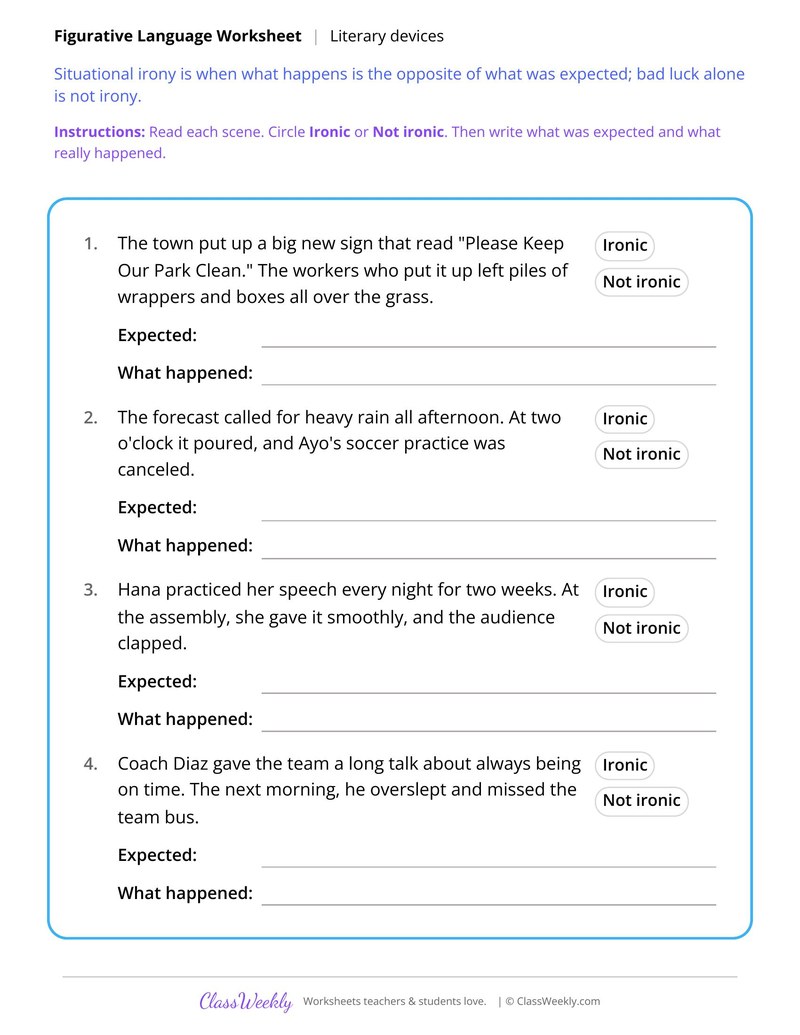
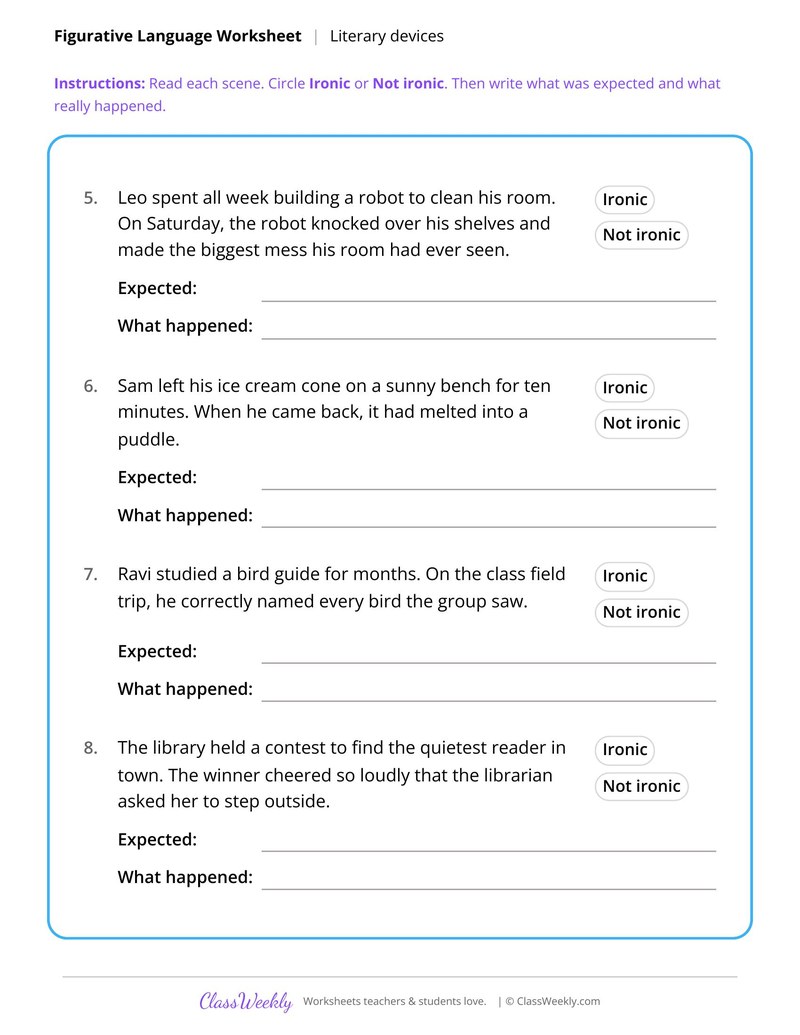
6th grade vocabulary worksheet: decide if 8 scenes, like a cleaning robot that makes a mess, are ironic and write what was expected. Answer key included. Part of our literary devices figurative language collection.
How do I use this worksheet?
Pair each device with a short story students read aloud first. Use Foreshadowing or Flashback? and Tone vs Mood to check that students can tell close terms apart.
What students will practice
- Students will circle ironic or not ironic for 8 short scenes.
- Students will write what was expected and what really happened in each scene.
- Students will tell irony from results that were expected, like ice cream melting in the sun.
Curriculum Links
Find this in the curriculum
Browse the grade, subject, and topic this belongs to.
FAQ
How do I use this literary devices worksheet?
⌄
Pair each device with a short story students read aloud first. Use Foreshadowing or Flashback? and Tone vs Mood to check that students can tell close terms apart.
What does this worksheet teach?
⌄
Decide if 8 scenes, like a cleaning robot that makes a mess, are ironic and write what was expected. Situational irony is when what happens is the opposite of what was expected; bad luck alone is not irony. The directions on the page read: Read each scene. Circle Ironic or Not ironic. Then write what was expected and what really happened. An answer key is included.
Can I use this literary devices worksheet for homeschool or classroom?
⌄
Yes, both. We made it for 6th Grade figurative language, and the page works the same whether it lands on a kitchen table or a center rotation. At home, most families go through it together and talk the answers out loud, and that talking is where most of the learning happens with literary devices. In class it runs well as independent work while you pull a small group. Print one copy or thirty, whichever the day needs.
What is a symbol in a story?
⌄
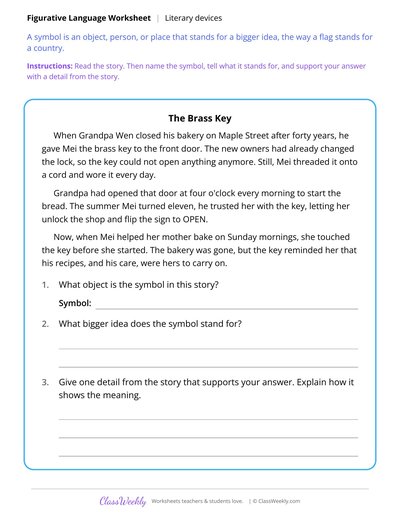
A symbol is an object, person or place that stands for a bigger idea. In The Brass Key, the key Mei wears stands for her grandfather's trust and the family baking tradition.
What is situational irony?
⌄
It is when what happens is the opposite of what was expected. A contest for the quietest reader whose winner cheers so loudly she must step outside is ironic, but ice cream melting in the sun is not.
What is a character archetype?
⌄
An archetype is a type of character that shows up in stories from many cultures, like the hero, the mentor or the trickster. Character Archetypes describes 8 types and matches 10 sketches to them.
Ratings & Reviews
No reviews yet. Be the first to share what you think.
Reviews are for ClassWeekly members.
Make a Request
Spotted something to fix, or want a worksheet we don't have yet? Tell us and we'll make it.
Worksheet Details
| Grade | 6th Grade |
| Subject | Vocabulary |
| Topic | Figurative Language |
| Pages | 2 pages |
| Difficulty | Medium |
What is ClassWeekly?
ClassWeekly offers free worksheets and printable learning resources for kids, from preschool up. All worksheets are aligned to Common Core, NGSS, and C3 Framework standards and designed by educators. Become a member to access the full library and download unlimited PDFs.