Homographs With Different Meanings
Written by Adi Ackerman, Head Teacher
"Homographs With Different Meanings" is written for 6th Grade (Ages 11-12), and it covers Common Core L.6.4.A. If your student is a year younger but already steady here, the page still works. You may just need to read the instructions out loud. And if they are older and homophones and homographs never quite stuck, this is a short review rather than busywork.
2 pages in this set
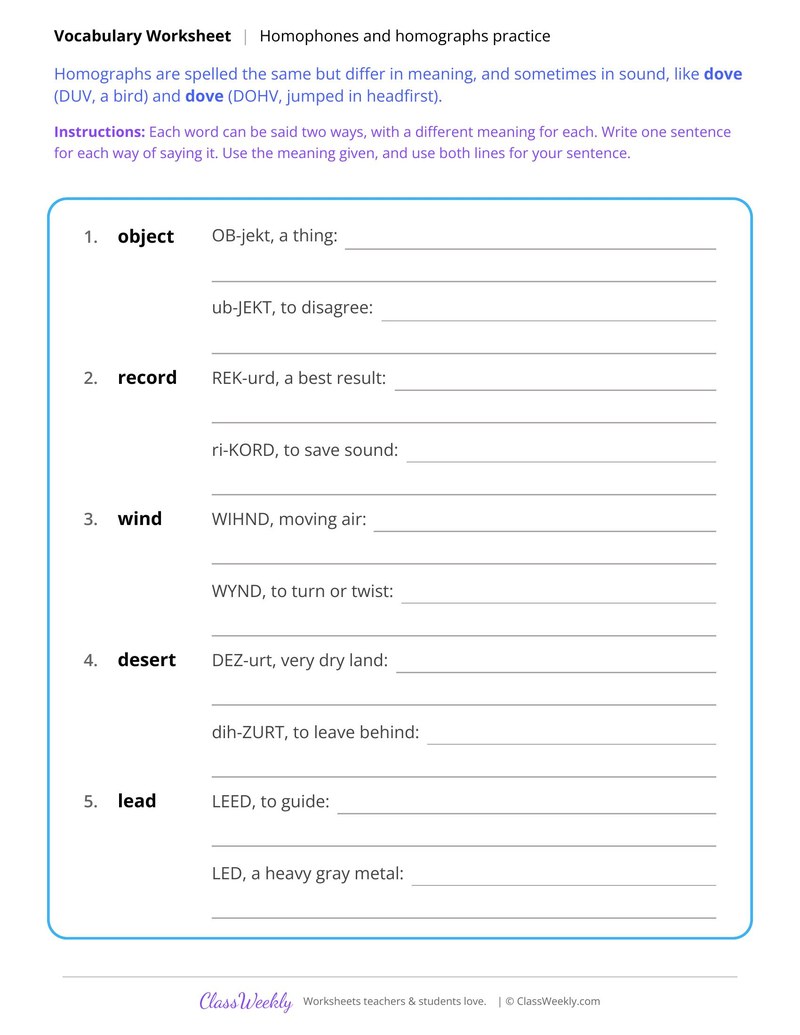
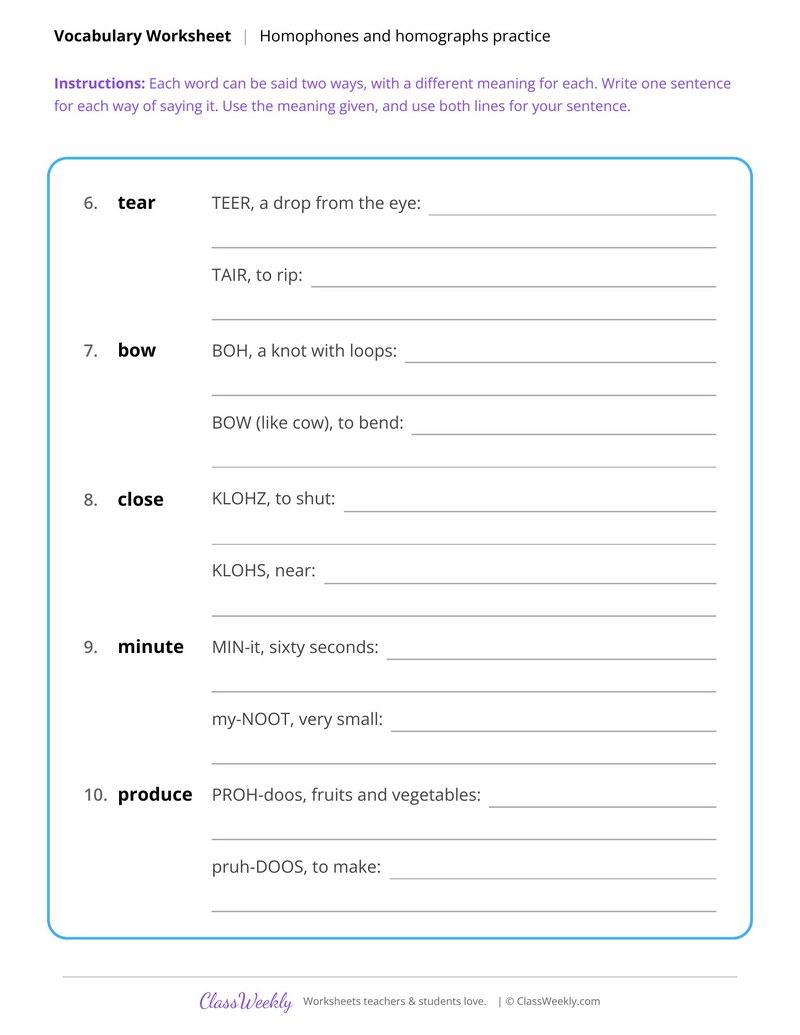
6th grade vocabulary worksheet: write a sentence for each way to say 10 homographs like object, desert and produce. Answer key included. Part of our homophones and homographs collection. Aligned to Common Core standards.
How do I use this worksheet?
Read the sound guides aloud before students write homograph sentences. Keep the meaning box in view for the look alike sheet, and review any pair students mix up.
What students will practice
- Students will write two sentences for each of 10 homographs, one for each way of saying it.
- Students will use the sound guide and meaning given for words like wind and tear.
- Students will show pairs such as lead the class and pipes made of lead.
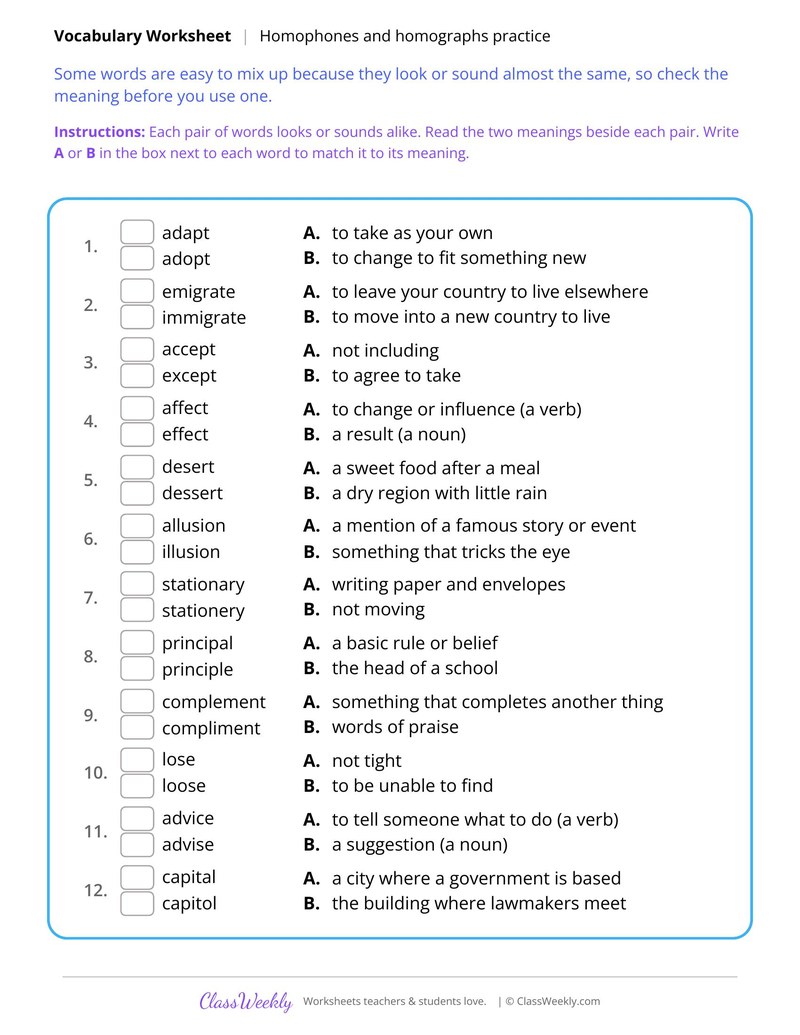
Match Meanings of Commonly Confused Words
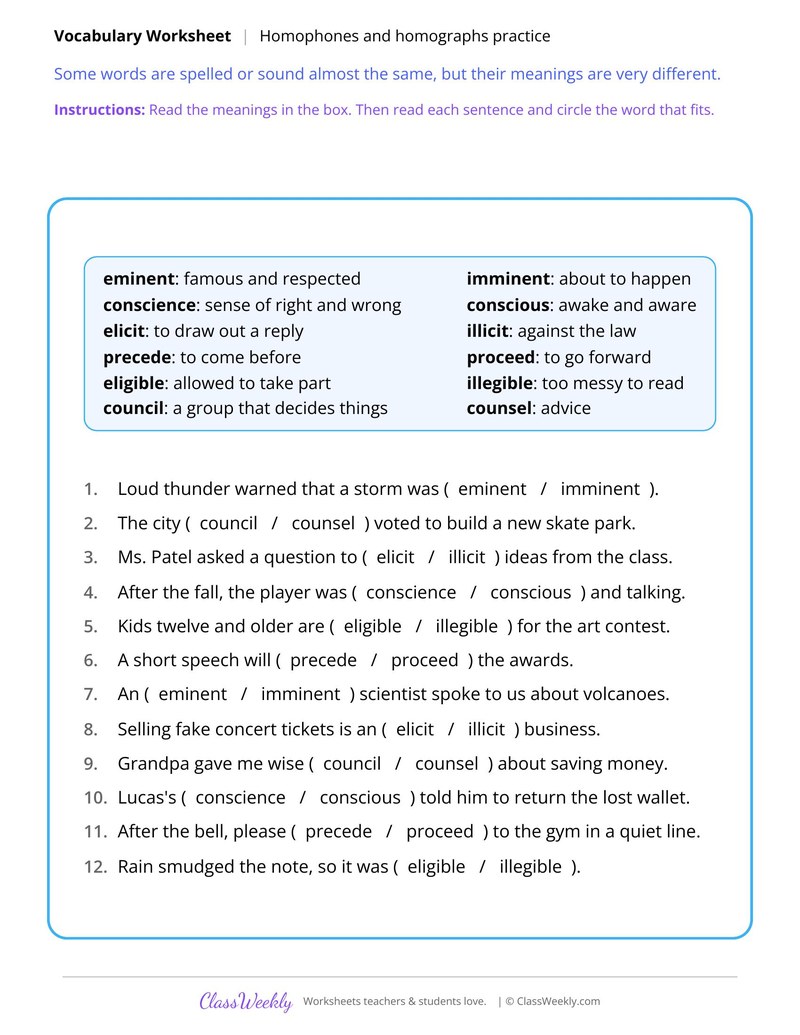
Eminent, Imminent and Other Look-Alikes
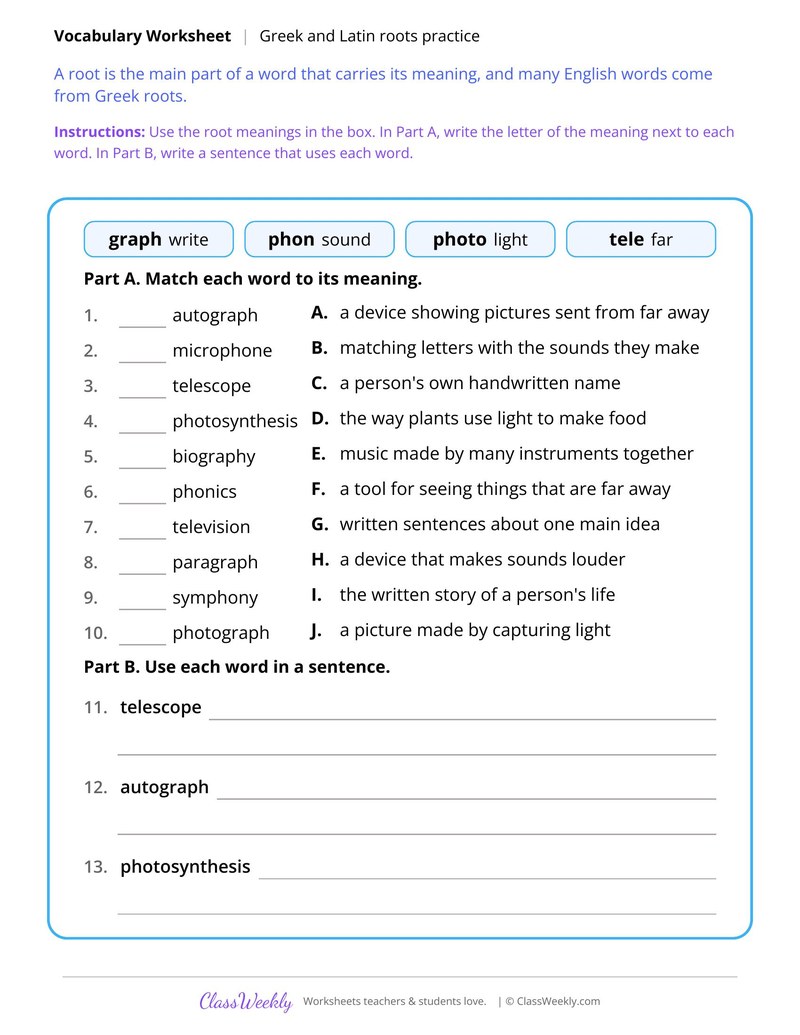
Greek Roots Graph, Phon, Photo and Tele
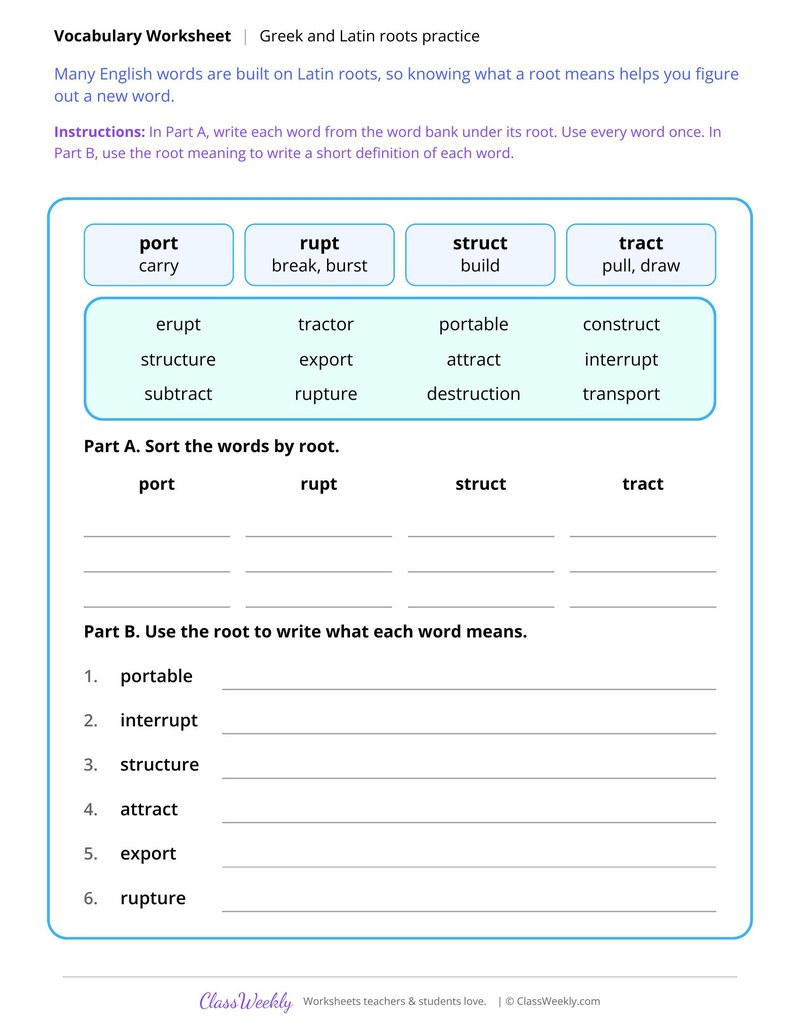
Latin Roots Port, Rupt, Struct and Tract
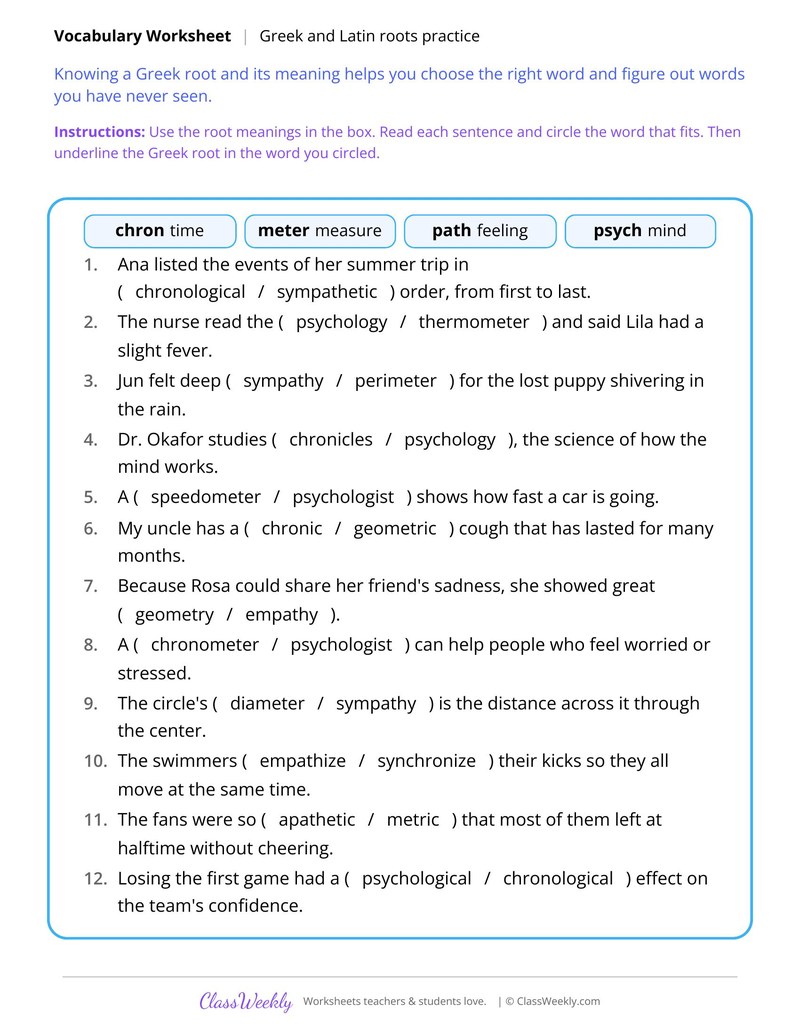
Greek Roots Chron, Meter, Path and Psych
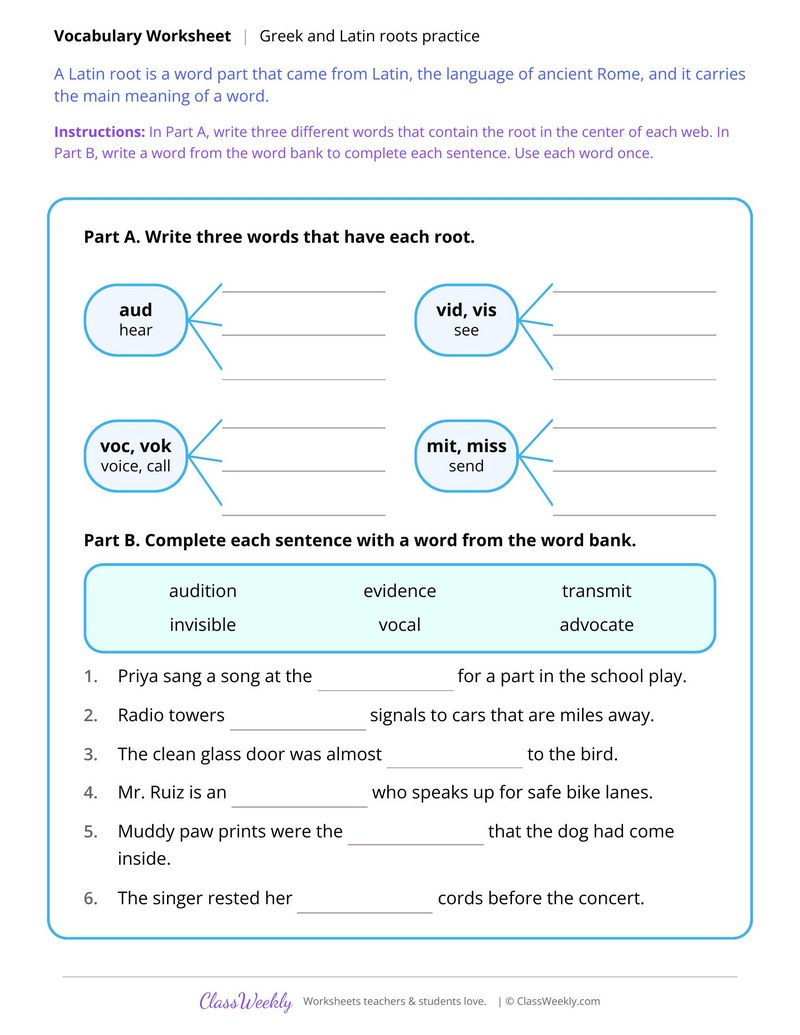
Latin Roots Aud, Vid, Voc and Mit
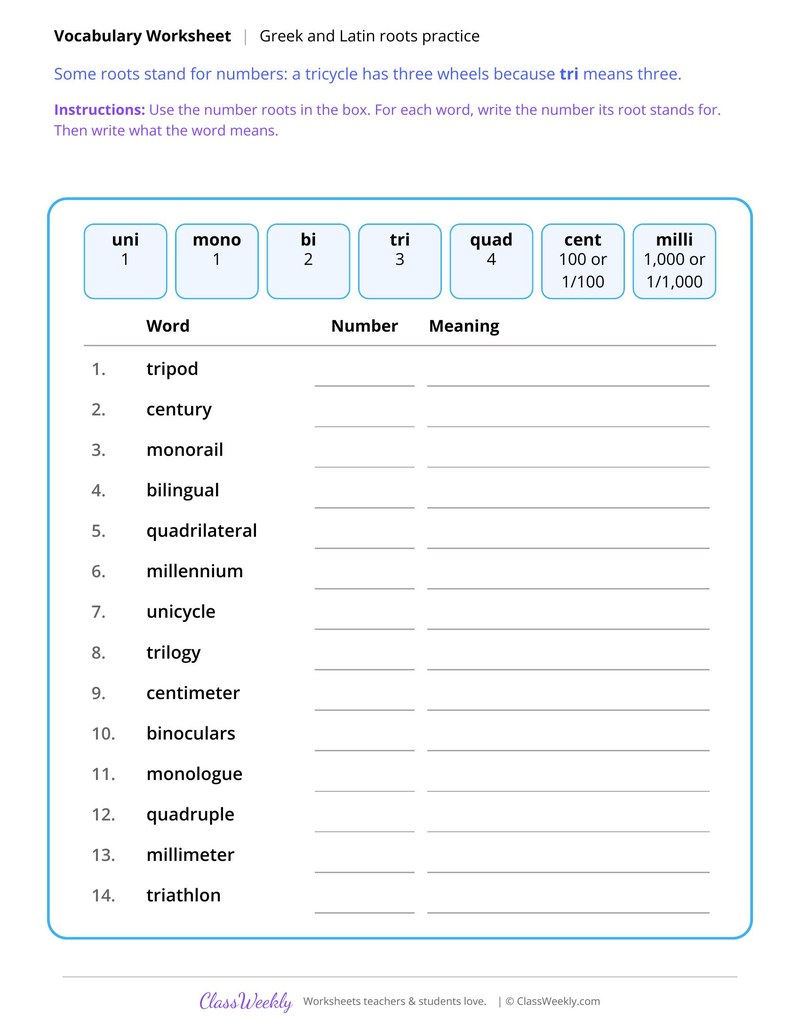
Number Roots Mono, Bi, Tri and Cent
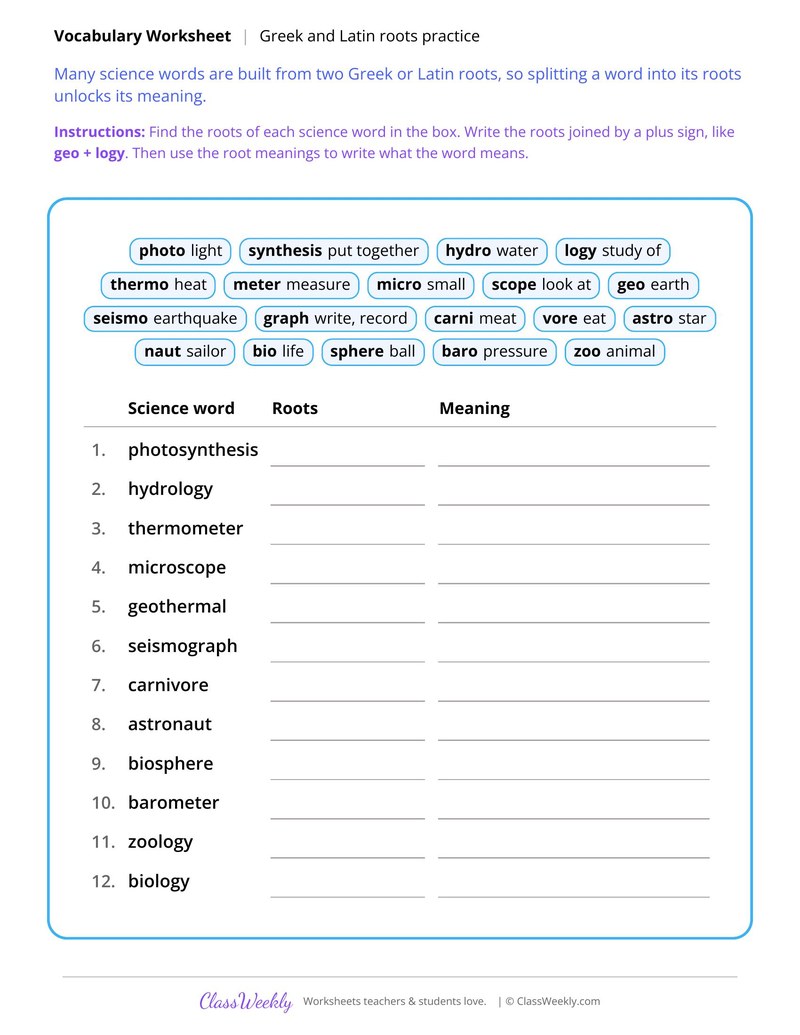
Greek and Latin Roots in Science Words
Curriculum Links
Common Core State Standards
Language · 6th Grade
Standard: Use context (e.g., the overall meaning of a sentence or paragraph; a word's position or function in a sentence) as a clue to the meaning of a word or phrase.
View all L.6.4.A worksheets →Find this in the curriculum
Browse the grade, subject, and topic this belongs to.
FAQ
How do I use this homophones and homographs worksheet?
⌄
Read the sound guides aloud before students write homograph sentences. Keep the meaning box in view for the look alike sheet, and review any pair students mix up.
What does this worksheet teach?
⌄
Write a sentence for each way to say 10 homographs like object, desert and produce. Homographs are spelled the same but differ in meaning, and sometimes in sound, like dove (DUV, a bird) and dove (DOHV, jumped in headfirst). The directions on the page read: Each word can be said two ways, with a different meaning for each. Write one sentence for each way of saying it. Use the meaning given, and use both lines for your sentence. An answer key is included.
Can I use this homophones and homographs worksheet for homeschool or classroom?
⌄
Yes, both. We made it for 6th Grade homophones and homographs, and the page works the same whether it lands on a kitchen table or a center rotation. At home, most families go through it together and talk the answers out loud, and that talking is where most of the learning happens. In class it runs well as independent work while you pull a small group. Print one copy or thirty, whichever the day needs.
Is stationary or stationery the paper?
⌄
Stationery, with er, is writing paper and envelopes. Stationary, with ar, means not moving.
How do the homograph sheets show pronunciation?
⌄
Each word gives a sound guide with its meaning, such as TEER for a drop from the eye and TAIR for to rip. Students write one sentence for each sound.
Which word means advice, council or counsel?
⌄
Counsel means advice, and a council is a group that decides things. In Eminent, Imminent and Other Look-Alikes, the city council votes on a skate park.
Ratings & Reviews
No reviews yet. Be the first to share what you think.
Reviews are for ClassWeekly members.
Make a Request
Spotted something to fix, or want a worksheet we don't have yet? Tell us and we'll make it.
Worksheet Details
| Grade | 6th Grade |
| Subject | Vocabulary |
| Topic | Homophones and Homographs |
| Standard | L.6.4.A |
| Pages | 2 pages |
| Difficulty | Medium |
What is ClassWeekly?
ClassWeekly offers free worksheets and printable learning resources for kids, from preschool up. All worksheets are aligned to Common Core, NGSS, and C3 Framework standards and designed by educators. Become a member to access the full library and download unlimited PDFs.
Match Meanings of Commonly Confused Words
Eminent, Imminent and Other Look-Alikes
Greek Roots Graph, Phon, Photo and Tele
Latin Roots Port, Rupt, Struct and Tract
Greek Roots Chron, Meter, Path and Psych
Latin Roots Aud, Vid, Voc and Mit
Number Roots Mono, Bi, Tri and Cent
Greek and Latin Roots in Science Words