
Homeschool 1st Grade Math: Teaching Subtraction
Get 30 days of free worksheet downloads
Key Takeaways
- Subtraction should start with taking away real objects your child can see disappear, not abstract number sentences.
- Crossing out pictures builds the same idea as taking away objects, just one step more abstract.
- Counting back and counting up are two different mental strategies, and kids benefit from learning both.
- Number lines make subtraction visible as backward movement, which many kids find easier than mental math.
Subtraction tends to feel trickier for first graders than addition, and there's a real reason for that. Taking away is a little more abstract than putting together, and a lot of kids need extra time with hands-on practice before it clicks.
The trick is building subtraction the same concrete way we build addition: real objects first, then pictures, then number lines, then abstract number sentences. Skipping steps is usually where the confusion creeps in.
This guide walks through that progression in order, with specific ways to teach each stage so your first grader builds real understanding, not just memorized steps.
Free 1st Grade Subtraction Worksheets


What First Grade Subtraction Actually Covers
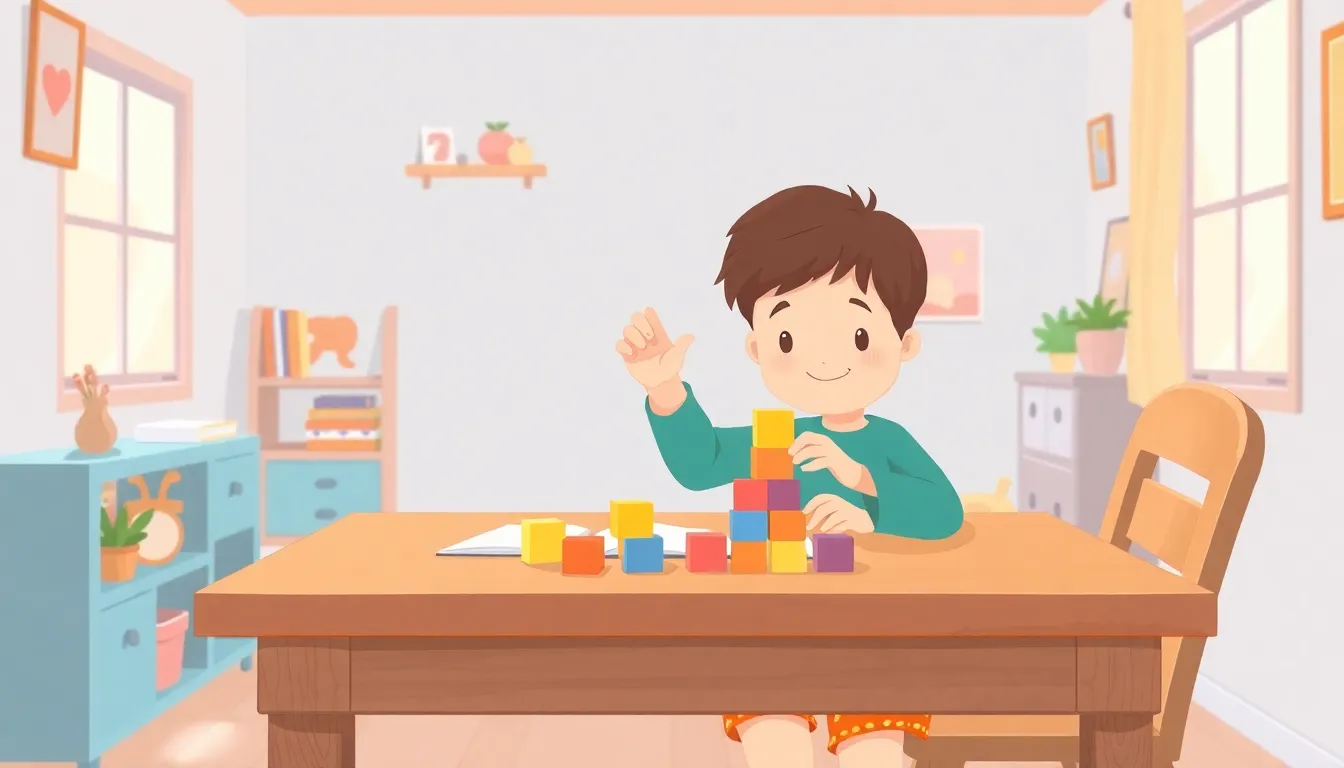
Subtraction starts with the most concrete version possible: taking away real objects. A child counts out a group, physically removes some, and counts what's left. This is where the whole concept of "fewer" or "less" becomes real to them.
From there, kids move to subtracting by crossing out objects on paper and subtracting by drawing and crossing out, which trains the same skill without needing physical items on hand. Solving subtraction word problems with objects comes in around the same time, connecting the math to real situations like "you had 6 stickers and gave 2 away."
Kids then move into selecting and writing subtraction sentences, translating what they've done with objects into the symbolic form: 6 - 2 = 4. This is a genuine leap, since it asks them to represent an action they can no longer see.
Number lines bring subtraction into a slightly different mental model: instead of removing items from a pile, your child hops backward along a line. Subtracting within 0-10 is usually the range worked in first, before stretching further. Two mental strategies get built alongside the number line work: counting back (starting at the bigger number and counting down) and counting up (starting at the smaller number and counting to the bigger one), which is often the faster strategy for problems with a small gap between numbers.
How to Teach It Step by Step
Step 1: Start with a full pile. Count out 6 objects together. Ask your child to take away 2 and count what's left. Repeat with different starting amounts.
Step 2: Move to crossing out pictures. Give your child a worksheet with drawn objects and ask them to cross out the number being subtracted, then count what remains.
Step 3: Connect it to word problems. Turn the object work into a story: "You had 5 crayons and your sister borrowed 2. How many do you have now?" Let them act it out with real crayons if needed.
Step 4: Write the subtraction sentence. Show your child how what they just did with objects becomes 5 - 2 = 3. Read it out loud together: "five minus two equals three."
Step 5: Introduce the number line. Draw a number line from 0 to 10. Show your child how to start at the first number and hop backward the second number's worth of spaces.
Step 6: Teach both counting strategies. For subtracting 9 - 2, show counting back two spaces from 9. For subtracting 9 - 7, show counting up from 7 to 9 and counting the hops, which is faster since the gap is small.
Common Mistakes and How to Know They've Got It
The most frequent mistake is jumping straight to number sentences before your child has physically taken things away enough times. If they're guessing at answers or reversing the numbers (writing 2 - 6 instead of 6 - 2), that's usually a sign they need more time with real objects.
Kids also sometimes default to only counting back, even on problems where counting up would be much faster and less error-prone, like 10 - 8. It's worth explicitly teaching both strategies and letting your child notice which one feels easier for different types of problems.
You'll know your child has mastered a subtraction skill when they can solve unfamiliar problems within their number range without needing objects in front of them, and when they can explain out loud what's happening, not just produce the right answer.
FAQ
Should I teach subtraction before or after addition? Addition first is the typical order, and it helps for a good reason: subtraction is easier to understand once your child already grasps that numbers combine and separate. Most first graders start subtraction a few weeks or months after solid addition work.
My child gets confused about which number to start with. Any tips? Point out that subtraction always starts with the bigger group, the one you're taking away from. Physically starting with a full pile of objects and removing some, rather than starting from nothing, makes this concrete and much less confusing.
What's the difference between counting back and counting up for subtraction? Counting back starts at the larger number and counts backward the amount being subtracted, useful for problems like 8 minus 2. Counting up starts at the smaller number and counts forward to the larger one, which works better for problems like 9 minus 7, where the gap is small.
How do I know if my child is ready for subtraction word problems? If they can confidently subtract using objects, pictures, and a number line, they're ready to try word problems. Start with problems that mirror something they've physically done, like "you had 5 crackers and ate 2, how many are left."
Keep Reading
Subtraction takes a little longer to feel natural than addition, and that's completely expected. Keep the objects handy longer than you think you need to, and watch how much easier the number sentences become once the concept is truly grounded. 😊

Adi Ackerman
Head Teacher
Adi is the Head Teacher at ClassWeekly, with years of experience teaching elementary students. She designs our curriculum-aligned worksheets and writes practical guides for teachers and parents.
Keep Reading
Ready to download? Try ClassWeekly free for 30 days.
Unlimited worksheets for PreK through 5th grade. Cancel anytime.