
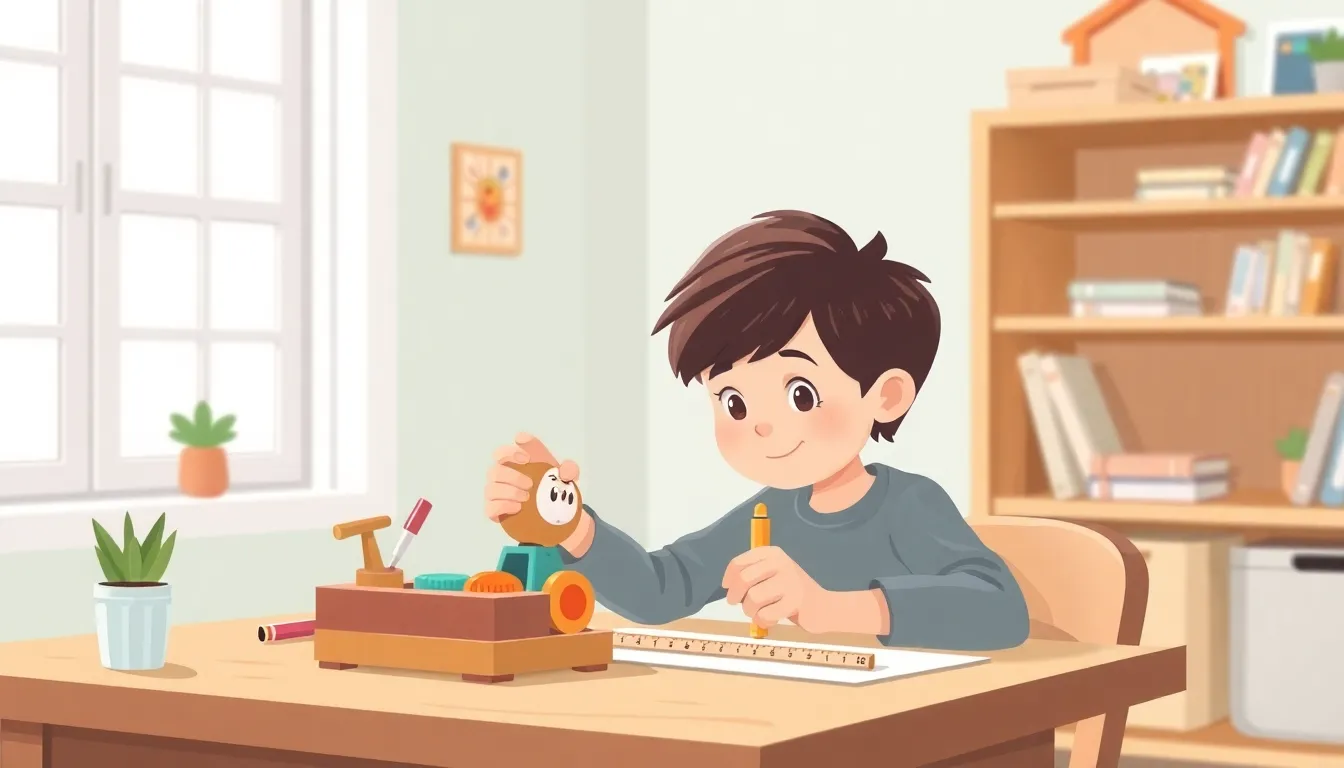
Homeschool 4th Grade Math: Teaching Measurement
Get 30 days of free worksheet downloads
Key Takeaways
- 4th graders need to move fluently between customary units (inches, feet, yards, miles) and metric units (mm, cm, m, km) in the same school year.
- Reading a ruler accurately to the nearest sixteenth of an inch is a physical skill that worksheets alone can't teach, it needs an actual ruler in hand.
- Conversion problems become manageable once a child memorizes just a handful of anchor facts, like 12 inches in a foot and 1,000 meters in a kilometer.
- Weight units (ounces, pounds, tons, grams, kilograms) trip kids up because they can't touch a ton the way they can touch a ruler, so real-world comparisons matter here.
Measurement is one of those units where you can tell right away if a kid actually understands math or has just memorized steps. Ask a 4th grader to convert 3 feet into inches and most can do it on paper. Ask them to guess whether a doorway is closer to 3 feet or 7 feet tall, and you find out fast whether the numbers mean anything to them yet.
That's why this unit deserves more hands-on time than most other 4th grade math topics. We're not just teaching conversion formulas here. We're building a sense of scale, so a kilometer feels like something real and a ton doesn't feel the same as a pound just because both start with a number.
The good news is measurement is one of the more forgiving topics to teach at home. You already have rulers, tape measures, and a kitchen scale lying around. Half the "materials" for this unit are things you own already.
Free 4th Grade Measurement Worksheets


What 4th Grade Measurement Actually Covers
The core of this unit splits into three buckets: length, weight, and the conversions that connect units within each system.
For length, your child needs both customary units (inches, feet, yards, and miles) and metric units (millimeters, centimeters, meters, and kilometers). They'll practice reading rulers precisely, comparing lengths side by side, and converting between related units, like turning feet into yards or miles into feet. The metric conversions go a step further and include decimal work, since metric units convert in clean multiples of 10, 100, and 1,000.
Weight gets its own smaller section: ounces, pounds, and tons on the customary side, grams and kilograms on the metric side. Fourth grade doesn't usually go deep into weight conversions the way it does with length, but your child should know the relative sizes: an ounce is tiny, a pound is a loaf of bread, a ton is a car.
Here's the part that catches families off guard: metric conversions in 4th grade often involve decimals, not just whole numbers. Converting 3.5 kilometers into meters isn't the same skill as converting 3 kilometers into meters. If your child hasn't had solid decimal practice yet, loop back to that before pushing hard on metric conversions with decimal answers.
How to Teach It Step by Step
Step 1: Build the ruler skill first. Before any conversion worksheet, hand your child a ruler and have them measure five household objects to the nearest quarter inch, then to the nearest centimeter. Don't move on until they can do this without help.
Step 2: Teach the "same system" conversions before mixing units. Start with inches to feet, then feet to yards, then feet to miles. Keep customary and metric completely separate during this stage.
Step 3: Anchor each unit to something physical. A yard is roughly a doorknob-to-floor stride. A meter is just slightly longer than a yard. A kilometer is about a 12-minute walk. These comparisons stick far better than the number alone.
Step 4: Introduce the multiply-versus-divide rule. Bigger unit to smaller unit means multiply. Smaller unit to bigger unit means divide. Practice saying which direction you're converting before doing any math.
Step 5: Layer in decimals last. Once whole-number conversions are solid, add decimal length and weight problems. This is usually the hardest part of the unit, so don't rush it.
Common Mistakes and How to Know When It's Mastered
The number one mistake is kids applying the wrong multiplication factor because they mixed up which system they're in, using 10 instead of 12 when converting feet to inches, for example. The fix is always the same: slow down and say the conversion fact out loud before doing the arithmetic.
The second common mistake is treating every conversion the same way regardless of direction. A child who's memorized "1 foot = 12 inches" sometimes divides by 12 when they should multiply. This is why Step 4 above matters so much, the rule needs to be automatic, not re-derived every time.
You'll know your child has mastered this unit when they can convert between units without writing down the conversion fact first, and when they can look at a measurement problem and estimate a reasonable answer before calculating. If a child converts 5 feet into inches and doesn't blink at an answer of 6 inches, that's a sign they're calculating without checking their work against real-world sense.
FAQ
What measurement skills should a 4th grader already know before starting this unit? They should be comfortable measuring to the nearest inch or centimeter and know that a foot equals 12 inches. If your child is still counting ruler marks one by one, spend a week on that before moving into conversions.
Do I need to teach customary units (inches, feet, miles) and metric units (mm, cm, km) at the same time? You can teach them side by side, but keep the practice separate at first. Mixing an inches problem with a centimeters problem in the same worksheet before your child is solid on both tends to cause more confusion than it saves time.
My child keeps mixing up when to multiply versus divide during conversions. How do I fix that? Teach one rule: going from a bigger unit to a smaller unit means multiply, because you'll need more of the smaller units. Going from small to big means divide. Say it out loud every single time until it's automatic.
How much should we practice reading a ruler if my child already "gets it"? Even kids who get it benefit from two or three short sessions a month measuring real objects around the house. It keeps the skill sharp for word problems later in the year, where ruler reading shows up again without warning.
Keep Reading
Measurement can feel dry on paper, but the second you hand your kiddo a tape measure and let them go loose on the living room, it clicks in a way worksheets never quite manage alone. Give it both, real rulers and real practice sheets, and this unit tends to come together faster than you'd expect. 😊

Adi Ackerman
Head Teacher
Adi is the Head Teacher at ClassWeekly, with years of experience teaching elementary students. She designs our curriculum-aligned worksheets and writes practical guides for teachers and parents.
Keep Reading
Ready to download? Try ClassWeekly free for 30 days.
Unlimited worksheets for PreK through 5th grade. Cancel anytime.