
Homeschool Co-ops: How They Work and How to Find One
Get 30 days of free worksheet downloads
Key Takeaways
- A co-op is a group of homeschool families sharing teaching, resources, or social time on a regular schedule.
- Formats range from casual weekly playgroups to structured academic co-ops with paid teachers and tuition.
- Facebook groups, local libraries, and state homeschool associations are the fastest ways to find one near you.
- If none exist nearby, starting a small one with two or three other families is more realistic than it sounds.
One of the most common questions from new homeschool families is some version of "but how does my kid make friends?" A co-op is usually the answer, and it's worth understanding how they actually work before you go looking for one.
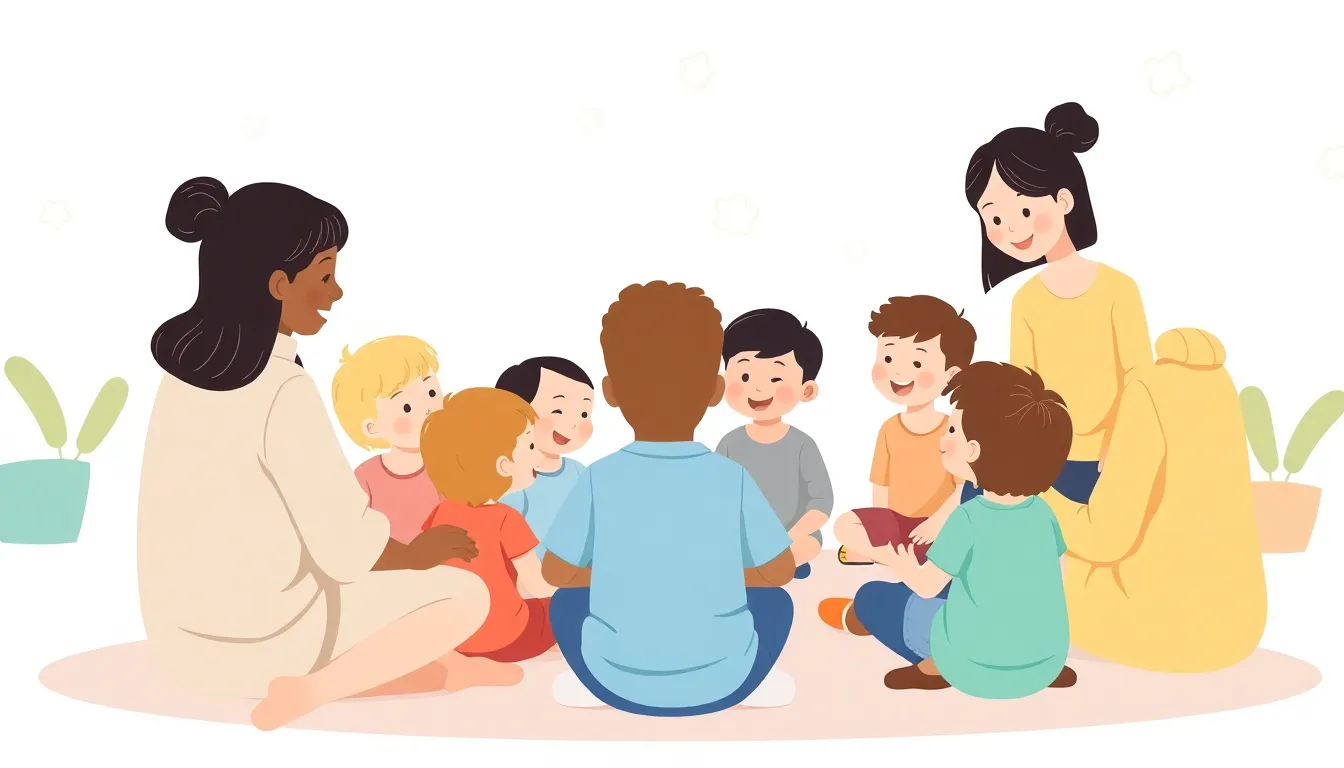
A homeschool co-op, short for cooperative, is a group of families who get together on a regular basis to share teaching, resources, and social time. Some are loose and casual. Others run more like a part-time school with a real schedule and tuition.
Here's what the different formats actually look like, and practical steps for finding, joining, or starting one near you.
What a Co-op Actually Looks Like
Co-ops exist on a wide spectrum, and knowing the range helps you figure out what your family is actually looking for.
On the casual end, a co-op might just be a weekly meetup at a park or community center where a few families rotate leading a simple activity, a nature walk, an art project, a read-aloud session. There's no tuition, minimal structure, and the main goal is social connection alongside a little shared learning.
In the middle, many co-ops run a more organized weekly or biweekly schedule with parent-taught classes divided by subject or age group. One parent might teach a science class, another leads art, another handles a history unit, and kids rotate through classes across a morning or afternoon. These often have modest costs to cover shared supplies.
On the structured end, some co-ops function almost like a part-time private school, with hired specialty teachers for subjects like foreign language, higher-level science labs, or performing arts, plus real tuition, sometimes several hundred dollars a semester per class. These tend to serve families who want specific academic offerings they can't easily provide at home.
There's no single "right" format. A family looking mainly for social time and low commitment fits better with the casual end. A family wanting structured academics in specific subjects, especially as kids get older, often gravitates toward the more formal option.
Free Kindergarten Math Worksheets


Free 1st Grade Math Worksheets


Free 2nd Grade Math Worksheets


How to Find One Near You
Start with your local homeschool Facebook group, since almost every region has at least one, often several split by area or philosophy (secular, faith-based, unschooling-friendly, and so on). Search "[your city or county] homeschool" and you'll usually find an active group where co-ops get discussed and recruited for regularly.
Check your state homeschool association's website. Most maintain a directory or a bulletin board listing local co-ops, support groups, and events by region.
Visit your local library and ask about their homeschool community bulletin board or programming. Many libraries host homeschool-specific story times or activity days that double as an informal networking spot for finding co-ops.
Ask at a local museum, nature center, or community education building that offers homeschool days or discounted homeschool admission, since these spots often attract the same families repeatedly and are a natural place to strike up a conversation.
When you find a candidate co-op, ask directly about cost, schedule, expected parent involvement (many co-ops require parents to teach or help, not just drop kids off), and whether there's a religious or philosophical framework attached, since some co-ops are built around a specific faith community and others are explicitly secular.
Starting Your Own if None Exist
If your search comes up empty, starting a small co-op is more doable than it sounds, and it's a common path for families in less populated areas.
Post in your local homeschool group asking if anyone's interested in a regular meetup. You typically only need two or three other families to get something going, not a dozen.
Start with one simple, low-commitment format: a weekly two-hour meetup at a park, library meeting room, or rotating host home, focused on one or two activities rather than a full academic schedule. It's much easier to expand a small, working co-op than to launch a complicated one from scratch.
Split responsibilities clearly from the start, who's bringing supplies, who's leading which week, so it doesn't fall entirely on one parent. Co-ops that survive long term are usually the ones where the workload is genuinely shared.
FAQ
What's the difference between a homeschool co-op and a support group? A support group is usually informal, focused on parent connection, occasional playdates, and shared advice, without a set academic structure. A co-op typically has a regular schedule, some form of shared teaching or classes, and often specific roles or responsibilities for participating families.
How much do homeschool co-ops typically cost? It ranges widely. A casual parent-run co-op might cost nothing beyond splitting supply costs. A structured co-op with hired specialty teachers for subjects like science labs or foreign language can run $20 to $150 per semester per class. Always ask for a full cost breakdown before committing.
Do co-ops work for kids who are shy or introverted? Often yes, more than parents expect. A structured co-op with a predictable schedule and smaller class sizes can feel less overwhelming to a shy child than a large classroom. Start with a co-op that has flexible participation options, and let your child ease in at their own pace rather than pushing full involvement immediately.
What if there's no co-op in my area? Consider starting one. Reach out through a local homeschool Facebook group or your library's homeschool bulletin board to find two or three interested families, then start small with a single weekly meetup focused on one or two subjects before expanding.
Keep Reading
Finding your people takes a little more effort in homeschooling than it did when everyone was assigned to the same building. But once you find your co-op, or build one, it tends to become one of the best parts of the week for your whole family. 🤝

Adi Ackerman
Head Teacher
Adi is the Head Teacher at ClassWeekly, with years of experience teaching elementary students. She designs our curriculum-aligned worksheets and writes practical guides for teachers and parents.
Keep Reading
Ready to download? Try ClassWeekly free for 30 days.
Unlimited worksheets for PreK through 5th grade. Cancel anytime.