
Homeschool Kindergarten Grammar: Teaching Writing
Get 30 days of free worksheet downloads
Key Takeaways
- Kindergarten writing is mostly about building the physical skill of forming letters before it becomes about composing sentences.
- Capital letters need direct teaching, since kids left on their own often default to using them randomly in the middle of words.
- Drawing and writing together lowers the pressure on a child whose ideas are bigger than their current handwriting ability.
- Simple writing prompts give kids just enough of a starting point to write independently without staring at a blank page.
Writing is where a kindergartner's hand has to catch up to their imagination, and honestly, that gap can be frustrating for a five-year-old with big ideas and a wobbly pencil grip. Our job as homeschool parents is to make that gap feel manageable, not discouraging.
At this age, writing practice isn't really about composing paragraphs. It's about building the physical stamina and control to form letters, combined with just enough structure that a child has something to say when you hand them a pencil.
Here's how we approach writing in a kindergarten homeschool, from basic practice through to a child's first independent writing prompts.
Free Kindergarten Writing Worksheets


What Kindergarten Writing Practice Covers
Writing practice at this level starts with basic letter and word formation, building the fine motor control needed to hold a pencil correctly and produce legible letters on a line. This is less about ideas and more about the mechanics.
Capital letters get their own focused attention, since kids don't naturally intuit the rule that capitals belong at the start of a sentence or a proper name. Left to their own devices, a lot of kindergartners will capitalize letters wherever they feel like it, often in the middle of a word for no clear reason.
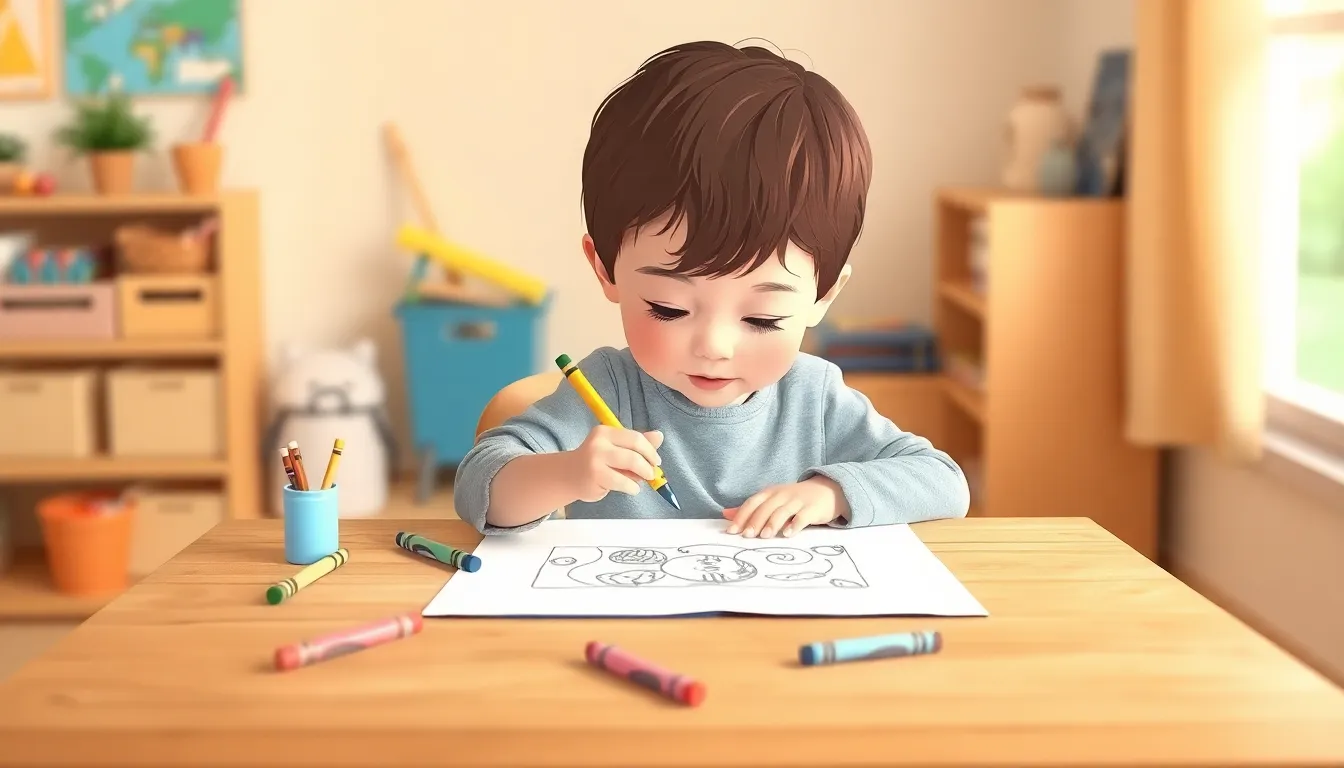
Drawing and writing as a combined activity is one of the most valuable tools at this age. A child draws a picture first, then writes one word, a short phrase, or (for more advanced kids) a simple sentence describing it. This lets kids express a full thought even when their letter formation is still shaky.
Writing prompts give structure to independent writing time. A prompt like "what did you do this weekend" or "draw your favorite food and write its name" gives a child a clear starting point, which matters a lot when a blank page can feel overwhelming.
How to Teach It Step by Step
Step 1: Warm up fine motor skills before every writing session. A minute or two of squeezing playdough, using tweezers to pick up small objects, or tracing shapes gets the hand ready and makes the actual writing easier.
Step 2: Practice letter formation in short bursts. Five to ten letters is plenty for one sitting. Say the letter name out loud as your child writes it, and watch their pencil grip, not just the finished letter.
Step 3: Introduce capital letters with a clear, simple rule. "Capitals go at the beginning of a sentence, and at the beginning of a name." Point out examples in books you're reading together so the rule feels real, not just a worksheet instruction.
Step 4: Use drawing and writing together for lower-pressure practice. Let your child draw first, then ask what they'd like to write about their picture. Write it down for them if needed, then have them copy it underneath in their own hand.
Step 5: Layer in a simple writing prompt once a week or so. Keep it concrete and personal. "What's your favorite animal and why" tends to work better than something abstract.
Building Confidence Without Rushing
The biggest thing to watch for at this age is a child avoiding writing altogether because it feels hard or slow compared to talking. If you notice this, shrink the task. One sentence, even one word, is a real win and worth celebrating just as much as a full paragraph would be for an older kid.
Letter reversals and inconsistent spacing between words are both completely typical in kindergarten writing and usually resolve with more practice rather than more correction. Focus your feedback on effort and content ("I love that you wrote about your dog!") more than on perfect letter formation, especially early on.
You'll see real progress when your child starts writing without being asked, labeling a drawing on their own, or asking how to spell a word because they want to write it correctly. That self-driven curiosity is a much better sign of readiness than any worksheet score.
FAQ
How much writing should a kindergartner be doing each day? Ten to fifteen minutes is a solid target for most five and six-year-olds. Writing uses fine motor muscles that tire quickly at this age, so short, frequent sessions work better than one long one.
When should I start correcting capital letter mistakes? As soon as you notice a pattern, gently. If your child is randomly capitalizing letters mid-word, point out that capitals go at the beginning of a sentence or a name, and keep modeling it in your own writing where they can see.
My child says "I don't know what to write" constantly. How do I help? Use a simple, specific writing prompt rather than an open-ended one. "Write about your favorite animal" works better than "write a story," because it gives a starting point without dictating the content.
Should drawing count as part of writing practice? Yes, especially at this age. Drawing and writing together lets a child express a full idea even when their letter formation is still developing, and the drawing often becomes the plan for what they write next.
Keep Reading
Every wobbly, backwards letter your kiddo writes right now is part of how they get to a confident, legible sentence later. Keep the sessions short, keep the praise specific, and let their ideas lead the way 😊

Adi Ackerman
Head Teacher
Adi is the Head Teacher at ClassWeekly, with years of experience teaching elementary students. She designs our curriculum-aligned worksheets and writes practical guides for teachers and parents.
Keep Reading
Ready to download? Try ClassWeekly free for 30 days.
Unlimited worksheets for PreK through 5th grade. Cancel anytime.