
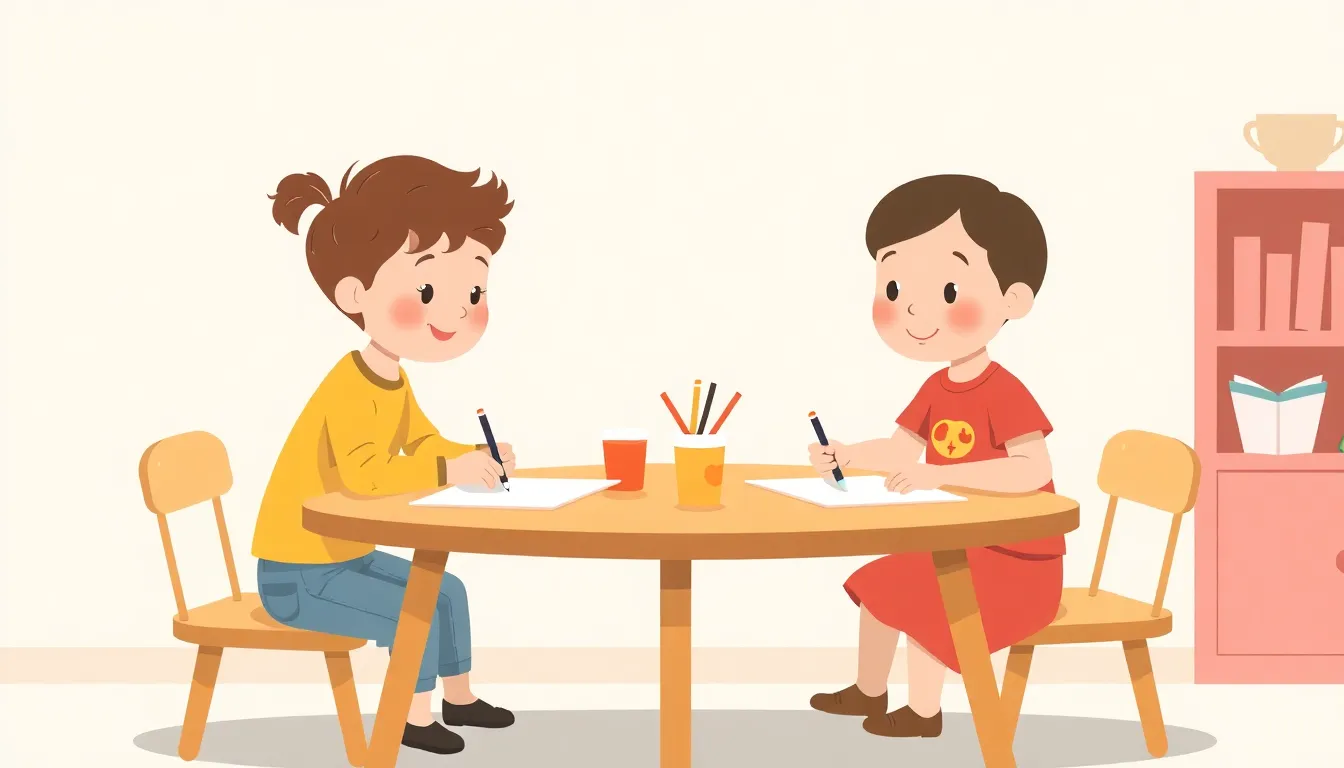
How to Homeschool Multiple Grades at Once
Get 30 days of free worksheet downloads
Key Takeaways
- Teaching subjects like history and science together as a family, with age-adjusted assignments, saves enormous time and works well.
- Math and reading nearly always need to be taught separately by grade level, since these skills build sequentially.
- Staggering independent work against direct teaching time is the core scheduling trick for multi-grade homeschooling.
- Older kids benefit academically and socially from helping teach younger siblings, so build that role in on purpose.
If you have more than one child, "how do I actually teach two or three different grade levels at the same time" is probably the logistical question keeping you up at night more than any curriculum choice. It's a real challenge, but it's also one of the most solved problems in homeschooling, because most homeschool families are multi-kid households by default.
The trick isn't finding a magic curriculum that works for every age simultaneously. It's knowing which subjects genuinely combine across grades and which ones don't, and building your day around that split.
Combine What Combines: History, Science, and Read-Alouds
Some subjects are naturally flexible across a wide age range, and treating them as family subjects rather than grade-specific ones is the single biggest time-saver in multi-grade homeschooling.
History and social studies work beautifully this way. Read the same living book or unit study material aloud to the whole group, then adjust the follow-up work by age: your kindergartner draws a picture and narrates back what happened, your third grader writes two sentences, your fifth grader writes a paragraph or does a short research task on the same topic.
Science works similarly, especially for topics like weather, animals, or basic physics, where a shared experiment or nature observation can anchor the lesson while written work scales by grade. Read-aloud literature is the same idea: everyone listens together, and discussion questions or journal responses scale to each child's writing ability.
This single strategy, teaching content subjects together and skill subjects separately, is the backbone of nearly every multi-grade homeschool schedule that actually works long term.
Free Kindergarten Reading Worksheets


Free 1st Grade Math Worksheets


Free 2nd Grade Math Worksheets


Keep Math and Reading Separate and Sequential
Math and phonics-based reading instruction don't combine well across grades, because these are sequential skills. A first grader learning to carry in addition and a fourth grader learning long division are not on the same page, literally or figuratively, and trying to teach them together shortchanges one or both kids.
The standard solution is staggering. While you teach direct math instruction to one child, the other works independently: a video lesson, a worksheet review of yesterday's concept, or an educational game. Then you switch. This is also where curriculum choice matters a lot. Programs with strong independent-practice components make staggering far easier than programs that need constant parent involvement at every step.
A rough rule of thumb many multi-grade families use: 15 to 20 minutes of direct teaching per child per subject, with the other child(ren) doing independent work during that window, repeated across math and reading blocks.
Let Older Kids Help, in Small Doses
Older siblings can genuinely help teach younger ones, and it's not just a convenience for you. Explaining a concept to someone else is one of the best-documented ways to deepen your own understanding of it, so a fifth grader quizzing a kindergartner on sight words is reinforcing their own reading fluency too.
Keep this role bounded and specific: flashcard review, listening to a younger sibling read a page aloud, or checking a completed worksheet against an answer key. Full lesson delivery is still your job. But short, structured helper tasks build both academic reinforcement and a genuine sibling bond that a lot of families count among homeschooling's best surprises.
FAQ
Which subjects can I combine across grades and which can't I? History, science, art, and read-aloud literature combine well across a wide age range, since you can adjust the depth of discussion and the written assignment to each child's level. Math and phonics-based reading almost always need grade-specific, sequential instruction and don't combine well.
How do I teach two kids math at the same time? Most multi-grade families don't teach math simultaneously. Instead, they stagger it: one child does independent practice or a video lesson while the parent teaches the other child directly, then they switch.
Is it fair to ask an older child to help teach a younger sibling? In small, well-bounded doses, yes, and it tends to benefit the older child too, since teaching a concept is one of the best ways to solidify it. Keep it to short, specific tasks like reviewing flashcards rather than full lesson delivery.
What if my kids are more than three grades apart? Combined subjects like history and science still work well across a wide age gap, since you simply adjust the reading level and assignment depth. For core skill subjects, expect to run largely separate, grade-appropriate instruction regardless of the age gap.
Keep Reading
Juggling multiple grade levels under one roof looks chaotic from the outside, but it settles into a genuine rhythm faster than you'd expect. Combine what you can, stagger what you can't, and let your kids help each other along the way. 👨👩👧👦

Adi Ackerman
Head Teacher
Adi is the Head Teacher at ClassWeekly, with years of experience teaching elementary students. She designs our curriculum-aligned worksheets and writes practical guides for teachers and parents.
Keep Reading
Ready to download? Try ClassWeekly free for 30 days.
Unlimited worksheets for PreK through 5th grade. Cancel anytime.