
Montessori Homeschooling: Bringing the Method Home
Get 30 days of free worksheet downloads
Key Takeaways
- Montessori homeschooling centers on a prepared environment, child-led choice, and hands-on materials rather than teacher-led lessons.
- Mixed-age learning and long uninterrupted work periods are core Montessori features you can recreate at home.
- You don't need authentic Montessori materials for everything; many can be approximated with household items and open-ended manipulatives.
- This method fits independent, self-motivated kids well, but some structured skill practice usually still needs to be added in.
Montessori is one of those homeschool words that gets used loosely, sometimes just meaning "wooden toys and a calm aesthetic." The real method is much more specific, and much more interesting.
Maria Montessori was a physician and educator who developed her approach in the early 1900s after observing how children actually learn when given freedom, order, and the right materials. Her method is built on respect for the child as a capable, self-directed learner.
Bringing Montessori home doesn't require a dedicated classroom or a shelf full of $200 wooden materials. It requires a shift in how you set up your space and how much you step back. Here's what that looks like in practice.
The Core Philosophy: Prepared Environment and Child-Led Work
The heart of Montessori is the "prepared environment," a space set up specifically for the child's independence. Everything has a place, materials are arranged on low shelves at the child's height, and each item teaches one concept clearly (a set of beads for counting, a set of letters for spelling, a set of geography puzzles for continents).
Children choose their own work from the shelf during long, uninterrupted work periods, often two to three hours. This isn't free-for-all play time. Materials are self-correcting, meaning the child can see for themselves if a puzzle piece doesn't fit or a stacking tower is uneven, which builds independence without needing constant correction from an adult.
Montessori also groups children in three-year age spans rather than single grades, so a homeschool with kids ages six, seven, and eight naturally fits the model. Older kids often help younger ones, which Montessori saw as valuable for both.
Sensorial learning matters heavily in the early years: materials that isolate one quality like weight, texture, size, or sound, so a young child can refine their senses before moving into abstract academic work.
Free 3rd Grade Grammar Worksheets


Free 4th Grade Grammar Worksheets


Free 5th Grade Math Worksheets


What a Typical Day Looks Like
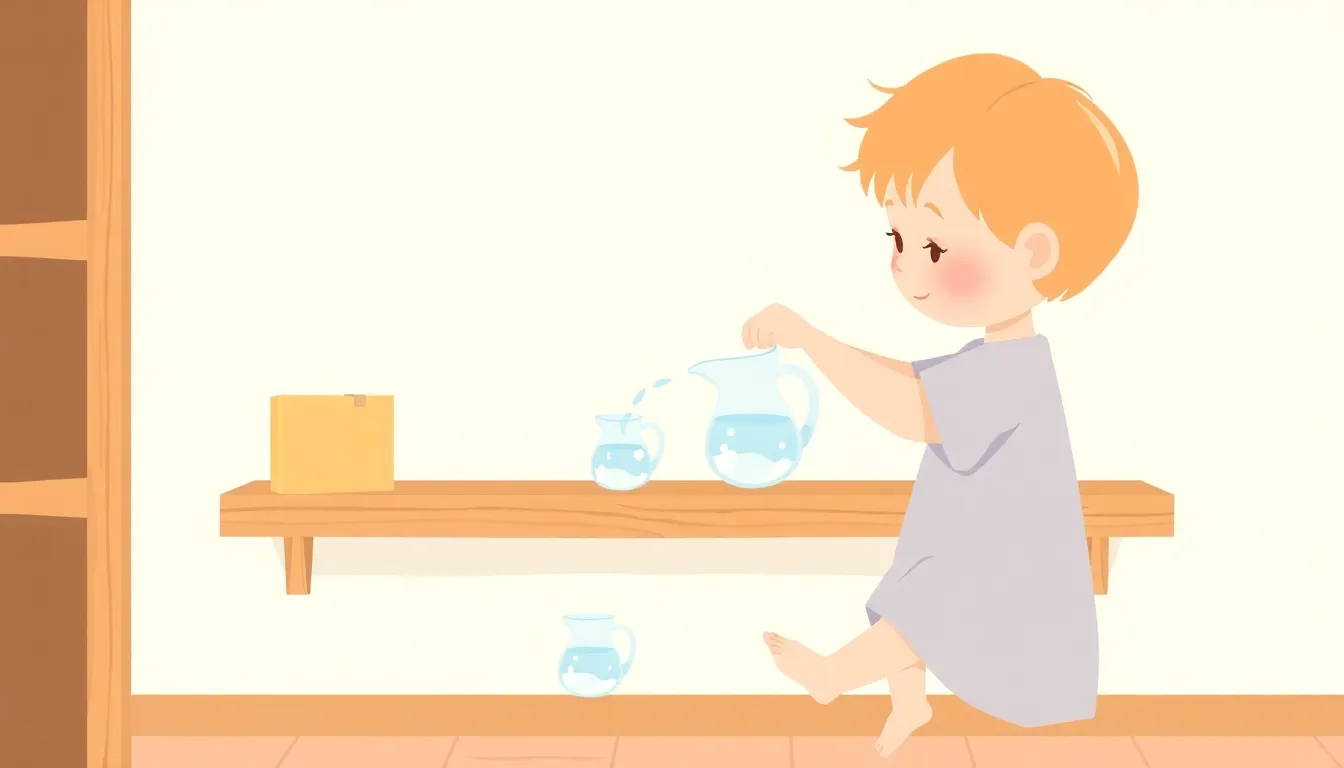
A Montessori homeschool morning usually opens with a long work cycle. Your child moves through the shelf independently, choosing math materials, then a language activity, then a practical life task like pouring or folding, working at their own pace with minimal interruption from you.
You circulate quietly, giving one-on-one lessons on new materials when a child is ready, then stepping back out of the way. The adult's job is to observe closely and prepare the environment, not to lecture from the front of the room.
Practical life skills get real emphasis: cooking, cleaning, gardening, caring for plants and pets. These aren't chores tacked onto the school day, they're considered core learning that builds concentration, order, and independence.
Afternoons often shift to outdoor time, art, or follow-up projects tied to whatever topic captured a child's interest that morning.
Who This Method Fits Best
Montessori homeschooling suits families with more than one child close in age, since the mixed-age, independent-work model was built for exactly that setup. It also fits kids who thrive with choice and hands-on materials rather than sitting for direct instruction.
It asks a lot of the parent in terms of environment setup and self-restraint (letting your child struggle productively instead of jumping in to help). Some families find pure Montessori harder to sustain once kids reach upper elementary, when more formal writing and math practice benefits from added structure.
We've seen homeschool families blend Montessori's independent, hands-on spirit with periodic worksheet practice for skills that need repetition, like handwriting formation or multiplication facts, without losing the child-led feel of their days.
FAQ
Do I need to buy expensive Montessori materials to homeschool this way? No. Authentic wooden Montessori materials are lovely but expensive. Many families recreate the same learning goals with household objects, printable materials, and a handful of key purchases like a bead chain for math or movable alphabet letters.
How much should I direct my child's learning in a Montessori homeschool? Less than in a traditional approach, but not zero. You prepare the environment and offer lessons on new materials, then step back and let your child choose their work and repeat it as often as they want during work periods.
Is Montessori only for younger kids? Montessori was designed for birth through adolescence, with different environments for each stage. Homeschoolers most commonly use it for the toddler through elementary years, then blend in more structured or classical elements for upper elementary and beyond.
What if my child doesn't seem interested in the materials I set out? Rotate what's available, follow their current interest instead of a rigid scope and sequence, and make sure the materials match their developmental stage. Montessori trusts that children will engage deeply with work that's pitched correctly for them.
Keep Reading
However much of the Montessori shelf you recreate, the real spirit of the method is trusting your kiddo to do more on their own than you'd expect. Start with one prepared shelf and watch what happens. 🧩

Adi Ackerman
Head Teacher
Adi is the Head Teacher at ClassWeekly, with years of experience teaching elementary students. She designs our curriculum-aligned worksheets and writes practical guides for teachers and parents.
Keep Reading
Ready to download? Try ClassWeekly free for 30 days.
Unlimited worksheets for PreK through 5th grade. Cancel anytime.