Good or Well, Bad or Badly and Other Pairs
Written by Adi Ackerman, Head Teacher
"Good or Well, Bad or Badly and Other Pairs" is written for 8th Grade (Ages 13-14), and it covers Common Core L.8.1. A 7th grader who is already steady on parts of speech can use it too, and an older student can use it as a short review.
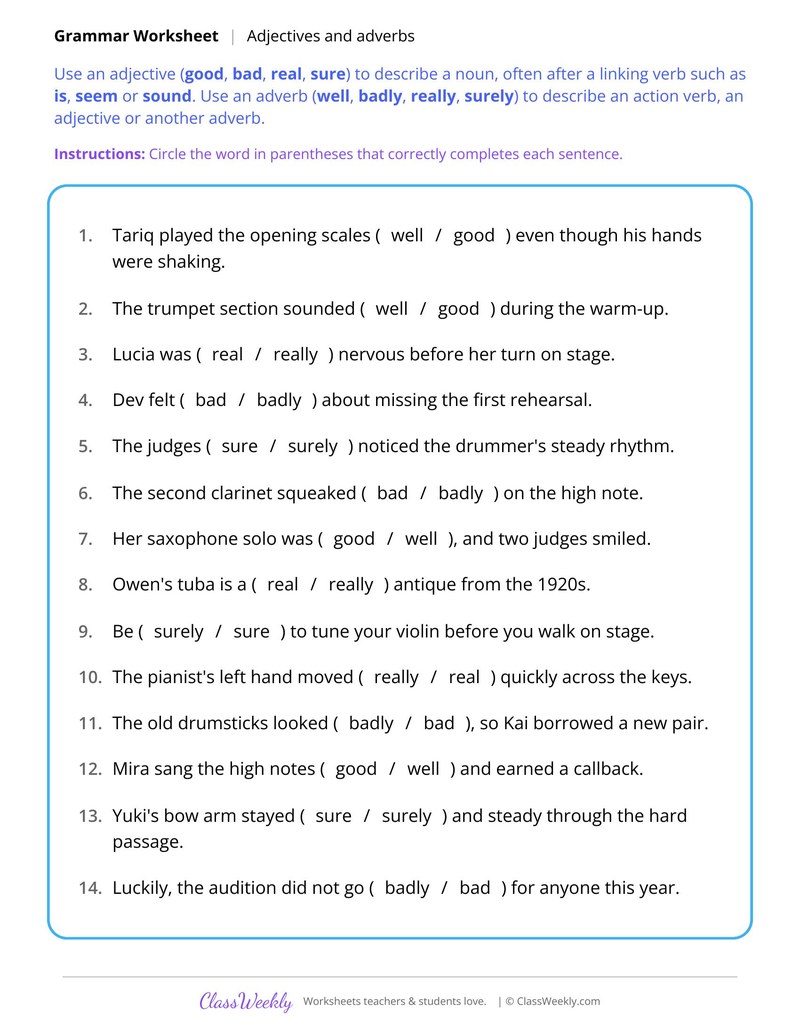
8th grade grammar worksheet: choose good or well, real or really and bad or badly in sentences about a music rehearsal. Answer key included. Part of our adjectives and adverbs parts of speech collection. Aligned to Common Core standards.
How do I use this worksheet?
Use the good or well sheet as a quick usage check. Keep the connotation list handy during narrative writing so students choose trait words on purpose.
What students will practice
- Students will choose between adjective and adverb pairs such as good and well.
- Students will use an adjective after a linking verb such as seem or sound.
- Students will use an adverb to describe an action verb, an adjective or another adverb.
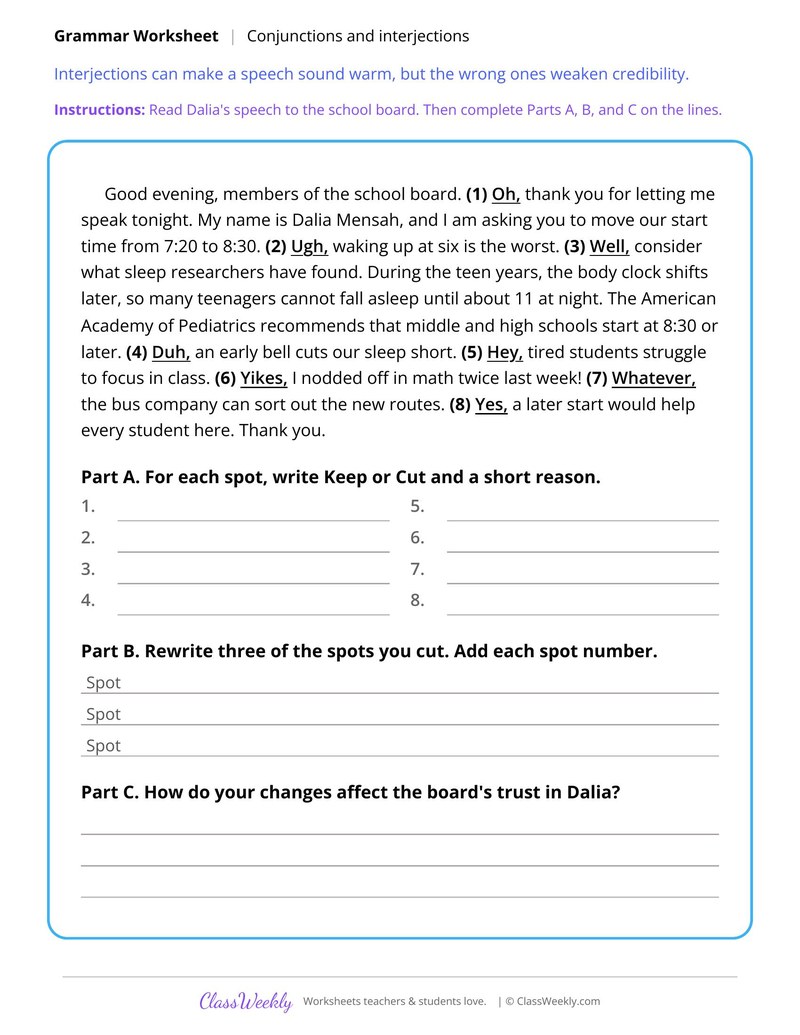
Interjections in a Persuasive Speech
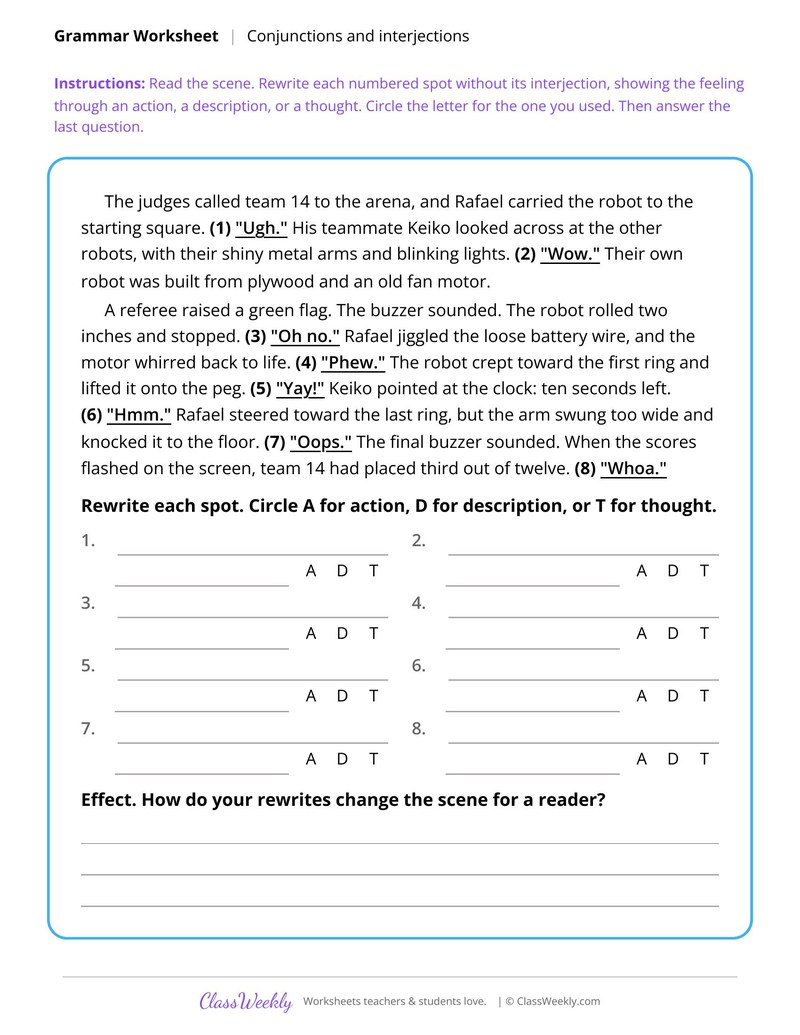
Turn Interjections Into Action and Thought
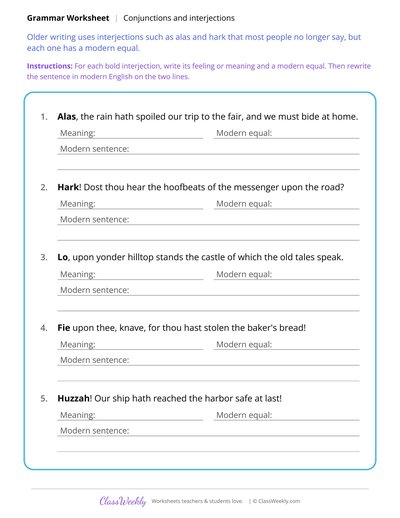
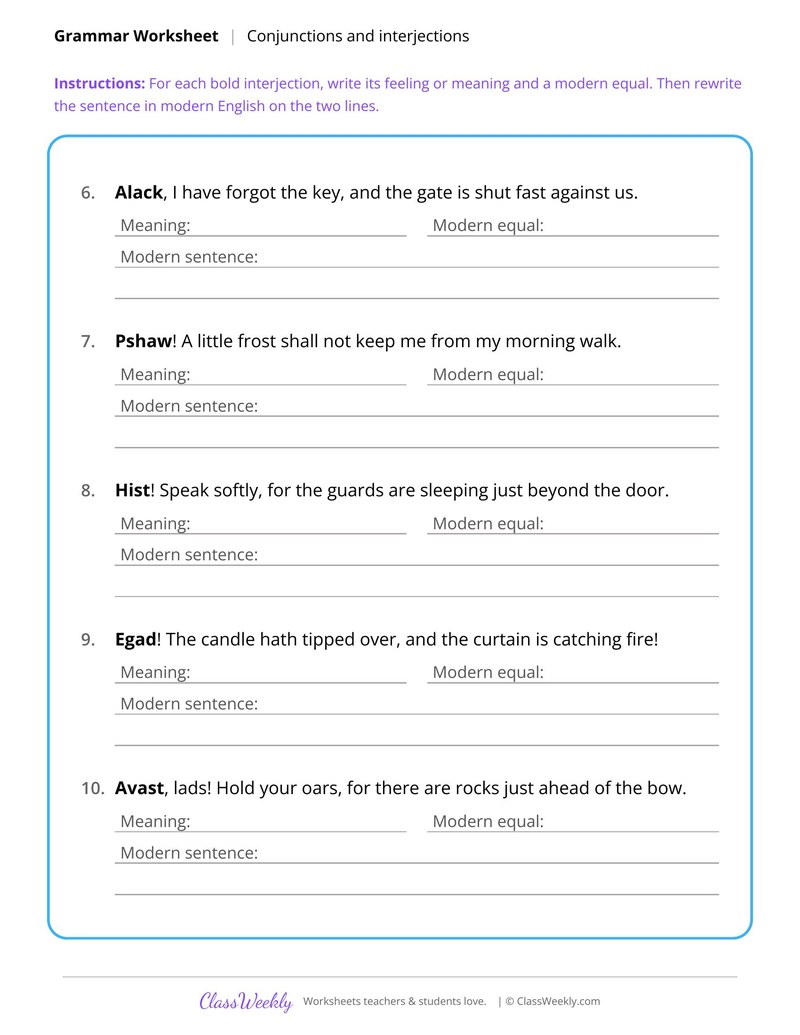
Old Interjections and Their Modern Equals
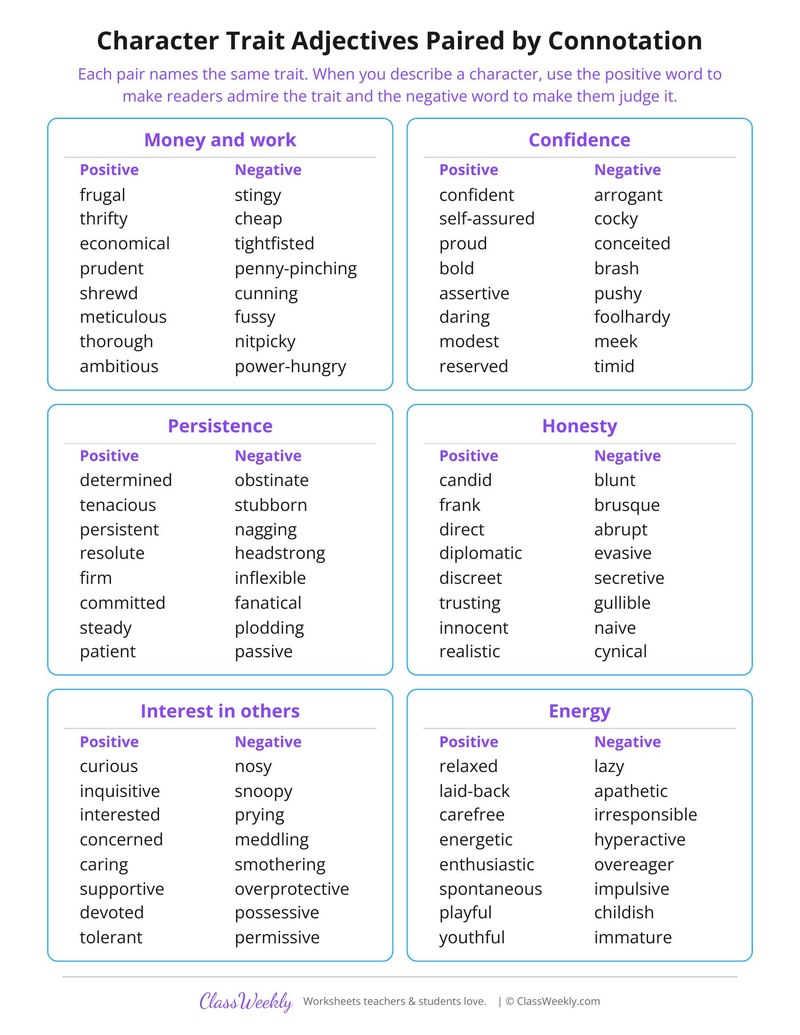
Character Trait Adjectives Paired by Connotation
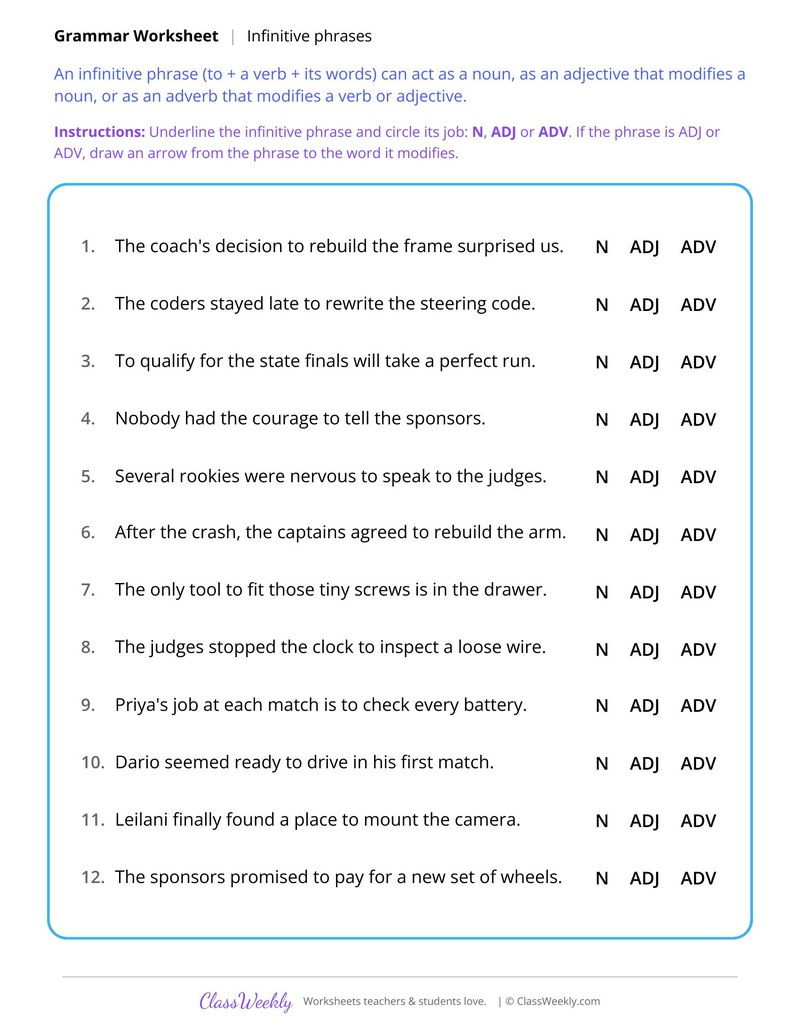
Infinitives That Act as Adjectives or Adverbs
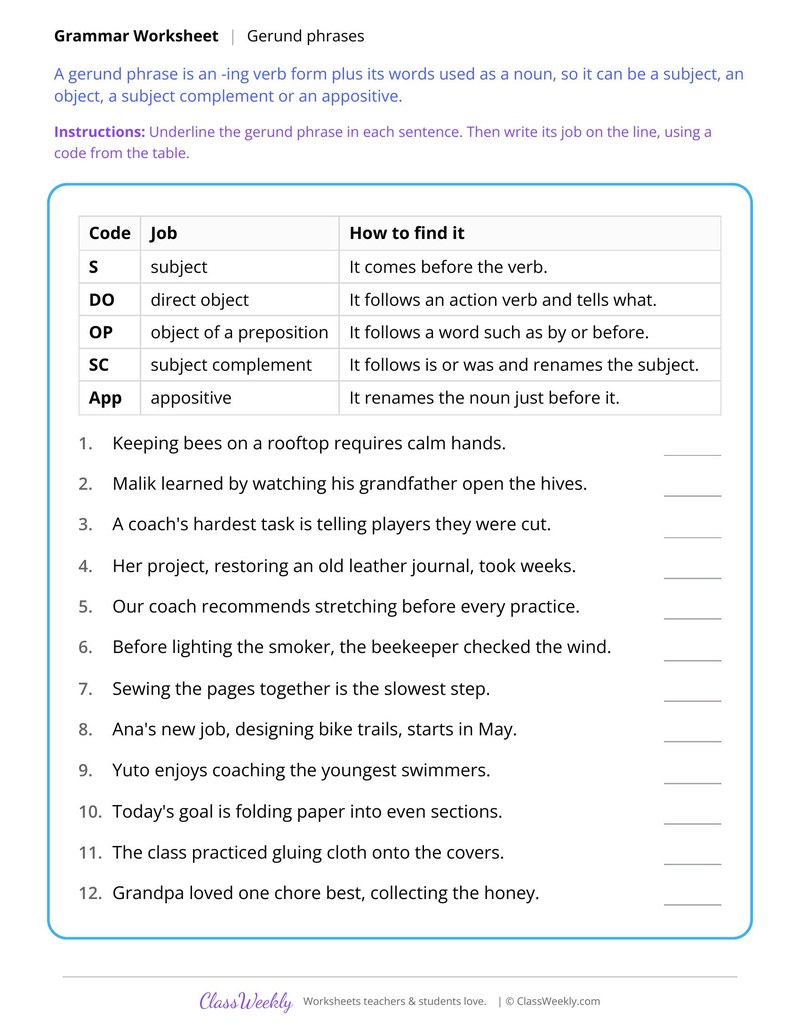
Gerund Phrases as Appositives and Complements
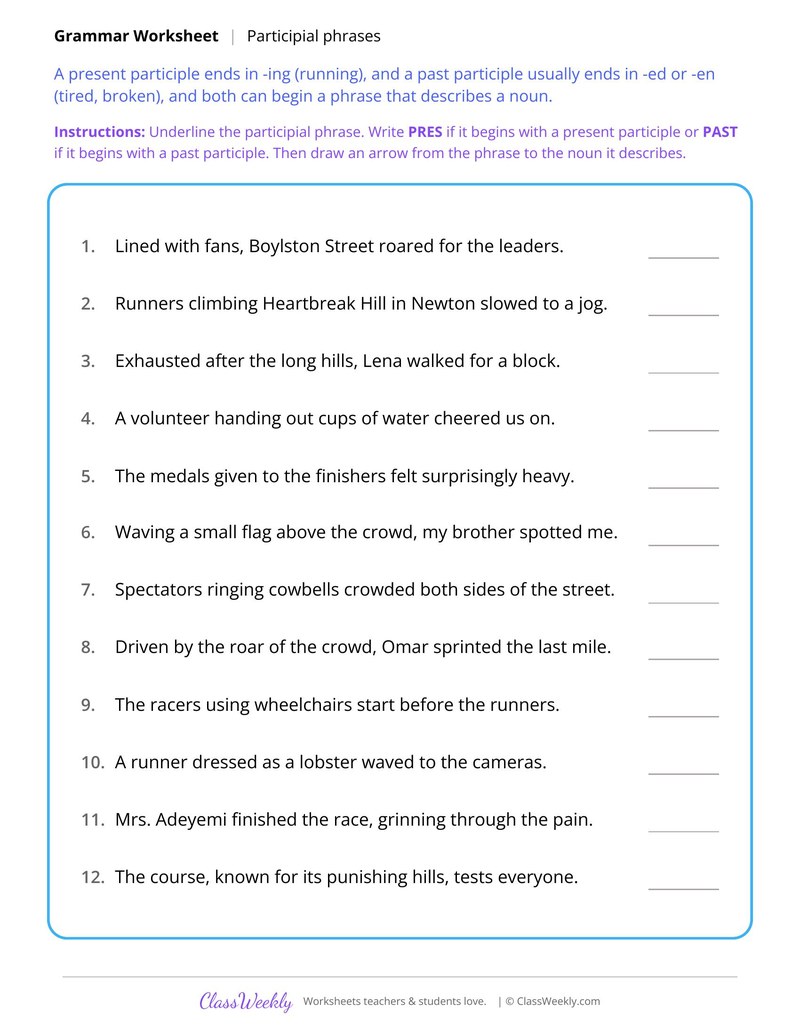
Present and Past Participial Phrases
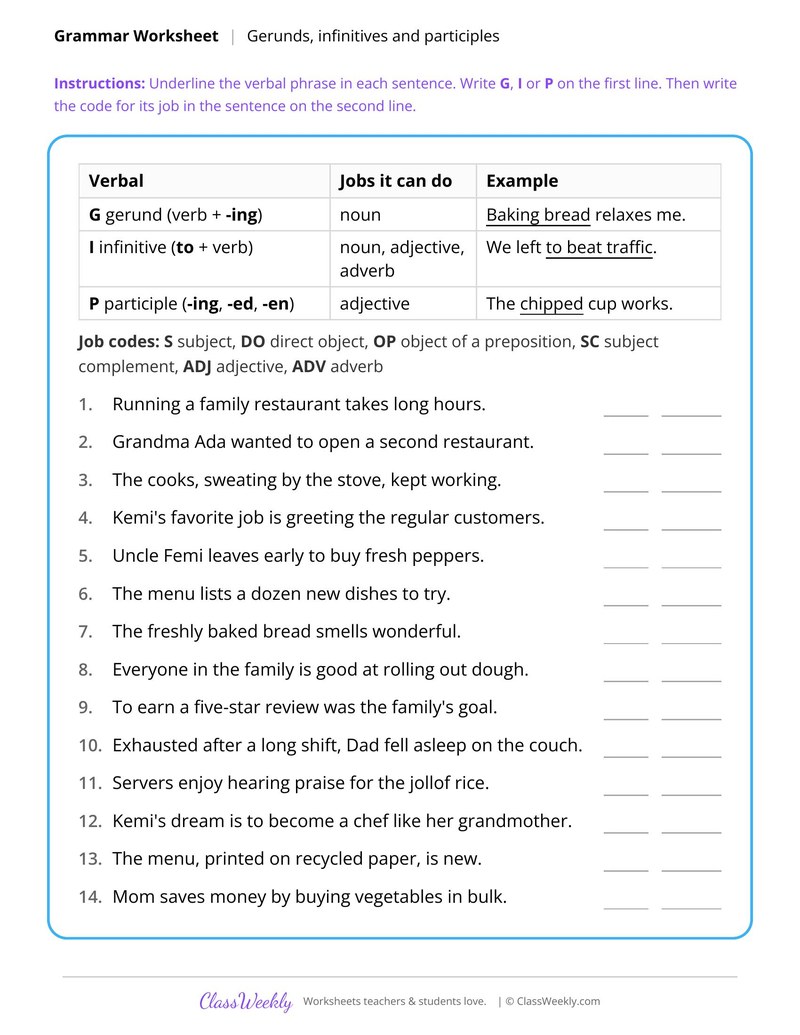
Sort Verbals by Type and Function
Curriculum Links
Common Core State Standards
Language · 8th Grade
Standard: Demonstrate command of the conventions of standard English grammar and usage when writing or speaking.
View all L.8.1 worksheets →Find this in the curriculum
Browse the grade, subject, and topic this belongs to.
FAQ
How do I use this adjectives and adverbs worksheet?
⌄
Use the good or well sheet as a quick usage check. Keep the connotation list handy during narrative writing so students choose trait words on purpose.
What does this worksheet teach?
⌄
Choose good or well, real or really and bad or badly in sentences about a music rehearsal. Use an adjective (good, bad, real, sure) to describe a noun, often after a linking verb such as is, seem or sound. Use an adverb (well, badly, really, surely) to describe an action verb, an adjective or another adverb. The directions on the page read: Circle the word in parentheses that correctly completes each sentence. An answer key is included.
Can I use this adjectives and adverbs worksheet for homeschool or classroom?
⌄
Yes, both. We made it for 8th grade parts of speech, and it works the same at home or at school. At home, a student can work through it alone and then go over it with you, which shows quickly what is solid and what needs another look. In class it works as independent practice, homework or a warm-up, and you can print one copy or a full set.
When do you use good and when do you use well?
⌄
Use good, an adjective, to describe a noun, often after a linking verb such as sounded. Use well, an adverb, to describe an action, as in Tariq played the scales well.
Is it feel bad or feel badly?
⌄
Feel is a linking verb here, so it takes the adjective: Dev felt bad about missing the rehearsal. Badly describes how an action is done.
What is connotation in character description?
⌄
Connotation is the feeling a word carries beyond its meaning. Frugal and stingy name the same trait, but frugal makes readers admire it and stingy makes them judge it.
Ratings & Reviews
No reviews yet. Be the first to share what you think.
Reviews are for ClassWeekly members.
Make a Request
Spotted something to fix, or want a worksheet we don't have yet? Tell us and we'll make it.
Worksheet Details
| Grade | 8th Grade |
| Subject | Grammar & Writing |
| Topic | Parts of Speech |
| Standard | L.8.1 |
| Pages | 1 page |
| Difficulty | Medium |
What is ClassWeekly?
ClassWeekly offers free worksheets and printable learning resources for kids, from preschool up. All worksheets are aligned to Common Core, NGSS, and C3 Framework standards and designed by educators. Become a member to access the full library and download unlimited PDFs.
Interjections in a Persuasive Speech
Turn Interjections Into Action and Thought
Old Interjections and Their Modern Equals
Character Trait Adjectives Paired by Connotation
Infinitives That Act as Adjectives or Adverbs
Gerund Phrases as Appositives and Complements
Present and Past Participial Phrases
Sort Verbals by Type and Function