Possessives of Plural and Compound Nouns
Written by Adi Ackerman, Head Teacher
"Possessives of Plural and Compound Nouns" is written for 8th Grade (Ages 13-14), and it covers Common Core L.8.2.C. A 7th grader who is already steady on parts of speech can use it too, and an older student can use it as a short review.
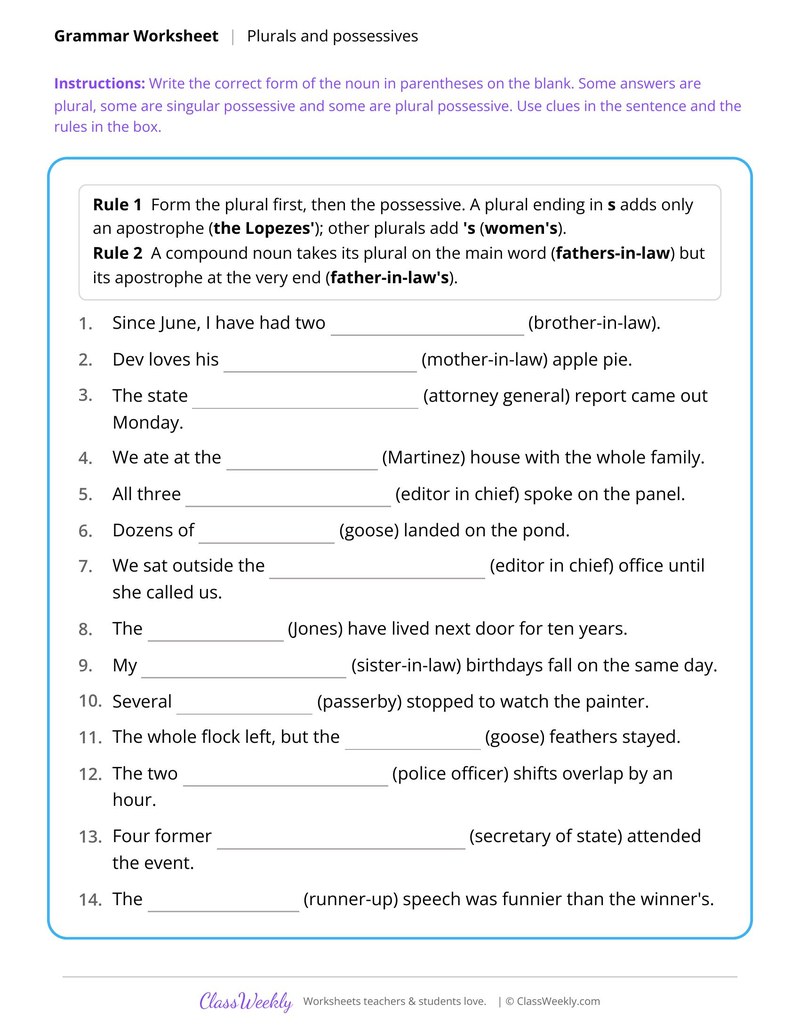
8th grade grammar worksheet: write plurals and possessives of compound nouns like mother-in-law and attorney general. Answer key included. Part of our plurals and possessives parts of speech collection. Aligned to Common Core standards.
How do I use this worksheet?
Review the rule box together, then let students work alone. Use the joint and separate possession sheet as a quick follow-up the next day.
What students will practice
- Students will write plurals, singular possessives and plural possessives of nouns.
- Students will form the plural first and then the possessive, as in the Lopezes' house.
- Students will place the plural on the main word and the apostrophe at the end of a compound noun.
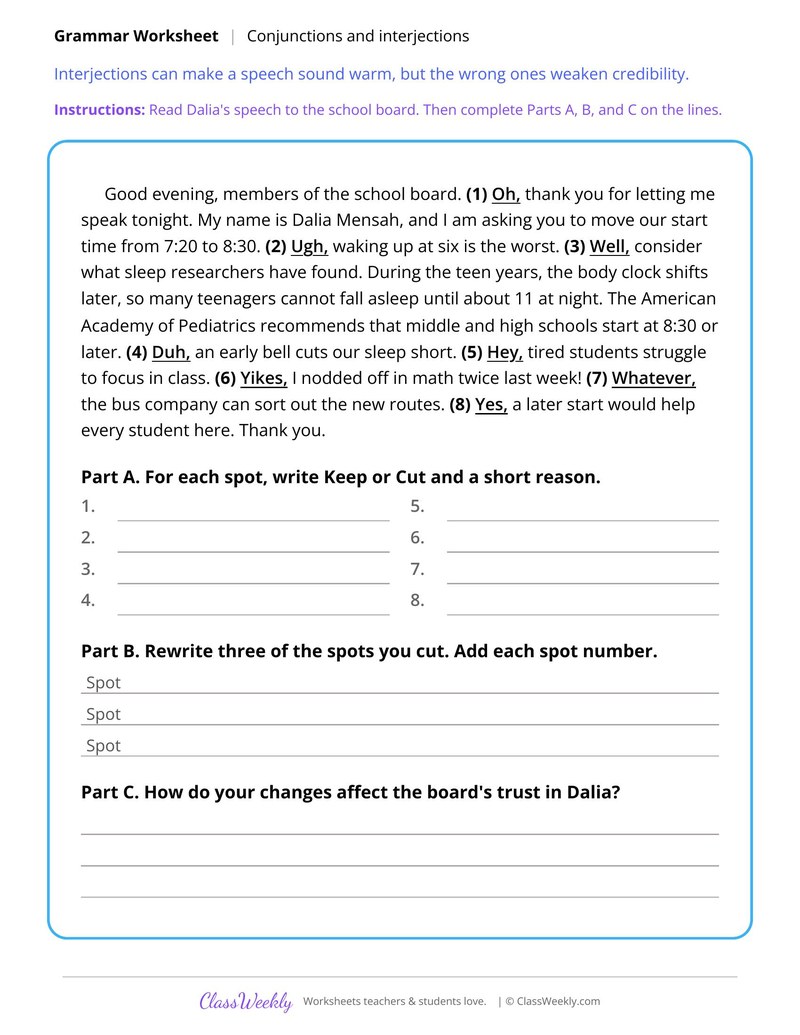
Interjections in a Persuasive Speech
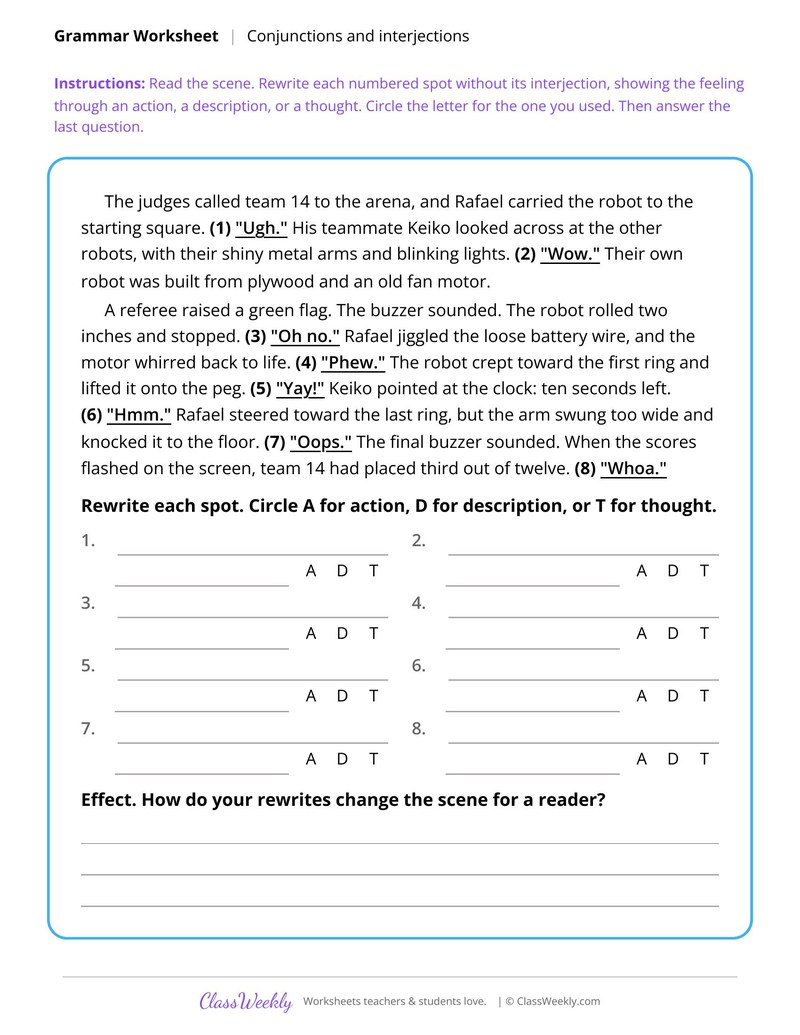
Turn Interjections Into Action and Thought
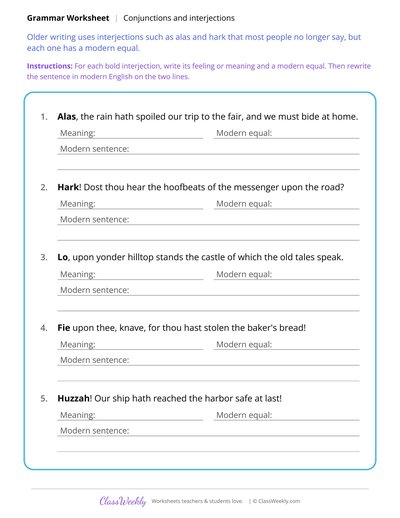
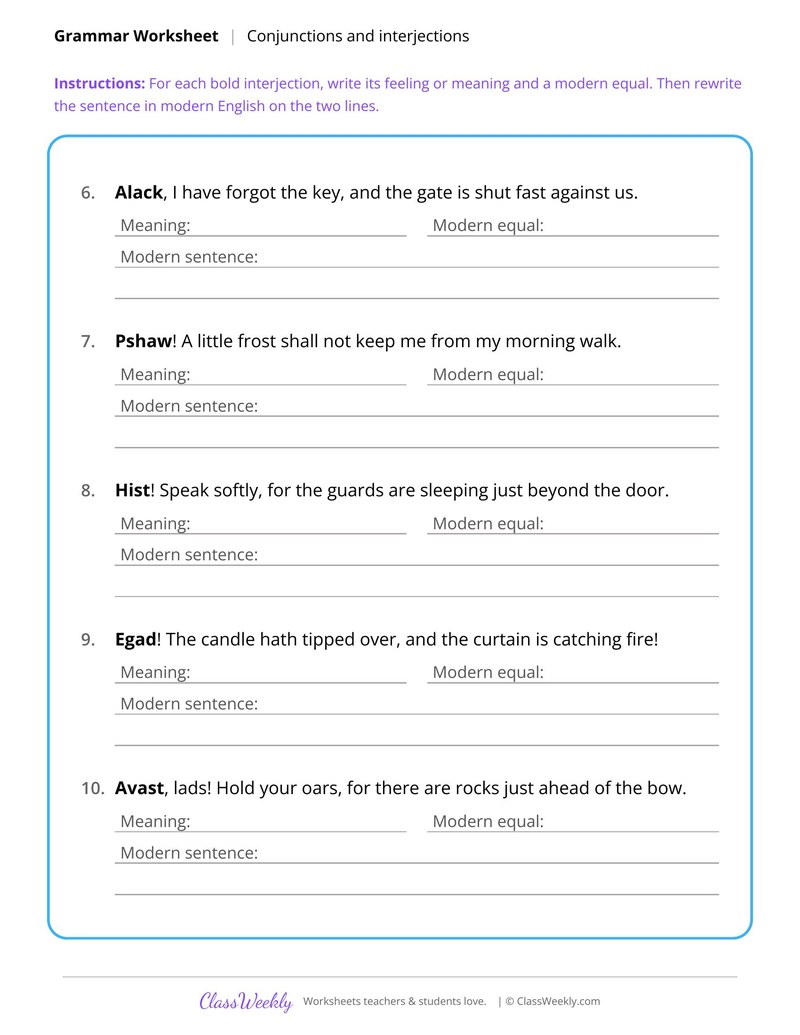
Old Interjections and Their Modern Equals
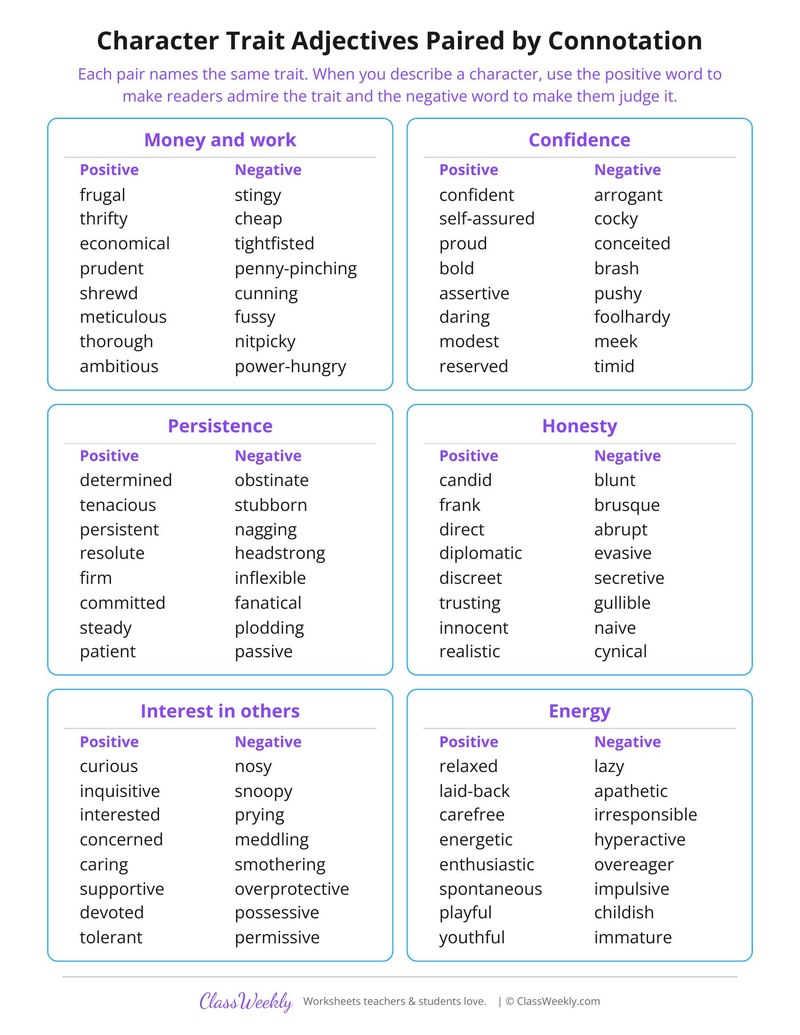
Character Trait Adjectives Paired by Connotation
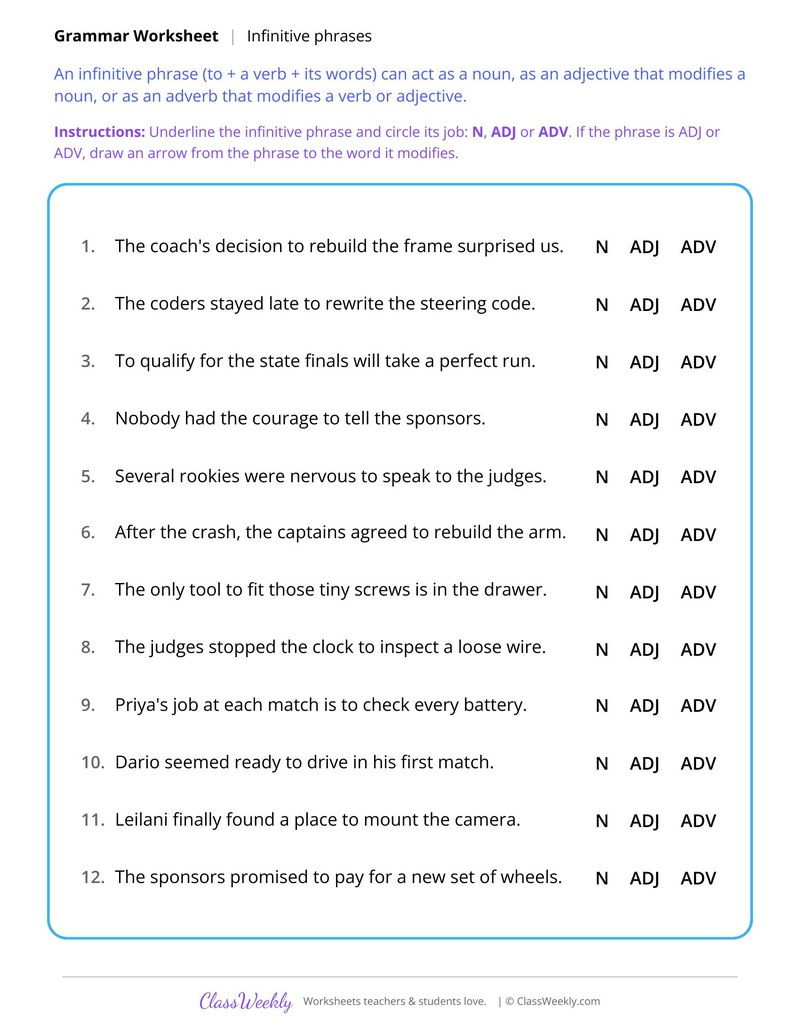
Infinitives That Act as Adjectives or Adverbs
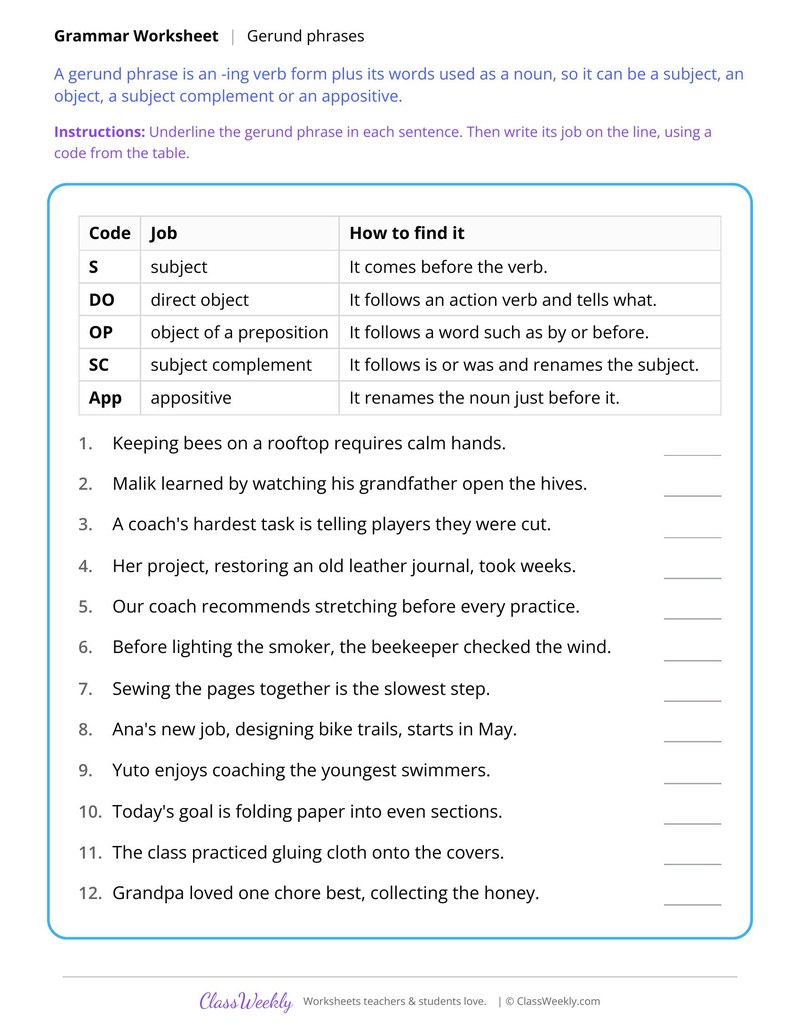
Gerund Phrases as Appositives and Complements
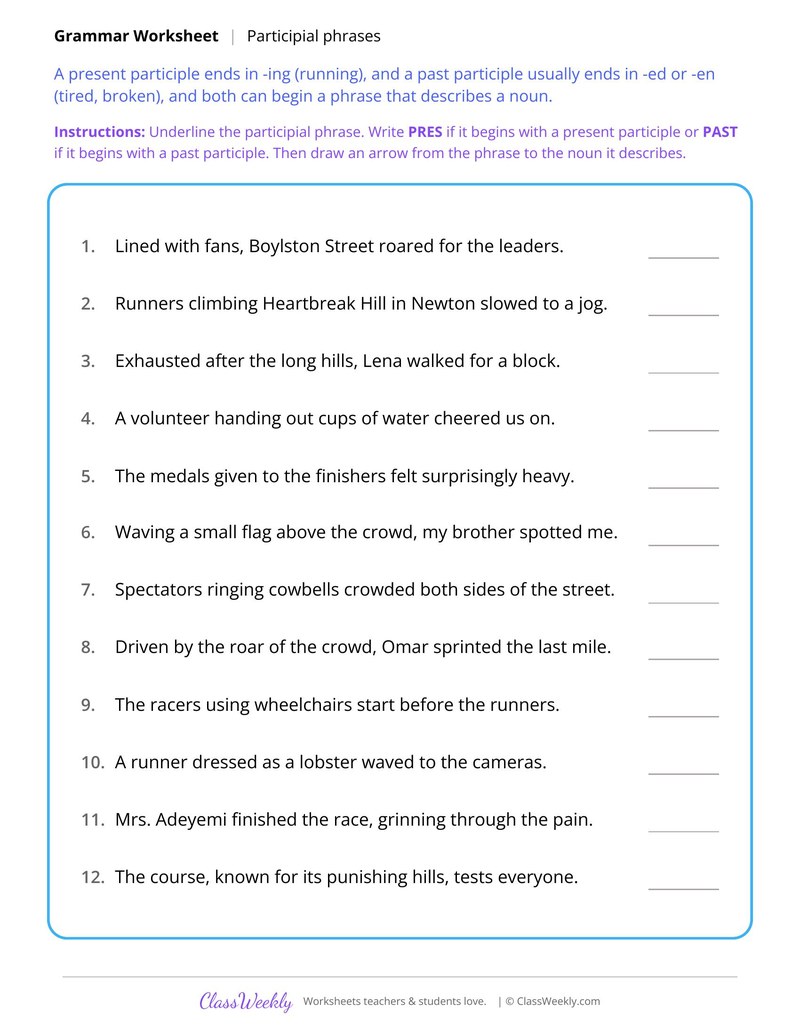
Present and Past Participial Phrases
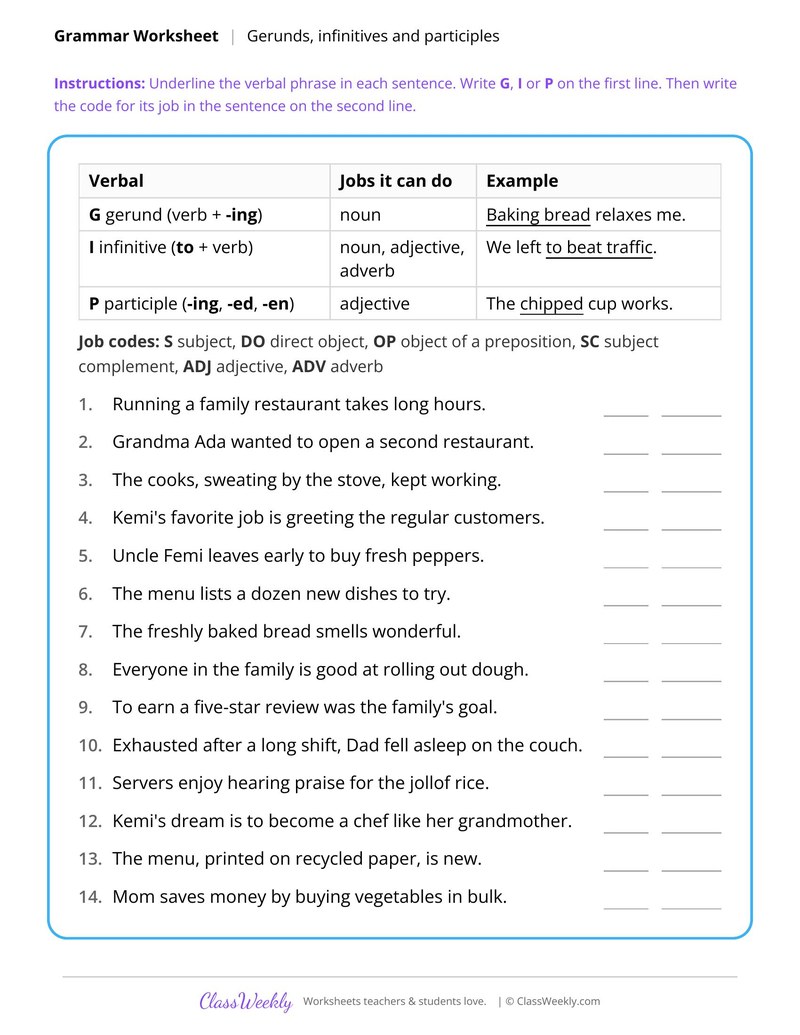
Sort Verbals by Type and Function
Curriculum Links
Common Core State Standards
Language · 8th Grade
Standard: Spell correctly.
View all L.8.2.C worksheets →Find this in the curriculum
Browse the grade, subject, and topic this belongs to.
FAQ
How do I use this plurals and possessives worksheet?
⌄
Review the rule box together, then let students work alone. Use the joint and separate possession sheet as a quick follow-up the next day.
What does this worksheet teach?
⌄
Write plurals and possessives of compound nouns like mother-in-law and attorney general. The directions on the page read: Write the correct form of the noun in parentheses on the blank. Some answers are plural, some are singular possessive and some are plural possessive. Use clues in the sentence and the rules in the box. An answer key is included.
Can I use this plurals and possessives worksheet for homeschool or classroom?
⌄
Yes, both. We made it for 8th grade parts of speech, and it works the same at home or at school. At home, a student can work through it alone and then go over it with you, which shows quickly what is solid and what needs another look. In class it works as independent practice, homework or a warm-up, and you can print one copy or a full set.
How do you make a compound noun possessive?
⌄
Put the apostrophe and s at the very end of the compound, as in father-in-law's. The plural goes on the main word, as in fathers-in-law.
What is the difference between joint and separate possession?
⌄
For shared ownership, only the last name takes the apostrophe and s, as in Lewis and Clark's journey. For separate ownership, both names take it, as in Lewis's and Clark's journals.
How do you write the possessive of a plural that ends in s?
⌄
Form the plural first, then add only an apostrophe, as in the Lopezes'. A plural that does not end in s adds an apostrophe and s, as in women's.
Ratings & Reviews
No reviews yet. Be the first to share what you think.
Reviews are for ClassWeekly members.
Make a Request
Spotted something to fix, or want a worksheet we don't have yet? Tell us and we'll make it.
Worksheet Details
| Grade | 8th Grade |
| Subject | Grammar & Writing |
| Topic | Parts of Speech |
| Standard | L.8.2.C |
| Pages | 1 page |
| Difficulty | Medium |
What is ClassWeekly?
ClassWeekly offers free worksheets and printable learning resources for kids, from preschool up. All worksheets are aligned to Common Core, NGSS, and C3 Framework standards and designed by educators. Become a member to access the full library and download unlimited PDFs.
Interjections in a Persuasive Speech
Turn Interjections Into Action and Thought
Old Interjections and Their Modern Equals
Character Trait Adjectives Paired by Connotation
Infinitives That Act as Adjectives or Adverbs
Gerund Phrases as Appositives and Complements
Present and Past Participial Phrases
Sort Verbals by Type and Function