List Sample Spaces With Tables and Lists
Written by Adi Ackerman, Head Teacher
"List Sample Spaces With Tables and Lists" is written for 7th Grade (Ages 12-13), and it covers Common Core 7.SP.C.8.B. A 6th grader who is already steady on probability can use it too, and an older student can use it as a short review.
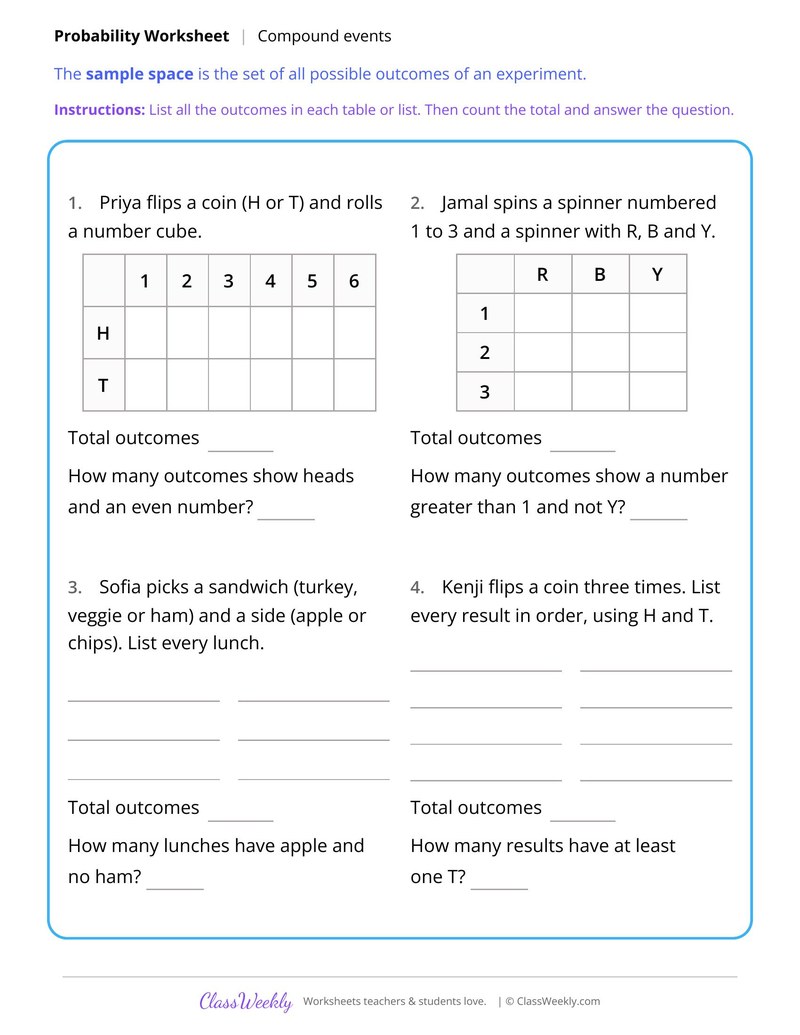
7th grade math worksheet: list all outcomes in tables for a coin and number cube, two spinners and a sandwich and side lunch menu. Answer key included. Part of our compound events probability collection. Aligned to Common Core standards.
How do I use this worksheet?
Do the sample space sheet first, then tree diagrams, then the simulation sheets. The carnival game suits a project day.
What students will practice
- Students will list every outcome of a compound event in a table or list.
- Students will count the total number of outcomes.
- Students will count the outcomes that match a given condition.
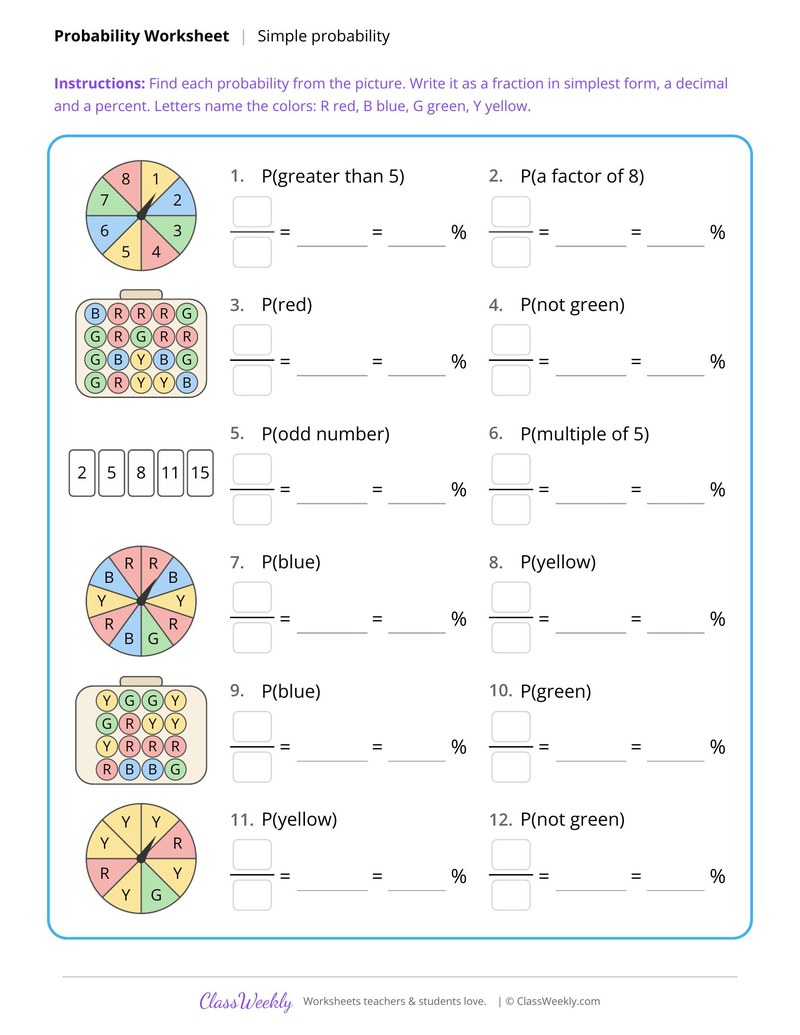
Probability of Simple Events as Fractions and Percents
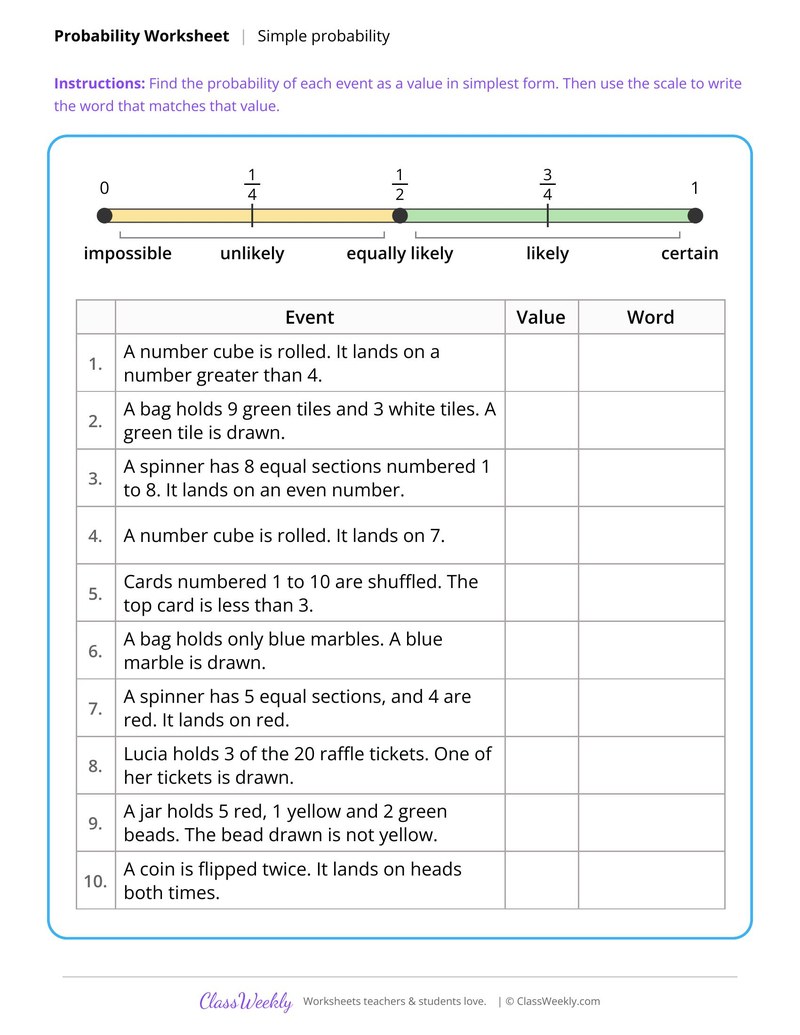
Likelihood Scale for Probabilities
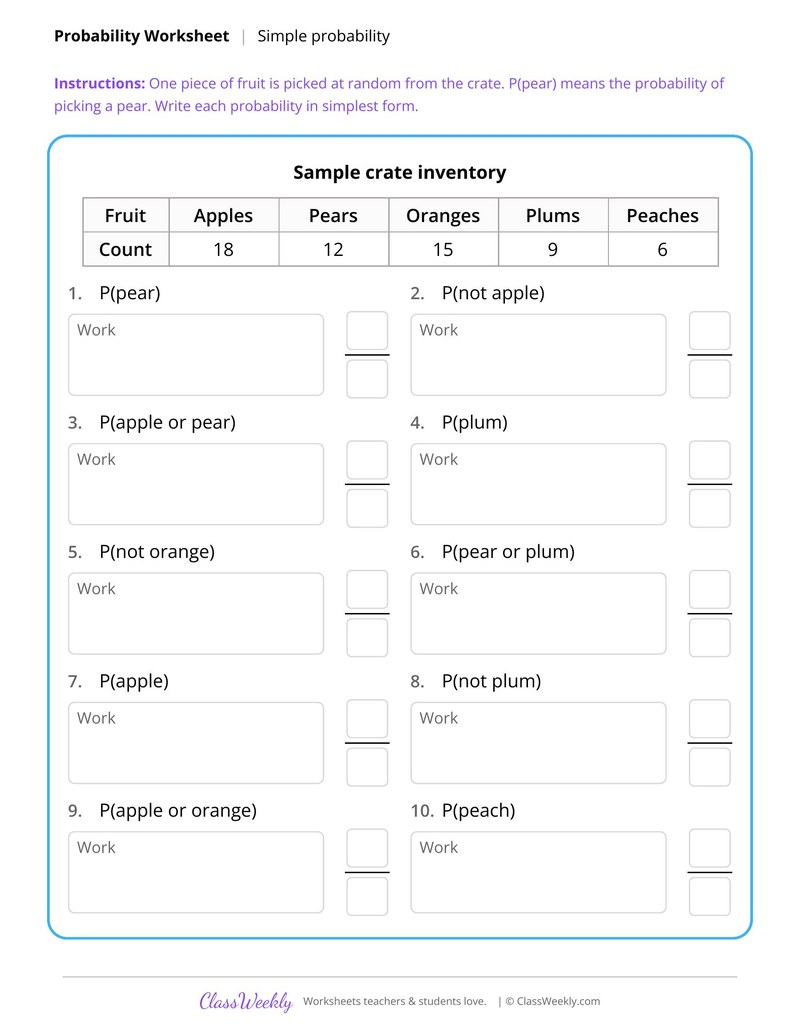
Probability From Mixed Item Counts
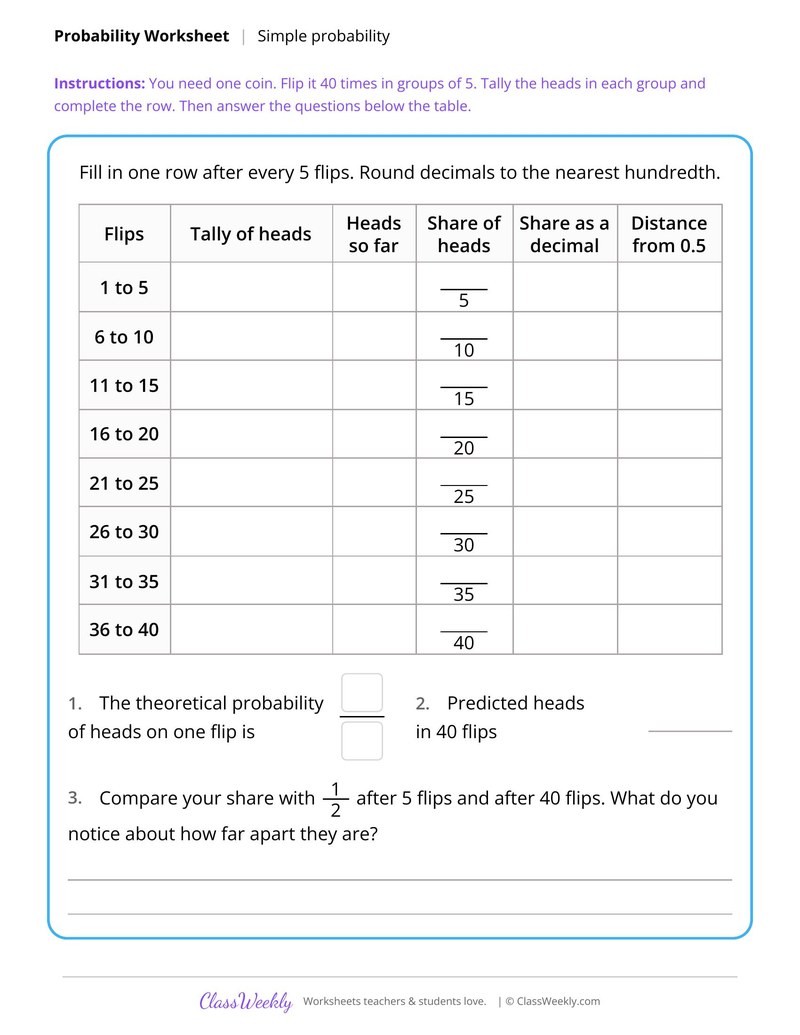
Coin Flip Probability and Long-Run Results
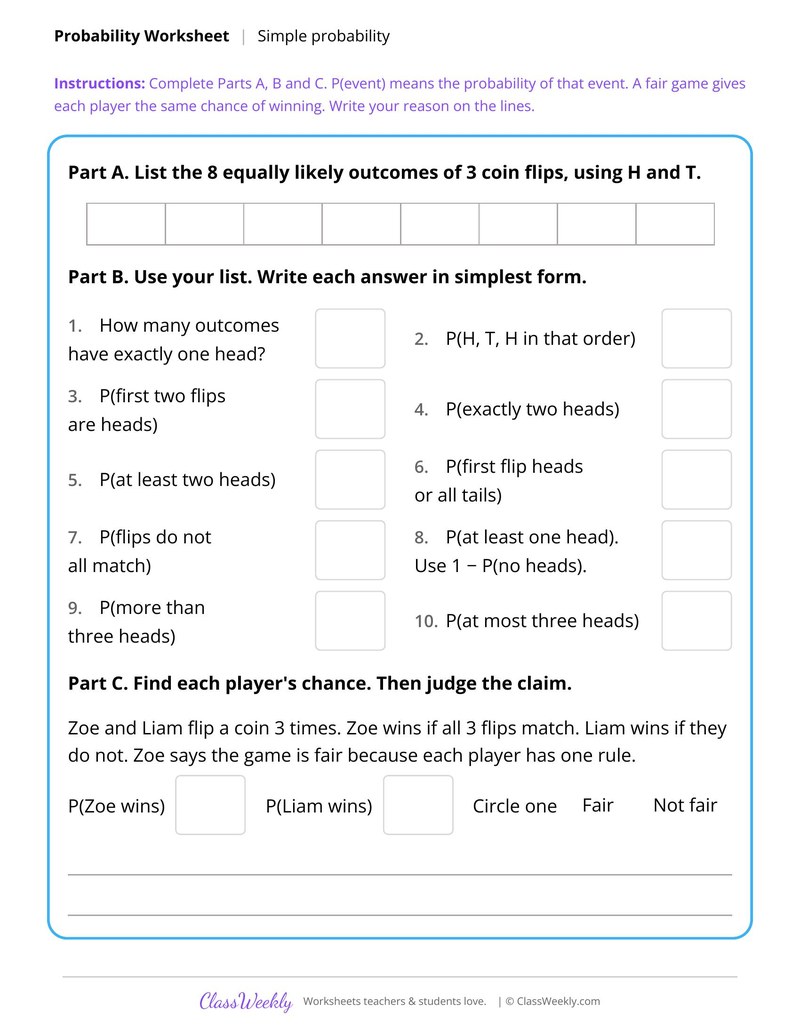
Coin Sequences, Complement and Fairness
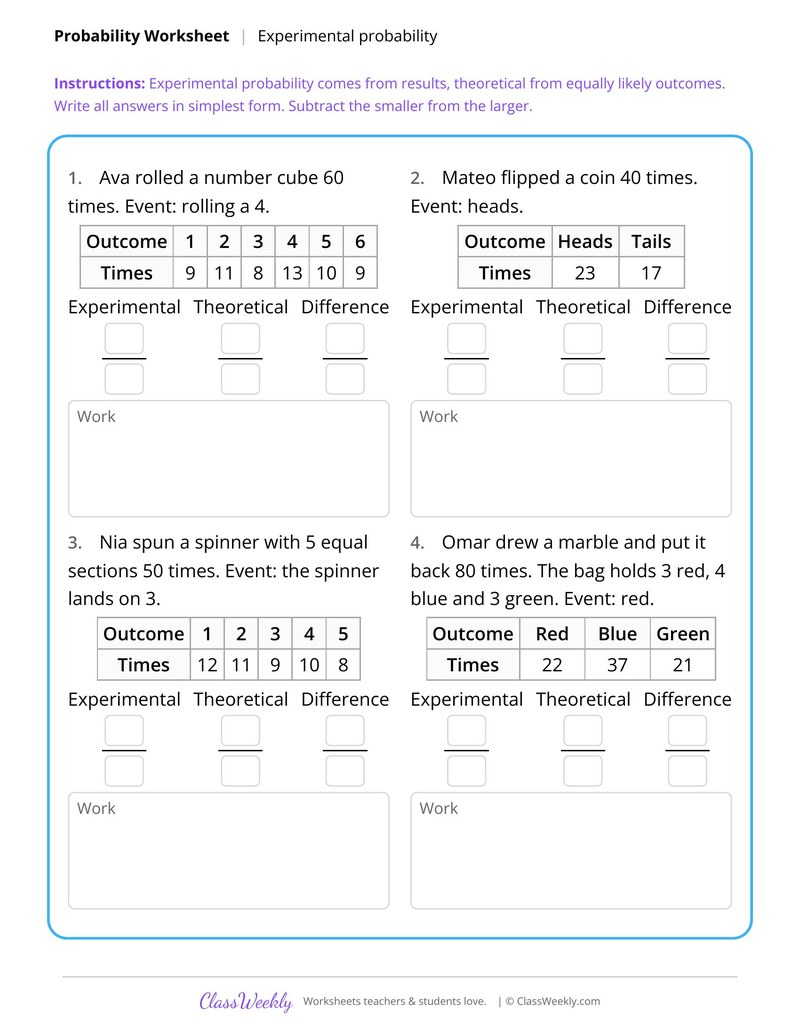
Experimental Probability From Trial Tables
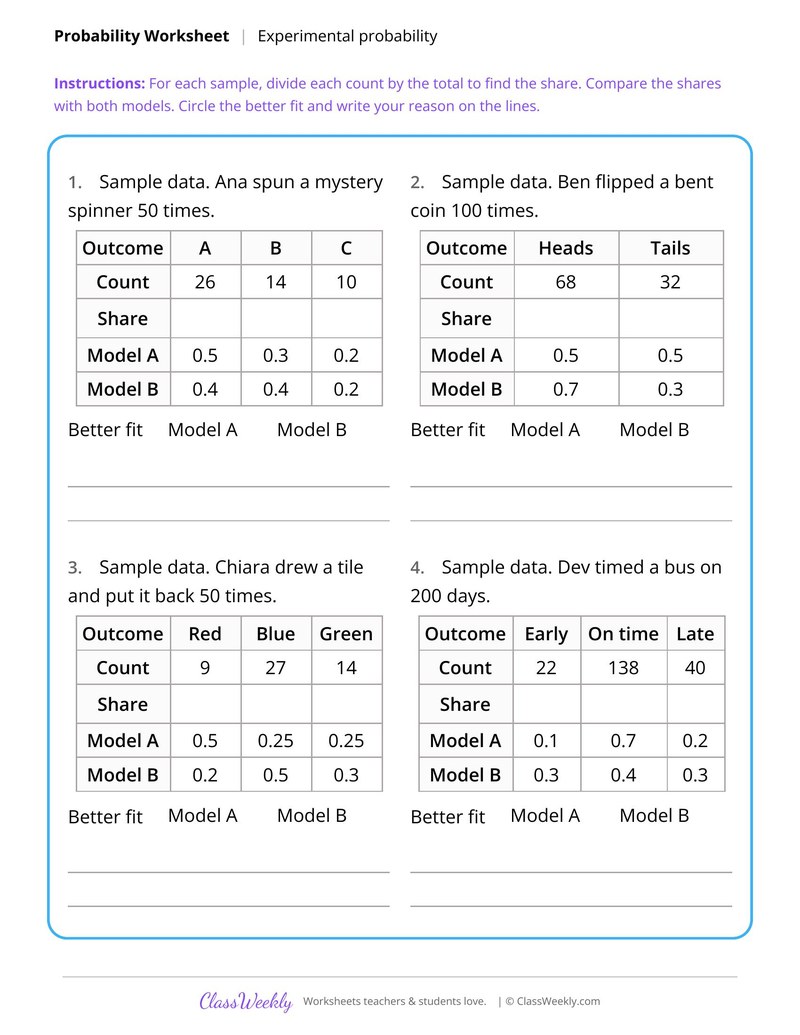
Choose the Model That Fits the Data
Predict Outcomes From Experimental Results
Curriculum Links
Common Core State Standards
Statistics and Probability · 7th Grade
Standard: Represent sample spaces for compound events using methods such as organized lists, tables and tree diagrams. For an event described in everyday language (e.g., "rolling double sixes"), identify the outcomes in the sample space which compose the event.
View all 7.SP.C.8.B worksheets →Find this in the curriculum
Browse the grade, subject, and topic this belongs to.
FAQ
How do I use this compound events worksheet?
⌄
Do the sample space sheet first, then tree diagrams, then the simulation sheets. The carnival game suits a project day.
What does this worksheet teach?
⌄
List all outcomes in tables for a coin and number cube, two spinners and a sandwich and side lunch menu. The sample space is the set of all possible outcomes of an experiment. The directions on the page read: List all the outcomes in each table or list. Then count the total and answer the question. An answer key is included.
Can I use this compound events worksheet for homeschool or classroom?
⌄
Yes, both. We made it for 7th grade probability, and it works the same at home or at school. At home, a student can work through it alone and then go over it with you, which shows quickly what is solid and what needs another look. In class it works as independent practice, homework or a warm-up, and you can print one copy or a full set.
What is a compound event?
⌄
A compound event has more than one part, such as a coin flip and a number cube roll. Students list all the outcomes to find its probability.
How does a simulation estimate a probability?
⌄
A simulation uses a coin, number cube or random digits to stand for the events. Students run trials, count the successes and divide. The Simulate Compound Events With a Random Table worksheet gives printed digits.
What do the simulation sheets need?
⌄
The simulation design sheet needs a coin and a number cube. The random table sheet uses printed digits and needs no tools.
Do these worksheets have answer keys?
⌄
Yes. All 6 worksheets in this group have answer keys.
Ratings & Reviews
No reviews yet. Be the first to share what you think.
Reviews are for ClassWeekly members.
Make a Request
Spotted something to fix, or want a worksheet we don't have yet? Tell us and we'll make it.
Worksheet Details
| Grade | 7th Grade |
| Subject | Math |
| Topic | Probability |
| Standard | 7.SP.C.8.B |
| Pages | 1 page |
| Difficulty | Medium |
What is ClassWeekly?
ClassWeekly offers free worksheets and printable learning resources for kids, from preschool up. All worksheets are aligned to Common Core, NGSS, and C3 Framework standards and designed by educators. Become a member to access the full library and download unlimited PDFs.
Probability of Simple Events as Fractions and Percents
Likelihood Scale for Probabilities
Probability From Mixed Item Counts
Coin Flip Probability and Long-Run Results
Coin Sequences, Complement and Fairness
Experimental Probability From Trial Tables
Choose the Model That Fits the Data
Predict Outcomes From Experimental Results