Complete Periods 5 and 6 on a Blank Table
Written by Adi Ackerman, Head Teacher
"Complete Periods 5 and 6 on a Blank Table" is written for 8th Grade (Ages 13-14). A 7th grader who is already steady on matter can use it too, and an older student can use it as a short review.
2 pages in this set
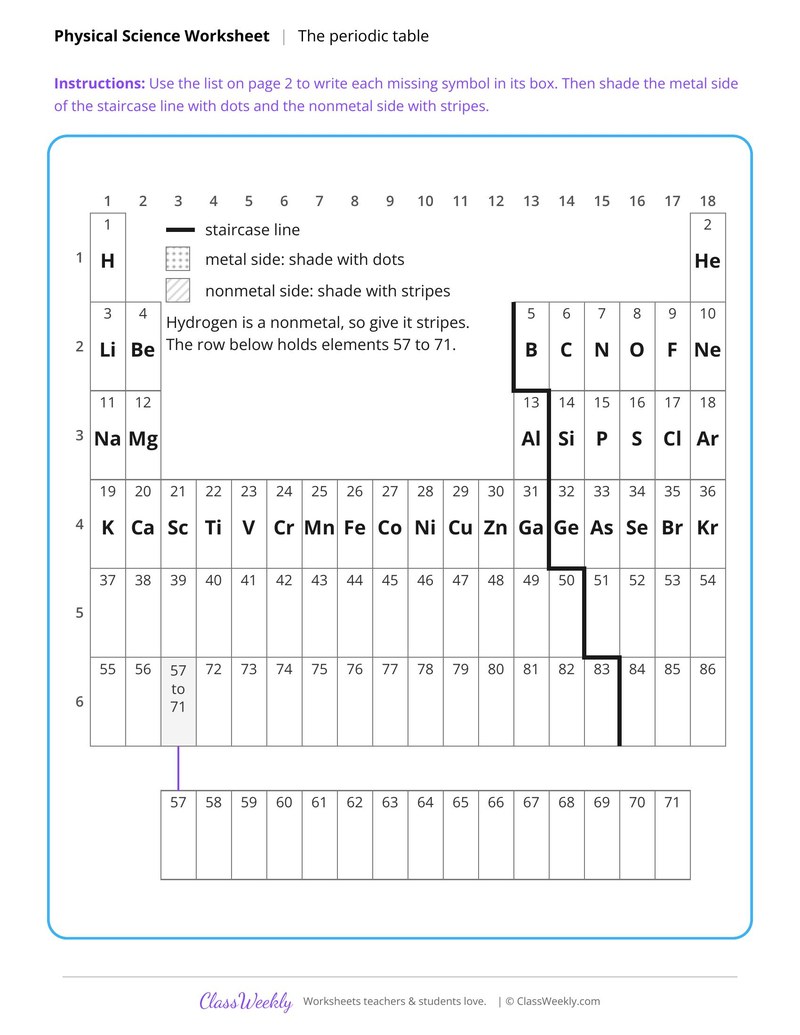
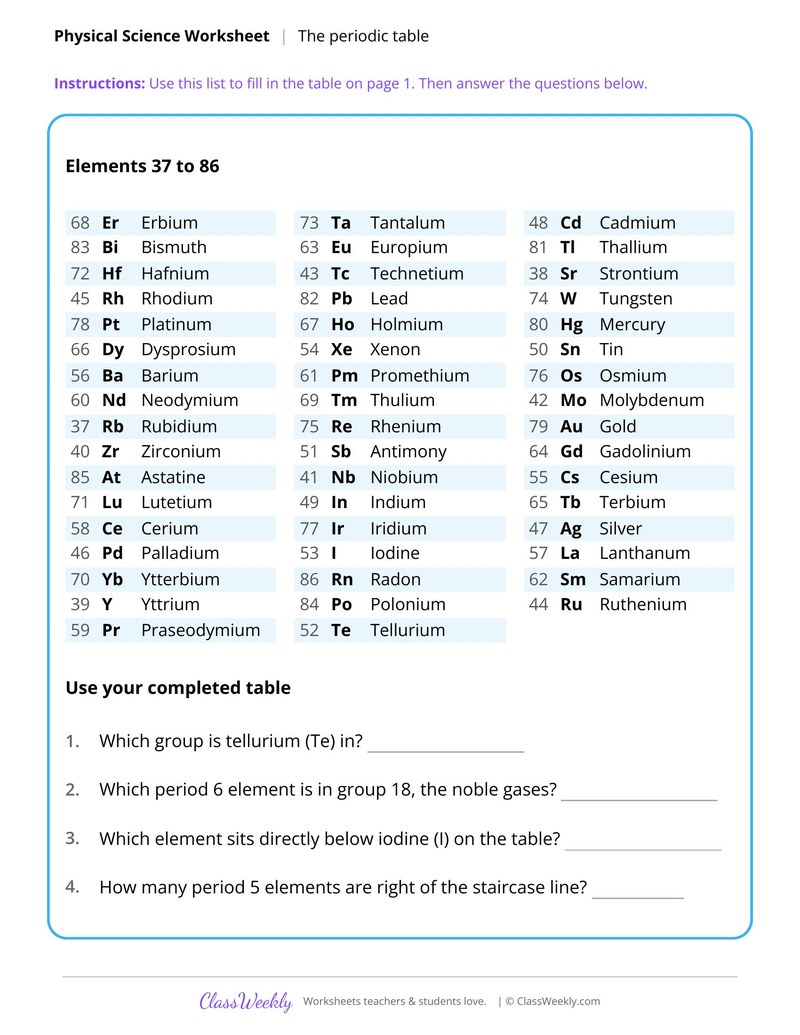
8th grade science worksheet: write the symbols for elements 37 to 86 on a blank table and shade the metals and nonmetals. Answer key included. Part of our periodic table matter collection.
How do I use this worksheet?
Start with the valence electron table so students see the group patterns, then move to the trend graphs. Use the review quiz to close the unit.
What students will practice
- Students will use a list to write the symbols for elements 37 to 86 on a blank table.
- Students will shade the metal and nonmetal sides of the staircase line.
- Students will answer questions about where elements sit in periods 5 and 6.
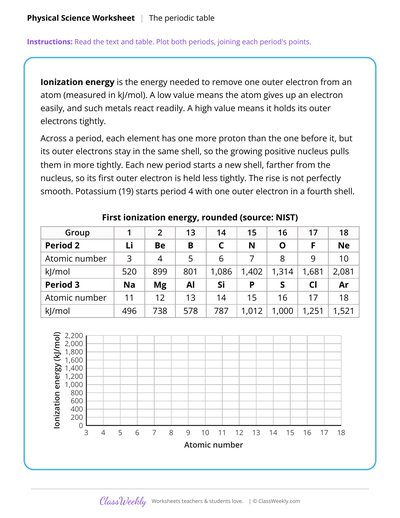
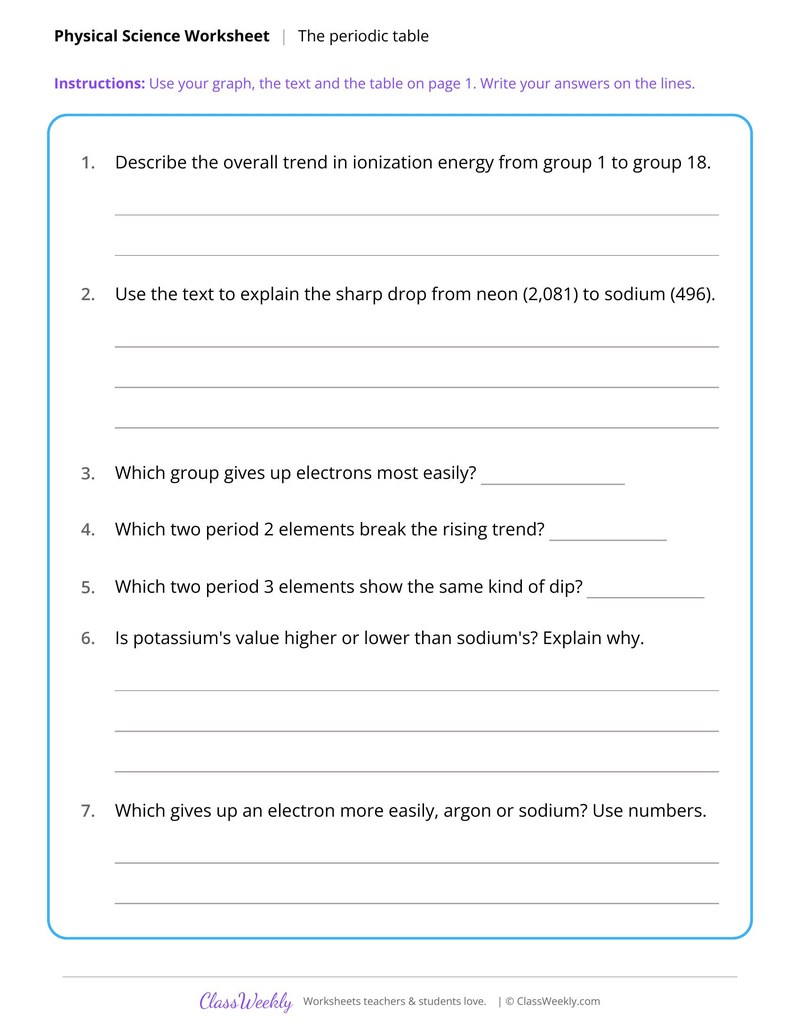
Graph First Ionization Energy Across Periods 2 and 3
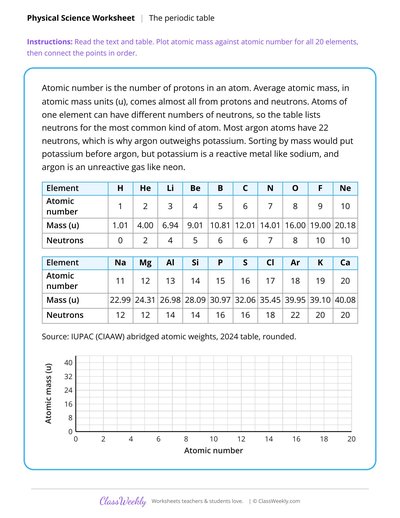
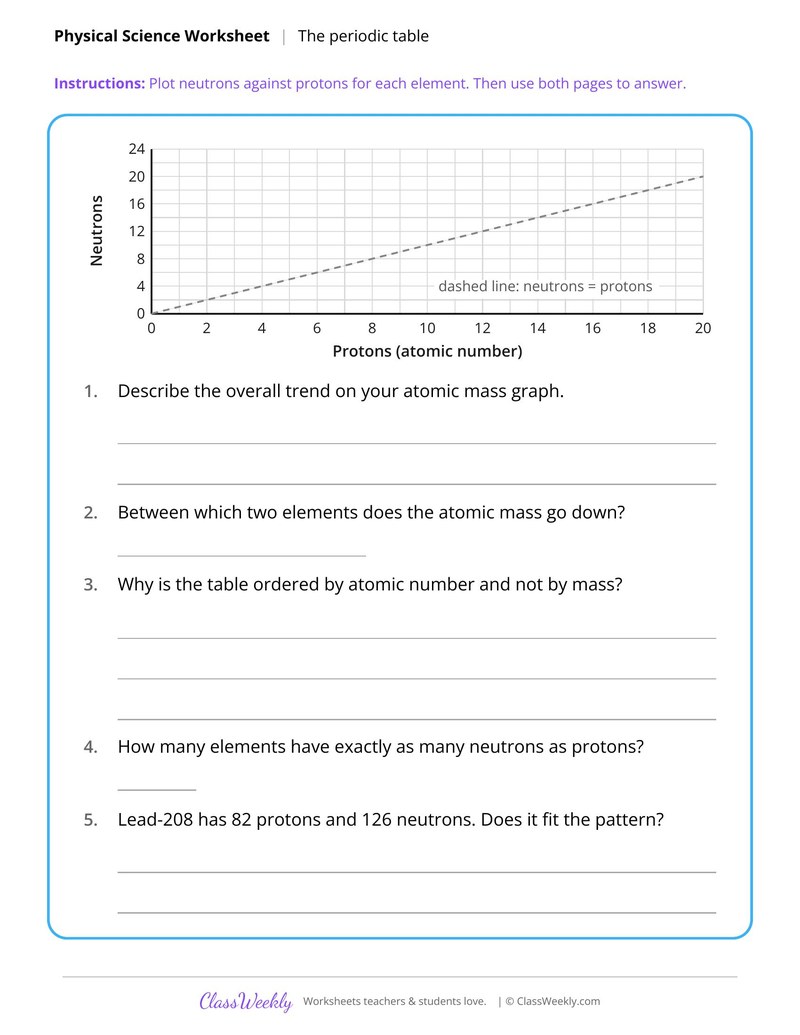
Graph Atomic Mass Against Atomic Number
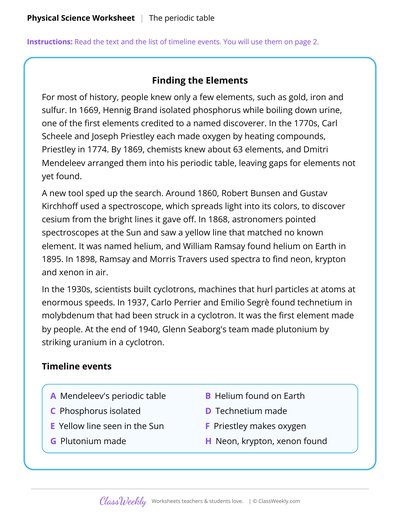
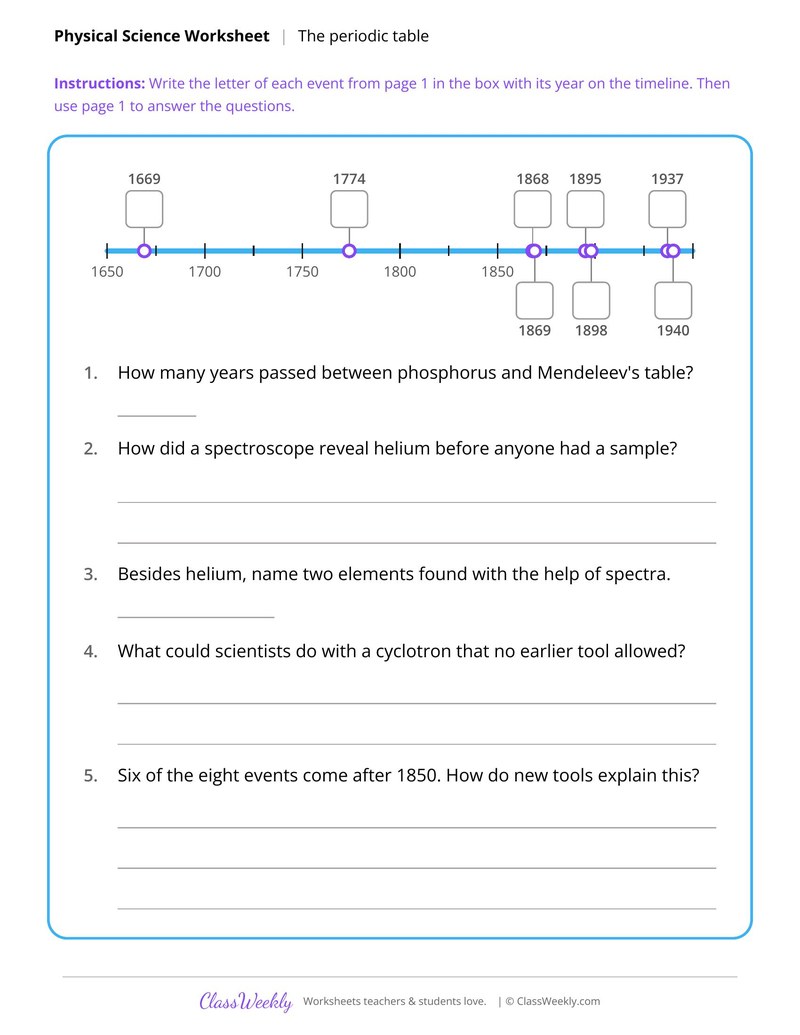
Element Discoveries Through Time
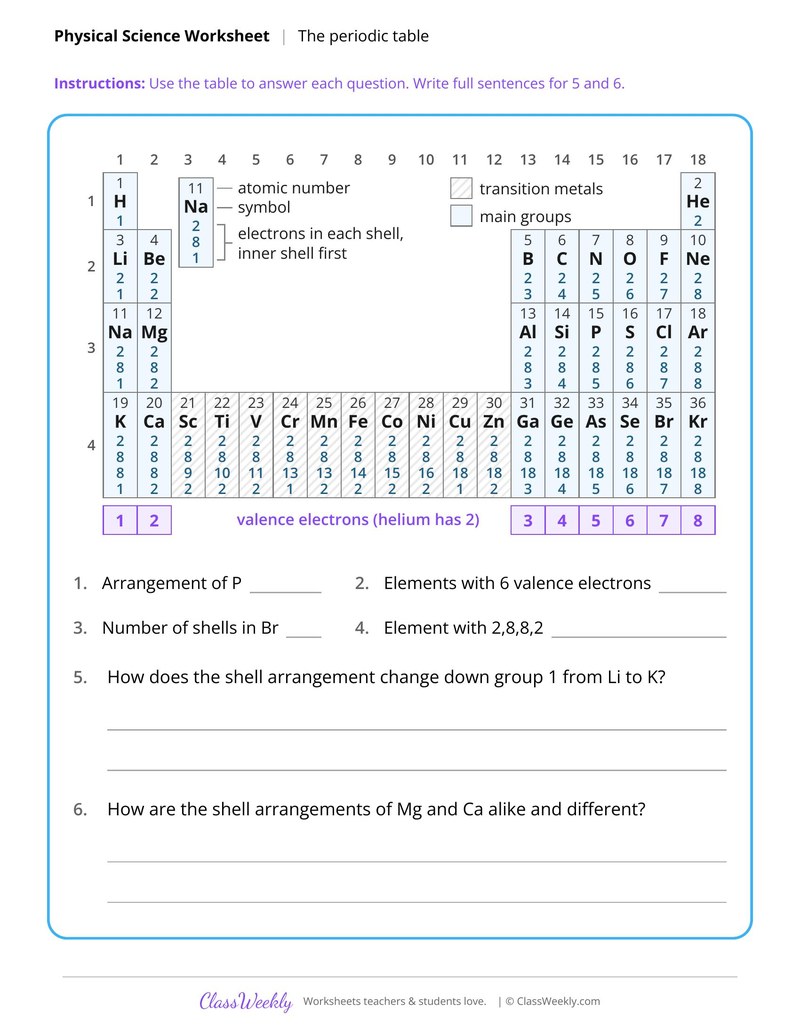
Periodic Table With Valence Electron Counts
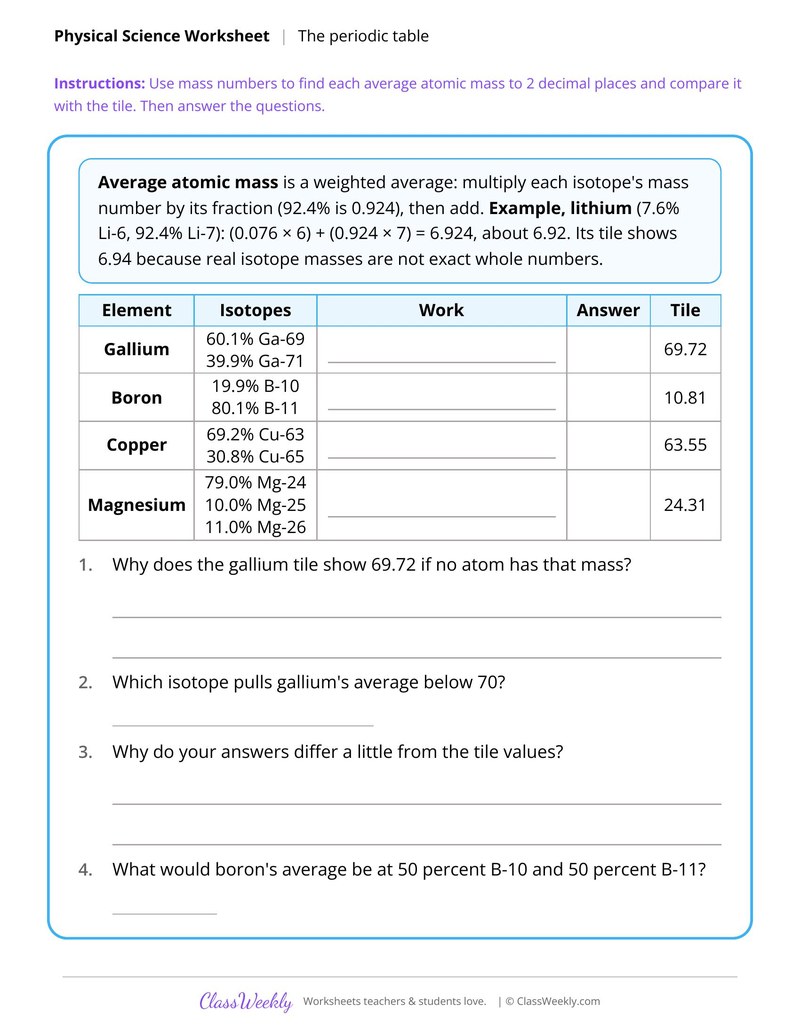
Calculate Average Atomic Mass From Isotopes
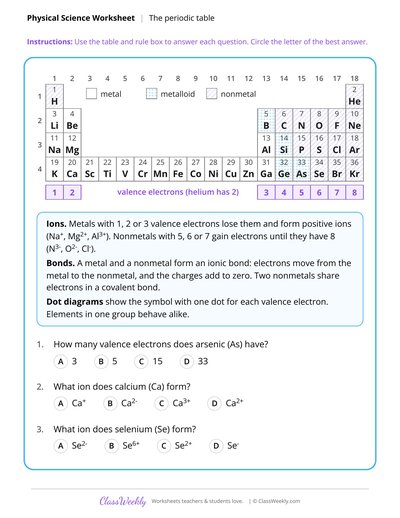
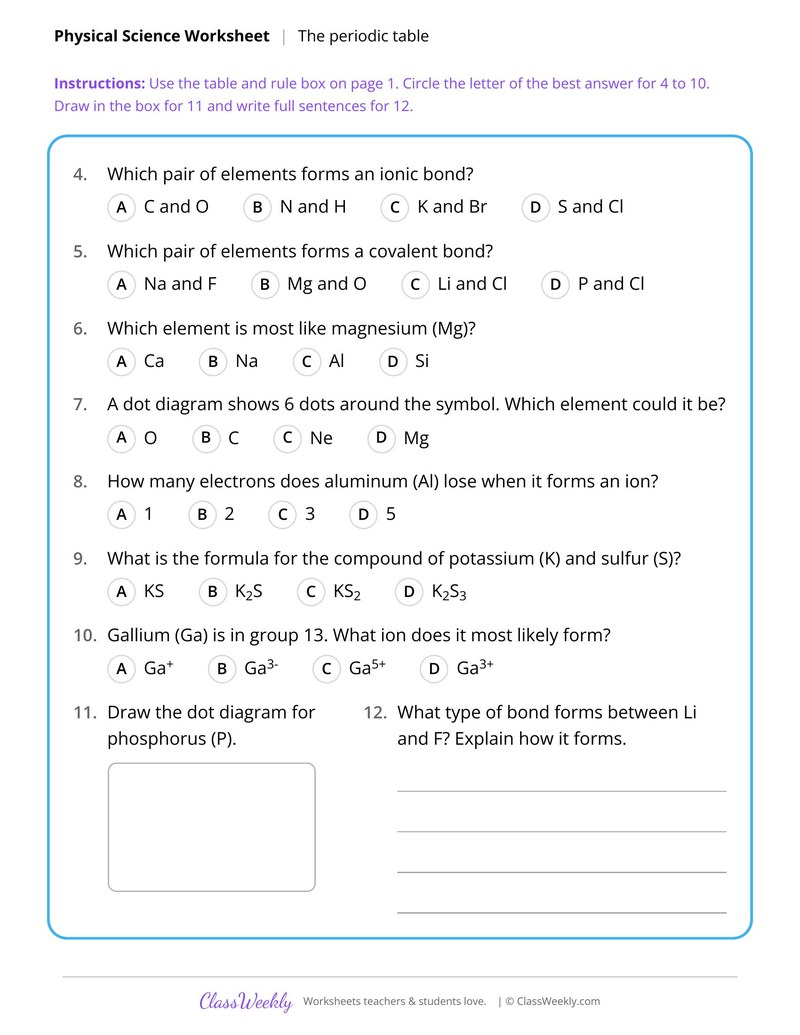
Periodic Table and Bonding Review Quiz
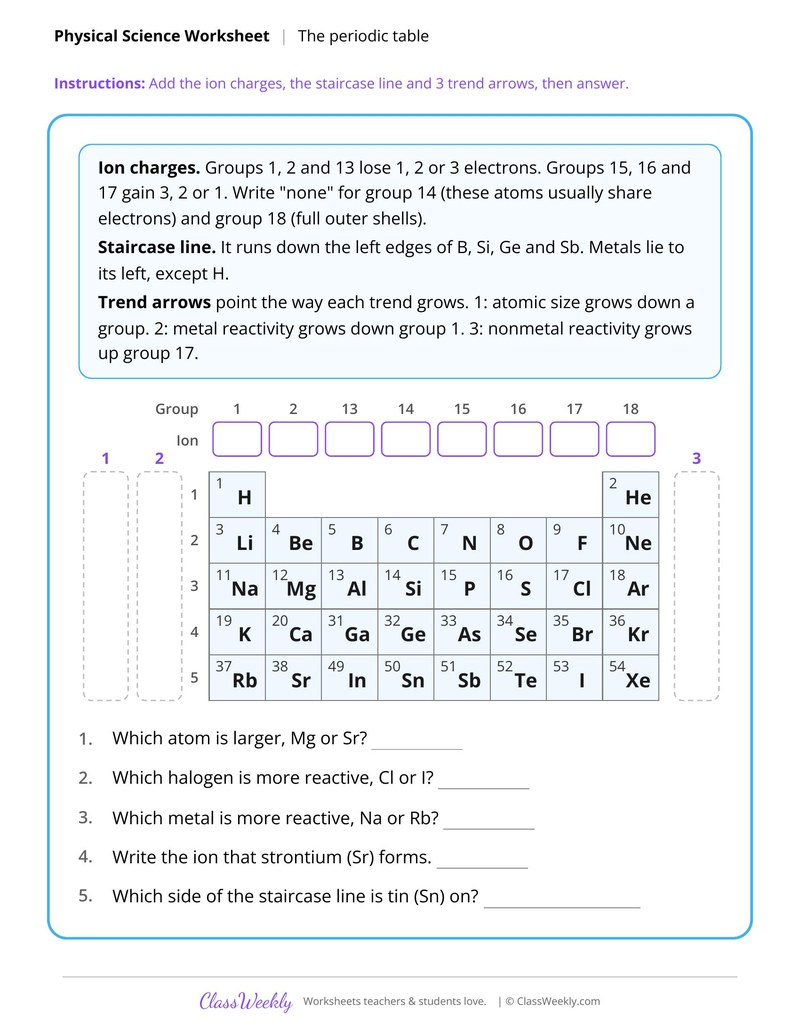
Label Ion Charges and Trends on the Table
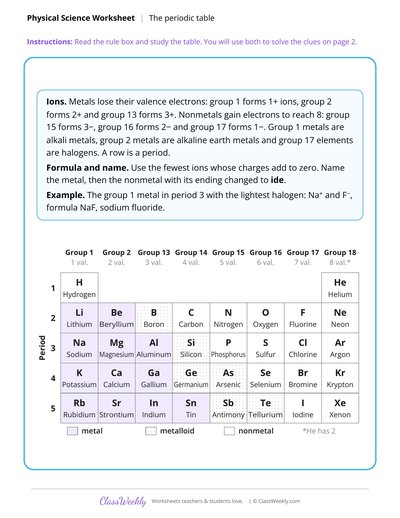
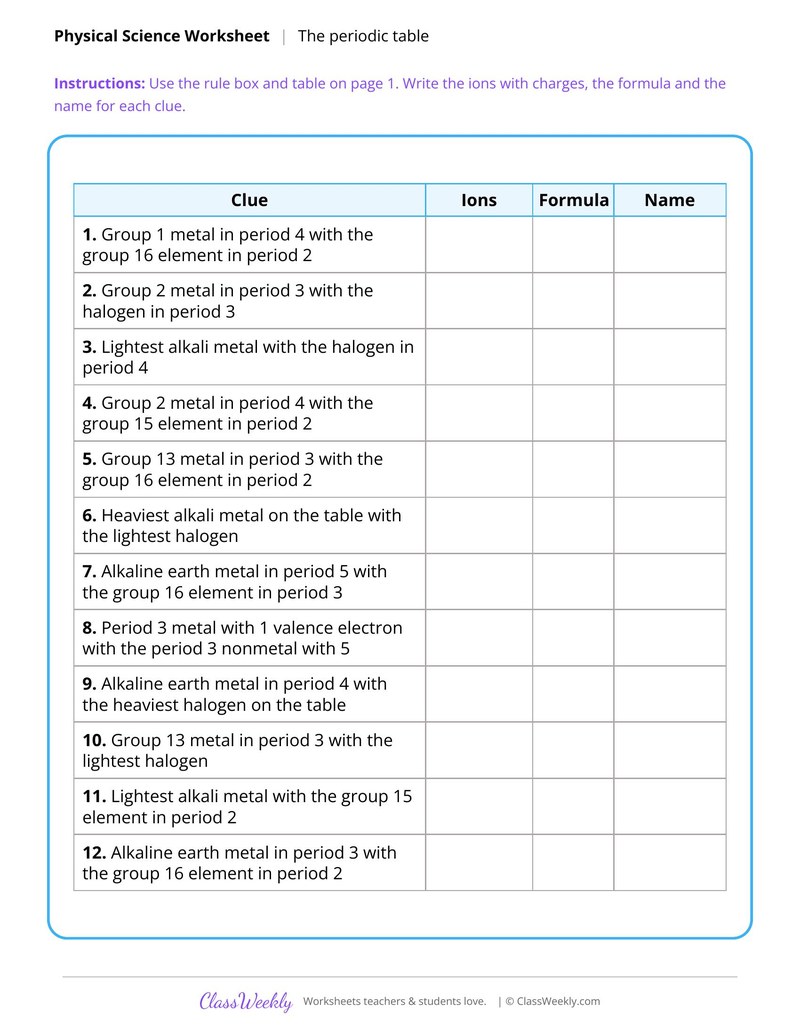
Solve Clues to Name Ionic Compounds
Curriculum Links
Find this in the curriculum
Browse the grade, subject, and topic this belongs to.
FAQ
How do I use this periodic table worksheet?
⌄
Start with the valence electron table so students see the group patterns, then move to the trend graphs. Use the review quiz to close the unit.
What does this worksheet teach?
⌄
Write the symbols for elements 37 to 86 on a blank table and shade the metals and nonmetals. The directions on the page read: Use the list on page 2 to write each missing symbol in its box. Then shade the metal side of the staircase line with dots and the nonmetal side with stripes. An answer key is included.
Can I use this periodic table worksheet for homeschool or classroom?
⌄
Yes, both. We made it for 8th grade matter, and it works the same at home or at school. At home, a student can work through it alone and then go over it with you, which shows quickly what is solid and what needs another look. In class it works as independent practice, homework or a warm-up, and you can print one copy or a full set.
Why is the periodic table ordered by atomic number?
⌄
Ordering by mass would put potassium before argon, but potassium is a reactive metal like sodium and argon is an unreactive gas like neon. Atomic number keeps similar elements in the same group. Graph Atomic Mass Against Atomic Number explores this.
How do you know what charge an ion will have?
⌄
Groups 1, 2 and 13 lose 1, 2 or 3 electrons and form positive ions. Groups 15, 16 and 17 gain 3, 2 or 1 electrons and form negative ions. Label Ion Charges and Trends on the Table has students write these on a table.
How do you name an ionic compound?
⌄
Name the metal first, then the nonmetal with its ending changed to ide. Sodium and fluorine make sodium fluoride, NaF. Solve Clues to Name Ionic Compounds gives clues by group and period.
Ratings & Reviews
No reviews yet. Be the first to share what you think.
Reviews are for ClassWeekly members.
Make a Request
Spotted something to fix, or want a worksheet we don't have yet? Tell us and we'll make it.
What is ClassWeekly?
ClassWeekly offers free worksheets and printable learning resources for kids, from preschool up. All worksheets are aligned to Common Core, NGSS, and C3 Framework standards and designed by educators. Become a member to access the full library and download unlimited PDFs.
Graph First Ionization Energy Across Periods 2 and 3
Graph Atomic Mass Against Atomic Number
Element Discoveries Through Time
Periodic Table With Valence Electron Counts
Calculate Average Atomic Mass From Isotopes
Periodic Table and Bonding Review Quiz
Label Ion Charges and Trends on the Table
Solve Clues to Name Ionic Compounds