Moon Phases and the Moon's Orbit
Written by Adi Ackerman, Head Teacher
"Moon Phases and the Moon's Orbit" is written for 6th Grade (Ages 11-12), and it covers NGSS MS-ESS1-1. If your student is a year younger but already steady on Earth and space, the page still works. You may just need to read the instructions out loud. And if they are older and moon phases and eclipses never quite stuck, this is a short review rather than busywork.
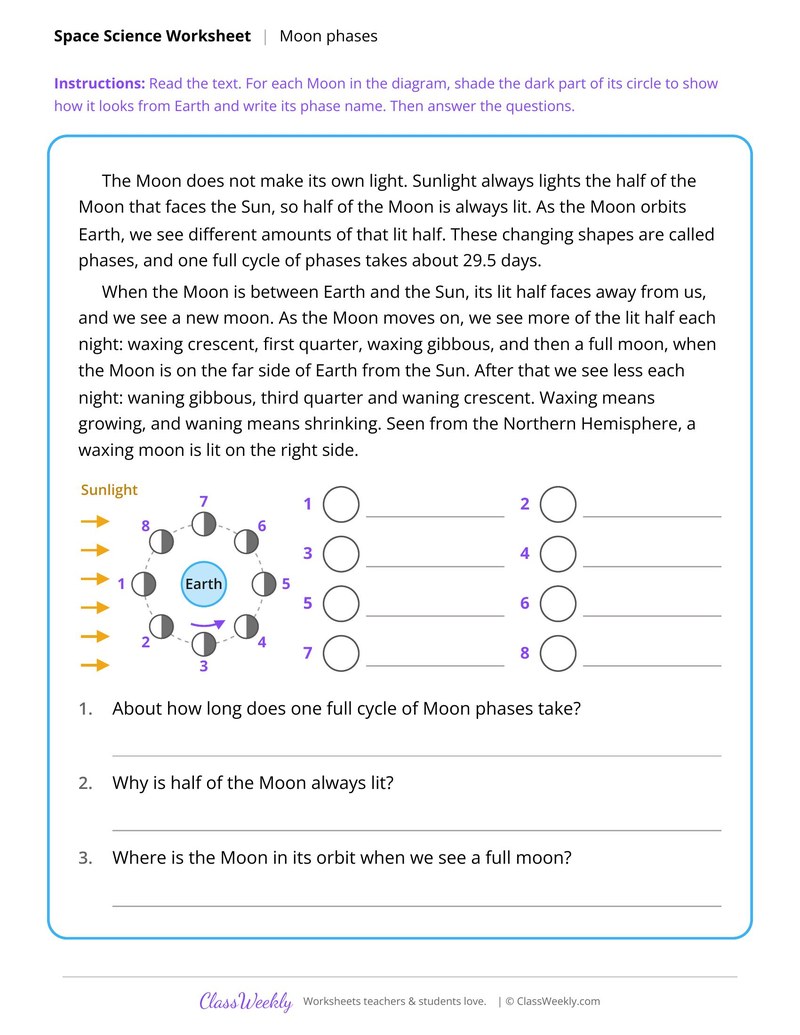
6th grade science worksheet: shade and name all eight Moon phases on an orbit diagram, then explain why half the Moon is always lit. Answer key included. Part of our moon phases and eclipses earth and space collection. Aligned to NGSS standards.
How do I use this worksheet?
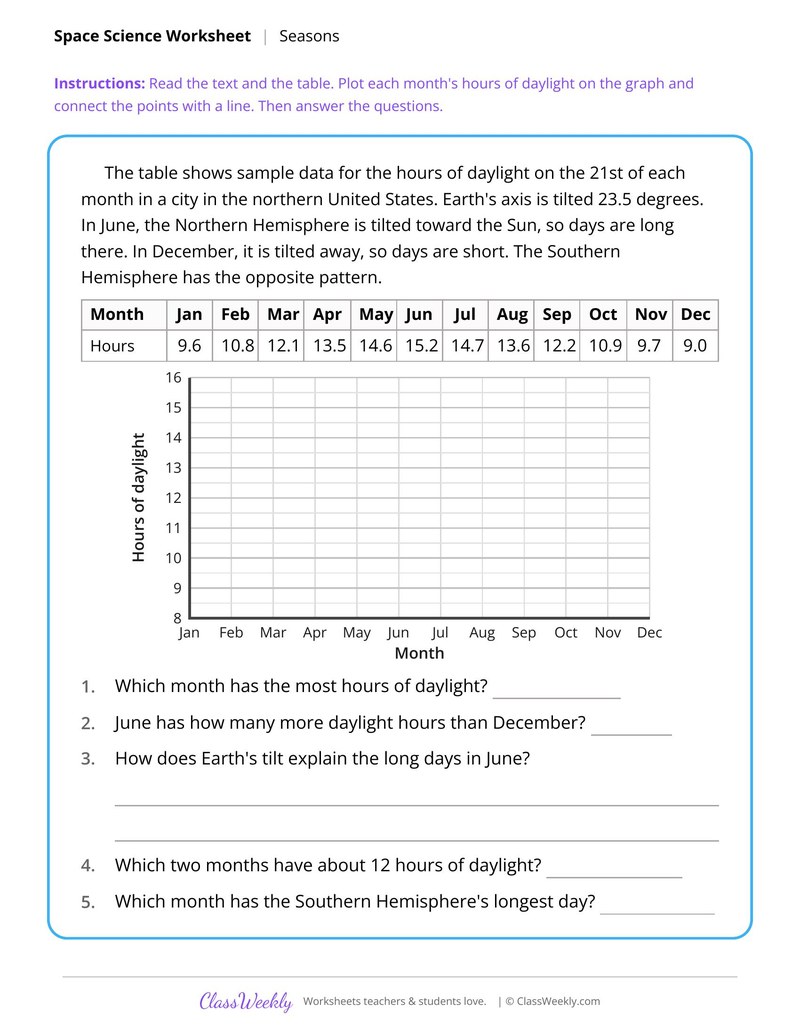
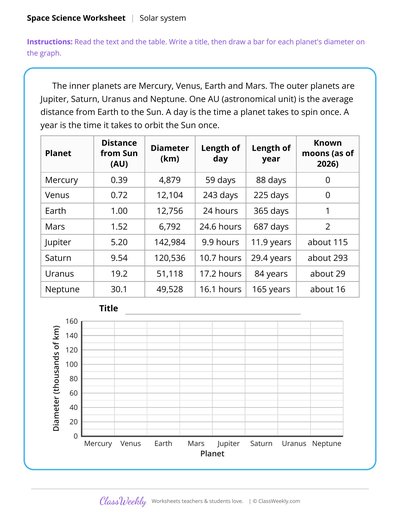
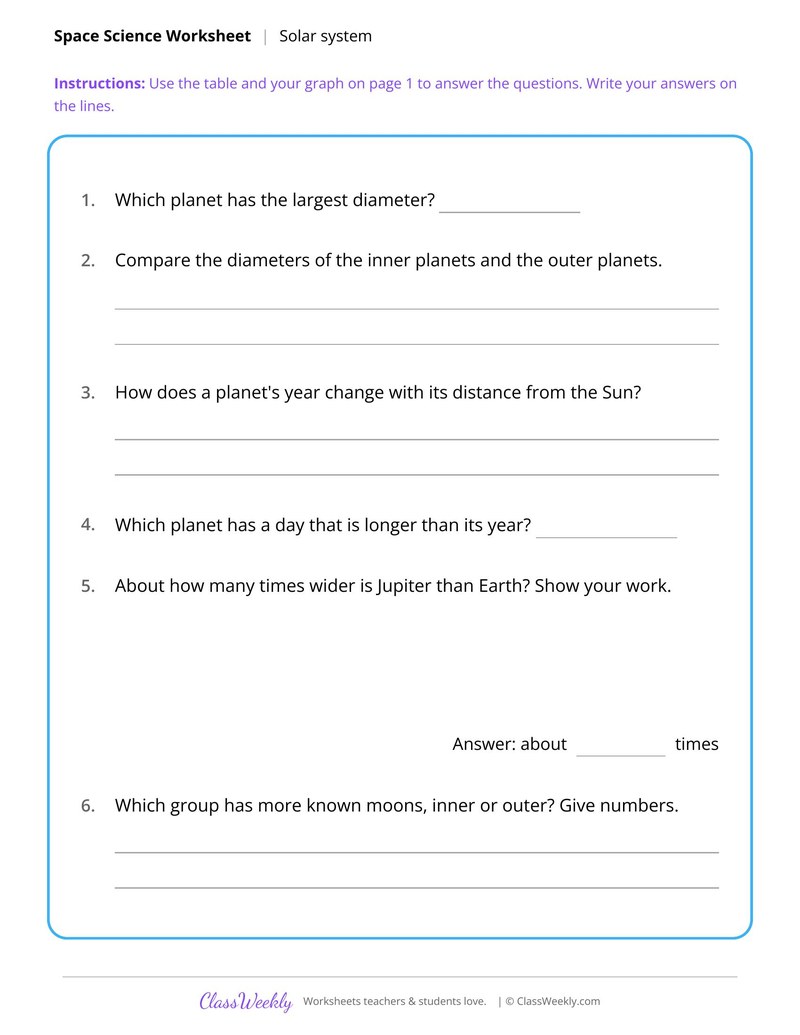
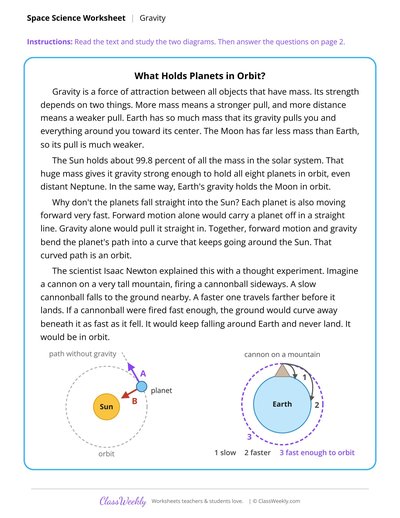
Have students read the text first and shade or label the diagram before they answer the questions. A ball and a lamp can help them see why half of the Moon is always lit.
What students will practice
- Students will shade eight Moons on an orbit diagram to show how each looks from Earth.
- Students will name each phase, from new moon through waning crescent.
- Students will explain why half of the Moon is always lit and where the Moon is at full moon.
Curriculum Links
Next Generation Science Standards
Science · 6th Grade
Find this in the curriculum
Browse the grade, subject, and topic this belongs to.
FAQ
How do I use this moon phases and eclipses worksheet?
⌄
Have students read the text first and shade or label the diagram before they answer the questions. A ball and a lamp can help them see why half of the Moon is always lit.
What does this worksheet teach?
⌄
Shade and name all eight Moon phases on an orbit diagram, then explain why half the Moon is always lit. The directions on the page read: Read the text. For each Moon in the diagram, shade the dark part of its circle to show how it looks from Earth and write its phase name. Then answer the questions. An answer key is included.
Can I use this moon phases and eclipses worksheet for homeschool or classroom?
⌄
Yes, both. We made it for 6th Grade Earth and space, and the page works the same whether it lands on a kitchen table or a center rotation. At home, most families go through it together and talk the answers out loud, and that talking is where most of the learning happens with moon phases and eclipses. In class it runs well as independent work while you pull a small group. Print one copy or thirty, whichever the day needs.
How many phases does the Moon have?
⌄
The sheet names eight: new moon, waxing crescent, first quarter, waxing gibbous, full moon, waning gibbous, third quarter and waning crescent. Waxing means growing and waning means shrinking.
What is the difference between a solar and a lunar eclipse?
⌄
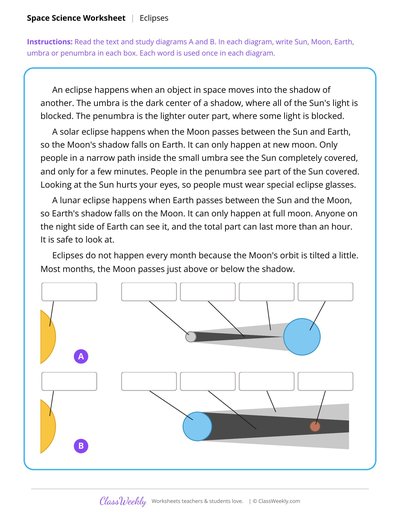
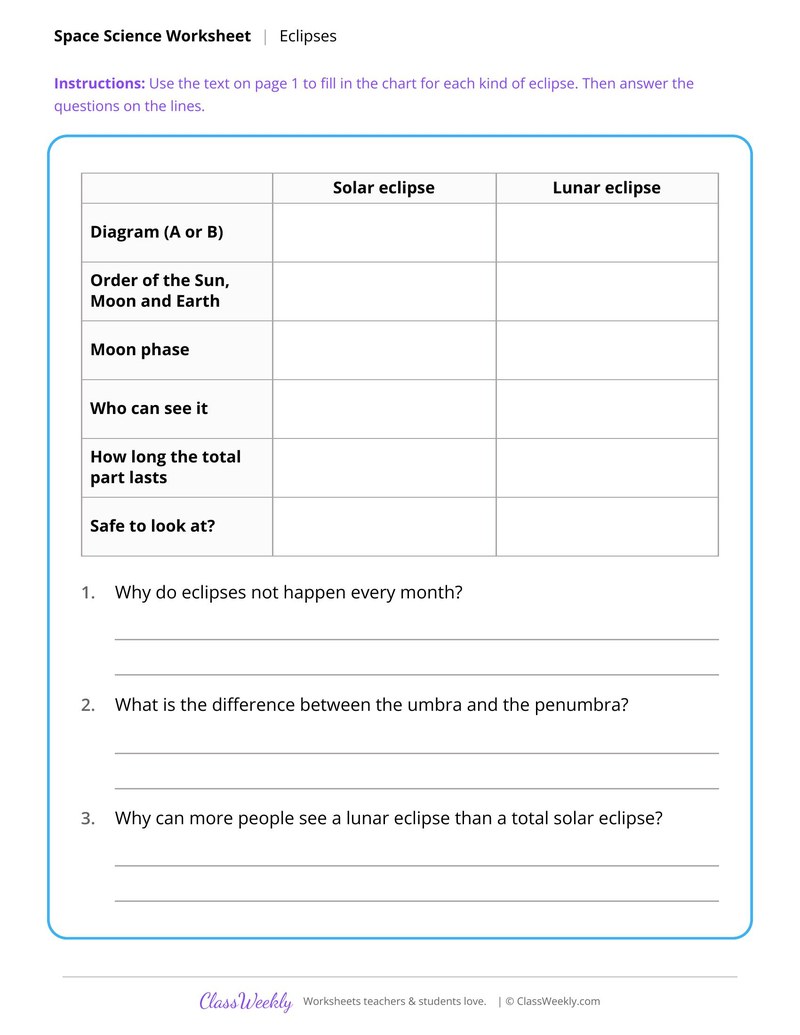
In a solar eclipse the Moon passes between the Sun and Earth, and it can only happen at new moon. In a lunar eclipse Earth passes between the Sun and the Moon, and it can only happen at full moon. A lunar eclipse is safe to look at, but a solar eclipse needs special eclipse glasses.
Why don't eclipses happen every month?
⌄
The Moon's orbit is tilted a little. Most months, the Moon passes just above or below the shadow.
Ratings & Reviews
No reviews yet. Be the first to share what you think.
Reviews are for ClassWeekly members.
Make a Request
Spotted something to fix, or want a worksheet we don't have yet? Tell us and we'll make it.
Worksheet Details
| Grade | 6th Grade |
| Subject | Science |
| Topic | Earth and Space |
| Standard | MS-ESS1-1 |
| Pages | 1 page |
| Difficulty | Medium |
What is ClassWeekly?
ClassWeekly offers free worksheets and printable learning resources for kids, from preschool up. All worksheets are aligned to Common Core, NGSS, and C3 Framework standards and designed by educators. Become a member to access the full library and download unlimited PDFs.