Renewable and Nonrenewable Resources
Written by Adi Ackerman, Head Teacher
"Renewable and Nonrenewable Resources" is written for 6th Grade (Ages 11-12). If your student is a year younger but already steady on Earth systems, the page still works. You may just need to read the instructions out loud. And if they are older and resources and human impact never quite stuck, this is a short review rather than busywork.
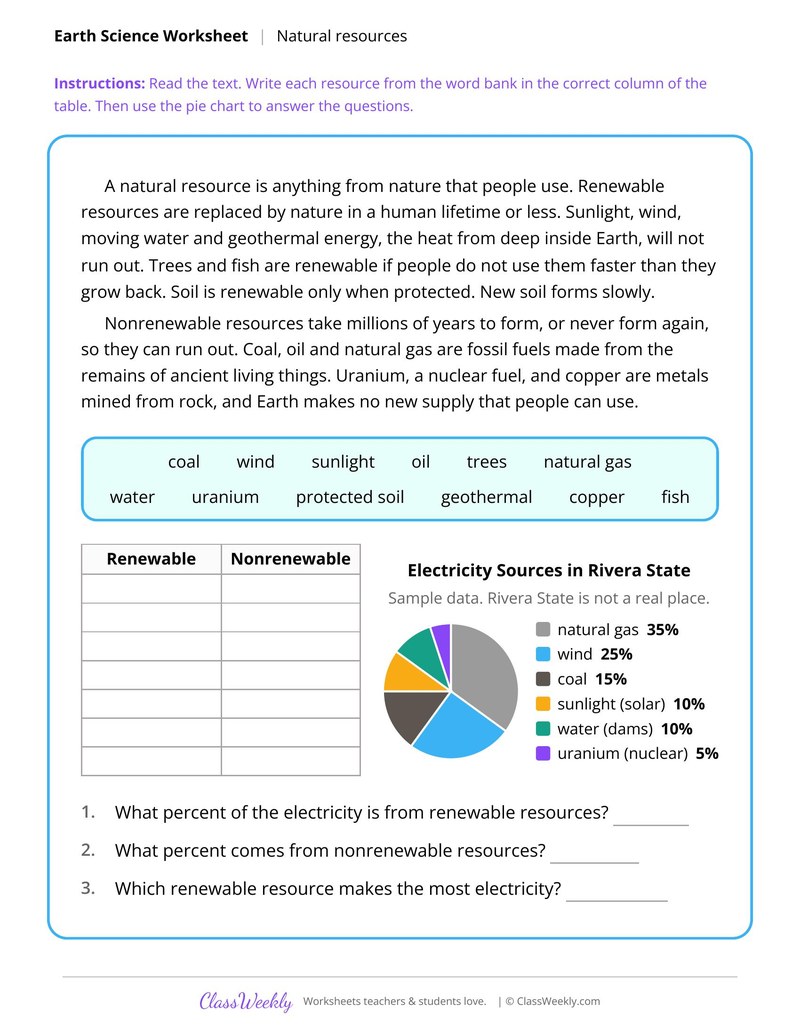
6th grade science worksheet: sort coal, wind and ten other resources as renewable or not, then read a sample electricity pie chart. Answer key included. Part of our resources and human impact earth systems collection.
How do I use this worksheet?
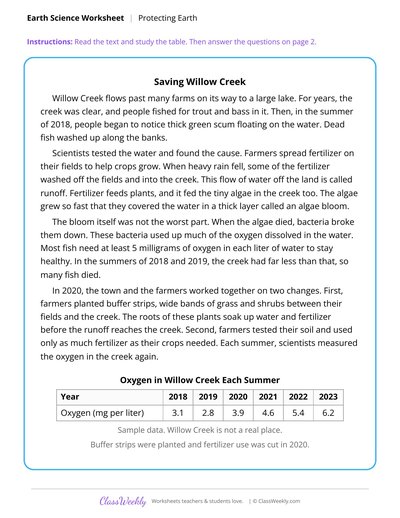
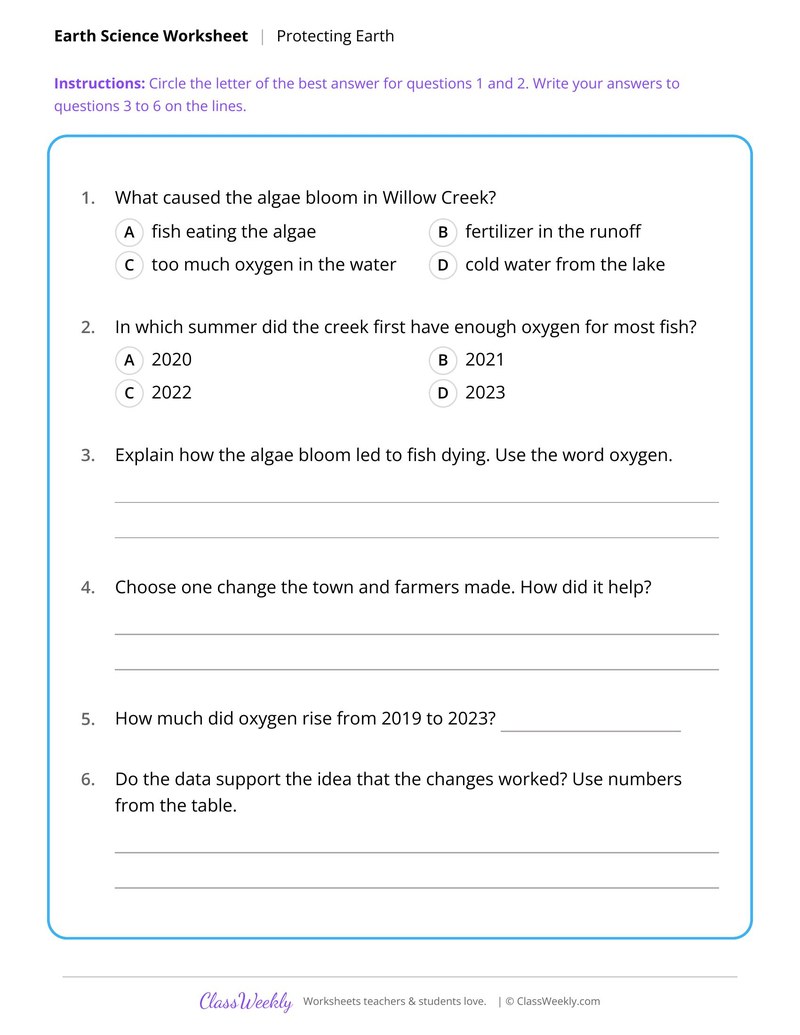
Have students sort the resources before they look at the pie chart so they can add the percents by group. On the creek reading, have them mark the cause and each change in the text.
What students will practice
- Students will sort 12 resources, such as uranium and geothermal energy, as renewable or nonrenewable.
- Students will read a pie chart of sample data for electricity sources in made-up Rivera State.
- Students will add percents to find the share of electricity from renewable and nonrenewable sources.
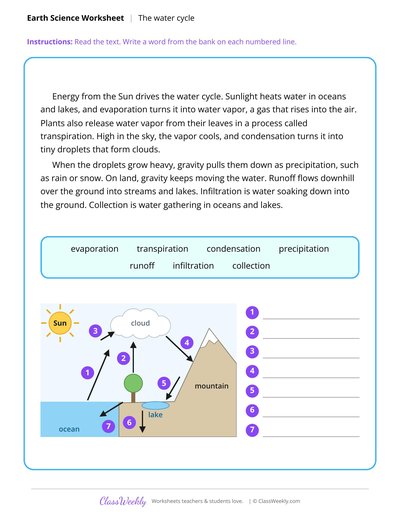
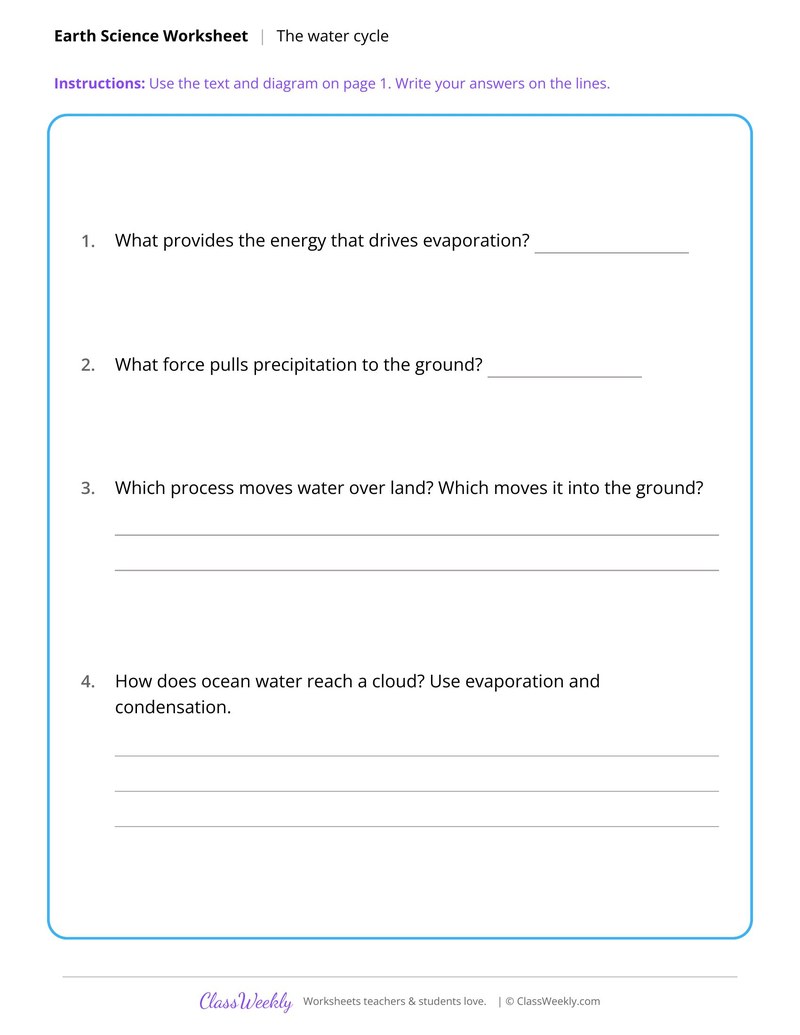
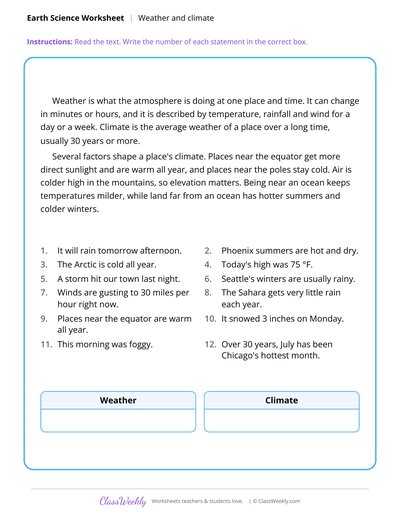
Curriculum Links
Find this in the curriculum
Browse the grade, subject, and topic this belongs to.
FAQ
How do I use this resources and human impact worksheet?
⌄
Have students sort the resources before they look at the pie chart so they can add the percents by group. On the creek reading, have them mark the cause and each change in the text.
What does this worksheet teach?
⌄
Sort coal, wind and ten other resources as renewable or not, then read a sample electricity pie chart. The directions on the page read: Read the text. Write each resource from the word bank in the correct column of the table. Then use the pie chart to answer the questions. An answer key is included.
Can I use this resources and human impact worksheet for homeschool or classroom?
⌄
Yes, both. We made it for 6th Grade Earth systems, and the page works the same whether it lands on a kitchen table or a center rotation. At home, most families go through it together and talk the answers out loud, and that talking is where most of the learning happens with resources and human impact. In class it runs well as independent work while you pull a small group. Print one copy or thirty, whichever the day needs.
What are examples of renewable resources?
⌄
The sheet lists sunlight, wind, moving water and geothermal energy, which will not run out. Trees and fish are renewable if people do not use them faster than they grow back, and soil is renewable only when protected.
How does fertilizer runoff harm fish?
⌄
Fertilizer that washes into a creek feeds algae, which can grow into a thick bloom. When the algae die, bacteria break them down and use up much of the oxygen in the water, so fish cannot get enough.
What are buffer strips?
⌄
Buffer strips are wide bands of grass and shrubs between fields and a creek. The roots soak up water and fertilizer before runoff reaches the creek.
Ratings & Reviews
No reviews yet. Be the first to share what you think.
Reviews are for ClassWeekly members.
Make a Request
Spotted something to fix, or want a worksheet we don't have yet? Tell us and we'll make it.
Worksheet Details
| Grade | 6th Grade |
| Subject | Science |
| Topic | Earth Systems |
| Pages | 1 page |
| Difficulty | Medium |
What is ClassWeekly?
ClassWeekly offers free worksheets and printable learning resources for kids, from preschool up. All worksheets are aligned to Common Core, NGSS, and C3 Framework standards and designed by educators. Become a member to access the full library and download unlimited PDFs.