What Moved Where in the Market Revolution
Written by Adi Ackerman, Head Teacher
"What Moved Where in the Market Revolution" is written for 8th Grade (Ages 13-14), and it covers C3 Framework D2.Geo.7.6-8. A 7th grader who is already steady on Immigration and Industry can use it too, and an older student can use it as a short review.
2 pages in this set
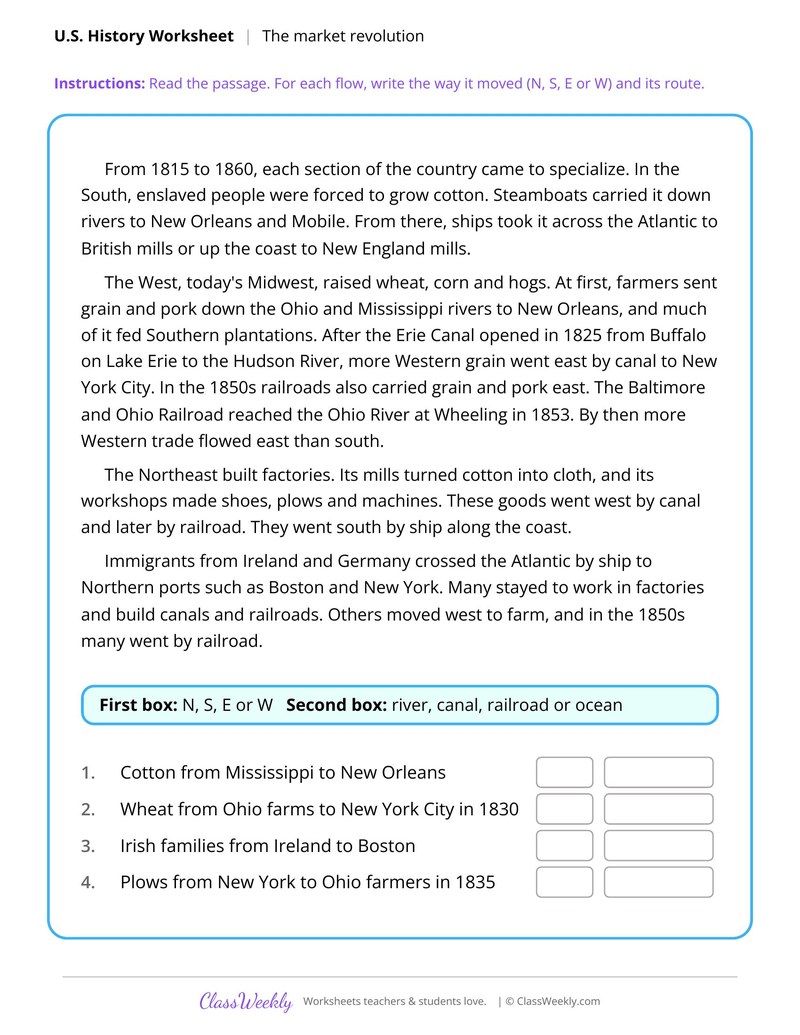
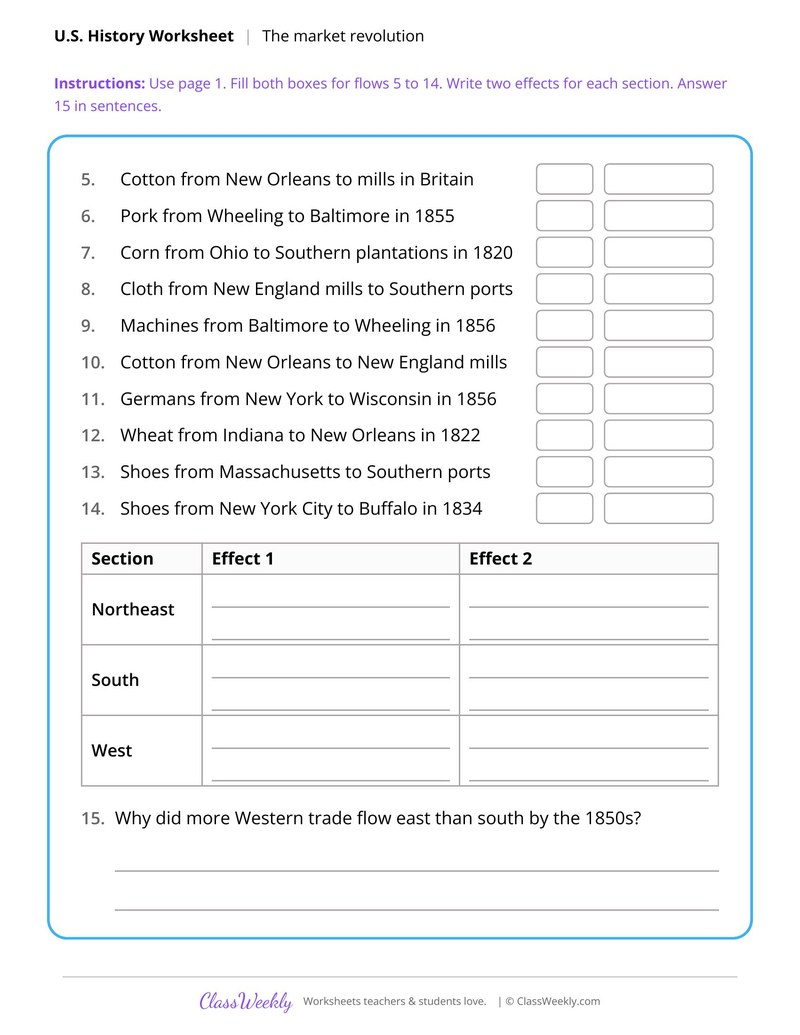
8th grade social studies worksheet: trace cotton, grain and pork flows by direction and route, from New Orleans to the Erie Canal. Answer key included. Part of our transportation revolution immigration and industry collection. Aligned to C3 Framework standards.
How do I use this worksheet?
Begin with the timeline for the big picture, then the lock and canal map. Use the railroad graph and trade flows to show how new routes tied the sections together.
What students will practice
- Students will read how the South, West and Northeast specialized from 1815 to 1860.
- Students will record the direction and route of each flow of goods.
- Students will write two effects of specialization for each section of the country.
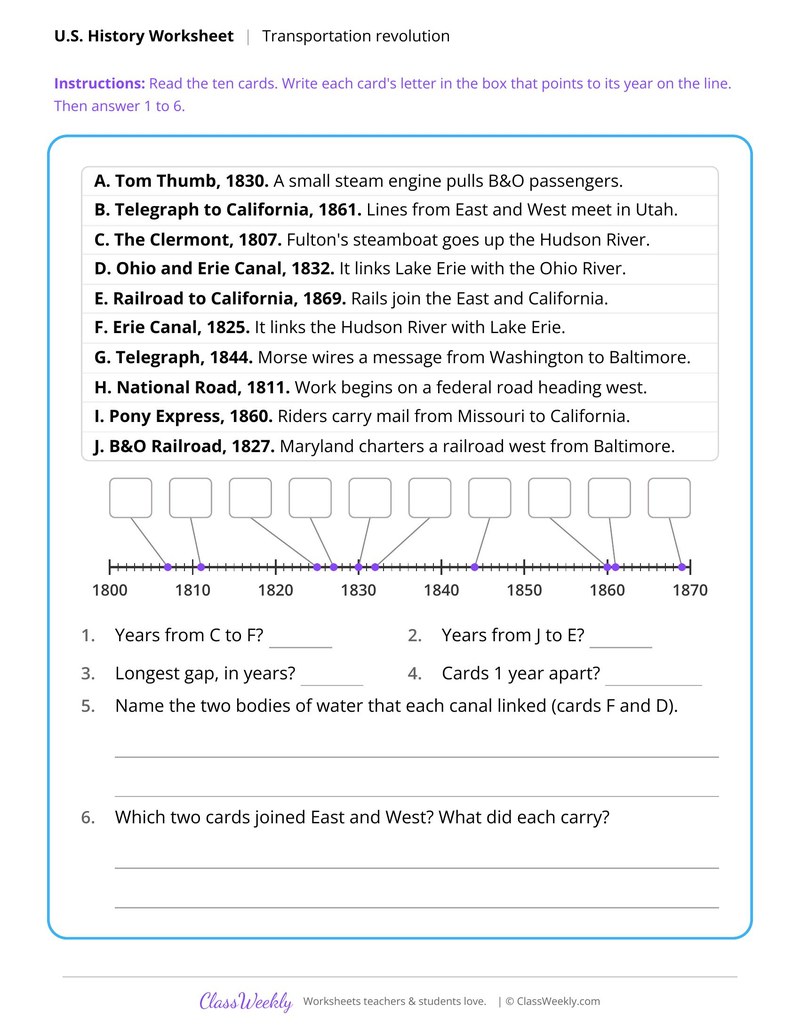
Transportation Revolution Timeline, 1807 to 1869
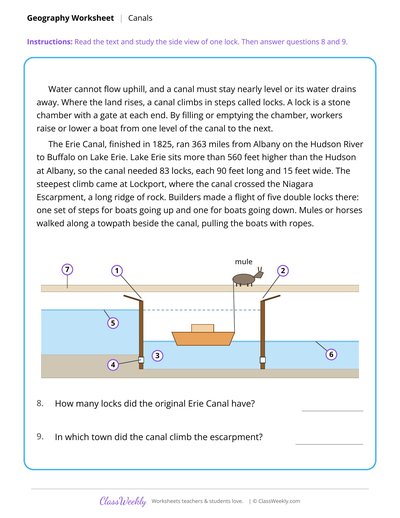
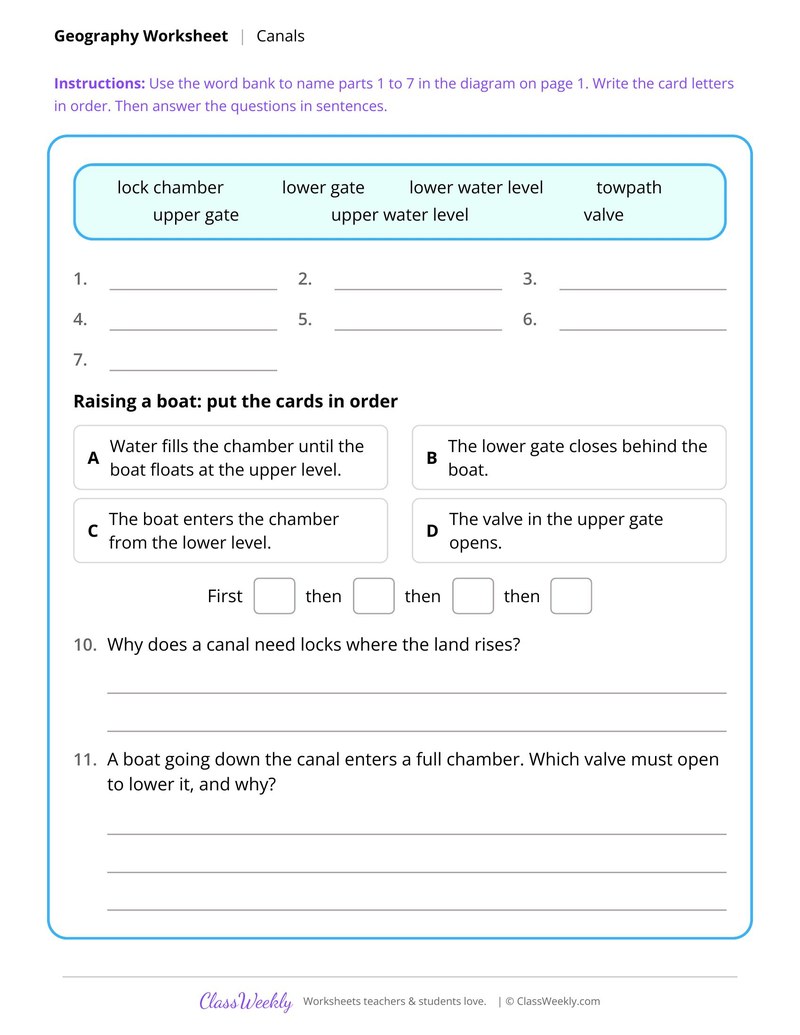
How a Canal Lock Lifts a Boat
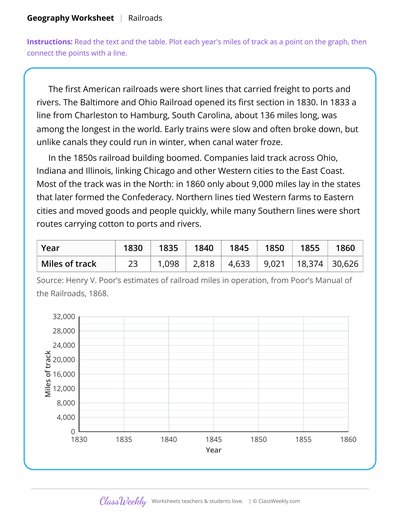
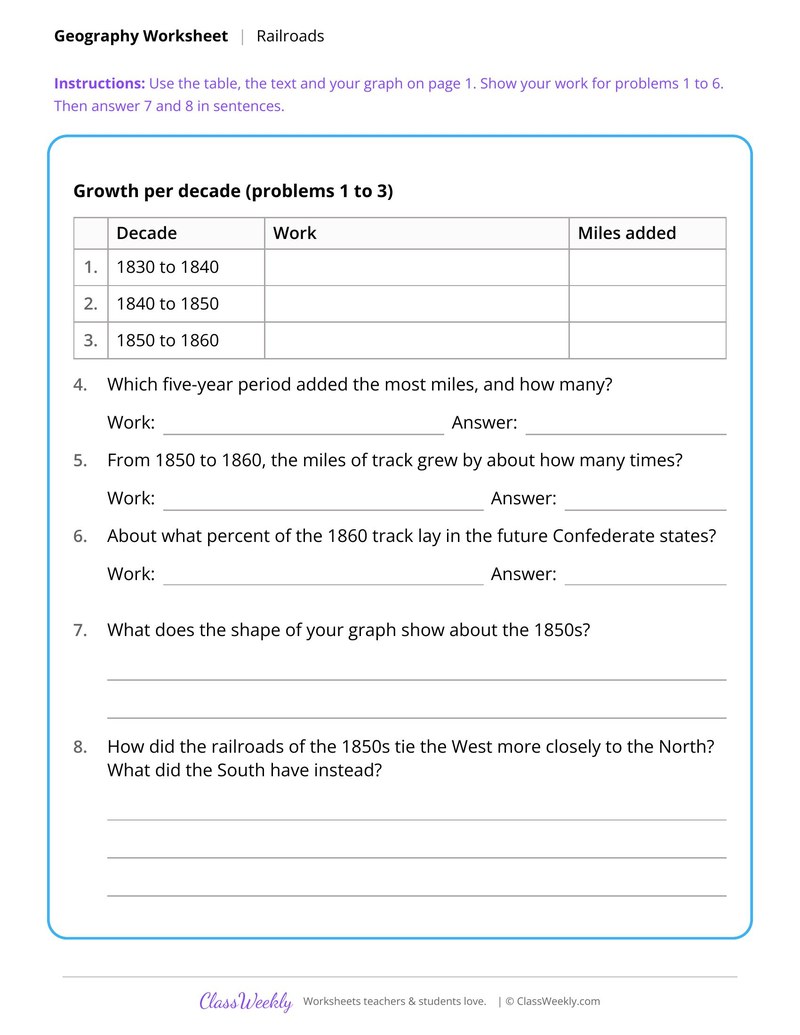
Railroad Miles in the United States, 1830 to 1860
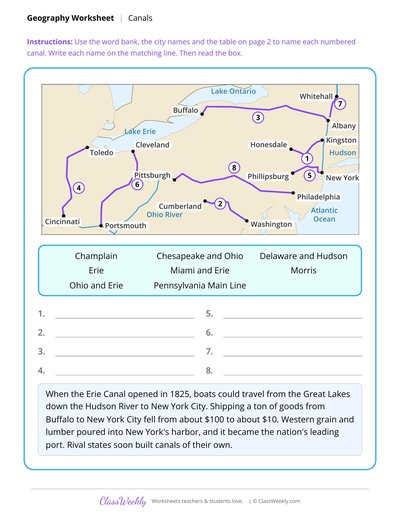
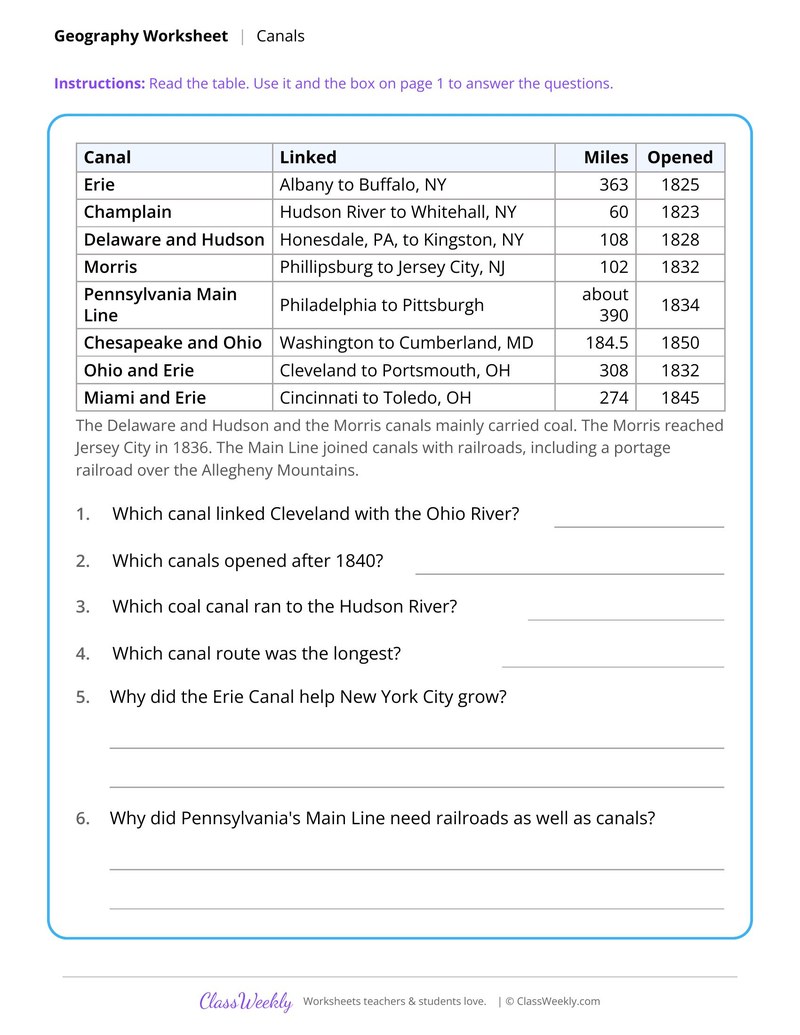
Canals of the Northeast by 1840
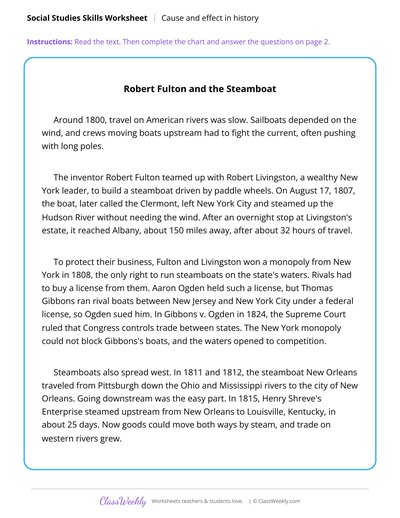
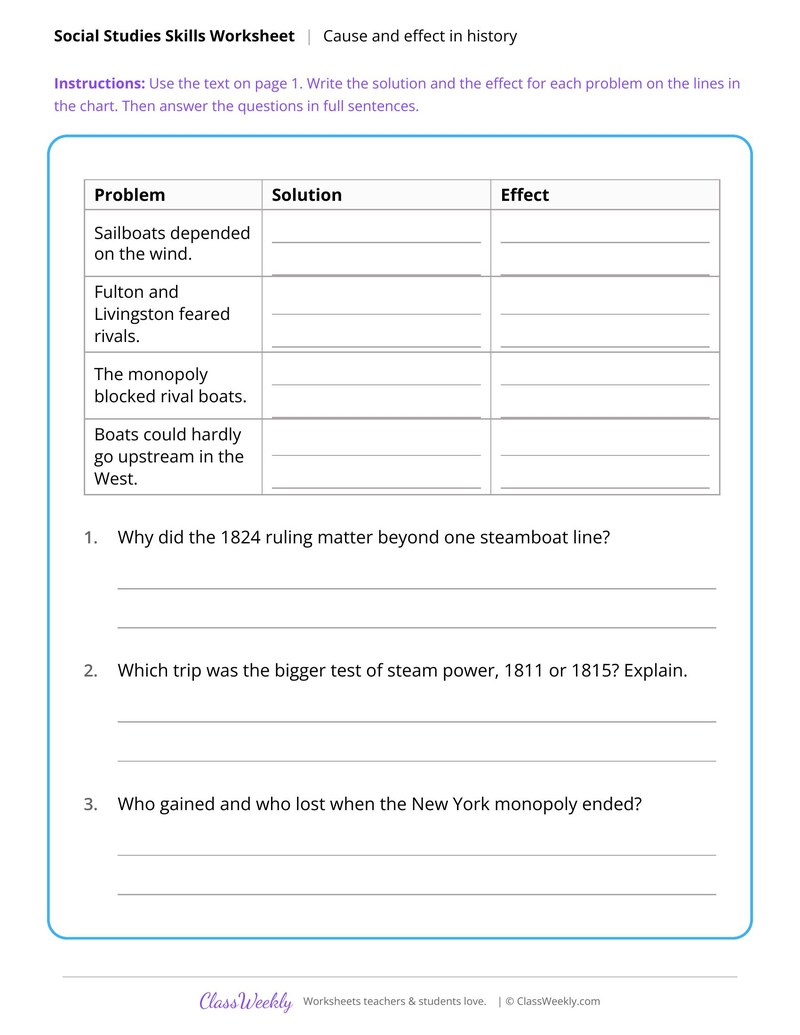
Robert Fulton and the Steamboat
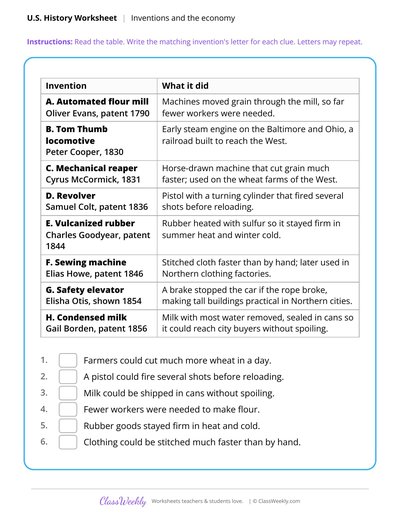
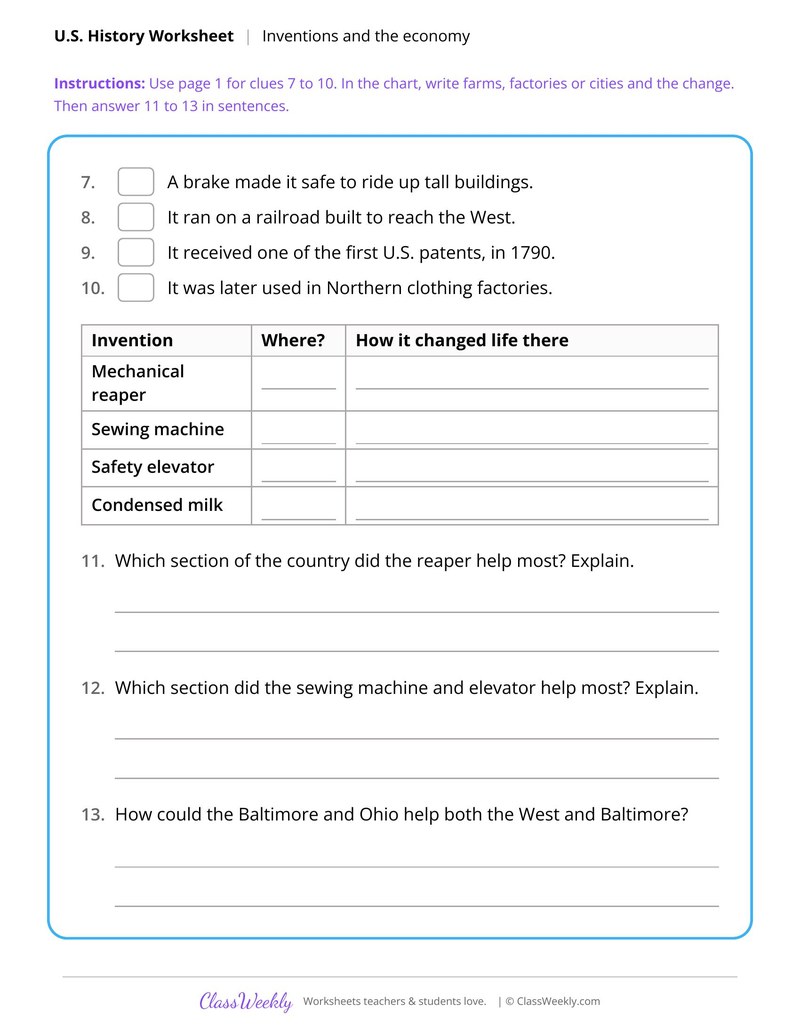
American Inventions of the Market Revolution
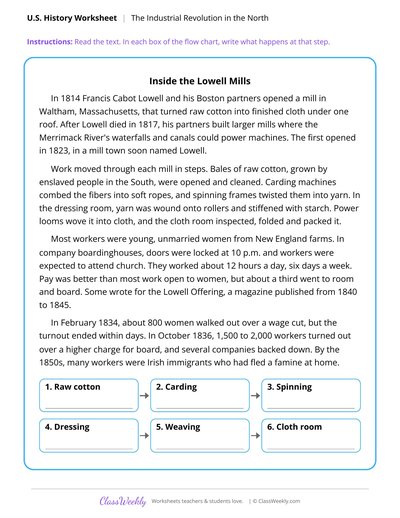
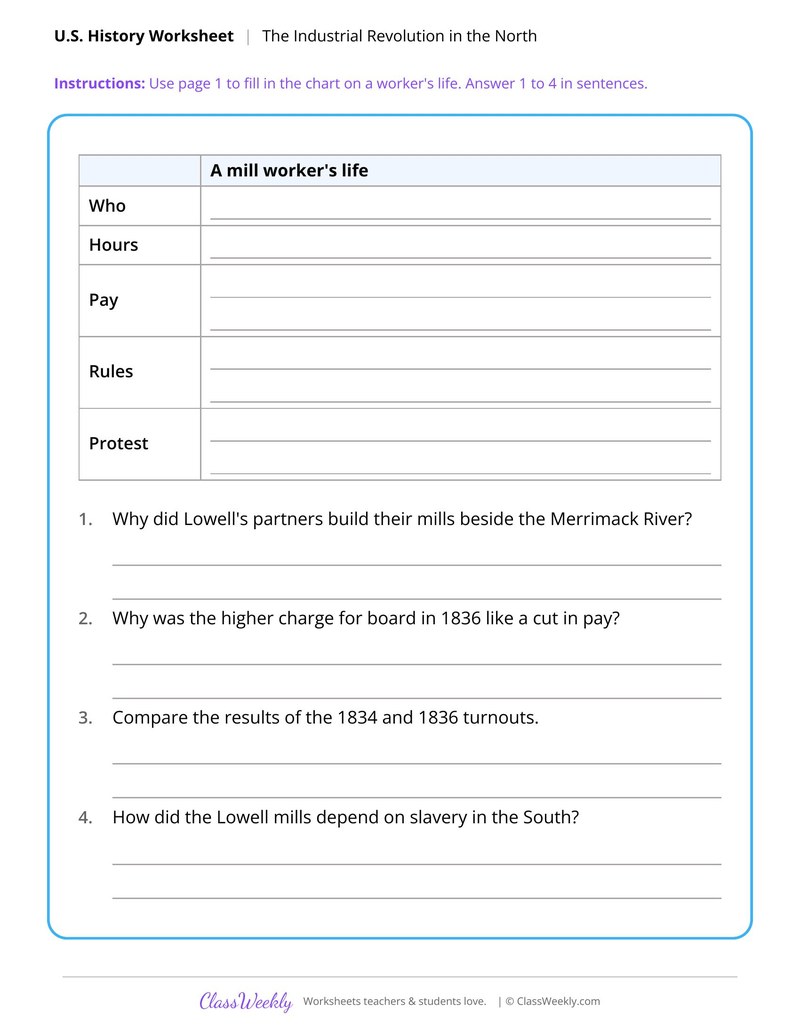
The Lowell Mill System Organizer
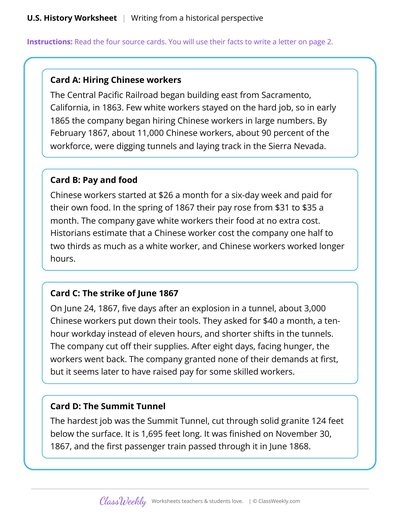
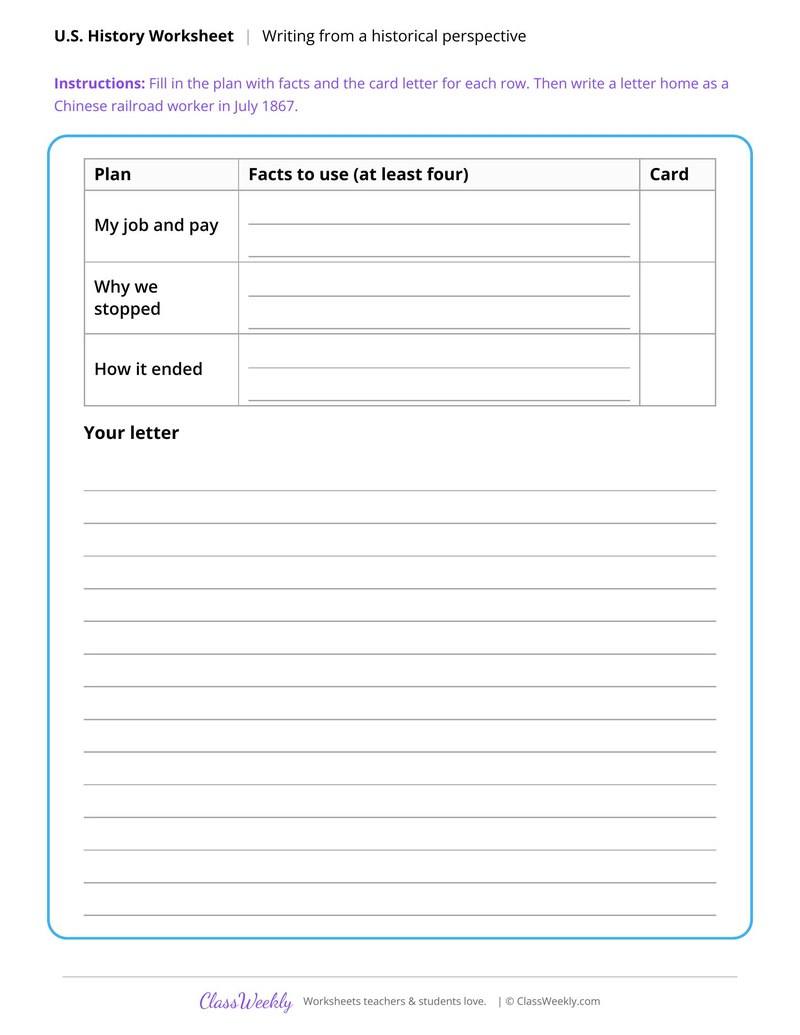
Letter About the 1867 Railroad Strike
Curriculum Links
C3 Framework for Social Studies State Standards
Social Studies · 8th Grade
Find this in the curriculum
Browse the grade, subject, and topic this belongs to.
FAQ
How do I use this transportation revolution worksheet?
⌄
Begin with the timeline for the big picture, then the lock and canal map. Use the railroad graph and trade flows to show how new routes tied the sections together.
What does this worksheet teach?
⌄
Trace cotton, grain and pork flows by direction and route, from New Orleans to the Erie Canal. The directions on the page read: Read the passage. For each flow, write the way it moved (N, S, E or W) and its route. An answer key is included.
Can I use this transportation revolution worksheet for homeschool or classroom?
⌄
Yes, both. We made it for 8th grade Immigration and Industry, and it works the same at home or at school. At home, a student can work through it alone and then go over it with you, which shows quickly what is solid and what needs another look. In class it works as independent practice, homework or a warm-up, and you can print one copy or a full set.
How does a canal lock work?
⌄
A lock is a chamber with a gate at each end. Workers fill or empty the chamber to raise or lower a boat from one level of the canal to the next, since water cannot flow uphill.
When did Fulton's steamboat first sail?
⌄
On August 17, 1807, the Clermont left New York City and steamed up the Hudson River. It reached Albany, about 150 miles away, after about 32 hours of travel.
Why were most railroads in the North by 1860?
⌄
Northern lines tied Western farms to Eastern cities, and in the 1850s companies laid track across Ohio, Indiana and Illinois. In 1860 only about 9,000 miles lay in the states that later formed the Confederacy.
Ratings & Reviews
No reviews yet. Be the first to share what you think.
Reviews are for ClassWeekly members.
Make a Request
Spotted something to fix, or want a worksheet we don't have yet? Tell us and we'll make it.
Worksheet Details
| Grade | 8th Grade |
| Subject | Social Studies |
| Topic | Immigration and Industry |
| Standard | D2.Geo.7.6-8 |
| Pages | 2 pages |
| Difficulty | Medium |
What is ClassWeekly?
ClassWeekly offers free worksheets and printable learning resources for kids, from preschool up. All worksheets are aligned to Common Core, NGSS, and C3 Framework standards and designed by educators. Become a member to access the full library and download unlimited PDFs.
Transportation Revolution Timeline, 1807 to 1869
How a Canal Lock Lifts a Boat
Railroad Miles in the United States, 1830 to 1860
Canals of the Northeast by 1840
Robert Fulton and the Steamboat
American Inventions of the Market Revolution
The Lowell Mill System Organizer
Letter About the 1867 Railroad Strike