Frederick Douglass's 1852 Independence Day Speech
Written by Adi Ackerman, Head Teacher
"Frederick Douglass's 1852 Independence Day Speech" is written for 8th Grade (Ages 13-14), and it covers C3 Framework D2.His.4.6-8. A 7th grader who is already steady on Sources, Data and Research Skills can use it too, and an older student can use it as a short review.
2 pages in this set
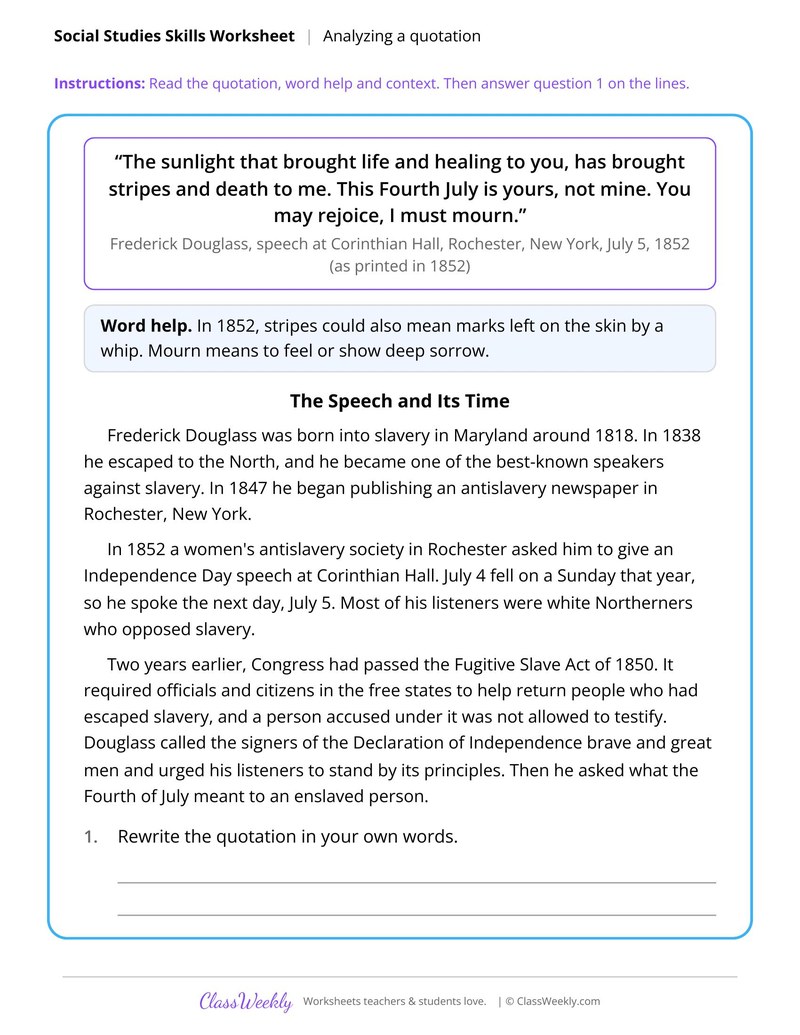
8th grade social studies worksheet: analyze the words sunlight and stripes in Frederick Douglass's 1852 Fourth of July speech. Answer key included. Part of our analyzing a quotation sources, data and research skills collection. Aligned to C3 Framework standards.
How do I use this worksheet?
Read the quotation aloud and discuss the word help first. Pair the two sheets to compare a reformer's report with an antislavery speech.
What students will practice
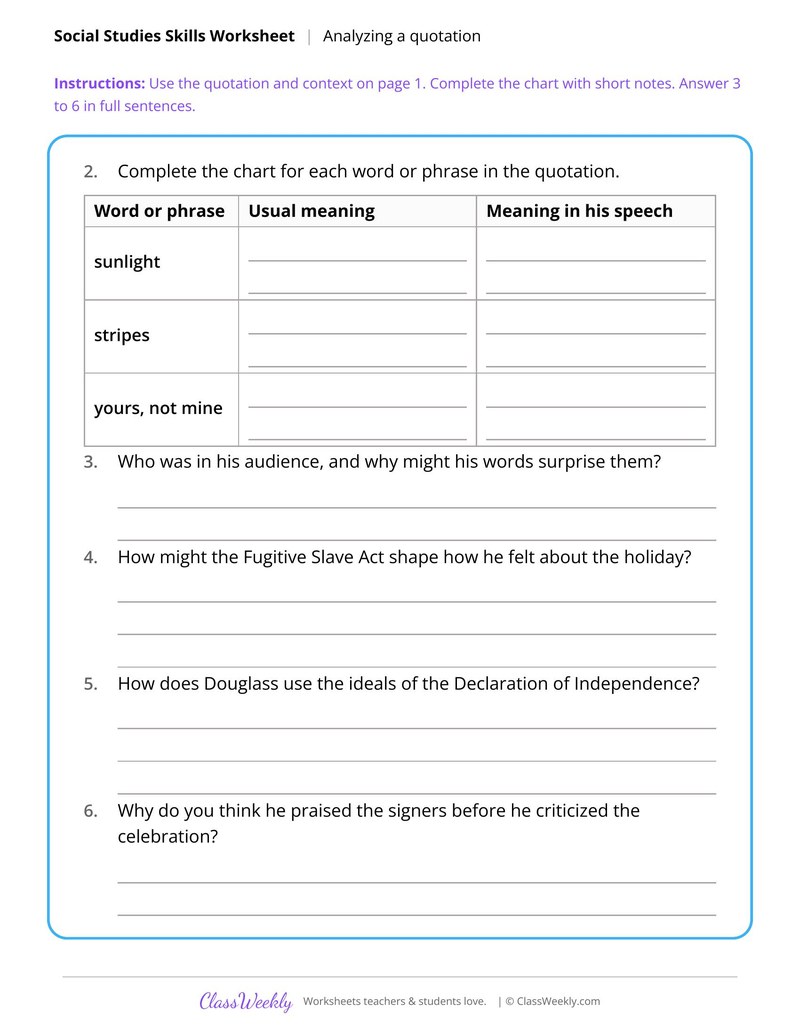
- Students will chart the usual and intended meaning of words in a Douglass quotation.
- Students will explain how the Fugitive Slave Act may have shaped his view of the holiday.
- Students will explain how Douglass used the ideals of the Declaration of Independence.
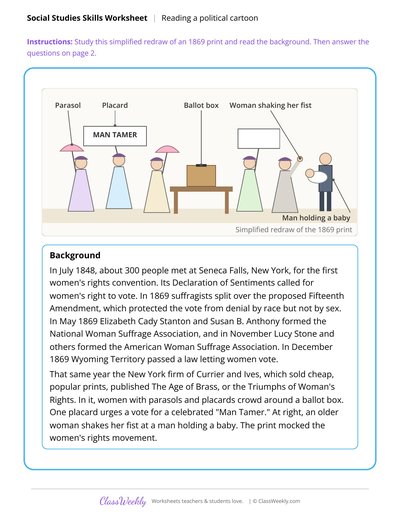
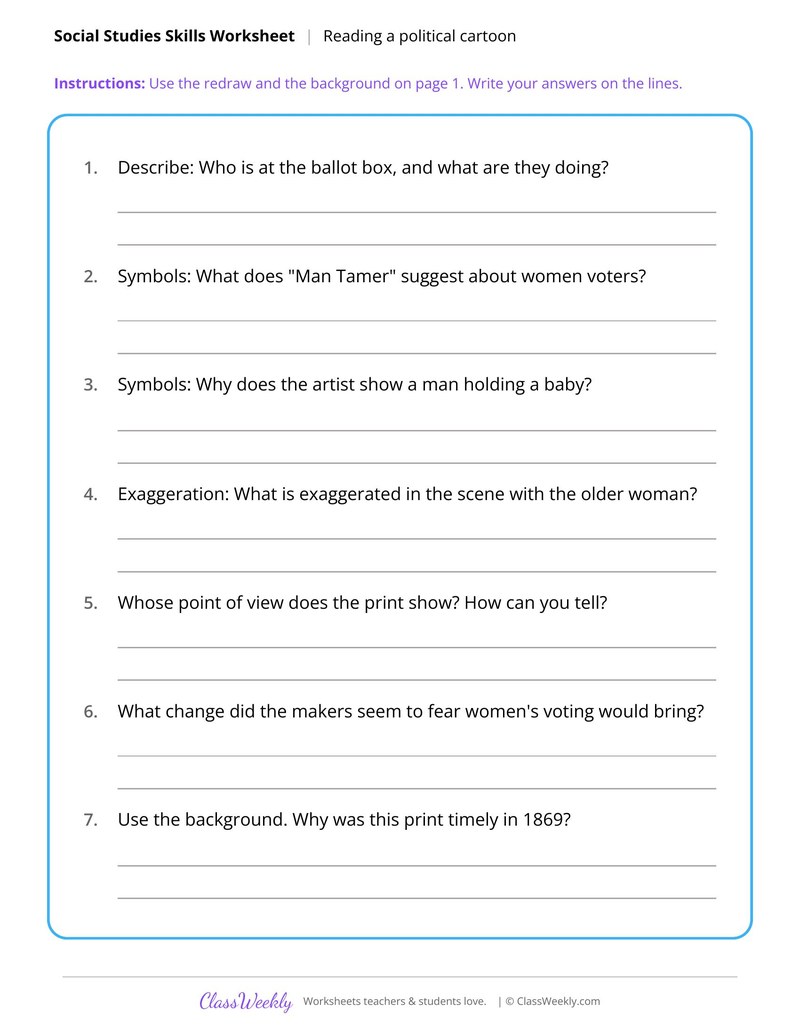
The Age of Brass Cartoon of 1869
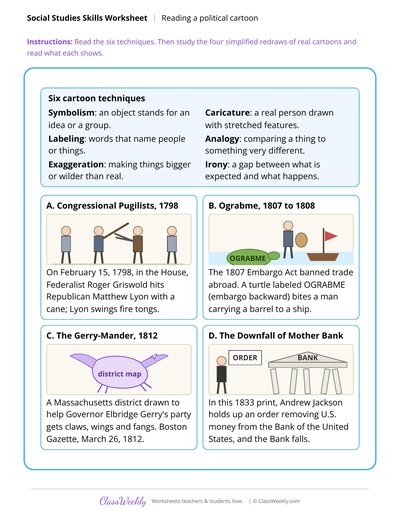
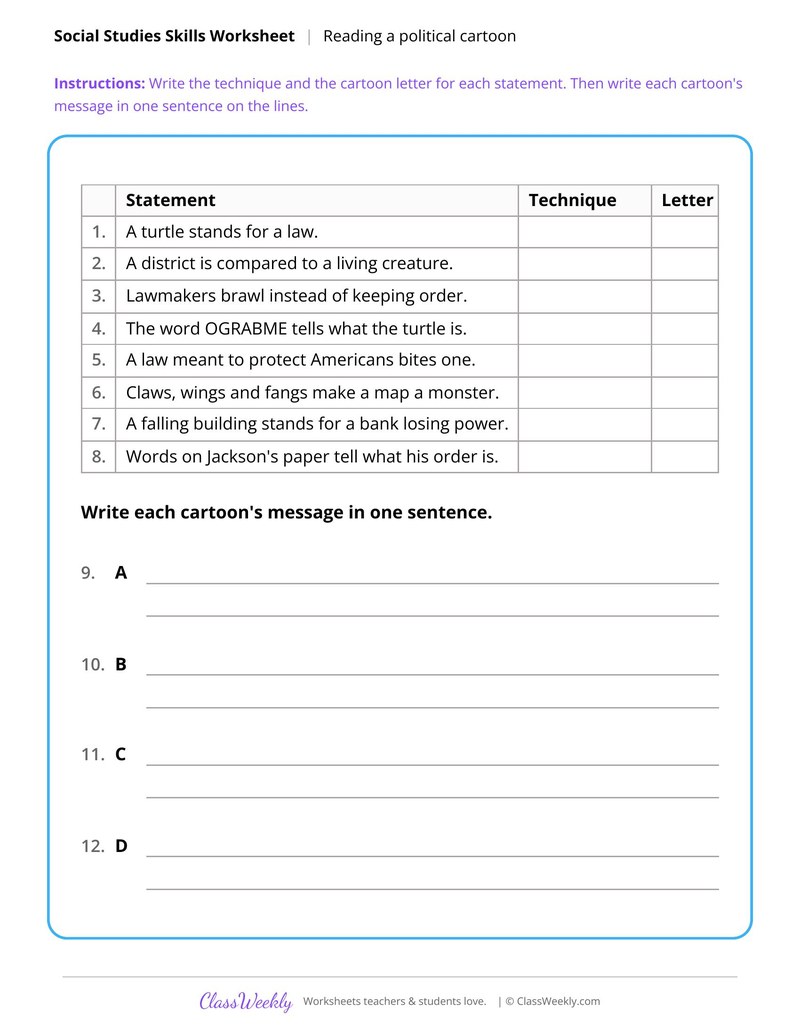
Cartoon Techniques in Early Republic Cartoons
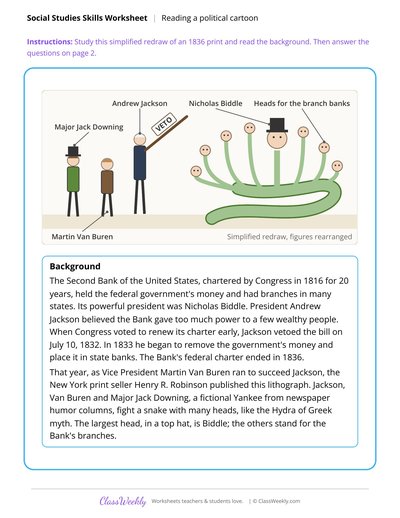
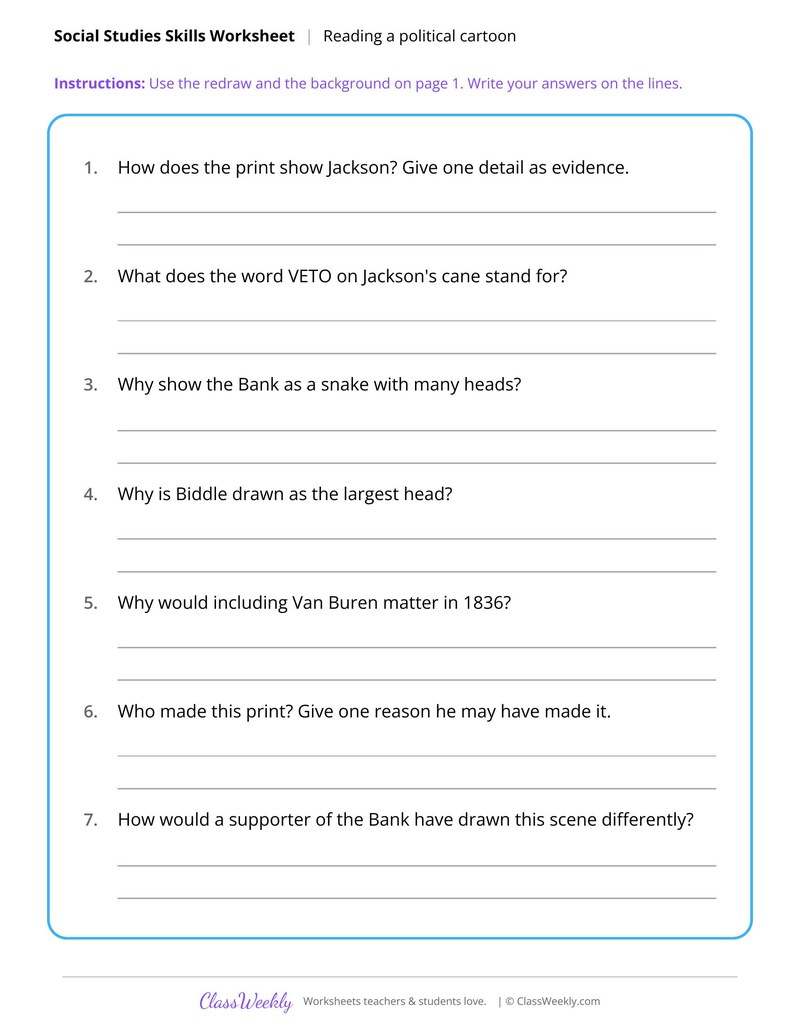
General Jackson Slaying the Bank Monster, 1836
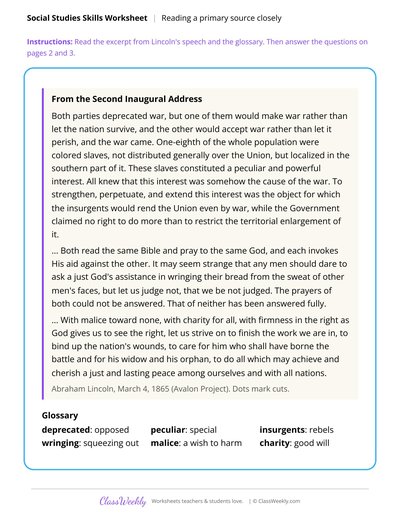
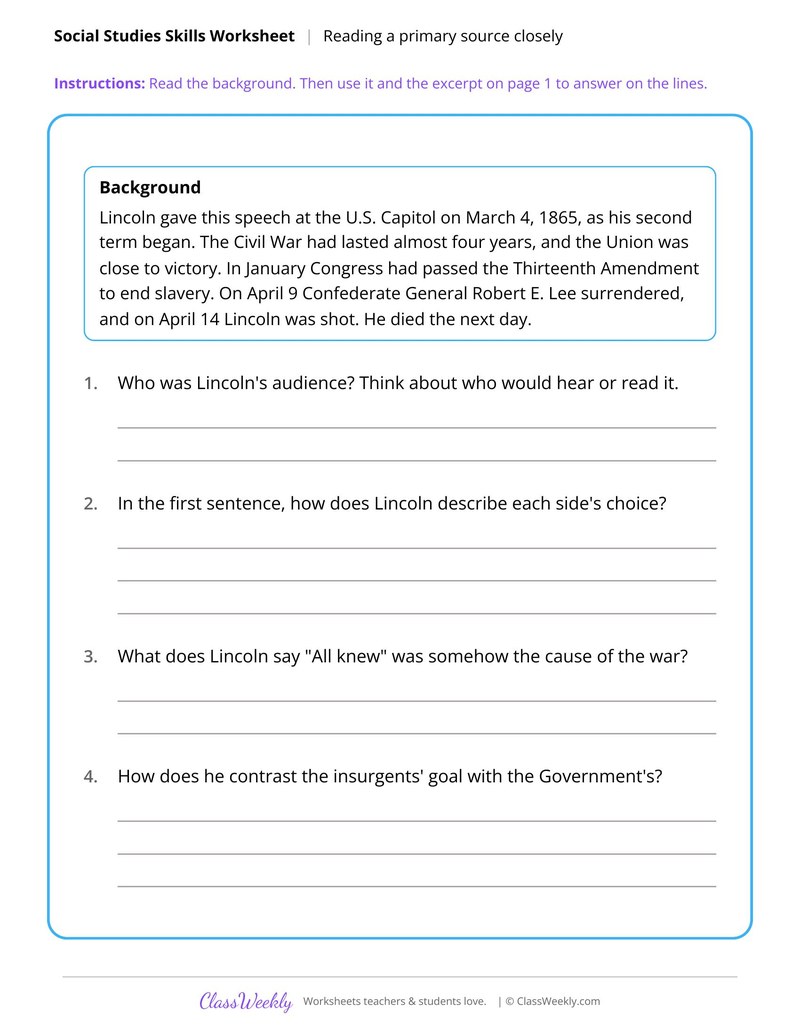
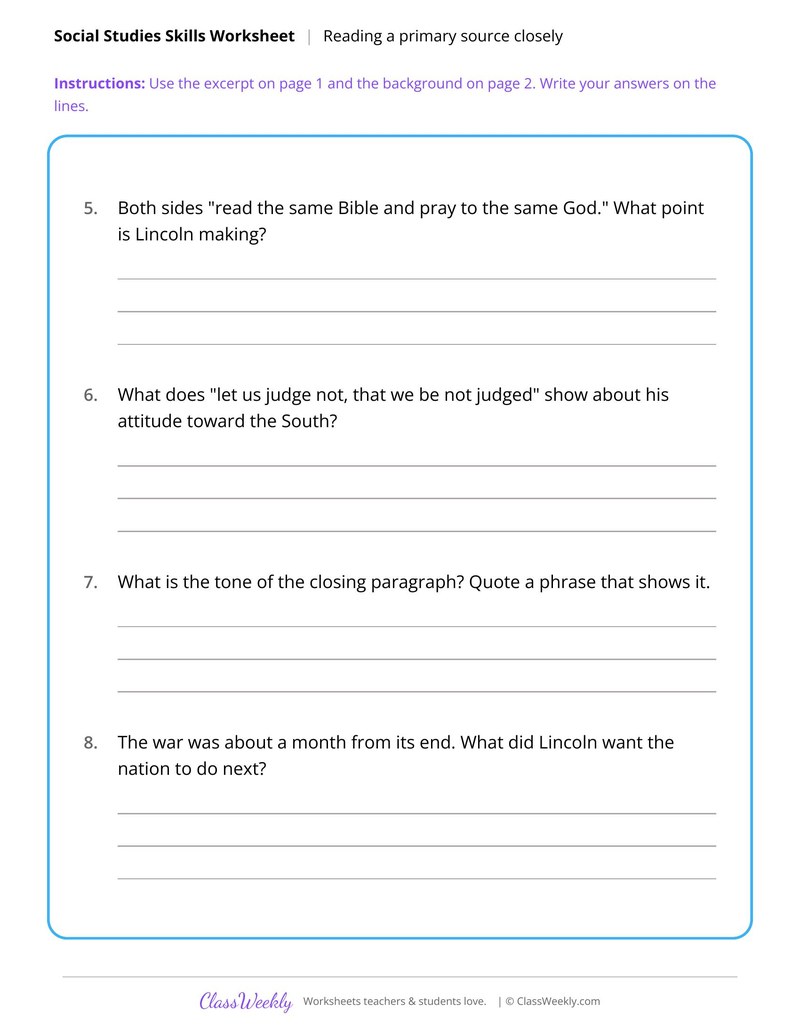
Lincoln's Second Inaugural Address
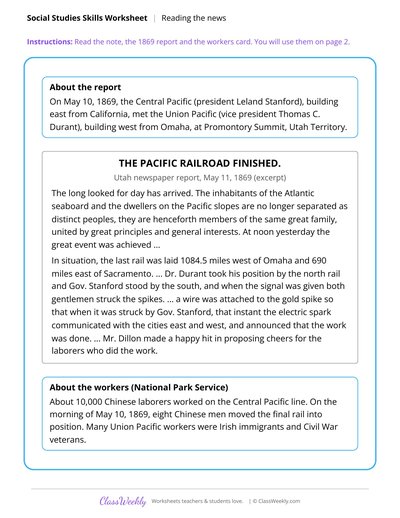
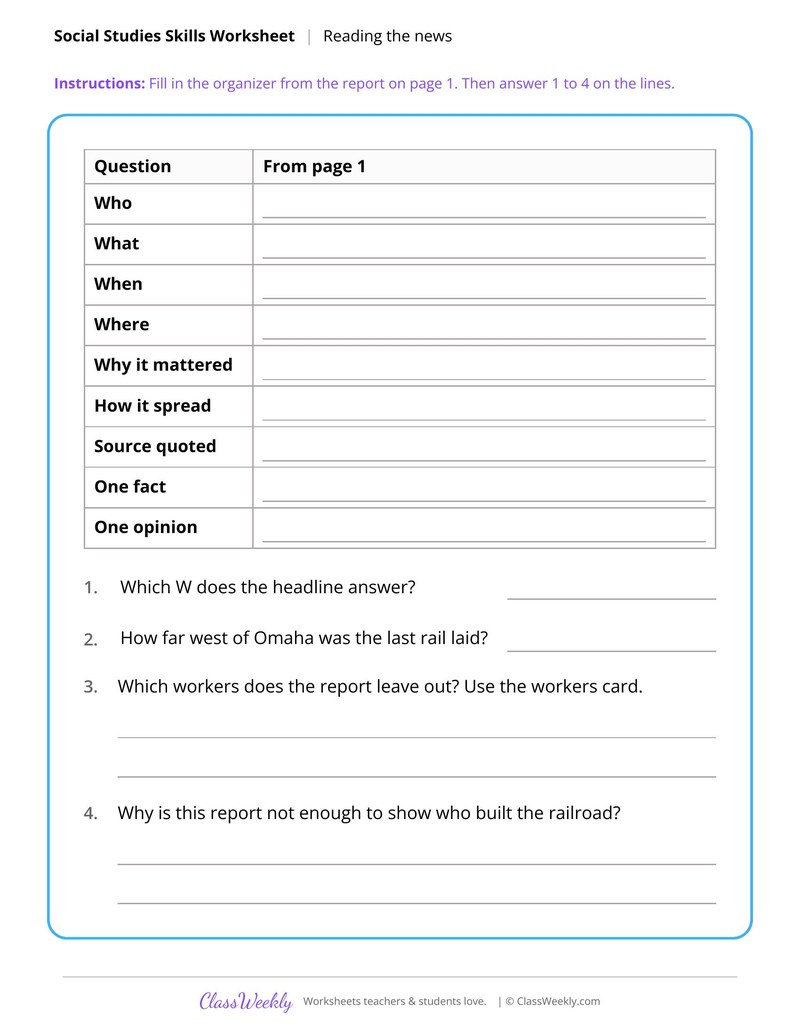
Five Ws of an 1869 Newspaper Report
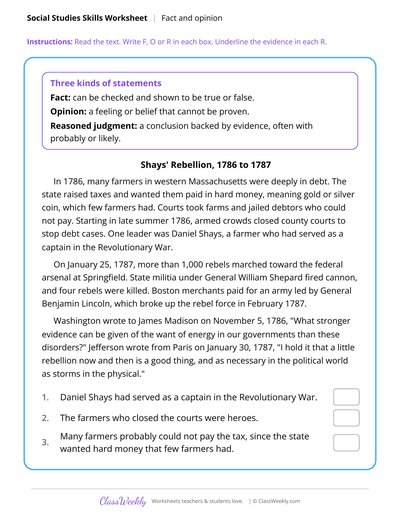
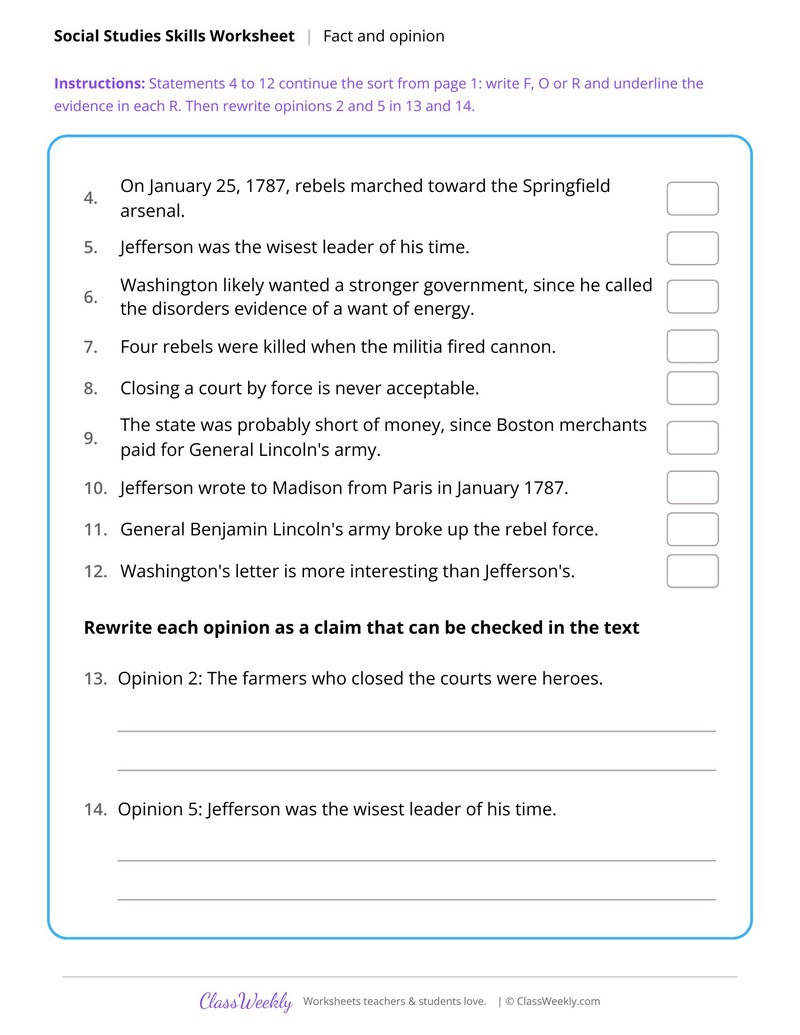
Fact, Opinion and Judgment on Shays' Rebellion
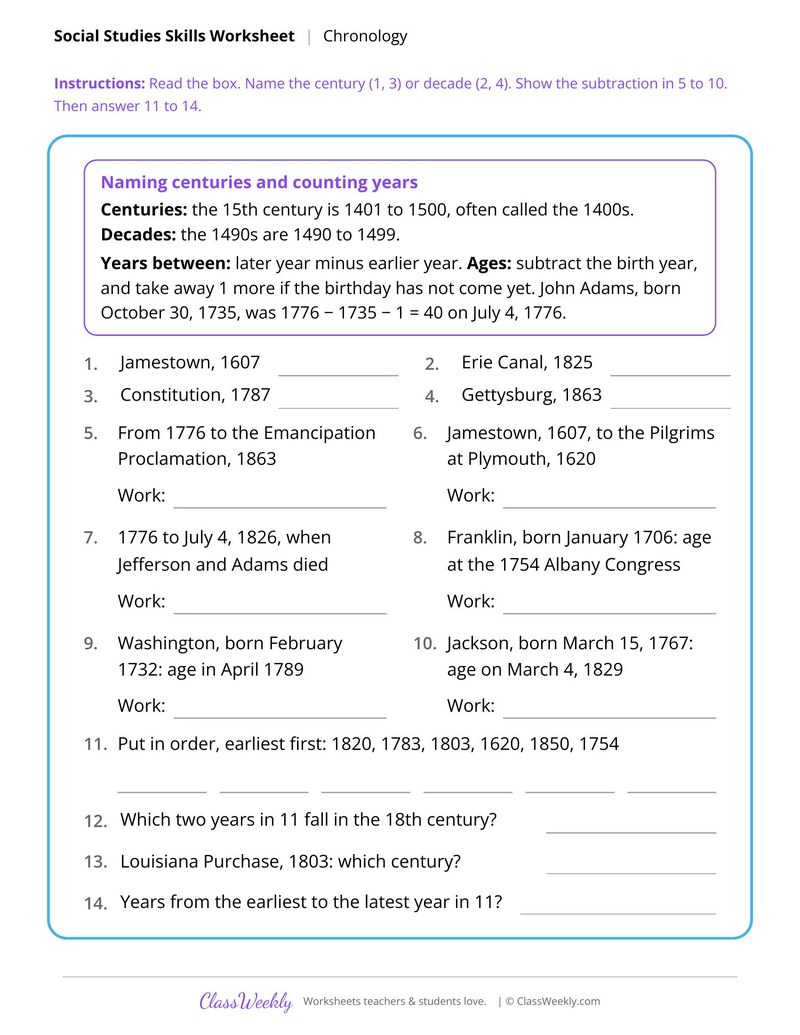
Centuries, Decades and Elapsed Years, 1600 to 1877
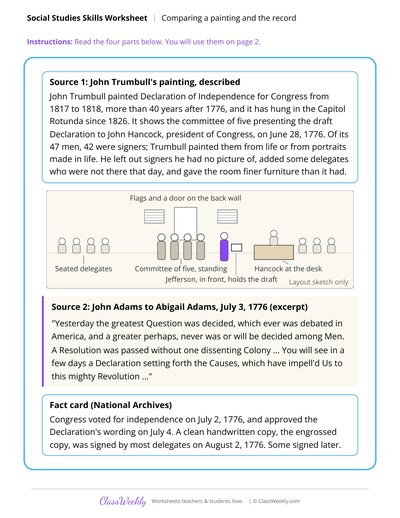
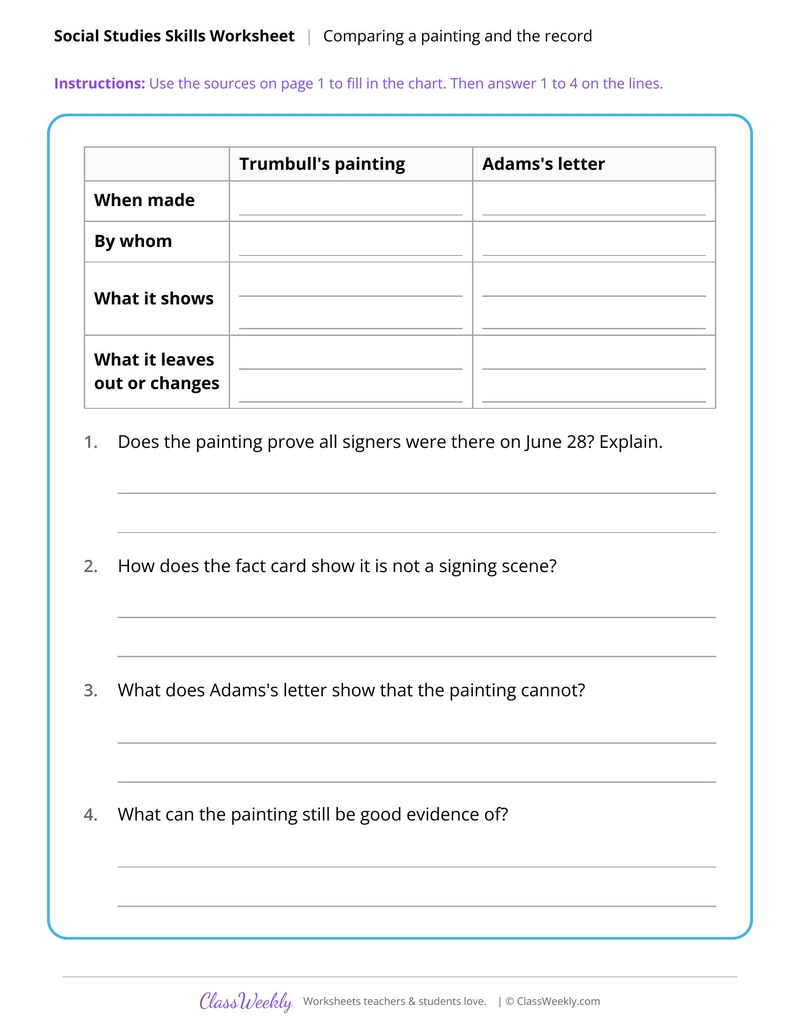
Trumbull's Declaration Painting and the Record
Curriculum Links
C3 Framework for Social Studies State Standards
Social Studies · 8th Grade
Find this in the curriculum
Browse the grade, subject, and topic this belongs to.
FAQ
How do I use this analyzing a quotation worksheet?
⌄
Read the quotation aloud and discuss the word help first. Pair the two sheets to compare a reformer's report with an antislavery speech.
What does this worksheet teach?
⌄
Analyze the words sunlight and stripes in Frederick Douglass's 1852 Fourth of July speech. The directions on the page read: Read the quotation, word help and context. Then answer question 1 on the lines. An answer key is included.
Can I use this analyzing a quotation worksheet for homeschool or classroom?
⌄
Yes, both. We made it for 8th grade Sources, Data and Research Skills, and it works the same at home or at school. At home, a student can work through it alone and then go over it with you, which shows quickly what is solid and what needs another look. In class it works as independent practice, homework or a warm-up, and you can print one copy or a full set.
What did Douglass mean by "This Fourth July is yours, not mine"?
⌄
Douglass had escaped slavery, and he spoke to an audience celebrating a holiday he could not share. Students chart the meaning of words like sunlight and stripes and explain how he used the ideals of the Declaration.
What did Horace Mann mean by the great equalizer?
⌄
In his 1848 report Mann wrote that education is the great equalizer of the conditions of men. Students explain how common schools could work like the balance wheel in a watch.
How do you analyze a historical quotation?
⌄
Read the word help, then the context, then ask who the audience was and why the speaker chose those words. Both sheets follow this order.
Ratings & Reviews
No reviews yet. Be the first to share what you think.
Reviews are for ClassWeekly members.
Make a Request
Spotted something to fix, or want a worksheet we don't have yet? Tell us and we'll make it.
Worksheet Details
| Grade | 8th Grade |
| Subject | Social Studies |
| Topic | Sources, Data and Research Skills |
| Standard | D2.His.4.6-8 |
| Pages | 2 pages |
| Difficulty | Medium |
What is ClassWeekly?
ClassWeekly offers free worksheets and printable learning resources for kids, from preschool up. All worksheets are aligned to Common Core, NGSS, and C3 Framework standards and designed by educators. Become a member to access the full library and download unlimited PDFs.
The Age of Brass Cartoon of 1869
Cartoon Techniques in Early Republic Cartoons
General Jackson Slaying the Bank Monster, 1836
Lincoln's Second Inaugural Address
Five Ws of an 1869 Newspaper Report
Fact, Opinion and Judgment on Shays' Rebellion
Centuries, Decades and Elapsed Years, 1600 to 1877
Trumbull's Declaration Painting and the Record