Civic Duties and Responsibilities in the Early Republic
Written by Adi Ackerman, Head Teacher
"Civic Duties and Responsibilities in the Early Republic" is written for 8th Grade (Ages 13-14), and it covers C3 Framework D2.Civ.2.6-8. A 7th grader who is already steady on the Constitution and Bill of Rights can use it too, and an older student can use it as a short review.
2 pages in this set
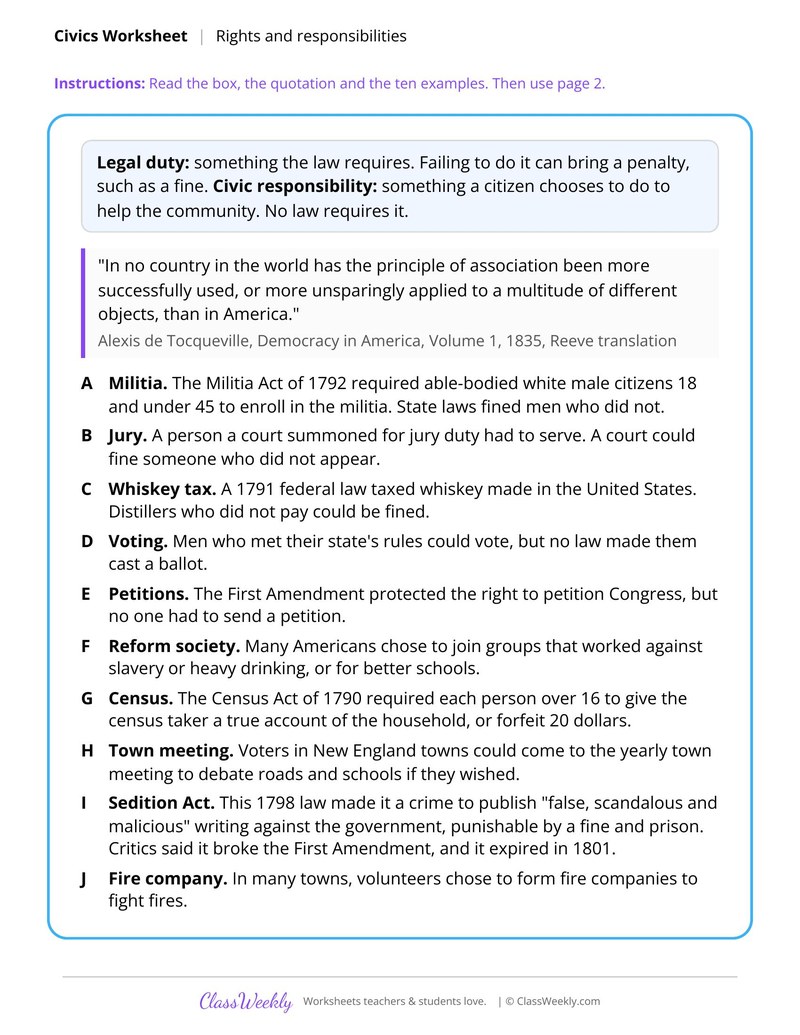
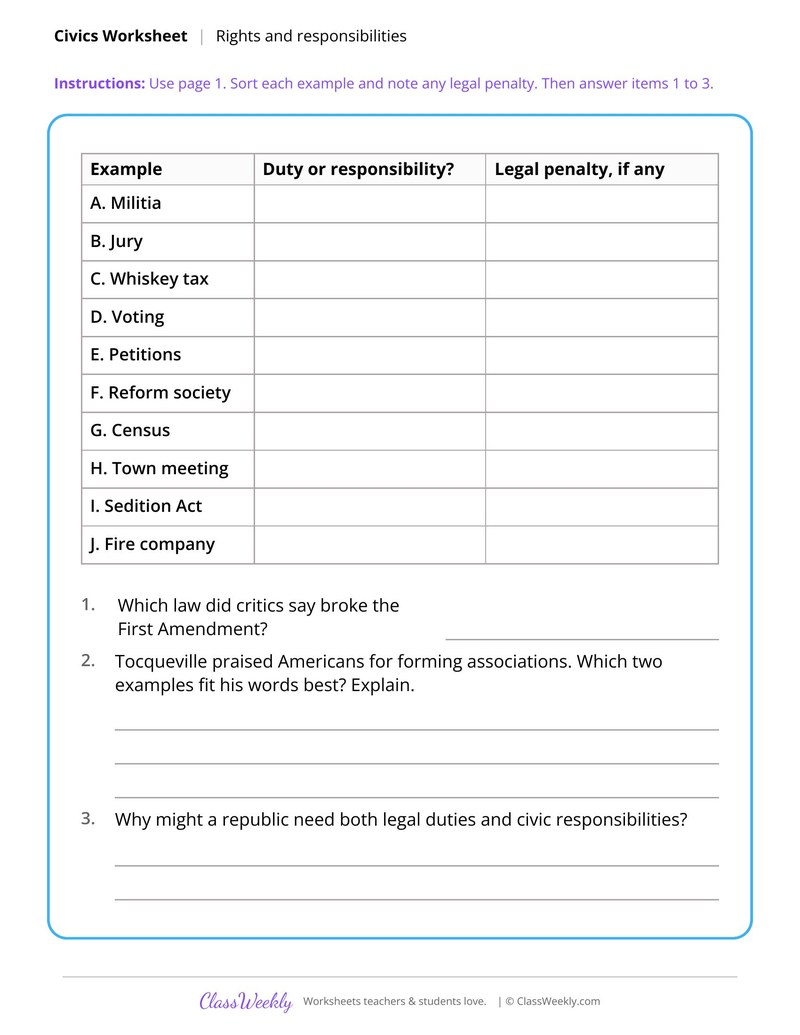
8th grade social studies worksheet: sort ten examples, from the Militia Act to fire companies, into legal duties or civic choices. Answer key included. Part of our Bill of Rights and amendments collection. Aligned to C3 Framework standards.
How do I use this worksheet?
Begin with the Madison sheet for the background, then use the duties sheet to talk about citizens. Give the religious liberty sheet as a writing task.
What students will practice
- Students will tell a legal duty from a civic responsibility using the definitions on the page.
- Students will sort ten early republic examples and note any legal penalty.
- Students will link Tocqueville's words on associations to two of the examples.
We the People and the Ratification Debate
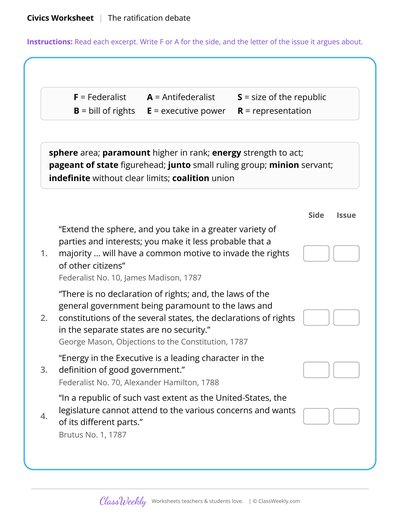
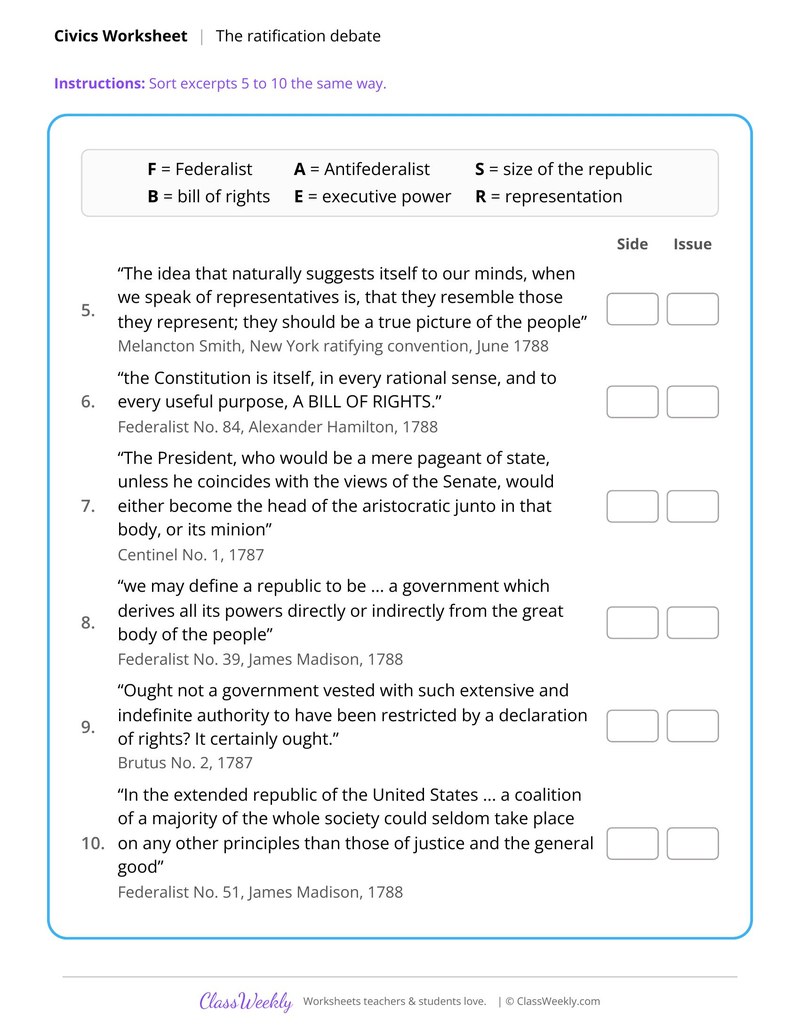
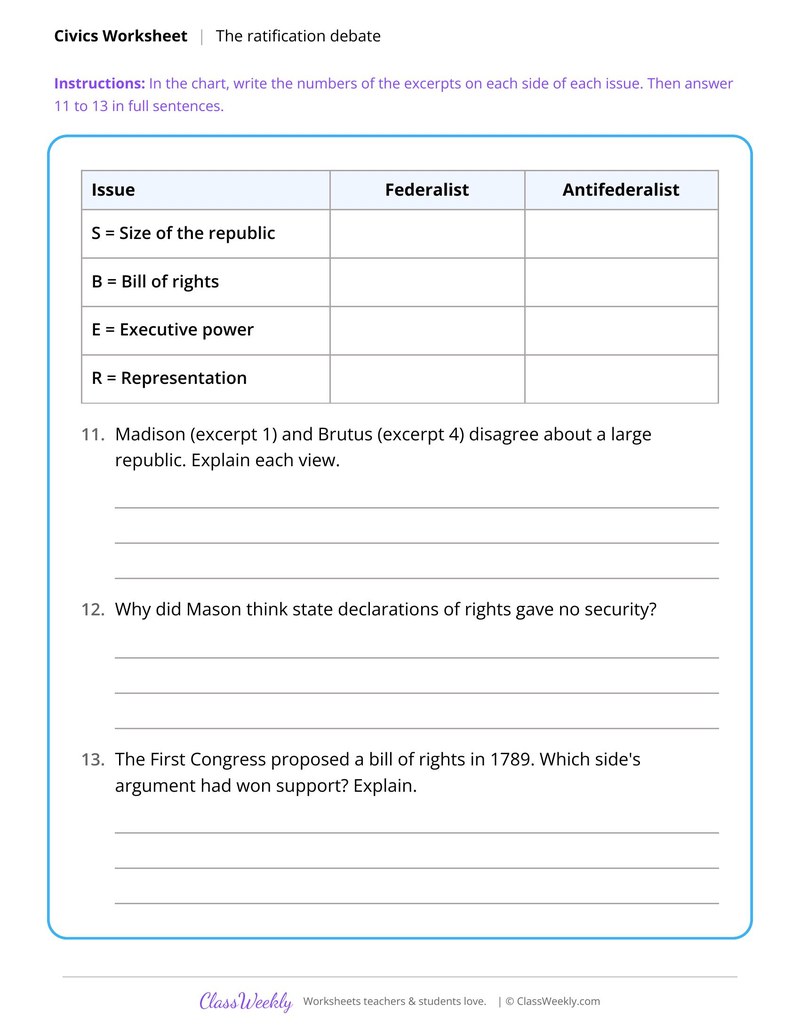
Federalist and Antifederalist Arguments Sorted
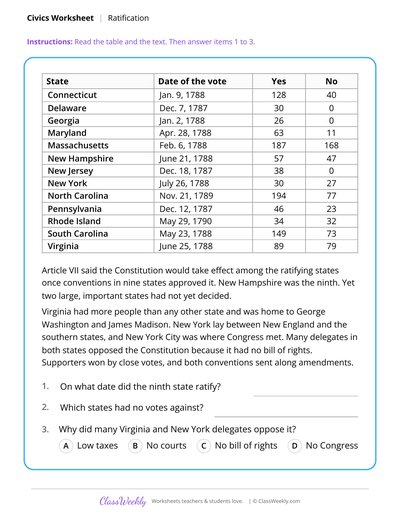
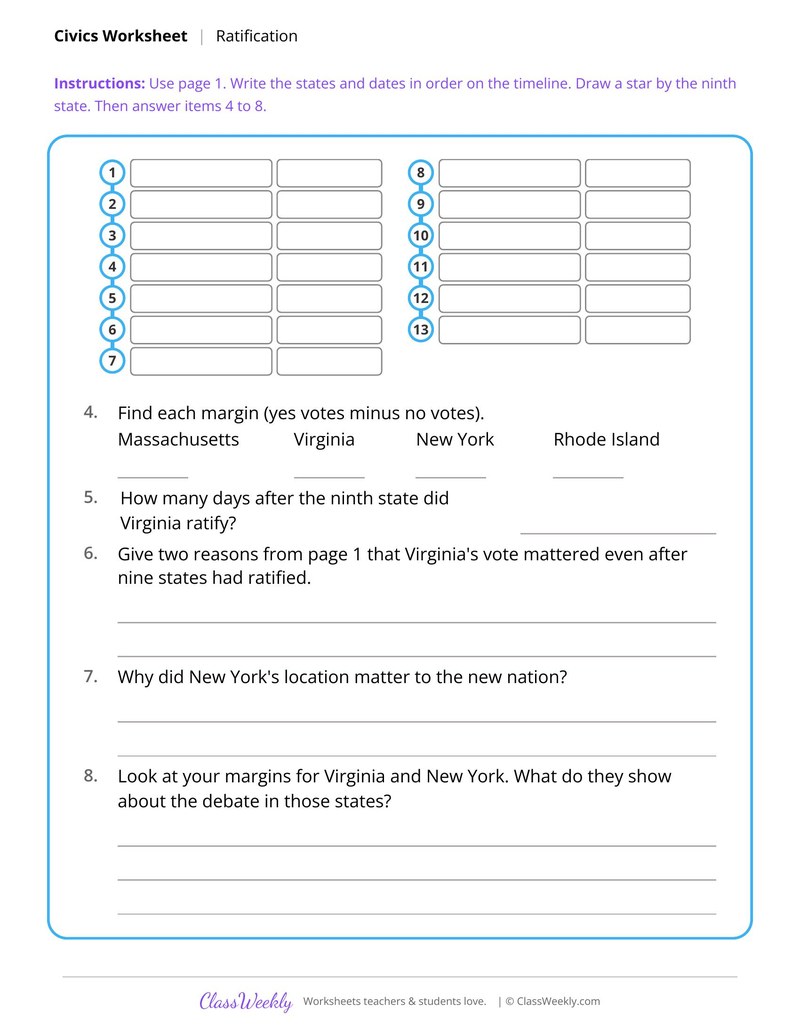
Ratifying the Constitution State by State
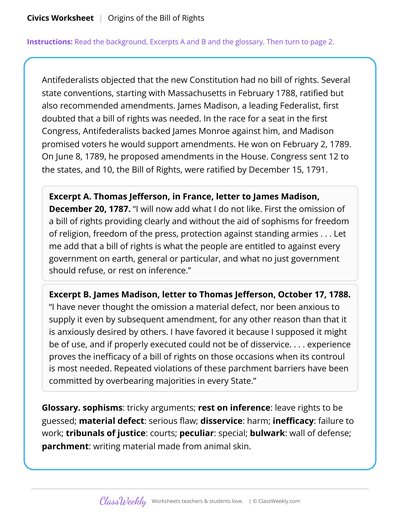
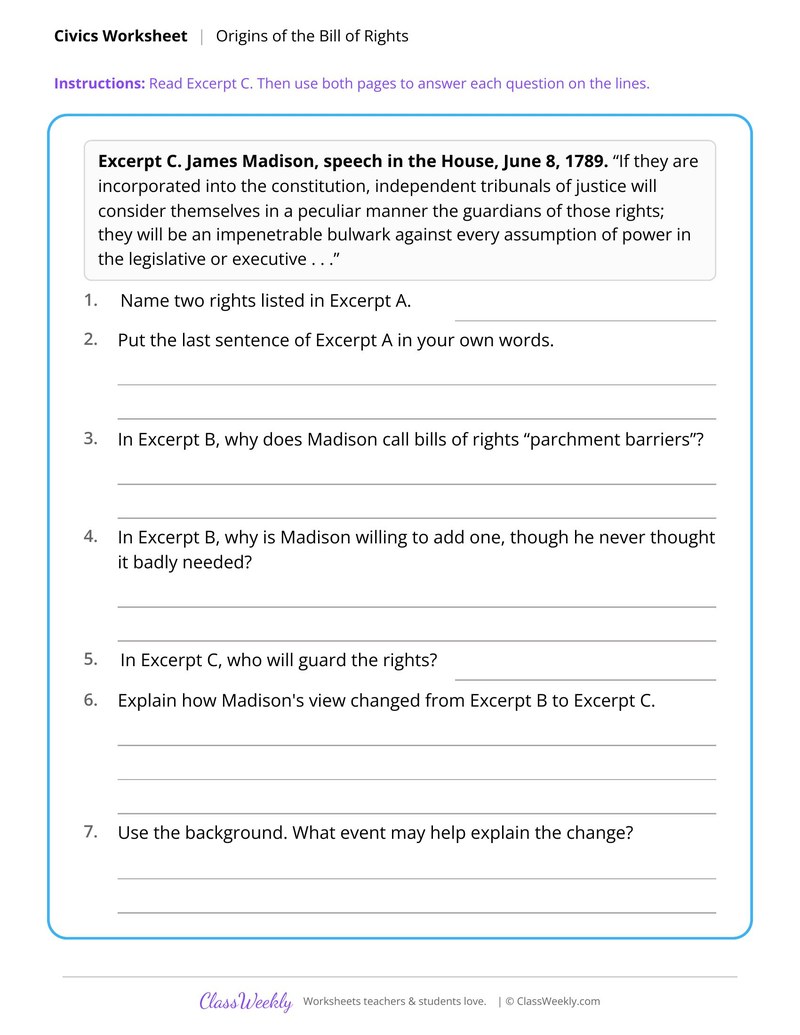
Why Madison Proposed a Bill of Rights
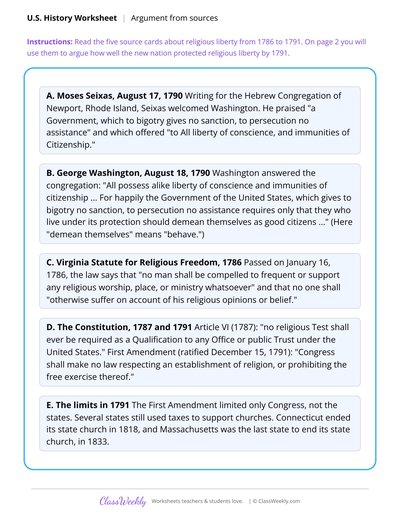
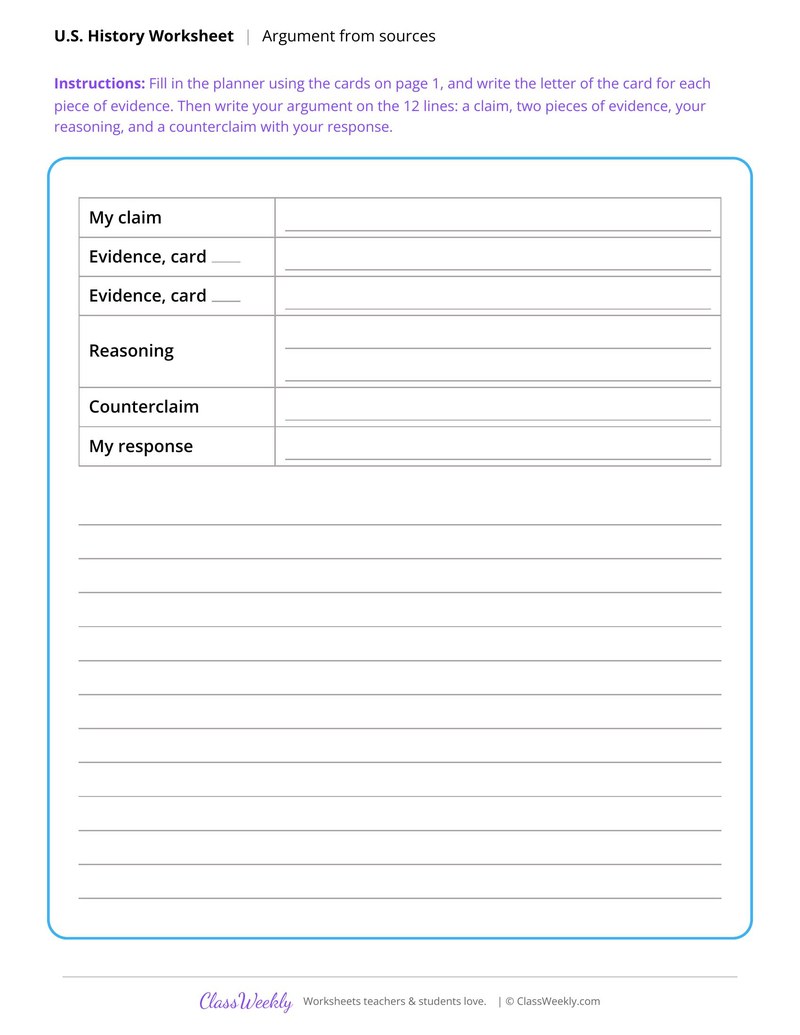
Religious Liberty Argument From Newport to 1791
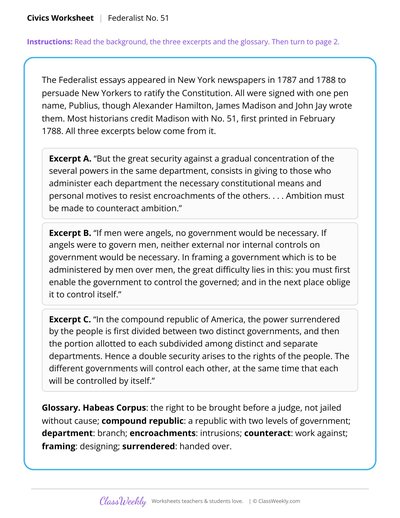
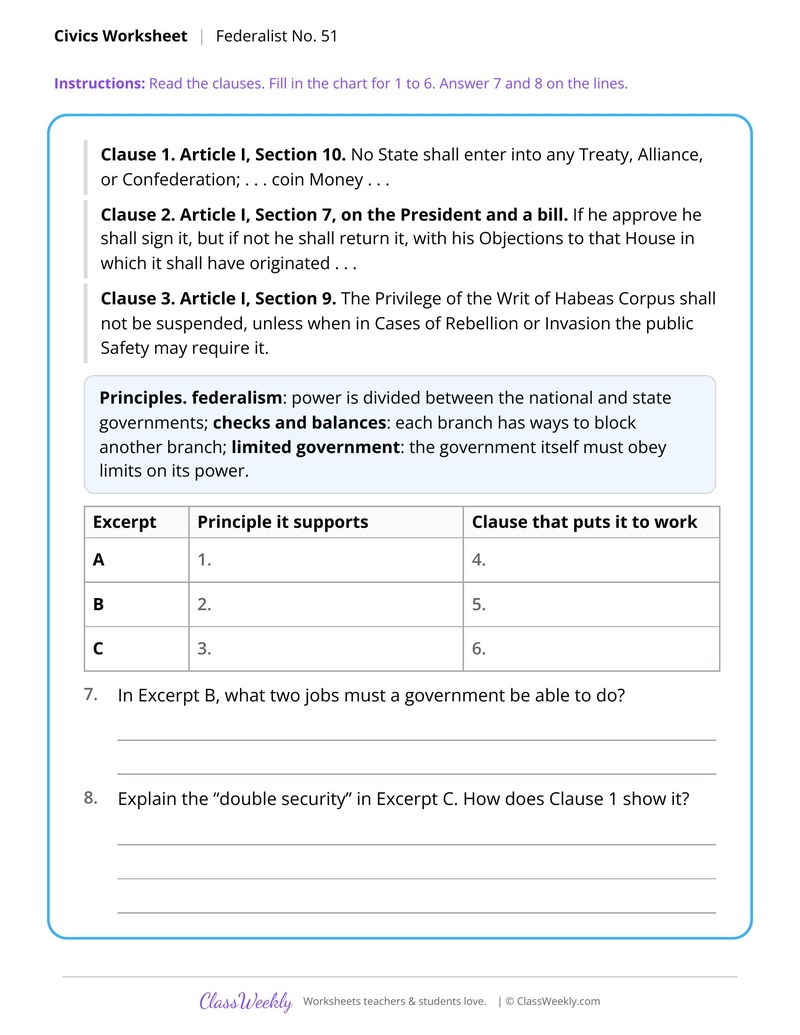
Federalist No. 51 and the Structure of Government
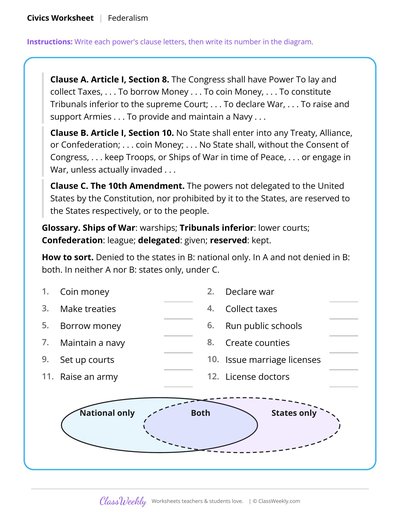
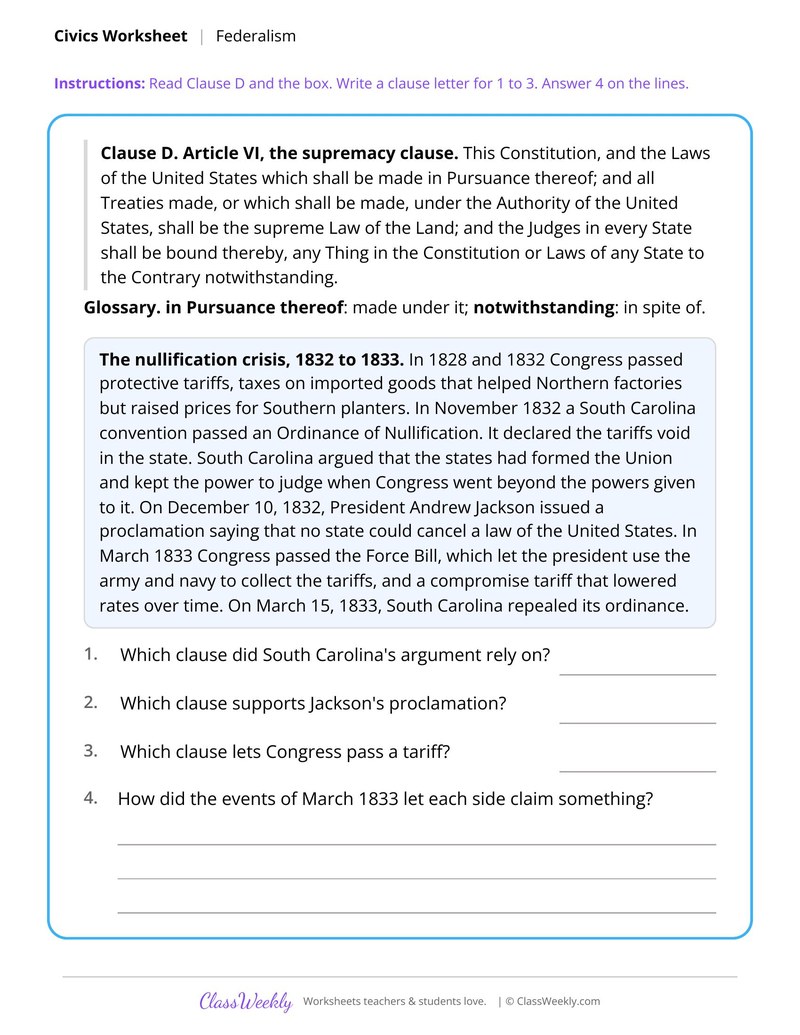
Federalism in the Constitution Venn Diagram
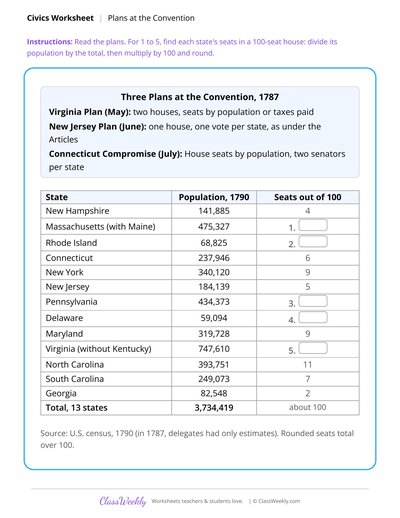
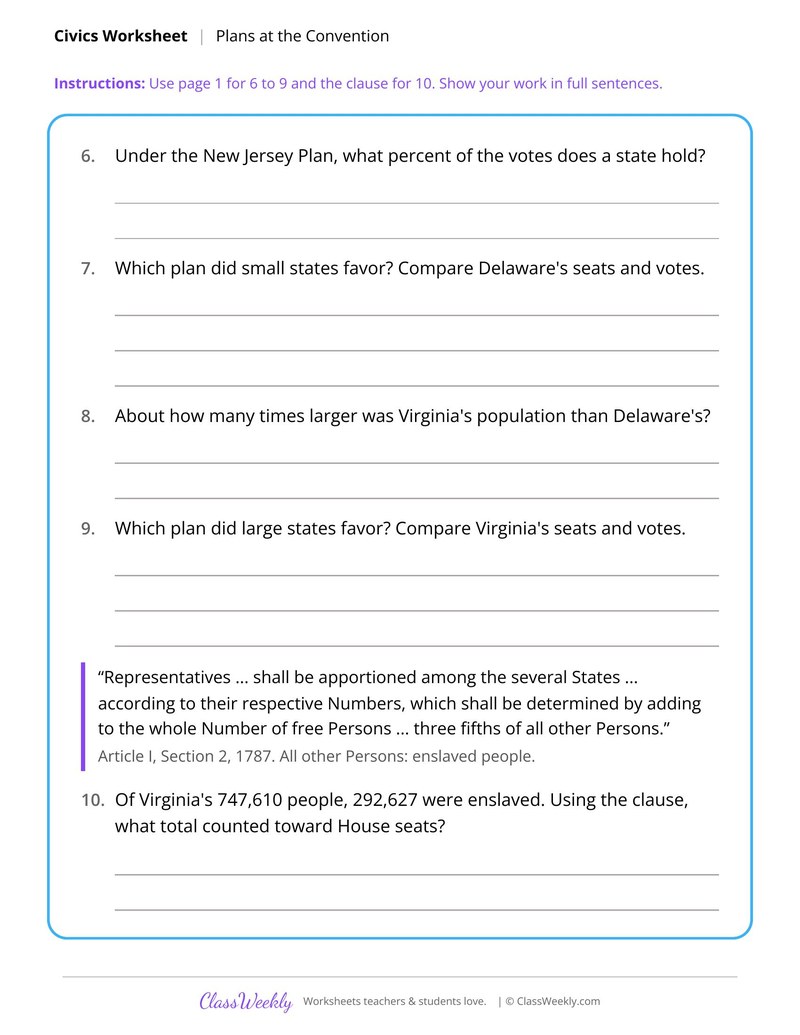
Virginia Plan or New Jersey Plan Seat Math
Curriculum Links
C3 Framework for Social Studies State Standards
Social Studies · 8th Grade
Find this in the curriculum
Browse the grade, subject, and topic this belongs to.
FAQ
How do I use this Bill of Rights and amendments worksheet?
⌄
Begin with the Madison sheet for the background, then use the duties sheet to talk about citizens. Give the religious liberty sheet as a writing task.
What does this worksheet teach?
⌄
Sort ten examples, from the Militia Act to fire companies, into legal duties or civic choices. The directions on the page read: Read the box, the quotation and the ten examples. Then use page 2. An answer key is included.
Can I use this Bill of Rights and amendments worksheet for homeschool or classroom?
⌄
Yes, both. We made it for 8th grade the Constitution and Bill of Rights, and it works the same at home or at school. At home, a student can work through it alone and then go over it with you, which shows quickly what is solid and what needs another look. In class it works as independent practice, homework or a warm-up, and you can print one copy or a full set.
Why did James Madison change his mind about a bill of rights?
⌄
Madison first doubted one was needed and called bills of rights parchment barriers. In the race for the first Congress he promised voters he would support amendments, and on June 8, 1789, he proposed them in the House.
What is the difference between a legal duty and a civic responsibility?
⌄
A legal duty is something the law requires, such as serving on a jury when summoned, and failing to do it can bring a penalty. A civic responsibility is something a citizen chooses to do to help the community, such as joining a fire company.
What sources does the religious liberty sheet use?
⌄
It uses five source cards from 1786 to 1791, including the Virginia Statute for Religious Freedom and the 1790 letters between Moses Seixas and George Washington. Students plan and write an argument with a counterclaim.
Ratings & Reviews
No reviews yet. Be the first to share what you think.
Reviews are for ClassWeekly members.
Make a Request
Spotted something to fix, or want a worksheet we don't have yet? Tell us and we'll make it.
Worksheet Details
| Grade | 8th Grade |
| Subject | Social Studies |
| Topic | The Constitution and Bill of Rights |
| Standard | D2.Civ.2.6-8 |
| Pages | 2 pages |
| Difficulty | Medium |
What is ClassWeekly?
ClassWeekly offers free worksheets and printable learning resources for kids, from preschool up. All worksheets are aligned to Common Core, NGSS, and C3 Framework standards and designed by educators. Become a member to access the full library and download unlimited PDFs.
We the People and the Ratification Debate
Federalist and Antifederalist Arguments Sorted
Ratifying the Constitution State by State
Why Madison Proposed a Bill of Rights
Religious Liberty Argument From Newport to 1791
Federalist No. 51 and the Structure of Government
Federalism in the Constitution Venn Diagram
Virginia Plan or New Jersey Plan Seat Math