Aztec Chinampa Farming Cross Section
Written by Adi Ackerman, Head Teacher
"Aztec Chinampa Farming Cross Section" is written for 7th Grade (Ages 12-13). A 6th grader who is already steady on Ancient History can use it too, and an older student can use it as a short review.
2 pages in this set
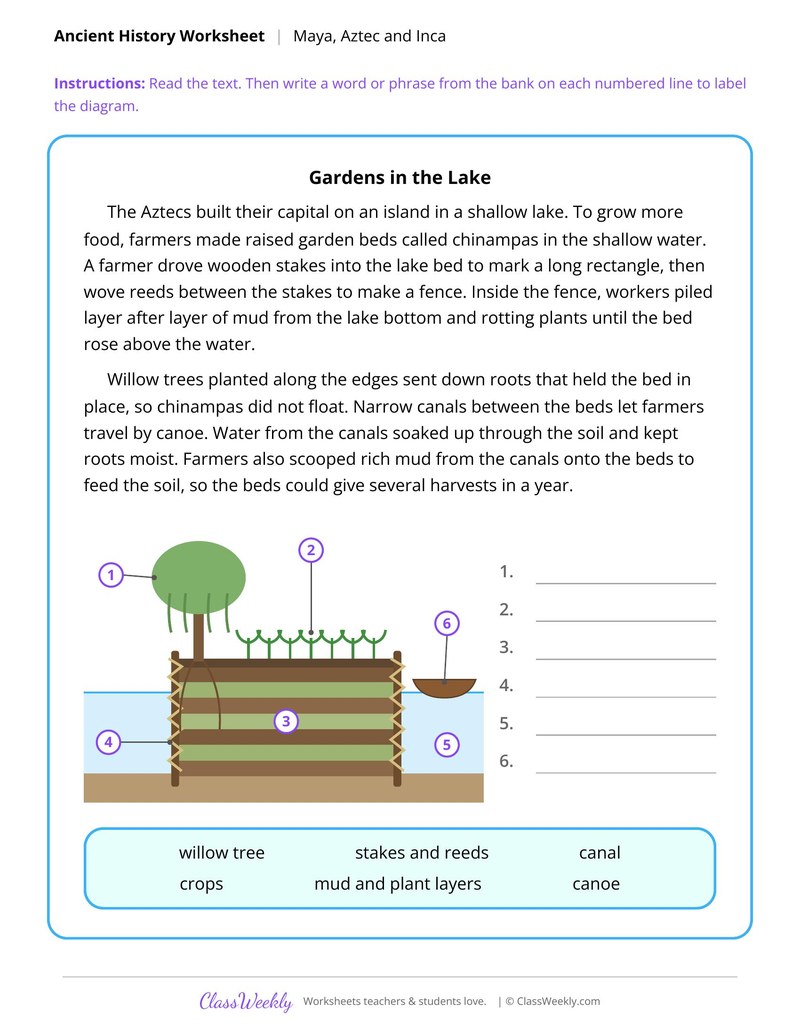
7th grade social studies worksheet: label an Aztec chinampa cross section, then explain how raised beds grew crops in a lake. Answer key included. Part of our Maya, Aztec and Inca ancient history collection.
How do I use this worksheet?
Use Maya Base Twenty Numbers after place value is secure, since it asks students to carry at 20. The chinampa and Inca sheets rely on a reading passage on page 1.
What students will practice
- Students will read how Aztec farmers built raised garden beds in a shallow lake.
- Students will label a chinampa cross section from a bank of words and phrases.
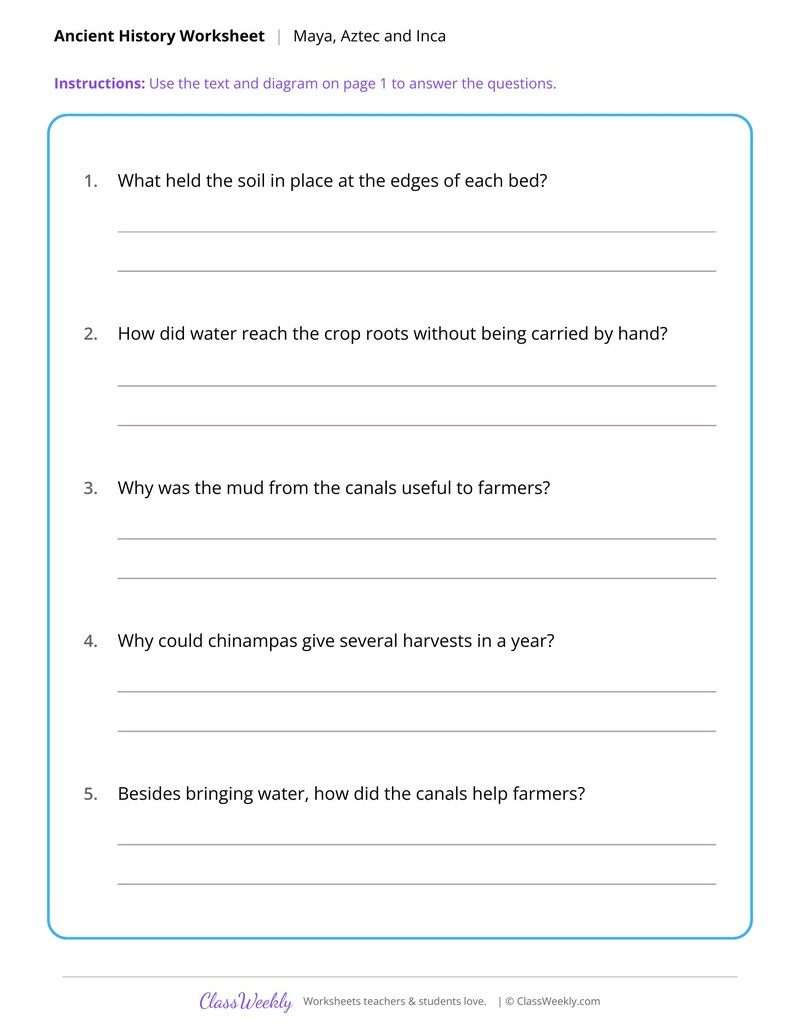
- Students will explain what held the soil, how crops got water and why mud from canals helped.
Athens and Sparta in the Peloponnesian War
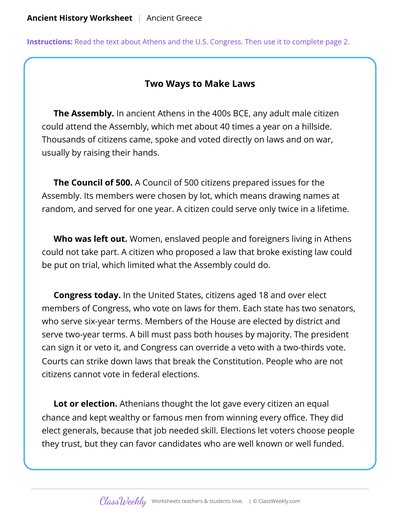
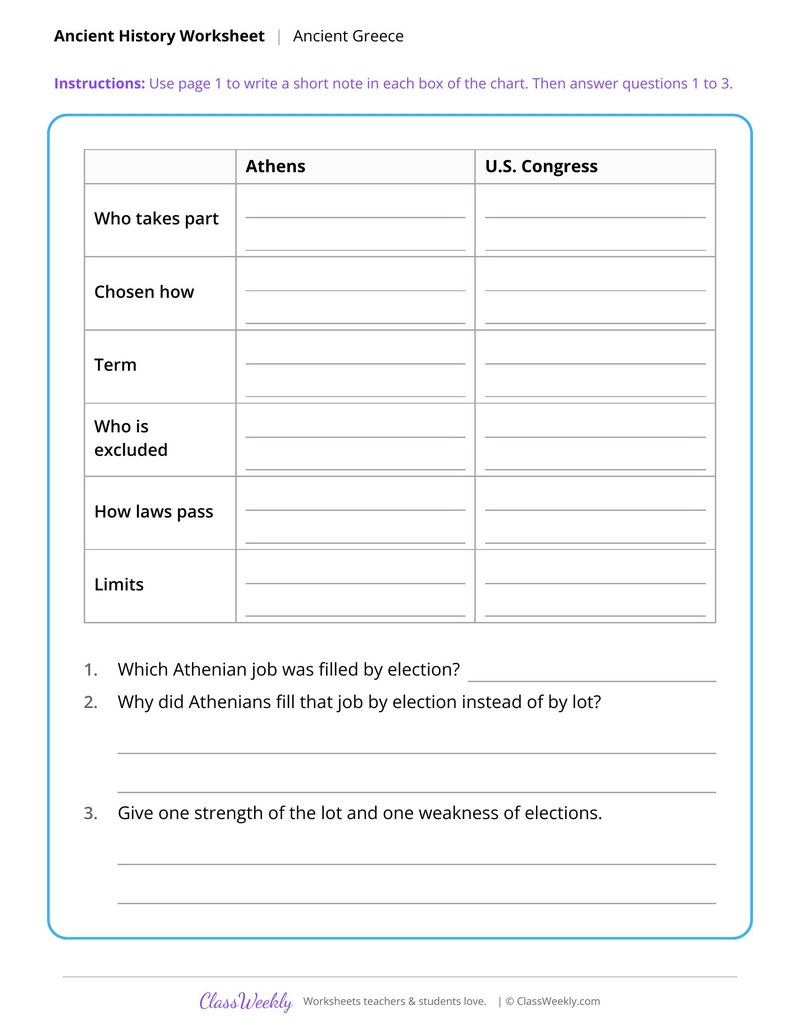
The Athenian Assembly and the U.S. Congress
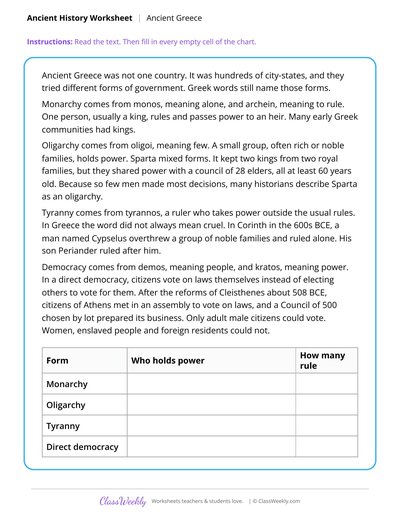
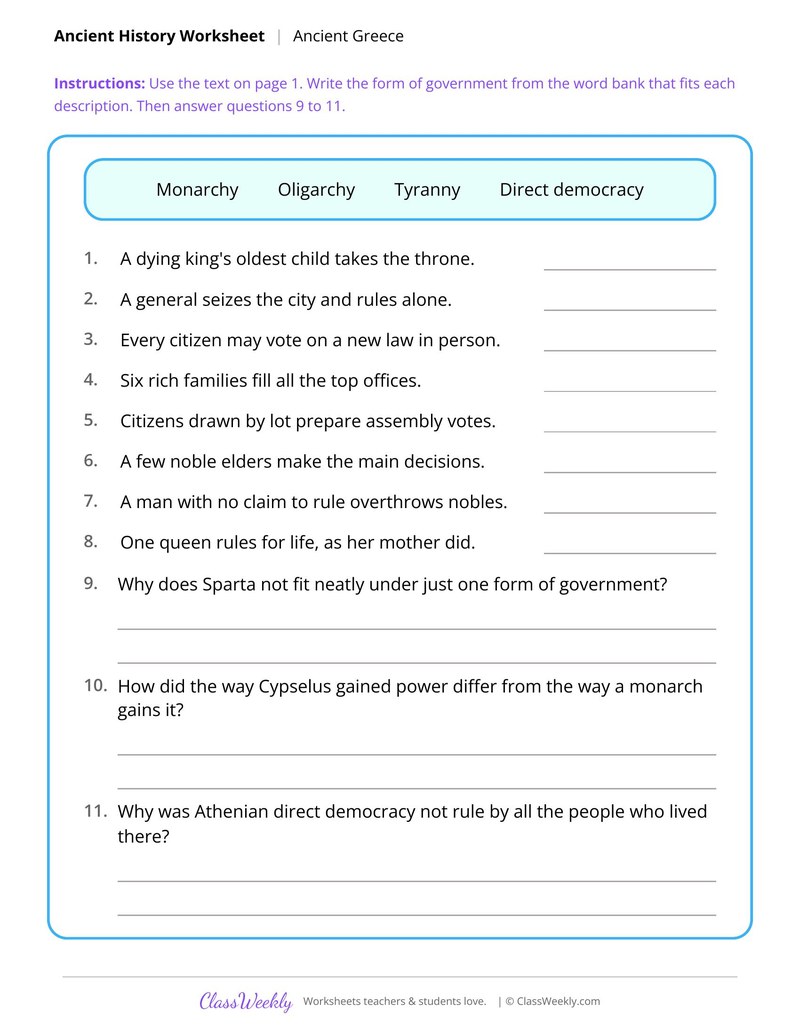
Forms of Government in Greek City-States
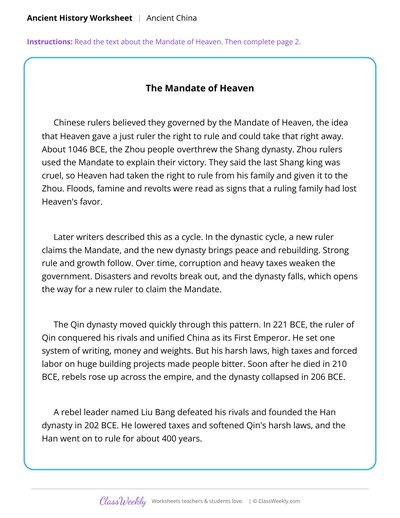
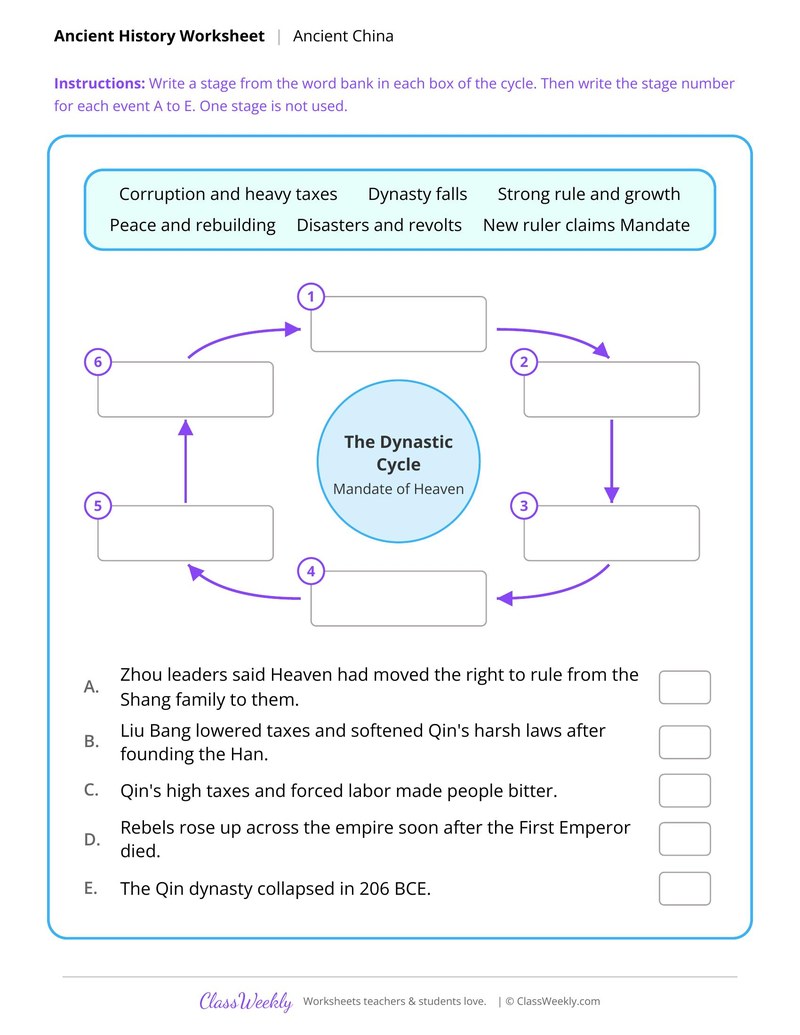
The Dynastic Cycle in Early China
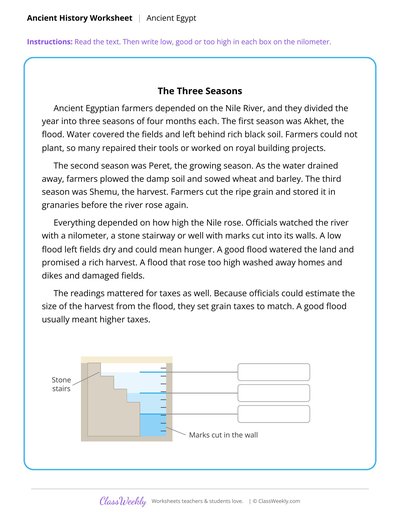
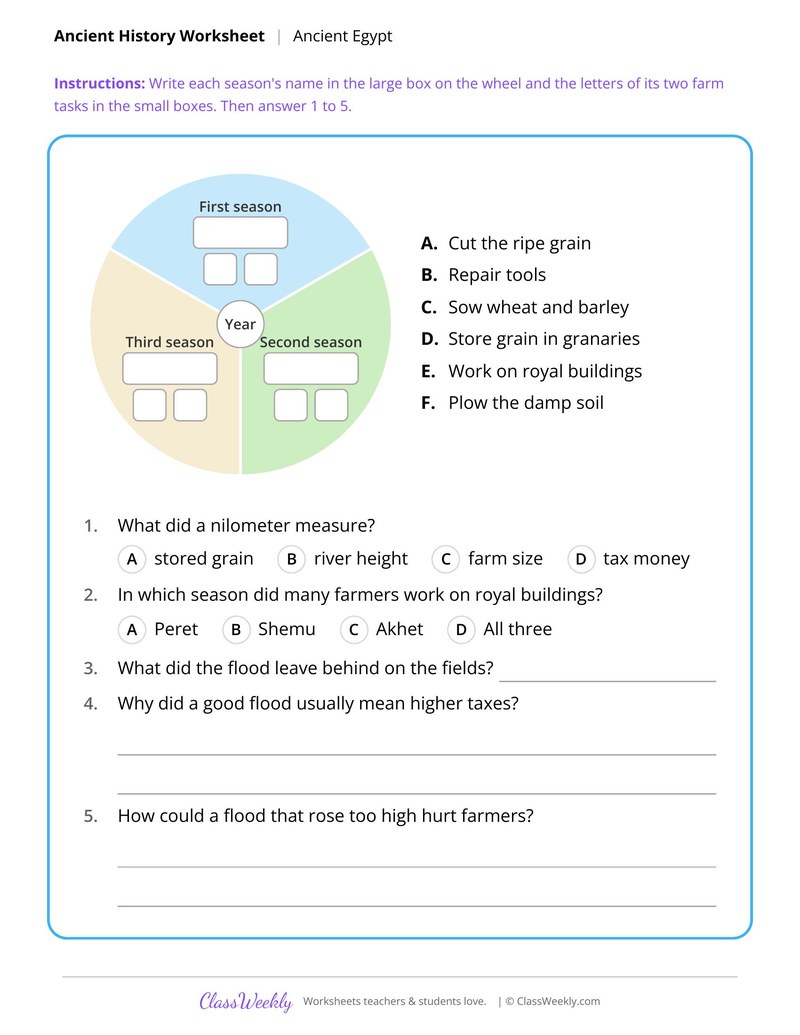
Egypt's Three Seasons and the Nile Flood
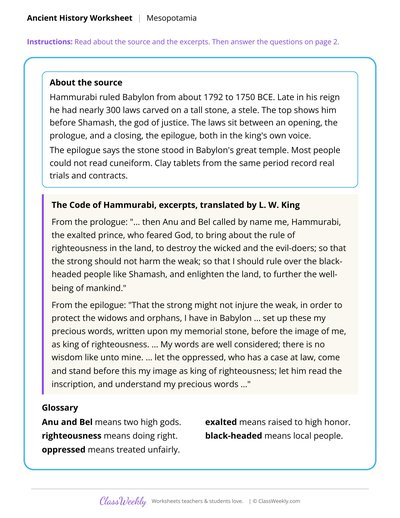
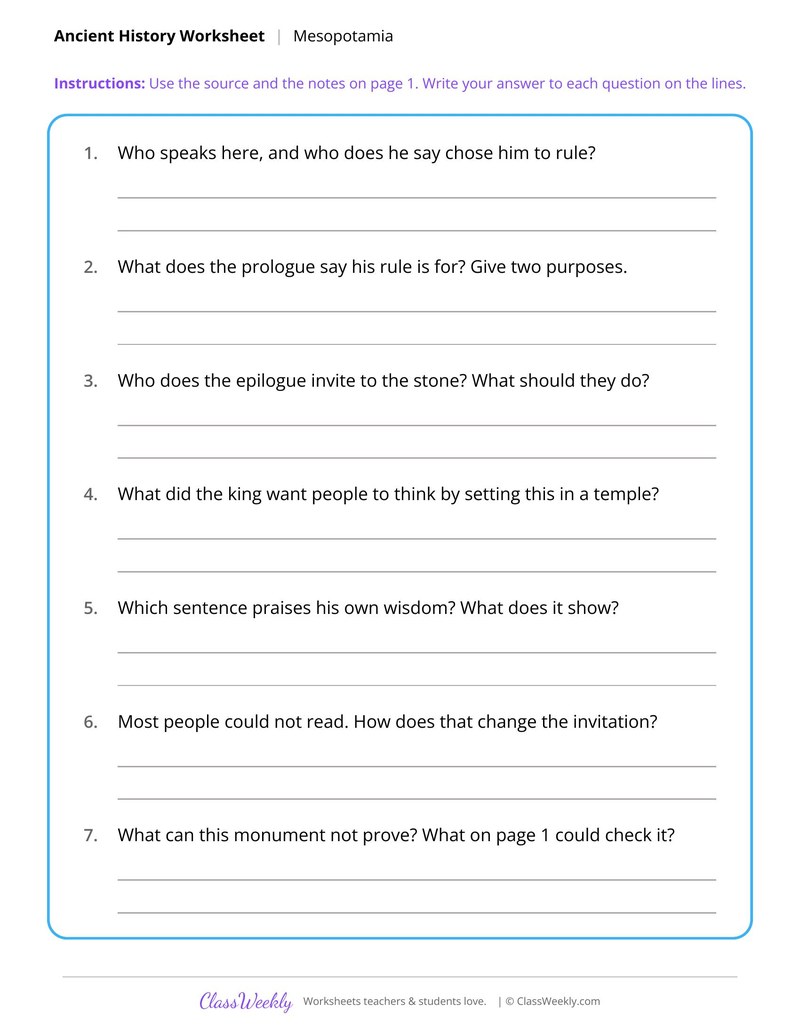
Hammurabi's Prologue as a Primary Source
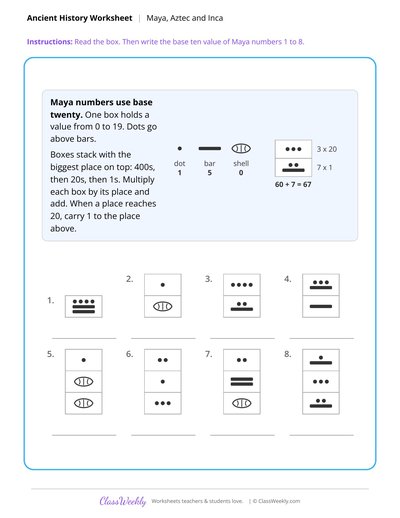
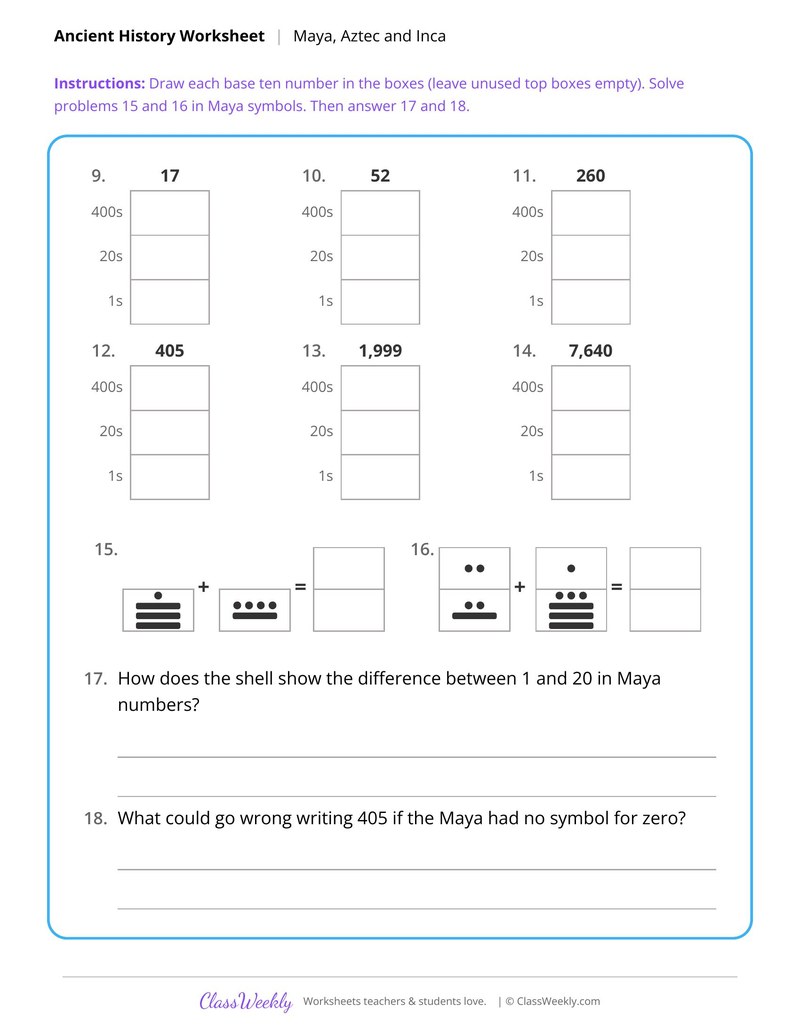
Maya Base Twenty Numbers
Inca Bridges, Way Stations and Road Rules
Curriculum Links
Find this in the curriculum
Browse the grade, subject, and topic this belongs to.
FAQ
How do I use this Maya, Aztec and Inca worksheet?
⌄
Use Maya Base Twenty Numbers after place value is secure, since it asks students to carry at 20. The chinampa and Inca sheets rely on a reading passage on page 1.
What does this worksheet teach?
⌄
Label an Aztec chinampa cross section, then explain how raised beds grew crops in a lake. The directions on the page read: Read the text. Then write a word or phrase from the bank on each numbered line to label the diagram. An answer key is included.
Can I use this Maya, Aztec and Inca worksheet for homeschool or classroom?
⌄
Yes, both. We made it for 7th grade Ancient History, and it works the same at home or at school. At home, a student can work through it alone and then go over it with you, which shows quickly what is solid and what needs another look. In class it works as independent practice, homework or a warm-up, and you can print one copy or a full set.
How do Maya numbers work?
⌄
Maya numbers use base twenty. A dot is 1, a bar is 5 and a shell is 0, and boxes stack with the 400s on top, then the 20s and the 1s.
What were chinampas?
⌄
They were raised garden beds the Aztecs made in a shallow lake. Workers piled layers of mud and rotting plants inside a fence of stakes and reeds. Aztec Chinampa Farming Cross Section labels the parts.
How did the Inca build roads in the mountains?
⌄
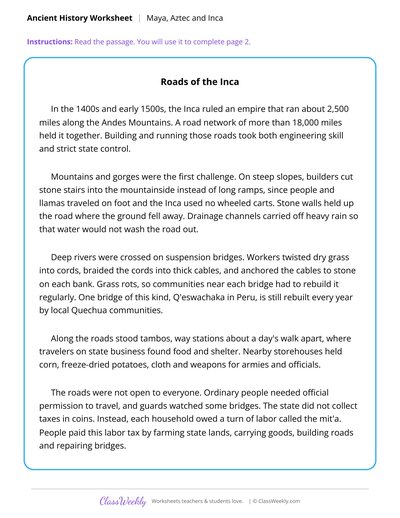
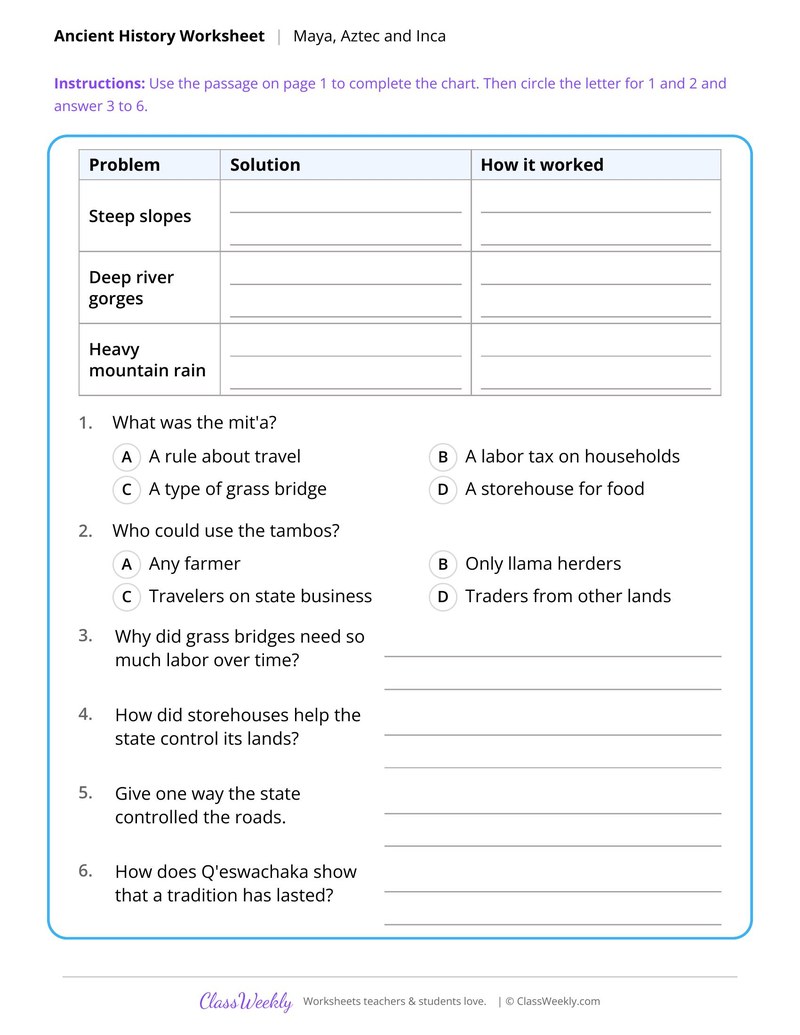
They cut stone stairs into steep slopes instead of long ramps, since people and llamas traveled on foot and the Inca used no wheeled carts. Inca Bridges, Way Stations and Road Rules has a chart of problems and solutions.
Ratings & Reviews
No reviews yet. Be the first to share what you think.
Reviews are for ClassWeekly members.
Make a Request
Spotted something to fix, or want a worksheet we don't have yet? Tell us and we'll make it.
Worksheet Details
| Grade | 7th Grade |
| Subject | Social Studies |
| Topic | Ancient History |
| Pages | 2 pages |
| Difficulty | Medium |
What is ClassWeekly?
ClassWeekly offers free worksheets and printable learning resources for kids, from preschool up. All worksheets are aligned to Common Core, NGSS, and C3 Framework standards and designed by educators. Become a member to access the full library and download unlimited PDFs.
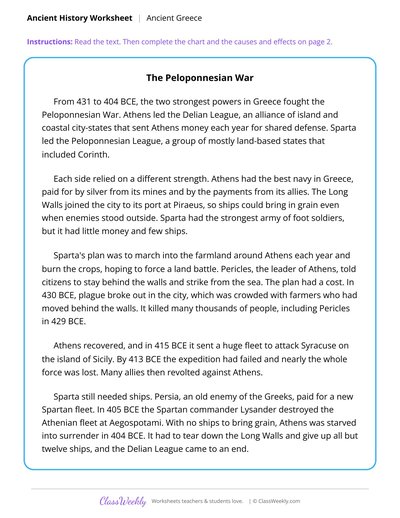
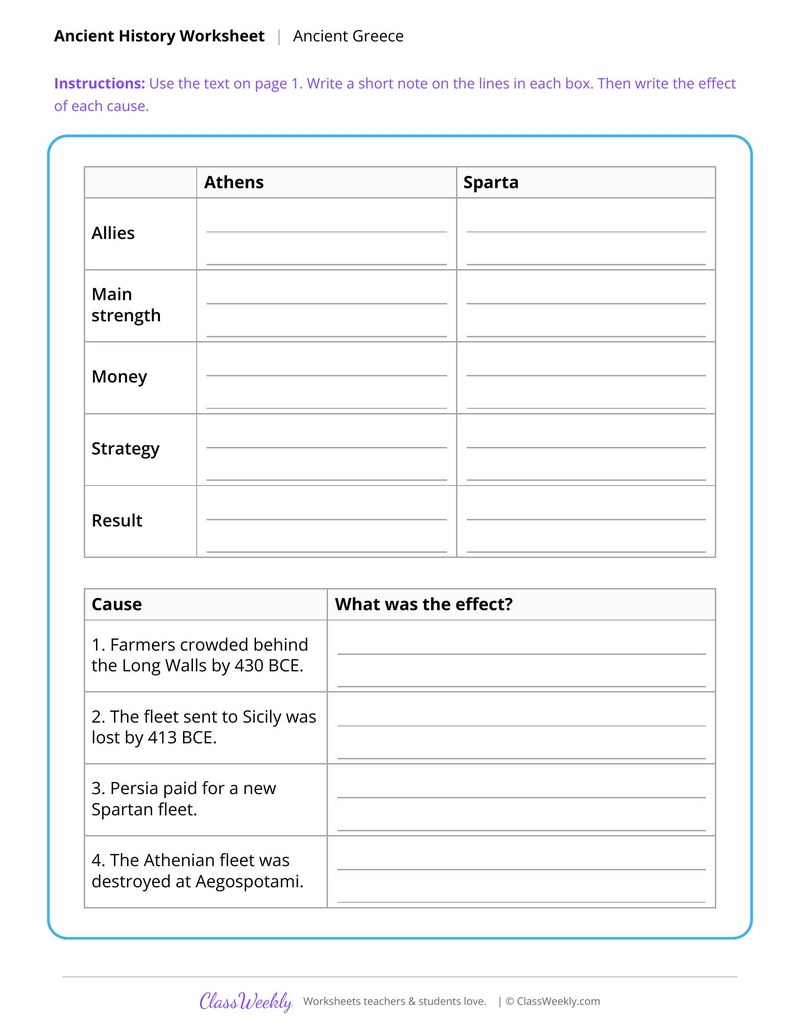
Athens and Sparta in the Peloponnesian War
The Athenian Assembly and the U.S. Congress
Forms of Government in Greek City-States
The Dynastic Cycle in Early China
Egypt's Three Seasons and the Nile Flood
Hammurabi's Prologue as a Primary Source
Maya Base Twenty Numbers
Inca Bridges, Way Stations and Road Rules