Northern and Southern Reactions Before the War
Written by Adi Ackerman, Head Teacher
"Northern and Southern Reactions Before the War" is written for 7th Grade (Ages 12-13), and it covers C3 Framework D2.His.4.6-8. A 6th grader who is already steady on Causes of the Civil War can use it too, and an older student can use it as a short review.
2 pages in this set
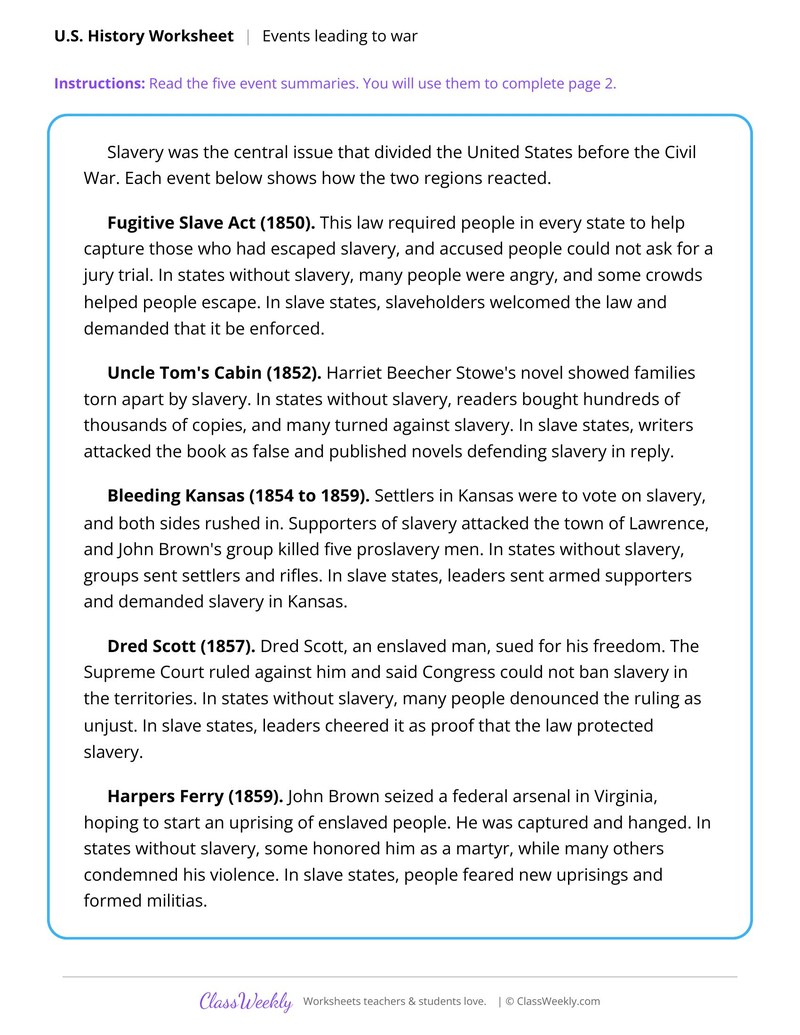
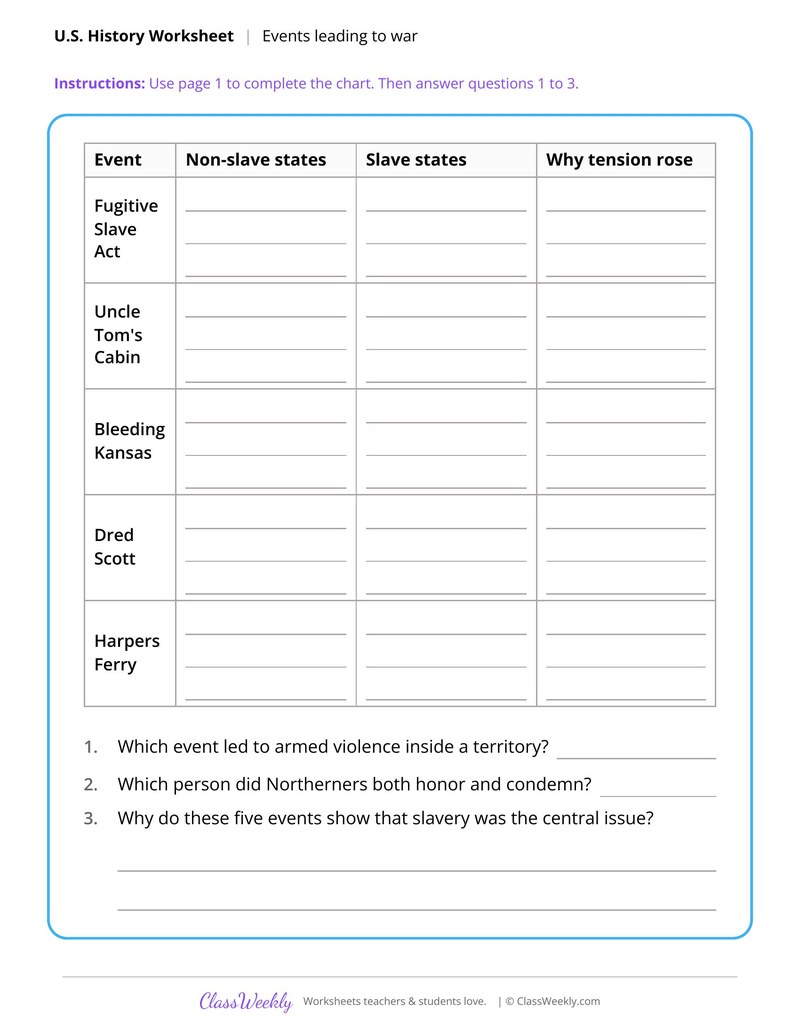
7th grade social studies worksheet: compare Northern and Southern reactions to the Fugitive Slave Act, Bleeding Kansas and Dred Scott. Answer key included. Part of our events leading to war collection. Aligned to C3 Framework standards.
How do I use this worksheet?
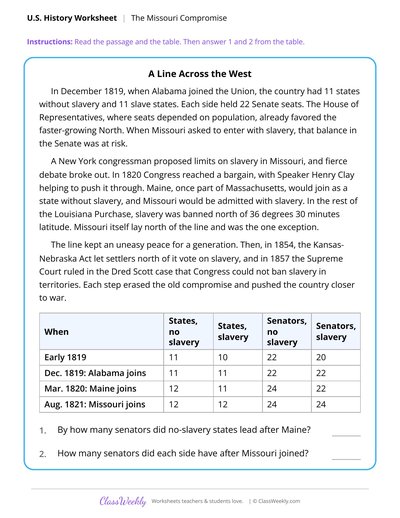
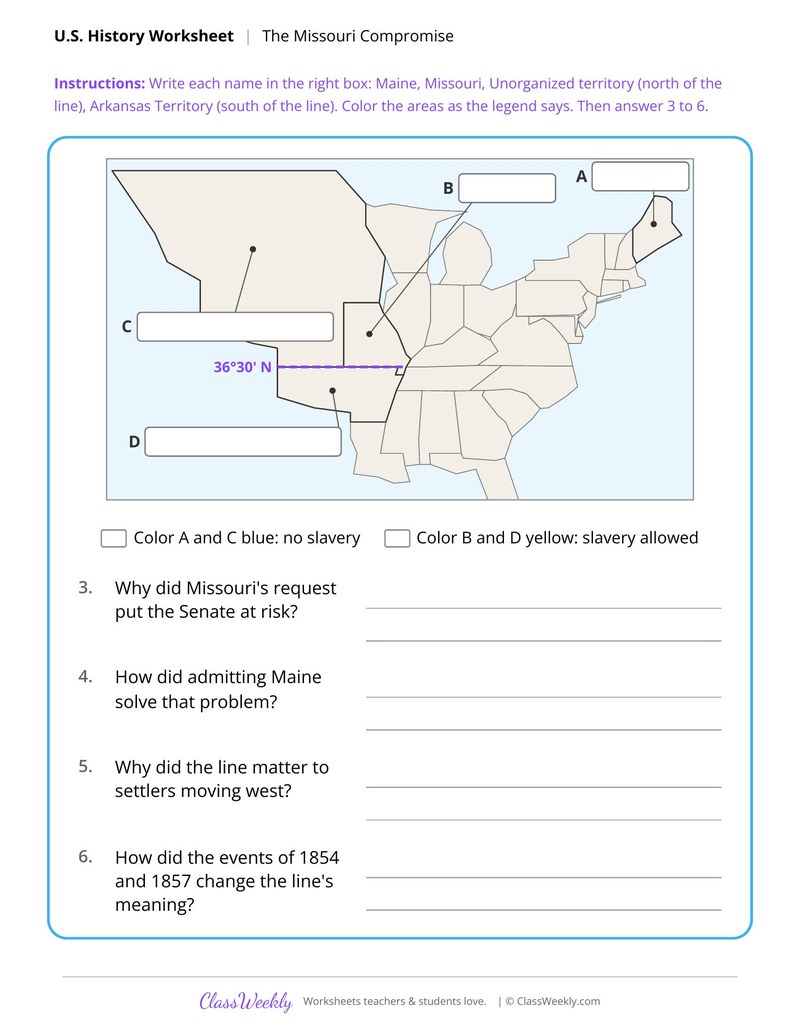
Begin with the timeline for the big picture, then use the reactions chart for perspective. The Missouri Compromise map works well on its own as a short lesson on geography and power in Congress.
What students will practice
- Students will summarize five events that divided the nation before the Civil War.
- Students will compare how non-slave states and slave states reacted to each event.
- Students will explain why the five events show that slavery was the central issue.
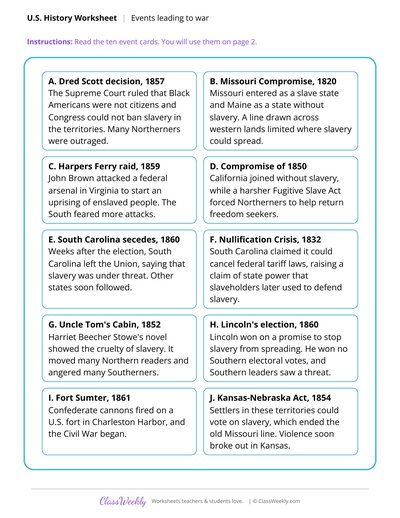
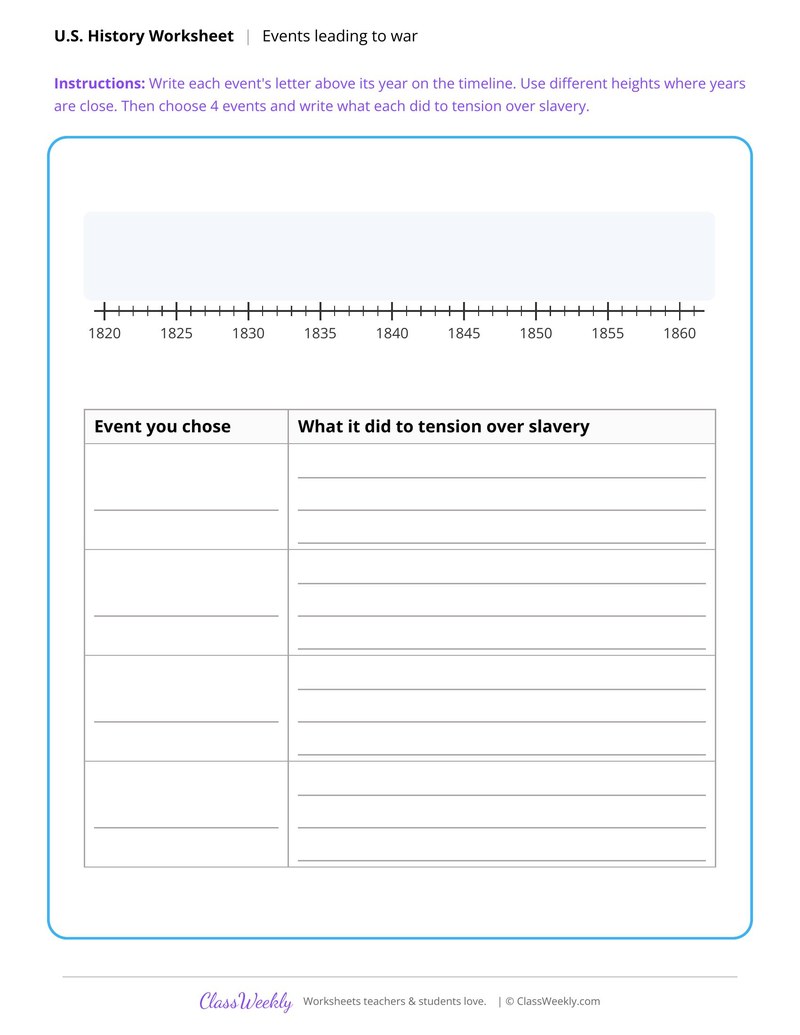
Civil War Causes Timeline, 1820 to 1861
Missouri Compromise Line and State Balance
Athens and Sparta in the Peloponnesian War
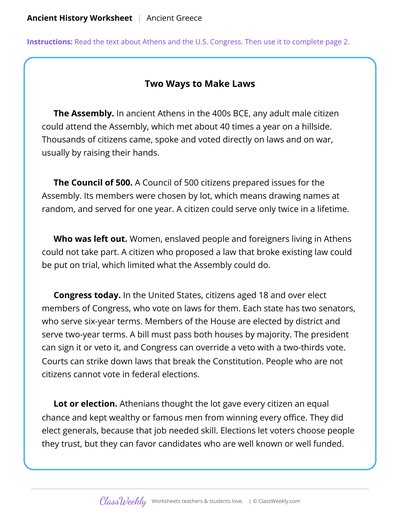
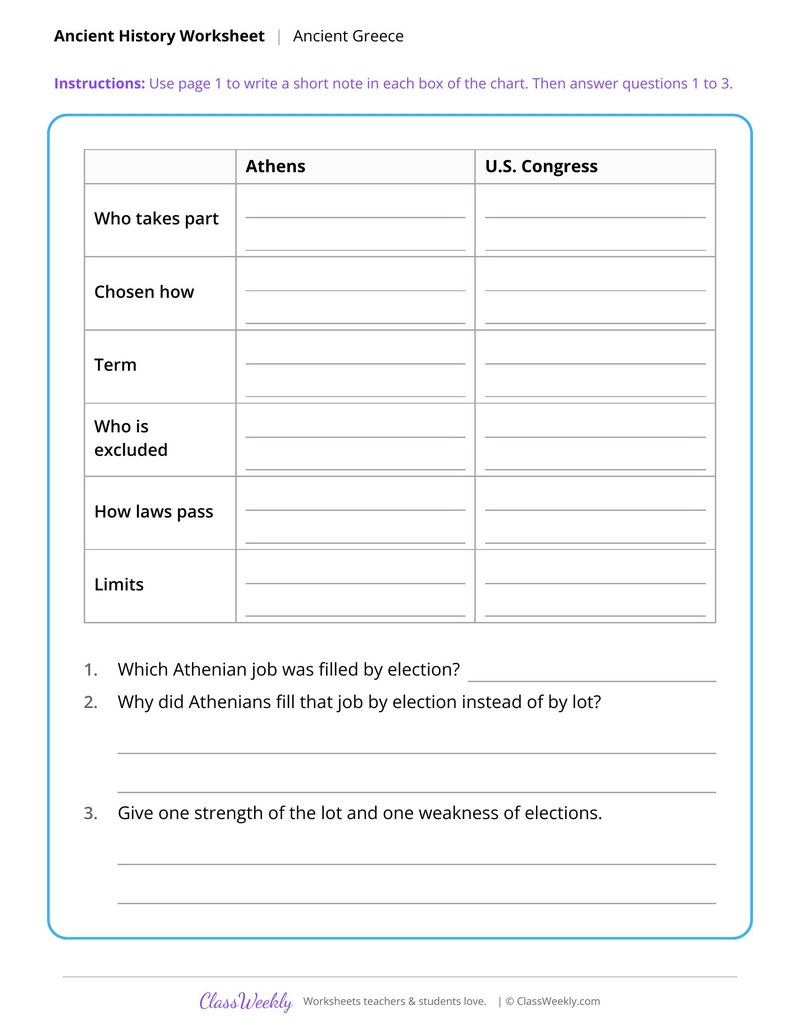
The Athenian Assembly and the U.S. Congress
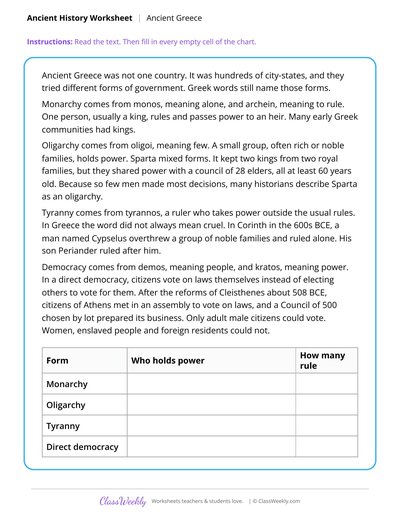
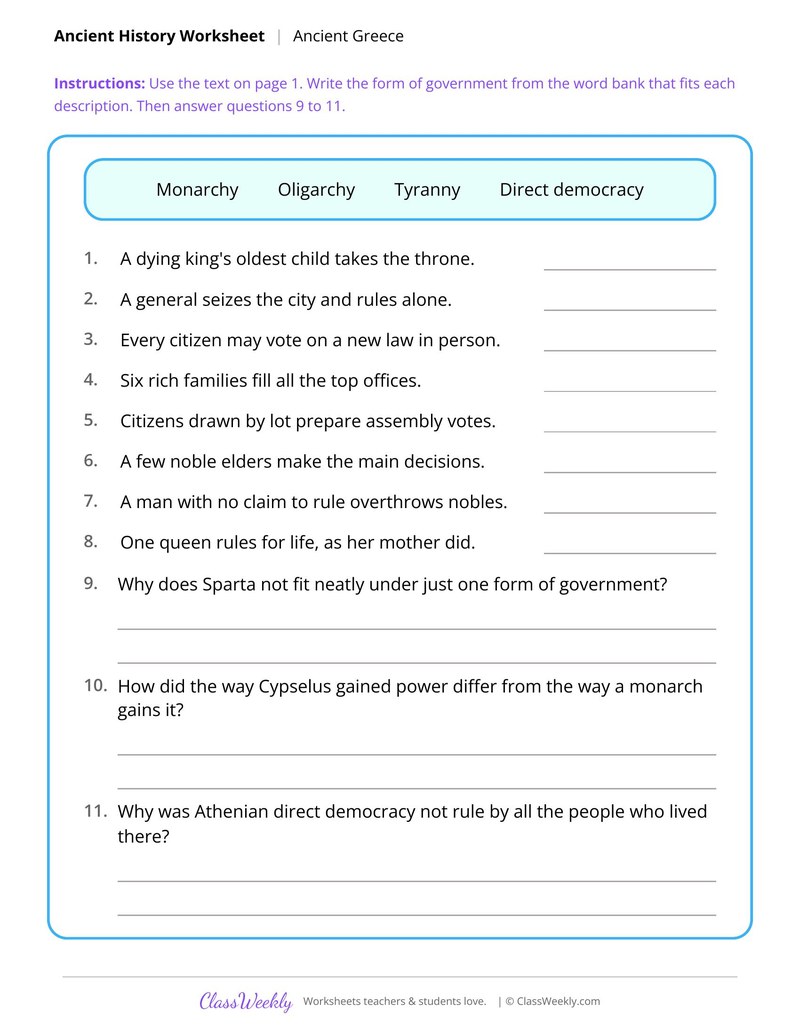
Forms of Government in Greek City-States
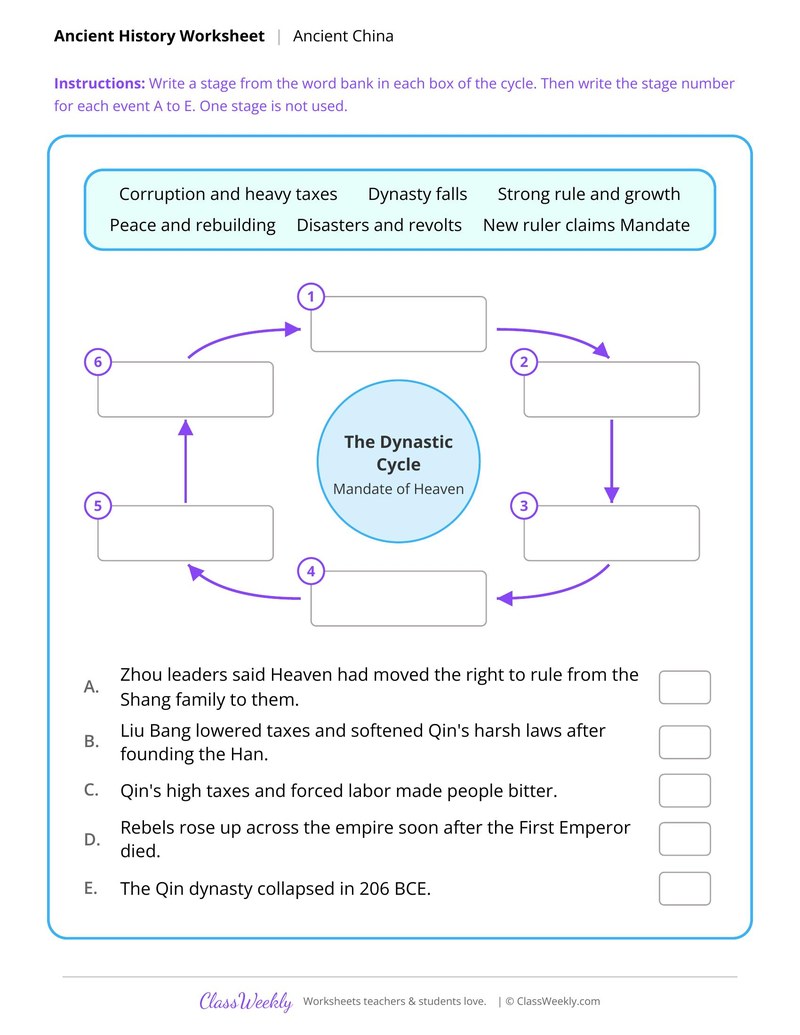
The Dynastic Cycle in Early China
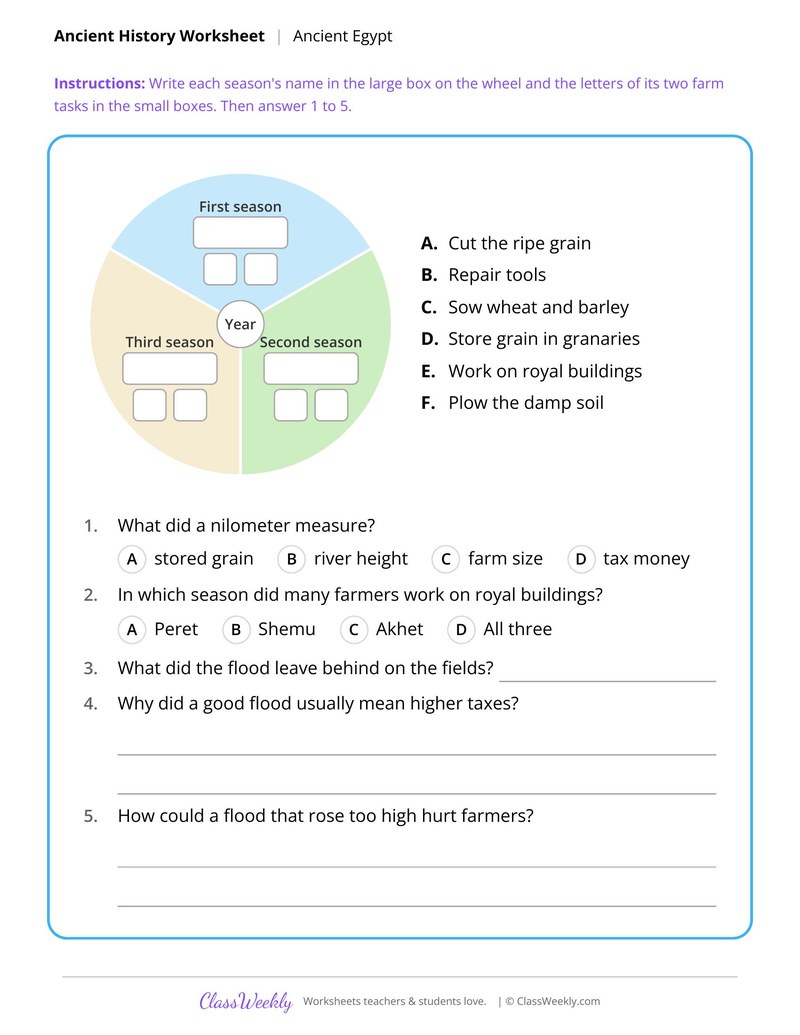
Egypt's Three Seasons and the Nile Flood
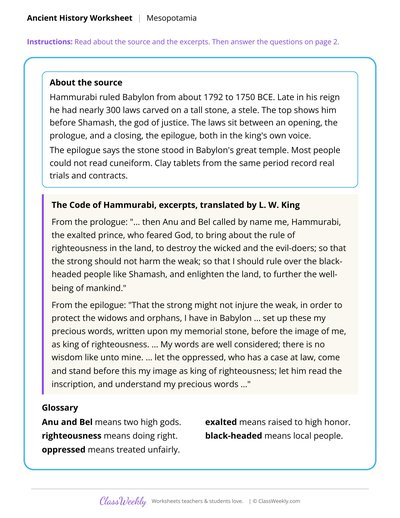
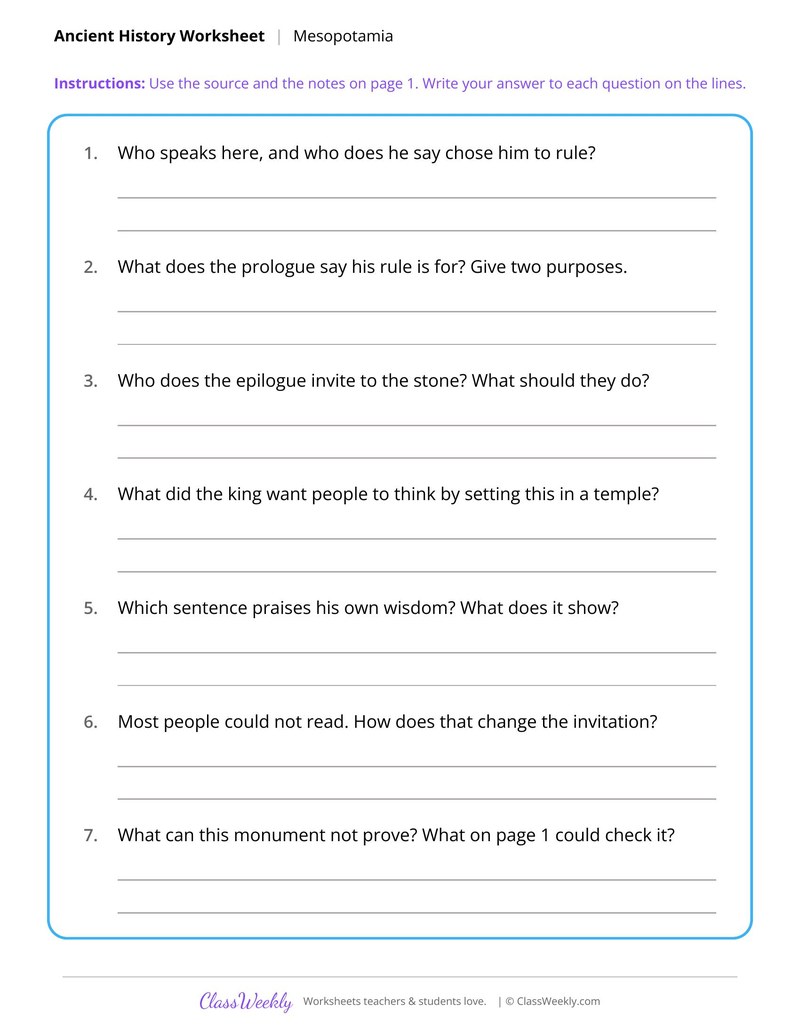
Hammurabi's Prologue as a Primary Source
Curriculum Links
C3 Framework for Social Studies State Standards
Social Studies · 7th Grade
Find this in the curriculum
Browse the grade, subject, and topic this belongs to.
FAQ
How do I use this events leading to war worksheet?
⌄
Begin with the timeline for the big picture, then use the reactions chart for perspective. The Missouri Compromise map works well on its own as a short lesson on geography and power in Congress.
What does this worksheet teach?
⌄
Compare Northern and Southern reactions to the Fugitive Slave Act, Bleeding Kansas and Dred Scott. The directions on the page read: Read the five event summaries. You will use them to complete page 2. An answer key is included.
Can I use this events leading to war worksheet for homeschool or classroom?
⌄
Yes, both. We made it for 7th grade Causes of the Civil War, and it works the same at home or at school. At home, a student can work through it alone and then go over it with you, which shows quickly what is solid and what needs another look. In class it works as independent practice, homework or a warm-up, and you can print one copy or a full set.
What was the Missouri Compromise?
⌄
In 1820 Missouri entered as a slave state and Maine as a state without slavery. A line drawn across western lands limited where slavery could spread.
What events increased tension over slavery before the Civil War?
⌄
The sheets cover the Dred Scott decision, the Harpers Ferry raid, the Fugitive Slave Act, Uncle Tom's Cabin and Bleeding Kansas, among others. Students choose events and write what each did to tension.
Why did the Senate balance matter in 1820?
⌄
In December 1819 there were 11 states without slavery and 11 slave states, so each side held 22 Senate seats. Missouri's request to enter with slavery put that balance at risk.
Ratings & Reviews
No reviews yet. Be the first to share what you think.
Reviews are for ClassWeekly members.
Make a Request
Spotted something to fix, or want a worksheet we don't have yet? Tell us and we'll make it.
Worksheet Details
| Grade | 7th Grade |
| Subject | Social Studies |
| Topic | Causes of the Civil War |
| Standard | D2.His.4.6-8 |
| Pages | 2 pages |
| Difficulty | Medium |
What is ClassWeekly?
ClassWeekly offers free worksheets and printable learning resources for kids, from preschool up. All worksheets are aligned to Common Core, NGSS, and C3 Framework standards and designed by educators. Become a member to access the full library and download unlimited PDFs.
Civil War Causes Timeline, 1820 to 1861
Missouri Compromise Line and State Balance
Athens and Sparta in the Peloponnesian War
The Athenian Assembly and the U.S. Congress
Forms of Government in Greek City-States
The Dynastic Cycle in Early China
Egypt's Three Seasons and the Nile Flood
Hammurabi's Prologue as a Primary Source