Progressive, Regressive and Proportional Taxes
Written by Adi Ackerman, Head Teacher
"Progressive, Regressive and Proportional Taxes" is written for 7th Grade (Ages 12-13). A 6th grader who is already steady on Economics and Money can use it too, and an older student can use it as a short review.
2 pages in this set
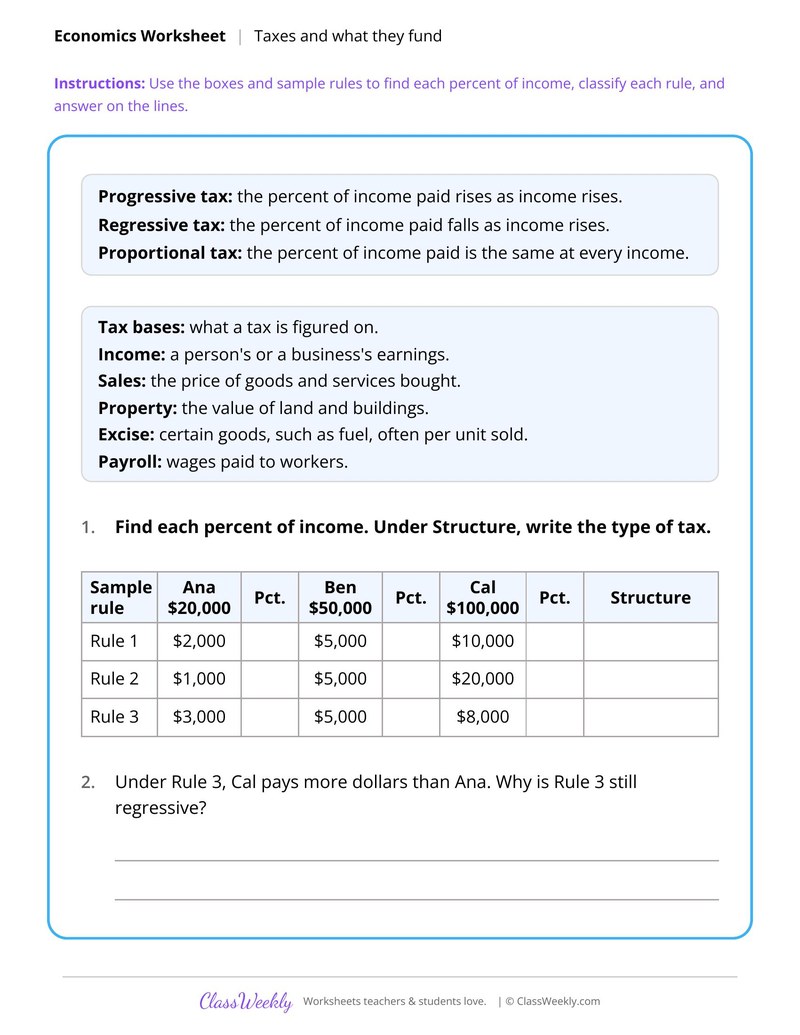
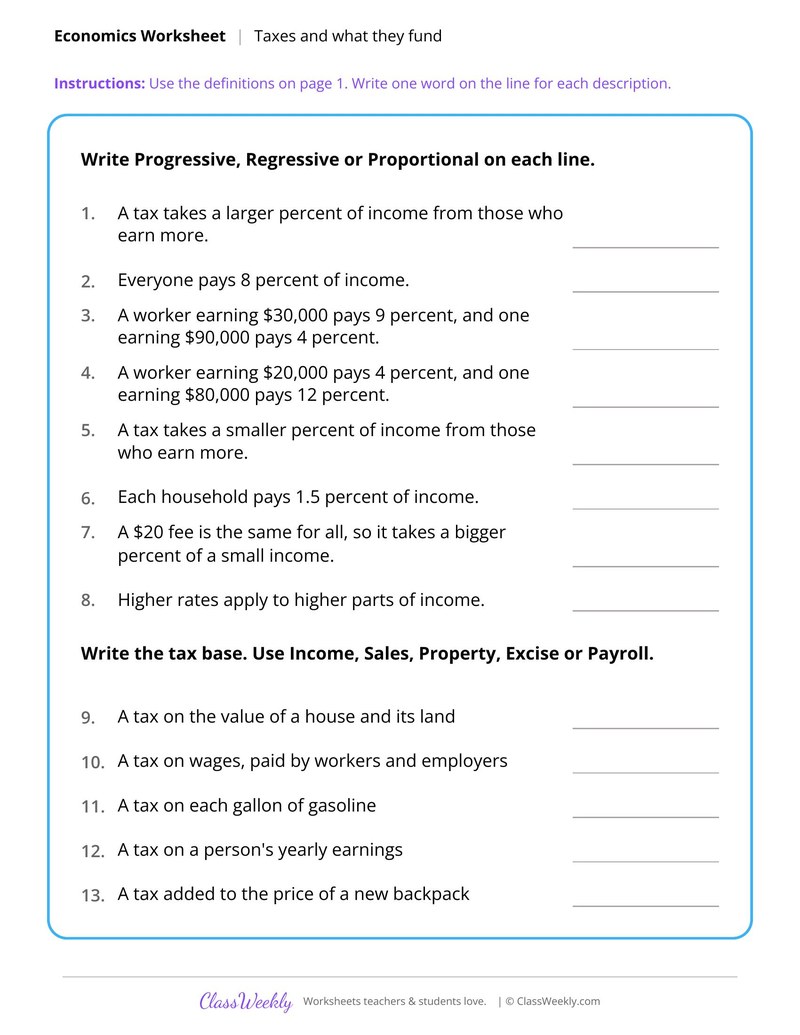
7th grade social studies worksheet: find tax as a percent of income and label sample rules progressive, regressive or proportional. Answer key included. Part of our taxes and what they fund economics and money collection.
How do I use this worksheet?
Start with the tax types sheet, then use property tax math for calculation practice. The spending charts work well for discussion.
What students will practice
- Students will calculate the percent of income paid under a tax rule.
- Students will classify a tax as progressive, regressive or proportional.
- Students will name the base of a tax, such as income, sales, property or payroll.
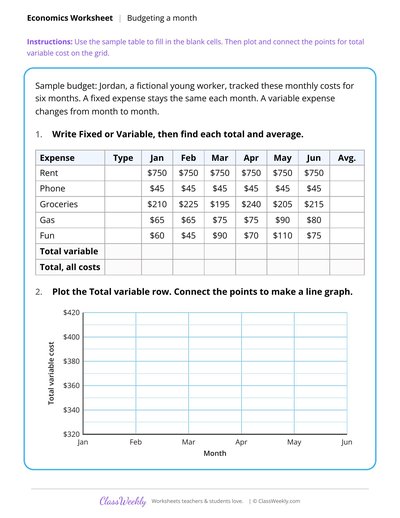
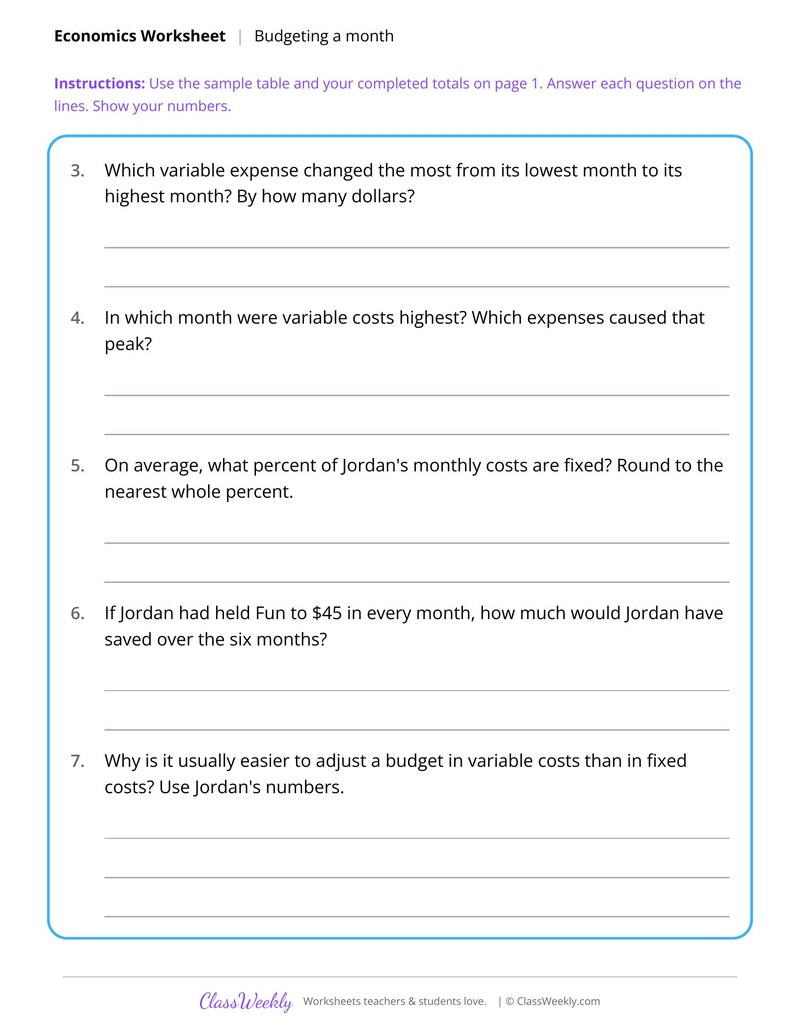
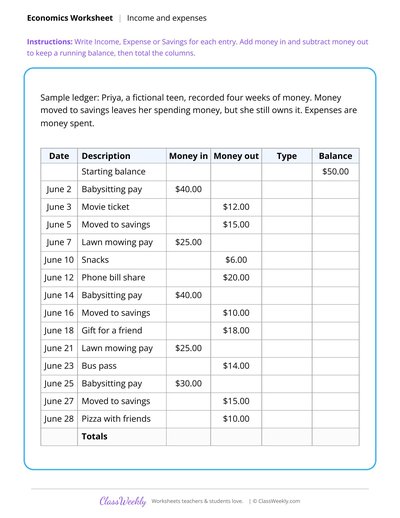
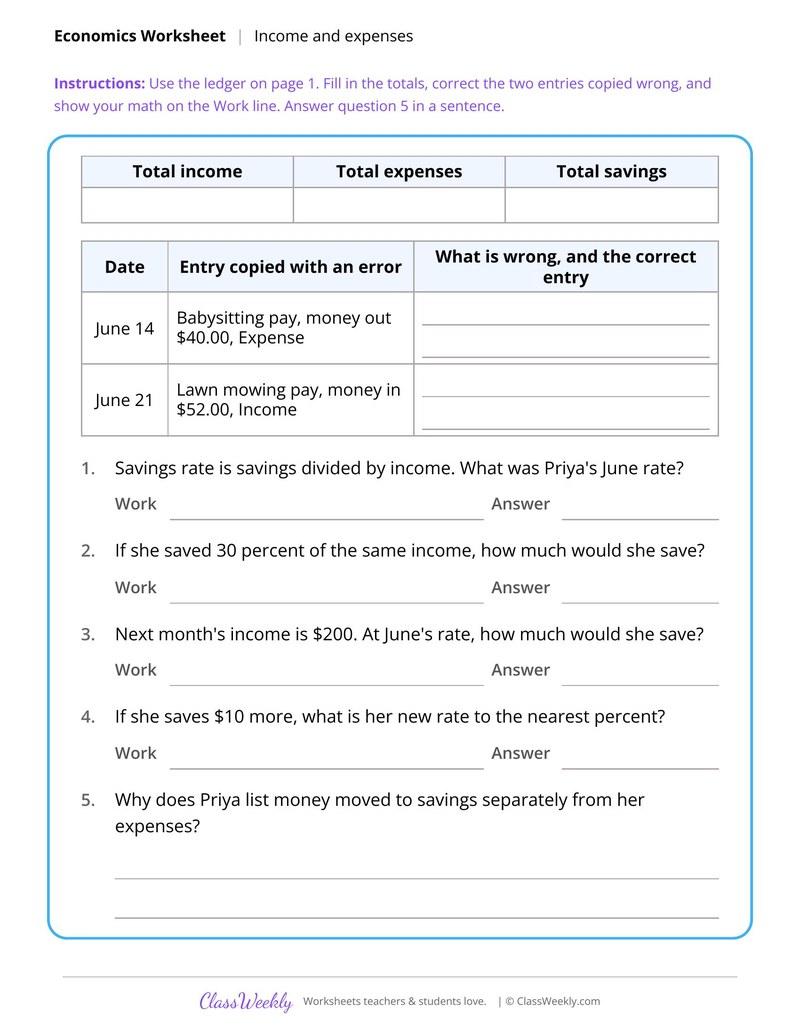
Curriculum Links
Find this in the curriculum
Browse the grade, subject, and topic this belongs to.
FAQ
How do I use this taxes and what they fund worksheet?
⌄
Start with the tax types sheet, then use property tax math for calculation practice. The spending charts work well for discussion.
What does this worksheet teach?
⌄
Find tax as a percent of income and label sample rules progressive, regressive or proportional. The directions on the page read: Use the boxes and sample rules to find each percent of income, classify each rule, and answer on the lines. An answer key is included.
Can I use this taxes and what they fund worksheet for homeschool or classroom?
⌄
Yes, both. We made it for 7th grade Economics and Money, and it works the same at home or at school. At home, a student can work through it alone and then go over it with you, which shows quickly what is solid and what needs another look. In class it works as independent practice, homework or a warm-up, and you can print one copy or a full set.
What is a mill rate?
⌄
One mill is $1 of tax for each $1,000 of taxable value.
What is withholding?
⌄
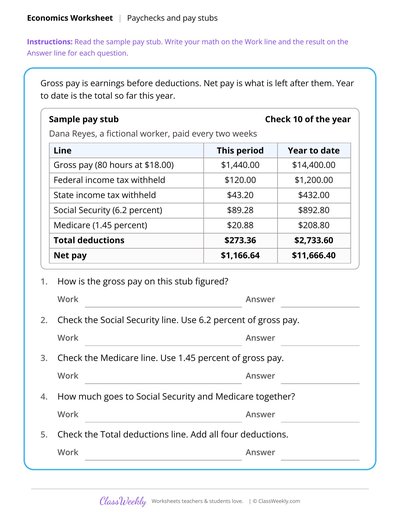
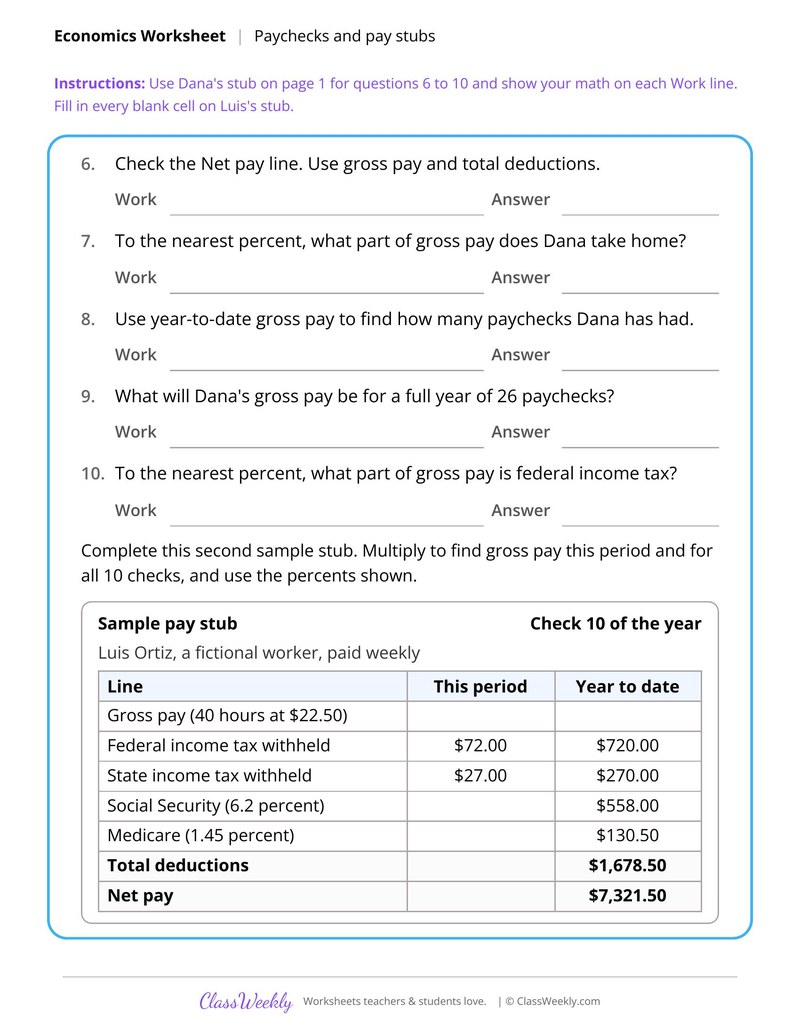
An employer holds back part of each paycheck and sends it to the government. Each spring, workers file a return that compares tax owed with the amount withheld.
What is the difference between mandatory and discretionary spending?
⌄
Mandatory spending is set by existing laws, like Social Security. Congress approves discretionary spending each year, and defense is discretionary.
Ratings & Reviews
No reviews yet. Be the first to share what you think.
Reviews are for ClassWeekly members.
Make a Request
Spotted something to fix, or want a worksheet we don't have yet? Tell us and we'll make it.
Worksheet Details
| Grade | 7th Grade |
| Subject | Social Studies |
| Topic | Economics and Money |
| Pages | 2 pages |
| Difficulty | Medium |
What is ClassWeekly?
ClassWeekly offers free worksheets and printable learning resources for kids, from preschool up. All worksheets are aligned to Common Core, NGSS, and C3 Framework standards and designed by educators. Become a member to access the full library and download unlimited PDFs.