Enlightenment Thinkers and Their Ideas
Written by Adi Ackerman, Head Teacher
"Enlightenment Thinkers and Their Ideas" is written for 7th Grade (Ages 12-13), and it covers C3 Framework D2.Civ.3.6-8. A 6th grader who is already steady on Medieval and Early Modern World can use it too, and an older student can use it as a short review.
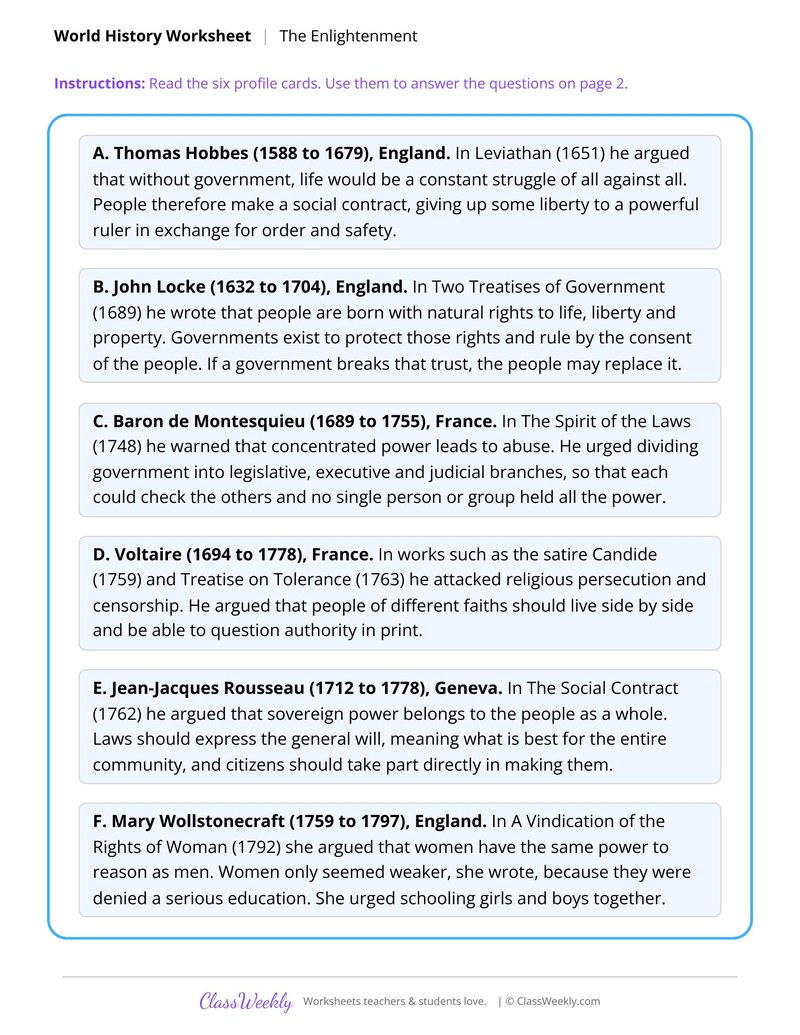
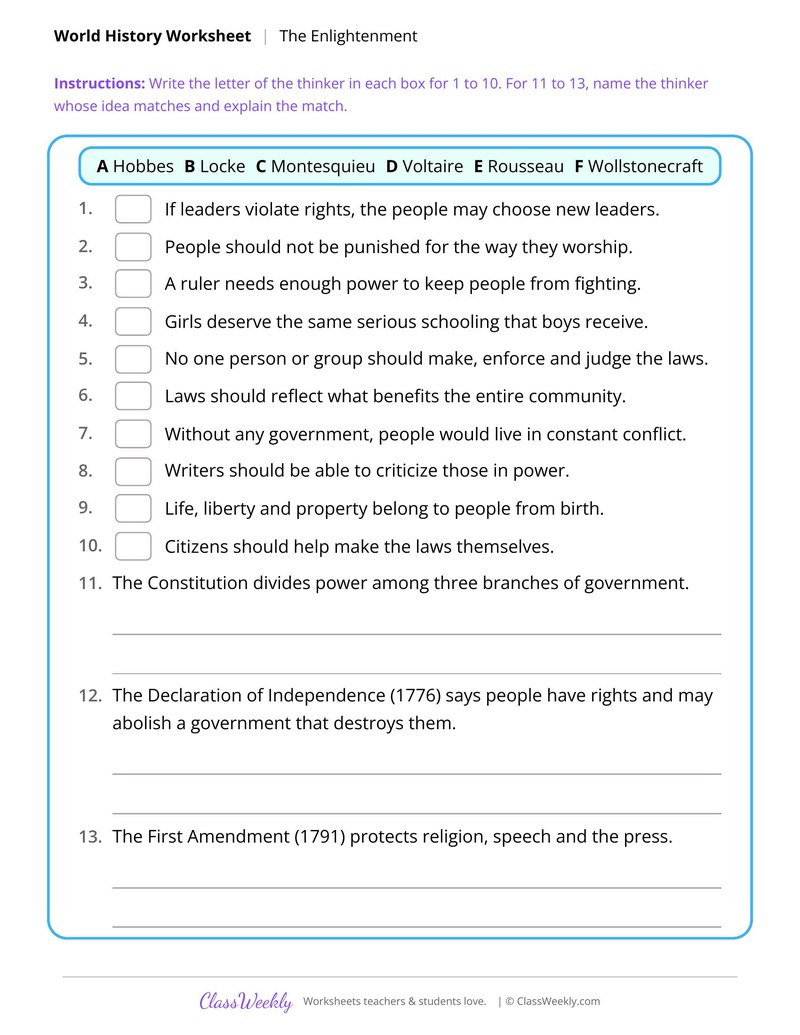
2 pages in this set
7th grade social studies worksheet: match Hobbes, Locke, Montesquieu, Voltaire, Rousseau and Wollstonecraft to their ideas. Answer key included. Part of our Renaissance to Industrial Revolution medieval and early modern world collection. Aligned to C3 Framework standards.
How do I use this worksheet?
Pair the Renaissance and Enlightenment sheets with a lesson on each, and use the print sheet to link both to the Reformation. The profile cards give students the information they need.
What students will practice
- Students will read six profiles of Enlightenment thinkers and their works.
- Students will match ten statements to the thinker who held that idea.
- Students will name the thinker whose idea matches a given idea and explain the match.
European Explorers and Their Sponsors
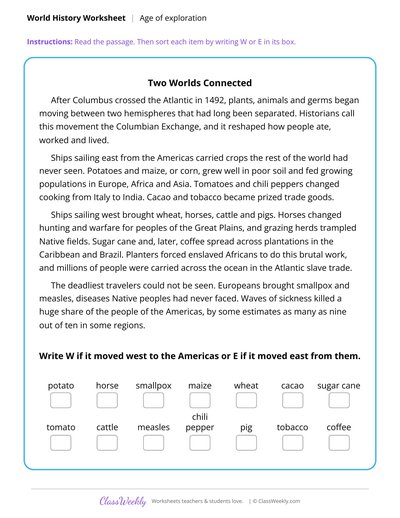
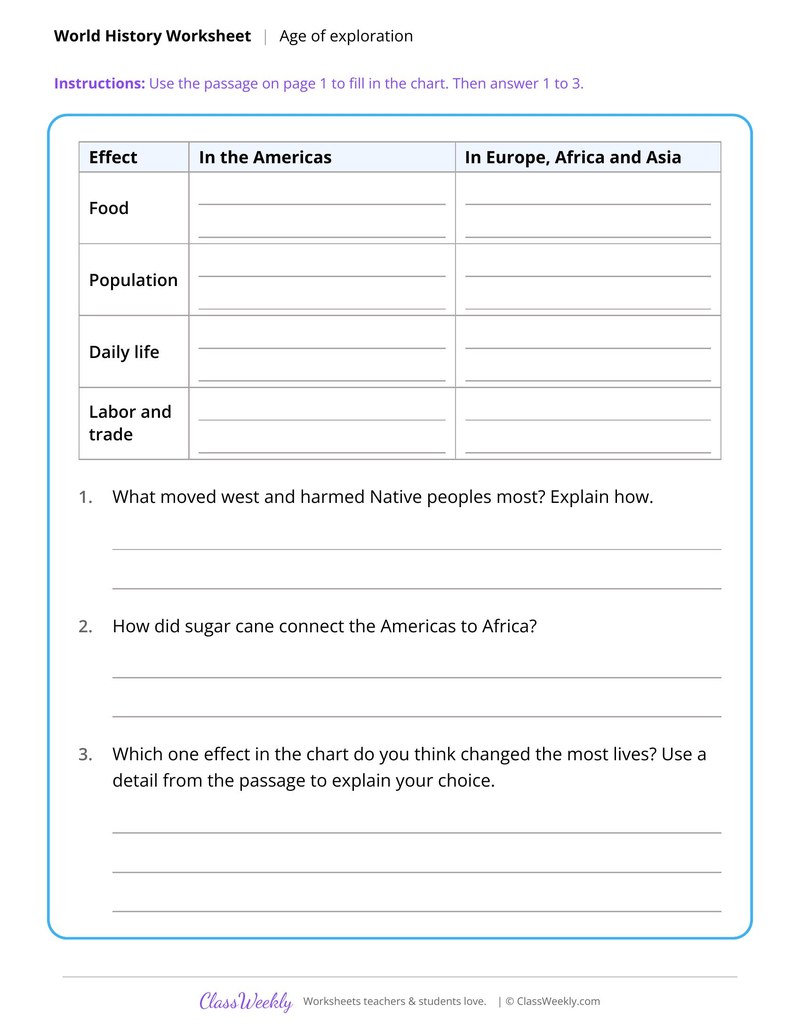
Columbian Exchange Crops, Animals and Diseases
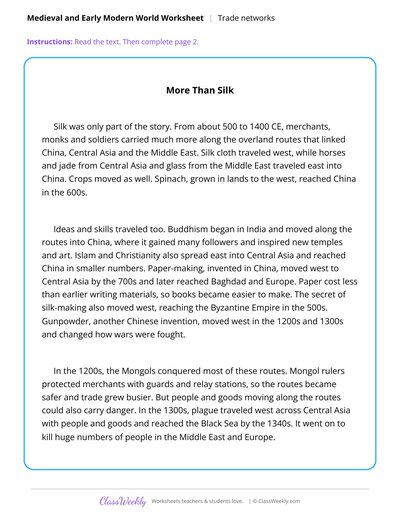
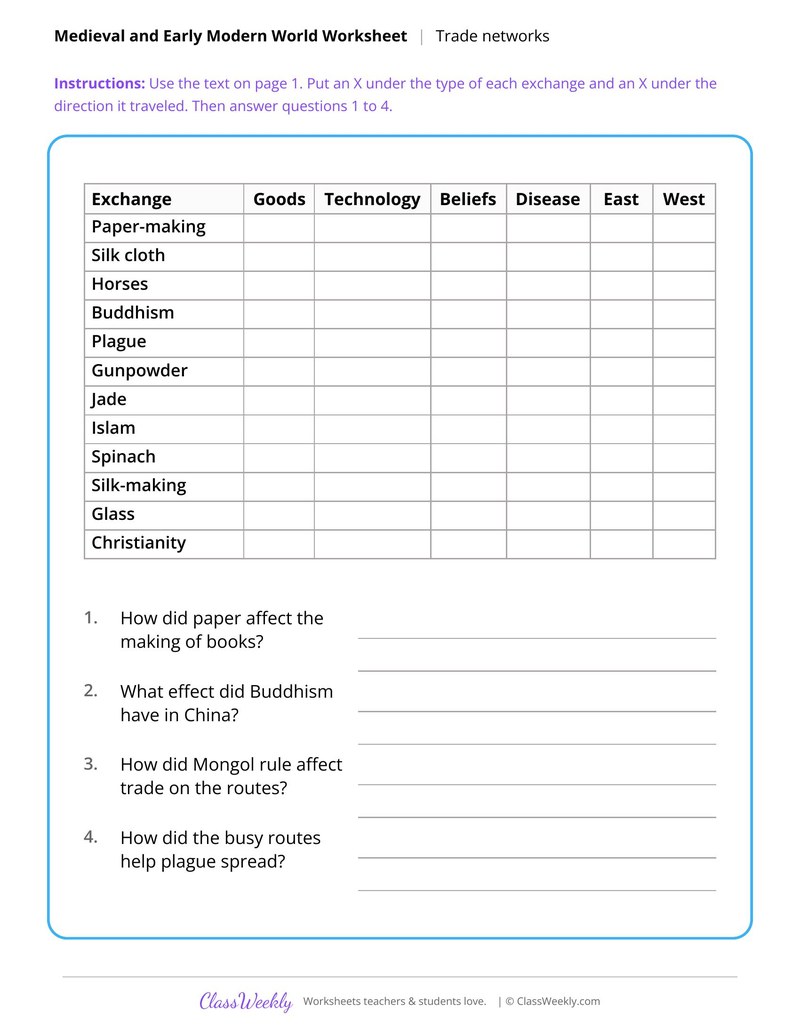
Silk Road Goods, Ideas and Diseases
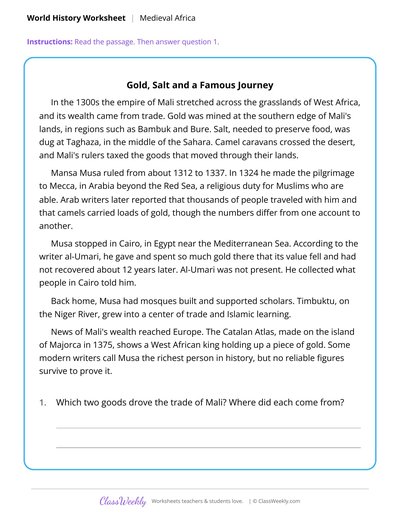
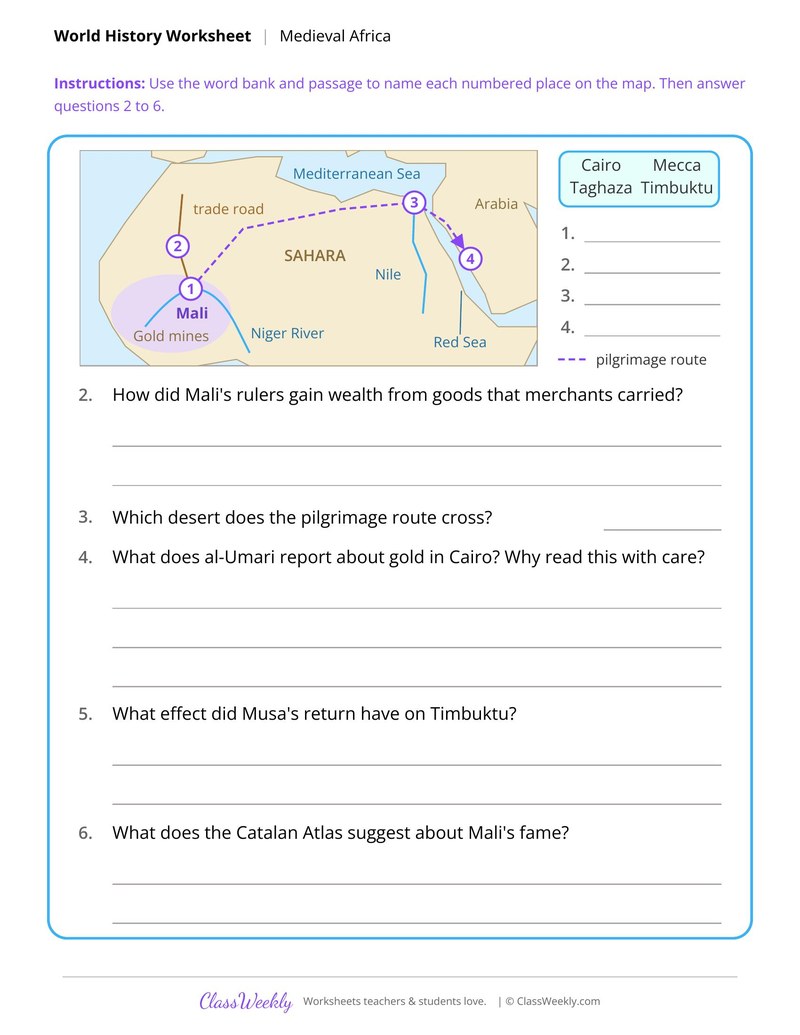
Mansa Musa and the Wealth of Mali
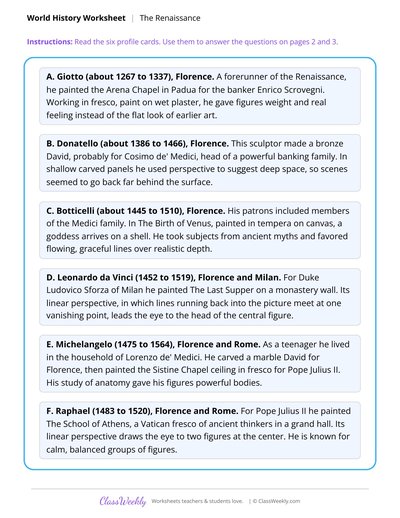
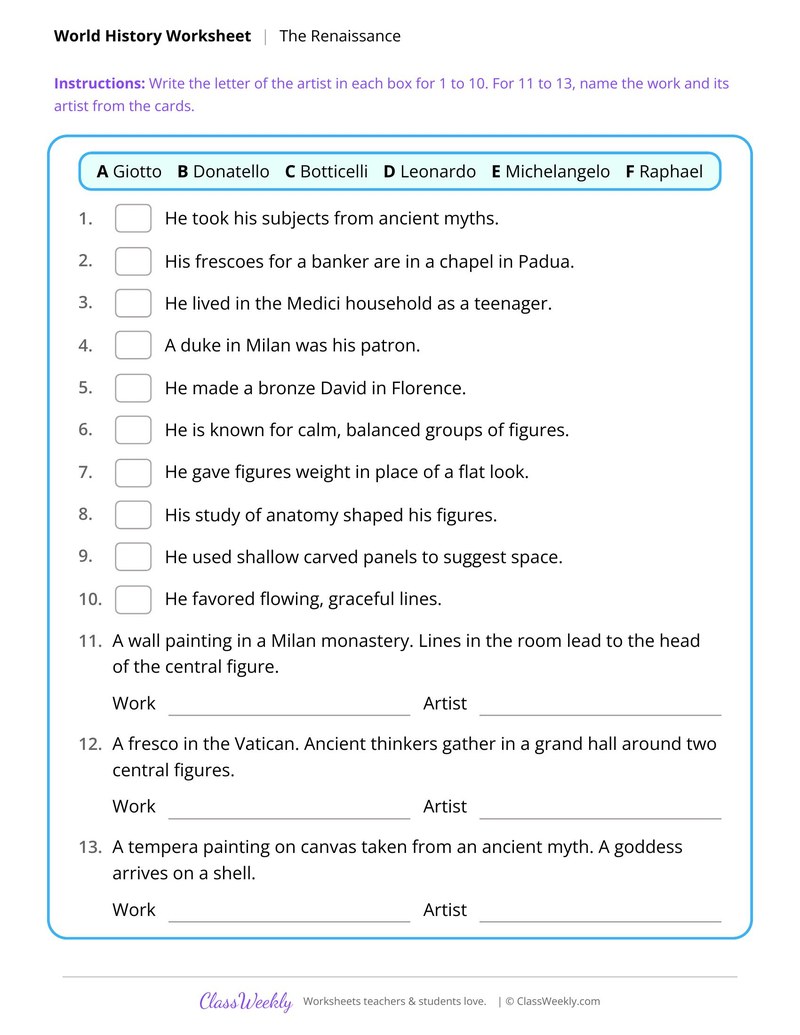
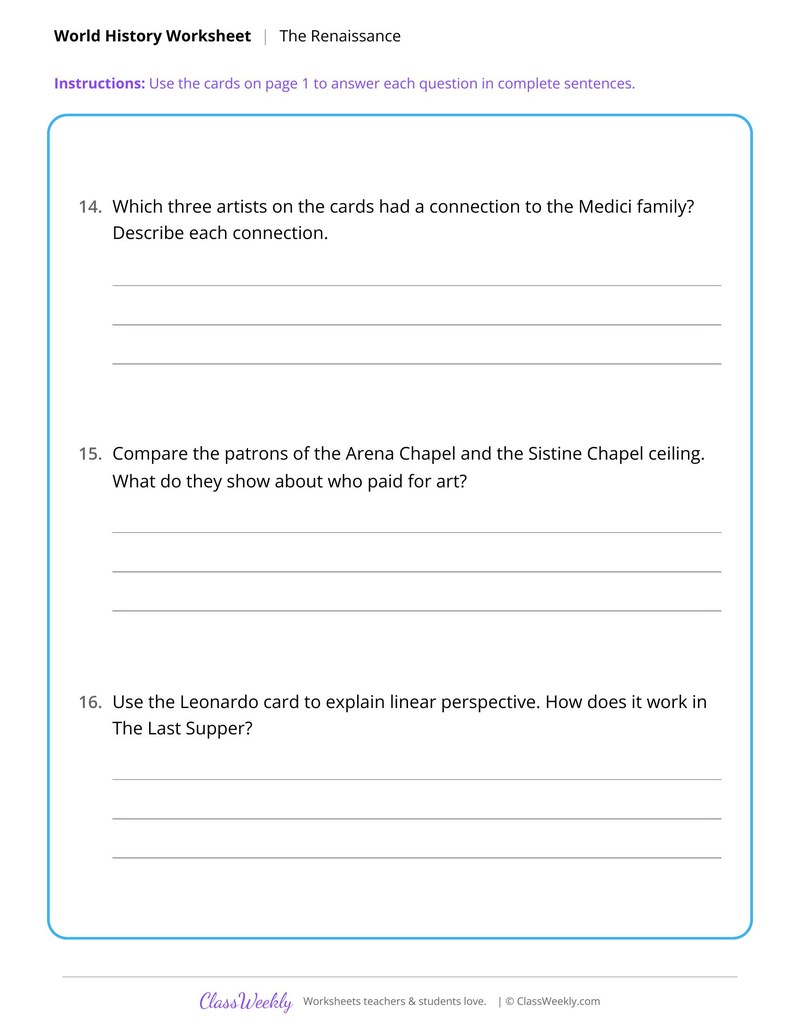
Italian Renaissance Artists and Patrons
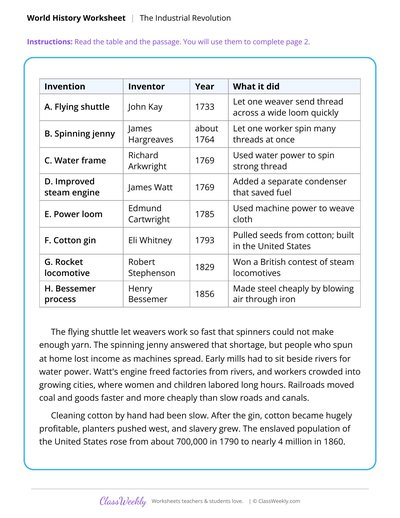
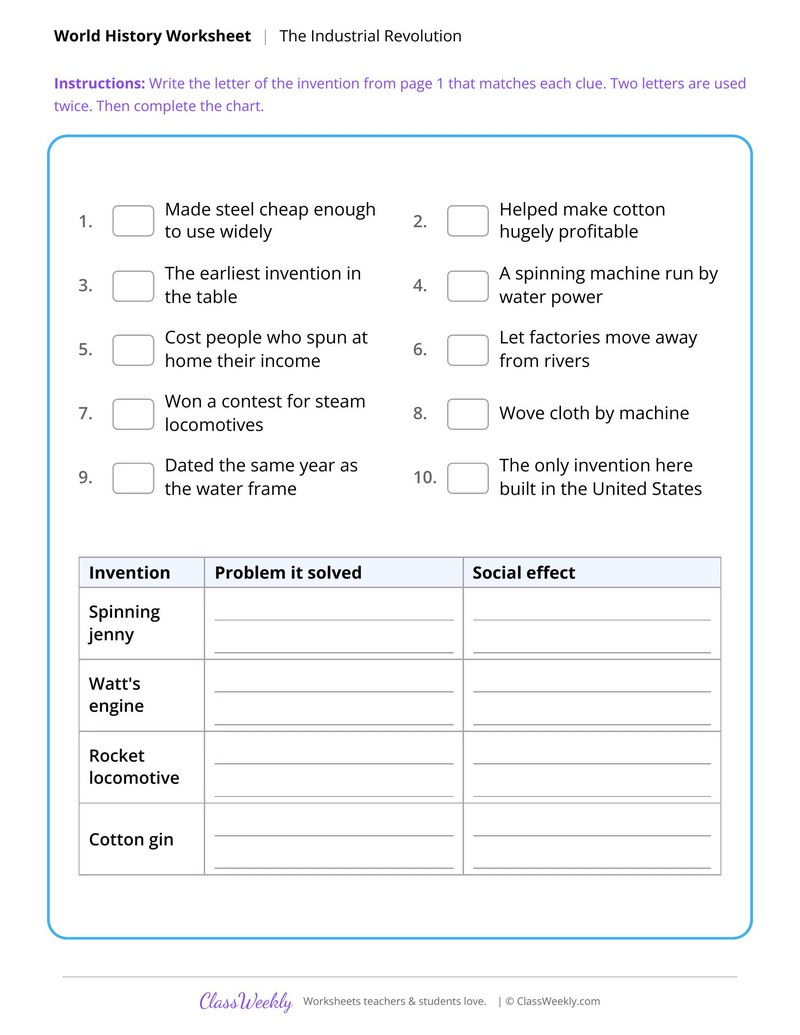
Industrial Revolution Inventors and Effects
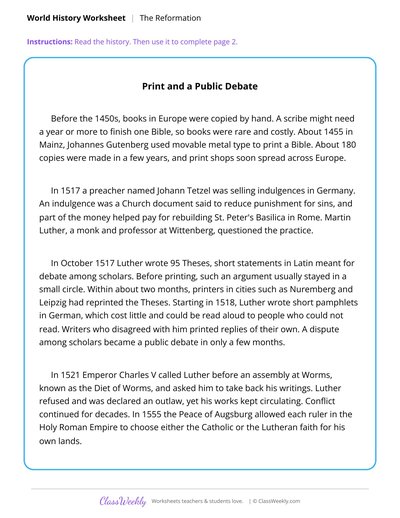
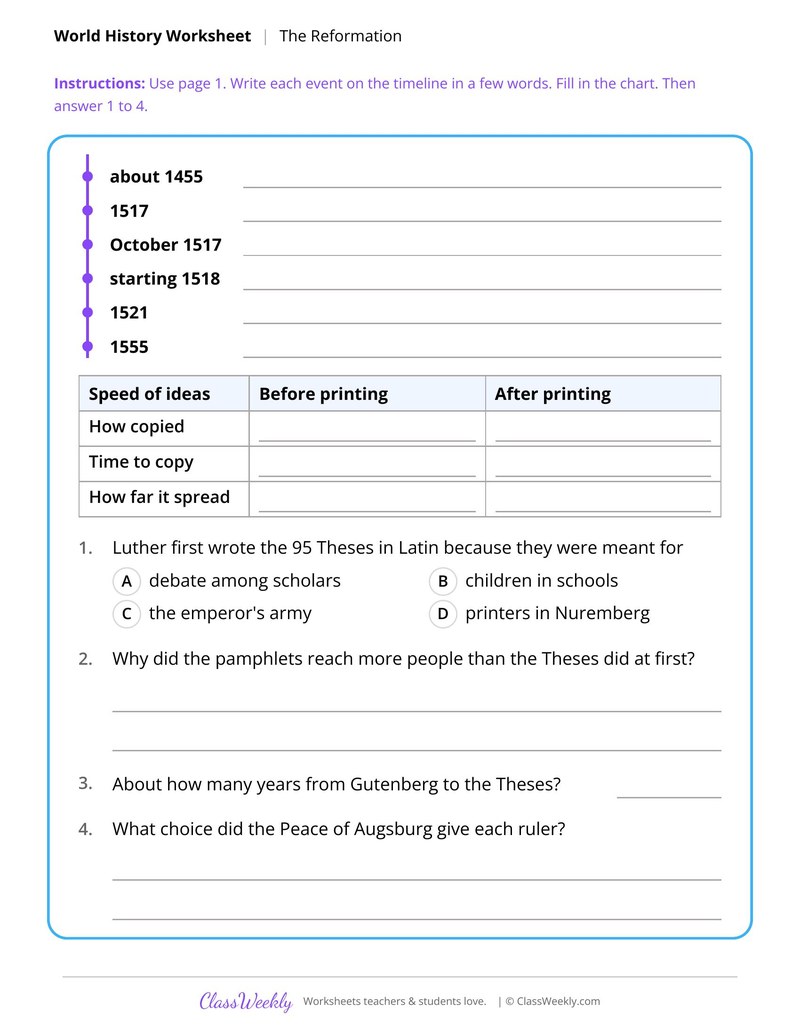
Luther's Theses and the Printing Press
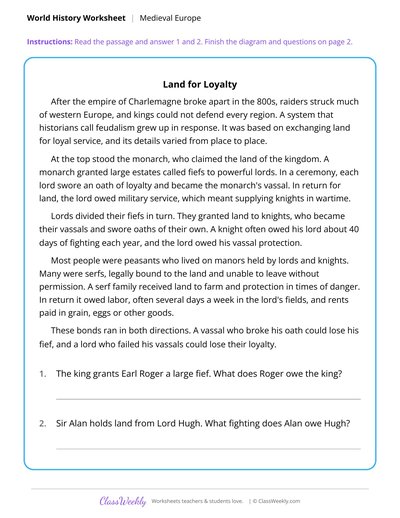
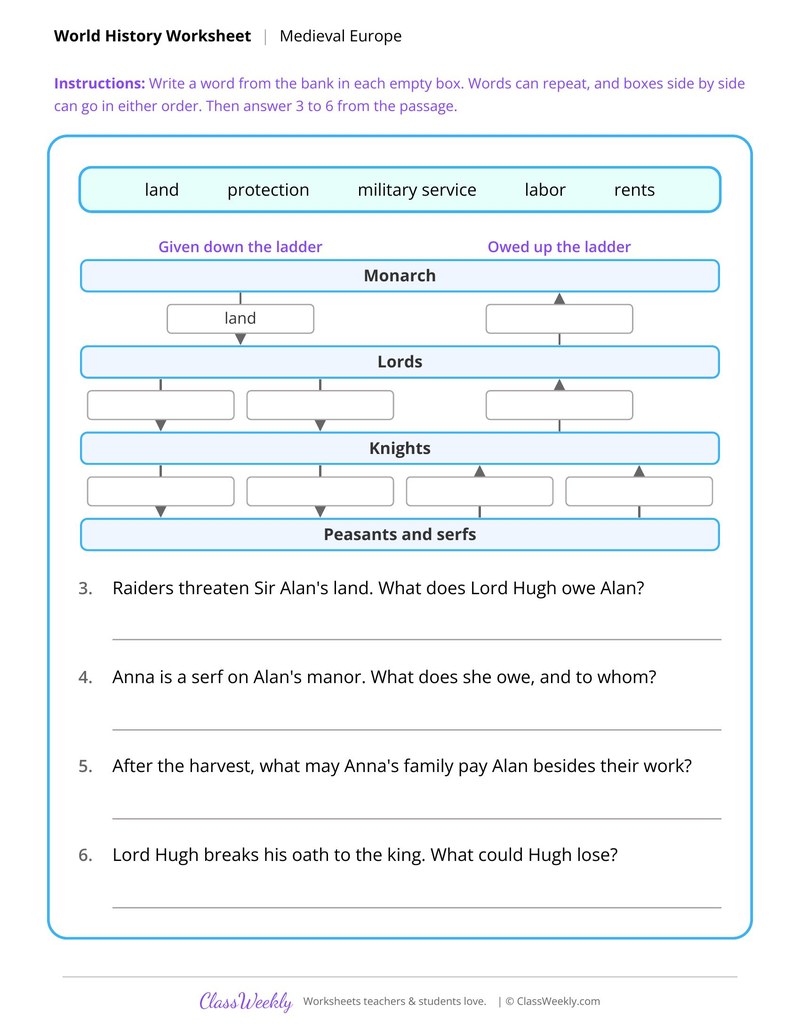
Feudal Obligations in Medieval Europe
Curriculum Links
C3 Framework for Social Studies State Standards
Social Studies · 7th Grade
Find this in the curriculum
Browse the grade, subject, and topic this belongs to.
FAQ
How do I use this Renaissance to Industrial Revolution worksheet?
⌄
Pair the Renaissance and Enlightenment sheets with a lesson on each, and use the print sheet to link both to the Reformation. The profile cards give students the information they need.
What does this worksheet teach?
⌄
Match Hobbes, Locke, Montesquieu, Voltaire, Rousseau and Wollstonecraft to their ideas. The directions on the page read: Read the six profile cards. Use them to answer the questions on page 2. An answer key is included.
Can I use this Renaissance to Industrial Revolution worksheet for homeschool or classroom?
⌄
Yes, both. We made it for 7th grade Medieval and Early Modern World, and it works the same at home or at school. At home, a student can work through it alone and then go over it with you, which shows quickly what is solid and what needs another look. In class it works as independent practice, homework or a warm-up, and you can print one copy or a full set.
Who were the Medici?
⌄
They were a powerful banking family, and some artists on the cards had a connection to them. Italian Renaissance Artists and Patrons asks which three artists did.
What did Luther's 95 Theses have to do with printing?
⌄
Print shops spread across Europe after Gutenberg's press, so ideas traveled fast. Luther's Theses and the Printing Press compares how books were copied before and after printing.
Which thinkers wrote about government?
⌄
Hobbes, Locke, Montesquieu, Voltaire, Rousseau and Wollstonecraft all appear on Enlightenment Thinkers and Their Ideas.
Ratings & Reviews
No reviews yet. Be the first to share what you think.
Reviews are for ClassWeekly members.
Make a Request
Spotted something to fix, or want a worksheet we don't have yet? Tell us and we'll make it.
Worksheet Details
| Grade | 7th Grade |
| Subject | Social Studies |
| Topic | Medieval and Early Modern World |
| Standard | D2.Civ.3.6-8 |
| Pages | 2 pages |
| Difficulty | Medium |
What is ClassWeekly?
ClassWeekly offers free worksheets and printable learning resources for kids, from preschool up. All worksheets are aligned to Common Core, NGSS, and C3 Framework standards and designed by educators. Become a member to access the full library and download unlimited PDFs.
European Explorers and Their Sponsors
Columbian Exchange Crops, Animals and Diseases
Silk Road Goods, Ideas and Diseases
Mansa Musa and the Wealth of Mali
Italian Renaissance Artists and Patrons
Industrial Revolution Inventors and Effects
Luther's Theses and the Printing Press
Feudal Obligations in Medieval Europe