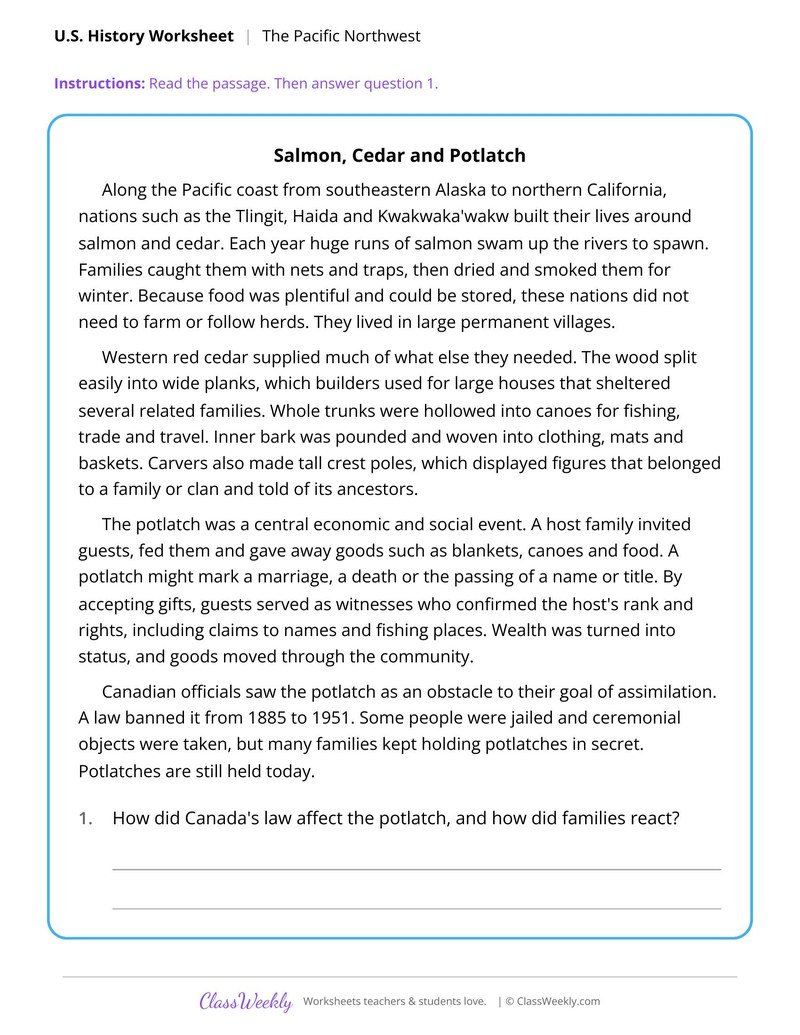
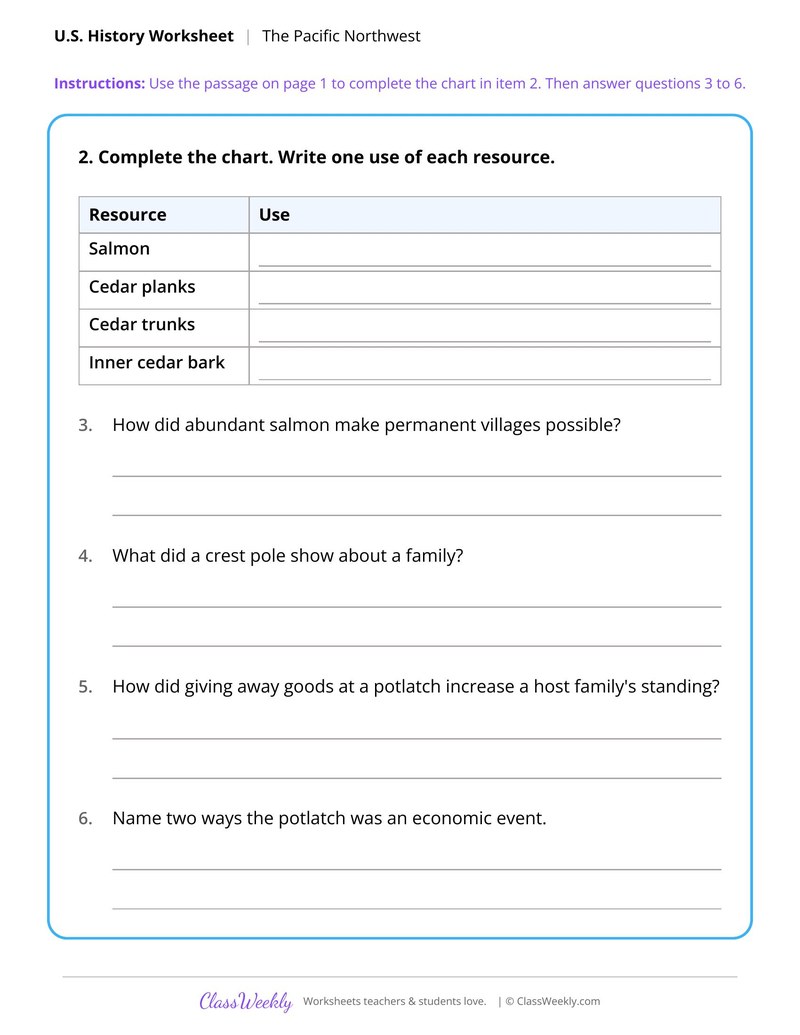
Salmon, Cedar and Potlatch on the Northwest Coast
Written by Adi Ackerman, Head Teacher
"Salmon, Cedar and Potlatch on the Northwest Coast" is written for 7th Grade (Ages 12-13). A 6th grader who is already steady on native nations before 1600 can use it too, and an older student can use it as a short review.
2 pages in this set
7th grade social studies worksheet: read about salmon, cedar and potlatch on the Northwest Coast and chart how each resource was used. Answer key included. Part of our nations and regions collection.
How do I use this worksheet?
Assign the sheet that matches your region or read all four to compare. Ask students to use the passage as evidence for each answer.
What students will practice
- Students will explain how abundant salmon made permanent villages possible.
- Students will list uses of salmon, cedar planks, cedar trunks and inner cedar bark.
- Students will describe what crest poles and potlatch giving showed about a family.
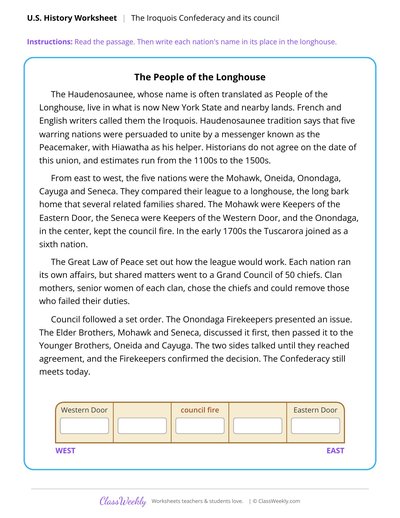
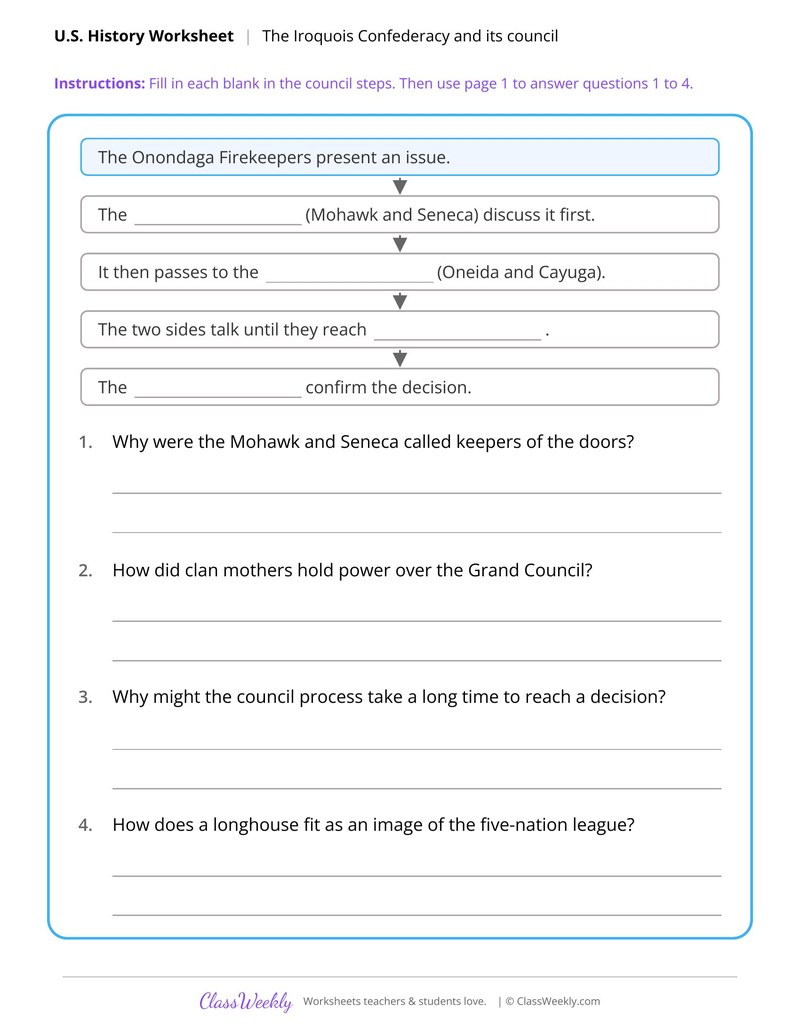
Haudenosaunee Confederacy and Its Council
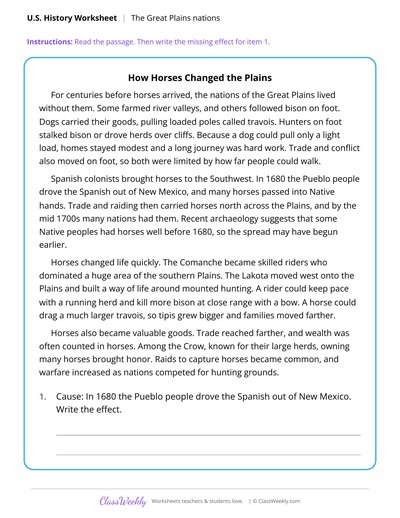
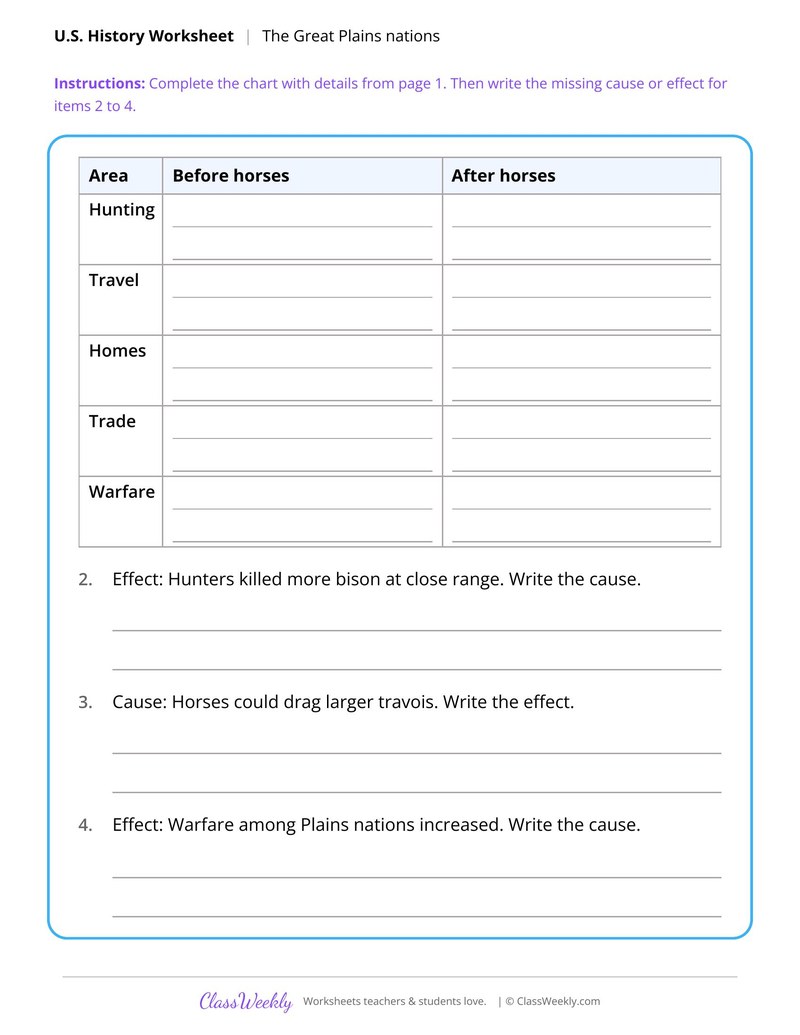
How Horses Changed Plains Nations
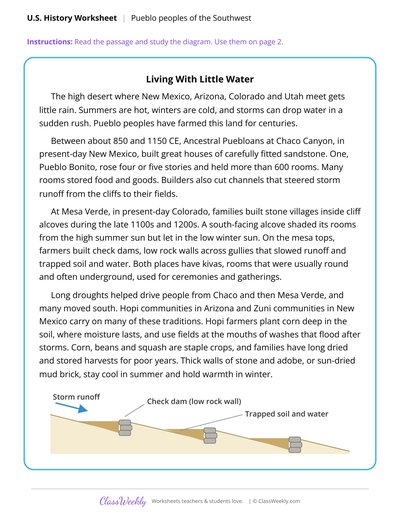
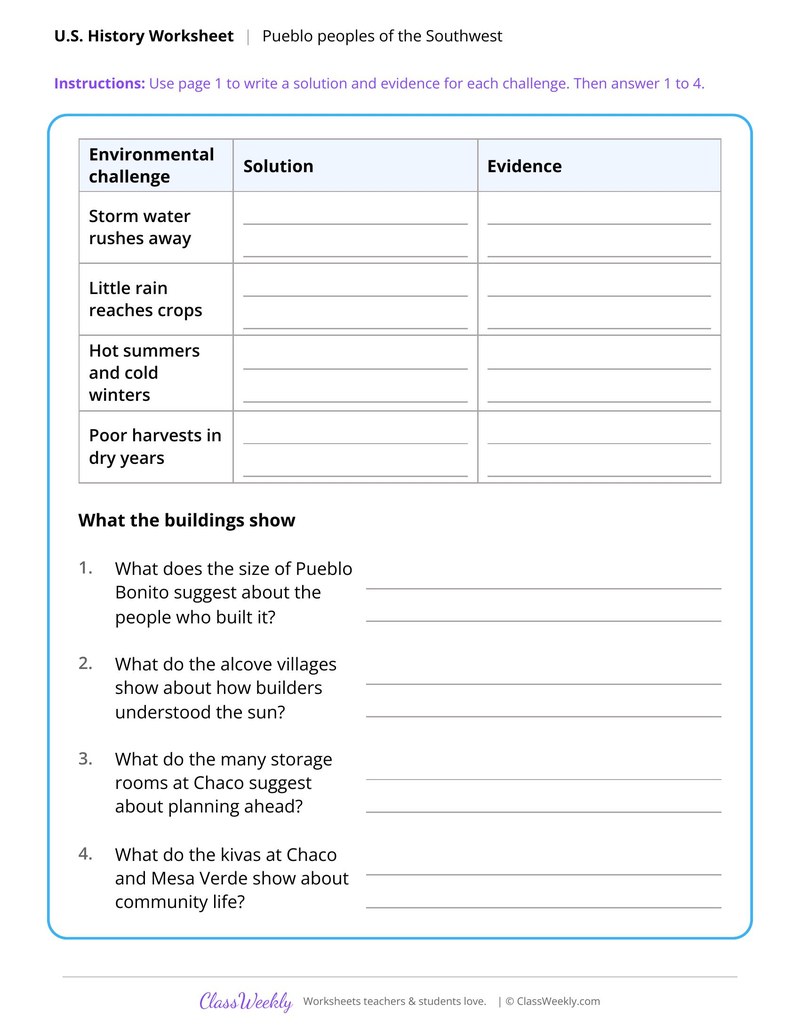
Farming and Building in the Dry Southwest
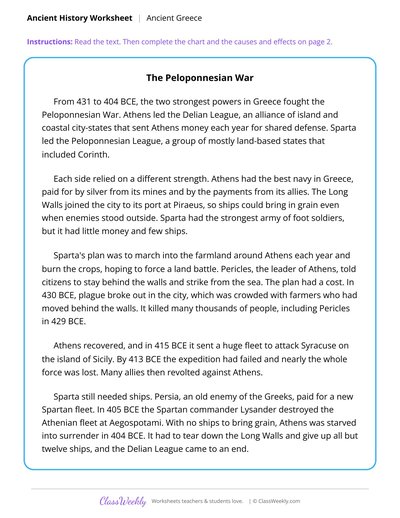
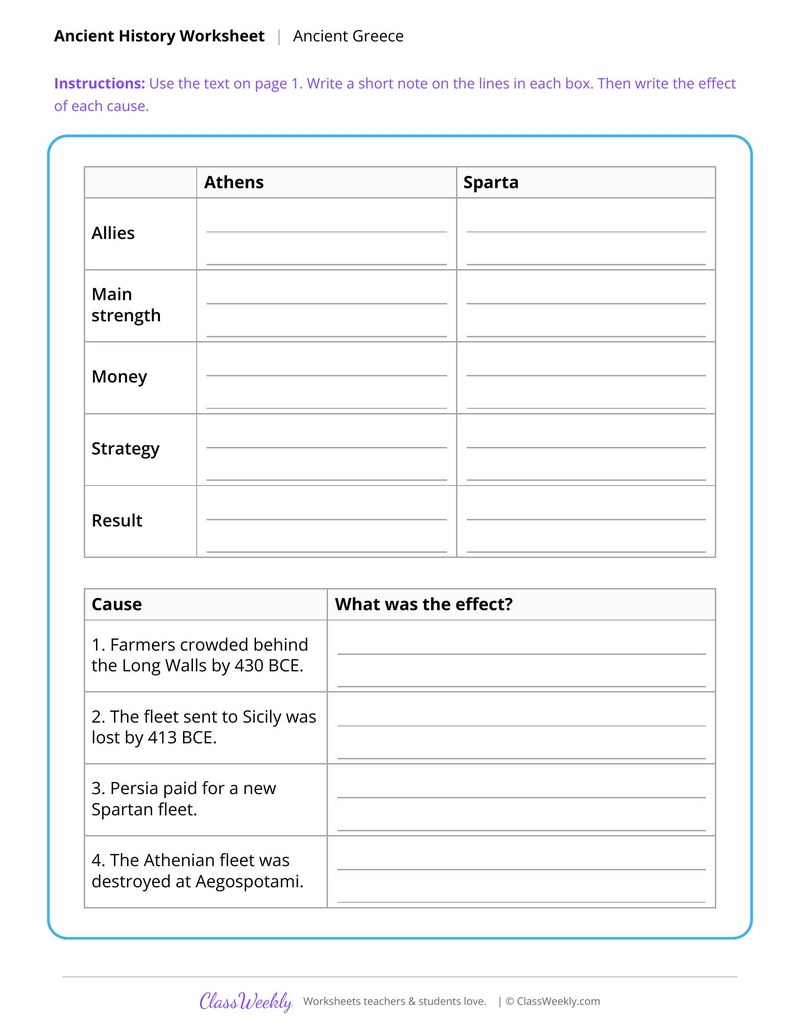
Athens and Sparta in the Peloponnesian War
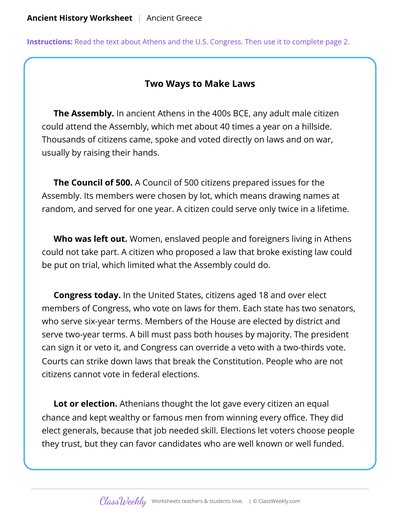
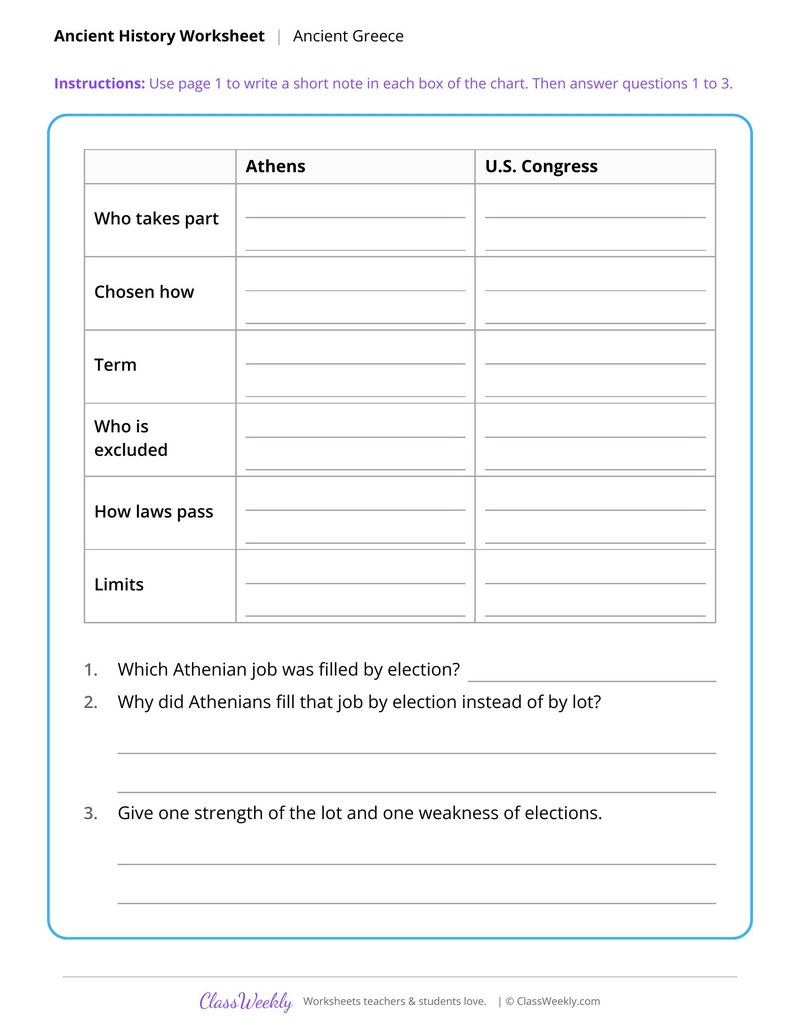
The Athenian Assembly and the U.S. Congress
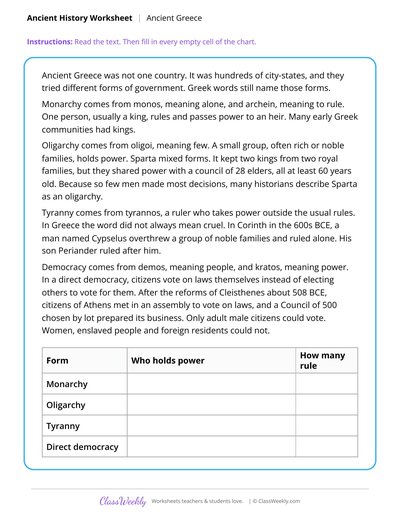
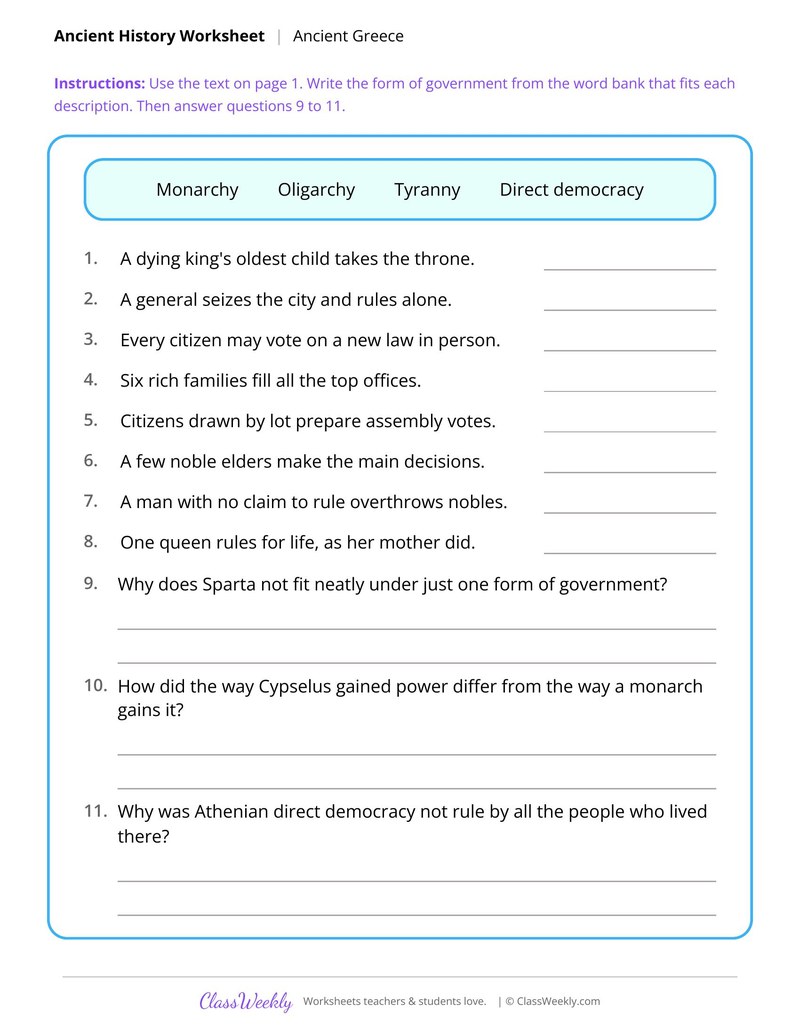
Forms of Government in Greek City-States
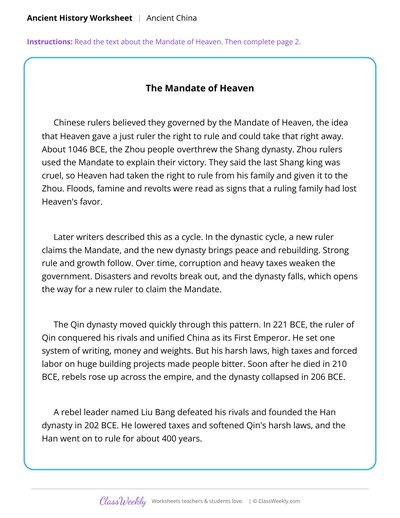
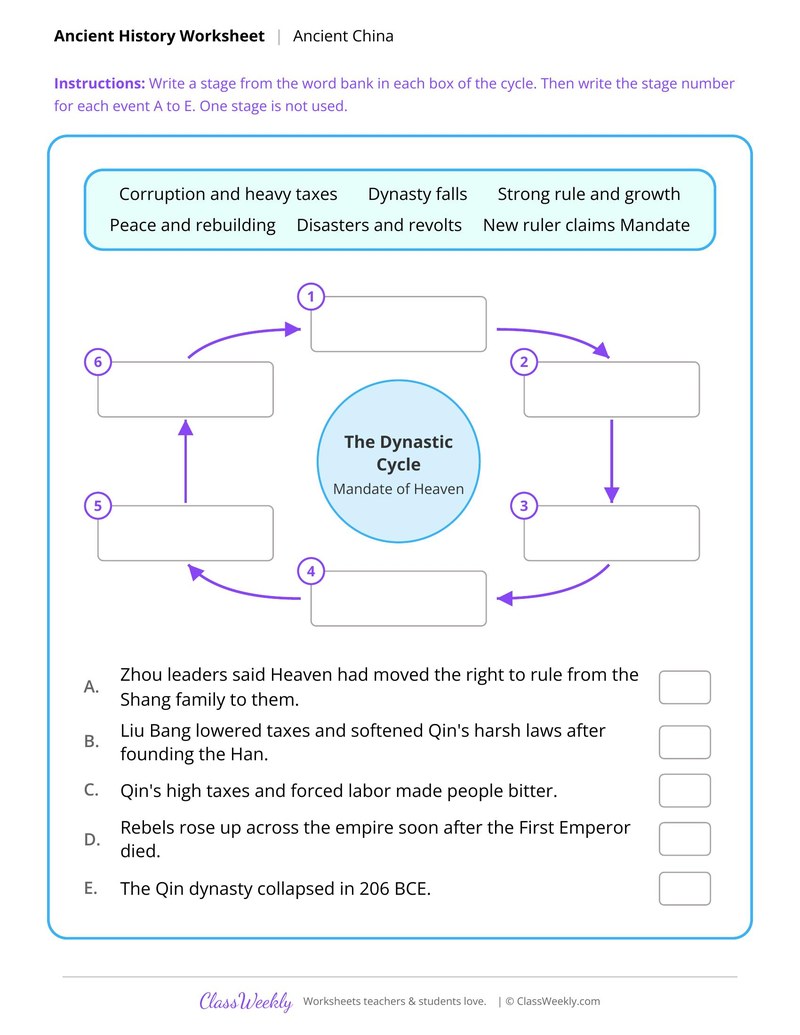
The Dynastic Cycle in Early China
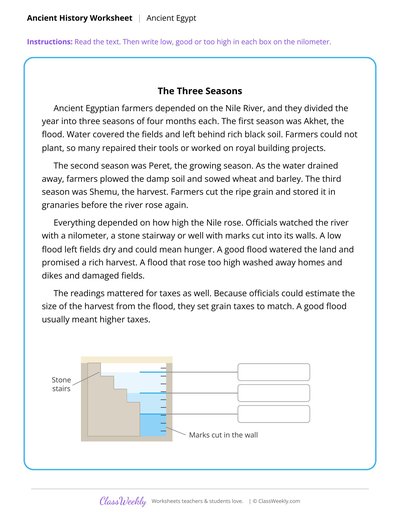
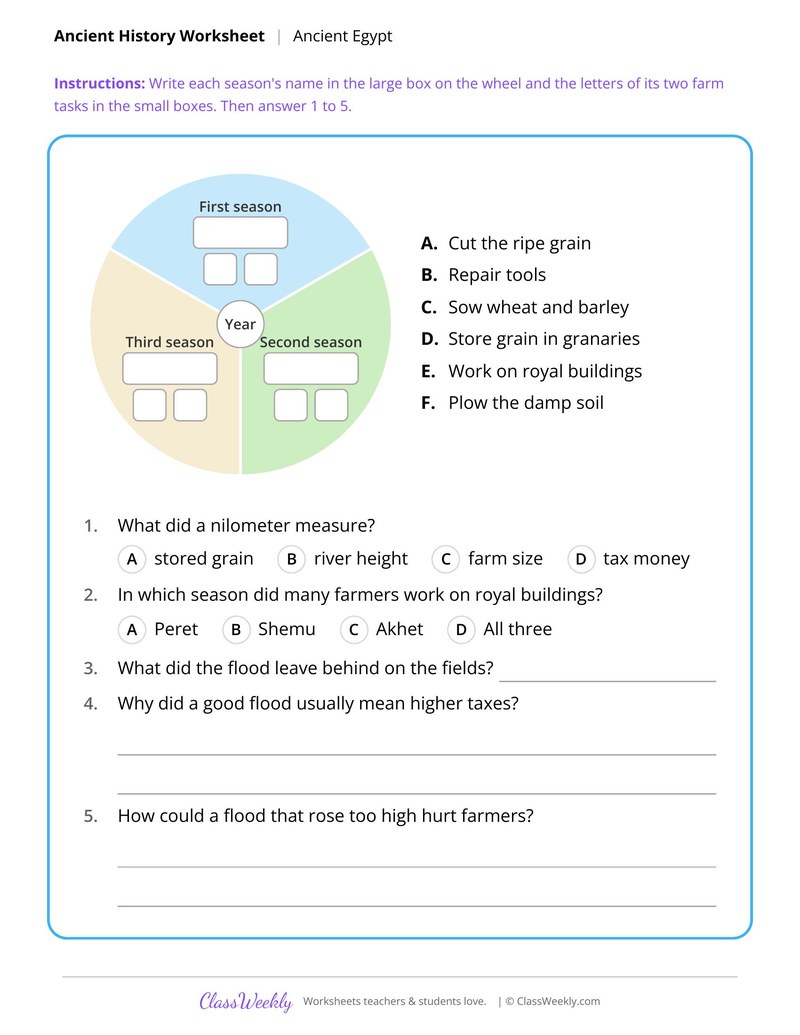
Egypt's Three Seasons and the Nile Flood
Curriculum Links
Find this in the curriculum
Browse the grade, subject, and topic this belongs to.
FAQ
How do I use this nations and regions worksheet?
⌄
Assign the sheet that matches your region or read all four to compare. Ask students to use the passage as evidence for each answer.
What does this worksheet teach?
⌄
Read about salmon, cedar and potlatch on the Northwest Coast and chart how each resource was used. The directions on the page read: Read the passage. Then answer question 1. An answer key is included.
Can I use this nations and regions worksheet for homeschool or classroom?
⌄
Yes, both. We made it for 7th grade native nations before 1600, and it works the same at home or at school. At home, a student can work through it alone and then go over it with you, which shows quickly what is solid and what needs another look. In class it works as independent practice, homework or a warm-up, and you can print one copy or a full set.
What was the Haudenosaunee Confederacy?
⌄
The sheet says the Haudenosaunee, often translated People of the Longhouse, live in what is now New York State. Tradition says five nations united with the help of the Peacemaker and Hiawatha, and students place each nation in a longhouse diagram.
How did horses change life on the Plains?
⌄
Before horses, dogs carried goods on travois and hunters on foot stalked bison. Students compare hunting, travel, homes, trade and warfare before and after horses.
How did Pueblo peoples live in a dry land?
⌄
The passage describes Chaco Canyon and Pueblo Bonito and the high desert where New Mexico, Arizona, Colorado and Utah meet. Students pair each environmental challenge with a solution and evidence.
Ratings & Reviews
No reviews yet. Be the first to share what you think.
Reviews are for ClassWeekly members.
Make a Request
Spotted something to fix, or want a worksheet we don't have yet? Tell us and we'll make it.
Worksheet Details
| Grade | 7th Grade |
| Subject | Social Studies |
| Topic | Native Nations Before 1600 |
| Pages | 2 pages |
| Difficulty | Medium |
What is ClassWeekly?
ClassWeekly offers free worksheets and printable learning resources for kids, from preschool up. All worksheets are aligned to Common Core, NGSS, and C3 Framework standards and designed by educators. Become a member to access the full library and download unlimited PDFs.
Haudenosaunee Confederacy and Its Council
How Horses Changed Plains Nations
Farming and Building in the Dry Southwest
Athens and Sparta in the Peloponnesian War
The Athenian Assembly and the U.S. Congress
Forms of Government in Greek City-States
The Dynastic Cycle in Early China
Egypt's Three Seasons and the Nile Flood