Legal Duties and Civic Responsibilities in Action
Written by Adi Ackerman, Head Teacher
"Legal Duties and Civic Responsibilities in Action" is written for 7th Grade (Ages 12-13). A 6th grader who is already steady on The Constitution and Bill of Rights can use it too, and an older student can use it as a short review.
2 pages in this set
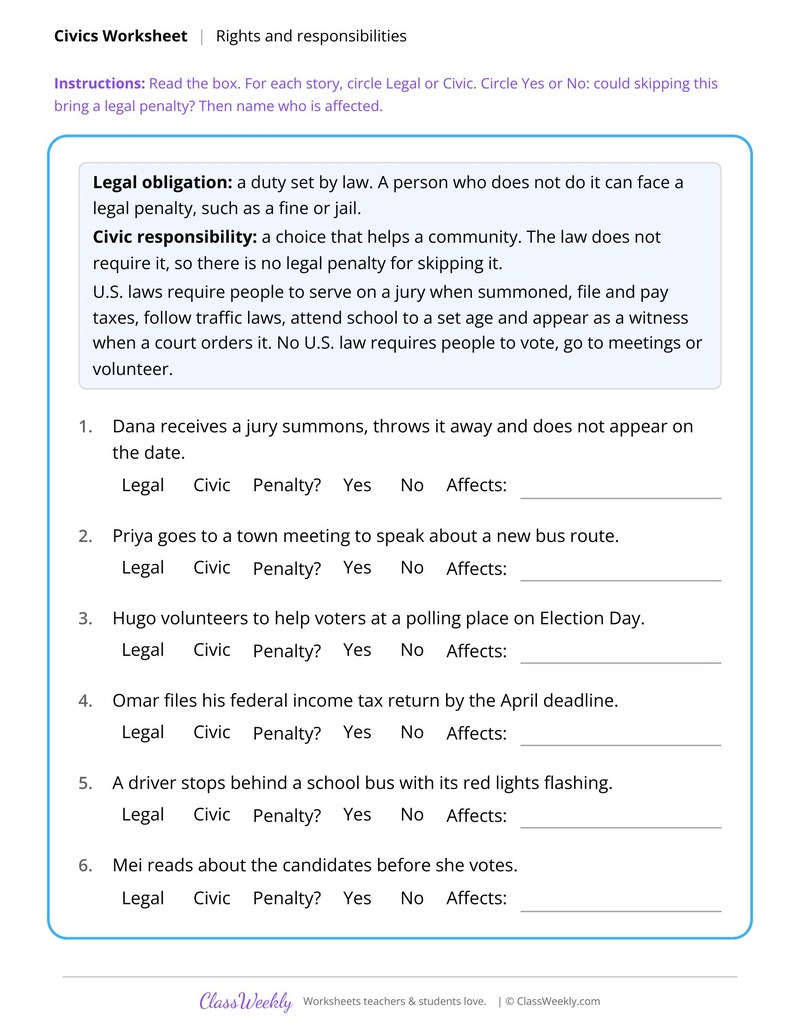
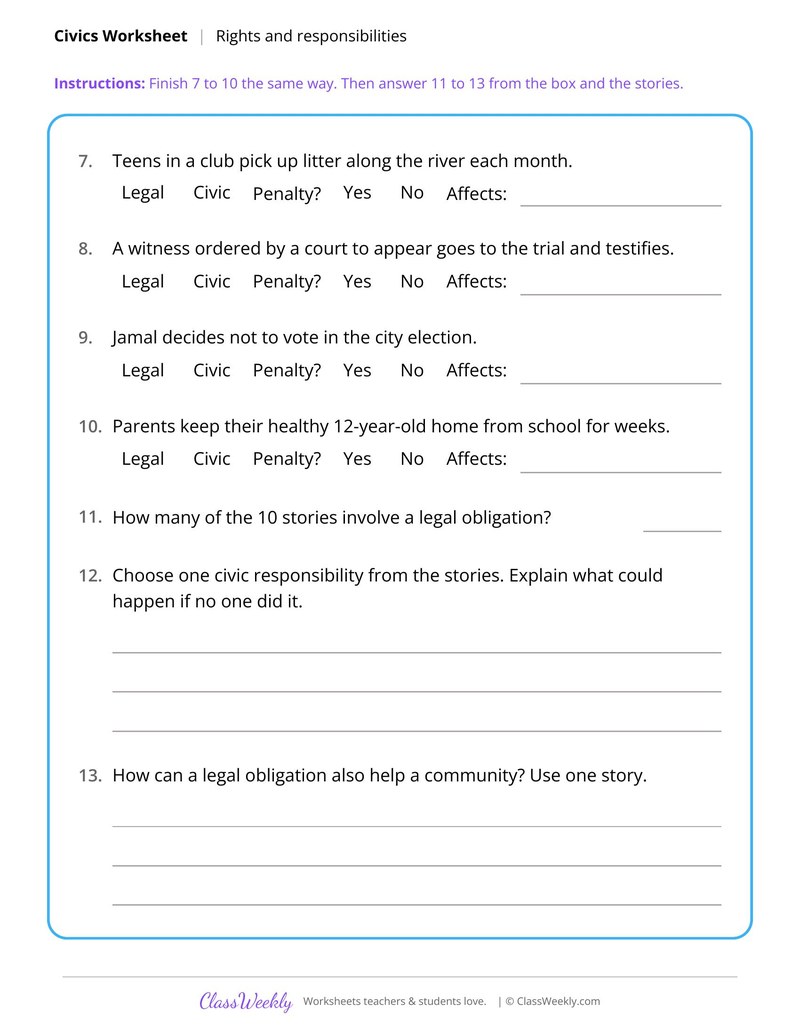
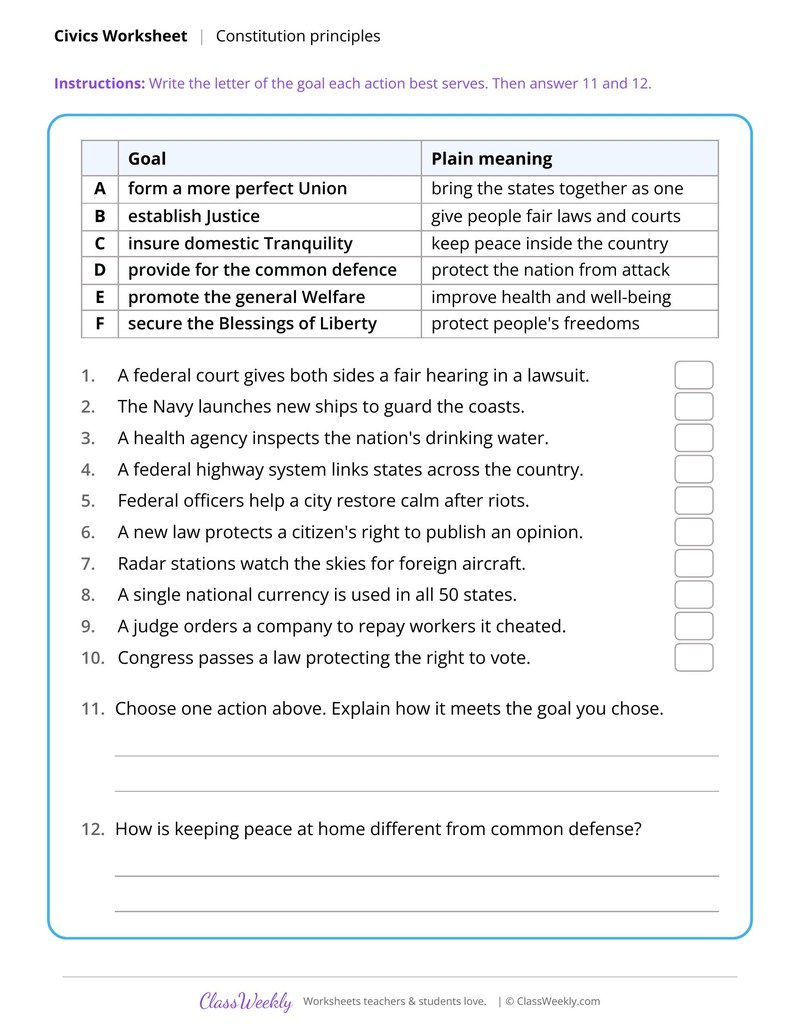
7th grade social studies worksheet: sort ten stories into legal duties and civic choices, from a jury summons to picking up litter. Answer key included. Part of our Bill of Rights and amendments collection.
How do I use this worksheet?
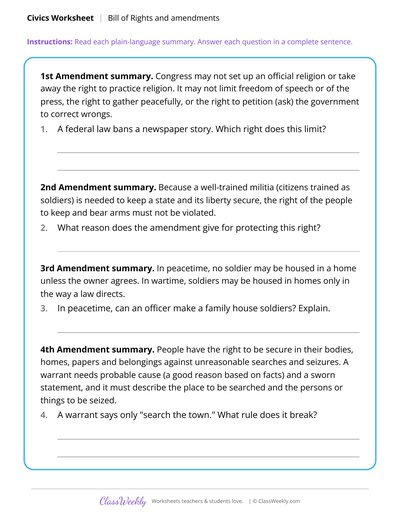
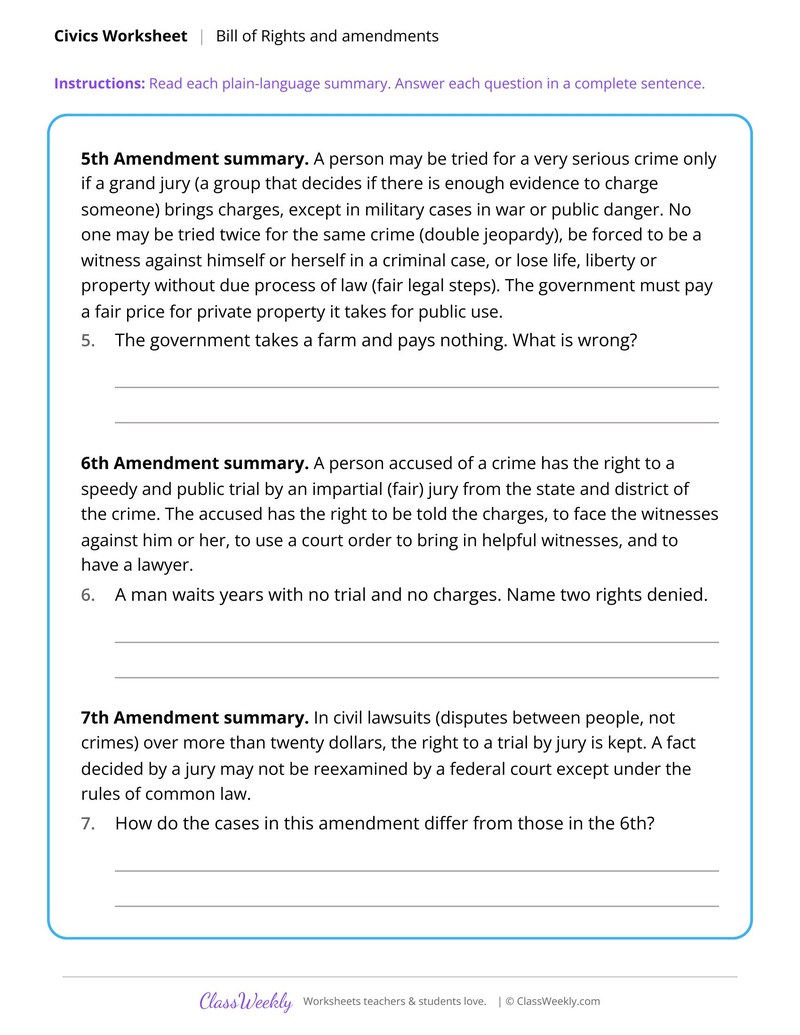
Start with the legal and civic sheet so students have the vocabulary of rights and duties. Then use the plain-language summaries as the reference while students answer in full sentences.
What students will practice
- Students will tell a legal obligation from a civic responsibility using the definitions in the box.
- Students will decide whether skipping each duty could bring a penalty and name who is affected.
- Students will explain how a legal obligation can also help a community.
Curriculum Links
Find this in the curriculum
Browse the grade, subject, and topic this belongs to.
FAQ
How do I use this Bill of Rights and amendments worksheet?
⌄
Start with the legal and civic sheet so students have the vocabulary of rights and duties. Then use the plain-language summaries as the reference while students answer in full sentences.
What does this worksheet teach?
⌄
Sort ten stories into legal duties and civic choices, from a jury summons to picking up litter. The directions on the page read: Read the box. For each story, circle Legal or Civic. Circle Yes or No: could skipping this bring a legal penalty? Then name who is affected. An answer key is included.
Can I use this Bill of Rights and amendments worksheet for homeschool or classroom?
⌄
Yes, both. We made it for 7th grade The Constitution and Bill of Rights, and it works the same at home or at school. At home, a student can work through it alone and then go over it with you, which shows quickly what is solid and what needs another look. In class it works as independent practice, homework or a warm-up, and you can print one copy or a full set.
What is the difference between a legal obligation and a civic responsibility?
⌄
A legal obligation is a duty set by law, and a person who skips it can face a penalty. A civic responsibility is a choice that helps a community, and no law requires it. Serving on a jury is a legal obligation, while voting is not.
What does the 5th Amendment protect?
⌄
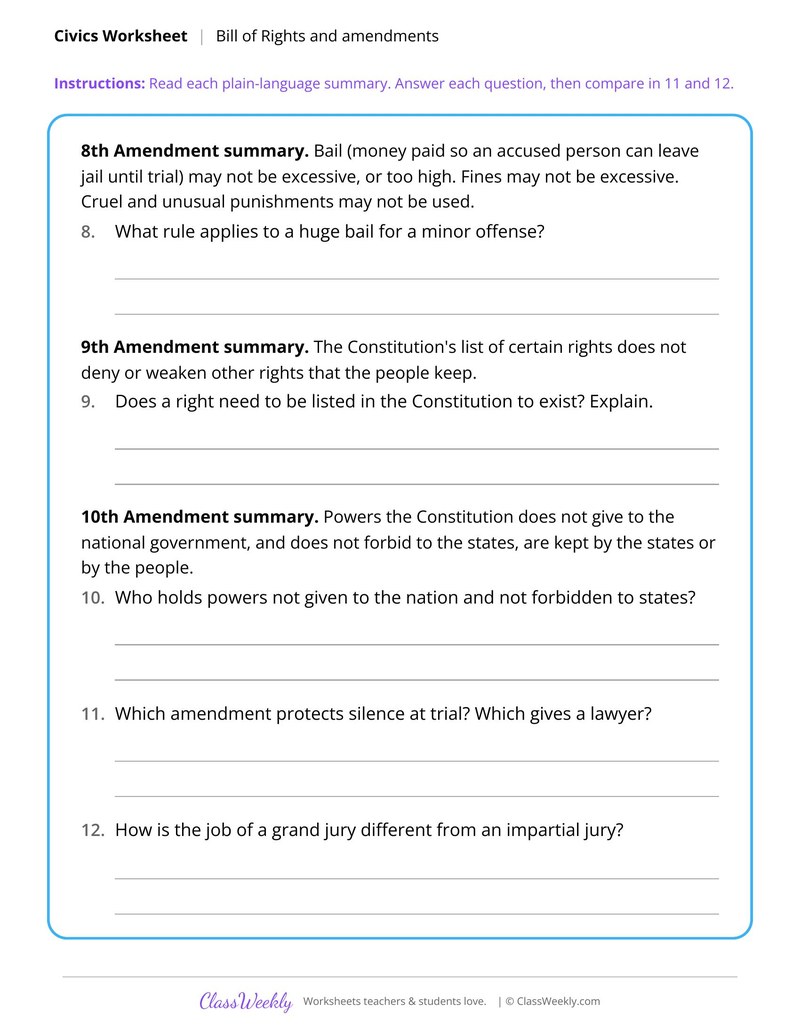
It lets a person be tried for a very serious crime only if a grand jury brings charges, bars trying someone twice for the same crime and protects against losing life, liberty or property without due process. Bill of Rights Text in Plain Words asks about it.
Why does the Bill of Rights matter?
⌄
It protects rights such as freedom of speech and the press and a speedy and public trial from being taken away by the federal government. The sheet has students apply the amendments to short situations.
Ratings & Reviews
No reviews yet. Be the first to share what you think.
Reviews are for ClassWeekly members.
Make a Request
Spotted something to fix, or want a worksheet we don't have yet? Tell us and we'll make it.
Worksheet Details
| Grade | 7th Grade |
| Subject | Social Studies |
| Topic | The Constitution and Bill of Rights |
| Pages | 2 pages |
| Difficulty | Medium |
What is ClassWeekly?
ClassWeekly offers free worksheets and printable learning resources for kids, from preschool up. All worksheets are aligned to Common Core, NGSS, and C3 Framework standards and designed by educators. Become a member to access the full library and download unlimited PDFs.