The Roman Republic
Written by Adi Ackerman, Head Teacher
"The Roman Republic" is written for 6th Grade (Ages 11-12), and it covers C3 Framework D2.Civ.5.6-8. If your student is a year younger but already steady on Ancient History, the page still works. You may just need to read the instructions out loud. And if they are older and Ancient Rome never quite stuck, this is a short review rather than busywork.
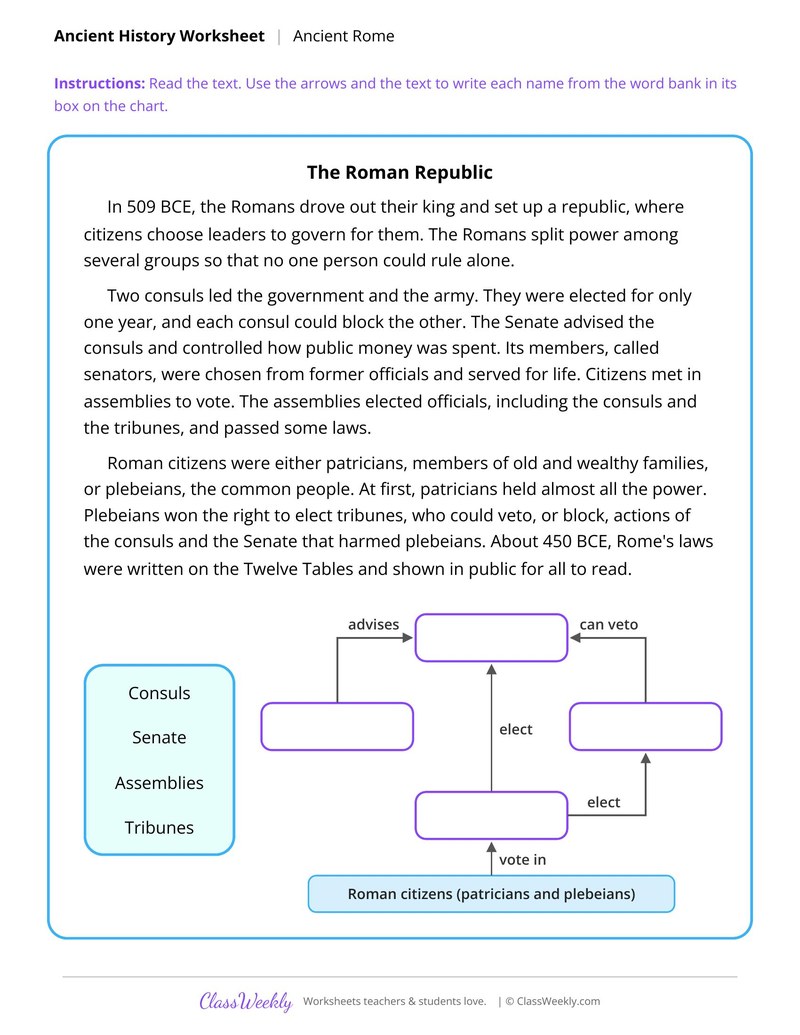
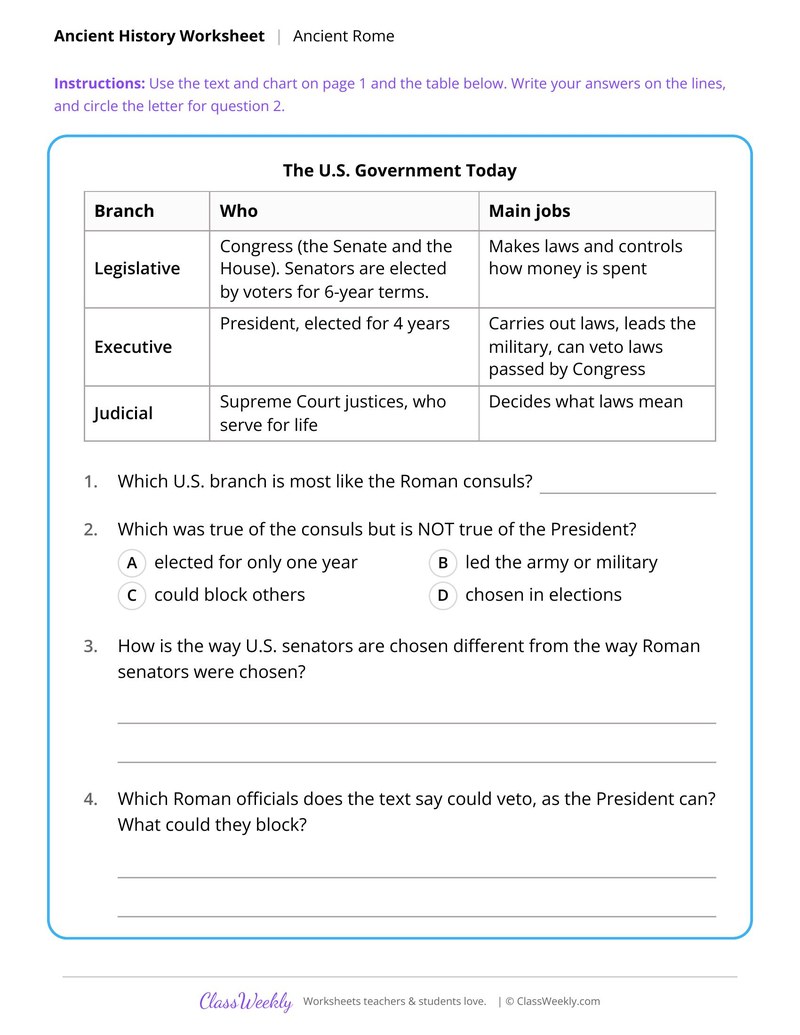
2 pages in this set
6th grade social studies worksheet: complete a chart of consuls, the Senate and tribunes, then compare them with U.S. government. Answer key included. Part of our Ancient Rome collection. Aligned to C3 Framework standards.
How do I use this worksheet?
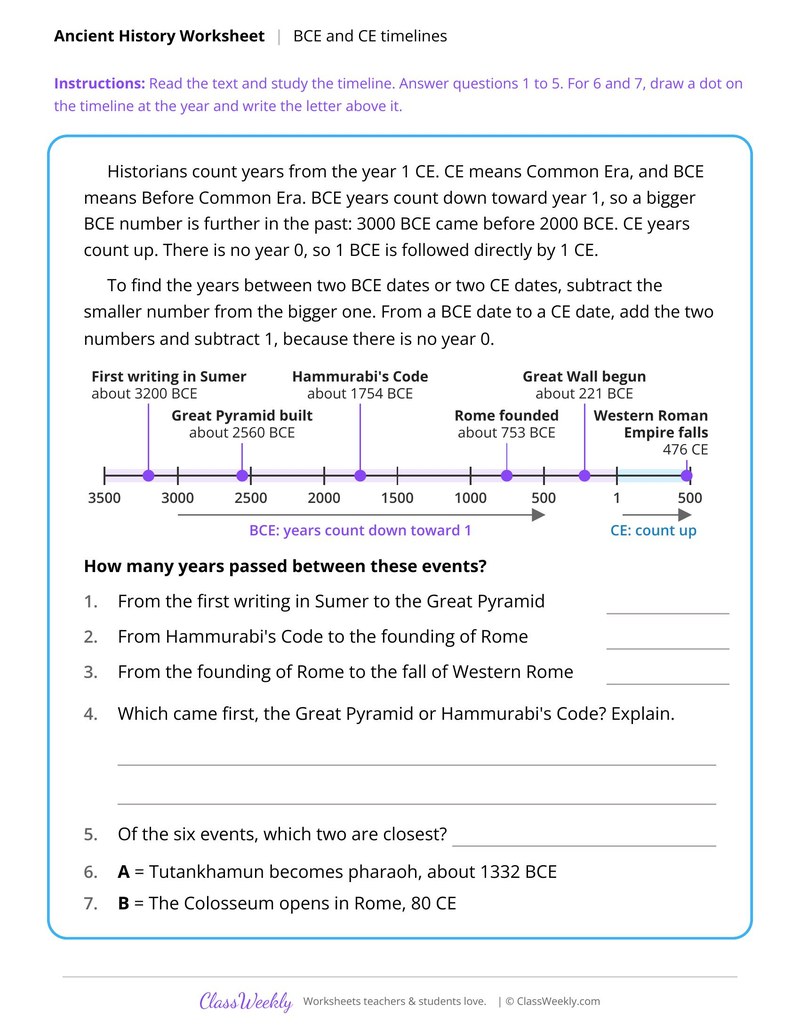
Begin with the government chart and keep the U.S. table in view for comparison. Use the counting box on the timeline sheet to review BCE and CE math, and have students trace the aqueduct diagram as they explain the slope.
What students will practice
- Students will complete a chart showing how consuls, the Senate, tribunes and assemblies were connected.
- Students will compare the Roman consuls and senators with the U.S. President and senators.
- Students will explain what tribunes could veto and whom that power protected.
Curriculum Links
C3 Framework for Social Studies State Standards
Social Studies · 6th Grade
Find this in the curriculum
Browse the grade, subject, and topic this belongs to.
FAQ
How do I use this Ancient Rome worksheet?
⌄
Begin with the government chart and keep the U.S. table in view for comparison. Use the counting box on the timeline sheet to review BCE and CE math, and have students trace the aqueduct diagram as they explain the slope.
What does this worksheet teach?
⌄
Complete a chart of consuls, the Senate and tribunes, then compare them with U.S. government. The directions on the page read: Read the text. Use the arrows and the text to write each name from the word bank in its box on the chart. An answer key is included.
Can I use this Ancient Rome worksheet for homeschool or classroom?
⌄
Yes, both. We made it for 6th Grade Ancient History, and the page works the same whether it lands on a kitchen table or a center rotation. At home, most families go through it together and talk the answers out loud, and that talking is where most of the learning happens with Ancient Rome. In class it runs well as independent work while you pull a small group. Print one copy or thirty, whichever the day needs.
How was the Roman Republic organized?
⌄
Two consuls led the government and the army, the Senate advised them and controlled public money, and citizens met in assemblies to vote. Tribunes elected by plebeians could veto actions that harmed plebeians. Students complete a chart of these groups and compare them with the U.S. government.
Why did Rome change from a republic to an empire?
⌄
Winning wars brought riches and power to generals with loyal armies, rich and poor Romans fought over land and civil wars broke out. In the end one ruler, the emperor, took the place of elected leaders. Augustus became the first emperor in 27 BCE.
How did Roman aqueducts work?
⌄
Aqueducts carried fresh water from springs in the hills to cities, and the water moved by gravity alone. Builders gave each channel a slight downward slope along its whole length, and bridges of arches carried the water across valleys.
Ratings & Reviews
No reviews yet. Be the first to share what you think.
Reviews are for ClassWeekly members.
Make a Request
Spotted something to fix, or want a worksheet we don't have yet? Tell us and we'll make it.
Worksheet Details
| Grade | 6th Grade |
| Subject | Social Studies |
| Topic | Ancient History |
| Standard | D2.Civ.5.6-8 |
| Pages | 2 pages |
| Difficulty | Medium |
What is ClassWeekly?
ClassWeekly offers free worksheets and printable learning resources for kids, from preschool up. All worksheets are aligned to Common Core, NGSS, and C3 Framework standards and designed by educators. Become a member to access the full library and download unlimited PDFs.